
Quick Take
- One crab on this list can span the length of a small car, and it probably isn't the one most people would guess. See the 12-foot giant →
- The largest land-dwelling crab produces a claw force that rivals industrial machinery, and it can live longer than most humans. Meet the coconut crab →
- One of these giants is caught, partially harvested, and then released alive, a process considered worth the unusual effort for the delicacy it yields. Learn about claw harvesting →
- The crab ranked #2 by size crushes the weight of the #1 giant, so why doesn't it top the list? Discover the heavier #2 →
There are over 6,000 species of crab in the world. Crabs are decapods, which also include lobsters, shrimp, and prawns. These invertebrates belong to the infraorder Brachyura, which includes many different families of crabs. Crabs have ten legs, including two claws. They occupy a wide range of habitats and may be terrestrial or aquatic. They are also eaten by various aquatic animals and enjoyed as a delicacy in many cultures. On this list, we will take a look at ten of the largest species of crab in the world, ranked by carapace width and weight.
#10: Florida Stone Crab
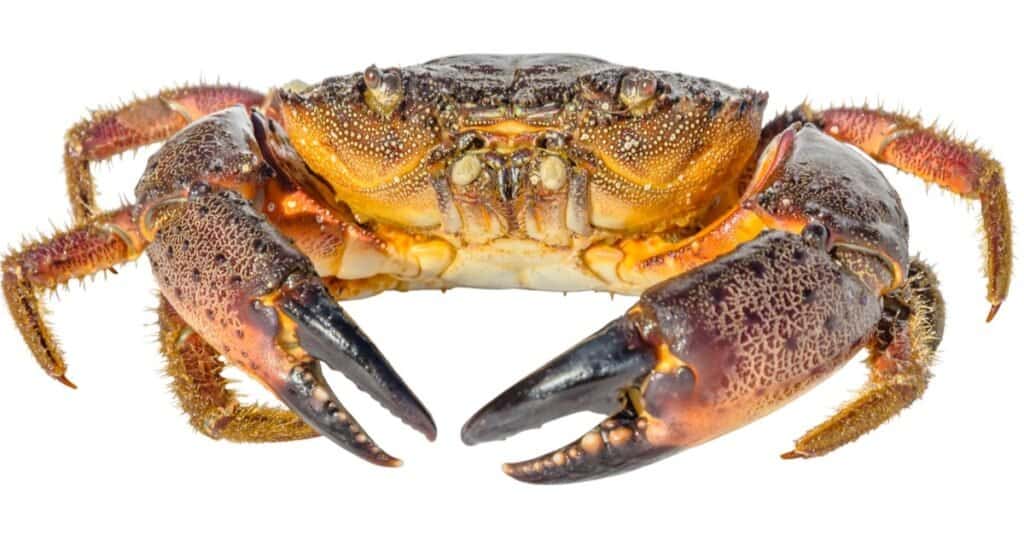
Florida stone crabs are found in the North Atlantic Ocean.
©Process/Shutterstock.com
The Florida stone crab (Menippe mercenaria) is one of the most expensive species in the world, and only their claws are eaten. Their carapace measures 5–6.5 inches. Males are generally larger than females and also have larger claws. The stone crab’s claws can reach up to 6 inches in length. These crabs are captured and then released back into the ocean after their claws are harvested.
Florida stone crabs are found in the western North Atlantic, particularly in the Gulf of Mexico and along the southeastern coast of the United States. In South Carolina and Georgia, they inhabit salt marshes. They dig holes 6-36 inches deep near semi-shallow water. Along with humans, predators include turtles, octopi, and cobia.
#9: Blue Crab
Blue crabs (Callinectes sapidus) are also called Atlantic blue crabs and Chesapeake blue crabs. They are generally olive green in color and are known for their bright blue claws. This species can reach up to 9 inches but only weighs up to 1 pound. Found in the Atlantic Ocean and throughout the Gulf of Mexico, this species is widespread and has been introduced to other parts of the world for its meat.
Blue crabs feed on clams, oysters, small fish, and decaying animals. They primarily spend their time in shallow waters. In winter, they bury themselves to survive the colder temperatures. Blue crabs handle global warming better than other species, as they thrive in warmer temperatures. Scientists estimate that the rate at which this crustacean species will survive oncoming winters is set to increase by 20%.
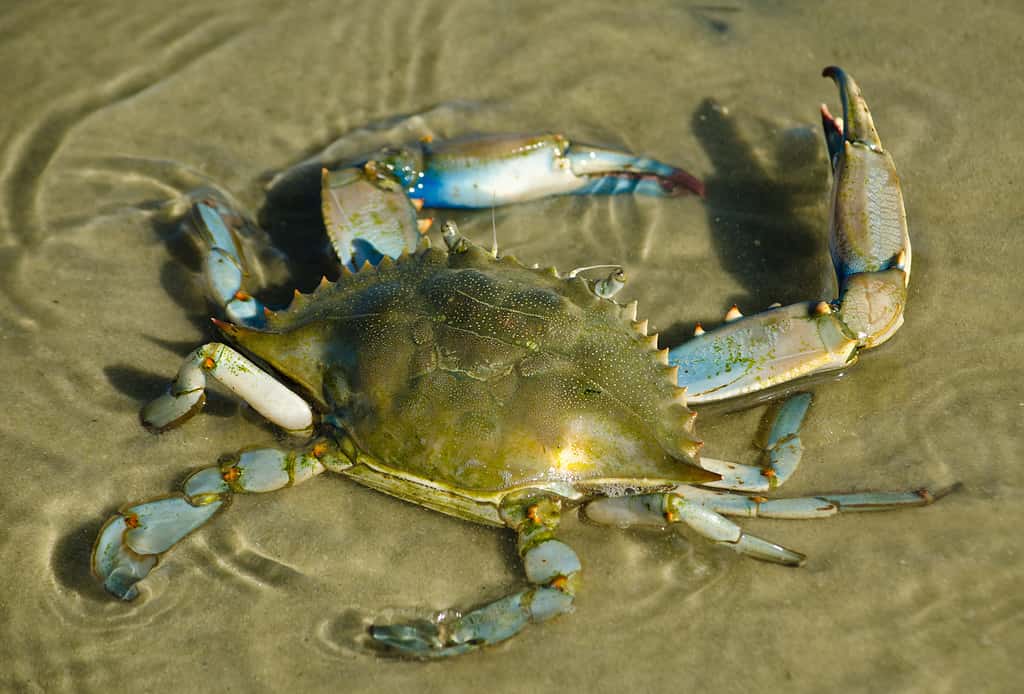
Blue crabs can reach up to 9 inches but only weigh up to 1 pound.
©MeliaMuse/iStock via Getty Images
#8: Opilio Crab
The opilio crab (Chionoecetes opilio) is a species of snow crab, also known as opies. They live in the northwest Atlantic Ocean and the North Pacific Ocean. Male crabs are larger than females and can grow up to 6.5 inches and weigh up to 3 pounds. These crabs are found at depths of 43-7,175 feet.
The opilio crab eats small invertebrates and scavenges on the seabed. Opilio crabs usually live for 5-6 years and mate before they die. Snow crabs are caught near Alaska and Canada and then sold across the world.
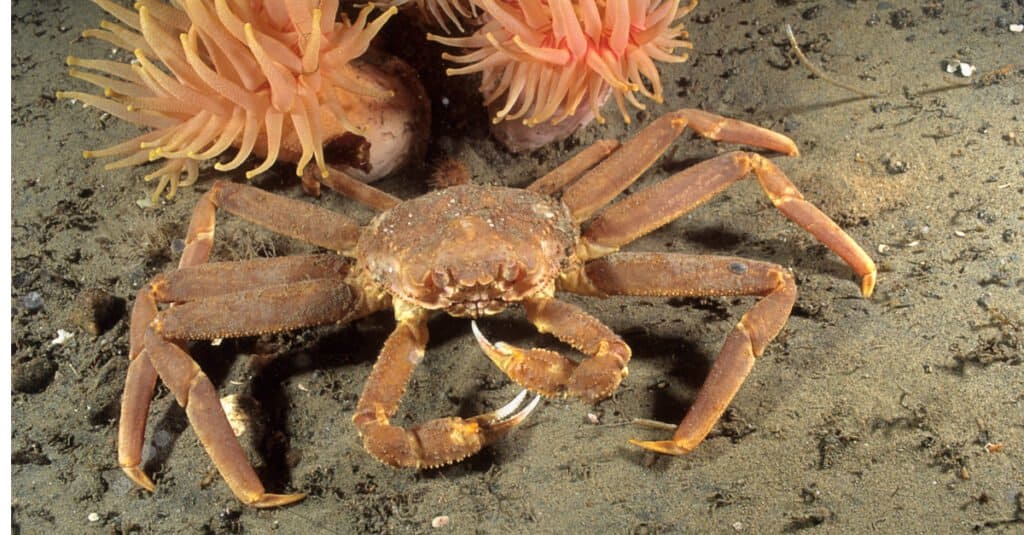
Opilio crabs are found in the northwest Atlantic and the North Pacific.
©RLS Photo/Shutterstock.com
#7: Dungeness Crab
The Dungeness crab (Metacarcinus magister) is found in the west coast oceans of North America. On average, they reach around 7.9 inches, but large crabs may reach up to 9.8 inches. This crab is the most fished species in the Pacific Northwest. These crabs are especially plentiful above 150 feet and can be found at depths of up to 750 feet.
The Dungeness crab is more expensive than other crabs because of the quality of its meat. They periodically molt their shells, typically in the fall before mating occurs. Males are attracted to females by pheromones in their urine.
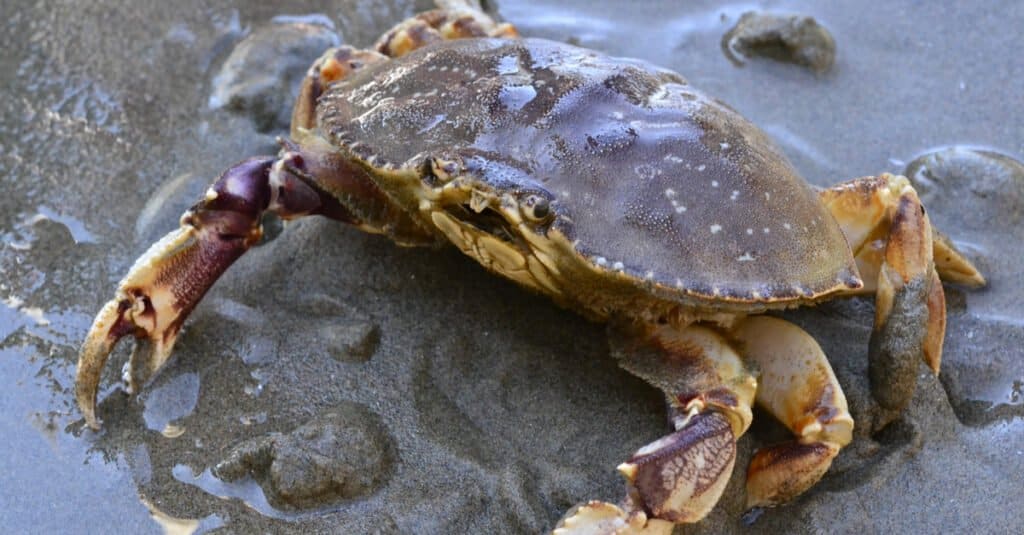
Dungeness crabs are renowned for the quality of their meat.
©Jennifer Nicole Buchanan/Shutterstock.com
#6: Brown Crab
Brown crabs (Cancer pagurus) are also called edible crabs. Males are typically larger than females and can grow up to 6 inches, but in the right habitat, they can reach 10 inches. They are generally found in the waters of the northeast Atlantic, but have also been observed near Norway and northern Africa. They live at depths of up to 330 feet.
Brown crabs inhabit holes and hide under rocks and other debris. They are nocturnal and come out to feed at night. During the day, they bury themselves but never sleep. They remain alert and watch for predators. Octopuses are their main predators, although they are fished and frequently farmed.
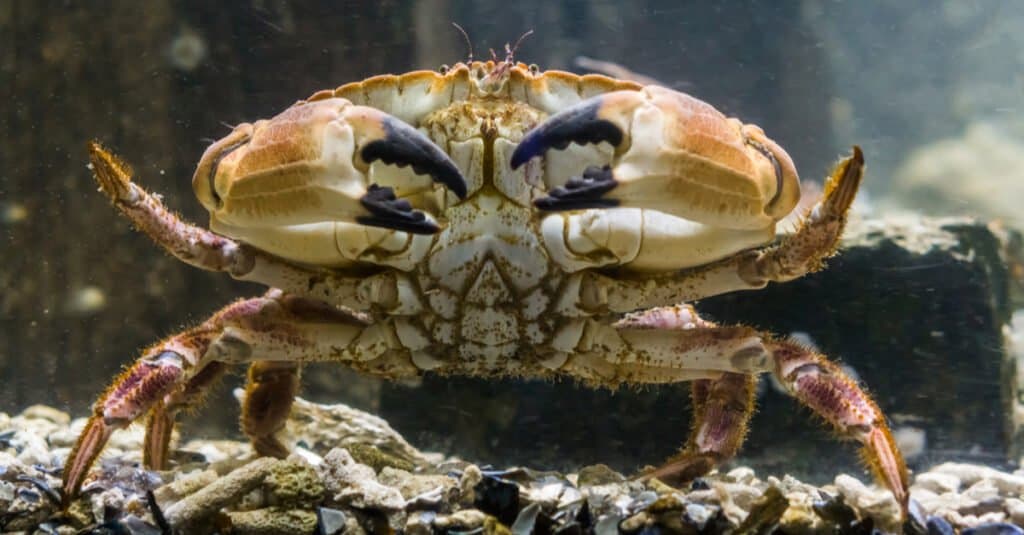
Brown crabs are nocturnal and conceal themselves beneath rocks and debris.
©Charlotte Bleijenberg/Shutterstock.com
#5: Red King Crab
The red king crab (Paralithodes camtschaticus) is also named the Kamchatka crab and the Alaskan King Crab. The red king crab is the largest species of king crab, with a carapace width of 7 inches and a mass of 6 pounds. The carapace of some large individuals can reach 11 inches in width and weigh as much as 28 pounds. However, this is rare. Red king crabs are named after the color they turn when cooked, but they can be brownish to blueish red and are covered in sharp spikes.
Red king crabs are native to the Bering Sea, the North Pacific Ocean, and the waters near the Kamchatka Peninsula in eastern Russia. For many, this species is the prime choice for crab and is harvested across the oceans in which it lives. Unfortunately, they have been steadily declining in the wild. Overfishing, a large number of predators, and global warming are believed to be the primary causes.
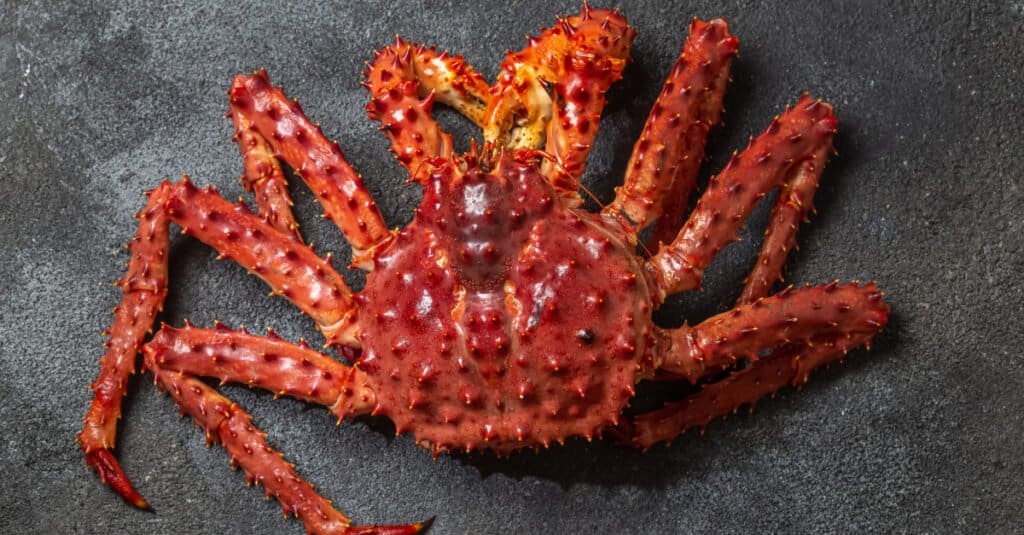
Red king crabs are endemic to the Bering Sea and the region around the Kamchatka Peninsula.
©Larisa Blinova/Shutterstock.com
#4: Giant Mud Crab
The giant mud crab (Scylla serrata) is also known as the Mangrove crab, black crab, serrated swimming crab, and the Indo-Pacific mud crab. The average carapace width of this species is 9 inches, but they can grow as large as 11 inches and weigh up to 11 pounds. They are found in estuaries and mangroves across the Indo-Pacific.
Mud crabs range from green to black in color and have spikes on the edge of their carapace. Mollusks and crustaceans are their main food sources, but they will also eat plants and fish. Female mud crabs bury themselves in the mud and males seek shelter in a burrow. In cold temperatures, they become inactive.
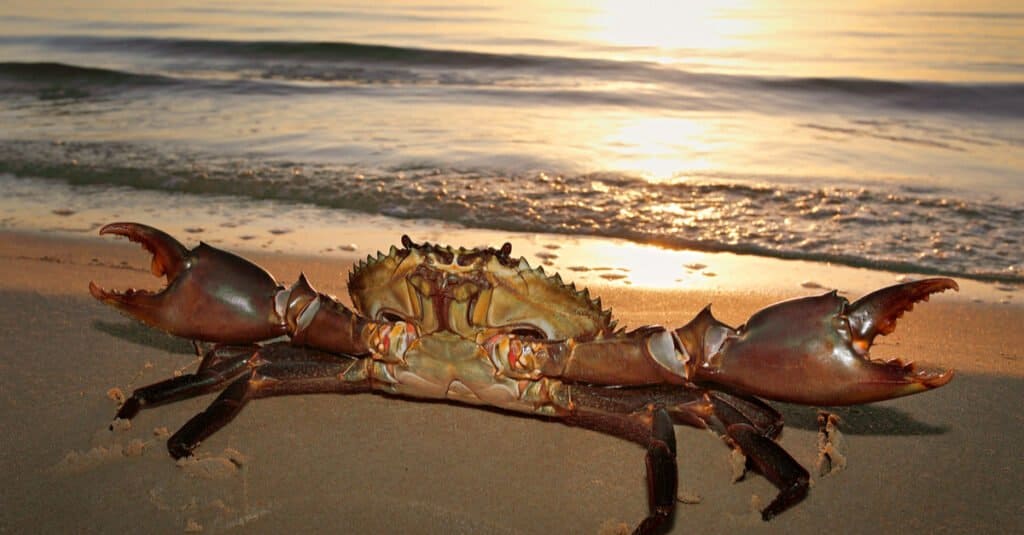
The giant mud crab is omnivorous and feeds on other crustaceans, fish, mollusks, and vegetation.
©Jocelyn Watts/Shutterstock.com
#3: Coconut Crab
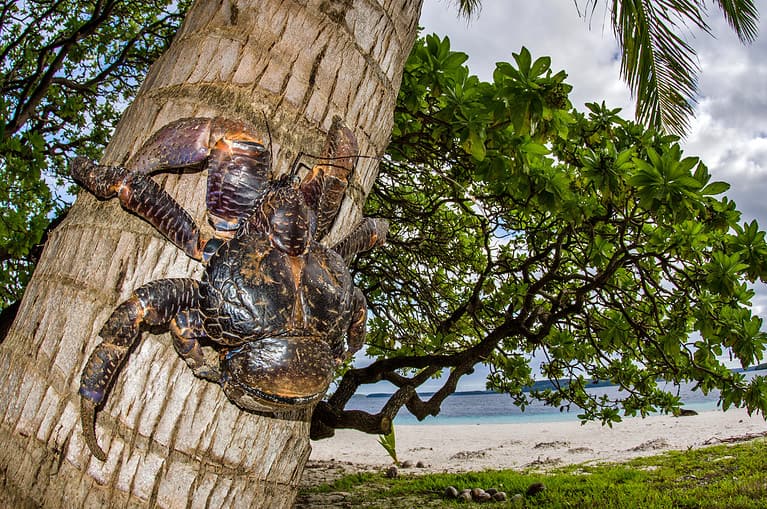
Coconut crabs (Birgus latro), also called robber crabs, are the largest terrestrial crabs. They can grow up to 3 feet 3 inches and weigh 9 pounds. In areas with human populations, they have been locally extirpated. However, they are found on islands across the Indian and Pacific Oceans. The coconut crab is unable to swim and spends most of its life on land.
The coconut crab’s closest relative is the hermit crab, but coconut crabs have evolved to be gigantic in comparison. They have the strongest claws among all land-dwelling crustaceans and can produce up to 3,300 Newtons of force. As larvae, they live in the sea for around a month before swimming to shore. Young coconut crabs live in snail shells until they grow too large. When they are large enough, they take shelter in underground burrows next to coconut trees. They have a long lifespan of over 60 years and survive on small animals, fruits, nuts, vegetation, and carrion.
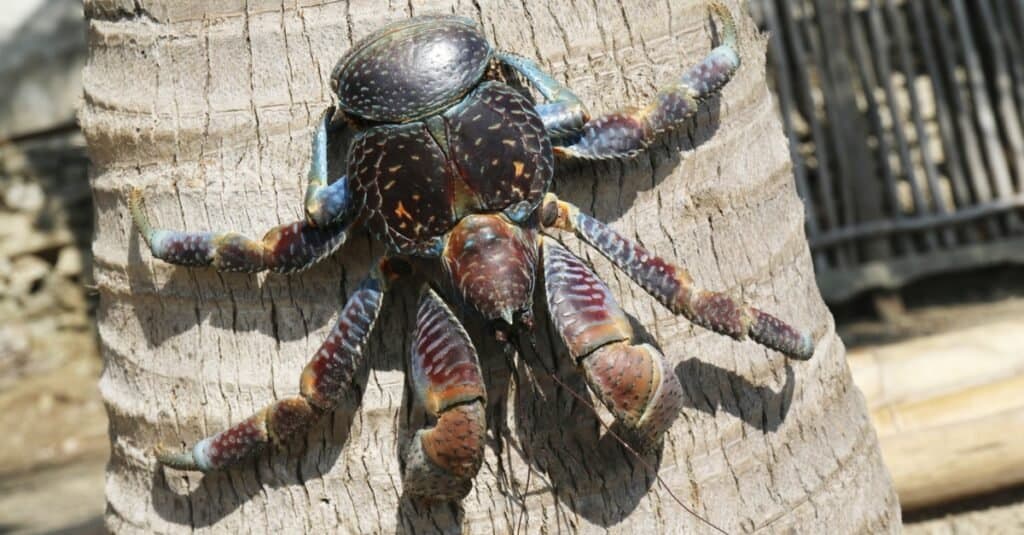
The coconut crab has the strongest claws found on any terrestrial crustacean.
©KYTan/Shutterstock.com
#2: Tasmanian Giant Crab
The Tasmanian Giant Crab (Pseudocarcinus gigas) is one of the largest crabs in the world with a carapace width of up to 18 inches and a weight of over 39 pounds. This giant lives on the muddy bottom of the Southern Ocean off Australia, on the edge of the continental shelf. They are most common at depths of 560–590 feet in summer, but travel deeper in winter to depths of 620–1,310 feet.
The Tasmanian giant crab eats smaller, slow-moving species like gastropods, crustaceans, and starfish. They will also feed on carrion. Male Tasmanian crabs reach twice the size of females. The average weight for males is over 30 pounds, while females average only 15 pounds. The top of their carapace is red, with a yellow or light-colored belly.
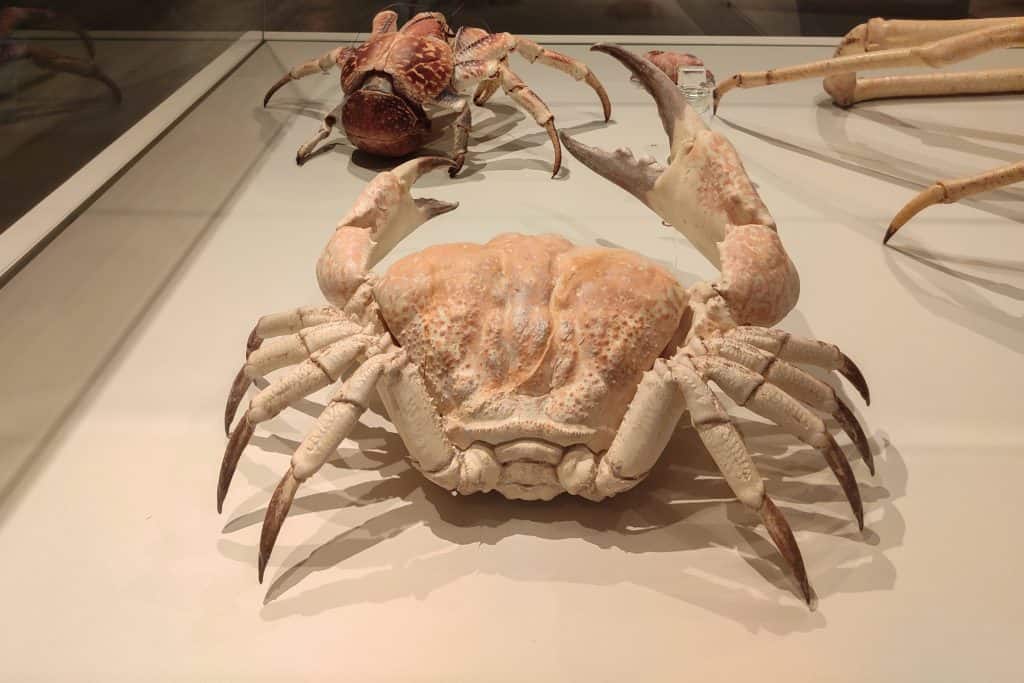
The Tasmanian crab can reach a weight of nearly 40 pounds.
#1: Japanese Spider Crab
The Japanese spider crab is the largest crab in the world. Native to waters near Japan, the Japanese spider crab (Macrocheira kaempferi) has the longest legs of any arthropod. The distance between the tips of their claws can measure up to 12 feet. They have a carapace width of 16 inches and reach weights of around 44 pounds. This gentle giant can be found at depths of 160-1,970 feet around the Japanese island of Honshu to Tokyo Bay.
Pear-shaped with a narrow head, the Japanese spider crab is orange and covered with dark spots. To avoid predators, they use algae and sponges to camouflage themselves. Large fish and octopuses are their most common predators, along with humans. Measures have been taken to ensure the population of this species does not decline from overfishing. Feeding on decaying matter on the seafloor, this species can live for up to 100 years.
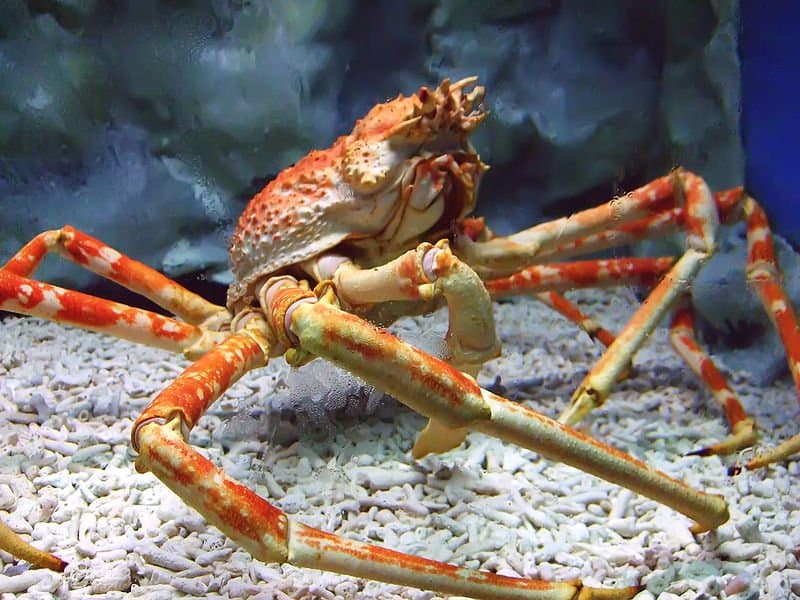
The Japanese spider crab relies on algae and sponges to conceal itself from predators.