
Quick Take
- Crabs must molt because their hard, calcified exoskeleton cannot grow with them.
- Before molting, they reabsorb calcium and weaken their old shell from the inside.
- During ecdysis, they painfully pull their legs, gills, and eyes through tight openings.
- Afterward, they are soft and vulnerable, inflating their bodies with water before the new shell hardens.
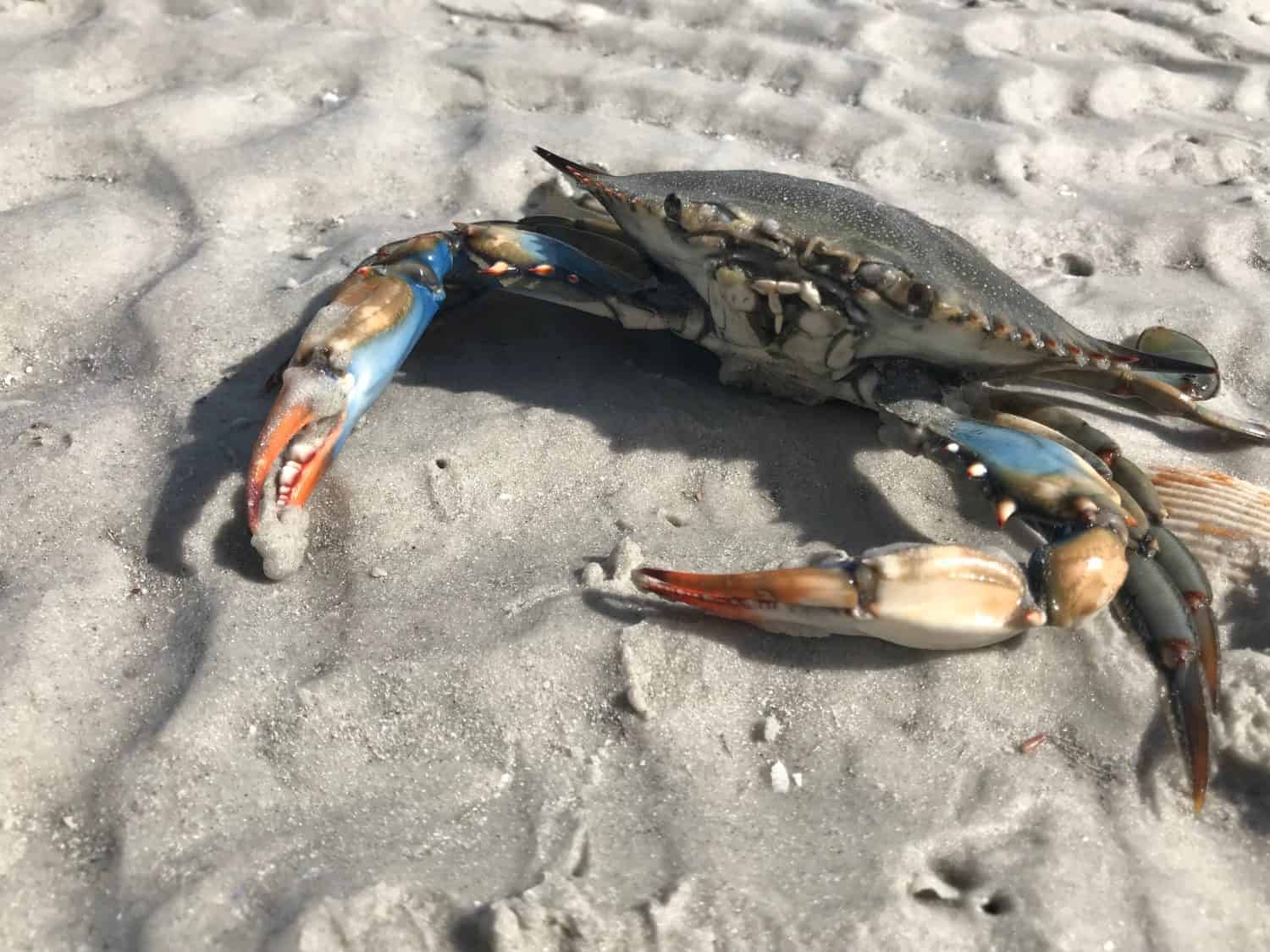
Like all arthropods, crabs must shed their tough exoskeleton to grow to a larger size. The video from the Shape of Life YouTube channel shows the fascinating details of just what it looks like as a blue crab (Callinectes sapidus) painstakingly climbs out of its old shell to reveal the new, softer shell underneath. This is a dangerous time for the crab because its soft exterior is vulnerable to predators, and the crab is exhausted from undergoing the difficult process of molting. Let’s take a closer look at how the crab sheds its skin.
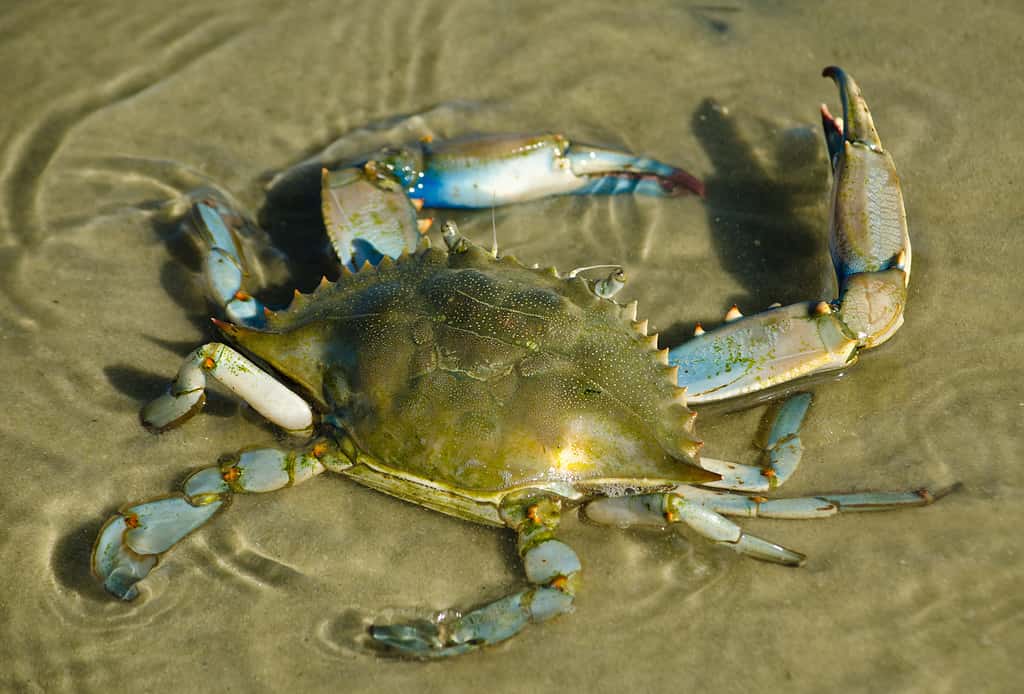
The process by which a blue crab sheds its exoskeleton is both fascinating and complex.
©MeliaMuse/iStock via Getty Images
Molting Allows Crustaceans to Shed Their Hard Outer Shells
A crab’s exoskeleton protects it like armor and gives the animal structural support. Without the process of molting, crabs and other crustaceans could not break free of their hard, calcified exoskeleton. The exoskeleton is rigid and does not expand as the animal grows, so the crab must shed its old shell when it gets too big to fit. It would be physically impossible for the crab to simply crawl out of its shell without the complex, hormone-driven process of molting.
Premolt: Dissolving the Armor From Within
When an arthropod senses that it will begin molting, it first finds a place to hide. Researchers have found that crabs living in Chesapeake Bay often head for the grass beds for safety during molts. During the molting process, the animal is completely incapacitated and cannot defend itself from a threat. However, the pre-molt stage can last several weeks to months while the animal’s body prepares itself for the change.
Crabs release special enzymes that begin breaking down the calcified exoskeleton. During this time, absorbing calcium is very important for growing the new shell, as crab shells are made of calcium carbonate. Crabs reabsorb calcium from their old shells and store it in their tissues for later use in growing their new shell. This also helps weaken the crab’s exoskeleton, making it easier to break free.
The Act of Molting
As the video above explains, when the crab is ready to molt, also called ecdysis, its expanding body cracks open its hard shell. A soft new exoskeleton has been growing underneath the old, hard one. This is a critical moment for the crab. It must use every bit of energy it has to squirm its way out of the tiny opening of its old shell. The crab must pull its delicate legs and gill linings through narrow openings without snapping them off. It must even carefully extract its eyestalks from the exoskeleton.
If the crab can’t properly extract itself, it may end up with missing or deformed limbs. If the molt is incomplete, the crab can remain stuck in its old shell. The crab may die from severe injuries or exhaustion. If a crab has lost a leg or claw to a predator or a previous bad molt, it can regenerate a new one during its next molt.
The Extreme Vulnerability of the Crab’s Soft-Shell Phase
In the video, the blue crab’s molt is successful. Once it emerges, you can see its soft outer covering has been growing underneath the exoskeleton. For the next two days, the blue crab is highly vulnerable to predators. Not only will other sea creatures snap up the soft-bodied crab for a tasty meal, but fishermen prize blue crabs that are freshly molted. Soft-shelled crabs are served whole because the entire crab can be eaten, and they are said to offer a tender texture and rich flavor.
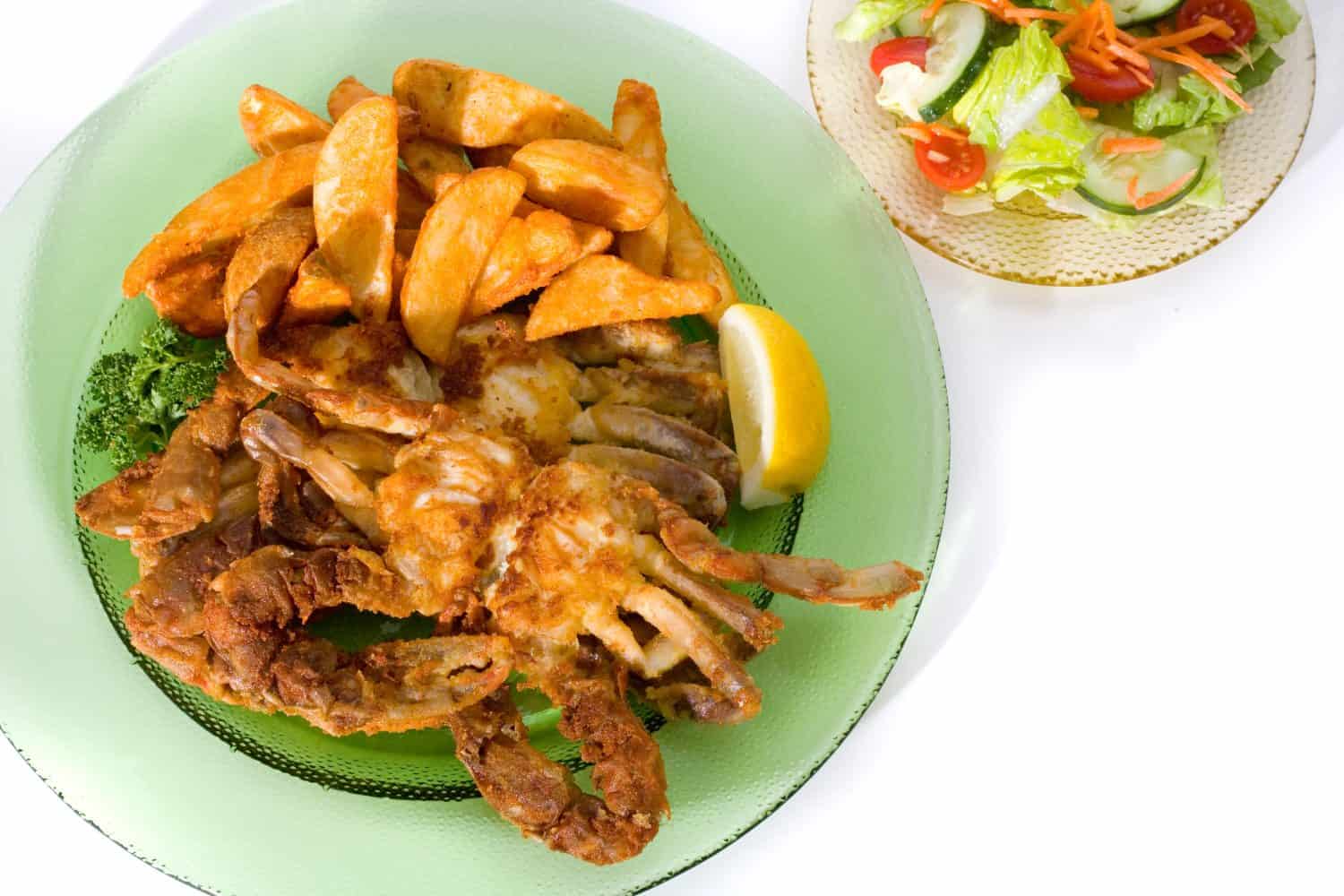
Blue crabs must hide from predators, including humans, when they are soft and freshly molted to avoid becoming someone’s meal.
©AnnapolisStudios/Shutterstock.com
During this dangerous time, the crab pumps its soft body full of water, which stretches out its skin and smooths all the wrinkles. As the crab pumps extra water into its body, its skin inflates and the shell hardens to a larger size, giving the crab more room to grow.
As the soft shell begins to harden, it looks similar to paper or cardboard, and crabs at this stage are sometimes called “papershells.” The amount of time it takes for the shell to harden depends on how much calcium the crab has absorbed. It will stay hidden and out of sight during this vulnerable time. Once the shell is fully hardened, the crab once again has its bright, protective outer covering.
Crabs Can Only Mate When the Female Crab’s Shell Is Still Soft
Males mate by inserting their gonopods, a pair of long appendages used for reproduction, to transfer sperm to the female. But they cannot insert them when she is covered by her hardened exoskeleton. Males locate freshly molted females by detecting pheromones—chemical signals released by females to indicate they are ready to mate.
Before and after mating, the male protects the vulnerable female’s soft body for several days by holding her under his armored shell with his legs. Scientists think the males do this to ensure successful reproduction, since female blue crabs only mate once in their lives. The females store the sperm and fertilize up to 2 million eggs during their spawning season.