Quick Take
- Researchers built a math equation to estimate a horse's weight, and the formula changes depending on the breed type. See the weight equation →
- Miniature horses are typically measured in inches, not hands, and the reason why may surprise you.
- The heaviest horse breed can tip the scales at a number most people would never guess. Meet the heaviest breeds →
- Getting a horse's weight wrong has real consequences, and most owners lack the tool most likely to get it right. Explore weighing methods →
Have you ever wondered how much horses weigh? A horse’s weight is not only determined by its breed, but also by its age, diet, health conditions, exercise, and environment. It’s important for horse owners to know how much their horse weighs to determine the horse’s nutritional requirements and to monitor its condition. Researchers have even developed an equation for estimating a horse’s weight. Keep reading to learn more about the different types of horses and discover how much the breeds in these groups weigh.
Horse Weight Classes and How They Are Weighed
Outside of specific classes for racing horses, U.S. horse weight classifications are based on carrying capacity (generally 20% of the horse’s weight, including tack) and functional breed type. Horses are typically classified as draft horses, light riding horses, warmbloods, or miniature horses/ponies. However, there is some variation, as gaited horses and ponies are sometimes classified separately. We’ll go over each of the types and weight ranges in the upcoming sections.
Having a large enough scale to properly weigh a horse is not always possible or practical. The University of Minnesota has developed equations for estimating the horse’s actual weight and ideal body weight that take breed type into account. The equation uses the horse’s girth, length, height, and neck measurements in inches. For example, draft horses and warmbloods are measured using the following formula:
Bodyweight = 25.09 x [girth 1.528 x length 0.574 x height 0.246 x neck 0.261] / X
X = 1,181 for draft horses and 1,209 for warmbloods. University researchers have also created a Healthy Horse app to assist owners in using the new equations.
How Much Do Horses Weigh?
As noted above, horses are frequently classified as miniature horses/ponies, light riding horses, warmbloods, or draft horses. Horses are also sometimes loosely grouped by their temperament: hot-blooded, warm-blooded, and cold-blooded. Hot-blooded horses are considered more energetic, cold-blooded horses are considered calmer, and warm-blooded horses are a combination of the two. Take an in-depth look at each of the breed types, as well as the weights and heights for popular horses in that class. Note that horses are measured in “hands,” which is a unit of measurement equal to 4 inches.
Miniature Horses and Ponies
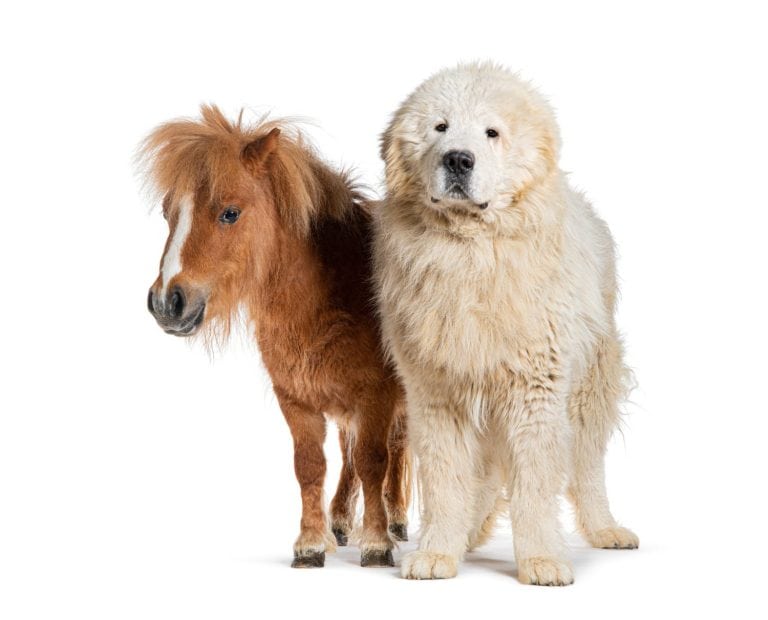
Miniature horses may be small, but their proportions are the same as a regular-sized horse. They typically fall into two categories: the sturdier stock or draft type and the more refined Arabian type. These athletic horses are known for their versatility and gentle demeanors. Tapping into the genetics of Shetland ponies, miniature horses were historically bred to be pets, participate in exhibitions, work in mines, and they have even been gifts to royalty. Because these horses are so small, they are measured in inches to be more precise.
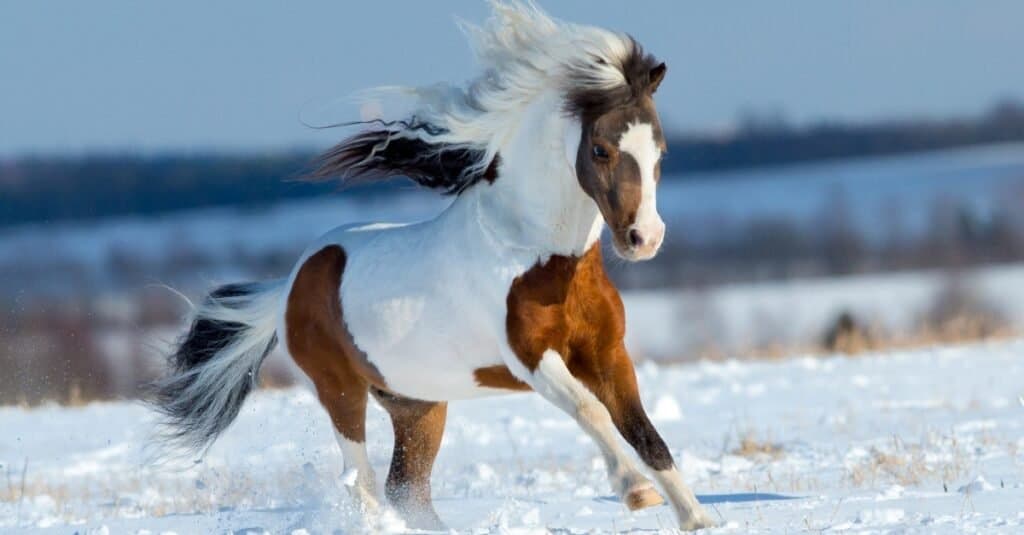
Miniature horses are sometimes used as emotional support animals.
©Alexia Khruscheva/Shutterstock.com
Ponies are not young horses; they are simply small horses that measure under 14.2 hands. Historically, ponies were bred for work such as mining, agriculture, carriage driving, and hauling heavy loads. Modern ponies are generally bred for use as children’s mounts, companions, and for competitions. Their temperaments vary by breed, but ponies are known to be generally patient and gentle, although their intelligence and independence can lean toward stubbornness if not trained.
| Breed | Weight | Height at the Shoulder |
|---|---|---|
| American Miniature Horse | The average weight is 150 to 250 pounds, with males generally being larger | AMHA standards state mature horses must not exceed 34 inches measured at the last hair of the mane; the AMHR allows up to 38 inches |
| Shetland Pony | 400 to 450 pounds, no significant weight difference between males and females | The American Shetland Pony Club allows up to 46 inches (11.5 hands) at the withers |
| Norwegian Fjord | 900 to 1,200 pounds; no significant weight difference between males and females | 13.1 to 14.3 hands. |
| Pony of the Americas | 661 to 881 pounds, with males generally being larger | 11.5 to 14 hands |
Light Riding Horses
light riding horses, or non-draft horses, are a more diverse group and can vary significantly in height, weight, and build. However, they were all bred for riding, so endurance, speed, and agility are common traits. Most racing horses and stock horses fall under this category. Gaited horses are similar in that they were bred for riding, but they were bred for a smoother gait. Light riding horses are either hot-blooded or warm-blooded, so these breeds tend to be more energetic, but temperament depends on the specific breed. While most male horses in this group tend to be more muscular than the females, sexual dimorphism is not as noticeable as in other groups. Male riding horses are generally only slightly heavier and taller than females.
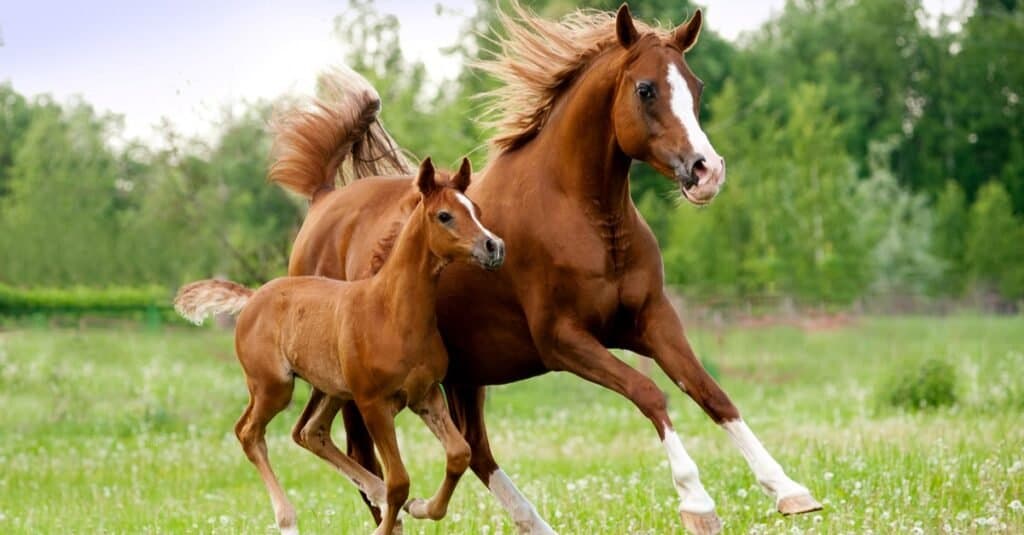
Arabian horses are among the most popular riding breeds in the world.
©Olga_i/Shutterstock.com
| Breed | Weight | Height at the Shoulder |
|---|---|---|
| Arabian | 800 to 1,000 pounds, with males being slightly larger | 14.1 to 15.1+ hands, with males being slightly taller |
| Thouroughbred (racing) | 900 to 1,200 pounds, with males being slightly larger | 15.2 to 17 hands, with males being slightly taller |
| American Quarter Horse (stock) | 950 to 1,200 pounds, with males being slightly larger | 14 to 16+ hands, with males being slightly taller |
| Tennessee Walking Horse (gaited) | 900 to 1,200 pounds, with males being slightly larger | 14.3 to 17 hands, with males being on the higher end of the spectrum |
Warmbloods
Warm-blooded horses were developed by breeding hot-blooded riding horses with cold-blooded draft horses. These versatile horses combine the energy and responsiveness of a hot-blooded horse with the steadiness and calm demeanor of a cold-blooded horse. Historically, they were used in agriculture and in the military. However, modern warmbloods excel in equestrian sporting events such as dressage and show jumping. Male and female horses fall within the same weight and height range; however, male horses are more muscular and fall on the higher end of the spectrum compared to females. The Dutch Warmblood is managed by the Royal Warmblood Horse Studbook of the Netherlands (KWPN), and breeding is highly regulated.
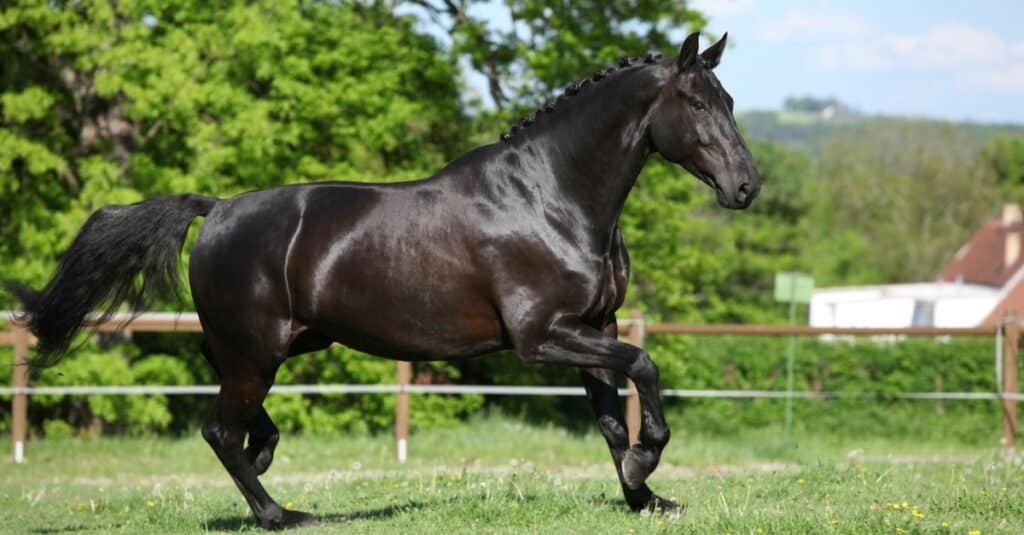
The breeding of Dutch warmblood horses is highly regulated to maintain high breed standards.
©Zuzule/Shutterstock.com
| Breed | Weight | Height at the Shoulder |
|---|---|---|
| Hanoverian | 1,200 to 1,500 pounds, with males being larger | 15.3 to 17.2 hands, with males being taller |
| Dutch Warmblood | 1,200 to 1,500 pounds, with males being larger | 15.5 to 17 hands (Mares must be 15.5 hands to breed, while males must be 15.75 hands) |
| Holsteiner | Males: 1,300 to 1,700+ pounds Females: 1,000 to 1,400 pounds | 16 to 17 hands, with males being slightly taller |
| Trakehner | 1,000 to 1,300 pounds, with males being larger | Males should be a minimum of 15.3 but average about 16.2 hands; females should be between 15.1 and 16.1 hands |
Draft Horses
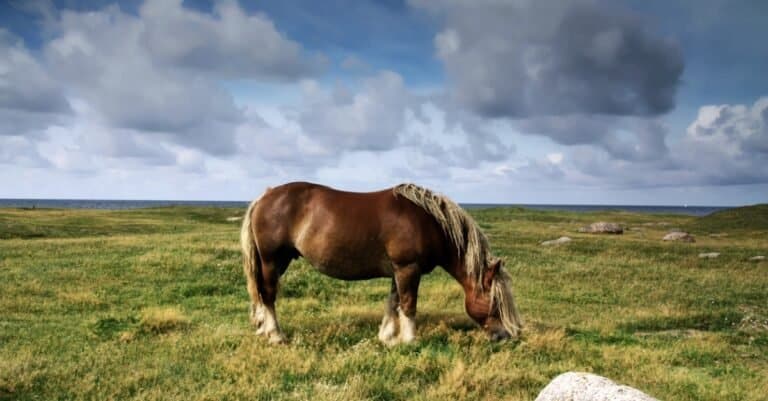
Draft horses are the largest and heaviest horses. They have been recorded to literally pull their own weight. These horses are incredibly powerful and were bred specifically to pull and carry heavy loads. Historically, they were bred for work such as plowing fields, pulling stagecoaches, trollies, and fire wagons, and even hauling heavy artillery during World Wars I and II. Modern draft horses are often bred for competitive events in the halter, hitching, and cart classes. They may also be used for tourism, small-scale agriculture, and forestry, where they can reach areas machinery cannot. These horses are usually patient, docile, and even-tempered. These cold-blooded horses are considered calmer and steadier than their warm- and hot-blooded cousins.
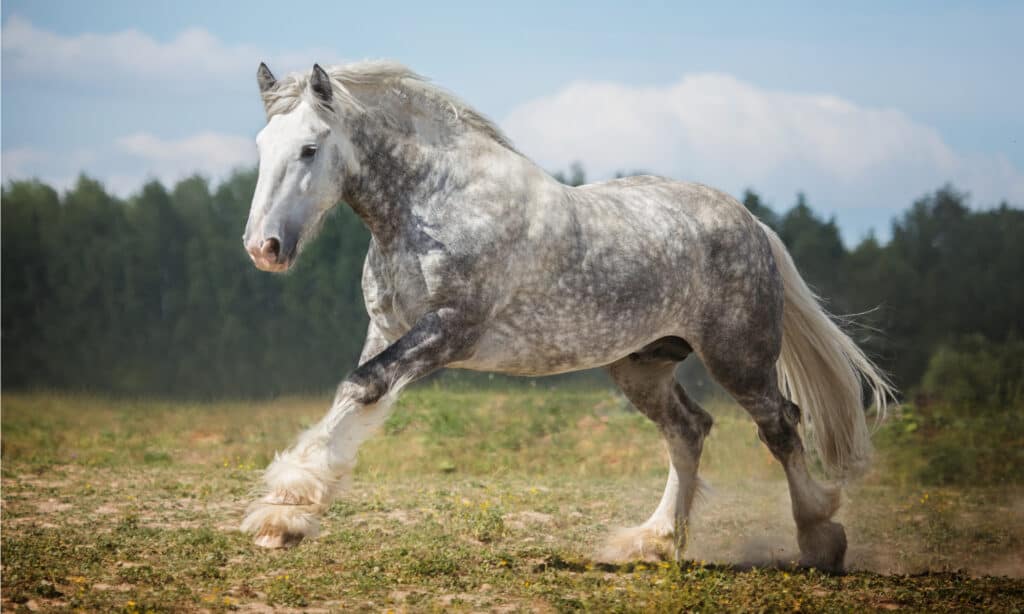
Shire horses are generally recognized as the largest horse breed in the world.
©Alla-L/Shutterstock.com
| Breed | Weight | Height at the Shoulder |
|---|---|---|
| Clydesdale | Males: 1,700 to 2,200 pounds Females: 1,500 to 2,000 pounds | 16 to 18+ hands, with males being taller |
| Belgian | Males: 1,800 to 2,400 pounds Females: 1,500 to 2,200 pounds | 16 to 18+ hands, with males being taller |
| Percheron | Males: 1,900 to 2,400+ pounds Females: 1,800 to 2,200 pounds | 16 to 18+ hands, with males being taller |
| Shire | Males: 1,800 to 2,400, but can reach over 3,000 pounds Females: 1,800 to 2,200 pounds | 16 to 19+ hands, with males being taller |