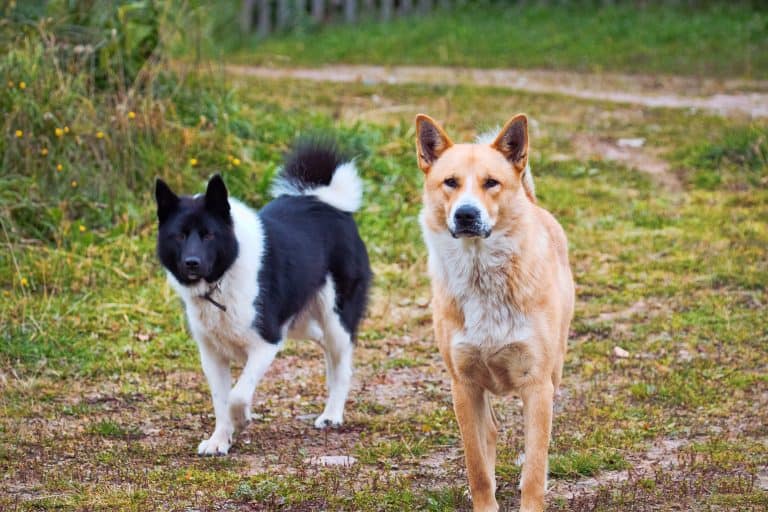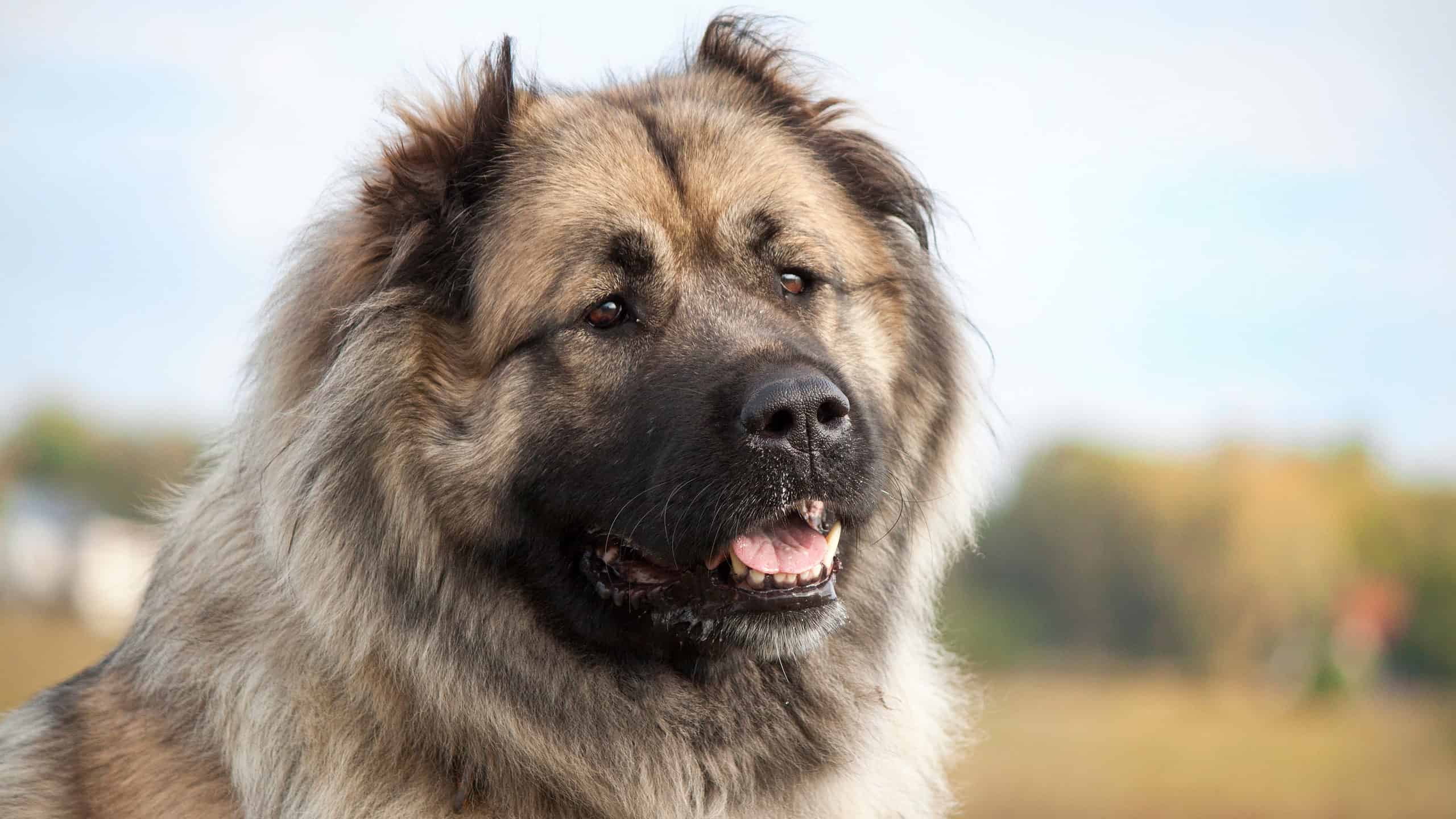

Dogs come in all different sizes and appearances, each with their own unique traits. Most dog breeds kept as pets are small enough to fit on the couch, but what about the larger breeds? One large breed is the Caucasian Shepherd. This Instagram post by @unilad shows this breed being comically too large for the couch. Read here to learn more about this adorable and massive dog breed.
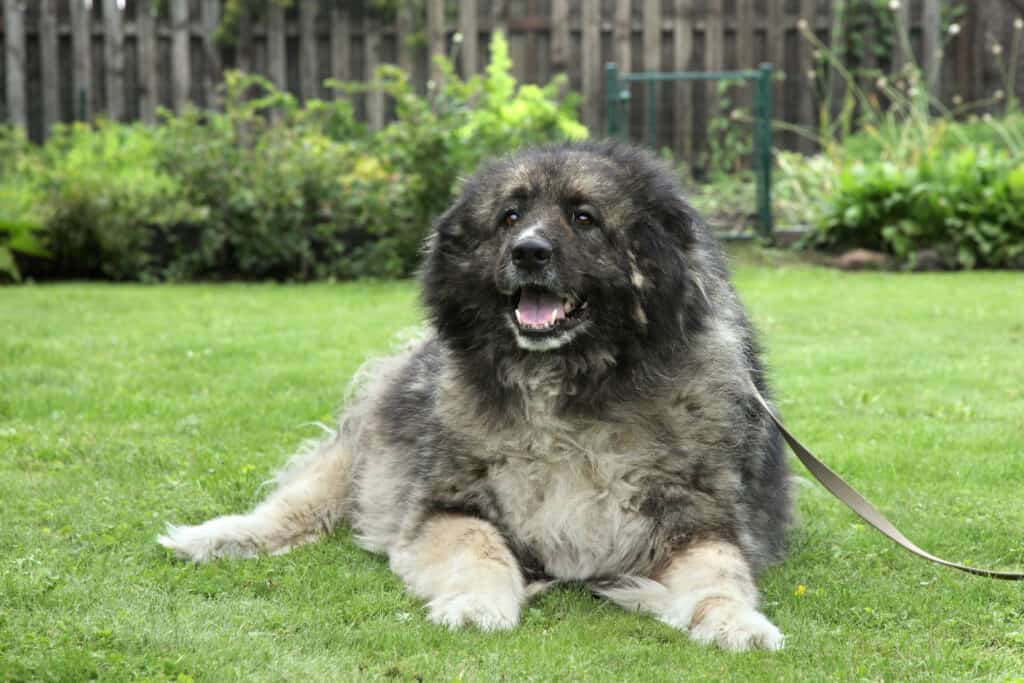
The Caucasian Mountain dog is massive.
©Jagodka/Shutterstock.com
Caucasian Shepherd Size
Caucasian Shepherds are large, but extremely adorable dogs! Their size can be intimidating for those looking for a new pet, and for good reason. An adult Caucasian Shepherd is considered a giant-sized dog. Males, on average, weigh anywhere between 110 to 170 pounds, with females being only a little lighter. Their height is also staggering, with an average adult standing around two feet or taller. They grow to around 3 feet long, making them massive. As seen in the video, the Caucasian Shepherd looks almost disproportionate to its owner. There’s not much information about sizes and weights at birth for puppies, but they are small, just like any other puppy. What is surprising, however, is that they reach about 80% of their adult height in their first year! With just one pup, you can see them go from a tiny fuzzball all the way to the giant they become.
Caucasian Shepherds have thick coats that can be challenging for groomers to manage. They have double coats, with a coarse outer coat and dense undercoat to keep them warm in cold environments. The length of their fur varies between individuals. Like other double-coated breeds, shedding can be a significant issue for owners. While they shed year-round, it becomes especially heavy in the spring and fall, a process known as seasonal shedding. During this time, the dog sheds its winter or summer coat in preparation for the upcoming season. To maintain their coats, regular brushing is necessary—possibly even daily during periods of heavy shedding. Taking them to a professional groomer can also help manage their coats, especially during seasonal shedding.
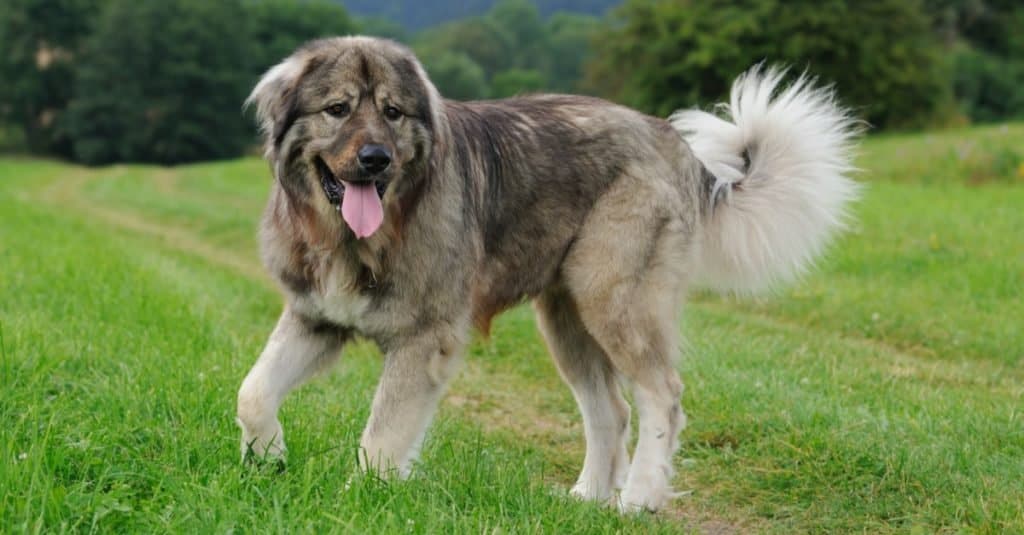
One of the biggest dog breeds, the Caucasian Shepherd dog, was originally bred as a working dog and used to guard livestock against predators
©anetapics/Shutterstock.com
How Much Do Caucasian Shepherds Eat?
Caucasian Shepherds are giant livestock dogs originally bred in the Caucasus Mountains. Like other large livestock dogs, they were bred to protect flocks of sheep from wolves, bears, or even humans! Because of this, they are powerful and protective dogs that require proper training. Given their large size, adults require lots of food per day.
The amount of food a Caucasian Shepherd needs depends on its weight, age, activity level, and the calorie content of its food. Owners should consult the feeding chart on their dog food packaging or ask a veterinarian for specific recommendations. Large breeds like the Caucasian Shepherd often require several cups of food per day, divided into two meals. If the dog is active, they may require even more. This food helps keep them energized, especially for their daily exercise needs. While they may not be as energetic as huskies, daily walks or playtime are important to keep these dogs physically and mentally healthy. They thrive on large properties where they can run and roam freely, and are not well-suited to apartment living.
Because they were originally bred as guard dogs, the temperament of the Caucasian Shepherd may differ from that of other breeds. They are extremely loyal and protective, which can make them wary of strangers at first. While they are often gentle with family members, they may be aggressive toward unfamiliar people. Many breeds kept as pets, such as Golden Retrievers, are eager to please and extremely friendly. In contrast, Caucasian Shepherds are independent thinkers. Their body language can be difficult to read at first, as they do not always seek attention from their owners. For this reason, it is best for prospective owners to have experience with similar breeds or to thoroughly research the breed beforehand.