
Wolves are some of the most fascinating yet feared canines around, given their reputation as ruthless predators. They have a similar appearance to coyotes, and the two can be difficult to distinguish at first glance. However, there are actually quite a few differences between them, both in appearance and in behavior.
Comparing Coyote vs. Wolf

Coyotes appear similar to wolves.
©karlumbriaco/iStock via Getty Images
Although coyotes are sometimes called the brush wolf or prairie wolf, they are not actually wolves. Instead, there are only two recognized species of true wolves: the red wolf and the gray wolf. And there are more than 30 subspecies of gray wolves. All of the other widely known wolves are actually only subspecies, including the Arctic wolf and the Eurasian wolf. The table below offers a quick overview of the differences between coyotes and wolves.
| Coyotes | Wolves | |
|---|---|---|
| Distribution | Widespread across North America | Across Asia, Europe, and North America |
| Habitat | Wide variety of habitats, including urban areas | Variety of habitats, including forests, mountains, deserts, and grasslands |
| Size | Weight: 15 to 44 pounds Length: 3ft 3in to 4ft 5in Height: Up to 24 inches | Weight: 45 to 145 pounds Length: 4ft 6in to 5ft 3in Height: Up to 33 inches |
| Physical Appearance | Long, narrow snout and pointed ears. Has a tan or gray coloration | Short, broad snout and rounded ears. Can have colors including white, gray, tan, silver, and black |
| Tail Carriage | Run with their tail down | Run with their tail out behind them |
| Social Behavior | Typically live in small family groups | Live in packs that are led by a dominant pair and have a strict hierarchy |
| Hunting Behavior | High-pitched, short howls. Also yaps, yelps, and barks | Cursorial predators that hunt as a coordinated pack |
| Diet | Mainly small mammals, birds, and insects | Predominantly mammals, including larger prey such as deer, elk, and moose |
| Tracks | Approximately 2.5 inches long | Approximately 4 – 5.5 inches long |
| Vocalization | High pitched, short howls. Also yaps, yelps, and barks | Long but with a low pitch |
The Key Differences Between a Coyote and a Wolf
Some of the main differences between wolves and coyotes include their size, facial features, and sounds. However, they also have very different social and hunting behaviors. Let’s explore them further.
Coyote vs. Wolf: Size
The first difference between wolves and coyotes is their size, as wolves are larger than coyotes. Male coyotes are larger than females, weighing up to 44 pounds and standing up to 24 inches at the shoulder. However, wolves weigh up to a massive 145 pounds and reach up to 33 inches high at the shoulder.
Coyote vs. Wolf: Physical Appearance
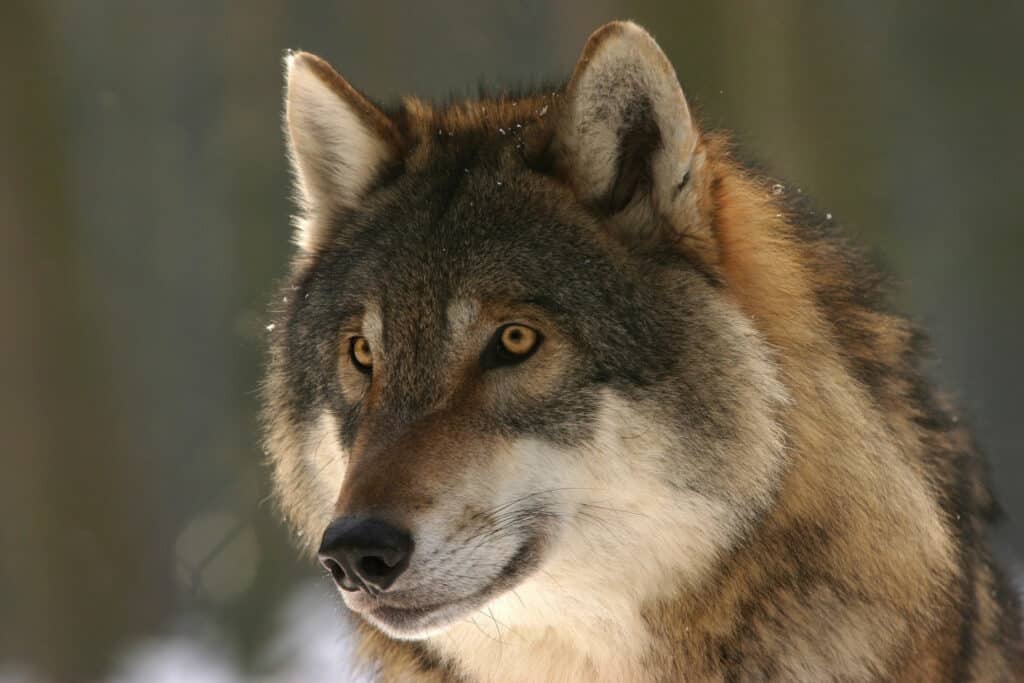
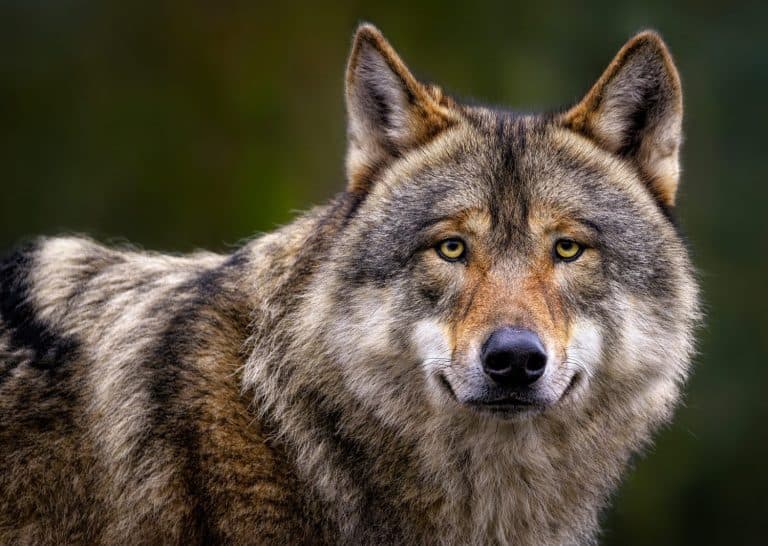
Wolves have a broader snout and smaller ears than coyotes.
©Next is nicer-K-R7/Shutterstock.com
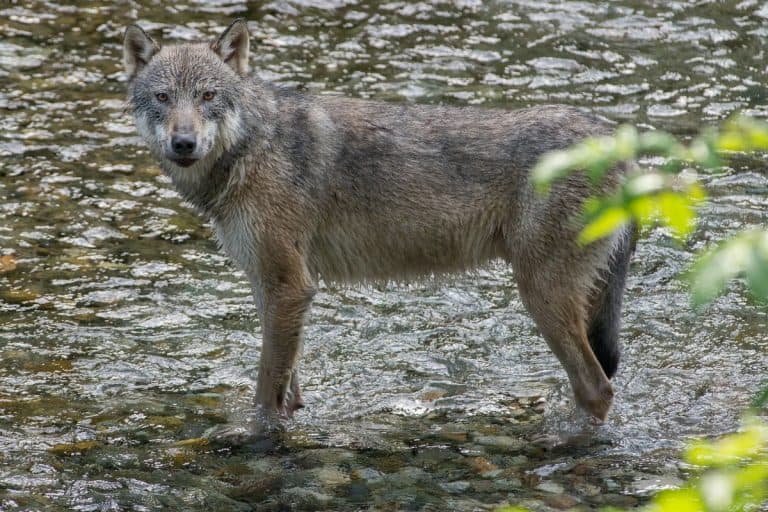
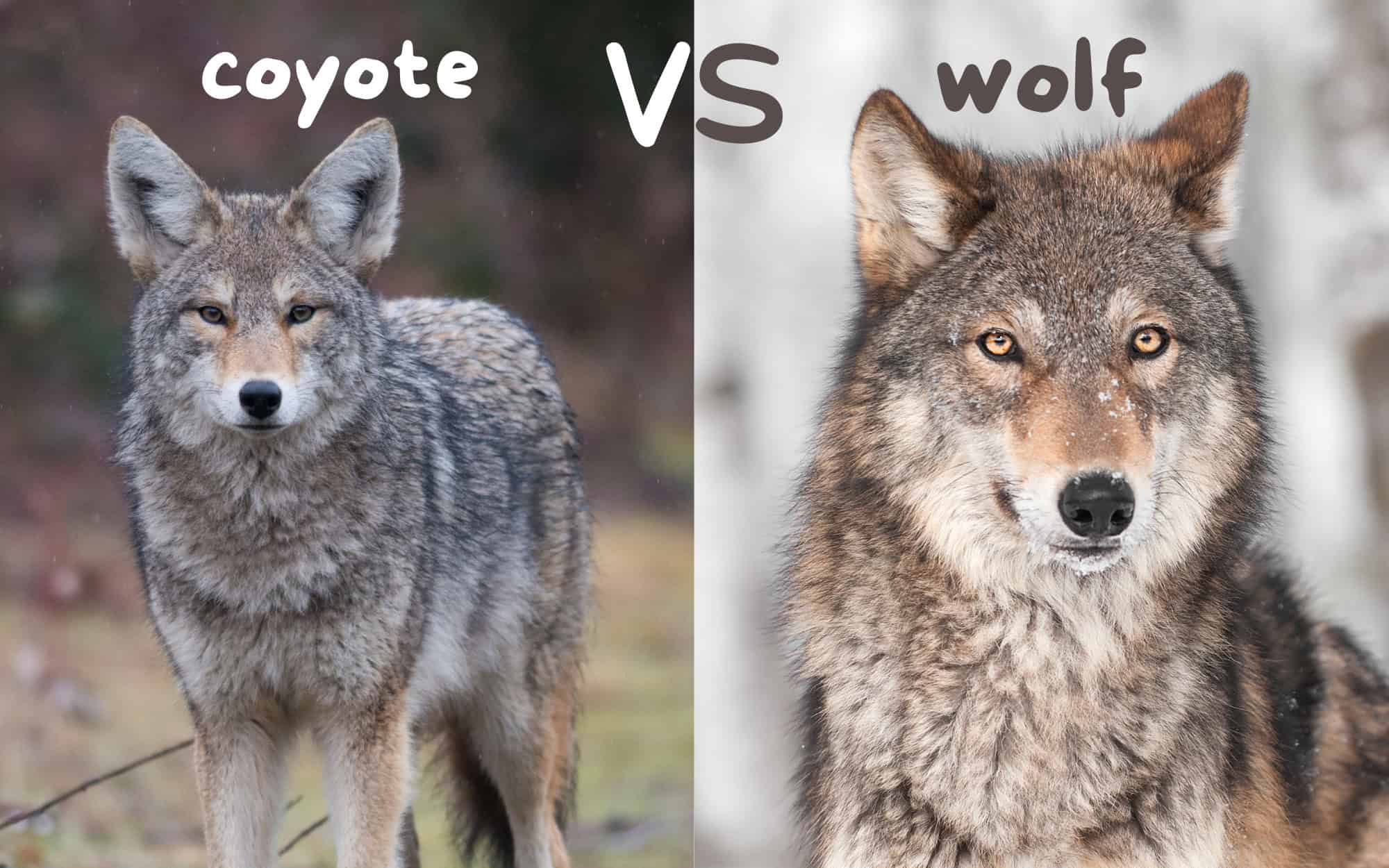
Size isn’t the only visible difference between coyotes and wolves, as it’s also possible to distinguish between them by looking at their faces, coats, and tails. Coyotes tend to be shades of gray or tan, but wolves can be a wider range of colors, including white, tan, gray, silver, and even black.
When looking at their faces head-on, coyotes tend to have a longer, narrower snout and long, pointed ears. In comparison, wolves have a shorter, broader snout and shorter, round-shaped ears. Finally, coyotes tend to run with their tail held down low, whereas wolves tend to hold their tail straight out behind them while they are running.
Distribution and Habitat
Although their range does overlap in North America, wolves and coyotes do have different distributions. Coyotes are only found in North America, where they live in a wide range of habitats, including near urban areas. In comparison, wolves inhabit areas of Asia, Europe, and North America. Red wolves are limited to only the eastern region of North Carolina, but gray wolves live in many other countries. Like coyotes, they are adaptable and live in a range of habitats, including deserts, mountains, and grasslands. However, they do tend to stay away from urban areas.
Social Behavior
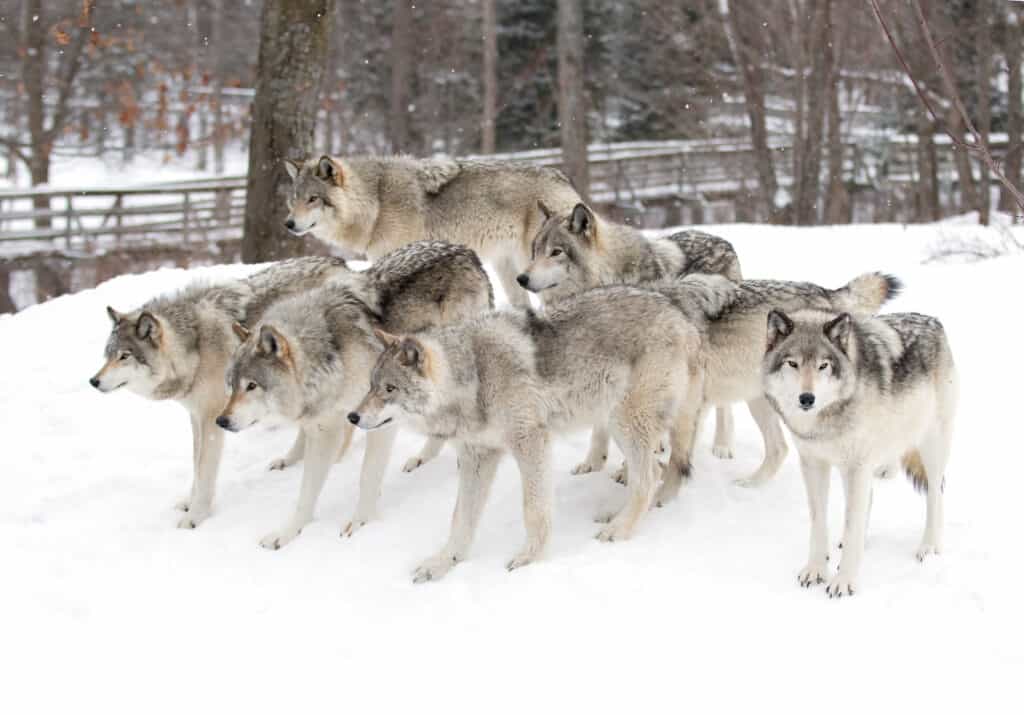
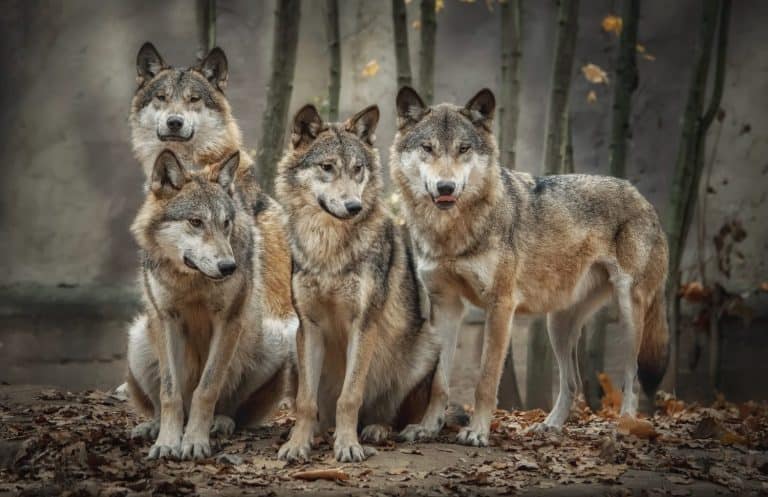
Wolves live in packs that have a strict ranking system.
©Jim Cumming/Shutterstock.com
One of the biggest differences between coyotes and wolves is how they behave. Wolves are famous for living in packs, which can consist of anything up to 30 individuals, although the average pack size is six to twelve wolves. A wolf pack is led by a dominant pair, and there’s a strict hierarchy within the pack, where each animal knows its place. The dominant pair, also known as the alphas, are the only ones that are allowed to breed within the pack and are the ones that decide where and when to hunt. Larger packs have a second pair, known as beta wolves, which are essentially the second-in-command to the alphas.
Other members of the pack are the subordinates who help to hunt, protect the pack, and look after the cubs. The lowest-ranking member of the pack is known as the omega wolf, which is responsible for preventing fights within the pack. The omega wolf is often the smallest wolf and ends up being the scapegoat, the one that the other wolves pick on instead of fighting amongst themselves.
Coyotes, on the other hand, live in much looser social groups. Some coyotes may be solitary, but most tend to live in small family groups consisting of a breeding pair and their offspring. Coyote packs don’t have the same cohesive social structure that a wolf pack has, and offspring will eventually move away in search of their own mate when they are old enough.
Diet and Hunting Behavior
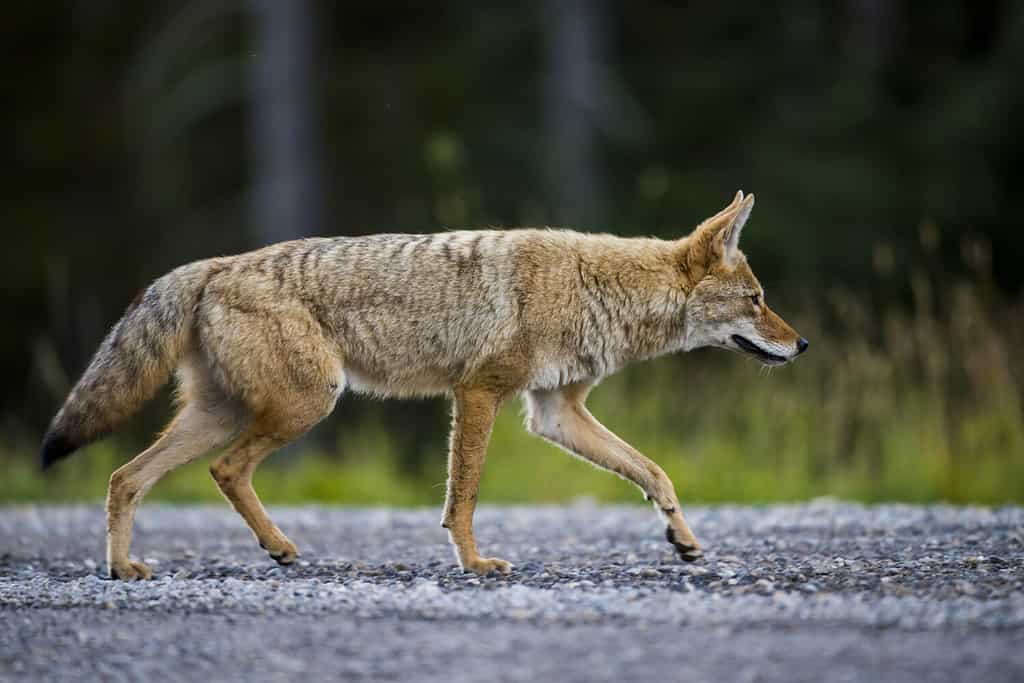
Coyotes are ambush predators and mainly hunt alone.
©BGSmith/Shutterstock.com
The family structure of wolf and coyote packs also has a knock-on effect on their hunting behavior and their diet. Coyotes are ambush predators and mainly hunt alone or in pairs. Coyotes prey mainly on small mammals such as rodents, rabbits, hares, and small deer. They also prey on birds and sometimes on amphibians and insects.
Wolves are cursorial predators, which means that they hunt their prey over a long distance, relying on their endurance so they can keep up the chase and outlast and outrun their prey. As wolves live and hunt in packs, they are able to prey on much larger animals than coyotes. A pack of wolves can work together to bring down larger prey. Although individual wolves and the smaller red wolf species will hunt smaller prey, gray wolves predominantly hunt larger mammals, such as deer, elk, and moose.
Vocalization
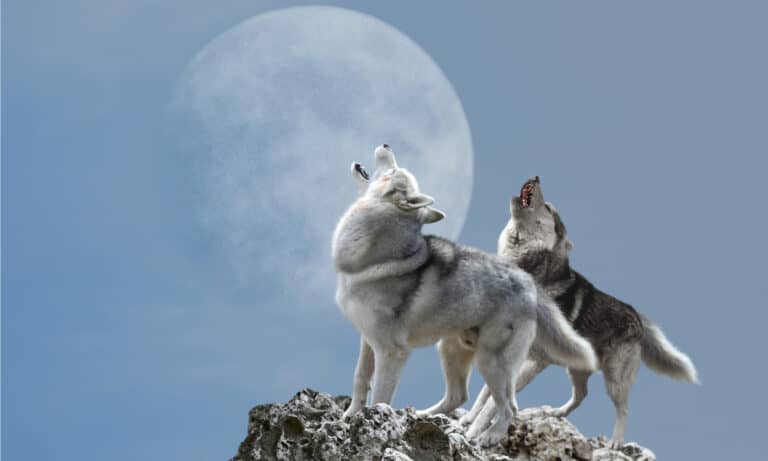
The sound of a wolf howling is one of the most chilling sounds that you might hear. Wolves tend to produce low-pitched sounds, including that long, drawn-out howl that they’re famous for. They also produce low-pitched barks and growls. However, coyotes sound very different, producing much higher-pitched vocalizations. Coyotes do howl, but their sound is typically shorter and not as drawn out as that of a wolf. They also produce high-pitched yaps, yelps, and barks.
Tracks
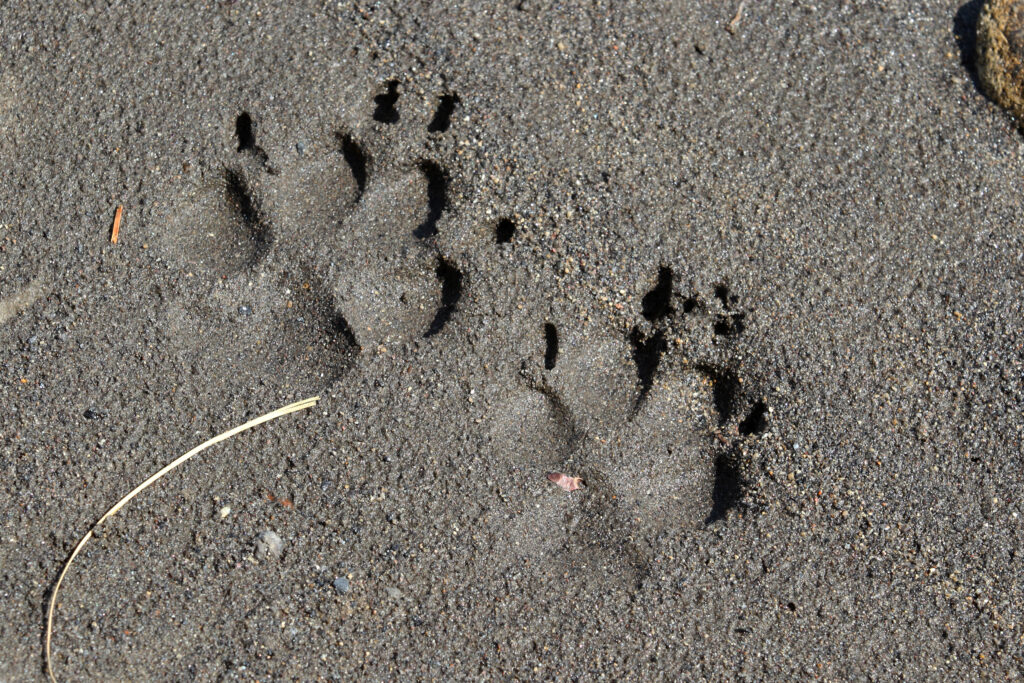
Wolf tracks have a rounded appearance compared to a coyote’s.
©Dennis W Donohue/Shutterstock.com
Determining the tracks of any animal can be challenging, but luckily, coyote and wolf tracks can be distinguished by looking at their size. As coyotes are smaller animals, they leave smaller footprints. Coyote tracks are typically around 2.5 inches long and one to 2.5 inches wide. They also have an oval-shaped appearance. In comparison, wolf tracks are much bigger, being approximately four to 5.5 inches long and three to five inches wide. Wolf tracks also tend to have a more rounded appearance than coyote tracks.