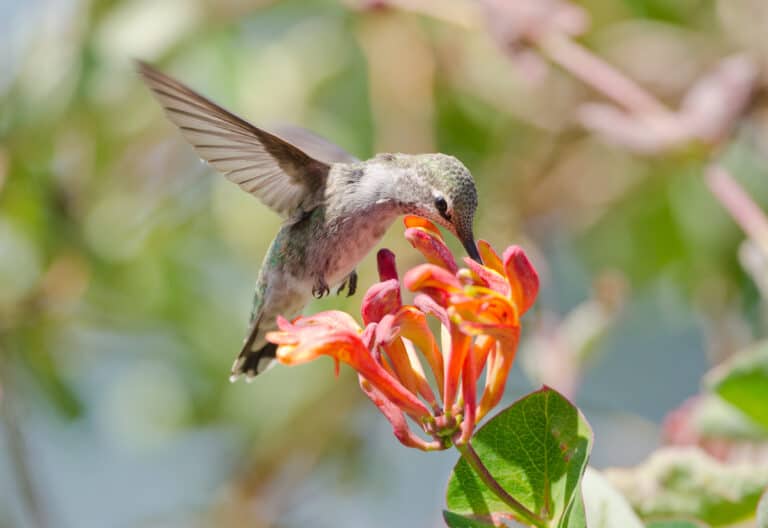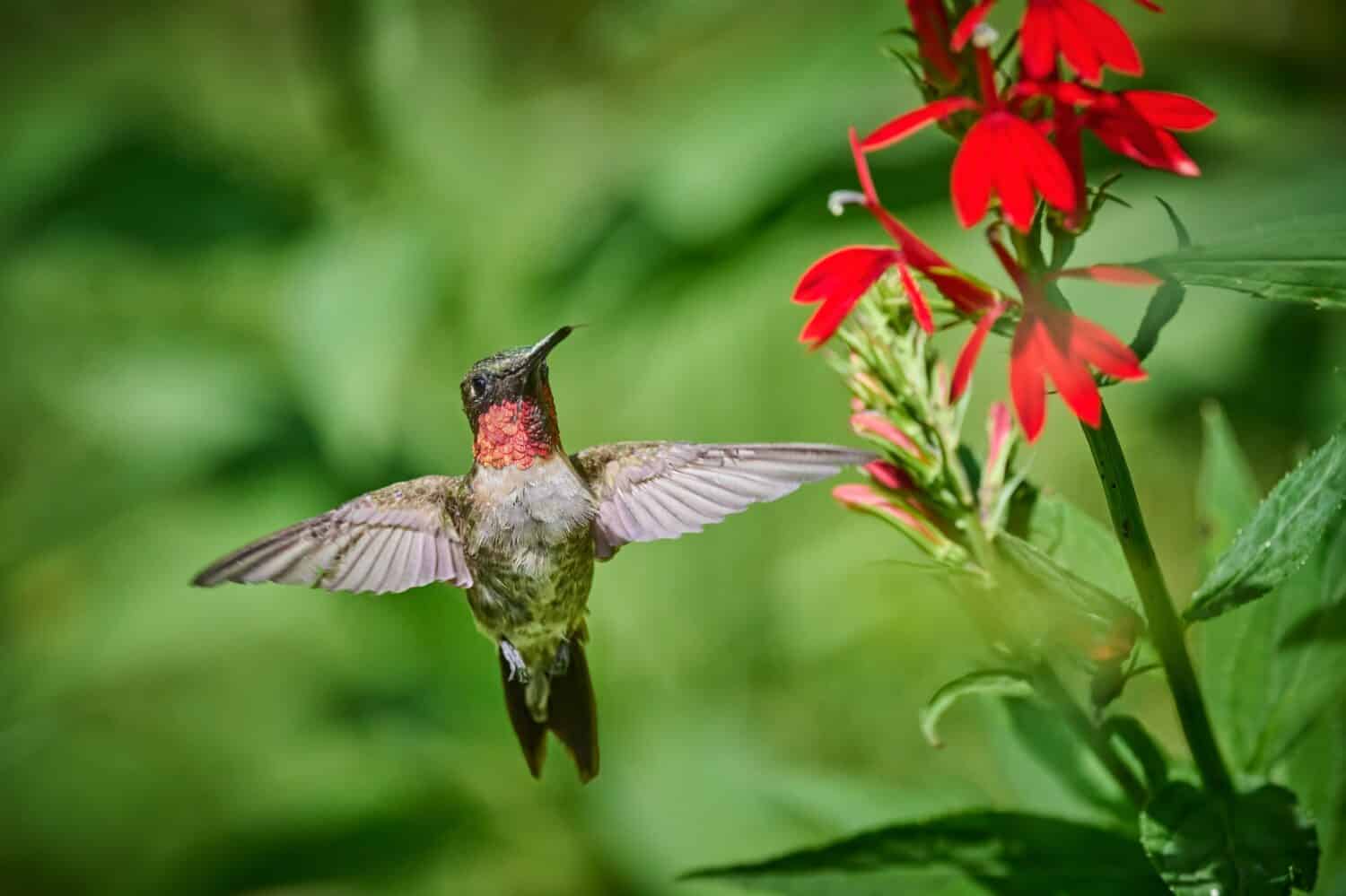

Quick Take
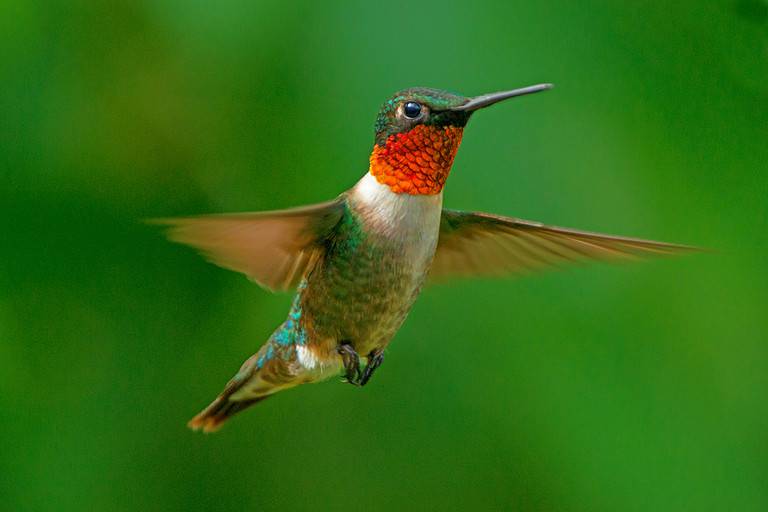
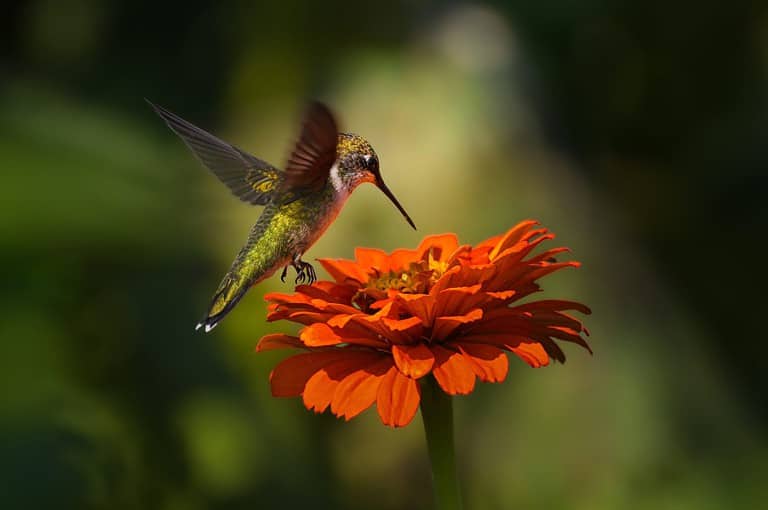
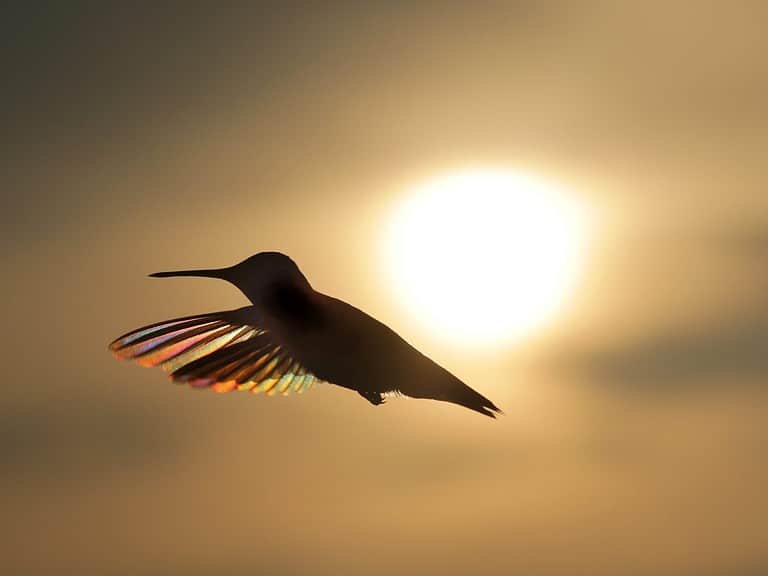
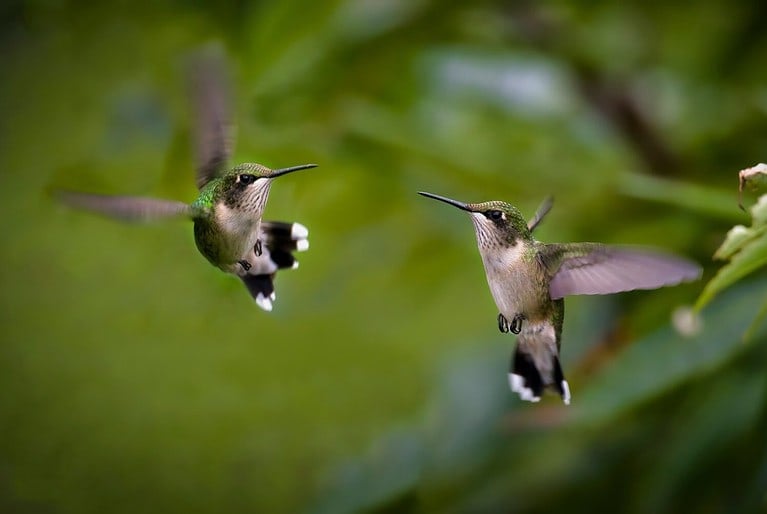
- One of Ohio's seven hummingbird species made its first-ever recorded appearance in the state as recently as 2020, and it's not the one you'd expect. Meet Ohio's 2020 newcomer →
- Ohio's only common hummingbird species crosses the Gulf of Mexico nonstop to reach your backyard, and specific plants can dramatically boost your chances of seeing one. Ohio's common hummingbird explained →
- One hummingbird on this list holds the title of smallest native bird in all of North America, and yet it migrates farther than most birds twice its size. North America's smallest bird →
- The most aggressive hummingbird on this list will actively attack and drive off other species, and it occasionally shows up in Ohio during the last season you would expect. Ohio's aggressive winter visitor →
If you live in Ohio and you love hummingbirds, you just might be in luck. The state boasts seven different species, although most of them are uncommon or even downright rare. In some cases, only one or two individuals have ever been spotted in Ohio. Luckily, the most common Ohio species, the ruby-throated hummingbird, can be found across the state. Your best bet for attracting a hummingbird to your backyard is to know when each species is active and what plants they prefer.
1. Black-Chinned Hummingbird (Archilochus alexandri)
The first reported sighting of the black-chinned hummingbird in Ohio occurred as recently as 2020. This species’ typical territory lies in the western United States and Mexico, but individuals occasionally find their way into other states. In terms of habitat, it prefers semi-arid regions, mountains, river groves, and urban areas. Because this bird is so rare in Ohio, it’s difficult to predict where to spot one, though it may appear during the spring or fall if it loses its way while migrating.
Black-chinned hummingbirds feed from a variety of brightly-colored, scented flowers on trees, herbs, and shrubs. These include desert ocotillo (Fouquieria splendens), scarlet larkspur (Delphinium cardinale), and tree tobacco (Nicotiana glauca). However, these plants are native to the southwestern U.S. and California. They also visit feeders for sugar water.
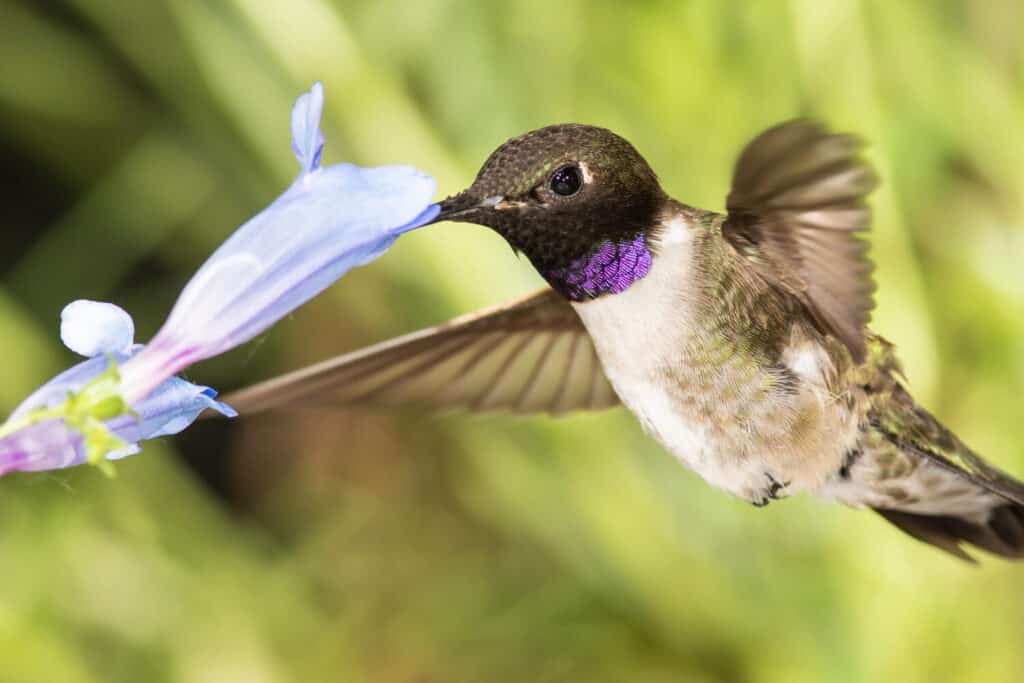
The black-chinned hummingbird was first spotted in Ohio in 2020.
©rck_953/Shutterstock.com
- Appearance (male): Black head, purple collar, mix of grey/white/light brown on body with faint green
- Appearance (female): Golden-green, brown-tipped wings, grey-white breast
- Length: 3.5 to 4.3 inches
- Wingspan: 4.7 to 5.5 inches
2. Ruby-Throated Hummingbird (Archilochus colubris)
The ruby-throated hummingbird is the most common species of hummingbird in Ohio. In spring, these birds migrate from Mexico and Central America to the eastern United States, often flying over the Gulf of Mexico without stopping. They typically arrive in Ohio in April or May and leave sometime in September. These hummingbirds can be found throughout the state. Their preferred habitats include open woods, fields, and urban areas.
This species prefers to feed from tubular flowers like the trumpet creeper (Campsis radicans). Other favorites include the trumpet honeysuckle (Lonicera sempervirens), cardinal flower (Lobelia cardinalis), and scarlet beebalm (Monarda didyma), all of which are either native to the state or can be grown there. Sugar water is also a surefire way to attract it to backyard feeders.
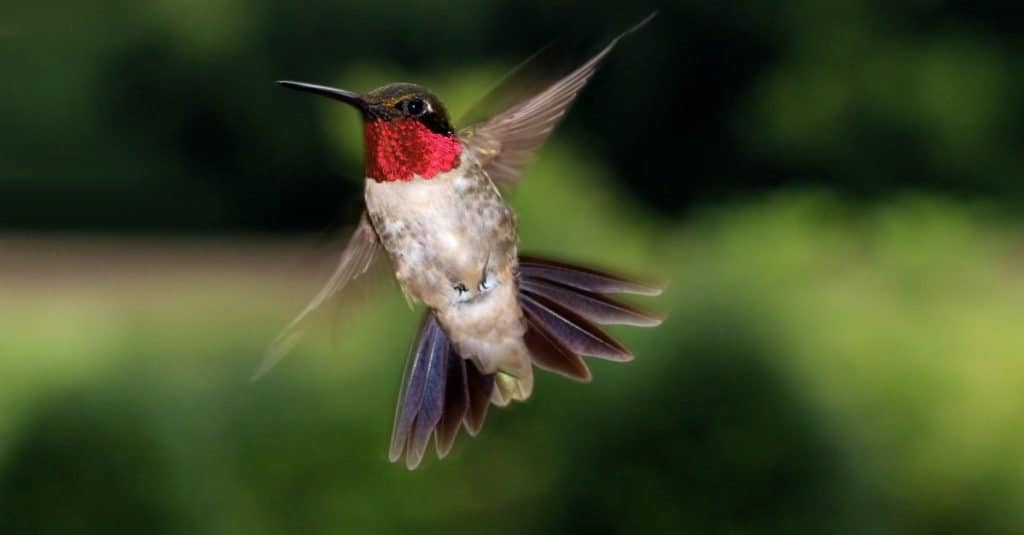
The ruby-throated hummingbird is the most common hummingbird species in Ohio.
©Ramona Edwards/Shutterstock.com
- Appearance (male): Emerald green head and back, white belly, ruby-red throat
- Appearance (female): Emerald green head and back, white belly
- Length: 2.8 to 3.5 inches
- Wingspan: 3.1 to 4.3 inches
3. Anna’s Hummingbird (Calypte anna)
Anna’s hummingbird typically remains in a handful of western U.S. states like Washington and California. However, it occasionally appears along Ohio’s western edge during the winter months. It prefers open woods, meadows, chaparral, and urban areas with parks and gardens.
Like many other hummingbirds, Anna’s hummingbird tends to choose red, tubular flowers with very sugary nectar. Some favorite flowers include desert willow (Chilopsis linearis), fuchsia-flowered gooseberry (Ribes speciosum), red-hot-poker (Tritoma), California fuchsia (Zauschneria californica), hummingbird sage (Salvia spathacea), and eucalyptus. These plants are not native to Ohio, although some, like red-hot-poker, can be grown there. These hummingbirds also love sugar water in feeders.
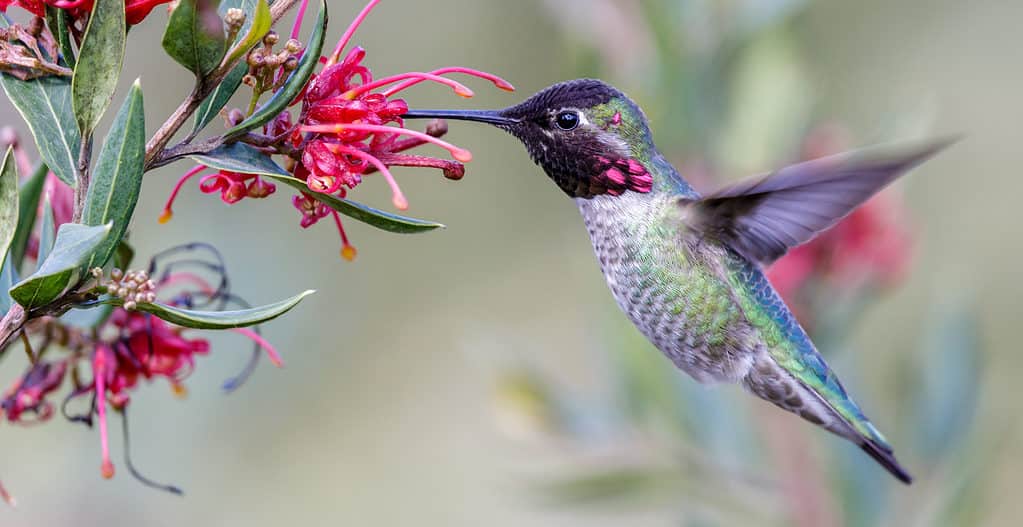
Like most other hummingbirds, Anna’s hummingbird prefers red, tubular flowers with sugary nectar.
©yhelfman/Shutterstock.com
- Appearance (male): Magenta head, greenish-grey body
- Appearance (female): Gold-green markings on sides and crown of head
- Length: 3.9 to 4.3 inches
- Wingspan: 4.7 inches
4. Mexican Violetear (Colibri thalassinus)
The Mexican violetear, formerly known as the green violetear, typically does not leave its usual range in Mexico and Central America. However, it occasionally appears in Ohio in the spring and summer months. It tends to hang around forest clearings and edges, though it sometimes ventures into backyards.
This species prefers brightly-colored flowers and nectar with a high sugar content. It gravitates toward flowers found on trees, shrubs, and epiphytes, including orchids and tillandsias. They particularly favor Salvia nectar. In Mexico, Mexican violetears are also known to feed on the honeydew left by scale insects infesting oak trees. Researchers note there is still much to learn about these hummingbirds, but like most hummingbirds, the Mexican violetear will also likely drink sugar water from feeders.
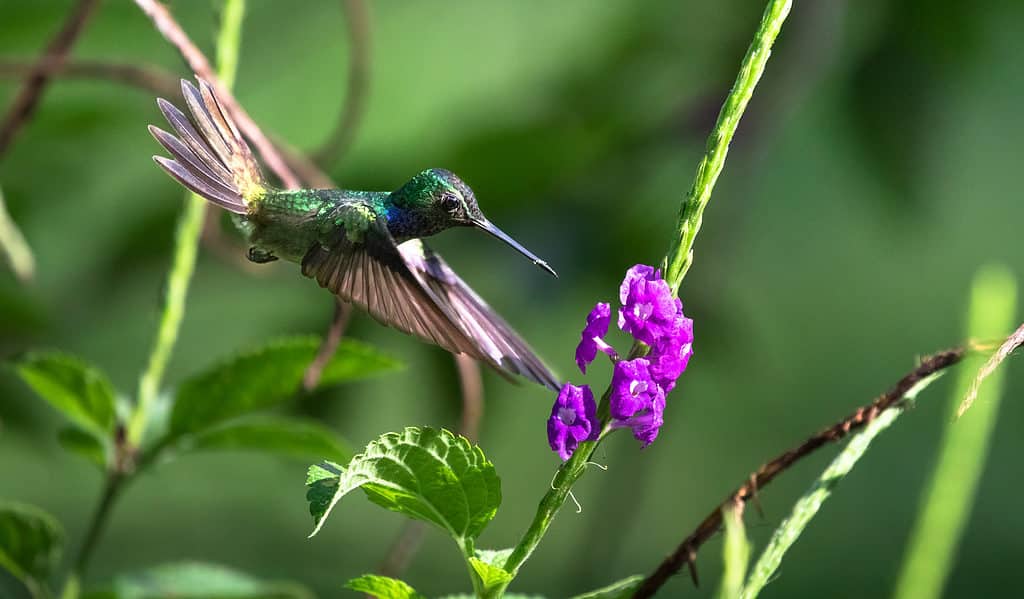
The Mexican violetear is an infrequent visitor to Ohio during the spring and summer.
©iStock.com/Kevin Wells
- Appearance (male): Iridescent green plumage, bluish-green tail, violet spots on cheeks and breast
- Appearance (female): Similar coloration but duller
- Length: 3.8 to 4.7 inches
- Wingspan: 4 to 5 inches
5. Calliope Hummingbird (Selasphorus calliope)
Despite being the smallest native bird in the United States and Canada, the calliope hummingbird migrates to the Pacific Northwest all the way from its wintering grounds in Mexico.. Its range typically does not include Ohio, but there have been a couple of sightings in the state. The most well-documented sighting occurred in Delaware County during late 2017. Because sightings are so rare, it is difficult to predict where or when the next one will be.
This species gravitates toward bright, tubular flowers with sugar-rich nectar. Some of their favorite flowers include red larkspur (Delphinium nudicaule), black sage (Salvia mellifera), Venus thistle (Cirsium occidentale var. venustum), coyote-mint (Monardella villosa), and bee plant (Scrophularia californica). Although these plants are not native to Ohio, calliope hummingbirds will drink sugar water from backyard feeders.
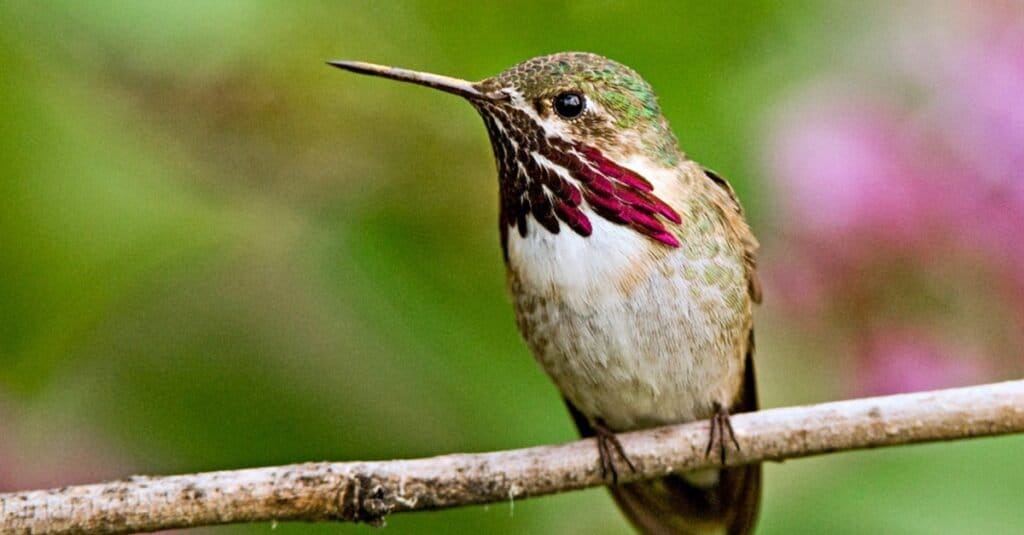
The calliope hummingbird is the smallest native bird in North America.
©MTKhaled mahmud/Shutterstock.com
- Appearance (male): White and light brown body, magenta throat
- Appearance (female): Green and bronze back, peach-tinged breast
- Length: About 3 inches
- Wingspan: 4.1 to 4.3 inches
6. Rufous Hummingbird (Selasphorus rufus)
The rufous hummingbird is an uncommon sight in Ohio, though lucky observers have sometimes spotted it during the fall and winter months. It frequents meadows, clearings, and urban areas with parks and gardens. Individuals often migrate over distances exceeding 3,000 miles.
This species is extremely territorial and aggressive, even for a hummingbird. It will drive off other other hummingbirds to protect what it sees as its feeding grounds. It tends to seek out red, tubular flowers with rich nectar. These include beardtongue (Penstemon), red columbine (Aquilegia canadensis), paintbrush flower (Castilleja), scarlet sage (Salvia splendens), and Gilia. Some of these plants are native to Ohio, such as some species of beardtongue and red columbine. Rufous hummingbirds will also drink from backyard feeders.
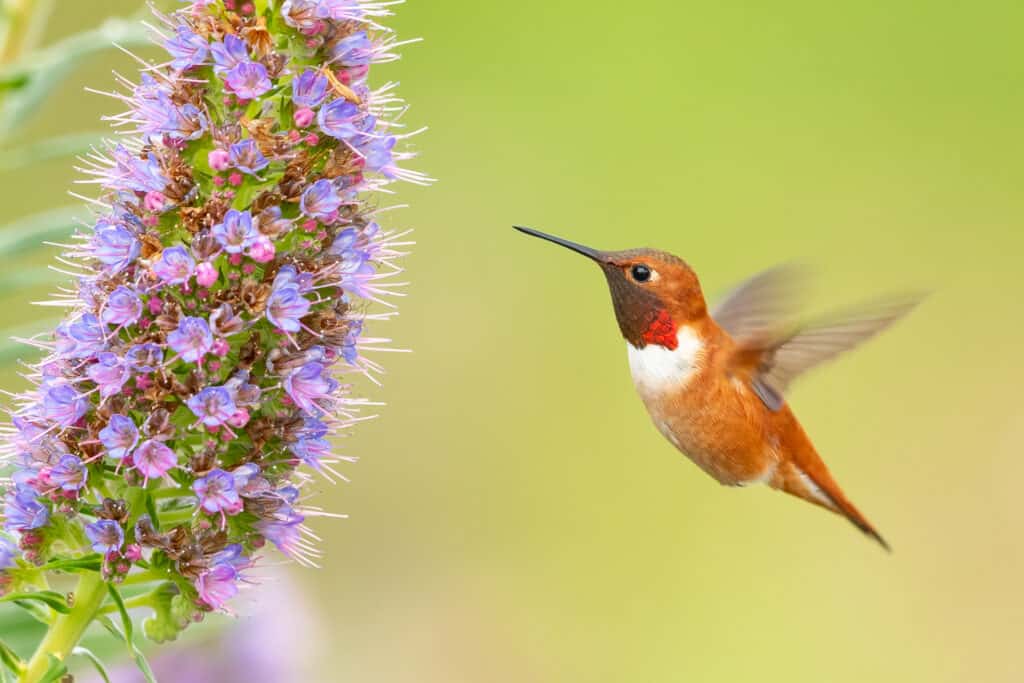
The rufous hummingbird occasionally appears in Ohio during the fall and winter months.
©Keneva Photography/Shutterstock.com
- Appearance (male): Brilliant orange body, orange-red throat, white patch on upper breast, rufous crown
- Appearance (female): Green crown and back, white-speckled throat with orange patch, rusty patches
- Length: 3.5 inches
- Wingspan: 4.3 to 4.5 inches
7. Allen’s Hummingbird (Selasphorus sasin)
Similar in appearance to the rufous hummingbird, Allen’s hummingbird is a rare, accidental visitor to Ohio. Sightings are so rare that a pattern is difficult to establish. The only recent, documented, committee accepted individual was seen in Madisonville (Cincinnati area) from November 10, 2021 through January 21, 2022.
In terms of food sources, this species prefers red, tubular flowers with rich nectar. Common favorites include beardtongue (Penstemon), red bush monkey-flower (Diplacus puniceus), red columbine (Aquilegia canadensis), paintbrush flower (Castilleja), scarlet sage (Salvia splendens), and tree tobacco (Nicotiana glauca). Most of its preferred flowers are native to the western U.S., but some species of beardtongue and red columbine are native to Ohio. This hummingbird has also been observed drinking sugar water from feeders.
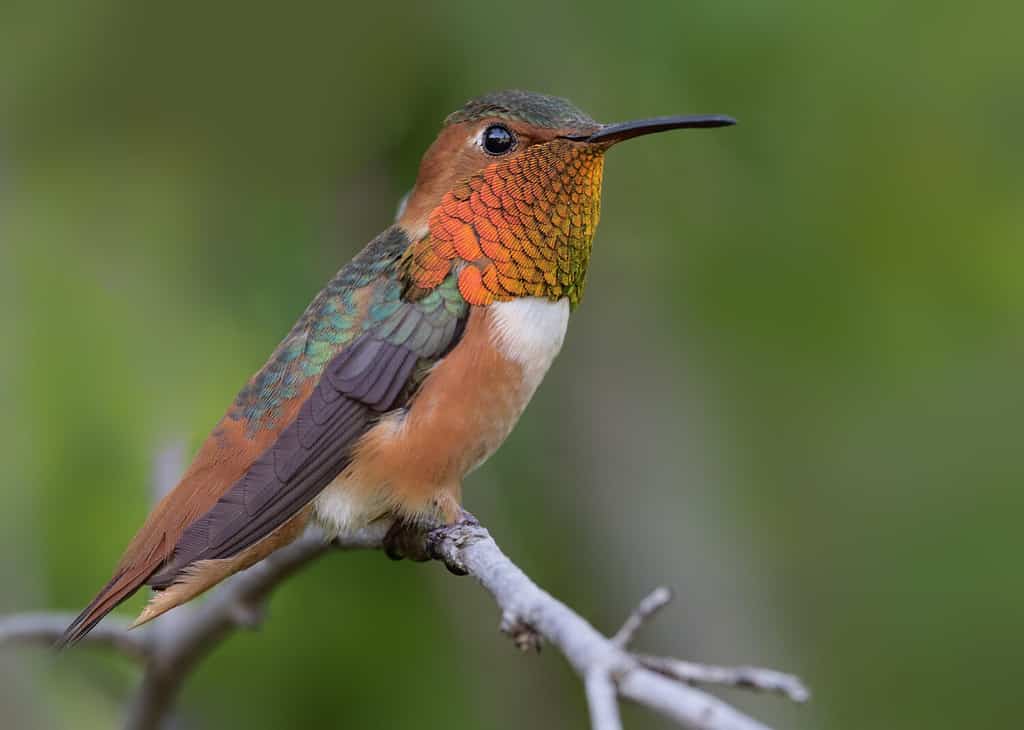
Allen’s hummingbird is extremely rare in Ohio.
©Angel DiBilio/Shutterstock.com
- Appearance (male): Orange plumage with green back, orange-red throat
- Appearance (female): Mossy green back, rusty sides, speckled throat
- Length: 3 to 3.5 inches
- Wingspan: 4.3 to 4.7 inches