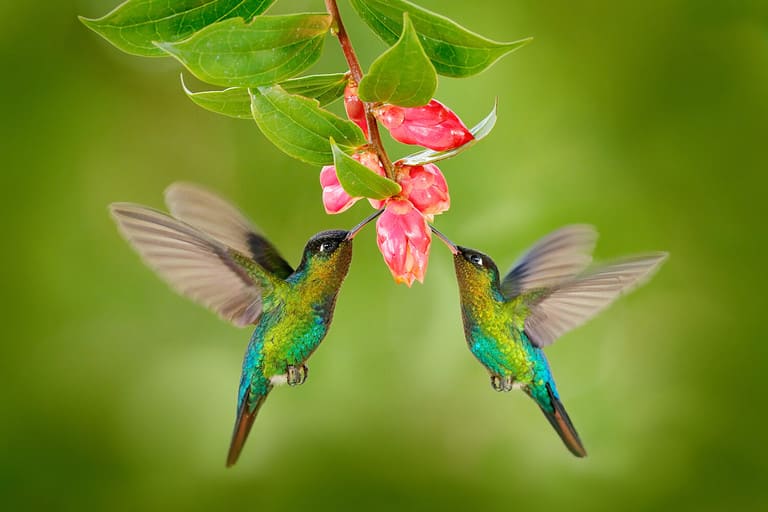
Hummingbirds have a beautiful and delicate appearance. However, despite their gentle look, they are fierce competitors, constantly fighting for access to flower nectar. This video by BBC Earth looks into how different hummingbird species use their adaptations to their advantage when competing for nectar. Read below to learn more about the ways hummingbirds compete.

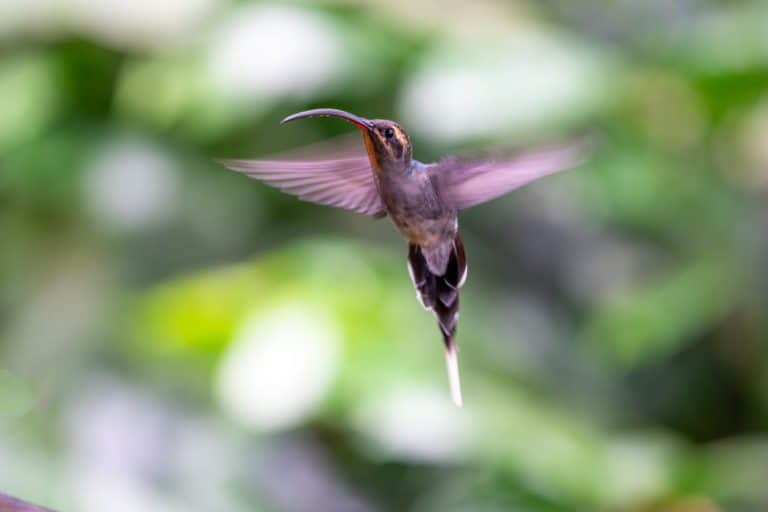
Hummingbirds have very high metabolisms.
©https://owendeutsch.com/ – Original
Fighting Over Nectar
Hummingbirds are always in a competition for nectar, and for an important reason as well. Given the speed at which they beat their wings, roughly 50 to 80 times per second, they have incredibly high metabolisms. To maintain their body weight, they may consume up to half their body weight in nectar each day. As most flowers have a limited amount of nectar each day, and those with high nectar volumes are rare, hummingbirds are constantly racing to fight for the same high-yielding flowers. Access to the best nectar is not just about staying full; it also often leads to better chances for courtship, mating, and defending territory. This makes it important that a hummingbird knows how to fight for the flowers it wishes to eat from.

Hummingbirds compete with each other for nectar.
©Jose Mauro Costa Monteiro/Shutterstock.com
How Do Hummingbirds Compete?
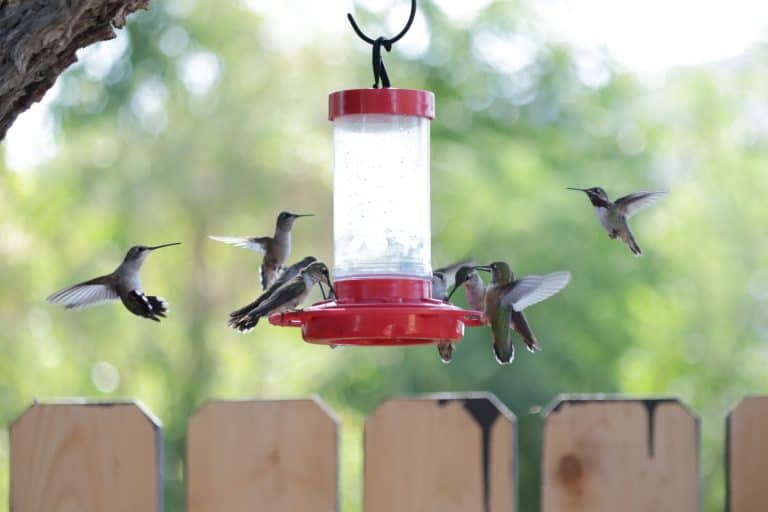
Hummingbirds compete for nectar in a few ways, with some variation between species as well. There are three main modes of competition: territory defense, trap-lining, and aggression. Territorial defense means that members of a hummingbird species will act as a patrol, almost defending a flower from other hummingbirds. This mode provides constant access to the nectar of a high-yielding flower, perfect for a hummingbird with access to it. Trap-lining refers to a set route that a hummingbird follows every day, ensuring it visits the same flowers. Following the same route ensures that nectar is consistently collected, reducing energy spent on fighting against other hummingbirds as well. Lastly is aggression. Hummingbirds may chase, swoop at, or vocalize at one another, fighting until one bird yields.
The preferred methods of collecting nectar depend on the species. The ruby-throated hummingbird is an aggressive chaser, defending flowers from intruders. Having a constant source of nectar means that they can confidently expend energy while defending. Similarly, the rufous hummingbird is extremely aggressive, with males aggressively defending individual feeding territories and chasing away intruders. On the other hand, the sword-billed hummingbird takes a more passive approach due to its unique evolution. Its bill is longer than those of other species, allowing it to collect nectar from flowers that other hummingbirds cannot reach. This allows them to reduce energy expended on aggression or defending, meaning they may not have to visit as many flowers per day. These are all amazing examples of how hummingbirds’ different evolutionary paths have resulted in the competition we see today.