
Quick Take
- More than 360 species of hummingbirds exist worldwide, but fewer than 20 migrate into and out of the United States and Canada each year.
- Some hummingbirds fly 500 miles nonstop across the Gulf of Mexico during spring migration.
- In the weeks before departure, hummingbirds can increase their body weight by up to 40% to fuel their journey.
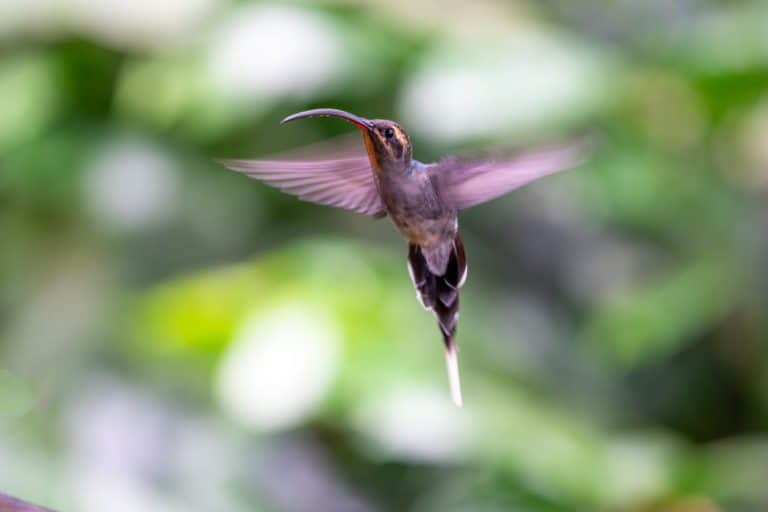
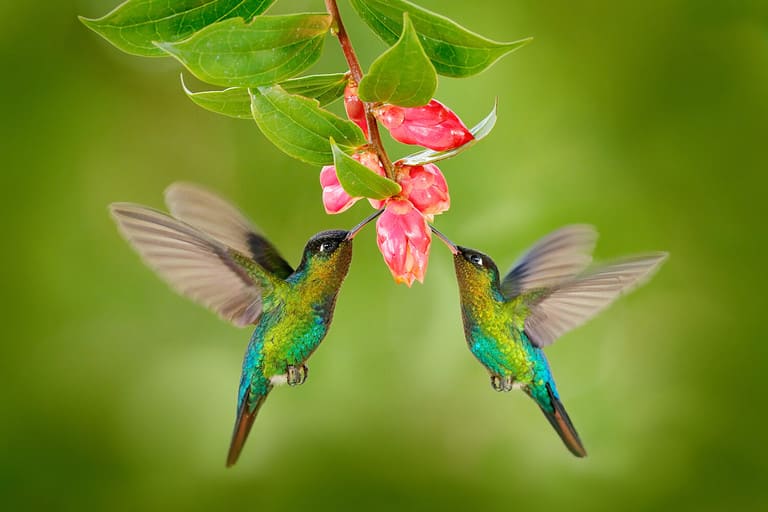
You’ve probably heard about geese, whales, and buffalo migrating due to extreme weather changes or to find food for their young. However, did you know that there is a tiny, five-inch traveler that also migrates? It’s the hummingbird! These tiny, feathered hummers get their name because they do just that: their wings “hum” as they beat anywhere from about 10 to 80 times per second, depending on the species. Yet they don’t just fly for a few miles. During peak migration flights, some species can cover several hundred miles in a single day. Let’s take a closer look at the amazing feats of hummingbird migration.

Why Do Hummingbirds Migrate?
When the weather begins to turn cooler, some hummingbird species begin long migrations from their northern breeding grounds in the U.S. to warmer wintering grounds in Central and South America.
While their northern breeding grounds provide ample food during the summer months, the fall and winter are too cold. Some species are not well-adapted for sub-freezing temperatures. Plus, there are fewer insects and flowers, and their sweet nectar disappears. Hummingbirds in northern regions migrate not only to escape the cold, but also to find food.
The Timing of Hummingbird Migration
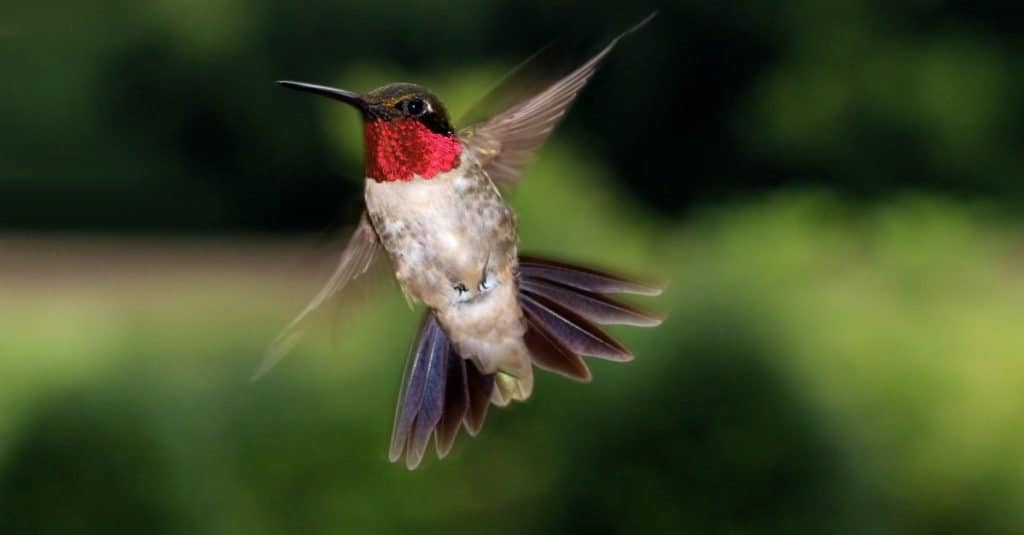
Ruby-throated hummingbirds are one of roughly 15 to 20 species that migrate into and out of the United States and Canada.
©Ramona Edwards/Shutterstock.com
Of the over 300 species of hummingbirds, fewer than 20 regularly migrate into and out of the U.S. and Canada. (However, many more migrate within Central and South America.) Some well-known hummingbirds that migrate include ruby-throated hummingbirds, Rufous hummingbirds, Allen’s hummingbirds, and black-chinned hummingbirds. What’s even more unusual is that those that do migrate travel individually, rather than in groups or flocks like other birds.
Most hummingbirds begin their southward migration from the United States to Central and South America between August and October. However, some may start as early as July, depending on the species and region. For their return to the U.S., they may begin their northward migration as early as late February or March, with arrivals in the southern United States starting in March and reaching northern areas by April or May. When they arrive at their breeding grounds in the U.S. and Canada, they not only find a mate, but also that their tasty meals of nectar and bugs are in abundance once again.
How Far Do Hummingbirds Migrate?
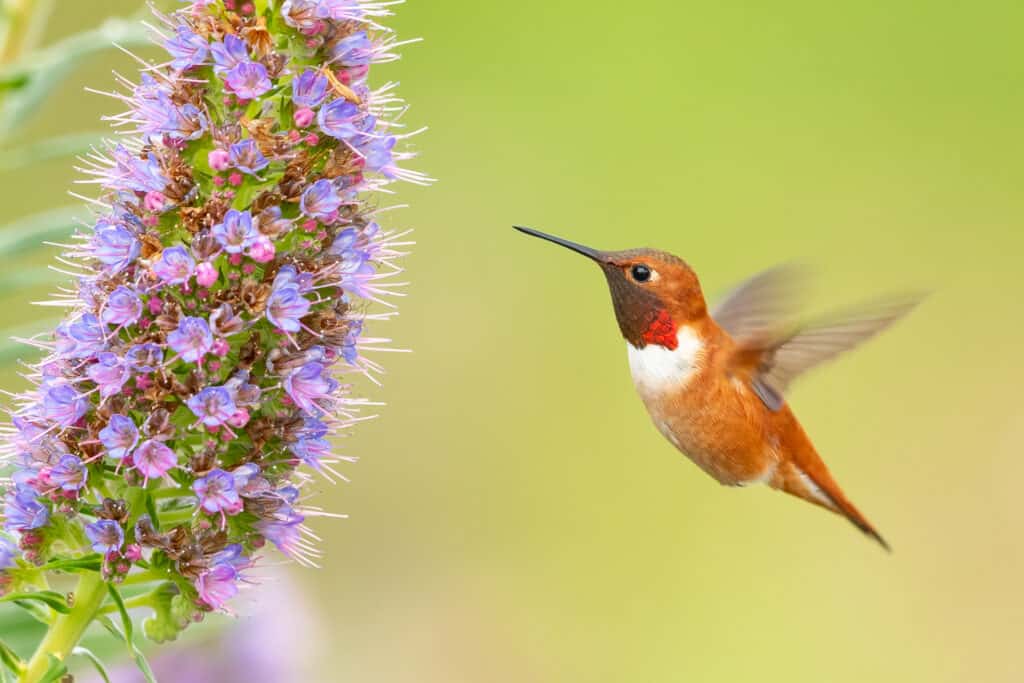
Some hummingbirds migrate thousands of miles to warmer regions where there is plenty of food.
©Keneva Photography/Shutterstock.com
Some hummingbirds do not migrate too far for winter, while others may travel thousands of miles during a single migration. Although hummingbirds are only five inches long or less, depending on the species, many can fly at speeds over 25 miles per hour. However, even at that speed, fall migration still takes quite a while. Some hummingbirds will migrate for 50 days or more before they reach their final destination.
Rufous hummingbirds may travel roughly 3,000 miles or more each year, flying from Alaska and western Canada down to Mexico. This is quite a journey, considering these small birds are only three inches long and must fly over the towering Rocky Mountains during their migration. Calliope hummingbirds migrate from Canada and the northwestern United States to Mexico, flying for over 2,000 miles each way.
Ruby-throated hummingbirds may travel more than 2,000 miles each season, breeding as far north as Canada and wintering in Mexico and Central America, including Panama. Rather than flying along the shoreline, these bold birds often migrate across the open water of the Gulf of Mexico, sometimes flying 500 miles without taking a break. Others make temporary pit stops on boats and oil rigs to catch their breath. Older birds typically begin their migration earlier in the season. Their stopovers usually take less time than those of younger birds, and they arrive in better shape.
How Hummingbirds Prepare to Migrate
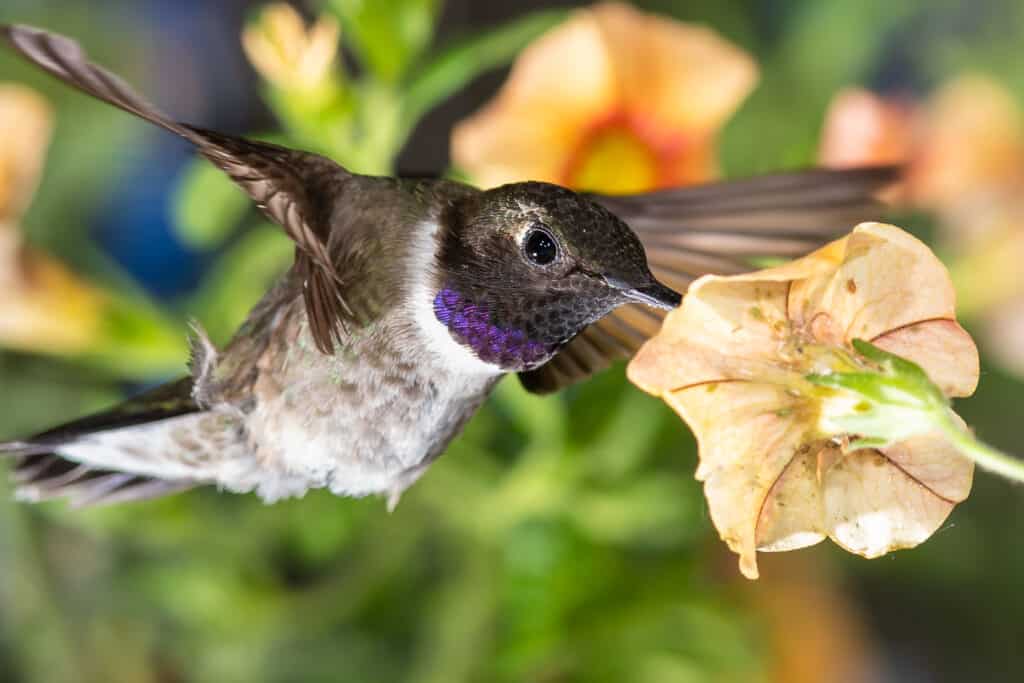
Hummingbirds need to eat approximately half of their own body weight every day in preparation for their migration.
©rck_953/Shutterstock.com
These incredible animals need a high level of fat in their diets to support them so they can fly long distances when the weather turns cool. Hummingbirds typically eat every 10-15 minutes, consuming half their body weight daily as they build the fat reserves they need for the trip. They need to eat many small insects and the nectar of many thousands of flowers each day to prepare. Some hummingbirds can increase their body weight by 25% to 40% — and occasionally even more — before migration to build fat reserves.
Hummingbirds generally have a super-fast metabolism, which is why they enjoy a diet rich in sugar-filled nectar. However, these birds do not tolerate cold weather well. In fact, there’s a phenomenon called “hypothermic torpor,” a trance-like state hummingbirds enter when temperatures start to drop, or there’s not enough to eat. During torpor, their body temperature can drop dramatically — sometimes falling close to the surrounding air temperature — allowing them to conserve significant energy overnight.
This condition conserves their energy, helping them to use just enough to stay warm. However, it usually only lasts overnight, so it can’t really be called “hibernation.” It’s simply a biological process that helps them to conserve energy and build up their fat stores as they prepare for migration.
When Can You See Hummingbirds?
In general, you are most likely to see hummingbirds in Canada and the United States from March through September, with some lingering into October in southern areas. Ruby-throated hummingbirds are much more common in the eastern half of the U.S., while black-chinned hummingbirds tend to favor the western half. Rufous hummingbirds can be seen in the Pacific Northwest. Costa’s hummingbirds seem to enjoy hot summers and desert areas in the southwest United States.
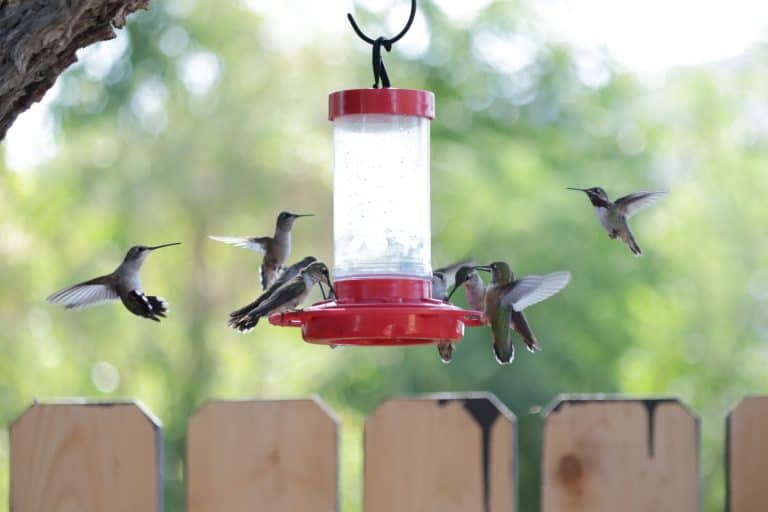
If you are in an area with hummingbirds, you can keep your hummingbird feeders full of fresh hummingbird nectar, even during winter months if you live in warmer areas. Don’t worry, this will not tempt migrating birds to stay too long, as their biological clocks signal when it’s time for the hummingbird migration. If you live in colder areas, you can maintain hummingbird feeders from early spring through late fall to help provide these tiny migrants with food as they prepare for winter travels.
Just be sure to keep your hummingbird feeder clean and replace nectar regularly so it doesn’t spoil and harm the birds. You can also plant flowers that attract hummingbirds to give them a natural food source. Flowers will provide your home with colorful blooms as well as entertaining hummingbird visitors to watch throughout the summer.