
Largemouth bass is one of the most fascinating fish found in Maryland. They are known to be fierce carnivores and will put up a huge fight when caught by anglers. But to discover the largest largemouth bass ever caught in Maryland, we need to dig into a variety of records. Continue reading to find out how big largemouth bass grow in Maryland and other interesting facts.
The Largest Bass Caught In Maryland
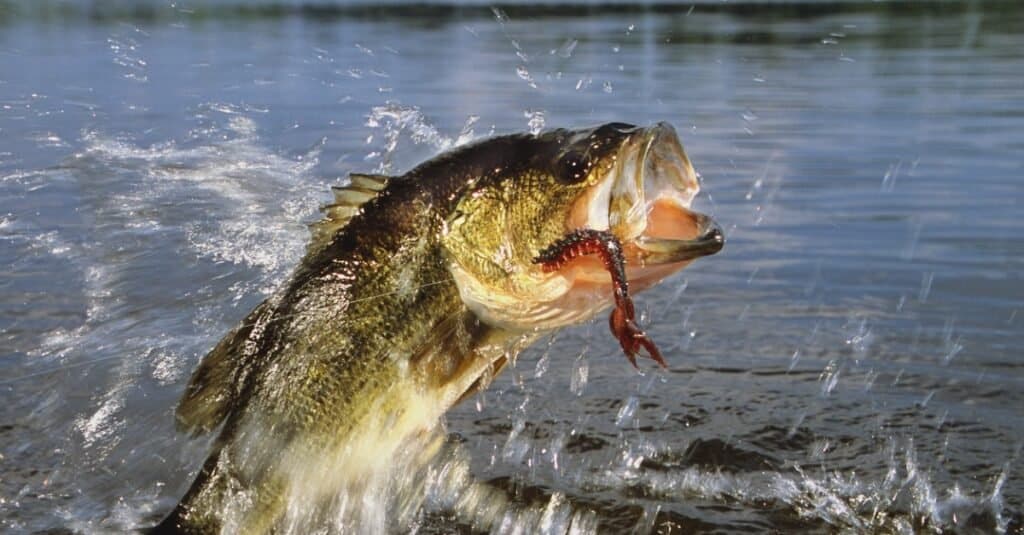
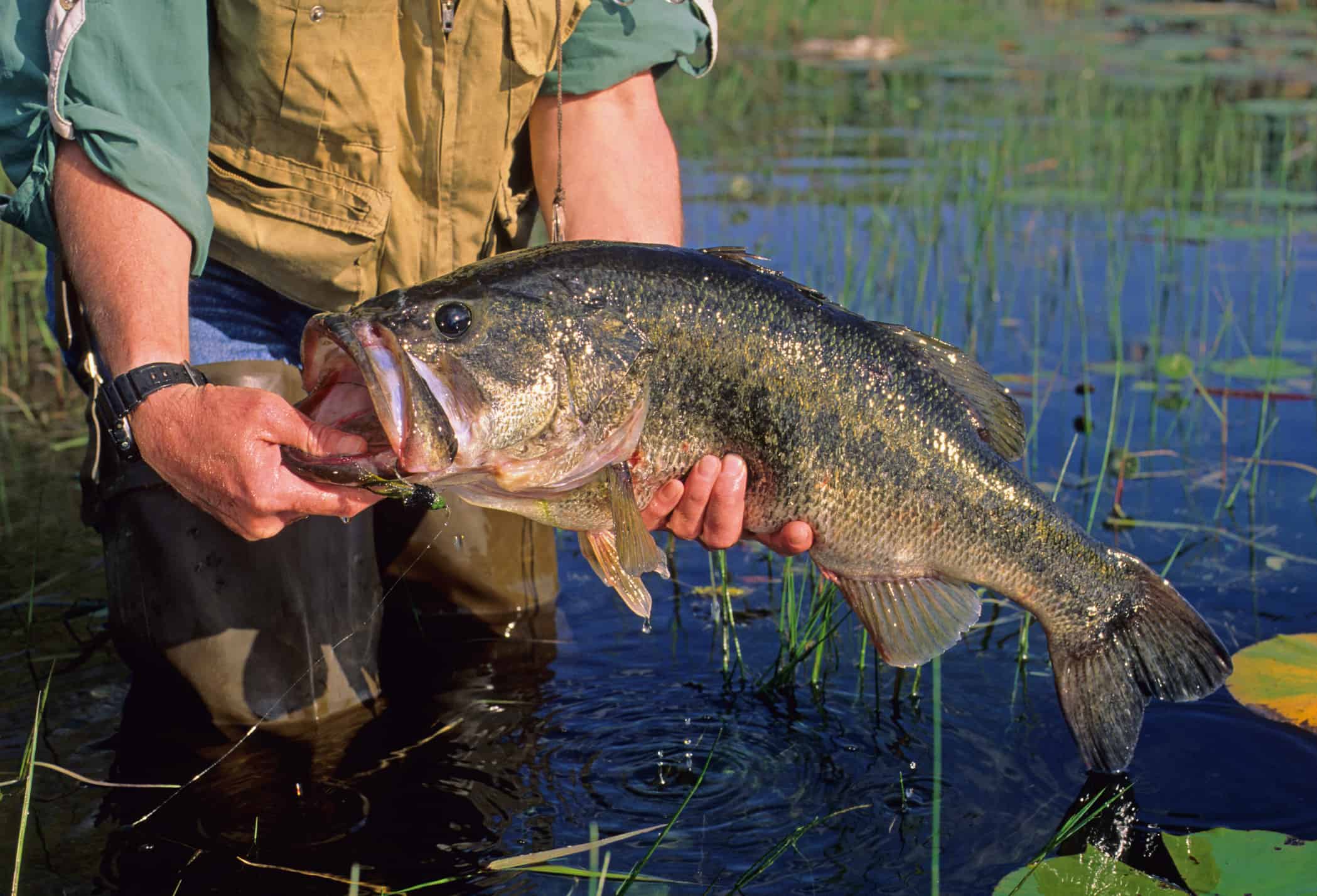
A largemouth bass was caught in Maryland that was 26 inches long.
©iStock.com/stammphoto
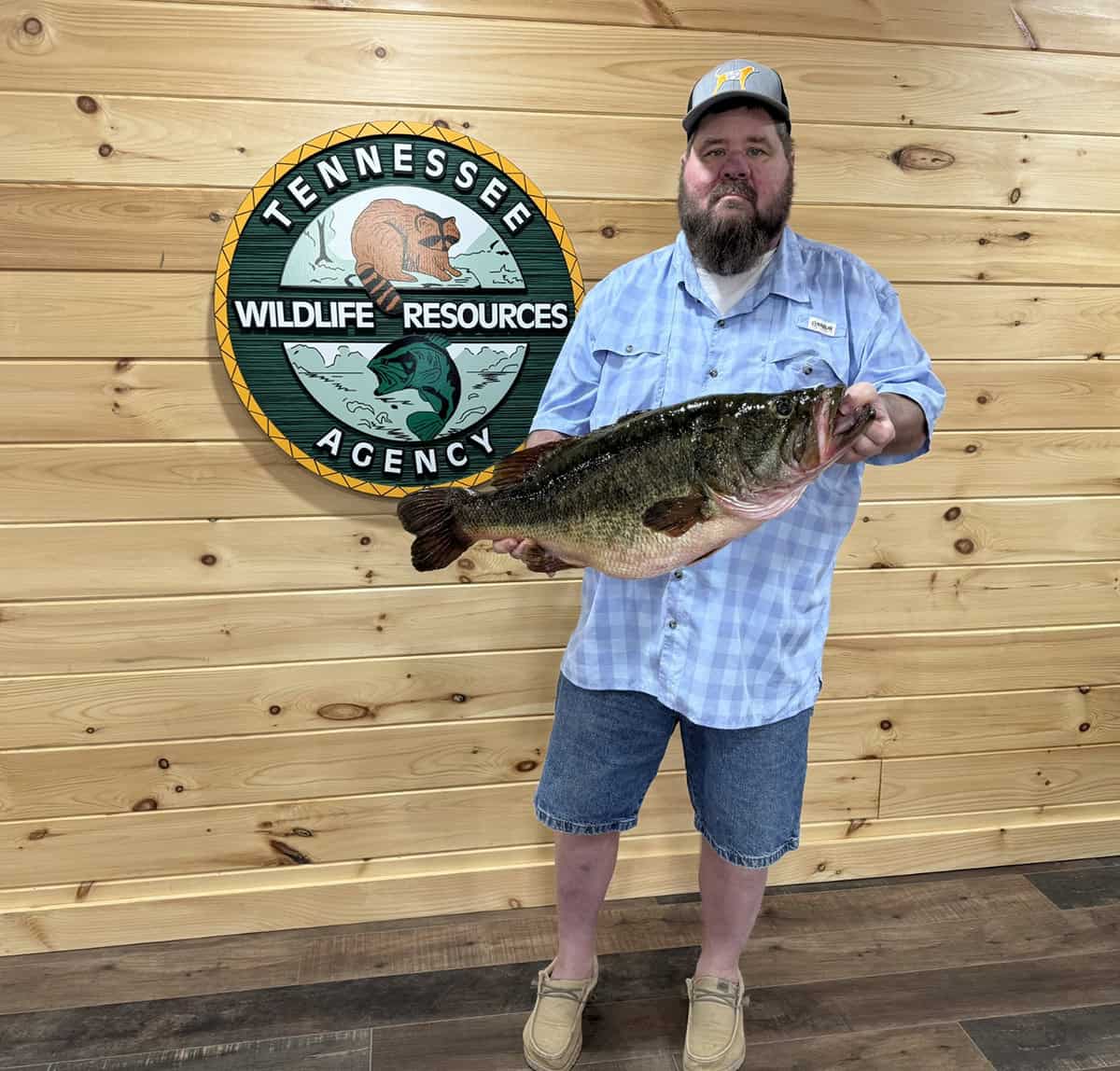
The largest largemouth bass caught in Maryland weighed 11 pounds, 6 ounces, and was 26 inches long, with a girth of 18 inches. On the 31st of July, 2013, 12-year-old Colton Lambert caught this huge largemouth bass. Colton was fishing at a pond in Huntingtown, Maryland when he caught the fish, not knowing he had set a record. The previous record had stood for 30 years, with that largemouth bass weighing 11 pounds, 2 ounces.
Colton and his father took the largemouth bass to Tyler’s Tackle in Chesapeake Beach, Maryland. Tyler’s Tackle is an Award Center for the Maryland Fishing Challenge and identified the largemouth bass as the new state record.
How Can You Recognise A Largemouth Bass?
As the name suggests, largemouth bass have a large mouth with their jaws extending from above their eye line down to below their body. Adult largemouth bass typically weigh between 1 and 5 pounds, although larger specimens can reach up to 10 pounds or more, and are 15 to 30 inches long.
Their bodies are usually green with a speckled pattern, with a lighter-colored belly. Their eyes are often either orange or brown, and another unique feature of largemouth bass is that their dorsal fins are separated.
Where Can You Find Largemouth Bass?
You will find largemouth bass in all bodies of water in Maryland. Whether freshwater or brackish or a combination of fresh and saltwater, you are likely to find largemouth bass living there. They prefer clear water in slow-moving rivers or streams with soft bottoms, so you will typically find them in the shallow areas of lakes.
Largemouth bass are native to the United States, but only in the central and eastern areas. This bass was introduced to the Chesapeake Bay area of Maryland in the middle of the 1800s and is found all over the Bay today.
What Does Largemouth Bass Eat?
The diets of largemouth bass differ between juveniles and adults. Juvenile largemouth bass have a diet that consists of small insects, scuds, baitfish, and shrimp. Adult largemouth bass prefer bigger prey to be a part of their diets.
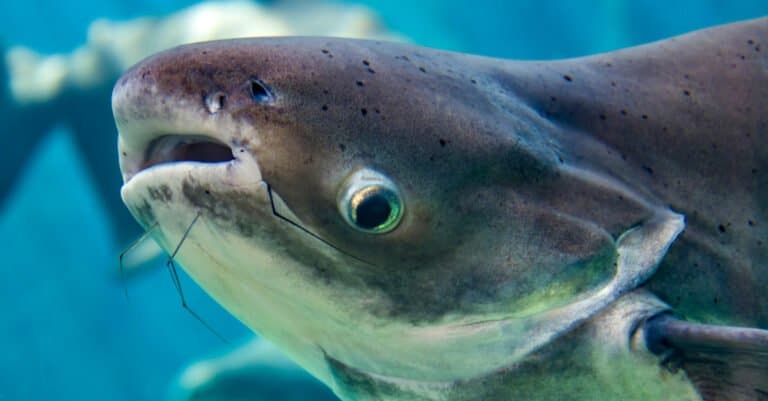
Their diets include shad, bluegill, crawfish, snails, snakes, frogs, small water birds, baby alligators, and lizards. Also, largemouth bass that live in lakes often eat younger fish, such as shad, yellow perch, shiners, trout, walleye, striped bass, and catfish.
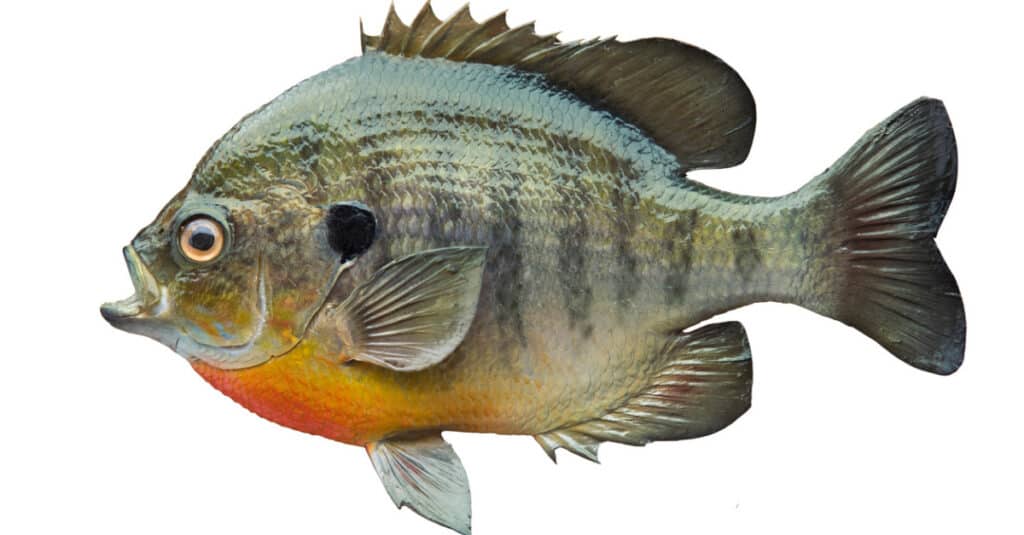
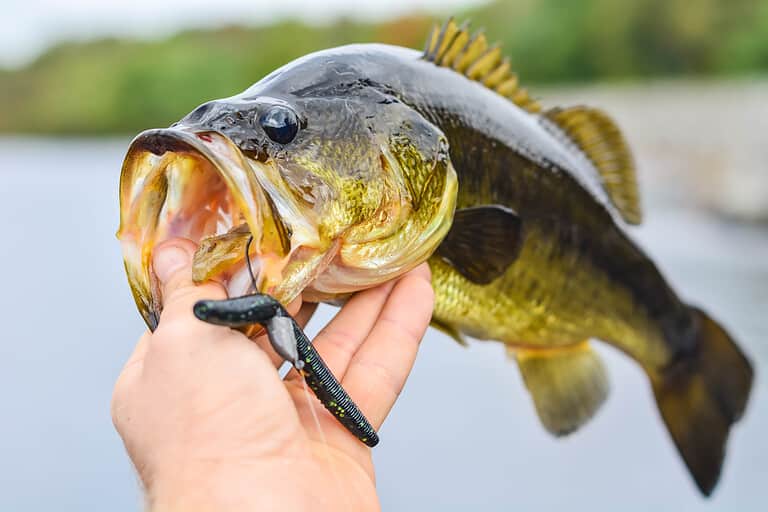
Largemouth bass eat bluegill, crawfish, baitfish, scuds, and small insects, among other foods.
©iStock.com/Willard
Fishing For Largemouth Bass
Largemouth bass are popular sports fish as they often put up a fight when caught on a light spinning tackle. This bass is known for leaping out of the water when fishermen catch them on tackle. They will shake their heads with gaping mouths to try and escape their fate. In addition, largemouth bass have a reputation for fighting back harder in warmer water than in cooler bodies of water.
If you want to catch a largemouth bass, it’s recommended to use live minnows, night crawlers, and a variety of artificial lures as bait. The best methods to fish for largemouth bass are fly-fishing bait casting, and bottom fishing.
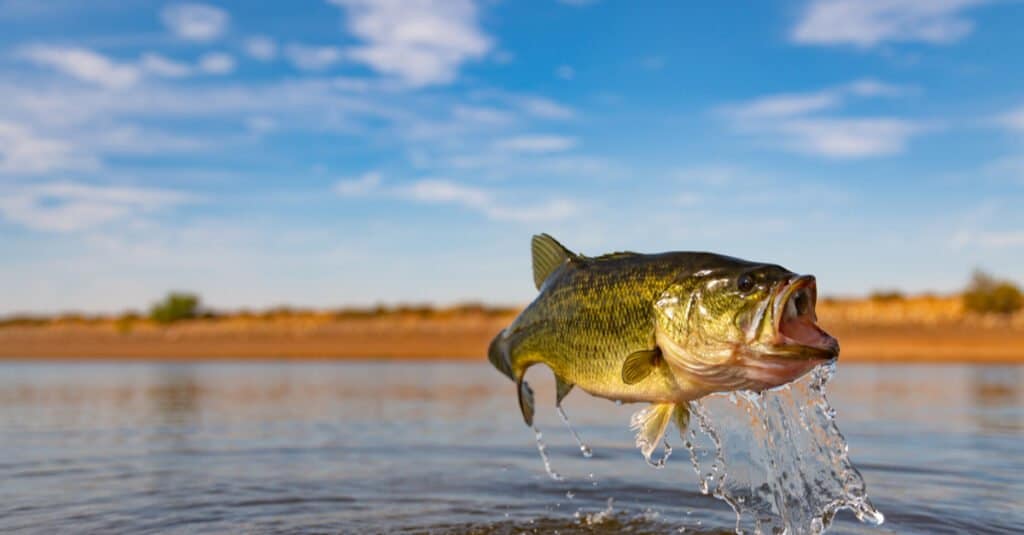
Popular lake fishing spots include Deep Creek, Jennings Randolph, Lake Habeeb, Liberty Lake, and Little Seneca.
©Ryno Botha/Shutterstock.com
If you want to fish for largemouth bass, you can find them in virtually any body of water in Maryland. If you are looking to fish for them in a lake, the most popular lakes filled with largemouth bass are:
- Deep Creek Lake
- Jennings Randolph Lake
- Lake Habeeb, Liberty Lake
- Little Seneca Lake
The Life Expectancy and Spawning of Largemouth Bass
Largemouth bass have a life expectancy of 10 to 15 years, with some living up to 25 years. Unsurprisingly, wild largemouth bass are known to live longer than their captive counterparts.
Largemouth bass spawn in the spring in water with a temperature of 54 to 64 degrees Fahrenheit. The male largemouth bass will build and guard the nest. The nests are often saucer-shaped, which they develop in shallow waters.
These fish build their nests on gravel but will sometimes also construct them on vegetation, roots, sand, mud, and rocks. Their eggs hatch within four to six days, and the larvae stay in schools while the male protects them for up to a month.
What Types of Bass Can You Find in Maryland?
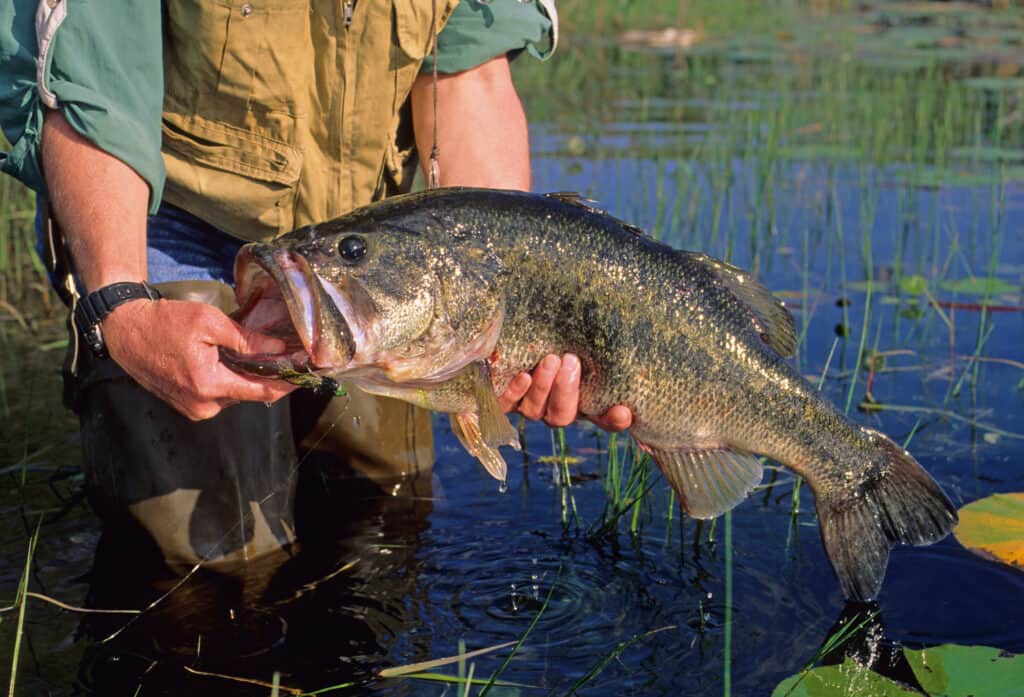
Trophy largemouth bass weighs over 10 pounds.
©iStock.com/stammphoto
According to the Maryland Manual, you can find four different types of bass in the state. These bass are:
- Largemouth Bass
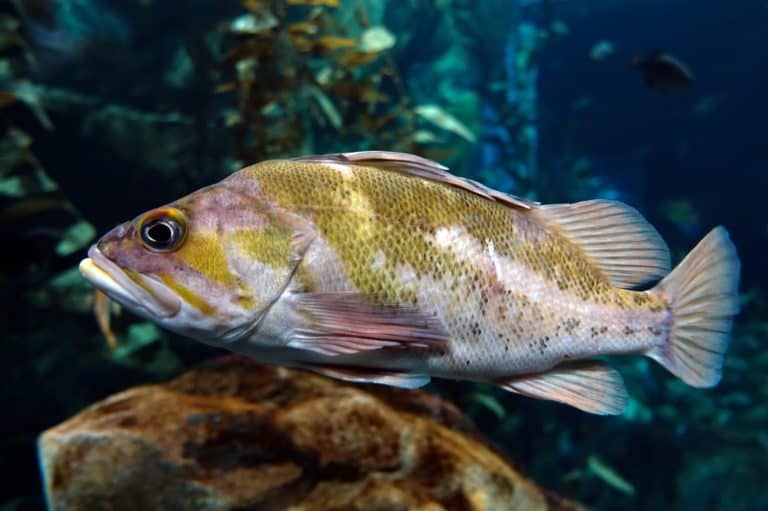
- Black Sea Bass
- Smallmouth Bass
- Striped Bass
The black sea bass are black and blue with blue streaks beneath their eyes. This bass has large mouths, like the largemouth bass, with pointed teeth, spotted or striped dorsal fins, and pointed caudal fins. Black sea bass lives at the bottom of the ocean and have a diet that consists of mollusks, crabs, and other fish.
The smallmouth bass differs from the black sea bass and is also known as the bareback bass and the bronzeback. It is brown and has dark vertical bars across its body, with a torpedo- or oval-shaped body and red eyes.
Unlike the largemouth bass, smallmouth bass have a small jaw with an upper jaw that stretches to the middle of their eye. You can find smallmouth bass in streams and lakes. These fish have a diet that consists of zooplankton, insects, crayfish, and small fish.
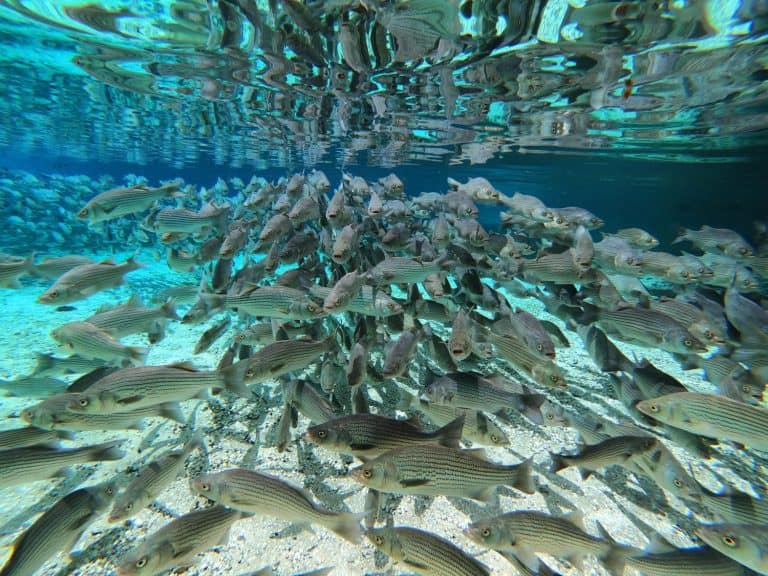
You may also know the striped bass as the rockfish or the striper. They are silver in color with dark stripes across their body. This bass can grow up to 60 inches in length and lives in the ocean and rivers. Striped bass have a diet of insects, crustaceans, and small fish. Most notably, this bass is the most important commercial fish in Maryland and is also its state fish.