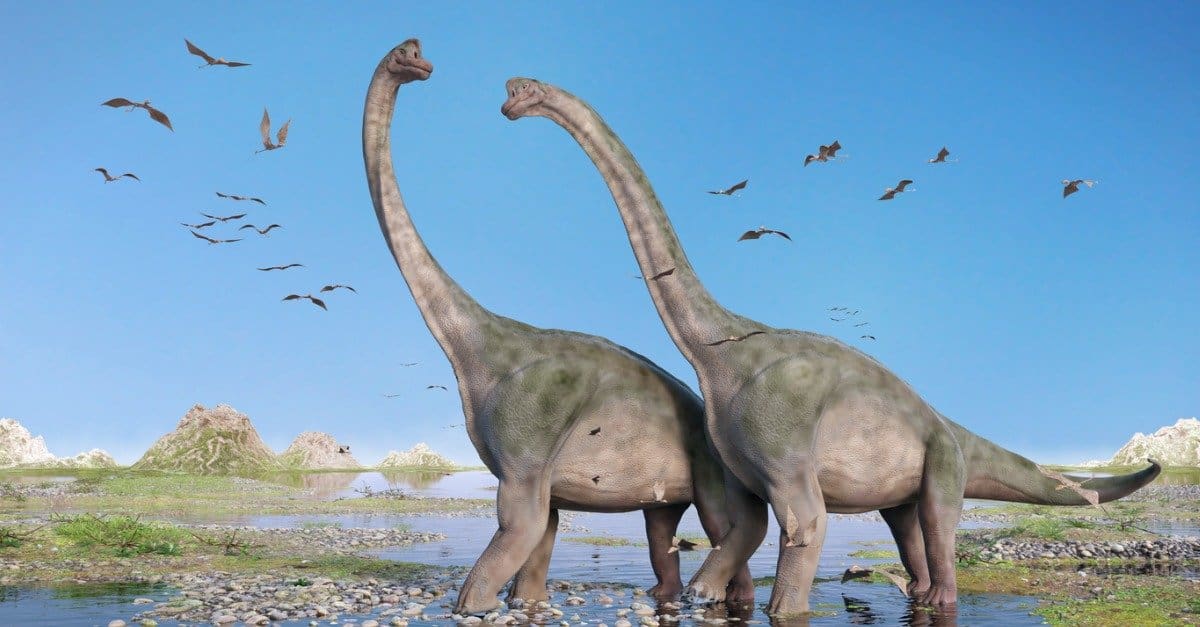

Have you ever wondered what the largest animal to ever live on land is? Or the biggest animal to ever live in the ocean? Prehistoric creatures could easily fill a list all on their own. However, size estimates often change as new fossils are discovered. Some animals, such as Bruhathkayosaurus or Maraapunisaurus, are estimated to be even larger than those on our list. However, these estimates are based only on descriptions, as the original fossils have disintegrated or been lost. For this reason, our list includes only animals with significant fossil evidence. Keep reading to discover the 10 biggest animals ever to walk the Earth, ranked by length and weight.
#10. Apatosaurus
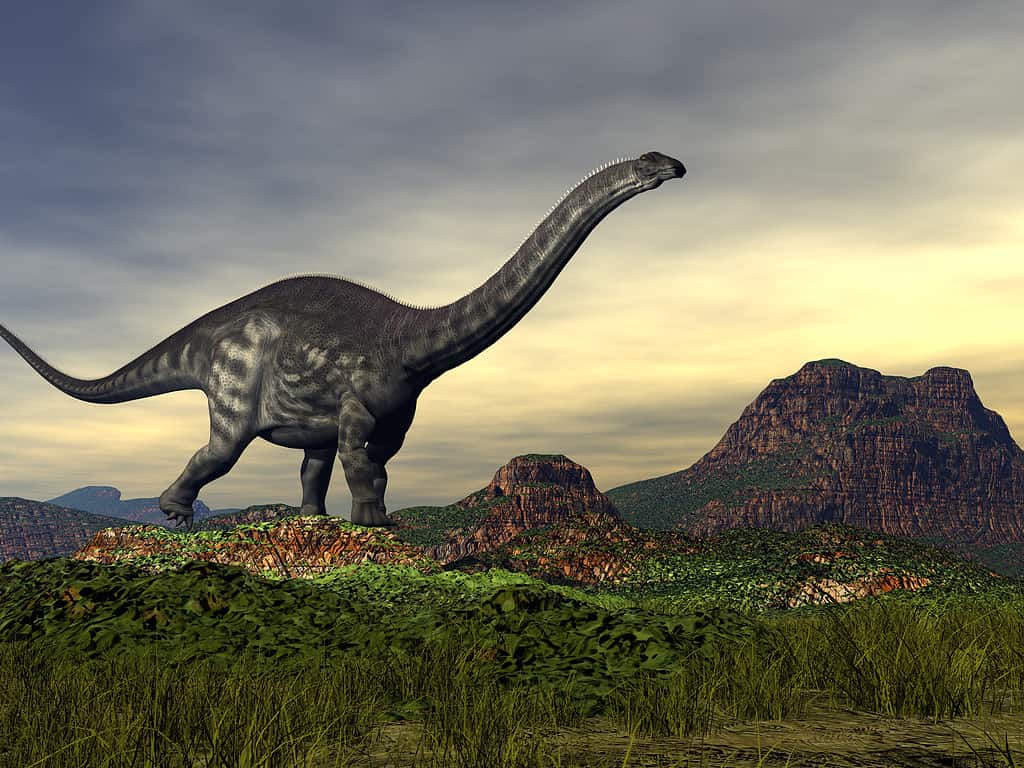
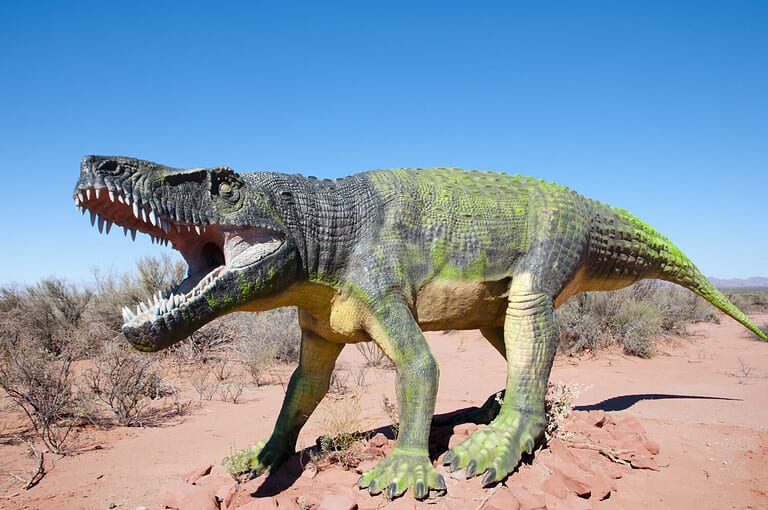
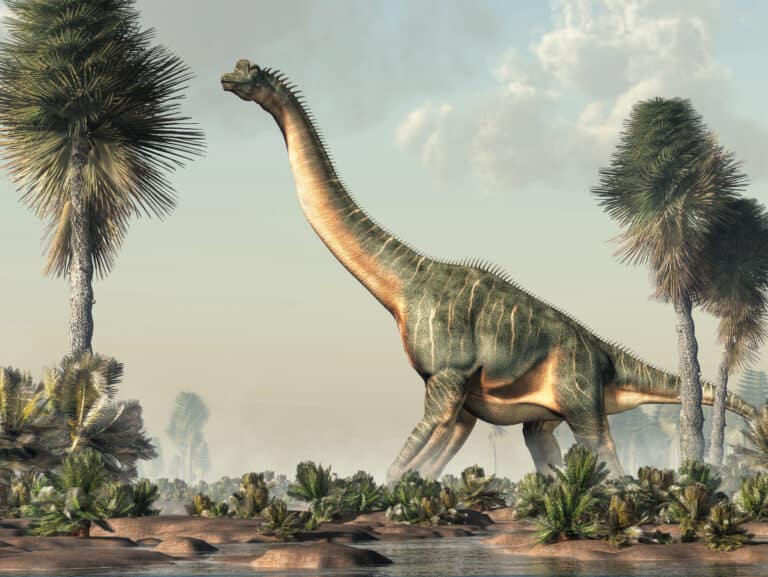
The Apatosaurus could reach lengths of about 75 feet.
©Elenarts108/iStock via Getty Images
The Apatosaurus is also sometimes referred to as the Brontosaurus. Fossils were originally found in Colorado. It was named Apatosaurus in 1877, but the name was changed to Brontosaurus in 1879. However, scientific naming conventions require that priority be given to the first name published, so the name Brontosaurus was later shelved and the fossils reassigned as Apatosaurus. In 2015, researchers showed evidence that Brontosaurus was distinct from Apatosaurus, so it’s possible the name will be revived.
Scientists argue that Apatosaurus is larger and sturdier than Brontosaurus and it has a thicker neck. Researchers estimate Apatosaurus reached about 75 feet long and weighed up to around 30 tons, or 60,000 pounds. This long-necked, long-tailed sauropod belonged to the Diplodocidae family. These dinosaurs lived during the Late Jurassic Period between 152–145 million years ago.
#9. Shastasaurus sikanniensis
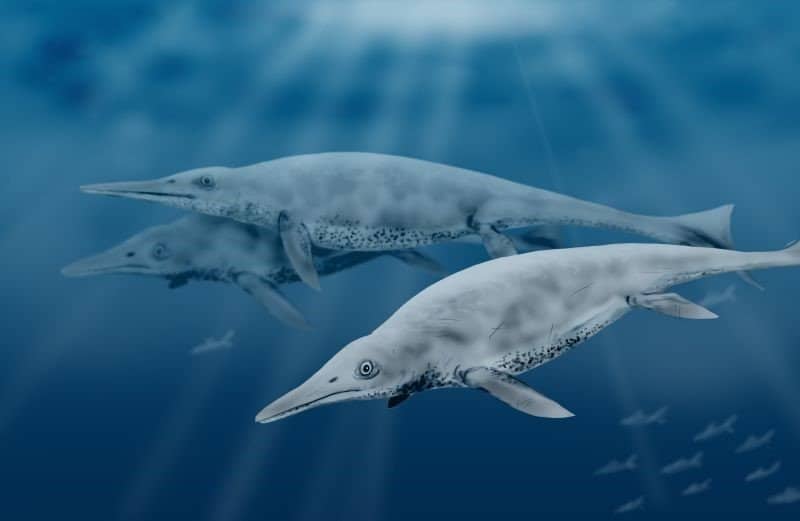
Fossils of Shastasaurus sikanniensis were first discovered in British Columbia, Canada in the 1990s.
Shastasaurus sikanniensis, also referred to as Shonisaurus sikanniensis due to a taxonomical debate, belongs to a group of gigantic, four-limbed marine vertebrates called ichthyosaurs. These fish-like reptiles emerged during the Triassic Period, around 250 million years ago. Shastasaurus was believed to have lived during the Middle and Late Triassic, from around 244-201 million years ago.
Fossils of Shastasaurus sikanniensis were first discovered along the Sikanni Chief River in British Columbia, Canada in the 1990s. It is estimated to have been 69 feet in length. Its skull alone weighed 1.5 metric tons, which is approximately 3,307 pounds. While some estimates have suggested overall weights of nearly 90 tons, most are more conservative. For example, researchers estimated that an 85-foot shastasaurid would weigh 66 tons, or 132,000 pounds, suggesting Shastasaurus sikanniensis likely weighed significantly less than 90 tons.
#8. Ichthyotitan severnensis
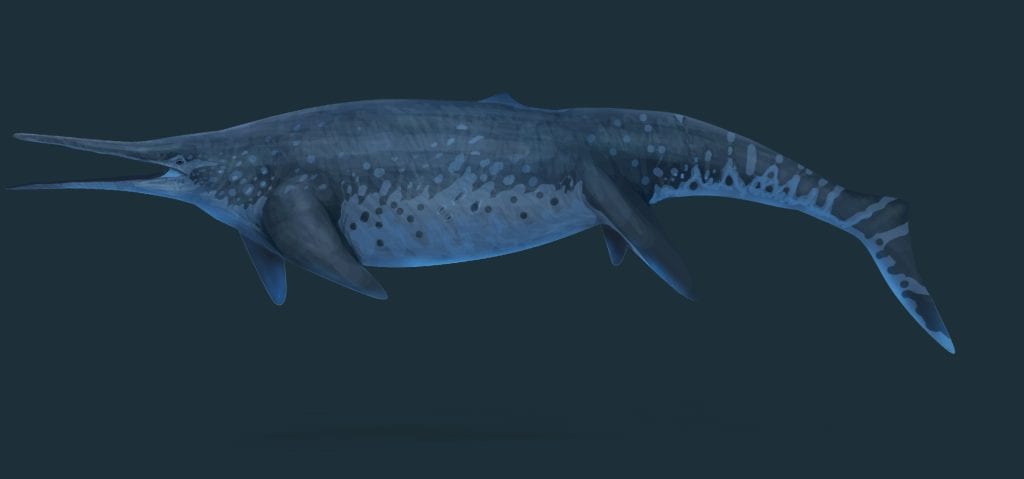
At 85 feet long, Ichthyotitan severnensis may be the largest marine reptile to ever live.
Ichthyotitan severnensis is the largest marine reptile that has been formally described. Fossils from this enormous reptile were first found near Somerset, England in 2016. As the name indicates, Ichthyotitan was an ichthyosaur. Ichthyotitan is believed to have lived during the Late Triassic Period around 202 million years ago.
Based on the size of jawbone fossils, Ichthyotitan is estimated to have reached around 82 feet in length. However, estimates based on other fossils now identified as Ichthyotitan severnensis suggest it could have reached up to 115 feet, although this has not yet been confirmed. Researchers also note that the smaller specimen they examined was still growing, suggesting Ichthyotitan could have grown to exceed 82 feet in length. Currently, there are no formal weight estimates, but some researchers believe ichthyosaurs could have rivaled the weights of the largest sauropods, which are next on our list.
#7. Dreadnoughtus
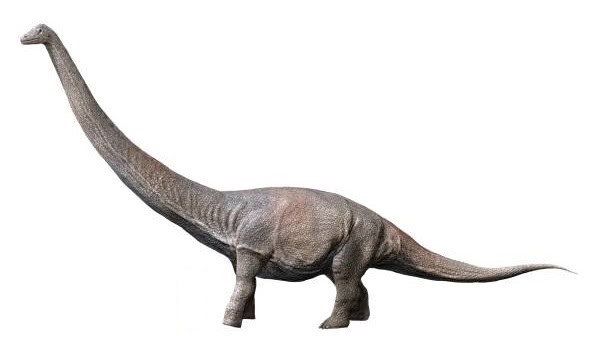
The Dreadnoughtus lived 76-70 million years ago.
Dreadnoughtus was part of the group of dinosaurs called titanosaurs. These sauropods had long necks and long tails similar to the family Diplodocidae. Dreadnoughtus lived during the Late Cretaceous Period, approximately 76-70 million years ago. The remains were first discovered beginning in 2005 in southern Patagonia, Argentina.
Only two specimens have ever been found, but between them, scientists have about half of a Dreadnoughtus skeleton. This has enabled them to make more accurate size estimates. This sauropod is estimated to have reached up to 85 feet in length. However, the largest specimen that was examined was not yet fully grown. Weight estimates have suggested a maximum of 65.4 tons, but a more recent estimate suggests a weight of 54 tons, or 108,000 pounds.
#6. Puertasaurus
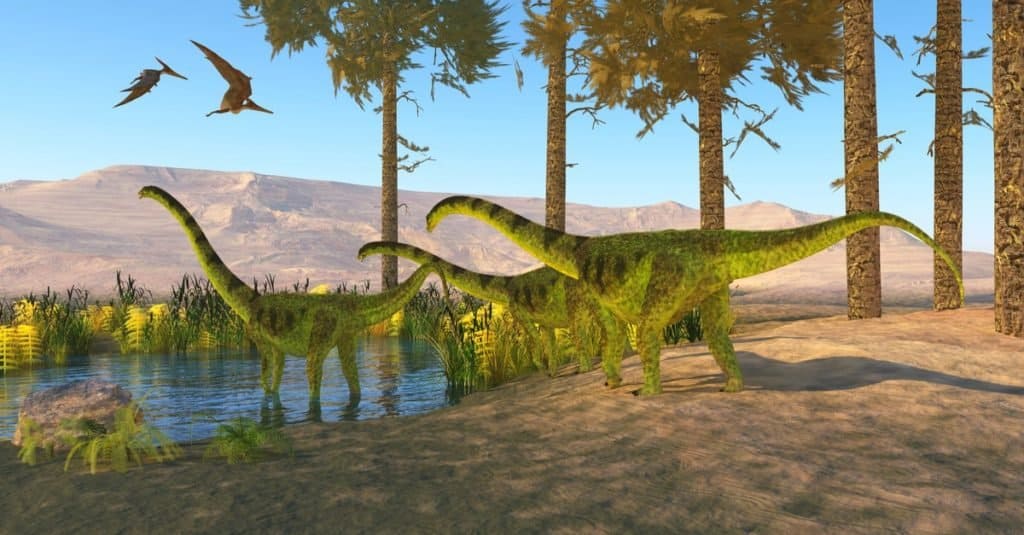
The Puertasaurus lived during the Late Cretaceous Period in the area that is now Argentina.
©Catmando/Shutterstock.com
Puertasaurus was a titanosaur that lived during the Late Cretaceous Period around 76-70 million years ago. This plant-eating dinosaur had a long neck and a long tail like other sauropods. Puertasaurus fossils were found in Argentina in the southwestern Patagonia region starting in 2001.
Only four vertebrae have been found from Puertasaurus. However, researchers believe it was one of the biggest animals to ever live based on the size of these bones. One of its upper vertebrae is among the widest of any known sauropod, indicating it had a very broad rib cage. It is believed to have been around 98 feet in length and weighed 55 tons, or 110,000 pounds.
#5. Perucetus Colossus
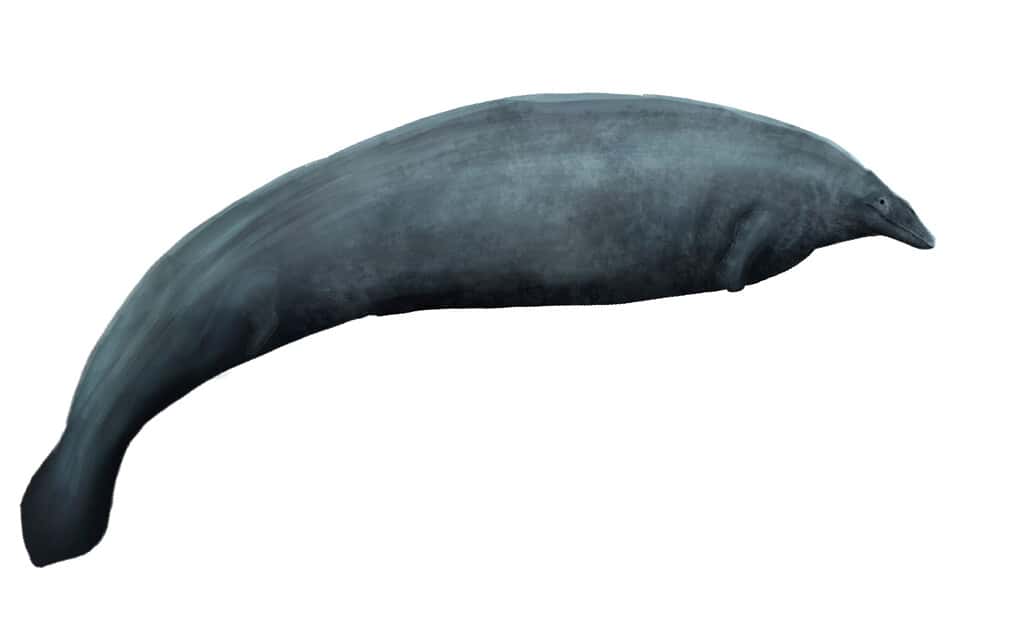
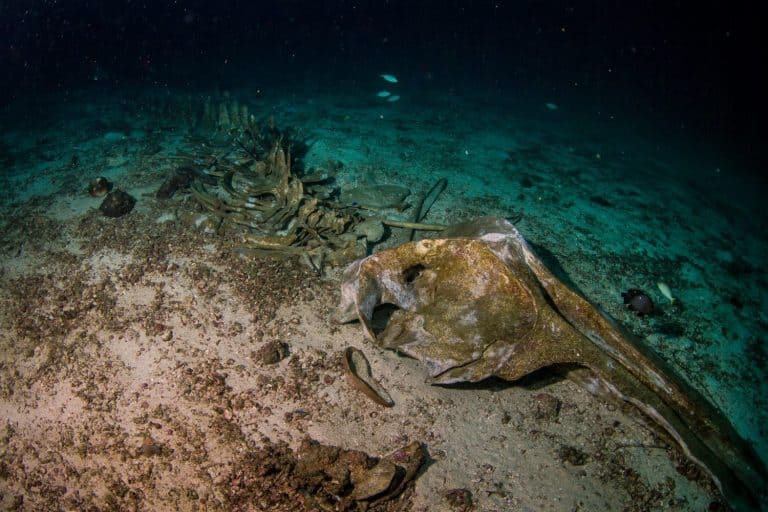
The Perucetus colossus has been said to be the largest animal to ever live, but some researchers disagree.
Perucetus colossus was first discovered in Peru in the 2010s. This animal was a member of the Basilosauridae, an extinct group of whales. It lived during the Eocene Period approximately 39 million years ago. Researchers have suggested this whale is the largest animal to have ever lived, but others disagree.
This prehistoric whale is believed to have reached around 55 feet long. Scientists originally estimated that this animal could weigh between 85-340 metric tons, or nearly 750,000 pounds. However, researchers at the University of California, Davis and the Smithsonian Institution have argued that the upper weights are impossible due to the animal’s length, as such weight would make its body too dense. They estimate that 60-70 metric tons, or up to around 154,000 pounds, is far more likely for an animal of this length.
#4. Argentinosaurus
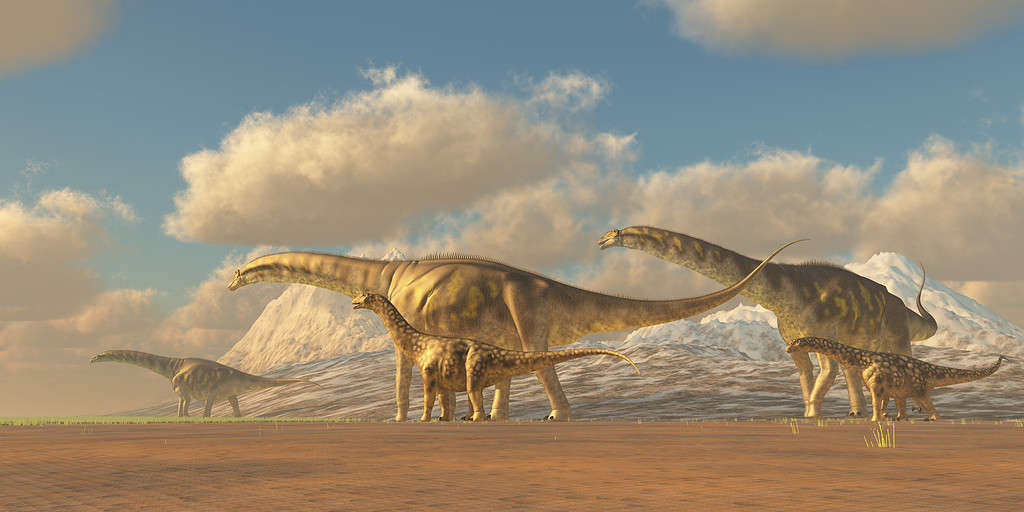
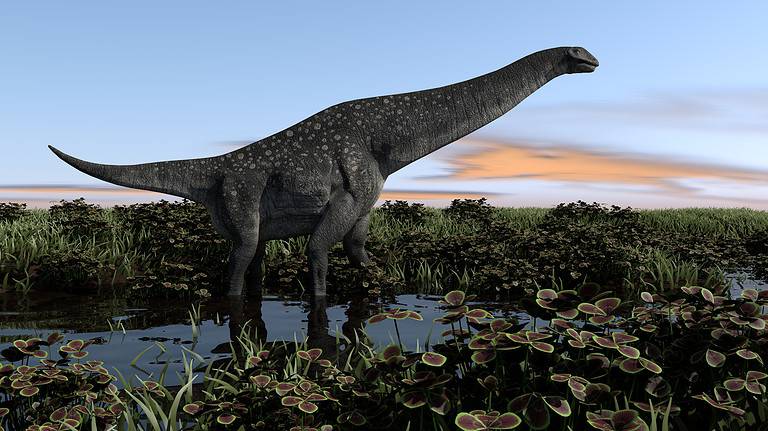
The Argentinosaurus lived around 90 million years ago.
©Catmando/Shutterstock.com
Fragmentary remains of the Argentinosaurus were first discovered in Neuquén Province, Argentina in 1987. This titanosaur was a herbivorous dinosaur that lived in the Late Cretaceous Period, about 90 million years ago. Like Puertasaurus, it is a sauropod dinosaur with a small head and a long neck and tail.
Based on the bones that have been found, it would have been around 115 feet long and around 77 tons, or 154,000 pounds. However, only a few vertebrae and ribs, part of the vertebrae at the base of its spine, and leg bones have been found. Argentinosaurus may prove to be the largest dinosaur ever to live, but with few fossils, it makes estimating this animal’s size, especially its weight, very difficult.
#3. Patagotitan mayorum
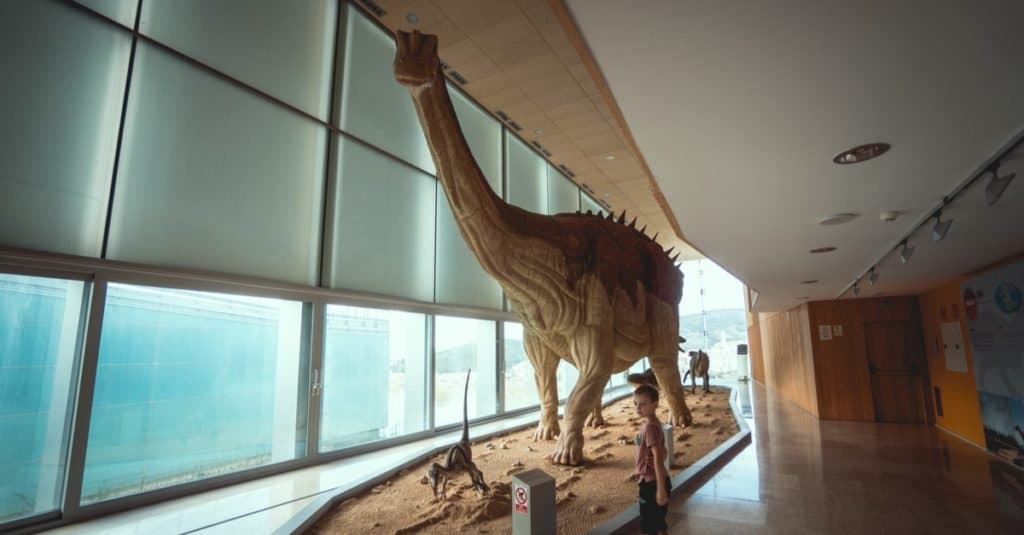
The biggest dinosaur may be Patagotitan mayorum at 121 feet long and up to 157,000 pounds.
©Basilio Dovgun/Shutterstock.com
Patagotitan mayorum is arguably the largest dinosaur paleontologists have ever discovered. It was also a titanosaur and sauropod dinosaur. It lived in the Cretaceous Period, about 101 million years ago. The Patagotitan’s fossils were first found in the Patagonia region of Argentina in 2010.
Scientists estimate the dinosaur measured up to 122 feet long from head to tail. Recent size estimates range from 47-78 tons, or 92,000-156,000 pounds. There are other contenders for the largest dinosaur, such as the Argentinosaurus and Puertasaurus, which may ultimately prove to be larger. However, there are currently only fragmentary remains of these dinosaurs. Patagotitan mayorum has a far more complete skeleton, so size estimates are based on more conclusive information.
#2. Fin Whale
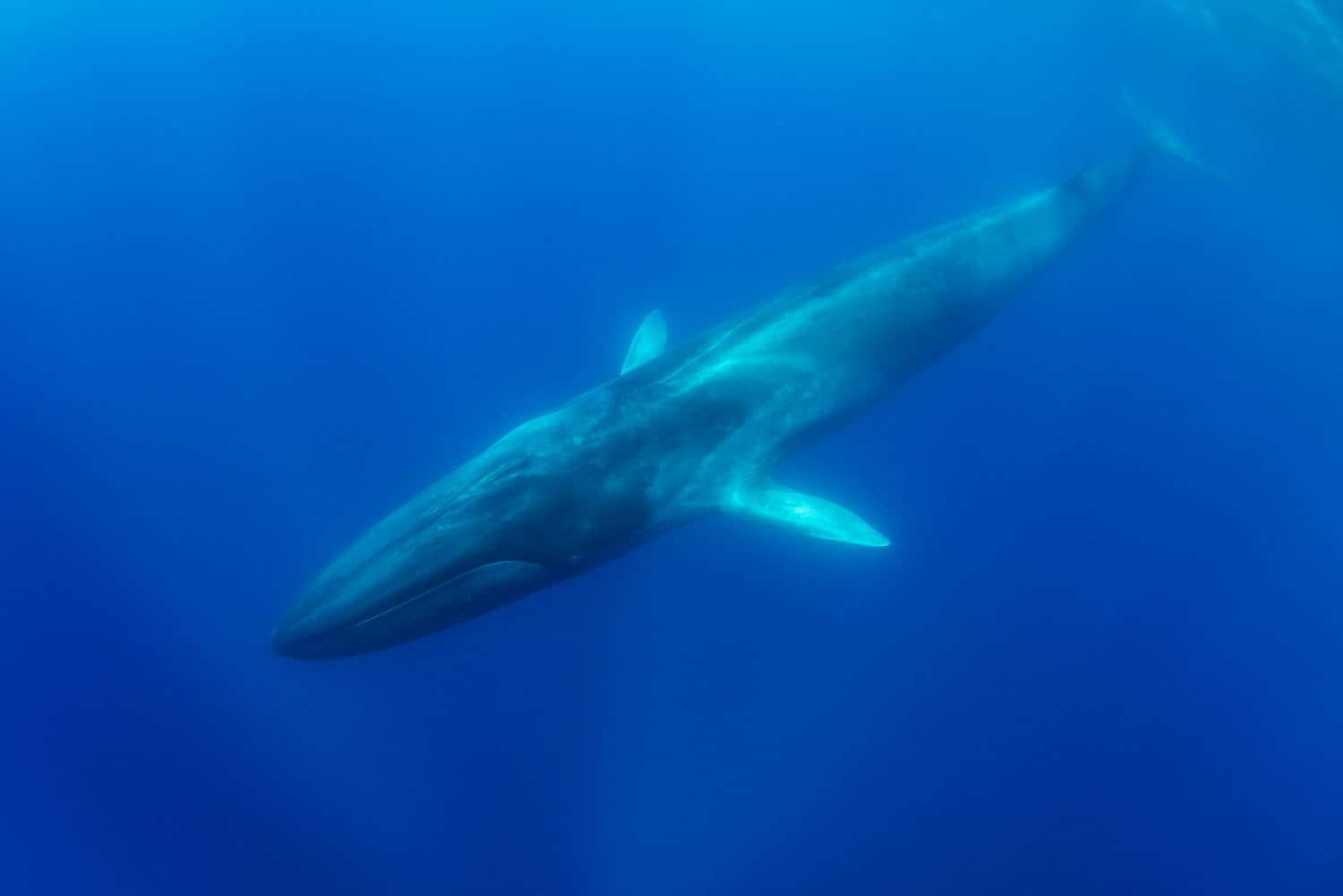
Fin whales are the second-largest whale species.
©wildestanimal/Shutterstock.com
Unlike our previous entries, the second-biggest animal to ever live on Earth is still alive. The fin whale (Balaenoptera physalus) is found in deep, offshore waters throughout the oceans of the world. Fin whales can grow to 85 feet in length and weigh up to 80 tons, or 160,000 pounds.
Although fin whales are much shorter than Patagotitan mayorum, Argentinosaurus, and Puertasaurus, they are believed to be heavier. Fin whales weigh between 4,000 and 50,000 pounds more than the current size estimates of their closest competitors. The earliest known fin whale dates back over a million years to the Early Pleistocene Era of northern California.
#1. Blue Whale
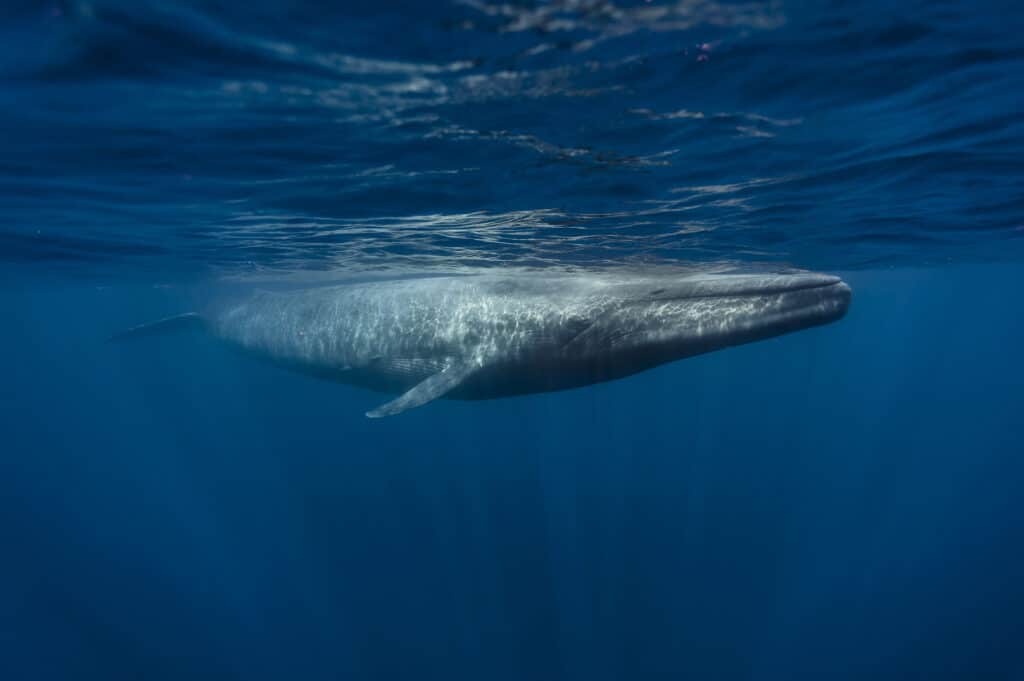
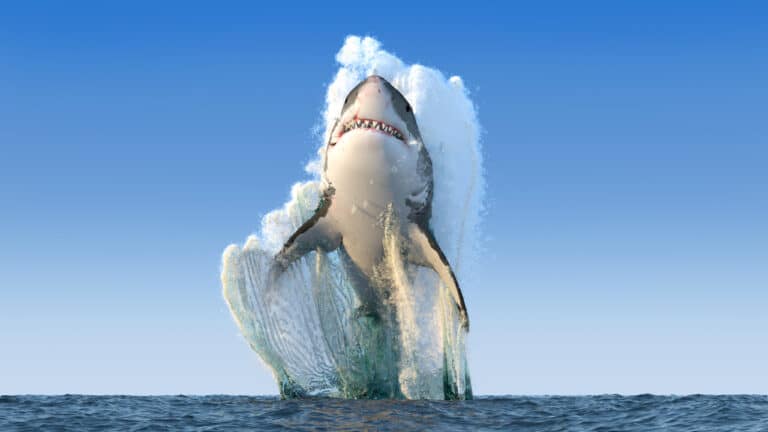
Blue whales are considered to be the largest animals to ever exist.
©Andrew Sutton/Shutterstock.com
The biggest animal to ever live on Earth is the blue whale (Balaenoptera musculus). They can be found in oceans all over the world, except the Arctic. These massive mammals can reach lengths of 110 feet and weights of over 200 tons, or 400,000 pounds. Blue whales average between 80-100 feet in length and weigh between 100,000-330,000 pounds. However, scientists state fossil calculations indicate blue whales may have grown even larger in the past — up to 270 tons, or nearly 600,000 pounds
While the blue whale is slightly shorter than dinosaurs such as Patagotitan mayorum and Argentinosaurus, it is well over twice as heavy as the heaviest dinosaurs currently known to scientists. The first whales came into existence around 50 million years ago. However, the earliest modern blue whale is believed to date to the Early Pleistocene Era, approximately 1.5–1.25 million years ago.