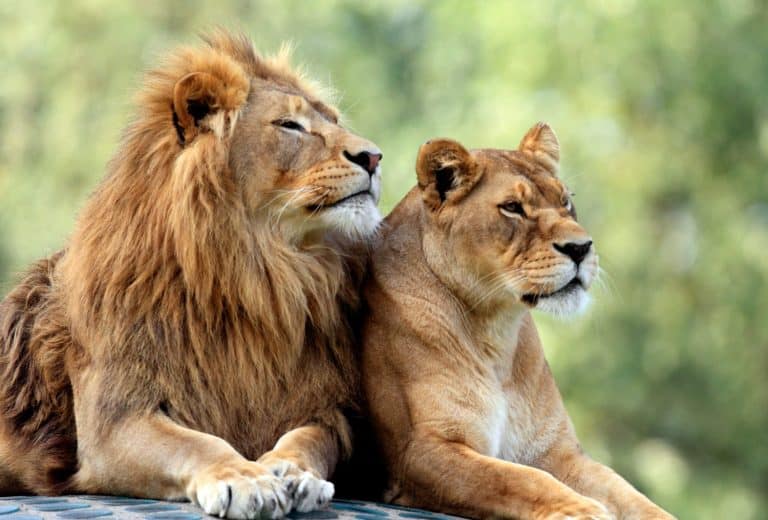
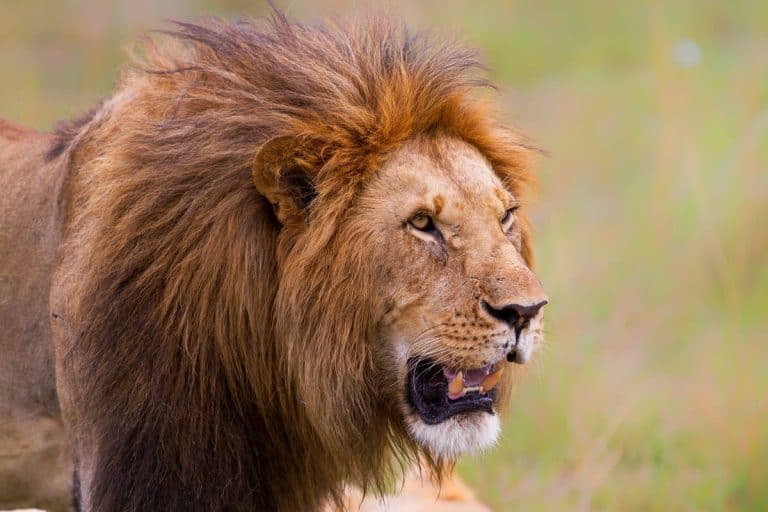
Lions are some of the most impressive big cats to roam the Earth. Today, they are quite large for a feline, but subspecies of the Ice Age were even more gigantic. Male lions are capable of reaching some incredible dimensions, stretching up to 11.5 feet in length. Females are smaller, but they are just as effective at hunting and cooperate with the pride in amazing ways. As a species, lions have been studied in depth, as people have been intrigued by these large cats for centuries.
Whether analyzing modern day lions or extinct species from years past, what constitutes as “the largest lion” is of course speculative. The American cave lion, which lived during the Pleistocene, was likely massive compared to today’s lions. However, a few modern-day captive males have reached great proportions. Hybrids like ligers are even larger, but they are generally dismissed from the ‘true’ lion rankings.
This slideshow covers everything you need to know about these keystone predators, including their amazing size and key ecological role. We’ll highlight how they are crucial to grassland ecosystems in an assortment of ways, including how they help to maintain biodiversity. Learn about this vulnerable species and why protecting these large cats protects entire ecosystems.
How Big Can Lions Get?
©2021 Photography/Shutterstock.com
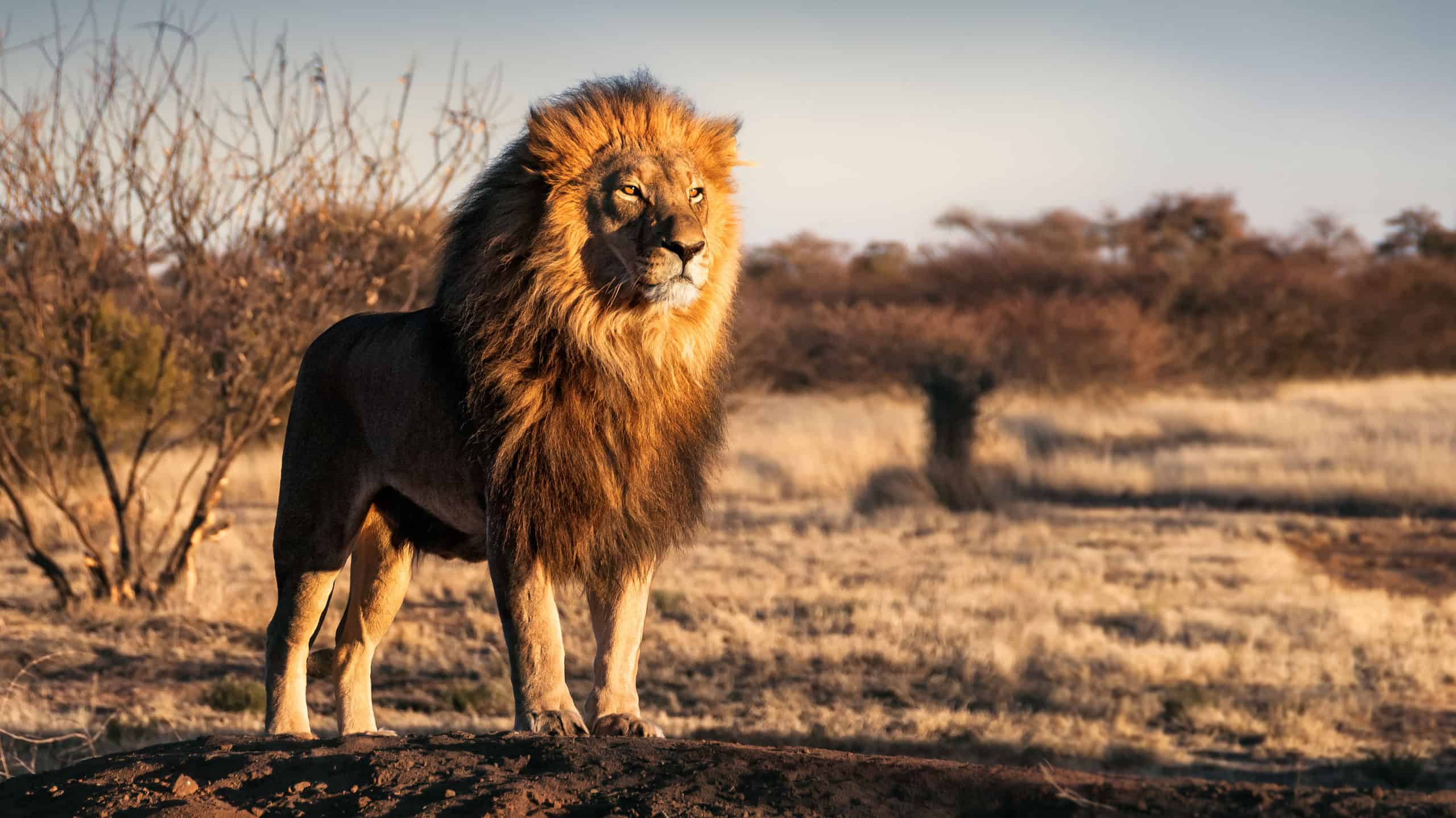
- Lions are among the largest big cats, and record individuals have pushed far beyond typical weights.
- Scientists track size records from both wild and captive lions to compare across eras and regions.
- This slideshow explains the biggest lions ever and why their size matters for ecosystems.
Largest Wild Lion On Record
©iStock.com/MaggyMeyer
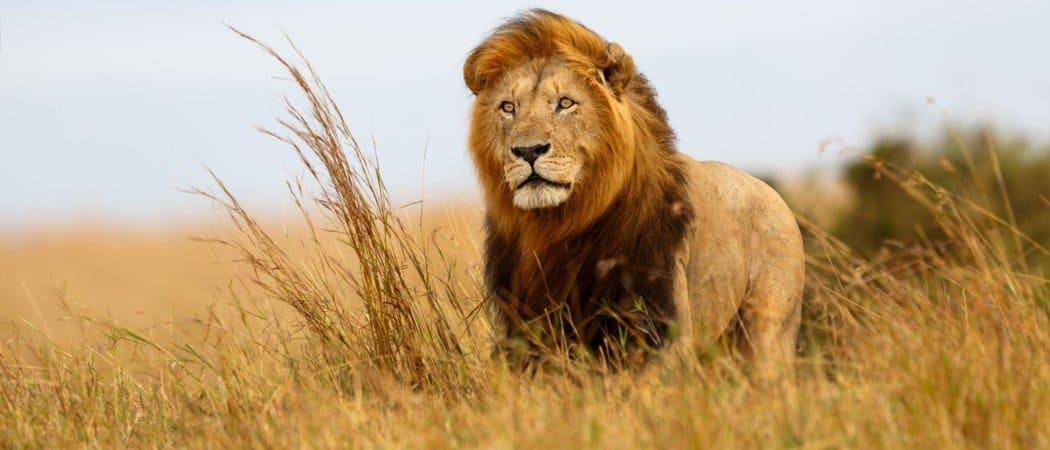
- The largest lion reportedly taken in the wild weighed about 690 pounds in South Africa in 1936.
- Such outliers sit well above the normal range for African lions documented by field studies.
- Record claims are rare and often debated, but they illustrate the upper limit of lion size.
Asiatic Lions: Size and Range
©ibrandcare/iStock via Getty Images
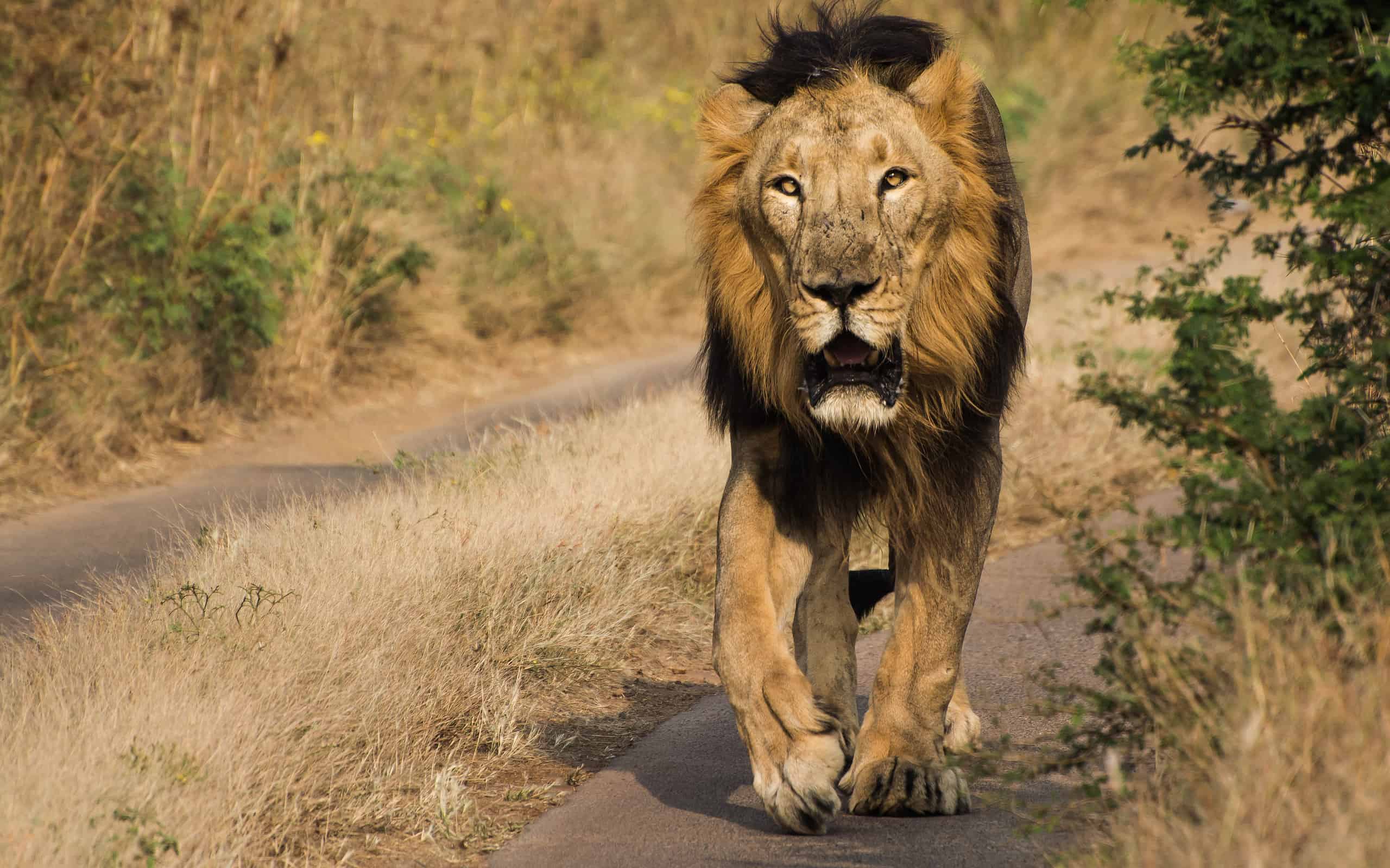
- Asiatic lions live mainly in and around Gir National Park in India and reach about 6.5 feet from nose to tail base.
- A historic specimen reportedly weighed 675 pounds in 1620, but modern wild males typically top out near 418 pounds.
- These lions are smaller on average than the biggest African males but remain formidable predators.
African Lions: Regional Heavyweights
©Tony Campbell/Shutterstock.com
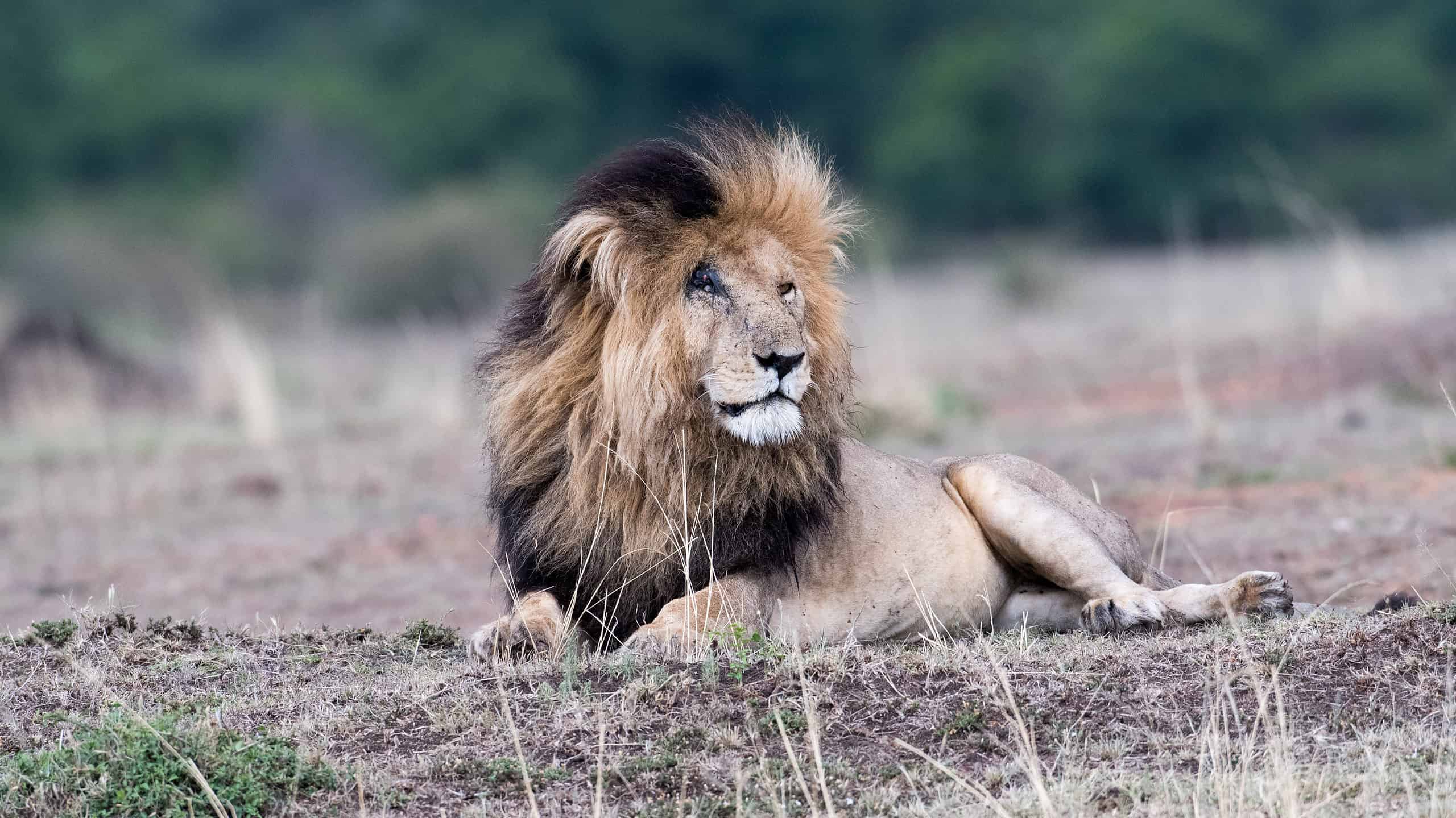
- A massive African lion measured near Mount Kenya was 11 feet long and weighed about 600 pounds.
- Typical maximum wild weights run near 496 pounds in southern Africa and around 451 pounds in eastern Africa.
- Regional prey, climate, and genetics all influence the ultimate size lions can reach.
Extinct Giants: The American Cave Lion
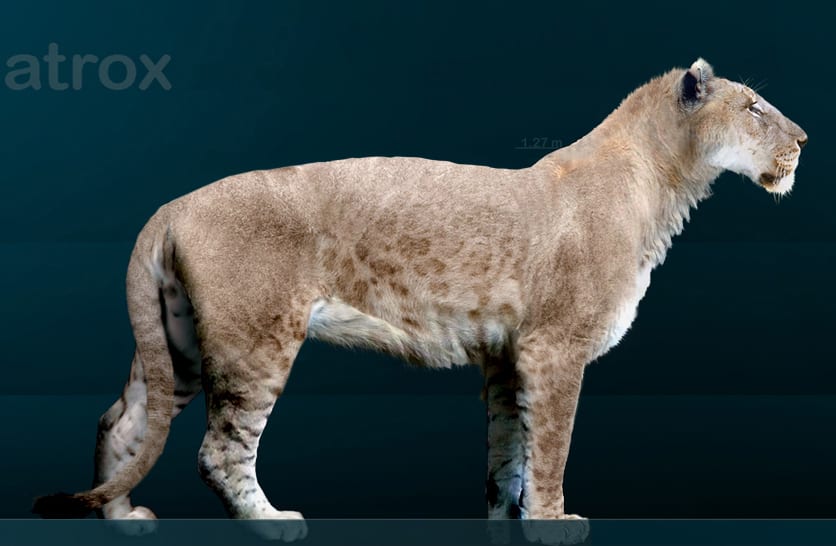
- The American cave lion likely reached up to 25 percent larger than modern lions and spanned wide ranges across North America.
- Length estimates run to about 8 feet 2 inches from nose to tail base based on fossil reconstructions.
- Weight estimates vary, with studies suggesting up to 930 pounds and some later work arguing as high as 1,153 pounds.
Eurasian Cave Lion: Another Heavyweight
©Popova Valeriya/Shutterstock.com
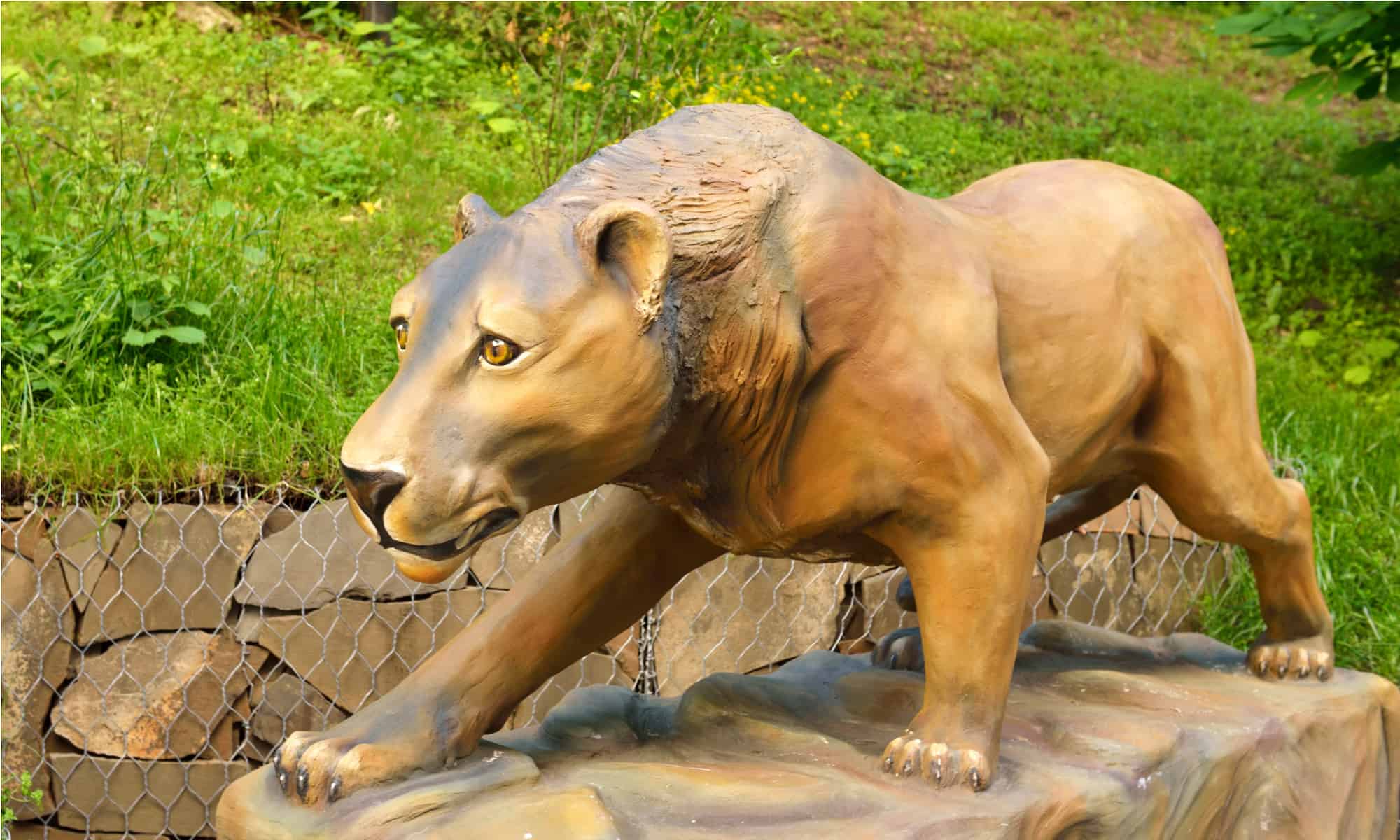
- The Eurasian cave lion lived across Europe and Asia and was about 12 percent larger than modern lions.
- The largest specimen is estimated at roughly 6 feet 11 inches long not including the tail.
- Some reconstructions place its top weight near 750 pounds, making it a formidable Ice Age predator.
Do Ligers Count in Lion Records
©Lizov Ivan/Shutterstock.com
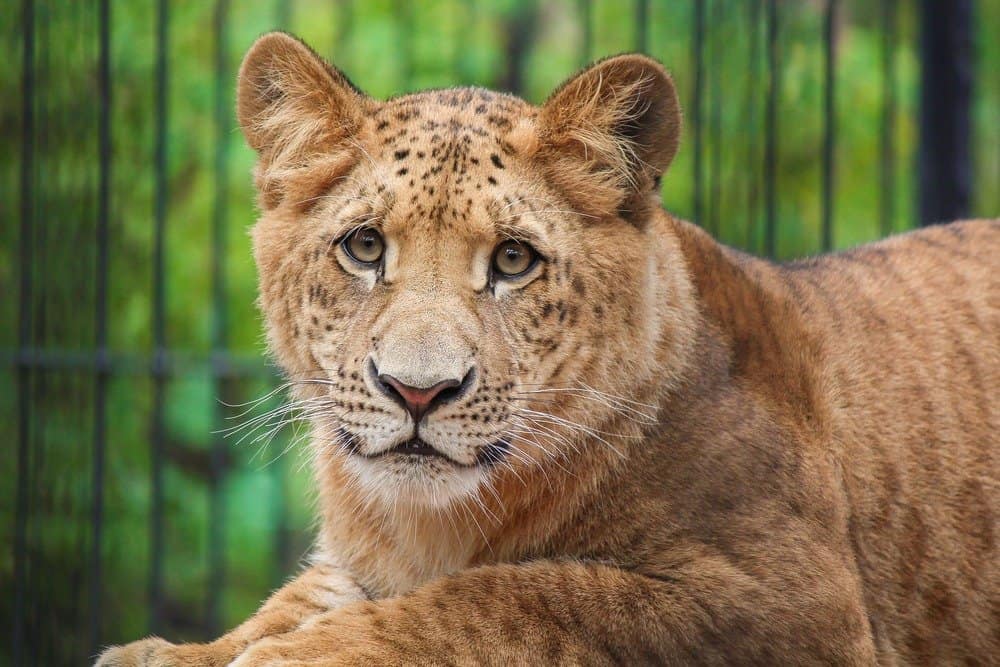
- Ligers are hybrids of a male lion and a female tiger, and they grow larger than either parent species.
- The largest known liger named Hercules reportedly weighed about 922 pounds in captivity.
- Ligers are not a wild species, so most size rankings exclude them from true lion records.
Largest Lion Depending on the Rules
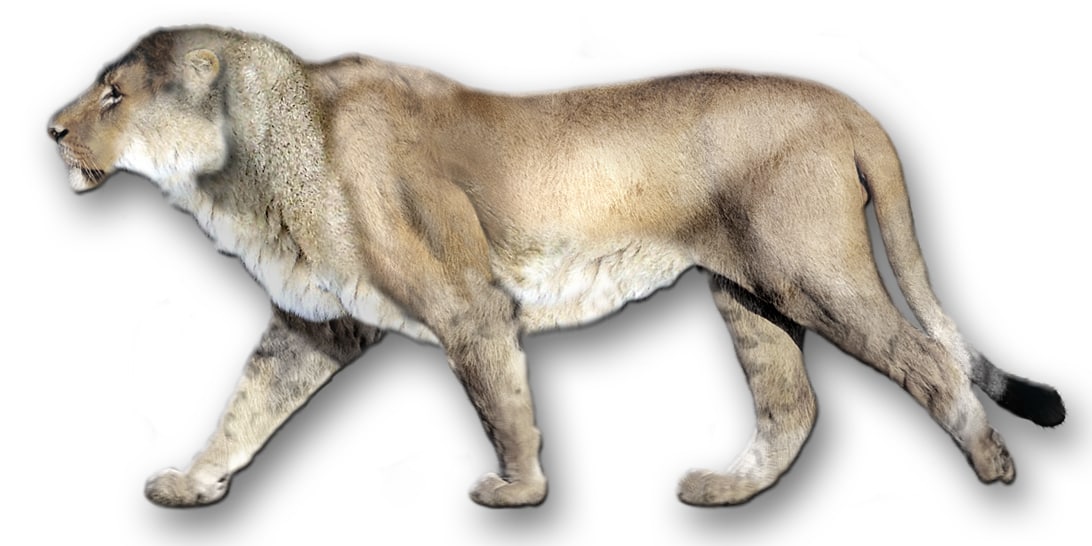
- If extinct lions are included, the American cave lion likely holds the crown for overall size.
- If only living subspecies are counted, a captive male at Dublin Zoo in 1959 reportedly reached about 827 pounds.
- If only wild modern lions are counted, the 1936 South African specimen near 690 pounds is often cited.
Why Lion Size Matters for Ecology
©Dennis W Donohue/Shutterstock.com
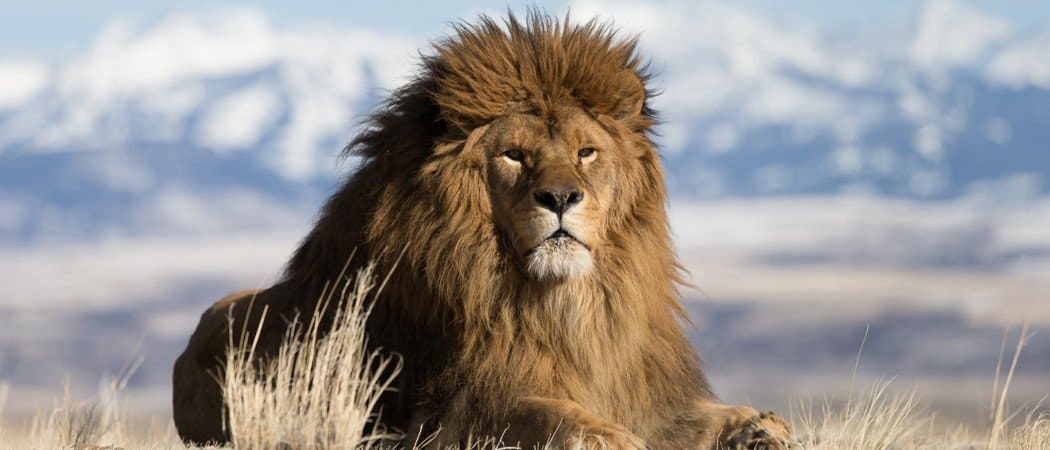
- Lions are apex predators and keystone species that regulate herbivore numbers like wildebeest, zebra, and buffalo.
- Without lions, grazing animals can overbrowse savanna grasses and destabilize entire ecosystems.
- A keystone predator acts like the first domino in a chain, so its loss can trigger cascading impacts.
Conservation Status and Threats
©Keith Jenkinson/Shutterstock.com
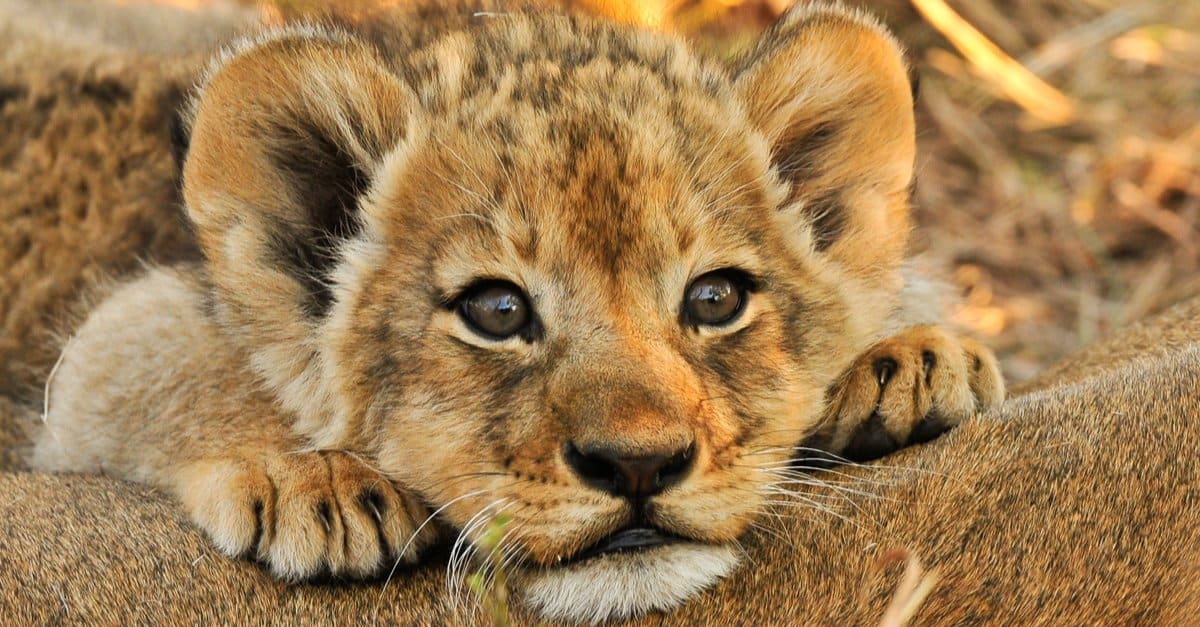
- Modern lions are listed as vulnerable and face pressure from habitat loss, conflict with people, and trophy hunting.
- Conservation responses include captive breeding, protected areas, and population monitoring in the wild.
- Protecting lions safeguards the wider web of life that depends on balanced savanna ecosystems.