
Jurassic Park convinced many fans that the dinosaurs were enormous animals. In reality, only a few species were the same size as a school bus. Many of the world’s largest recorded dinosaurs were also herbivores, meaning they didn’t prey on other animals. While harmless, their size would have been more than intimidating. Carnivores like Tyrannosaurus Rex may have also been near the top of the food chain, but some species eclipsed even this large predator. Here are ten of the biggest dinosaurs ever recorded, from carnivore to omnivore and everything in between.
Shantungosaurus
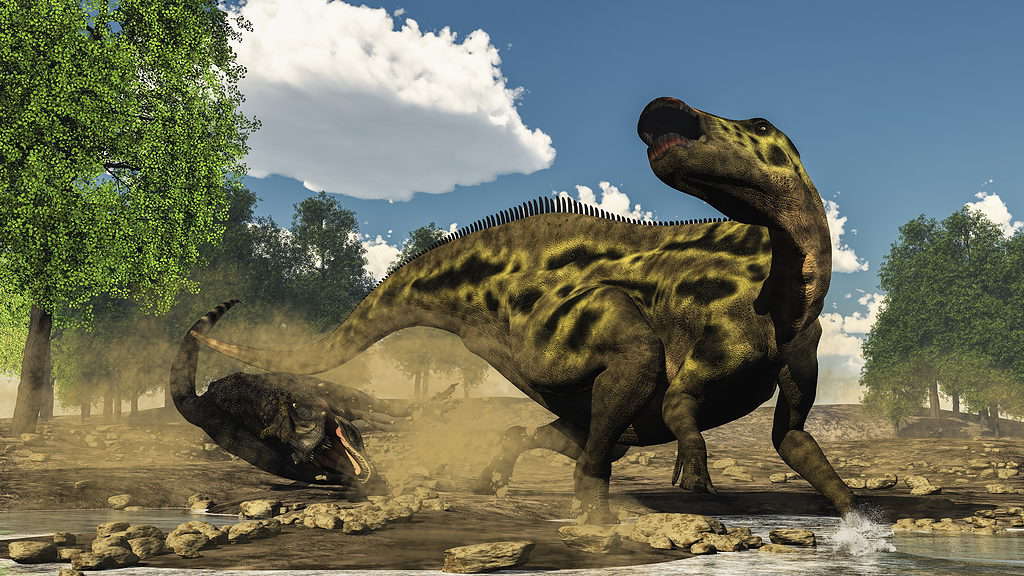
Shantungosaurus belongs to the genus Saurolophine hadrosaurid, which was native to China. This massive creature towered over others, with a length ranging from 49 to 56 feet. This herbivore had unique bird-like features, including a flat beak, a flat head, and a long tail. The latter was likely used for balance, and Shantungosaurus needed it with a 15-ton body to move. Paleontologists believe it also had webbed hands, though there is no definitive fossil evidence to confirm this theory.
©Elenarts/Shutterstock.com
Since plants made up the primary part of its diet, Shantungosaurus lacked teeth at the front of its beak. However, it did have a row of smaller back teeth that were used for grinding. These dinosaurs traveled in herds, with little need to defend themselves. Their size alone made them challenging prey, and it’s not likely they faced many predators. Bird-like feet also helped Shantungosaurus move, though it’s unlikely that this dinosaur ran from many things.
| Size | 49-53 feet long, 23 feet tall |
| Weight | Up to 16 tons |
| Notable Feature | 1,500 small teeth behind its beak |
Spinosaurus
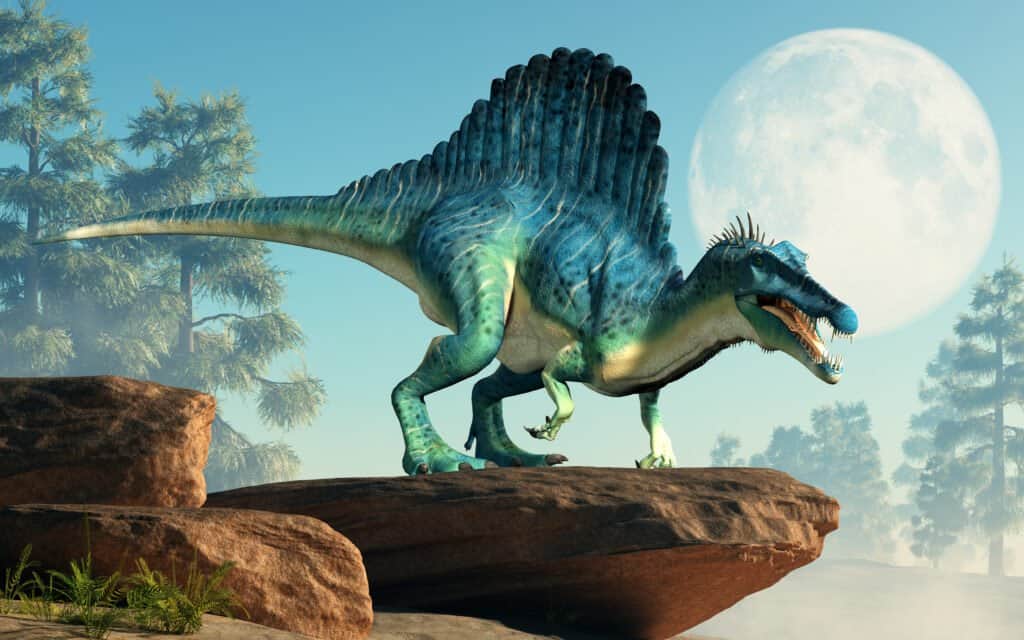
Spinosaurus has been made even more famous thanks to its on-screen debut in “Jurassic World Rebirth.” While the movie took liberties with its real-life characteristics, its aquatic nature was somewhat accurate. It was named for the sail on its back, which some experts believe stored water or was used in mating displays. This feature also makes Spinosaurus somewhat intimidating, adding height to an already large frame.
©Daniel Eskridge/Shutterstock.com
Spinosaurus gave T. Rex a run for its money, with a head that measured approximately six feet long. Its body is estimated to be anywhere from 46 to 59 feet long, with its mass at an estimated 22 tons. This dinosaur was carnivorous, and fossilized remains from other species have been found in its stomach contents. It’s believed Spinosaurus also ate fish, potentially hinting at its semi-aquatic existence.
| Size | 46-59 feet long |
| Weight | 22 tons max |
| Notable Feature | The sail along its spine |
Turiasaurus
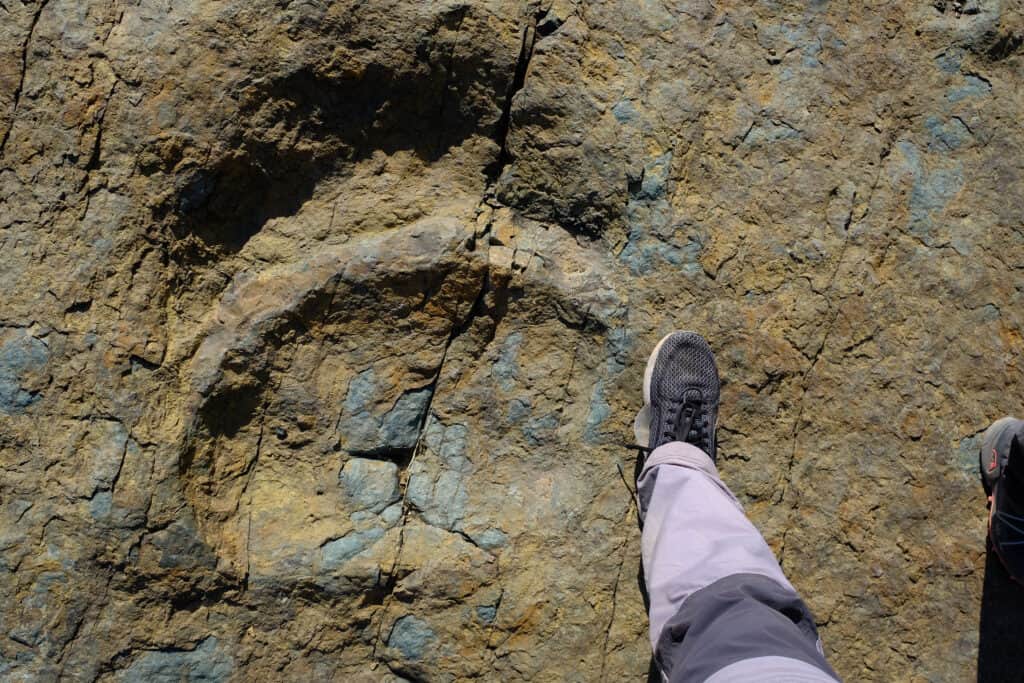
Turiasaurus lived in what’s now modern-day Spain. Its weight has been estimated at up to 48 tons, making it Europe’s biggest mega dinosaur. It was a massive creature, measuring up to about 82 feet long. Its body was proportionate to its size, with a smaller head and thick, muscular limbs.
©Yannick Martinez/Shutterstock.com
Little is known about this dinosaur outside of its size. While it’s said to be the largest discovered in Europe, its body shape is similar to that of a brontosaurus. As a sauropod, paleontologists can determine that Turiasaurus was a herbivore.
| Size | Roughly 82 feet long |
| Weight | 40-48 tons |
| Notable Feature | Its small head, which was believed to reduce upper body weight |
Diplodocus
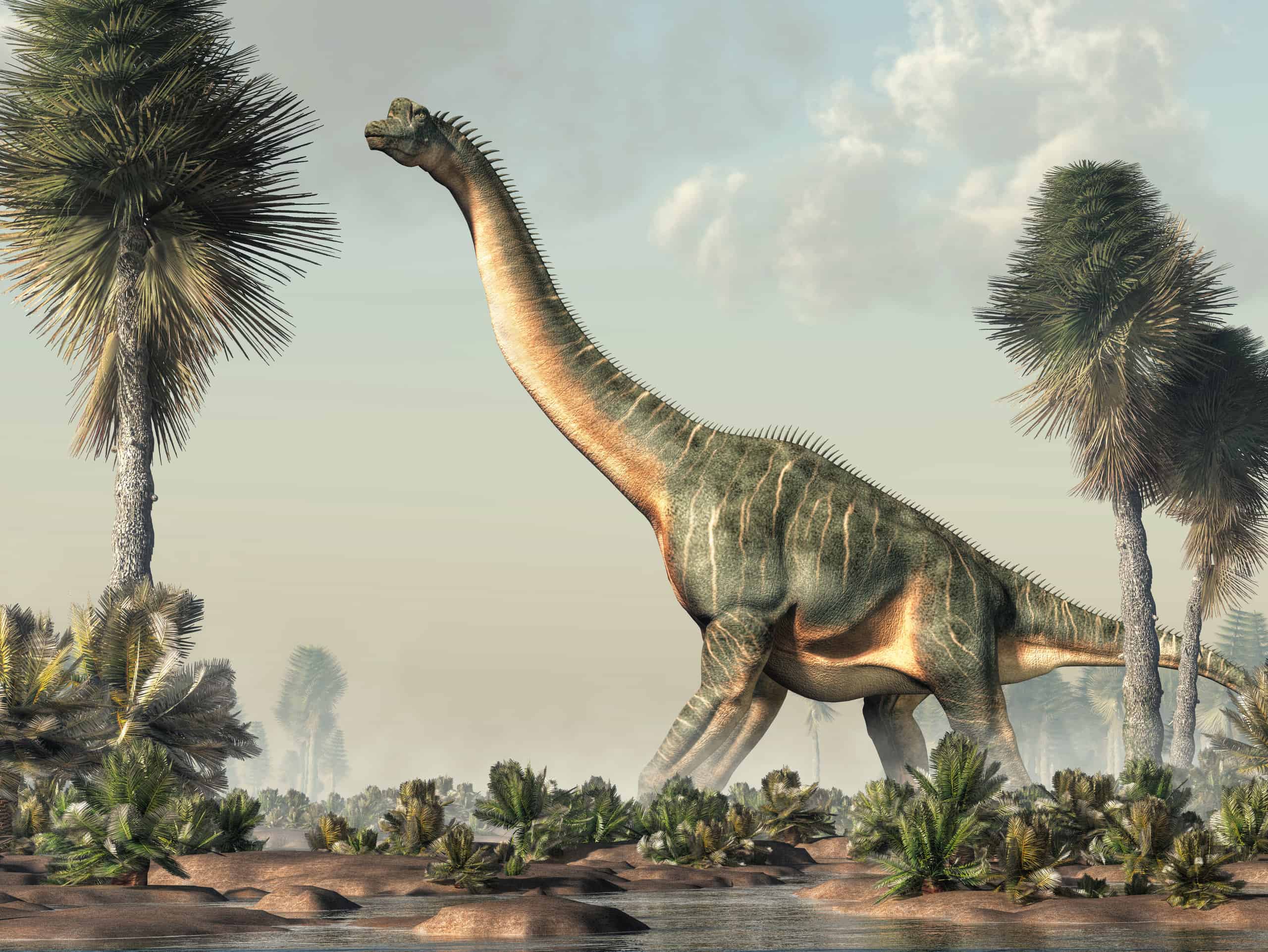
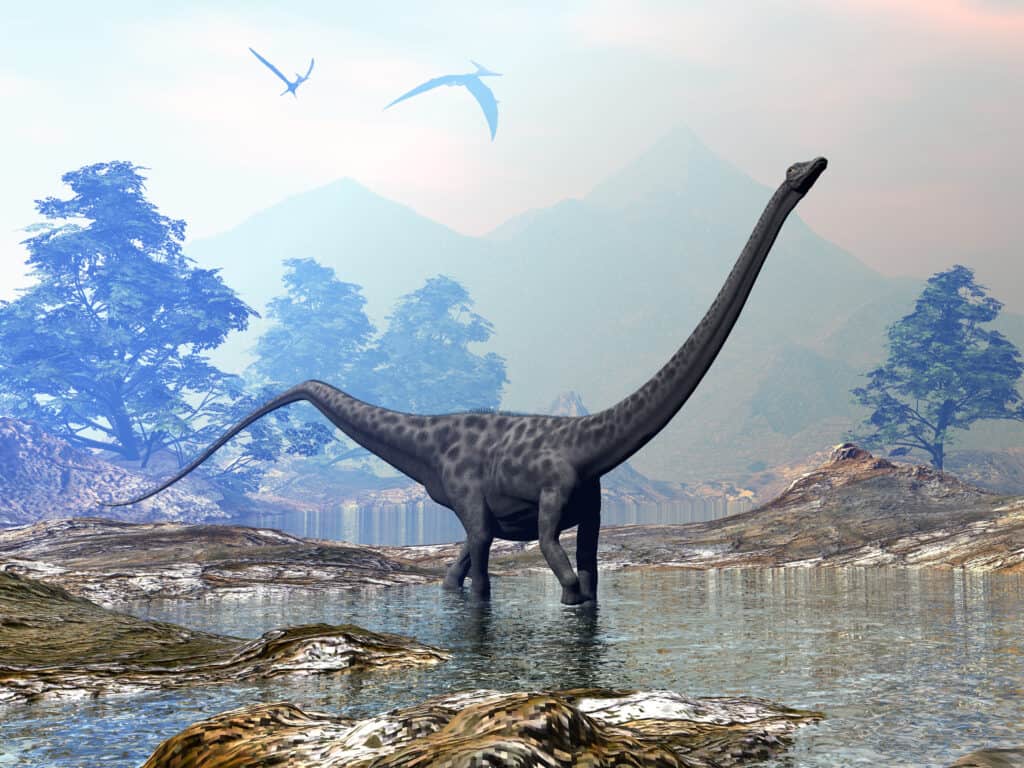
Although Diplodocus was a herbivore, its size was still intimidating. It was discovered in North America and was known for its unique way of consuming vegetation. Its long neck and slender body helped with this, reaching lengths of up to 90 feet. While not the largest sauropod, it was among the longest.
©Elenarts/Shutterstock.com
Paleontologists believe that Diplodocus’s tail was a built-in defense mechanism. It was likely used as a whip during fights where carnivorous dinosaurs got too close. This alone measured 46 feet in length and, when swung at great force, could likely inflict severe damage. It may have been covered in tiny keratinous-like spines at the end, further evidence of Diplodocus wielding its tail as a weapon.
| Size | Up to 90 feet long |
| Weight | 10-15 tons |
| Notable Feature | Spiked tail, peg-shaped teeth used for extracting leaves from branches |
Supersaurus
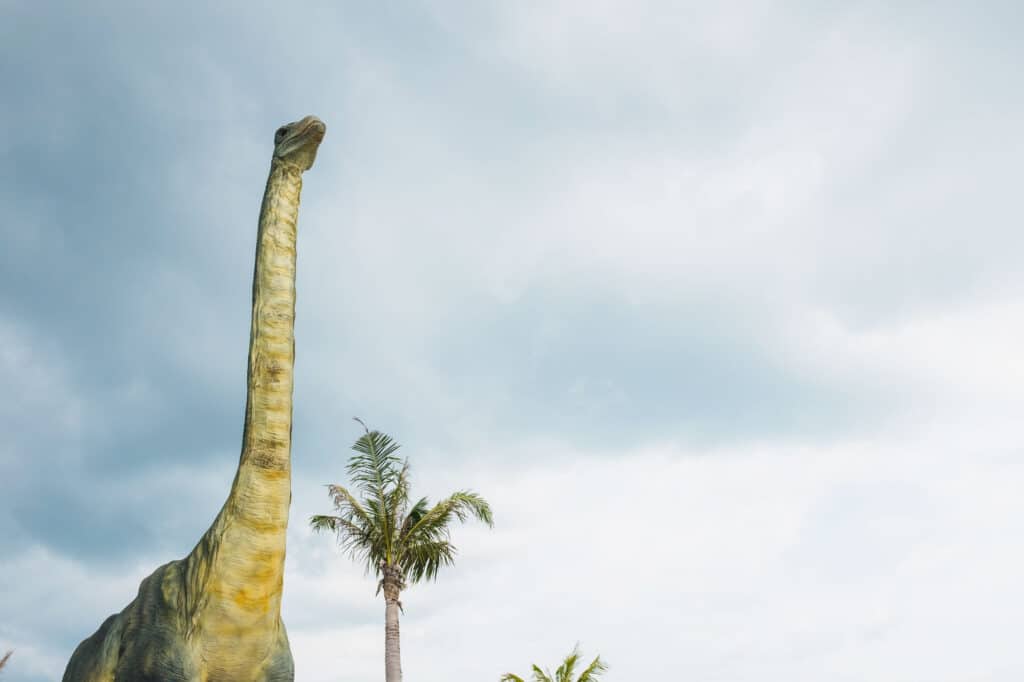
Supersaurus was an impressive sauropod. It was one of the largest herbivores that ever lived during the Late Jurassic Period. The first fossil belonging to this dinosaur was discovered in Colorado in 1972. Since then, paleontologists have determined the species was 110 to 118 feet long. One of the most unique discoveries about Supersaurus, though, is its lifespan. This dinosaur may have lived to be a century old, if not older. However, this has yet to be confirmed by experts.
©HugYou/Shutterstock.com
While not a threat in its behavior, Supersaurus was threatening in size. This is also what helped it reach vegetation that provided the dinosaur with essential nutrients. Its rounded teeth were excellent for crushing leaves, but had no further use outside of aiding in digestion. Due to its size, it’s also unlikely that Supersaurus had many natural enemies.
| Size | 110-118 feet long |
| Weight | 40-50 tons |
| Notable Feature | Its long neck which was more than 10 stories taller than a human being |
Puertasaurus
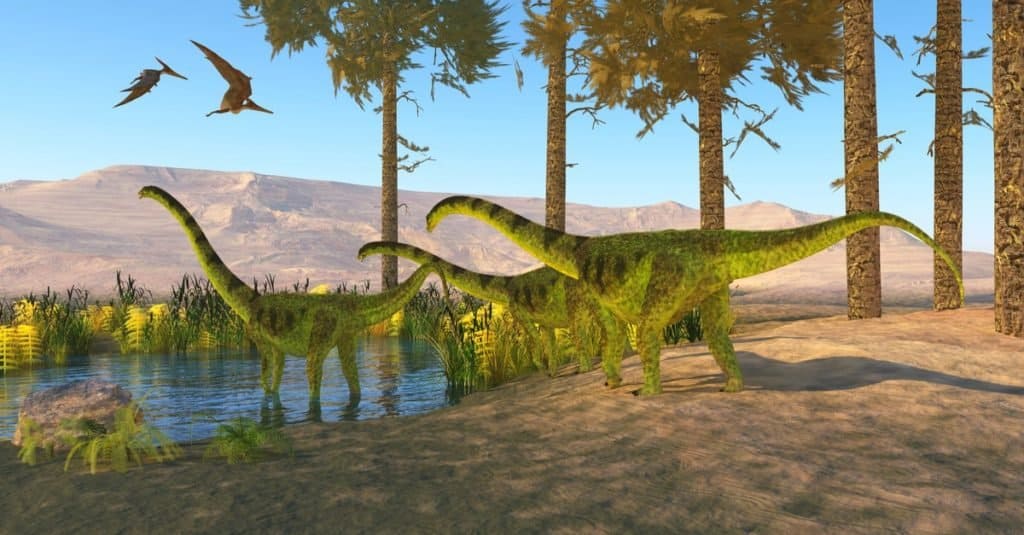
A common thread in dinosaur size is that the largest species were primarily herbivores. Puertasaurus is another prime example of this, obviously thanks to its long, thick neck. This dinosaur was discovered in South America and lived during the Late Cretaceous Period. Its size makes it part of a group of massive dinosaurs known as titanosaurs.
©Catmando/Shutterstock.com
Despite having some information about this dinosaur, paleontologists have only found one fossil specimen. It was determined that Puertasaurus measured anywhere from 89 to 130 feet long and weighed twice as much (or more) than a Mack truck.
| Size | Up to 115 feet long |
| Weight | 110,000-220,000 pounds |
| Notable Feature | It has numerous vertebrae, which make it one of the longest dinosaurs ever recorded |
Dreadnoughtus
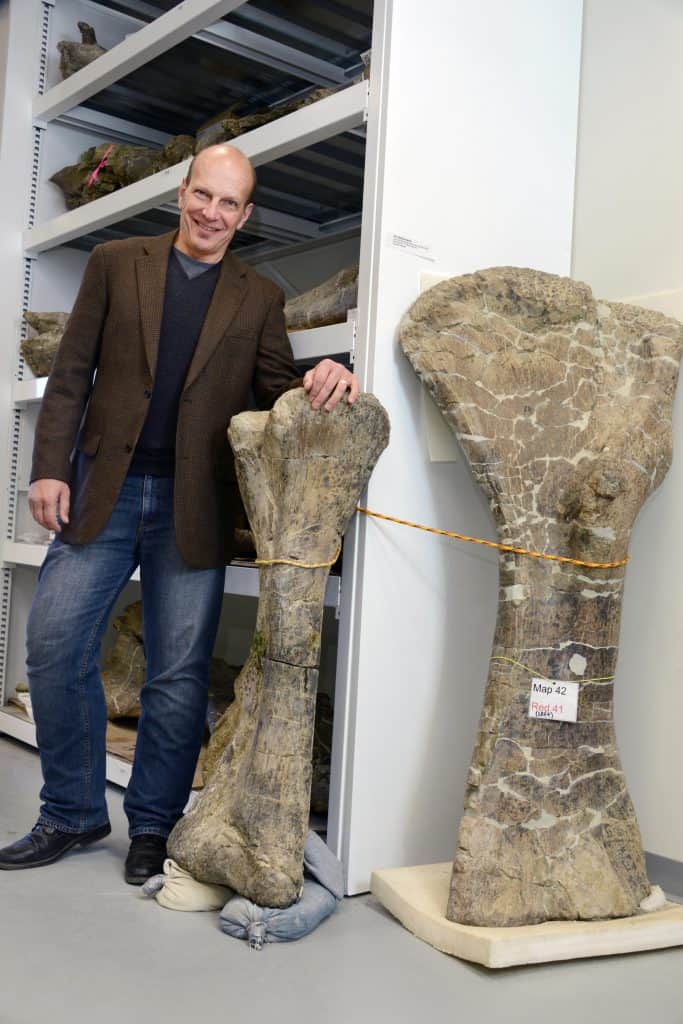
Unlike many other species, Dreadnoughtus has a confirmed mass and length. It is considered a supermassive dinosaur species, measuring 85 feet long. The shoulder of a Dreadnoughtus reached a height of 20 feet, making it the same height as a two-story building.
©By ArcaneHalveKnot – Own work, CC BY-SA 4.0, https://commons.wikimedia.org/w/index.php?curid=51710199 – Original / License
The Drexel Team is responsible for the first nearly-complete skeleton, with roughly 70% of fossilized remains accounted for. This has given paleontologists a vivid idea of the size and prowess of this herbivore, even down to its appearance. If Dreadnoughtus were around today, it would have weighed nearly the same as a blue whale and been comparable in size. I
| Size | 85 feet long |
| Weight | Approximately 30-40 tons |
| Notable Feature | Its long head and neck which made it roughly the same length as a Boeing 737 |
Patagotitan
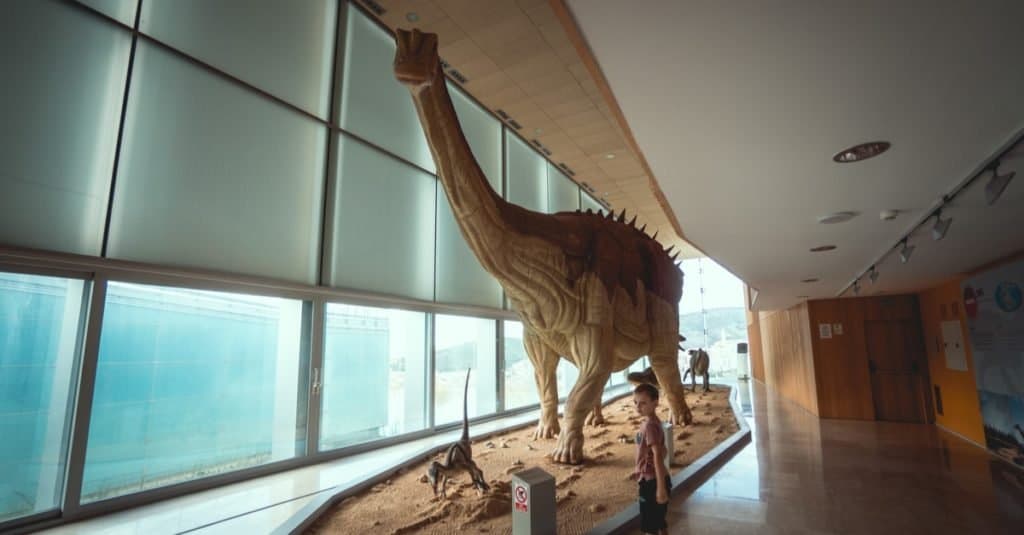
Many dinosaurs would have stood in the shadow of Patagotitan. It was twice the size of Diplodicus and nearly three times as heavy. It was native to modern-day Argentina and lived during the Early Cretaceous Period. Its fossilized remains were found accidentally after major floods swept through the region and unearthed bones.
©Basilio Dovgun/Shutterstock.com
Patagotitan is one of the most enormous dinosaurs ever to exist, but it is not confirmed as the largest. It measured approximately 121 feet long and may have weighed between 50 and 57 tons. No animal alive today compares to the mass of this dinosaur. In fact, it would weigh as much as several houses or buildings.
| Size | 122 feet long |
| Weight | 50-57 tons |
| Notable Feature | 8-foot long femur bone |
Sauroposeidon
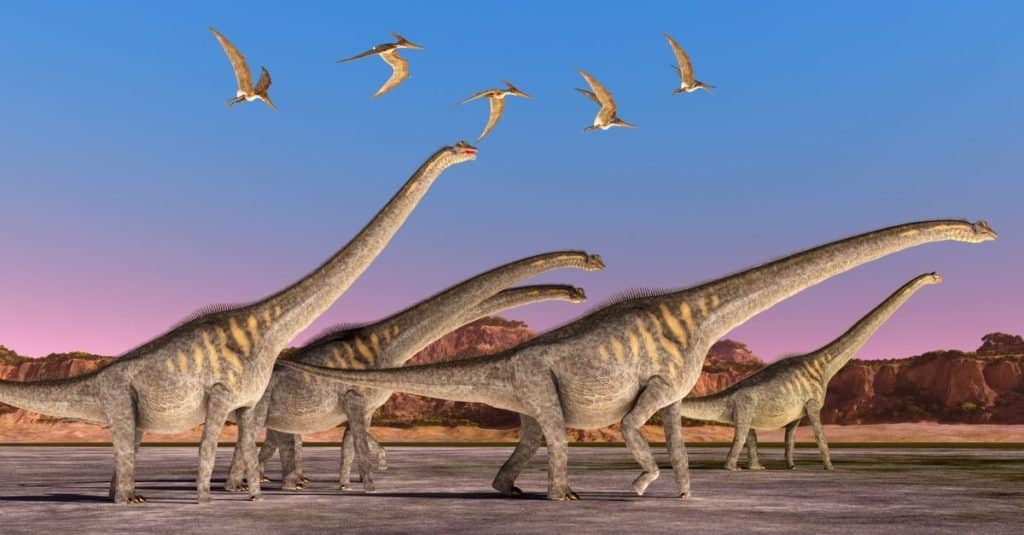
Sauroposeidon was one of the most enormous dinosaurs in the world, but it’s also one of the tallest ever recorded. It was native to the Gulf of Mexico and lived toward the end of the Early Cretaceous Period. Paleontologists believe the height from its head to the ground would measure 56-60 feet. However, they also think it could reach a total length of 112 feet.
©Catmando/Shutterstock.com
This dinosaur had a massive body, with a neck that measured 39 feet long. This makes it one of the longest in existence, dwarfing other sauropod dinosaurs. The bones of Sauroposeidon are lightweight compared to those of other dinosaurs, which helped it move its massive limbs. It has the same features as many other sauropods, including a small head, sturdy legs, and a long, proportionate tail.
| Size | 89-112 feet long |
| Weight | 40-60 tons |
| Notable Feature | An incredibly long neck |
Argentinosaurus
Argentinosaurus isn’t just one of the most enormous dinosaurs to ever exist; it’s also one of the largest land animals ever recorded. This sauropod dinosaur was a giant, measuring between 98 and 115 feet long and weighing between 60 and 100 tons. If it existed today, it would take up roughly half the length of a football field, according to HowStuffWorks.
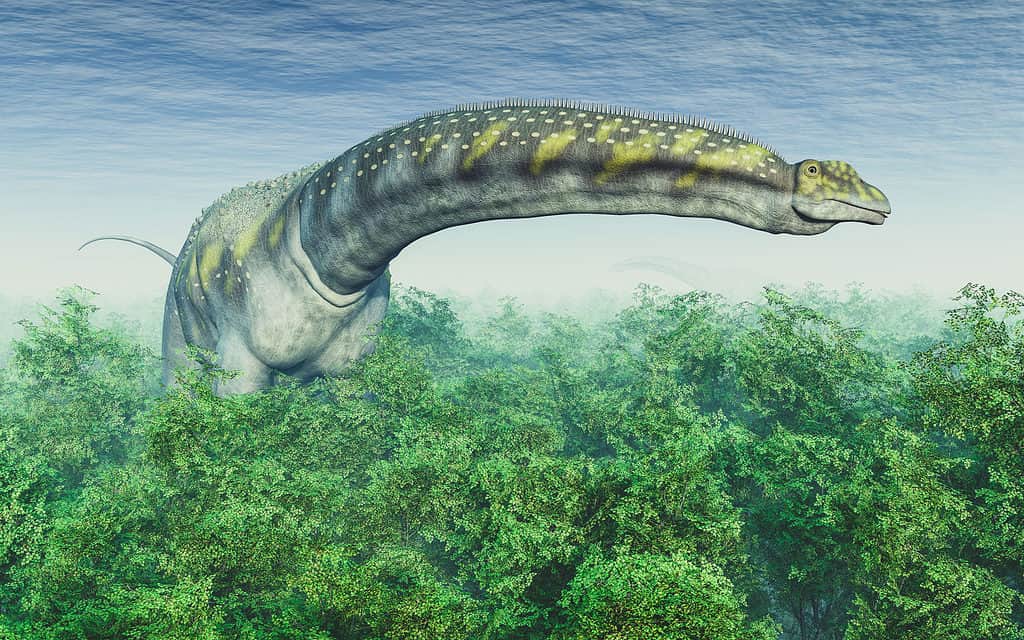
©MR1805/Shutterstock.com
Its body was perfectly proportioned to carry its massive weight while still allowing it to move efficiently. While little is known about this superspecies, every recorded fossil is evidence of its massive body mass.
| Size | 98 to 115 feet long |
| Weight | 60 to 100 tons |
| Notable Feature | Massive size |