
Quick Take
- A geological quirk of the Indian Ocean floor may explain why millions of whale carcasses ended up in the exact same spot, and the reason has nothing to do with whale behavior. Explore the graveyard's geology →
- Buried among the fossils was a species no scientist had ever named, one that had been sitting there for millions of years. Meet the newly named species →
- This graveyard turned out to behave more like one of the most extreme living environments on Earth. See the vent comparison →
About 71-74% of the ocean remains unexplored by scientists as of 2026, and much of that is the deep sea. ROVs give us fleeting glimpses of what lies beneath, but no human can truly imagine what exists below. Some discoveries are downright bizarre, while others, such as the one recently made by China’s Fendouzhe submersible, are somewhat morbid—but also fascinating.
When Peng Zhou, the co-author of the study published in Nature Journal, went down in the submersible, millions of whale carcasses were the last thing on anyone’s minds. What each visitor to the Diamantina Fracture Zone saw, however, challenged their beliefs about the Indian Ocean floor.
The Largest Whale Graveyard on Earth
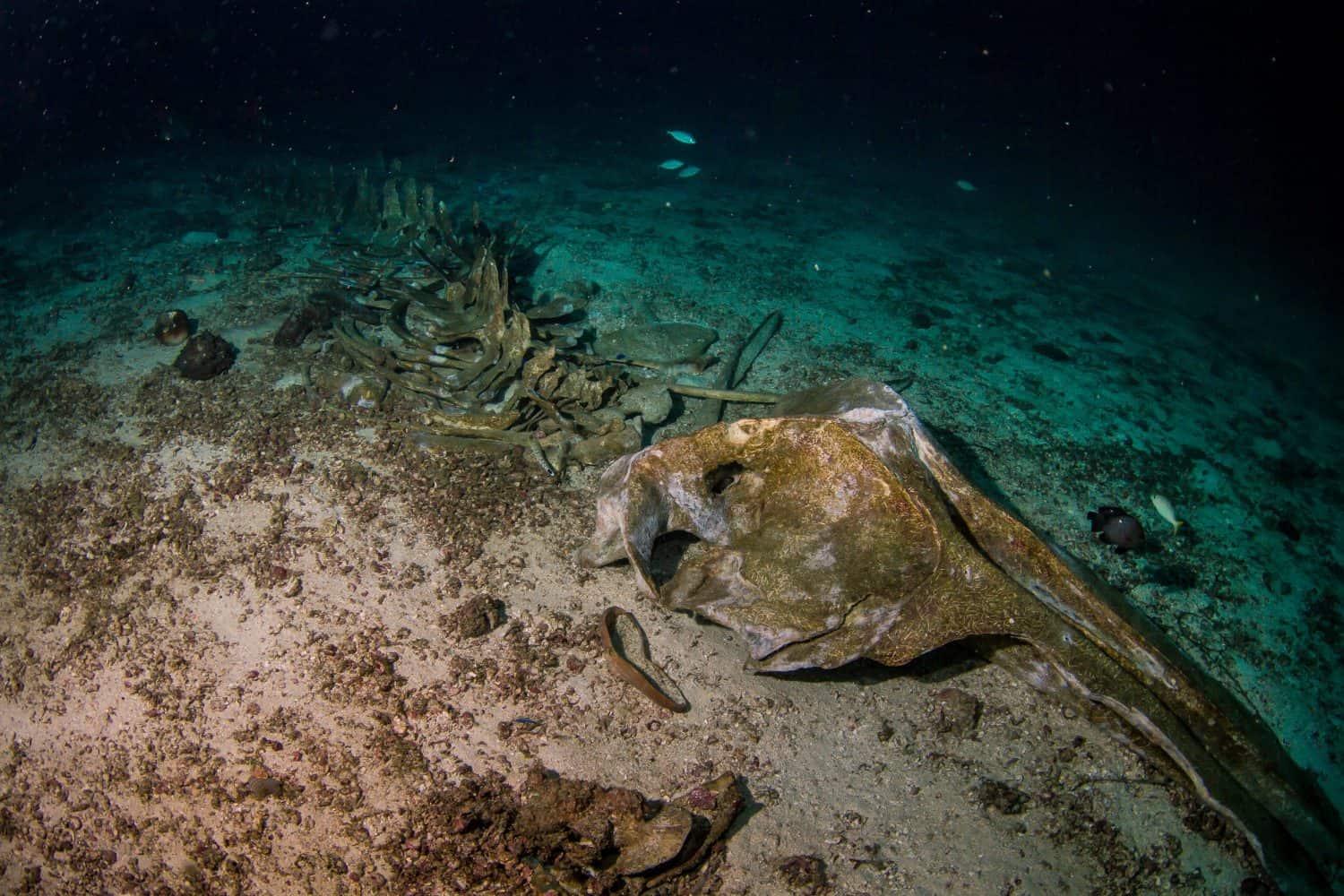
The discovery of the whale necropolis was published in Nature and shocked the scientific community. For up to 5.3 million years, the Diamantina Fracture Zone has been collecting the dead bodies of whales. Based on its location and geology, it’s believed the carcasses were unintentionally funneled onto the ocean floor. The landmass surrounding the floor forms a nearly perfect V-shape, which is conducive to sliding.
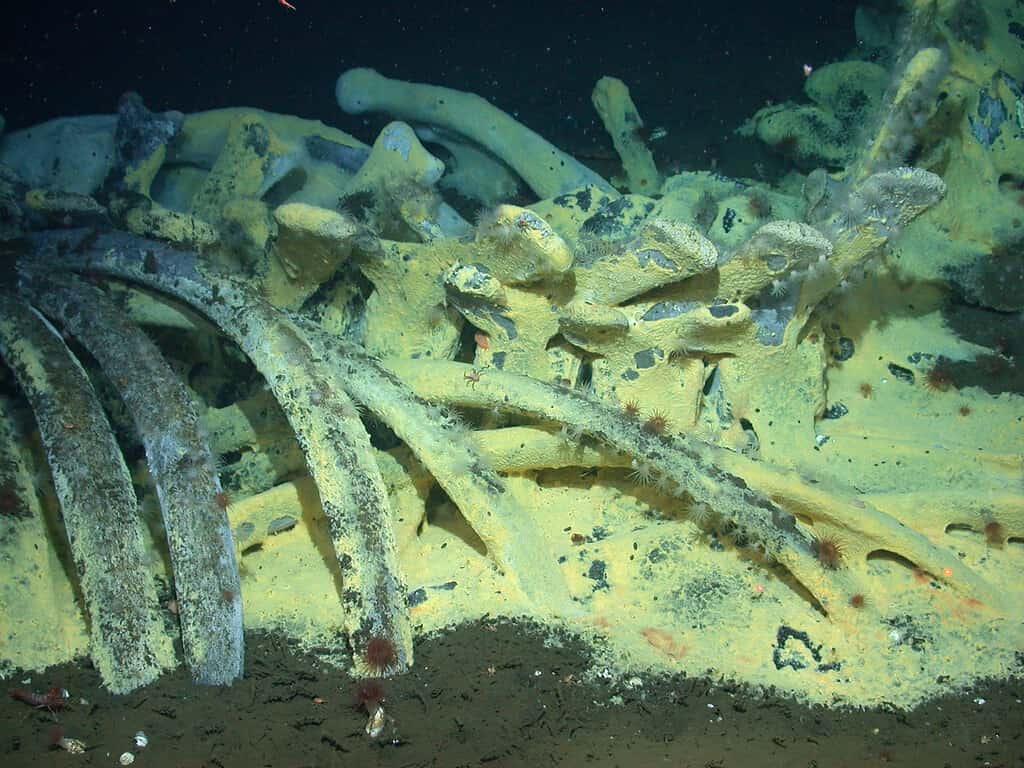
Whale falls become feeding grounds for many species on the ocean floor, primarily because of the carbon-rich nutrients they provide.
And at the very bottom of this trench lie 485 fossils belonging to multiple species of beaked whales. The area, which was once a popular foraging ground, had become the final resting place for an estimated 10 million whales. Scientists estimate the region has been collecting whale carcasses since the Early Pliocene. Now, this deep seabed has given way to its own thriving ecosystem. It doesn’t boast the traditionally bright colors of a reef or the bustling activity of the deep ocean, but it exists.
Given the number of whale carcasses currently decomposing at this depth, scientists estimate that it contains roughly 6.7 million tons of sequestered carbon. Other marine species, such as jellyfish, worms, crustaceans, and mollusks, are drawn to these nutrients. At the heart of the largest whale graveyard in the world, new life is emerging, along with several newly identified species.
The Dead Give New Life
An enormous whale fall such as this is bound to attract attention. After 32 dives, the team of Chinese scientists cataloged a diverse range of marine species. The presence of bone-boring worms indicated that the whale fall had been active for some time. Annelids, crustaceans, mollusks, cnidarians, and nematodes were also found at various sites along the ocean floor, feeding on the carcasses. Larger species, such as brittle stars, were also seen crawling along bleached whale bones. According to the study, 21 species were identified in total that fed on whale-fall remains.
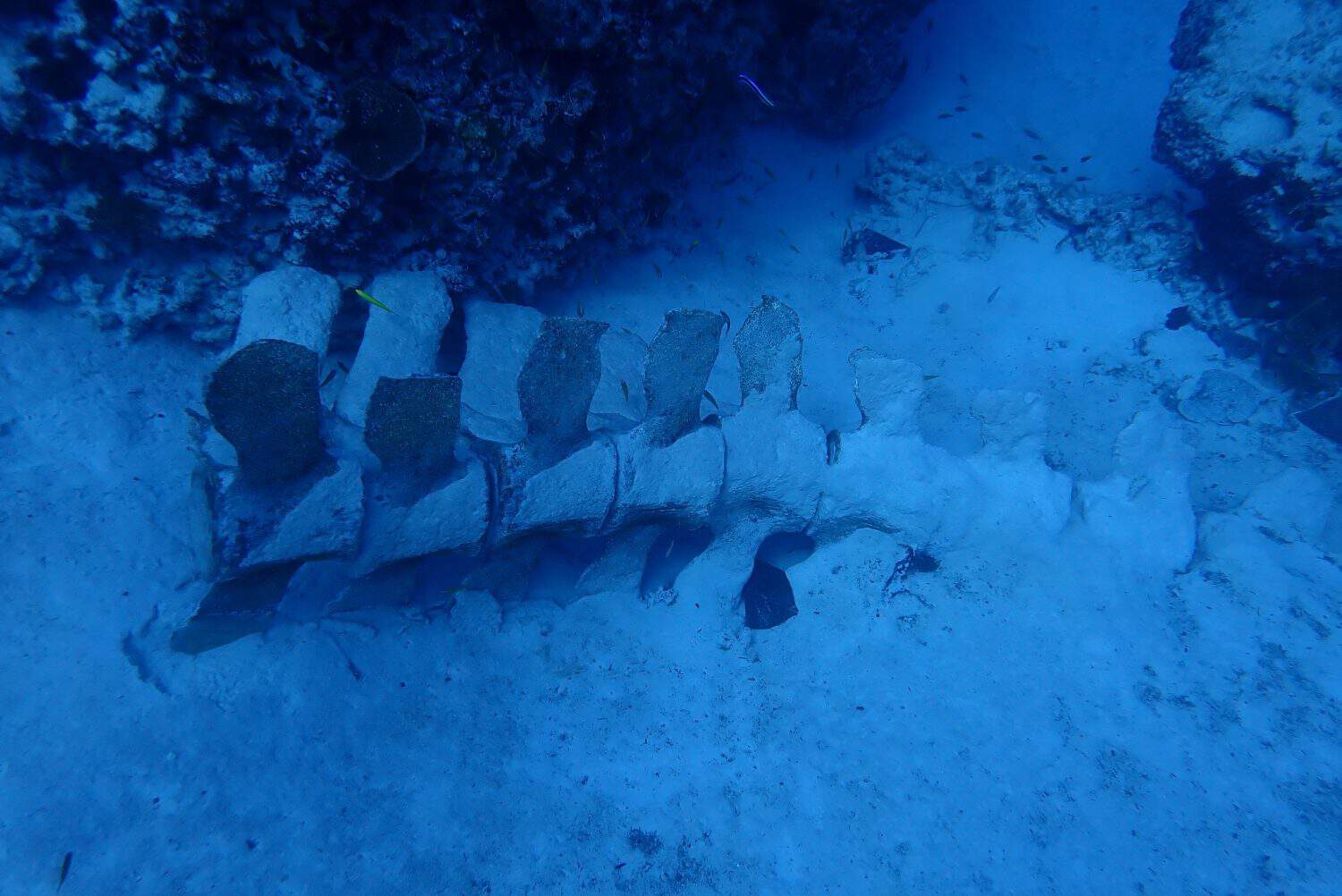
The Indian Ocean is now home to the largest and one of the oldest whale falls in the world, with both living and extinct whale species.
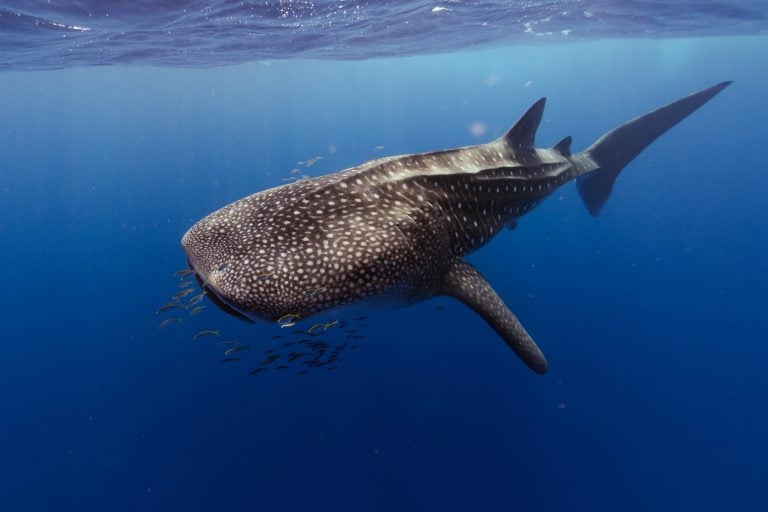
©fadhlanbr/Shutterstock.com
When it came time to identify the fossils, two living species were among them: Andrews’ beaked whale (Mesoplodon bowdoini) and the strap-toothed whale (Mesoplodon layardii). These species are native to the Indian Ocean, but several more have already gone extinct. Three well-preserved skulls were identified as Pterocetus and Izikoziphius, while more remains belonged to Balaenoptera borealis, a baleen whale. However, one new species was also identified, now extinct: Pterocetus diamantinae sp. nov.
The vast majority of the whales are or were known to forage along trenches and deep-sea abysses. It’s no surprise they were discovered in the Indian Ocean. But the sheer number of them indicates that deep-diving has its risks, even for whales. It’s unclear what caused the deaths of so many whales, but about 1,200 kilometers (746 miles) of geological formations may have played a role.
A World Growing at These Depths
Despite a depth of nearly 15,000 to 23,000 feet, this necropolis is ever-expanding. Without the help of ROVs and specialized submersibles, scientists may never have known this underwater ecosystem existed. The area has been compared to those with hydrothermal vents due to its carbon content. This provides the ideal environment for many of the marine species that scientists observed to continue thriving.
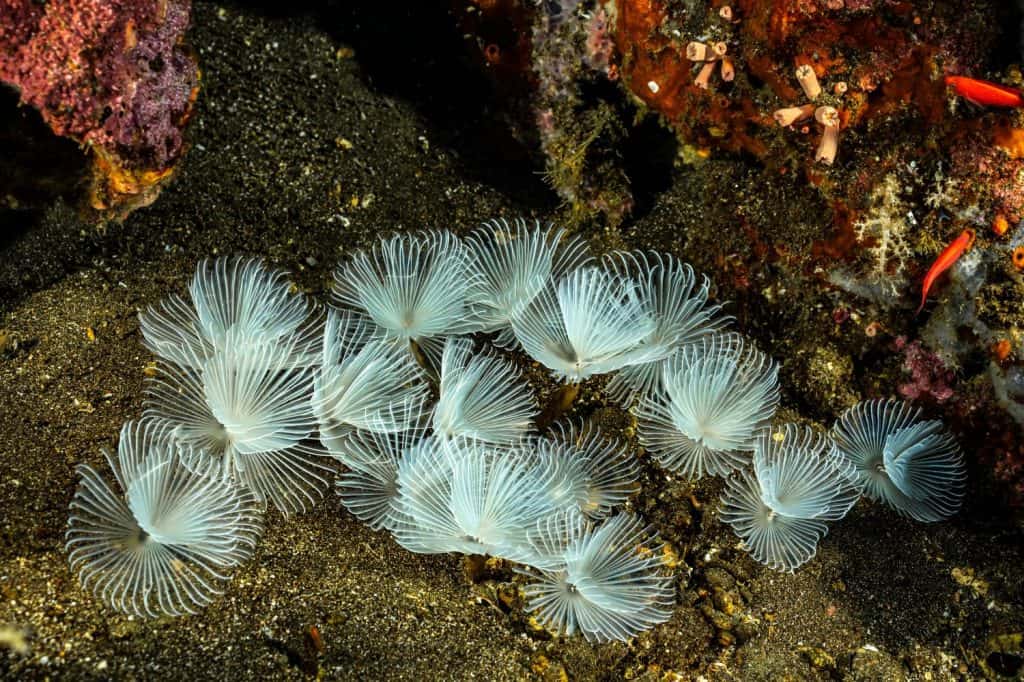
Over time, whale falls will continue to sustain the growing ecosystem supported by their carcasses.
©Subphoto.com/Shutterstock.com
Additionally, this hub provides shelter for species that were previously thought to be threatened or vulnerable. At this depth, human activity is rarely, if ever, an issue. The marine life observed on the seabed of the Indian Ocean will remain undisturbed, and whale falls will likely continue to occur as long as the seabed remains unchanged. Five active whale falls are proof enough of this — each one teeming with life and providing sustenance for other animals.