
Quick Take
- Critically endangered Randall Lineback cattle are native to Vermont and are one of the final surviving landrace breeds.
- The Hermit thrush is migratory and does not live in Vermont year-round, but it can be found in every county in the state.
- The Morgan horse, one of the first known American horse breeds, was chosen as Vermont’s official state animal in 1961.
- Vermont has both cold water and warm water official state fish: brook trout and walleye pike, respectively.
Vermont is in the Northeastern region of the U.S. It is renowned for its ski resorts, maple sugar, and the beautiful fall foliage of its forested landscape. Vermont’s official state animals not only represent the state’s agricultural history, but also its incredible natural heritage. Keep reading to discover Vermont’s official state animals and learn why they were chosen as symbols of this New England state.
State Bird: Hermit Thrush
The hermit thrush (Hylocichla gutta pallasi) was appointed as Vermont’s state bird by an act of the Legislature in 1941. Although the hermit thrush is migratory and does not live in Vermont year-round, it has a distinctive call and can be found in every county in the state.
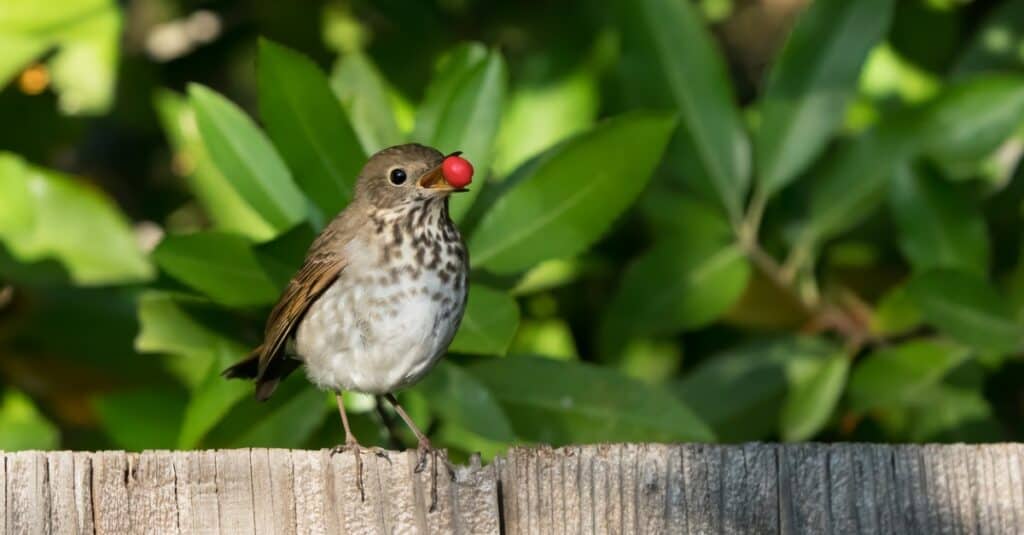
Although it does not live in the state year-round, the hermit thrush is the official state bird of Vermont.
©iStock.com/Wendy/Jeff Sparks/Torquemada
The hermit thrush has a stout build like a robin, but it is smaller. They have rounded heads, long tails, and thin beaks. These birds have a brown head and back, with a reddish-brown tail. The hermit thrush has a light-colored belly with brown spots on the throat and chest. They have dark eyes and a thin, pale eye ring. Hermit thrushes can reach 5.5-7.1 inches in length with wingspans of 9.8-11.4 inches.
The hermit thrush is typically found near the edges or clearings of the forest understories, which are the shaded areas beneath the canopy but above the forest floor. This layer contains vegetation such as small trees, shrubs, saplings, grasses, mosses, and herbaceous plants. The birds make their nests in and around trees, as well as on the ground, especially hermit thrushes that live in the Eastern U.S.
State Animal: Morgan Horse
The Morgan horse (Equus caballus), was designated as Vermont’s official state animal in 1961. The Morgan horse is originally from Vermont and can be traced to a single stallion named Figure, born in 1789 and named for its owner, Justin Morgan. The University of Vermont’s Morgan Horse Farm at Weybridge continues to breed the horses to promote and preserve the bloodline of these animals.
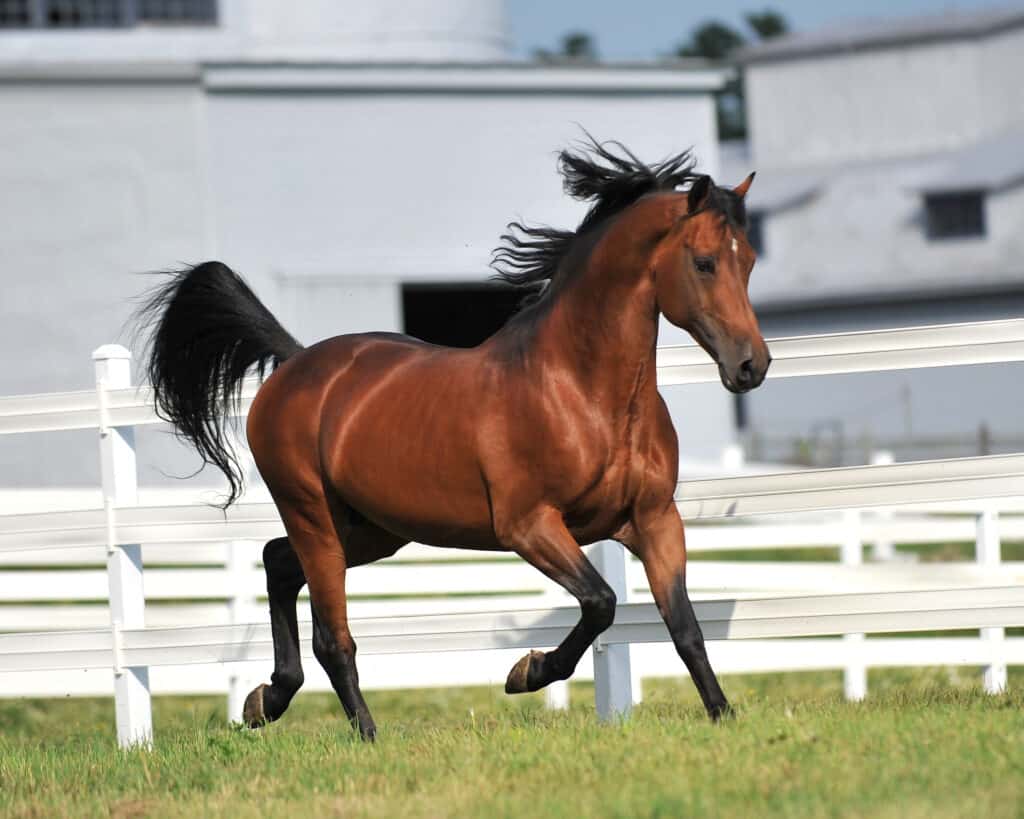
The Morgan horse was chosen as Vermont’s official state animal in 1961.
©Christopher Crosby Morris/Shutterstock.com
The Morgan horse is one of the first known American horse breeds. Morgan horse standards note they have expressive heads with broad foreheads, large eyes, short ears, slightly arched necks, and compact, muscular bodies. They typically stand between 14.2 to 15.2 hands tall (4.7-5 feet). They are most commonly bay (reddish-brown to dark brown with black on the lower legs, mane, and tail), black, and chestnut, although they can be found in every color.
Morgans are known for their versatility, intelligence, and willingness. Today, they are prized in the show ring and as pleasure horses, but they have earned their place in Vermont’s history. These hardworking horses not only excelled on farms, but they were also said to be some of the best cavalry and artillery horses during the Civil War. In fact, the entire 1st Vermont Cavalry was mounted on Morgan horses.
State Insect: Honeybee
The honey bee (Apis mellifera) was adopted as Vermont’s official state insect in 1978 under Act No. 124. As a regular pollinator of the state flower, the red clover, the honey bee was selected due to its agricultural importance, as well as for its social and cooperative nature, which is said to represent the unity part of the state motto, “Freedom and Unity.”
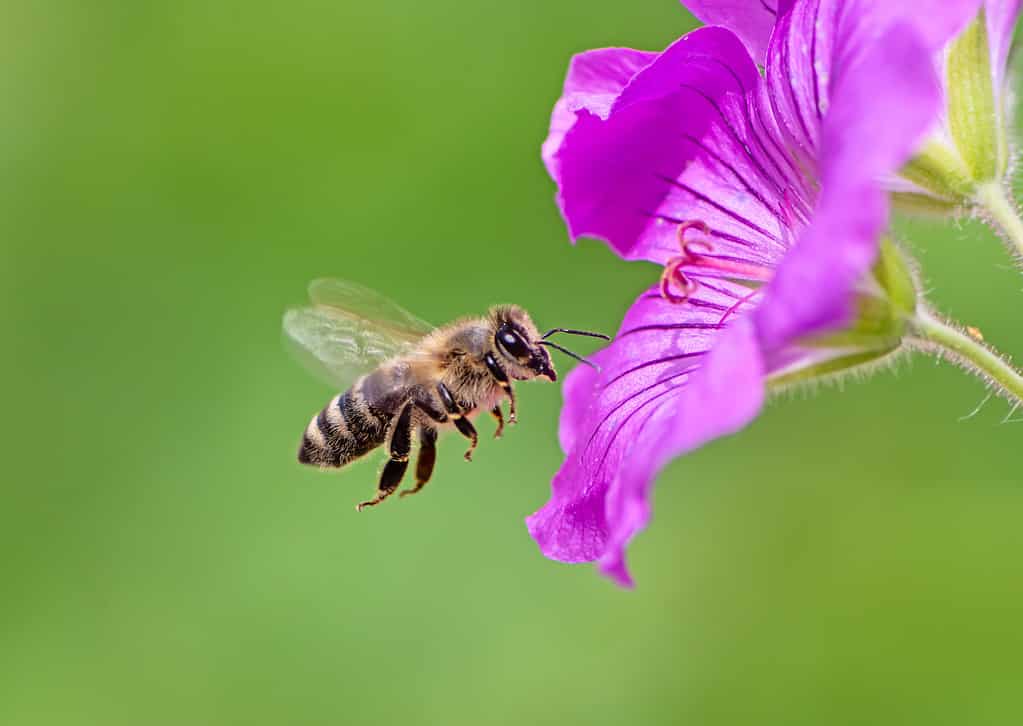
The honey bee is Vermont’s official state insect due to its agricultural importance and social nature.
©iStock.com/manfredxy
Honey bees are generally brown with yellow and brown abdomens and fuzzy hairs on their thorax. They typically measure 0.5-0.6 inches long. These bees live in large hives with a single queen, non-fertile female workers, and male drones that mate with the queen. The female workers build the waxy honeycomb and collect pollen and nectar to feed the larvae. The females do have stingers, but if they use them, they will die.
Honey bees thrive in habitats with a wide variety of flowering plants, including backyards, orchards, and meadows. They also live in managed hives. According to the State of Vermont’s Agency of Agriculture Food and Markets, the beekeeping industry in Vermont has continued to grow over the last 10 years. They estimate there are around 900 beekeepers with 14,000 hives across the state. Individuals and commercial farms not only harvest honey, but they also offer pollination services for important crops such as apples, blueberries, and pumpkins.
State Fish: Brook Trout and Walleye Pike
The brook trout (Salvelinus fontinalis), Vermont’s only native stream-dwelling trout, was adopted as the official state cold water fish in 1978 through Joint Resolution R-91. The walleye pike (Sander vitreus), a popular native sport fish, was designated as Vermont’s official warm water fish in 2011.
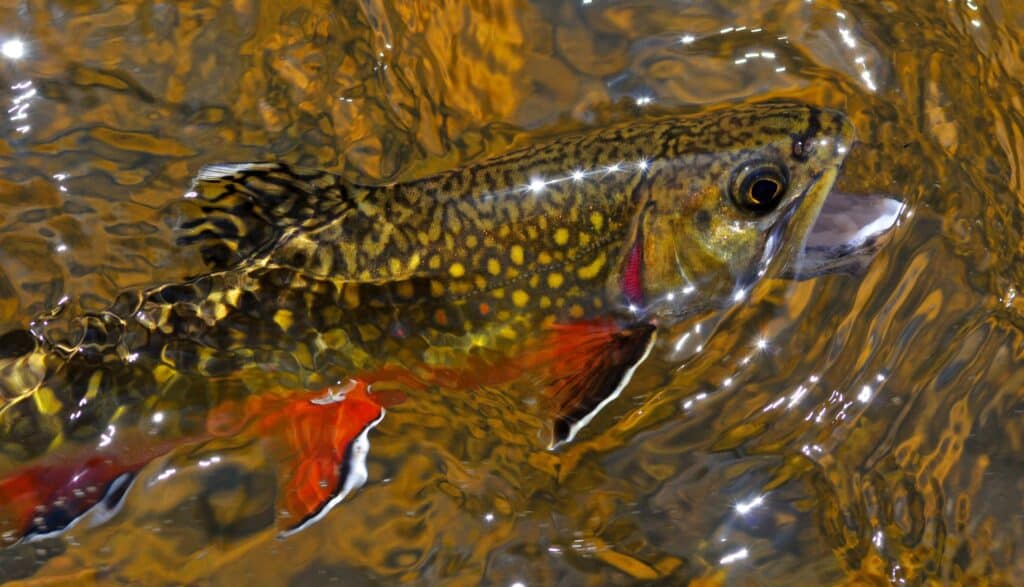
In 1978, the brook trout became the official state cold water fish of Vermont.
©Dec Hogan/Shutterstock.com
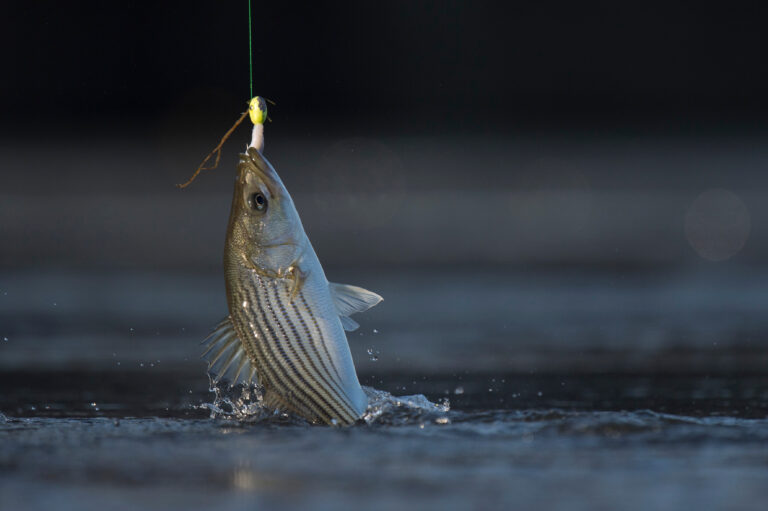
Brook trout have elongated, olive-green bodies with dark, squiggly markings. Their sides have red spots with blue rims. The Vermont state record brook trout was caught in Paran Creek in 1977. It weighed 5 pounds and 12 ounces. They can be found in cold water rivers and streams throughout the state.
Walleye pike have long, olive-green to brownish-gold bodies with white bellies. They have large, opaque, silvery eyes and sharp teeth. The Vermont state record walleye pike weighed 14 pounds 8.8 ounces and was caught in Lake Champlain in 2010. Walleye pike are primarily found in lakes and reservoirs.
State Butterfly: Monarch Butterfly
Students at the Anna Stowell Sunderland Bingham Memorial School (often referred to as the Cornwall School) influenced the adoption of the state butterfly, the monarch (Danaus plexippus). It was adopted as Vermont’s state butterfly in 1987. The colors of the monarch are said to represent different aspects of Vermont. The black veins represent the soil, the orange wings represent autumn, and the white markings represent snow.
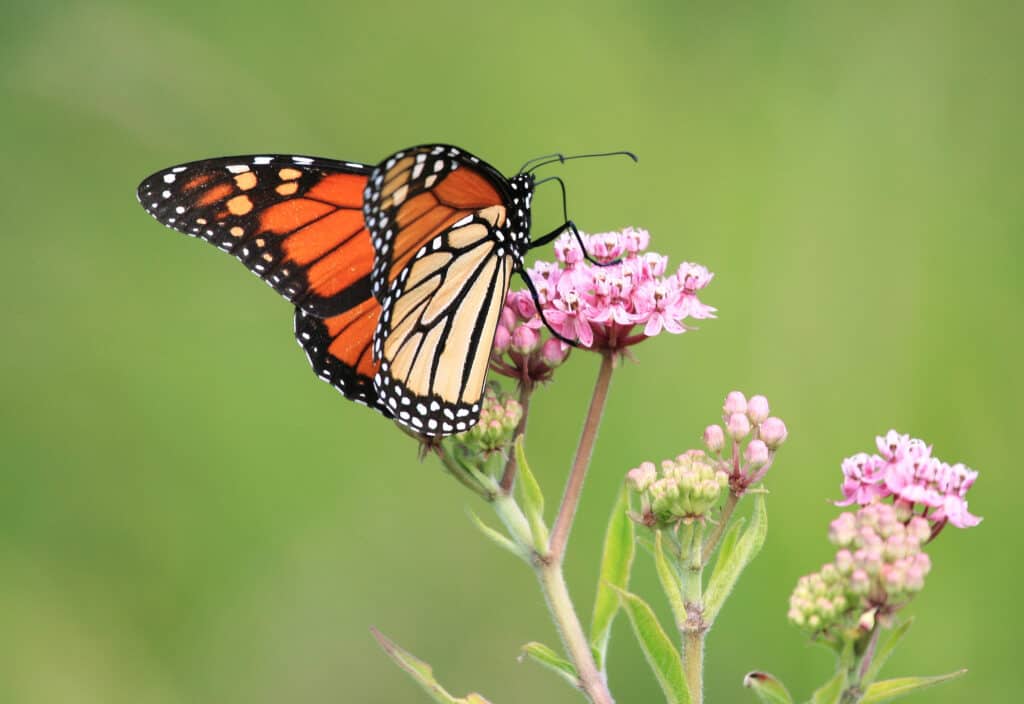
The monarch butterfly is Vermont’s official state butterfly thanks to elementary school students in Cornwall.
©David Byron Keener/Shutterstock.com
Monarch butterfly males have speckled black bodies, bright orange wings, black veins, black edges with white spots, and black spots (scent glands) on each of their hind wings. Females differ in that their wings are a more brownish-orange and their veins are darker and thicker. Monarch butterflies typically have wingspans of 3.5 to 4 inches.
Monarchs can be found in open meadows, weeded areas, marshes, and habitats with milkweed throughout the state. The monarch butterfly is common in Vermont during late summer and early autumn before migrating south in September and October. Most monarchs spend the winter in central Mexico.
State Reptile: Painted Turtle
Students at the Anna Stowell Sunderland Bingham Memorial School (the Cornwall School) were also behind the designation of the painted turtle (Chrysemys picta) as the official state reptile via joint resolution J.R.S. 57. According to the 1994 resolution, the turtle was adopted because it is a hard worker, it can endure cold temperatures like Vermont citizens, its colors represent the beauty of Vermont in autumn, it enhances biodiversity, it makes the ponds more beautiful, it helps to control insects, and it is one of the most common turtles in the state.
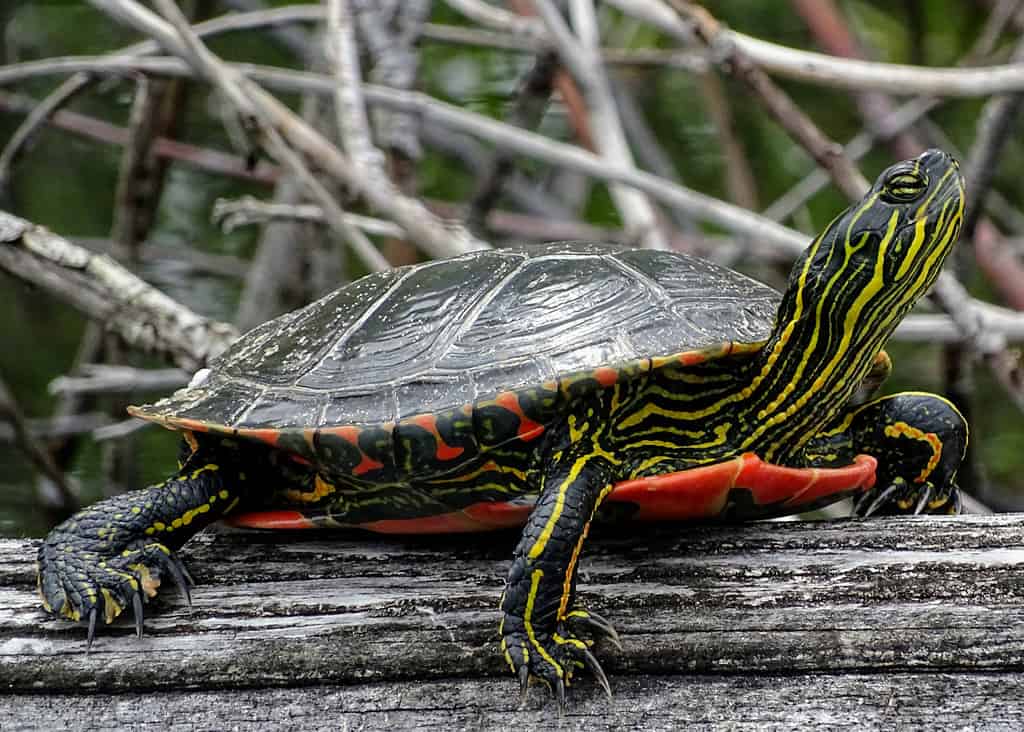
The painted turtle became the official state reptile of Vermont in 1994.
©iStock.com/Dave Acheson Photography
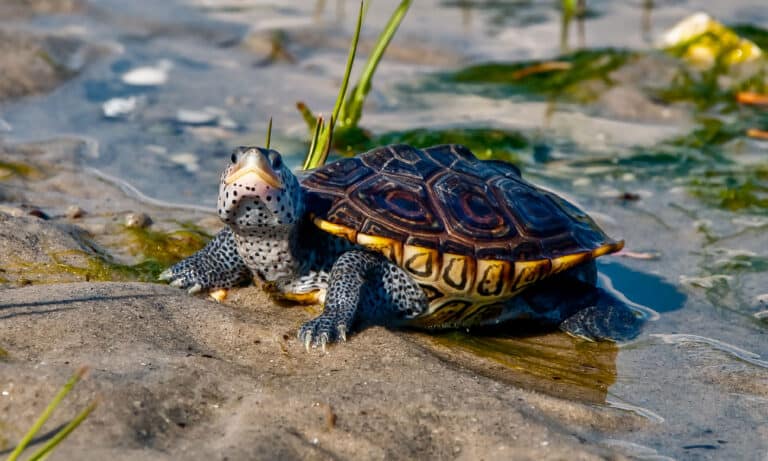
The painted turtle has a smooth, slightly domed shell with outlined scutes. It has olive to black skin with bright yellow and reddish stripes on its head, neck, and legs. The undersides of the outer scutes are brightly patterned. Its underside is either yellow or yellow with a dark pattern. Males are smaller than females and have long, straight claws used in courtship and mating. Females can reach up to 10 inches long, while males generally only reach about 7 inches long.
Although these turtles are the most common in the state, they are not found in mountainous areas. They are primarily aquatic but are often seen basking. Females also leave the water to lay their eggs or travel between water sources. Painted turtles favor ponds and lakes with soft bottoms, emergent plants, and basking spots.
State Amphibian: Northern Leopard Frog
The northern leopard frog (Lithobates pipiens) was recognized as the official state amphibian in Senate Bill No. 241, which was made effective in 1998. These native frogs were chosen as Vermont’s official amphibian because of their importance as an indicator species, their ecological role in controlling insects, and their appearance, which represents the state’s natural beauty.
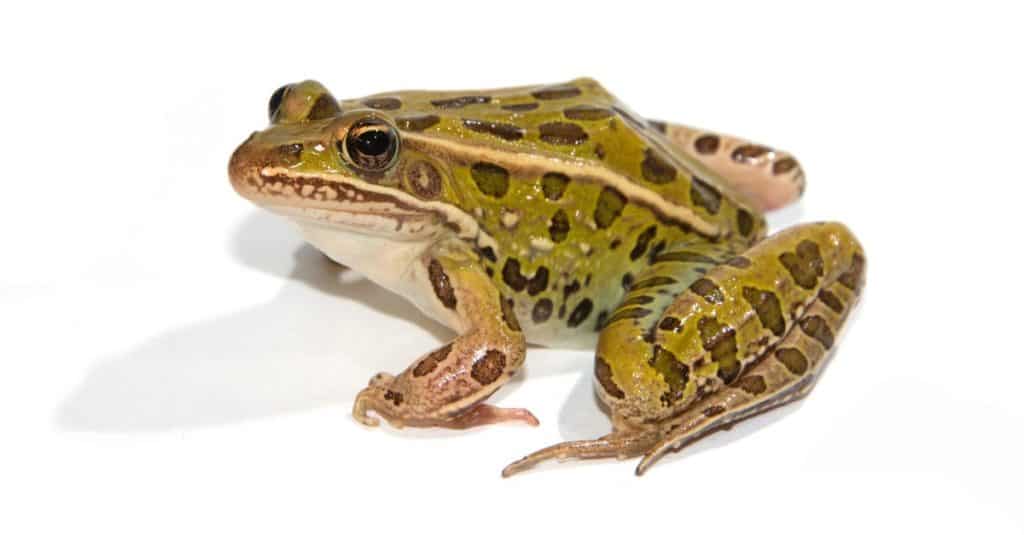
The northern leopard frog was selected as the official state amphibian due to its importance as an indicator species.
©Gerald A. DeBoer/Shutterstock.com
The northern leopard frog has green, brown, or yellowish skin with large, dark, oval spots surrounded by a lighter border. It has pale undersides and lighter colored ridges along both sides of its back. The longest reported northern leopard frog in Vermont is 4.7 inches, but they average around 3.3 inches, with females being larger than males.
In Vermont, the northern leopard frog can be heard calling from April through mid-May. Northern leopard frogs require multiple, linked habitats. They rely on permanent water sources for breeding, overwintering, and escaping predators. They also breed in marshes, floodplains, and other wetlands, and they need semi-open wet meadows and fields for foraging. The frog is relatively common in the Lake Champlain Basin.
State Heritage Livestock Breed: Randall Lineback Cattle
Randall Lineback cattle (Bos primigenius) were adopted as Vermont’s official state heritage livestock in 2006 under House Bill No. 468, which Governor Jim Douglas approved. The breed began in Bennington County, Vermont in the the early 1900s, but the origin of these animals goes back to the 1600s. The Randall Lineback breed is among the last surviving landrace cattle breeds, which are domestic animal populations that develop in local areas for local purposes. They are usually isolated from other breeds and are uniquely adapted to their particular geographical region.
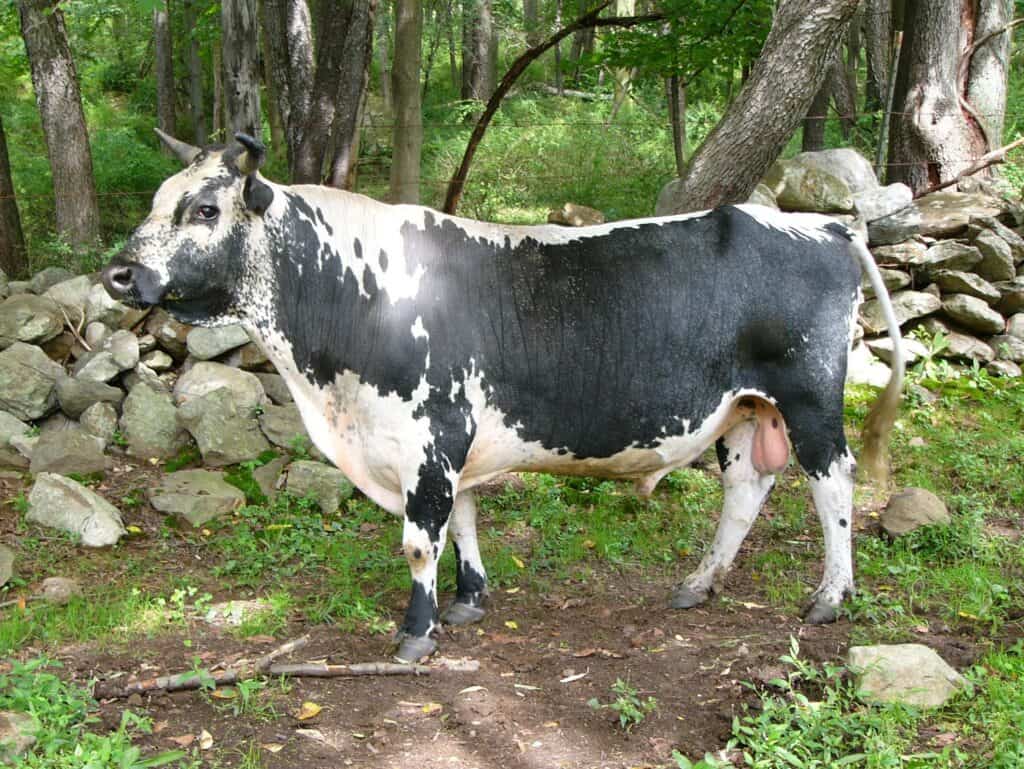
The Randall Lineback cattle breed is one of the last surviving landrace cattle breeds.
Randall Lineback cattle are primarily blue-black with a white line down their backs. However, with increased breeding, some animals are exhibiting blue, grey, or red coloring. The coloring on their sides varies from almost black to almost white. They have black noses, ears, eye rings, teats, and feet. This breed also has horns. This is a medium-sized breed, with cows weighing 600-1100 pounds and bulls weighing 1000-1800 pounds.
Randall Lineback cattle were originally an all-purpose breed, used for milk, meat, and as draft animals, but they are rarely used for milk today. They are said to be docile, and the cows are good mothers, but they have an assertive side. The breed is critically endangered, but population recovery efforts are ongoing.