
Quick Take
- The corso pit bull's reputation as a fighter is almost entirely backwards, and what actually drives any aggression in this breed is something else entirely. Explore their fighting origins →
- Guessing this mix's adult size is trickier than it sounds, and there's only one reliable way to know for sure. See the size range →
- Their love for family comes with one serious emotional vulnerability that every potential owner should prepare for. Learn about separation anxiety →
- One inherited health condition can only be corrected with surgery, and both parent breeds put this mix at risk of developing it. See the surgical health risk →
The American pit bull terrier/cane corso mix, known as the American pit corso or the corso pit bull, grows very large and strong, but they are gentle giants. While any mixed breed comes with surprises, these pups pair best with families with all the time in the world to play and engage with them. They are stubborn yet intelligent, seemingly inheriting the best traits of both breeds. Read on to learn everything you need to know about the corso pit bull.
History of the Corso Pit Bull
The reputation of both of these species as guard dogs is one of many qualities that makes the American pit bull terrier and cane corso easy to love. While some sources portray these dogs as fighters, the right socialization and training set them on a path to success. A loving home makes this mix sweet and doting on their family, and the only drive to fight comes from a desire to protect the ones they love.
The American pit bull terrier’s lineage traces back to crosses between old English bulldogs and terriers, producing so-called “bull and terrier” dogs, with closely related breeds such as the bull terrier sharing this common ancestry. These dogs can trace their lineage to old English bulldogs, used in blood sports such as bull and bear baiting, until a ban in 1835 outlawed it. They were brought to North America in the mid-to-late 19th century, where they often worked on farms, guarding stock and hunting game.

The cane corso originated in Italy.
©Ruben Kazaryan/Shutterstock.com
The life of a cane corso was much different, working to guard property and cattle on farms. Originally bred in Italy, some experts say that their bloodline goes back to Roman war dogs, and their ruthless hunting skills are more than a match for large game. As these farming methods became obsolete, the species was also on the way to obsolescence, but dog enthusiasts began to revive the population in the 1970s. These dogs didn’t make their way to the United States until the end of the 20th century. They received recognition from the American Kennel Club (AKC) in 2010.
The Muscular Build of the Corso Pit Bull
With any mixed breed, the specific weight tends to range with the same variation as the dogs that make it up. On average, the American pit corso stands 24-34 inches tall, weighing 50-115 pounds. The only way to truly determine this adult dog’s size is by looking at its biological parents.
Cane corso females measure 23.5-26 inches at the withers, while males measure 25-27.5 inches. AKC breed standards indicate weight should be proportionate to height. These large dogs can easily exceed 100 pounds.
American pit bull terriers can be registered with the United Kennel Club (UKC). They recommend that mature males weigh between 35 and 60 pounds, while females should weigh between 30 and 50 pounds. The height range is 18 to 21 inches at the withers for males and 17 to 20 inches at the withers for females.
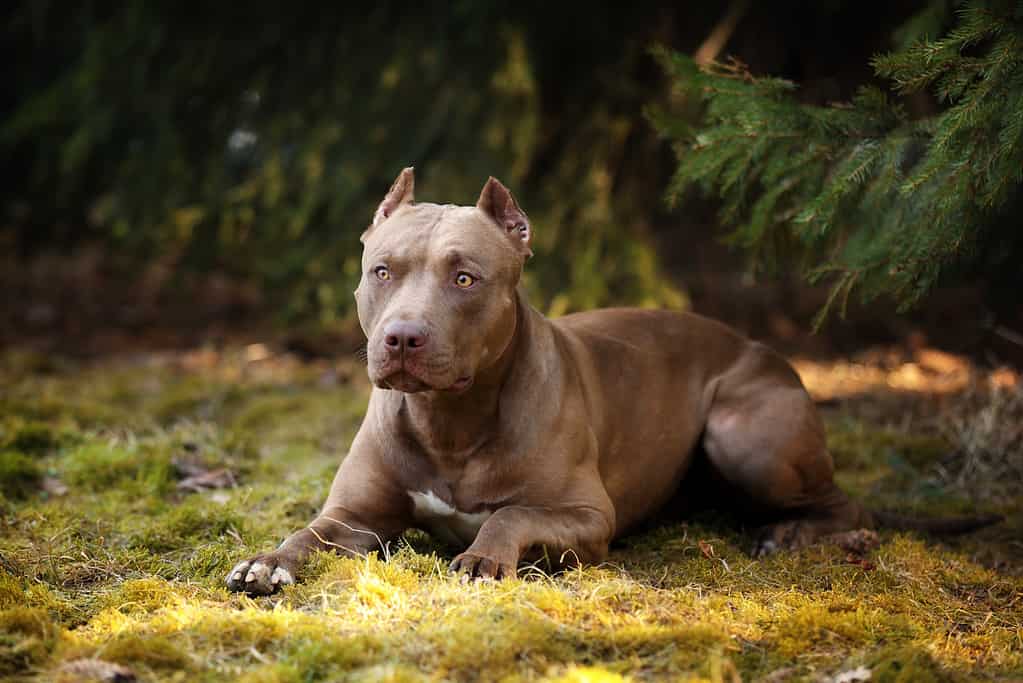
American pit bull terriers should generally weigh between 30 and 60 pounds, depending on sex.
©Ivanova N/Shutterstock.com
The coat of both dogs is short with a soft shine for the sleek but coarse fur, though some variations have a double coat for the winter. Brindle coloring is common, but the American pit corso also has black, fawn, or red fur. Genetically, the corso pit bull typically has a skull and muzzle that resembles the American pit bull terrier, while its body and stature follow the look of the cane corso. Their shoulders and chest are squarish, complemented by their equally muscular and thick neck. While some owners crop the ears of these dogs, leaving them alone only adds to their bright grins and baggy jowls.
The Corso Pit Bull’s Lovingly Protective Personality
Young puppies need socialization to make them comfortable with people and reduce the risk of aggression. Once owners establish this baseline of behavior, the dogs remain loyal to their people, quickly responding to commands and attention they receive. While both breeds were originally bred for aggression, stopping any sign of inappropriate behavior is a job for their owners.
Some say the American pit corso struggles to share attention with other dogs and animals in the home, but a little training helps. They love a home with many children, blending well with the family atmosphere that shows them the same love in return. Don’t let the muscular build fool you, they are sweet and doting when they feel safe.
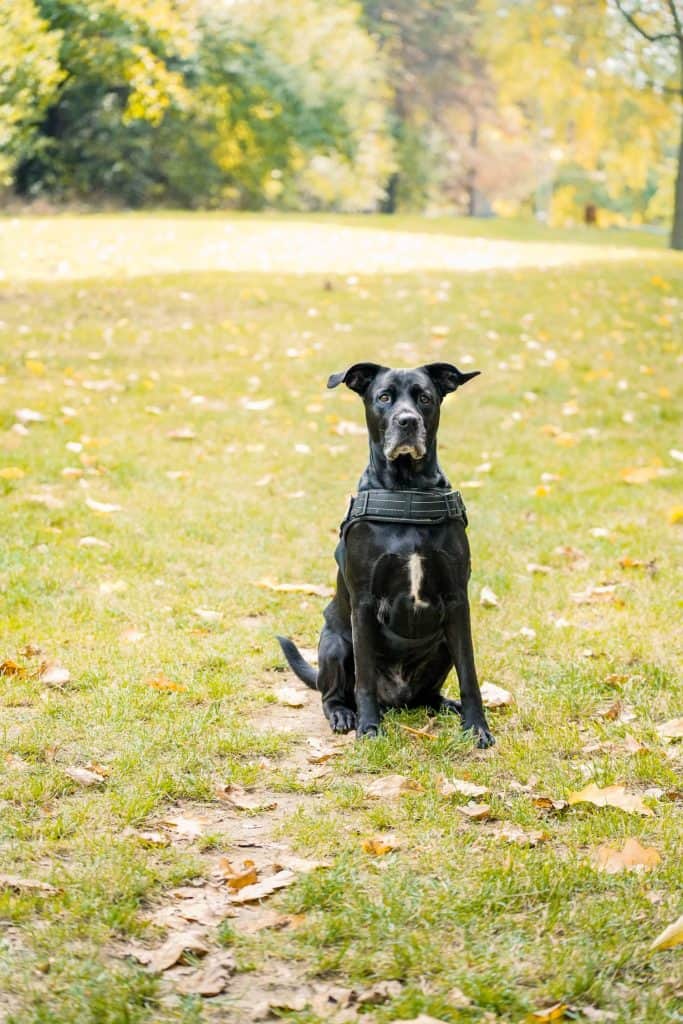
The cane corso and pit bull mix is protective but loving.
©Dog_graphy/Shutterstock.com
As much love as the Corso pit bull shows its family, strangers get a much colder shoulder. If this pup senses anything wrong, it jumps to protect its family, though not as quickly as the cane corso does. Instead of becoming physically aggressive, they bark as a warning when feeling threatened. This personality is big, so they thrive when they have a family to spend time with. Separation anxiety is a challenge for this dog, but owners are rewarded with a warm and boisterous welcome whenever they come home.
Corso Pit Bull’s Health Concerns
The Corso pit bull’s breeding for optimal genetics makes it generally healthy, but the right veterinary care can help to prevent issues that come with their genetics. Both parent breeds put corso pit bulls at risk of developing hip and elbow dysplasia, a condition that can cause the joint to pop out of the socket. The only way to correct this problem is with surgery.
Much like other dogs with their build, cardiac issues like dilated cardiomyopathy plague this breed. The required treatment depends on how severe the condition is when identified, but most dogs will need medication to help manage it. Allergies and other minor concerns may arise, depending on genetics and how you care for them. These dogs live to be 9-14 years old with proper care.

Much like the American pit bull terrier, the corso pit bull enjoys time with its family.
©MVolodymyr/Shutterstock.com