
Polar bears are not only the largest bears, but they are also the largest land predators in the world. So, when it comes to size, how do polar bears measure up against some of the other top land predators? This comprehensive polar bear size comparison will show how large polar bears are compared to Kodiak bears, grizzly bears, and tigers. Find out just how big polar bears really are, and discover why they’ve earned their place at the top of the food chain.
How Big Are Polar Bears?
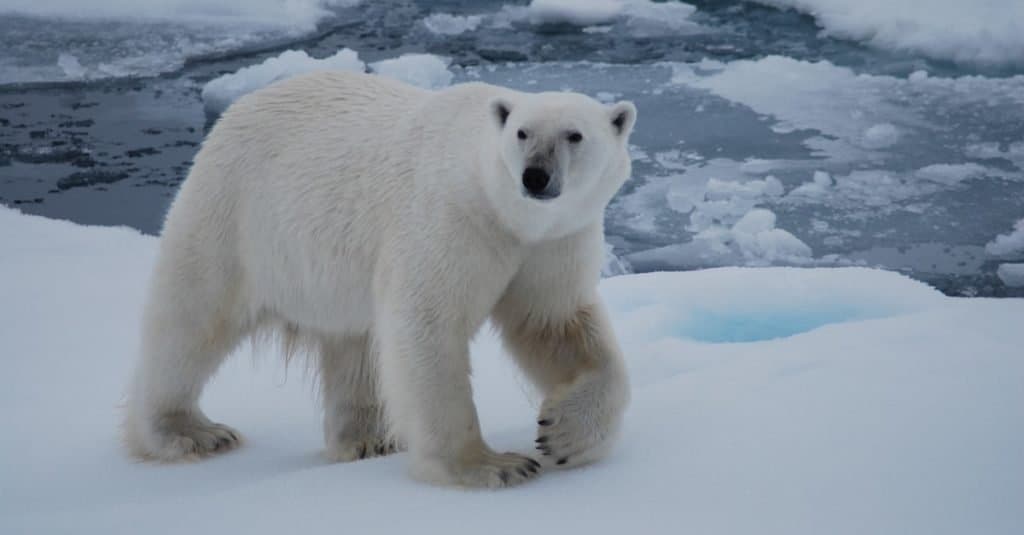
A polar bear’s paw can reach 12 inches in diameter.
©Louise Ekeblad/Shutterstock.com
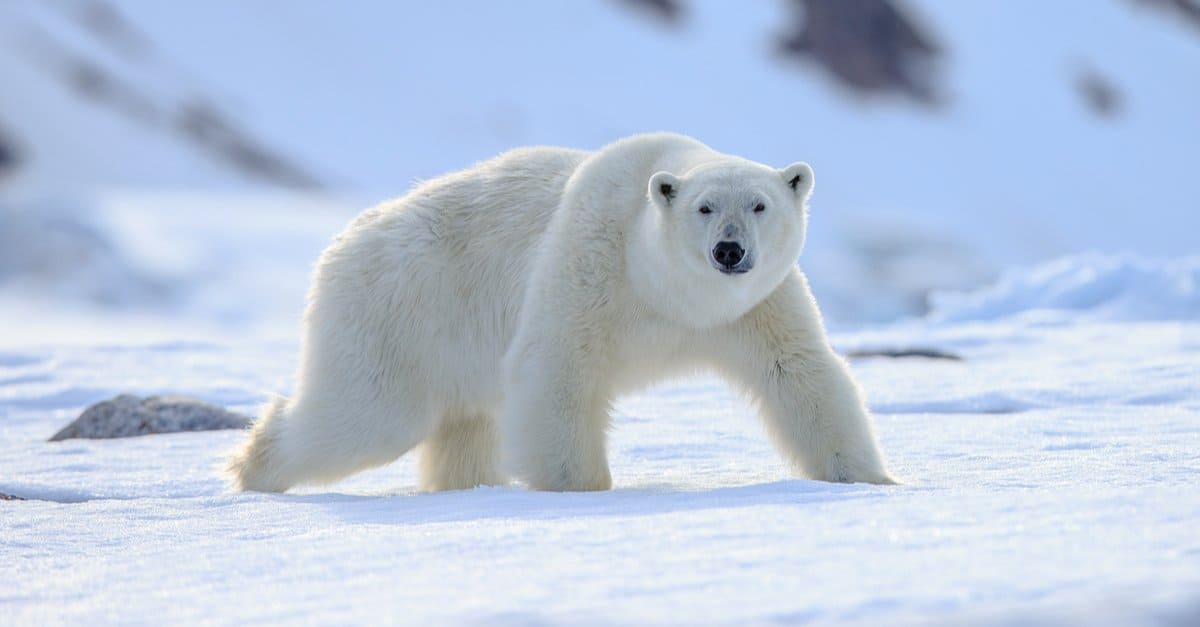
Due to a protein-rich diet filled with seals, young walruses, fish, whales, and other common Arctic prey, polar bears (Ursus maritimus) can develop a thick layer of fat. This fat layer can grow up to 4.5 inches thick, and researchers estimate that about half of the bear’s weight is fat. This fat layer is crucial for insulation in temperatures that regularly reach -50°F.
The largest polar bear ever recorded was taken in Alaska in 1960. This giant was nearly 12 feet tall and weighed an incredible 2,209 pounds. The average adult male in the U.S. is about 5 feet 9 inches tall, so this polar bear was more than twice the height of an average man.
However, polar bears generally do not exceed 10 feet in height when standing on their hind legs. On all fours, they reach a maximum shoulder height of about 5 feet, which is slightly shorter than the average adult female height of around 5 feet 3 inches. The largest male polar bears can weigh upwards of 1,700 pounds, but they typically average closer to 775-1,300 pounds, with females only reaching around 700 pounds.
Polar Bears vs. Kodiak Bears
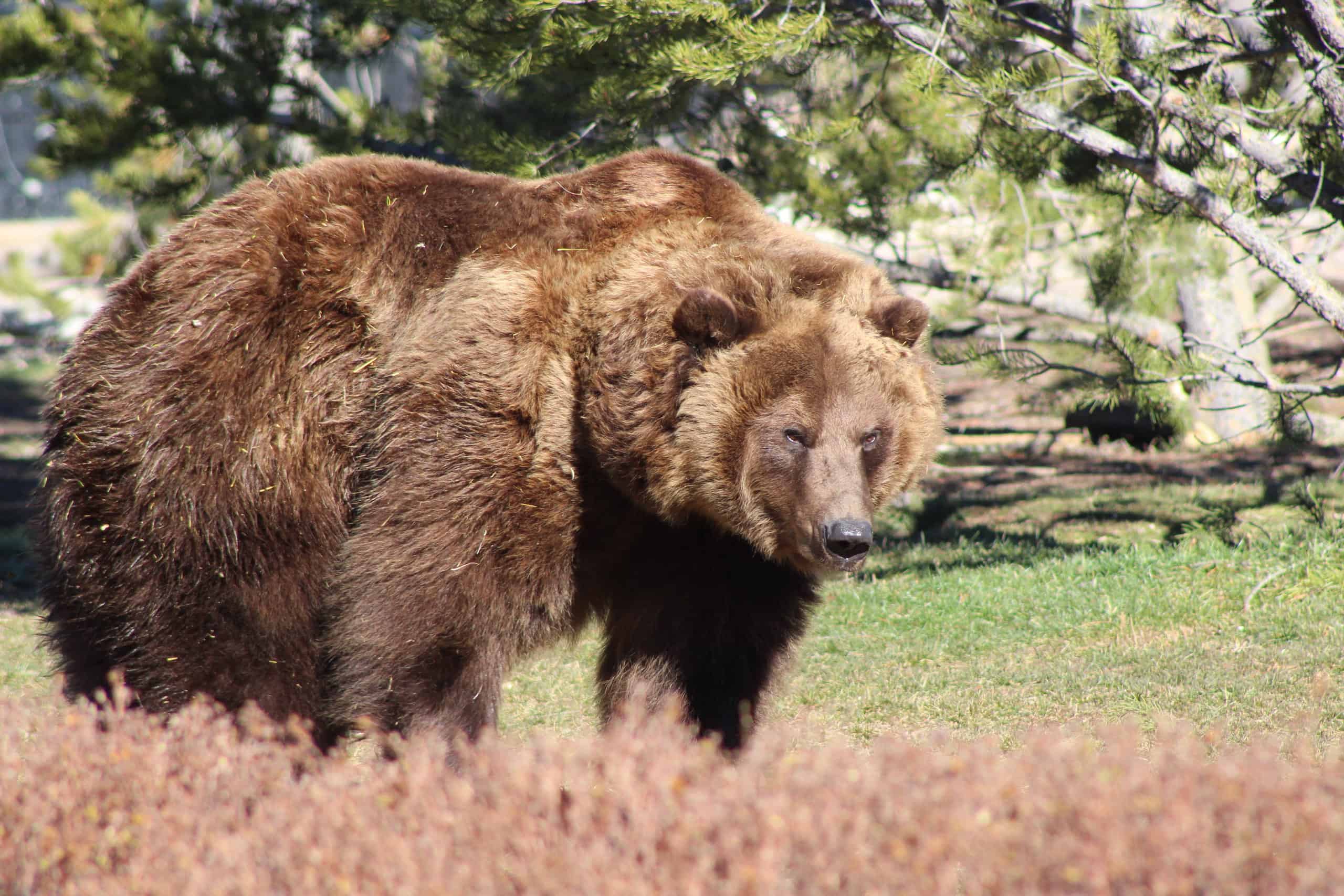
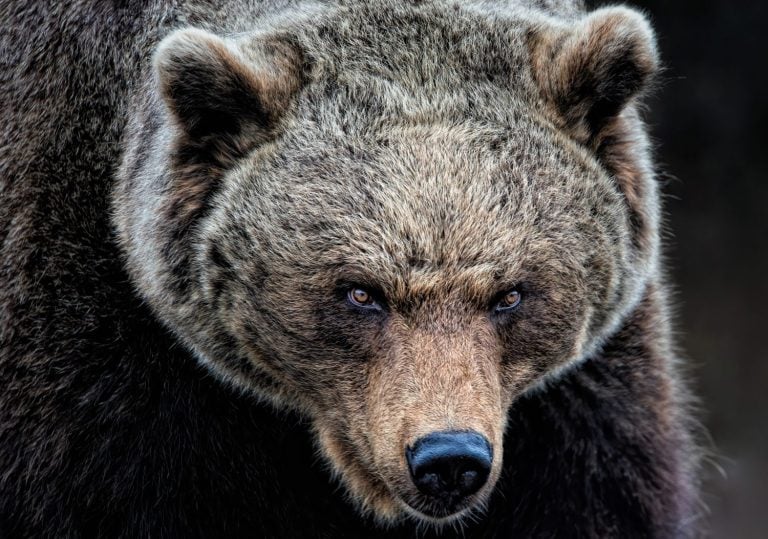
Kodiaks are the largest type of brown bear.
©Lisa Stoorza/Shutterstock.com
The Kodiak bear (Ursus arctos middendorffi) is the largest subspecies of brown bear. The Kodiak is roughly the same size as the polar bear, so many consider it a tie for the title of largest bear. Like the polar bear, the Kodiak’s shoulder height can reach 5 feet, but most bears are slightly shorter. When the Kodiak is upright on its hind legs, it stands around 10 feet tall.
The largest Kodiak bear is believed to be Clyde, a captive bear at the Dakota Zoo in Bismarck, North Dakota. Clyde weighed 2,130 pounds when he passed away in 1987. However, adult male Kodiaks in the wild typically average 600 pounds to a maximum of around 1,400 pounds, which is 300 pounds less than the maximum for polar bears. Female Kodiaks reach about 700 pounds, the same as female polar bears.
Polar Bears vs. Grizzly Bears
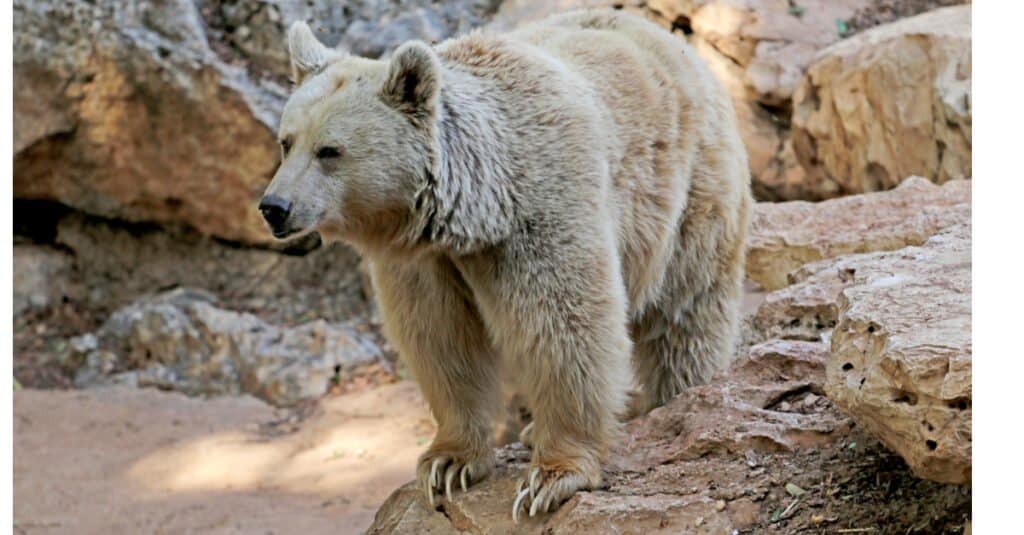
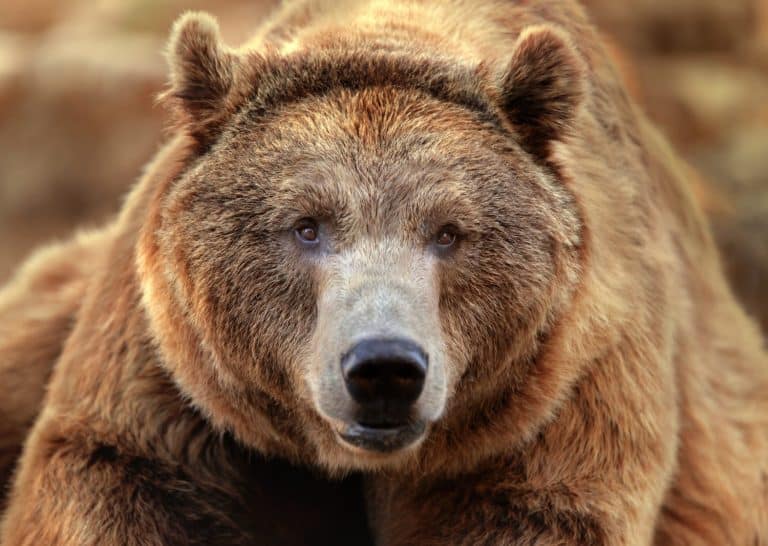
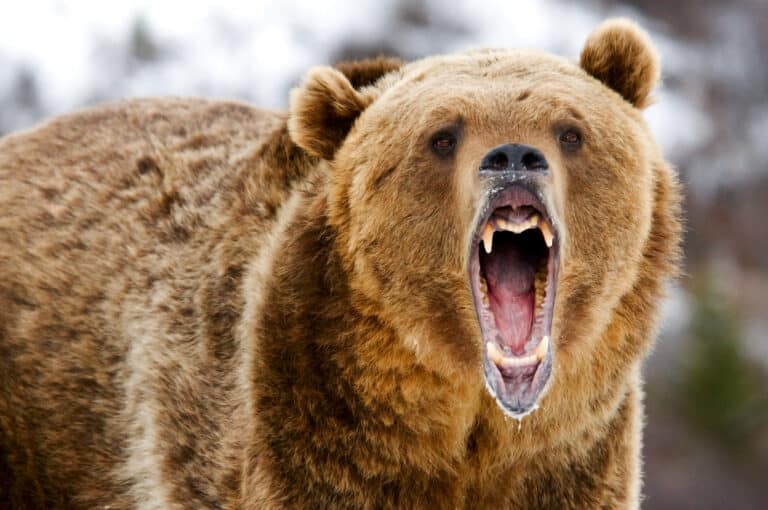
Adult grizzly bears weigh up to 700 pounds.
©Yurii 1111/Shutterstock.com
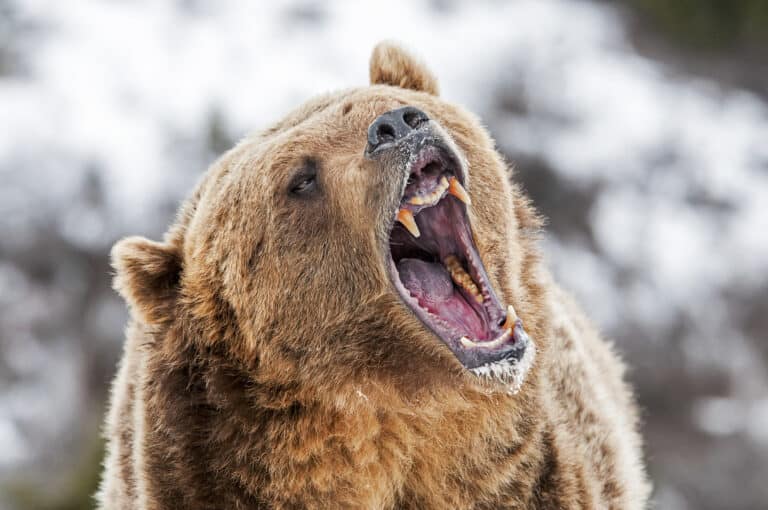
Like the Kodiak bear, the grizzly bear (Ursus arctos horribilis) is a subspecies of brown bear, though they’re smaller than Kodiaks on average. Kodiak bears are found on the Kodiak Islands in Alaska, while grizzlies are found throughout the contiguous United States and parts of Canada. When comparing grizzlies to polar bears, there is a notable size difference.
On their hind legs, grizzly bears reach over 8 feet tall. However, this is about two feet shorter than both Kodiaks and polar bears. The grizzly’s shoulder height is only around 3.5 feet, which is about the same height as the average 4-year-old in the U.S. When it comes to weight, male grizzlies don’t even come close to polar bears. Grizzlies weigh 200-700 pounds, which is at least 500-600 pounds less than the average polar bear. Female grizzlies weigh a maximum of 400 pounds, which is 300 pounds less than female Kodiaks or female polar bears.
Polar Bears vs. Tigers
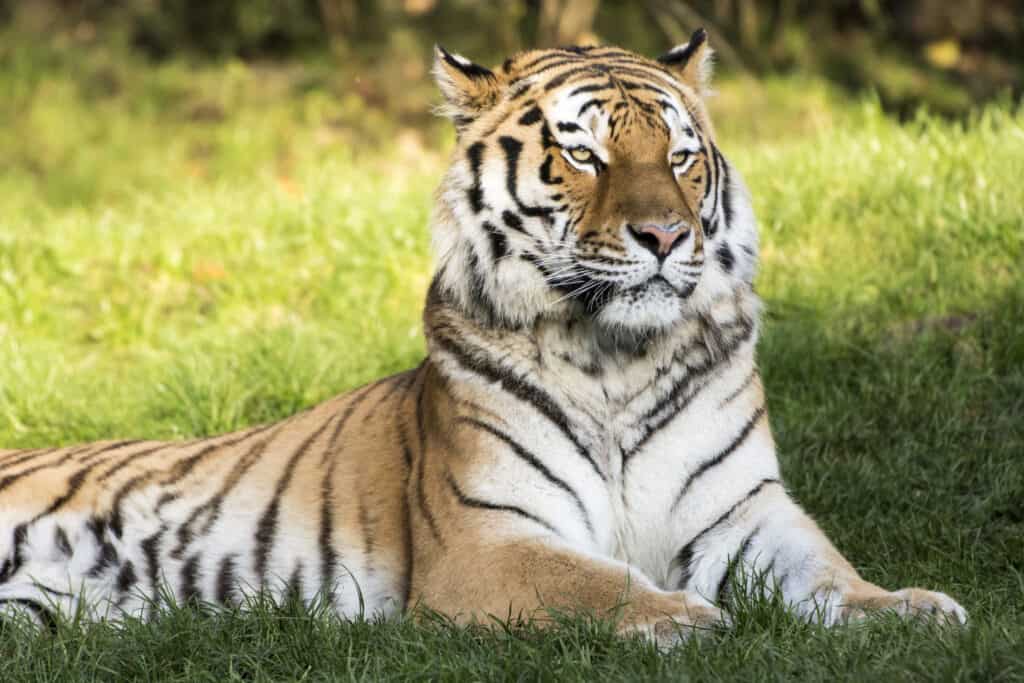
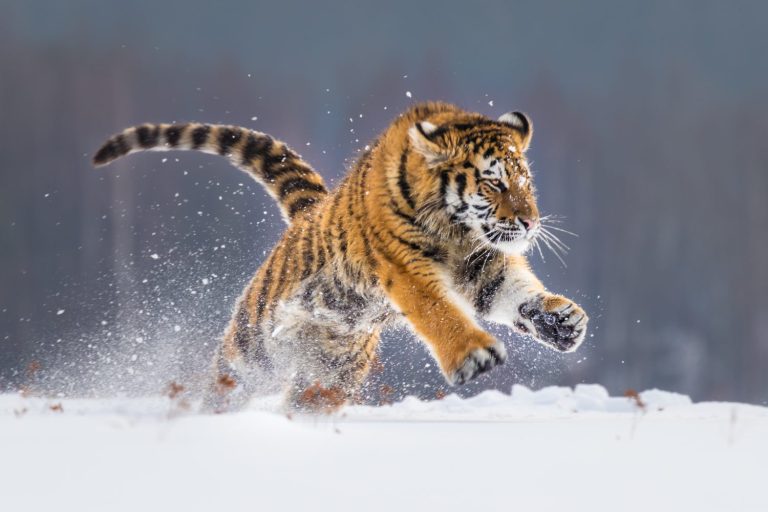
Amur tigers are the largest cats in the world.
©Gerckens-Photo-Hamburg/Shutterstock.com
Tigers are the polar bears of the big cat world in terms of size. They are the largest cat species, with the Amur tiger, also known as the Siberian tiger (Panthera tigris altaica), being the largest subspecies. The males can reach up to 700 pounds, while the females weigh less than 400 pounds. Amur tigers are about 10 feet long from nose to tail. The largest captive Amur tiger on record was 10 feet and 11 inches from nose to tail, and weighed 932 pounds.
When comparing average weights, large Amur tigers are close in size to small polar bears and Kodiak bears. Amur tigers and grizzlies reach roughly the same average weights. However, Amur tigers reach around the same length as polar bears and Kodiak bears, and they are about two feet longer than a grizzly.