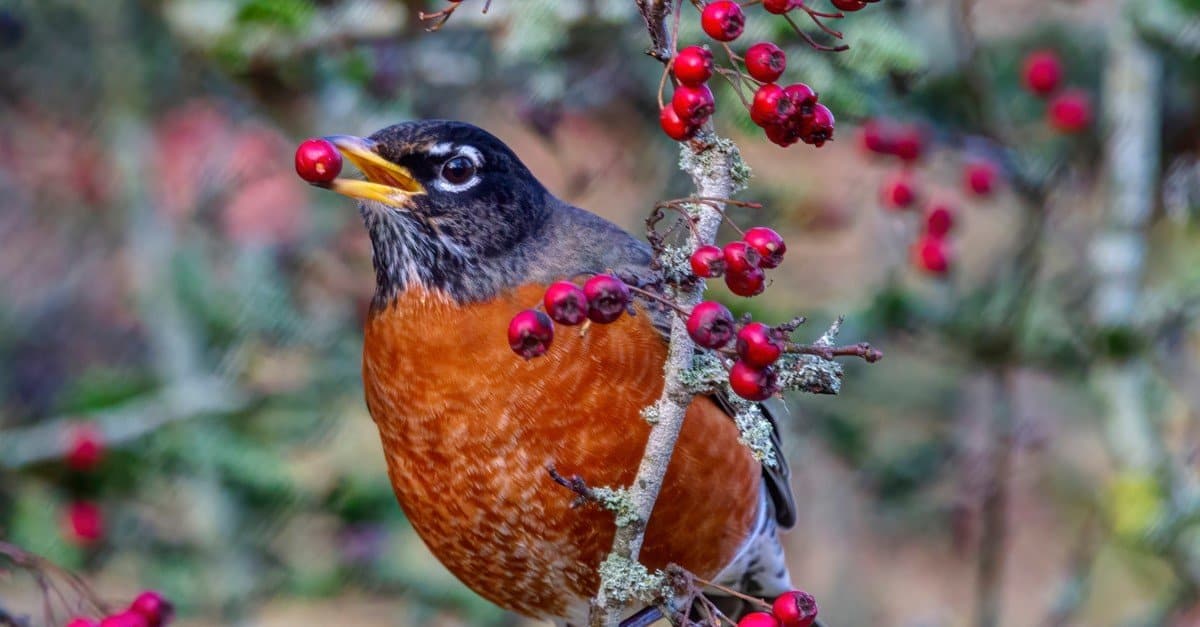

There are dozens of species of robins, but the relationship between these different birds is often less rooted in shared evolutionary history and more in passing resemblances. The two most prominent species are the European robin (Erithacus rubecula) and the American robin (Turdus migratorius). Though these two species are not closely related, these birds tend to have similar diets and employ similar tactics for both catching prey and eluding predators. Continue reading to discover what these birds eat and more.
Opportunistic Omnivores
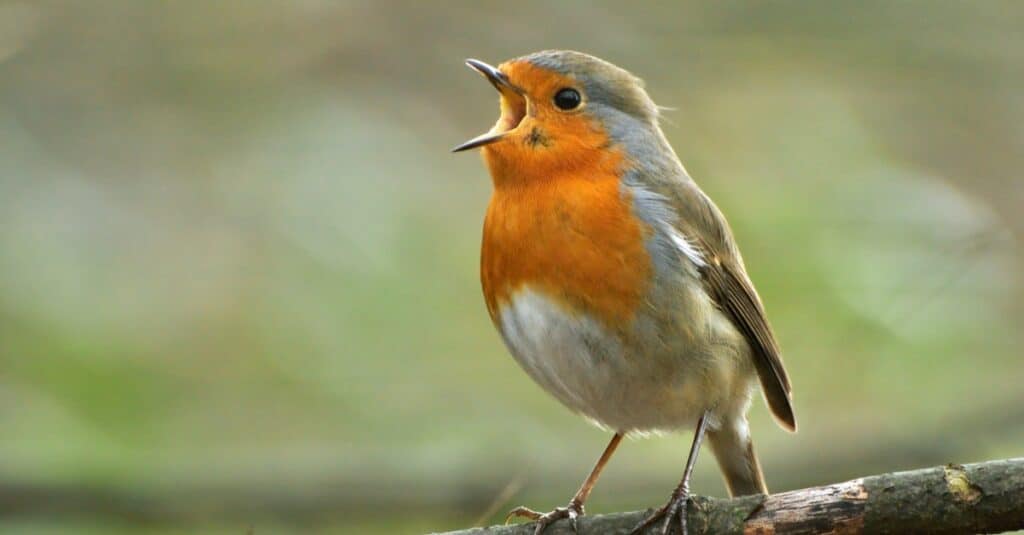
European robins are songbirds.
©iStock.com/Wouter_Marck
European robins and American robins are opportunistic omnivores whose diet consists of animal protein and vegetable matter in equal proportions. Because their habitats experience four distinct seasons, their diets vary accordingly. Spring and summer are months that are rich in protein-heavy meals, which fuel the robins throughout the breeding season and the rearing of their young. American robins have as many as 100 different invertebrate species to feed on, ranging from earthworms and snails to millipedes and centipedes to termites and spiders. In the peak of spring, invertebrates can make up as much as 90% of a robin’s diet, with fruits representing 10% or less. In winter, fruit — mainly wild berries — becomes the majority of their diet, often making up around 60% or more.
The Robin’s Spring and Summer Diet
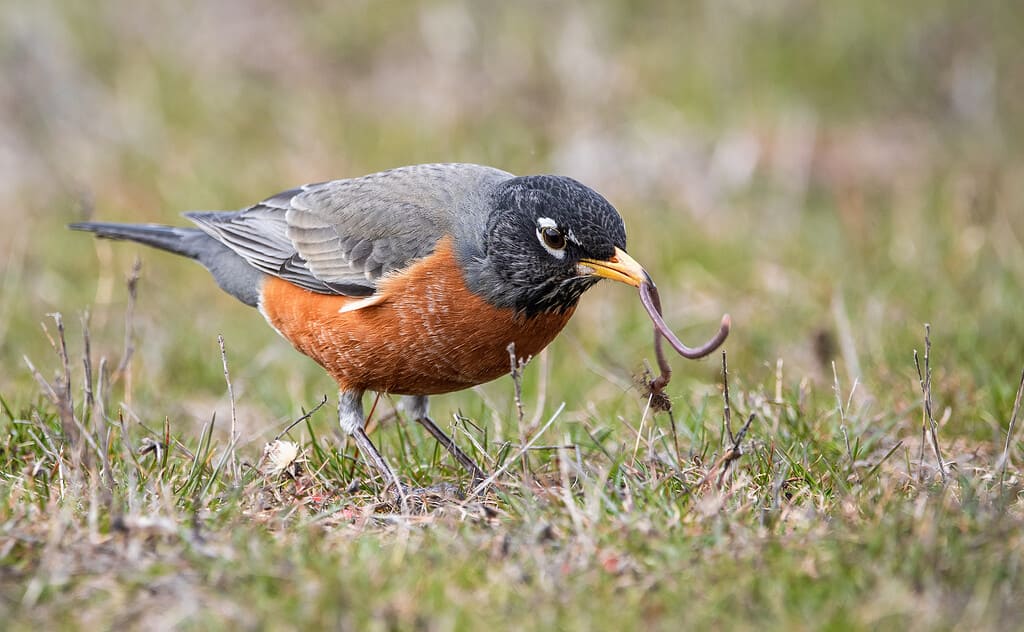
A male American Robin foraging for earthworms in a field in Washington State.
©Mason Maron/iStock via Getty Images
Robins’ eggs hatch between April and August, when insects and invertebrates are plentiful. These high-protein snacks aid the hatchlings’ growth and development. The high-protein spring and summer diet also supplies adult robins with the energy they require to care for their brood. Both mother and father will care for baby robins, which they feed a diet of worms that they break down for easier digestion. These attentive parents will often feed their young as many as a hundred times in a single day.
The Robin’s Winter Diet
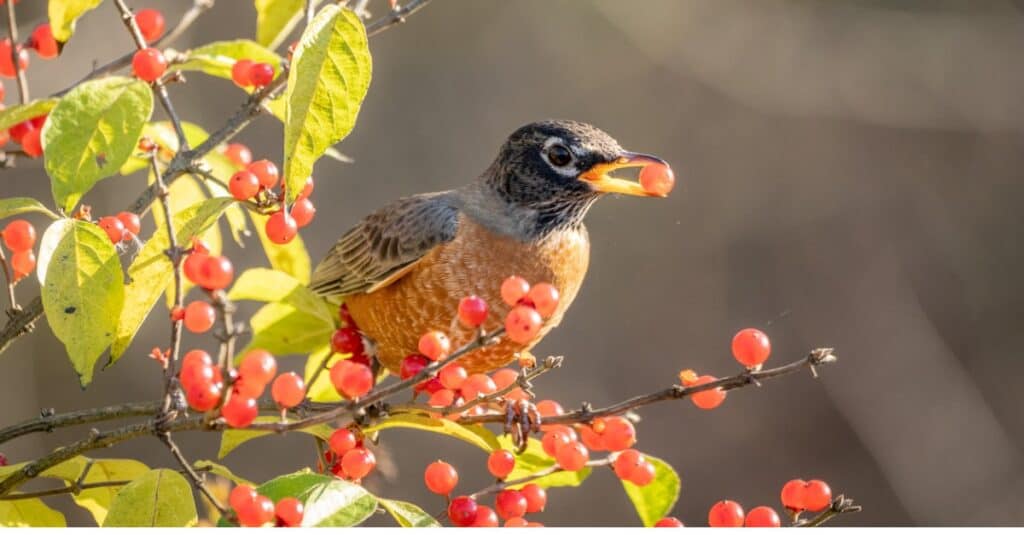
Robins eat berries in the fall and winter.
©iStock.com/weaver1234
While some robins remain in the same general habitat year-round, many American robins migrate south to the U.S., Mexico, and Central America, and many European robins migrate to the Mediterranean region for the winter. As many insects go into hibernation, robins are left with fewer food sources to draw from. Throughout the winter, wild berries will make up the majority of a robin’s diet.
This is the time of year when you’re most likely to find robins at a feeder in the yard. Robins can’t digest most seeds, though they will eat sunflower seeds. Nuts, suet, and cultivated fruit are also favorites.
Robins eat a diet that includes the following:
- Worms
- Insects
- Spiders
- Small reptiles
- Cultivated fruits
- Wild berries
How Robins Find Food
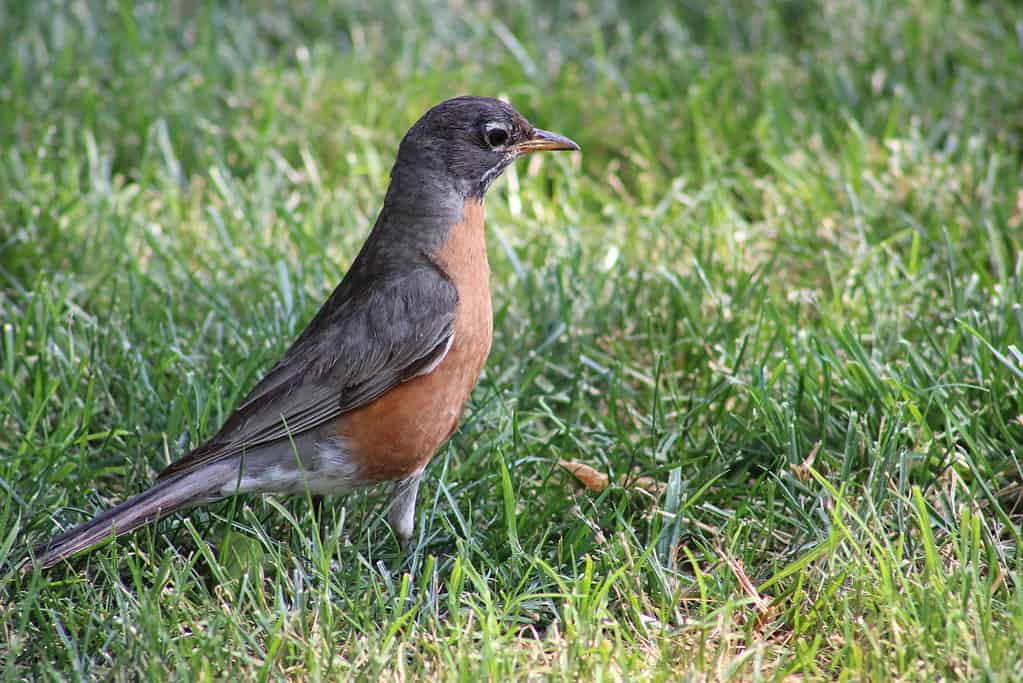
Despite being prevalent throughout both the United States and Europe, robins aren’t a common sight around backyard feeders. That’s because worms, snails, and other invertebrates make up the majority of their diet. These animals provide high levels of protein and require very little energy to capture.
For migrating robins, fruits offer the energy they need to cross long distances over a few months. During the mating and nesting season, foraging responsibilities will be split between both the male and female of a pair. Robins will typically forage together in flocks once the chicks have left the nest. In pursuit of their preferred prey, robins have two great tools at their disposal: their eyes and their ears. Both senses are strong, especially when used together. Robins forage on the ground, typically picking through leaves and other detritus in search of bugs and invertebrates. They’ll tip their heads to the side until they hear movement and then zero in on the location with their precision eyesight. They use both their beaks and their feet to dig away underneath themselves in pursuit of prey.