
Quick Take
- Fewer than 4,000 tigers remain in the wild today, with most living in small, isolated populations across Asia. See the full decline →
- Habitat loss, poaching, human-wildlife conflict and climate change continue to threaten the survival of wild tigers. Explore the climate threat →
- Conservation measures, including anti-poaching patrols, wildlife corridors and protected areas, are helping some tiger populations recover. Understand the hidden problem →
- As apex predators, tigers play a vital role in maintaining healthy ecosystems by keeping prey populations in balance. See community-led conservation →
Every year on July 29, International Tiger Day is held to raise awareness for tiger conservation. Tigers once roamed across much of Asia, but have suffered one of the greatest population declines of any large predator. Fewer than 4,000 tigers remain in the wild today, but many are living in small, isolated populations. Keep reading to discover where these populations survive, what threats they face, and the conservation efforts helping to protect them.
The World’s Remaining Tiger Populations
Although there is only a single species of tiger, there are several subspecies. The exact number is debated: most sources state there are six living and three extinct subspecies, while some scientists propose there are only two. However, the Bengal population makes up the largest majority of the tigers in the wild, with an estimated population of between 2,000 and 2,500. Most of these live in India, although there are also smaller Bengal populations in Bangladesh, Bhutan, China, and Nepal.
Compared to the Bengal population, the Indochinese tiger population is smaller, with just 200 to 250 individuals. More than half of these tigers live in Thailand, but some also survive in Myanmar and Laos. Indochinese tigers have a darker coat and narrower stripes than Bengal tigers.
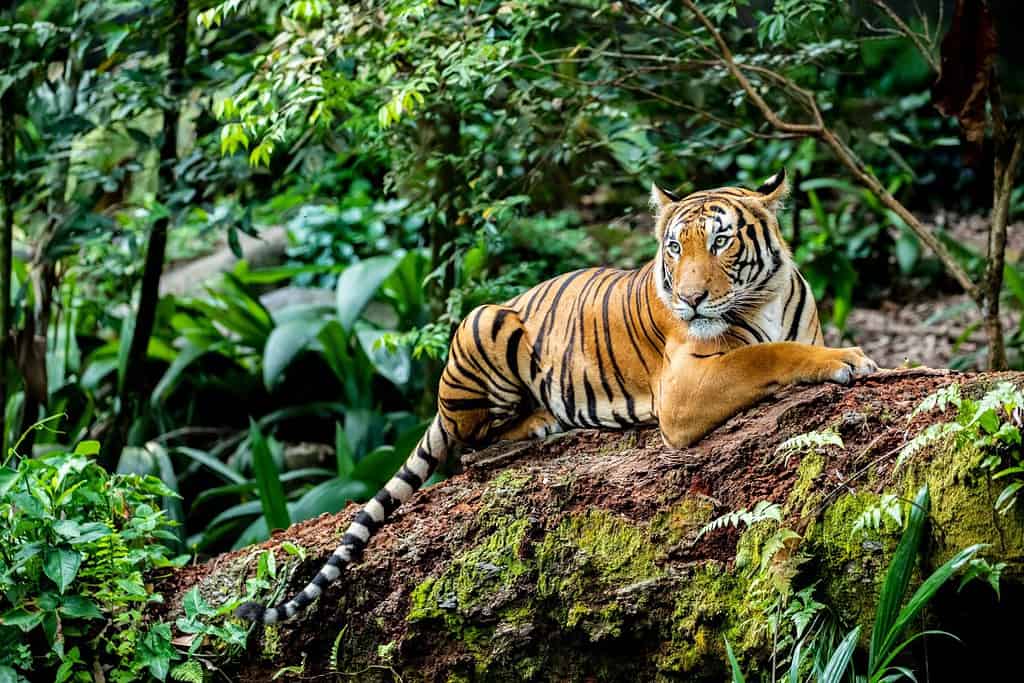
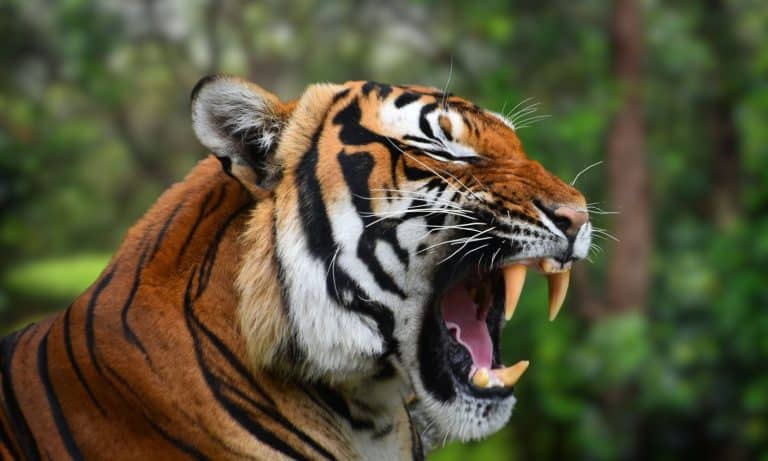
There are only around 100 Malayan tigers left.
©Danny Ye/Shutterstock.com
Malayan tigers are one of the rarest populations, with just 80 to 120 mature individuals left. They inhabit forests in the central and southern regions of the Malay Peninsula, and they have a similar appearance to Indochinese tigers.
The only surviving tiger population in the Sunda Islands is the Sumatran tiger, which lives on Sumatra and has an estimated population of 400 to 600 individuals. However, their population is fragmented into several smaller, isolated areas. Sumatran tigers have a darker appearance than Bengal tigers and have more stripes, which are located closer together.
The Siberian tiger, also known as the Amur tiger, is the largest living tiger and can weigh up to 700 pounds. Siberian tigers have a very distinctive appearance, with a much paler coat than the others, especially in the winter. There are around 500 Siberian tigers left, with most living in Russia, although about 20 also live in China.
The Decline of Tigers
It is estimated that there were about 100,000 tigers in Asia a century ago. However, today there are only around 4,000 left in the wild, representing a massive 96% decline. During this time, three populations have become completely extinct – the Bali, Javan, and Caspian tigers – while the South China tiger is now extinct in the wild.
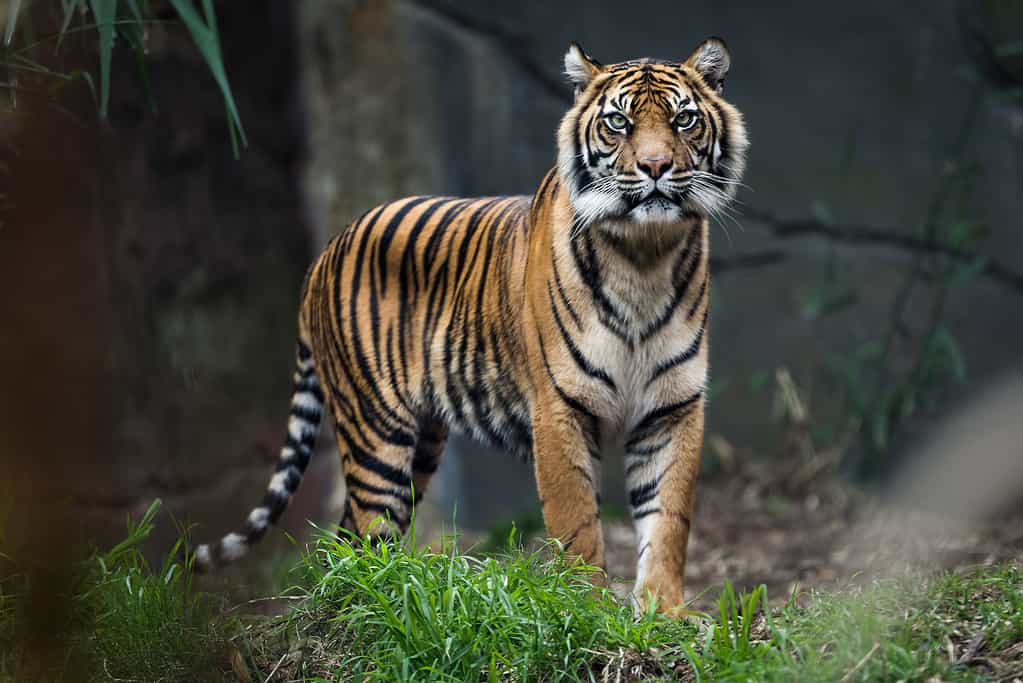
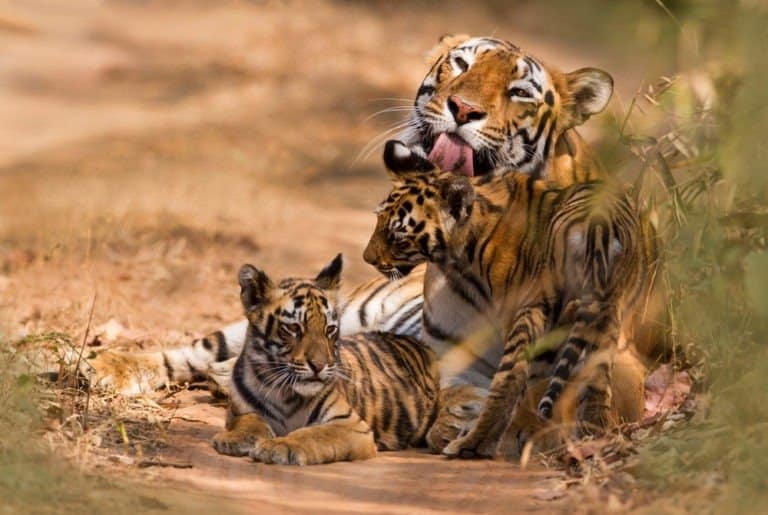
There are 96,000 fewer tigers today than a century ago.
©Thorsten Spoerlein/iStock via Getty Images
Tiger numbers have declined so much that there is now a very real risk that more populations could disappear entirely. However, this decline has not been caused by a single event, but rather by a combination of ongoing pressures over a long period.
What Threats Do Tigers Face?
Habitat loss is one of the greatest long-term threats to tigers, and it’s estimated that they have lost around 95% of their historical range. As forests are cleared for agriculture, logging, or new settlements, the tiger’s habitat becomes smaller and smaller. This leads to population fragmentation, as tigers are pushed into more isolated patches. Tigers are solitary animals with large home ranges and can be very territorial. Pushing them into smaller areas leads to greater conflict among tigers. It also forces them to travel farther as they try to expand their territory and search for prey.
As human settlements continue to grow, they encroach further into the tiger’s habitat. This means that tigers are living in much closer proximity to humans. As forests are cleared, the tiger’s natural prey becomes scarce. When this happens, the tigers sometimes resort to preying on livestock. Unfortunately, some of these encounters also result in fatal attacks on humans. As a result, tigers are often killed by local communities in retaliation for preying on livestock or attacking humans.
Poaching also remains one of the greatest threats to tigers. Tigers are illegally hunted for their body parts, many of which are used in traditional medicine. It’s estimated that around 150 tigers are killed each year by illegal poaching. Despite international bans, the trade is worth billions of dollars, and the demand for tiger parts remains high.
Some tiger populations are also threatened by the effects of climate change. A population of around 100 to 180 Bengal tigers lives in the Sundarbans of India and Bangladesh—the only tigers in the world that inhabit mangrove forests. However, the rising sea levels threaten to wipe out the mangroves entirely, with some estimates suggesting that much of the Sundarbans could be submerged by 2070.
Protecting Tigers in the Wild
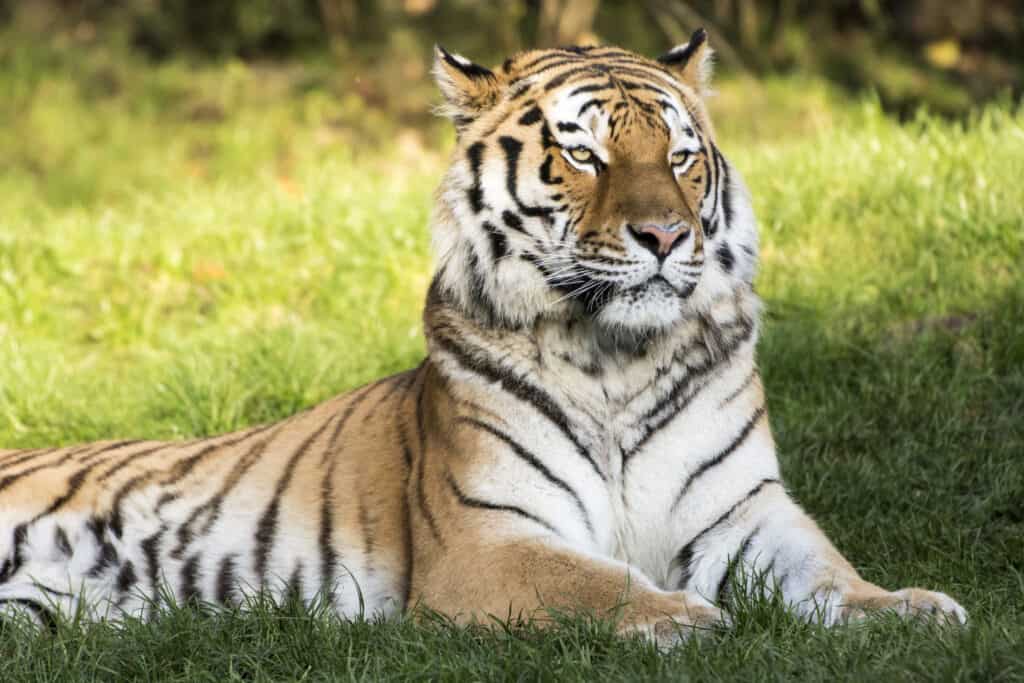
Conservation efforts include more anti-poaching controls.
©Gerckens-Photo-Hamburg/Shutterstock.com
With tiger populations at an all-time low, conservation efforts are vitally important to give them a fighting chance at recovery. One of the main priorities is preventing poaching. Government and conservation organizations have strengthened anti-poaching controls to try to protect the tigers. Methods such as satellite tracking and the use of camera traps also help to monitor tiger populations closely. However, until the illegal trade of tiger parts is stopped entirely, it’s unlikely that poaching will ever be fully controlled.
However, efforts are also being made to protect the tiger’s habitat. One priority is reconnecting fragmented populations by creating wildlife corridors and establishing more protected areas. These allow tigers to move between areas to find mates, which also helps maintain genetic diversity by preventing inbreeding.
Conservation organizations are also working closely with local communities to help improve livestock protection through better fencing. They also offer compensation schemes to cover financial losses when predation occurs. Community programs also aim to educate people about tigers to help them live more peacefully alongside these animals.
Although conservation efforts have helped some tiger populations recover, there is still a long way to go. Many populations remain small and isolated, meaning that continued protection is essential if tigers are to recover across more of their historic range.
Protecting tigers also benefits the wider ecosystem. As apex predators, tigers help to control the numbers of prey animals, such as deer and wild boar. This prevents prey populations from becoming too large and placing excessive pressure on habitats, such as through overgrazing.