
Quick Take
- Sliding on your belly looks inefficient, yet for a polar bear crossing sea ice, it's actually the smarter move. See why sliding works →
- Press your hand to ice and it sticks, yet a soaking-wet polar bear slides across the same surface without a problem. Discover the ice-phobic secret →
- This behavior has been documented for over 200 years, yet scientists only recently figured out how polar bears pull it off without freezing to the surface. Explore the documented behavior →
The polar bear in this Instagram post has a clever way of getting across the ice. It is lying flat on its front and pulling itself along with its front paws. But why is it doing this, and how does it stop itself from getting stuck to the ice?
How Do Polar Bears Travel Across Ice?
Polar bears use sea ice as a platform for feeding and mating. Therefore, moving across ice safely and efficiently is a skill they have developed. These bears are found throughout the circumpolar region and have very large annual home ranges. They range throughout the Arctic region surrounding the North Pole. To thrive in this environment, polar bears need feeding areas, mating areas, and denning areas. All of these involve sea ice.
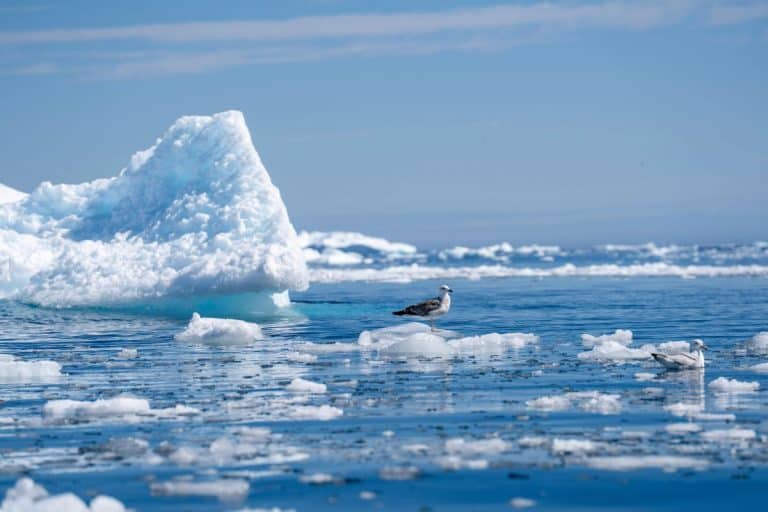
Sea ice is essentially frozen seawater that floats on the ocean surface. In late winter, Arctic sea ice covers, on average, 5.8 million square miles. Getting across sea ice is most efficiently done if the bear flattens its body. This makes it less likely that they will fall through the ice or slip off. Polar bears have been described as sliding across ice since the first recorded account by Inuk hunter and artist Jakob Danielsen in the early 1800s.
How Can Bears Slide So Well on Ice?
If you’ve ever put your hand down on a block of ice, you’ll know how your skin tends to stick to it. So, why doesn’t that happen to polar bears?
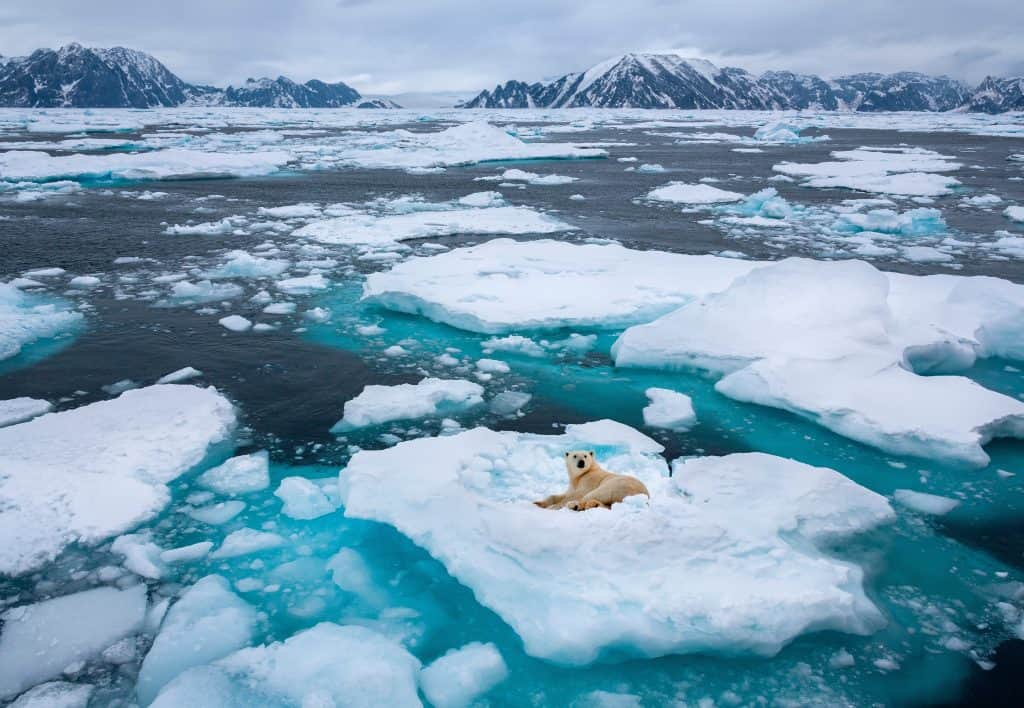
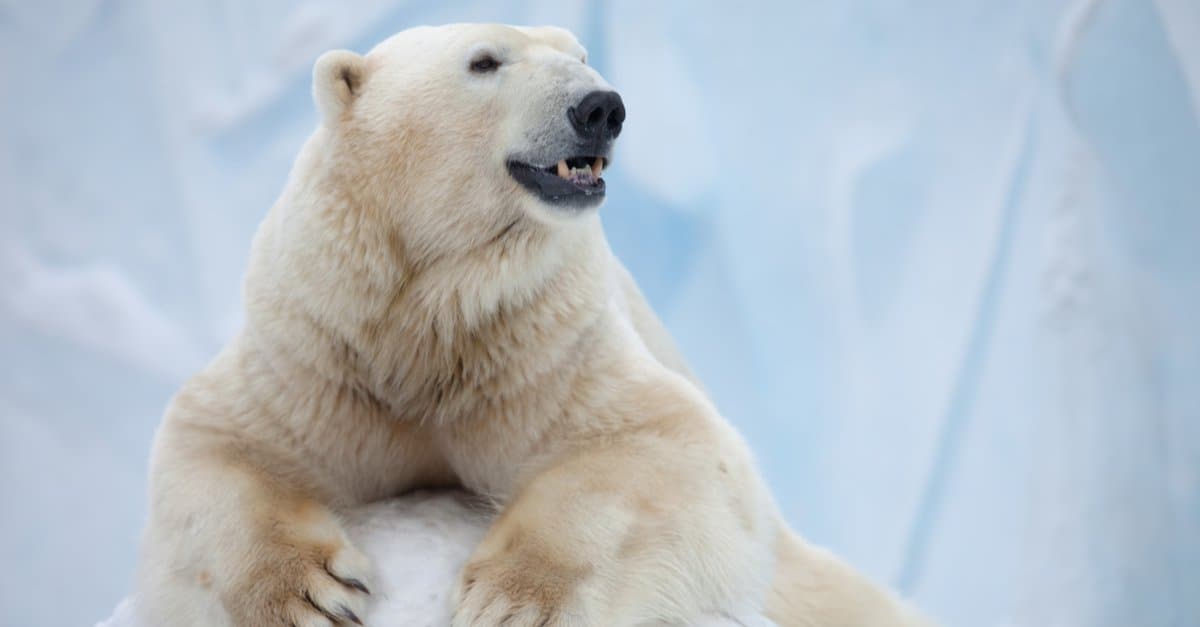
Polar bears do not stick to the ice surface.
©Steve Allen/Shutterstock.com
The bears need their thick fur and blubber to stop them from getting cold as their abdomens touch the ice. However, that fur does not adhere to the ice surface. Also, the bears dive into the water when they hunt prey (predominantly seals). When they get back out of the water, their fur is exposed to the cold environment, which could cause ice to accumulate quickly. Yet it doesn’t!
A study found that polar bear sebum plays a crucial role in the anti-icing properties of their fur. It means that they can slide across ice with ease and without suffering from an accumulation of ice on their coat. It also allows them to lie motionless beside a breathing hole on sea ice, waiting for seals to surface. Sebum consists of water-repelling waxes, glycerols, and other lipids, which contribute to its ice-phobic properties. However, scientists believe there may be additional components that have not yet been discovered.