
Quick Take
- Washing watermelon before giving it to your rabbit can actually backfire, and it all comes down to one factor most people overlook. See the washing tip →
- Watermelon seeds pose more danger to rabbits than a choking hazard alone, and there is a second risk that most owners don't know about. See the seed risks →
- Watermelon is 92% water and packed with vitamins, yet it can still wreck your rabbit's digestion. Check the nutrition details →
- Feeding the right amount of watermelon isn't guesswork. There's a specific formula tied to your rabbit's body that most owners skip. Get the serving formula →
A well-balanced diet for a rabbit includes grass hay, leafy green vegetables, hay-based pellets, and the occasional fruity treat. If you have a pet rabbit, you might have wondered if they can eat watermelon, and if so, how much of it should you feed to your bunnies? Let’s dive into four tips to avoid mistakes and safely feed watermelon to your rabbit.
Can Rabbits Eat Watermelon, and Is It Healthy?
Rabbits can eat watermelon flesh. They can also eat bits of the rind, as it is not toxic to rabbits. However, it may be more difficult for them to digest.
One of the main benefits of watermelon is its water content. Watermelon consists of 92% water. It is a good option to feed your rabbits on hot days to provide additional hydration.
Watermelon also contains vitamins and minerals such as vitamin A, vitamin C, magnesium, potassium, and antioxidants — all of which are beneficial to rabbits. However, it also contains a lot of natural sugar, which can cause digestive issues and diarrhea when consumed in large quantities.
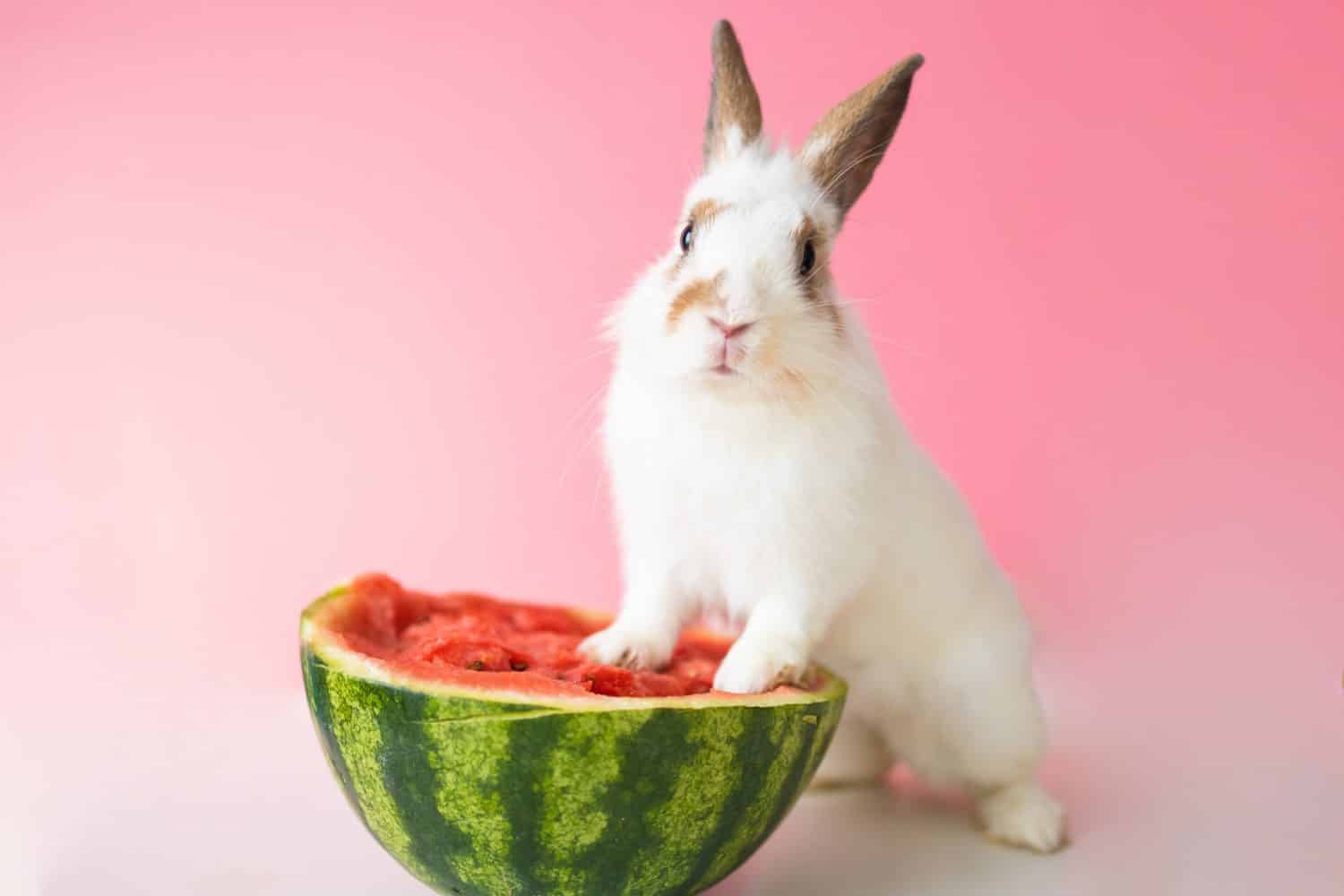
Rabbits can eat watermelon in moderation.
©Yanya/Shutterstock.com
4 Tips For Feeding Watermelon to Your Rabbit
If you want to make watermelon a part of your rabbit’s diet, follow these tips to avoid mistakes and ensure your rabbit’s watermelon treat is as healthy as possible.
#1: Buy Organic When Possible
Although watermelon rind is thick and less likely to absorb pesticides than thinner rinds, it’s best to avoid any contamination when possible. Rabbits are small, sensitive animals and may be more impacted by these chemicals than humans. Organic fruit is grown without synthetic fertilizers or chemical pesticides, so the fruit has had less chemical exposure overall. Organic standards also prohibit artificial post-harvest preservatives or waxes. This is important if your bunny likes to have a bit of the rind.
#2: Wash the Watermelon Before Cutting Into It
Even if you purchase an organic watermelon, it can still be contaminated by dirt, natural pesticides, germs, and bacteria from transport and handling. If you’re cutting up an entire melon, it’s important to wash it first so that the knife doesn’t transfer pesticides onto the fruit. You can skip this step if you’ve purchased pre-cut or pre-packaged watermelon from the store, as this doesn’t need to be washed. In fact, washing it again can actually introduce bacteria from your sink or countertops.
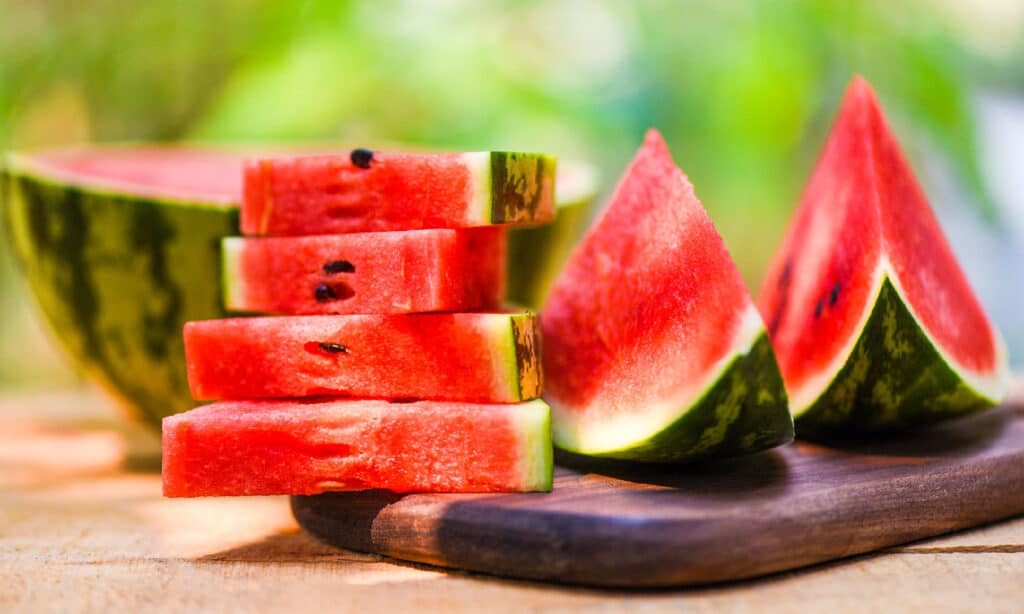
It’s important to prepare watermelon properly for your rabbit. A whole slice is too much for them to eat!
©iStock.com/panida wijitpanya
#3: Buy Seedless or Remove the Seeds Before Serving
Purchase a seedless watermelon or remove both the black and white seeds before serving watermelon to your bunny. Rabbits cannot properly digest seeds, which can present a choking hazard. Watermelon seeds can also obstruct your rabbit’s intestines.
#4: Only Feed Watermelon in Moderation
While watermelon is safe for rabbits, they shouldn’t eat it every day. Offer your rabbit only one small piece of watermelon as an occasional treat. Experts recommend no more than 1-2 tablespoons per 6 pounds of body weight per week. Your rabbit’s diet should consist of primarily grass hay, in addition to daily fresh, leafy greens and a small amount of quality rabbit pellets.