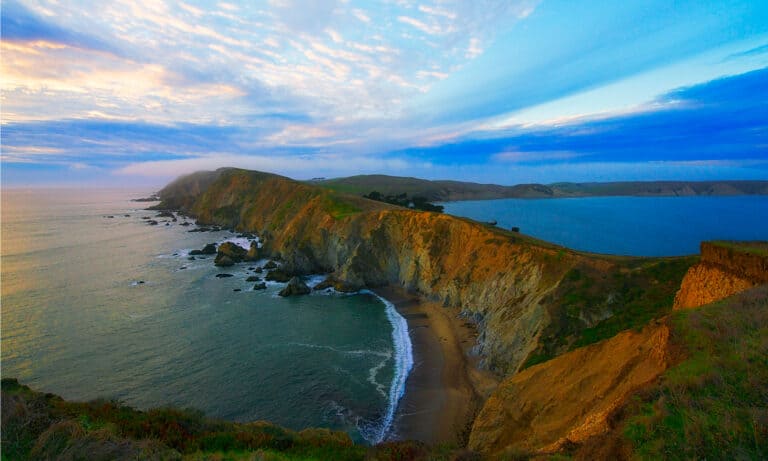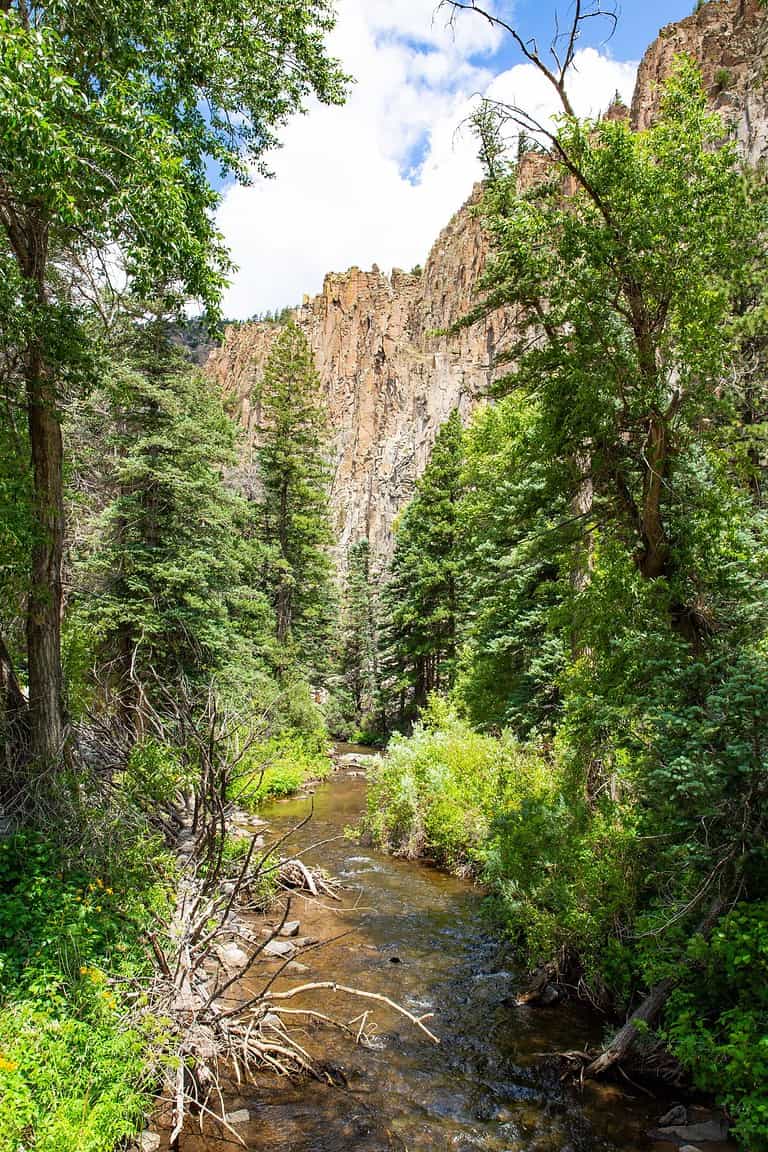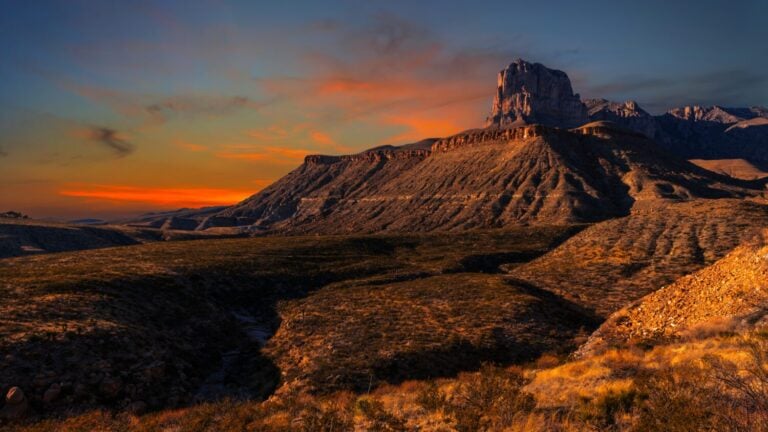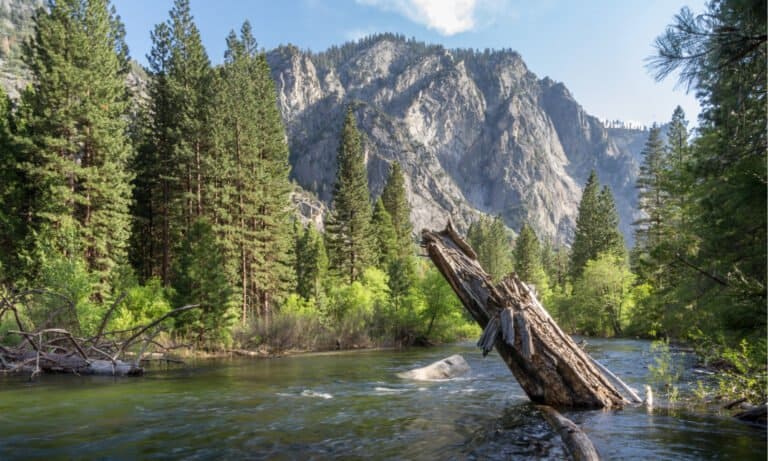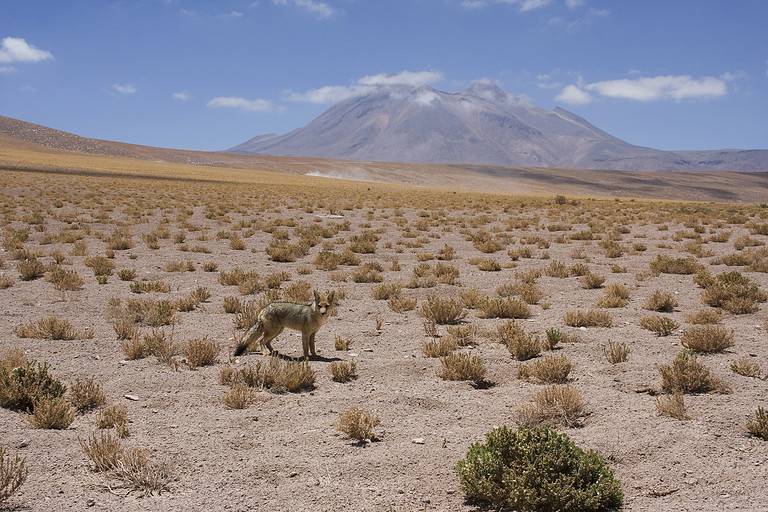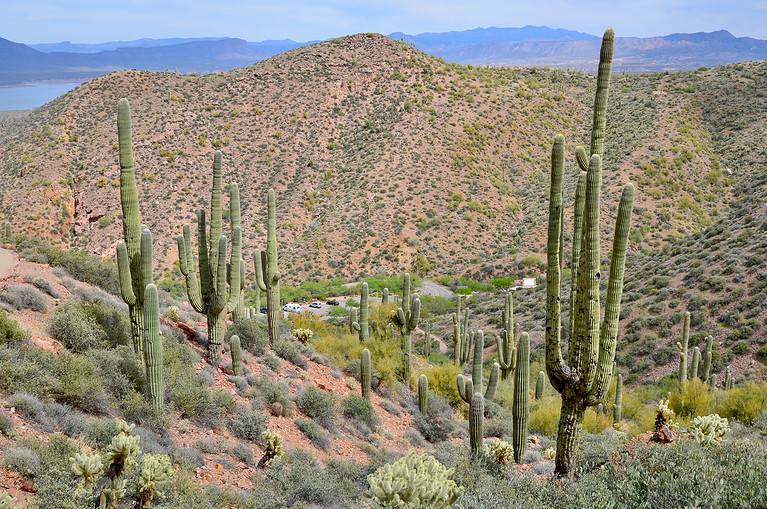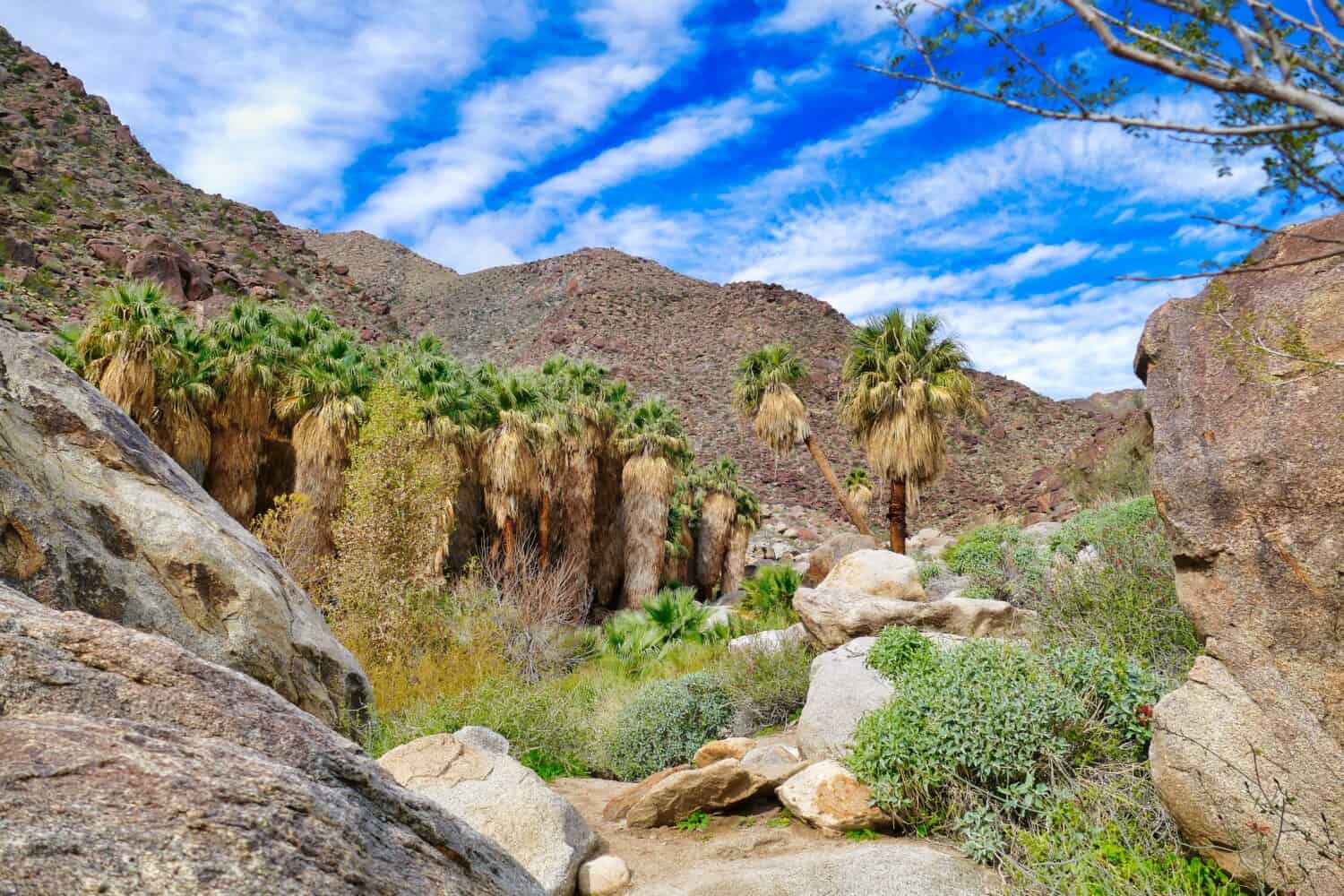

With over 500 miles of dirt roads for four-wheel-drive off-roading, over 100 miles of hiking trails, and 12 wilderness areas, Anza-Borrego Desert State Park is California’s largest state park. Stretched across 600,000 acres, from the mountains just south of Palm Springs all the way down to the Mexican border, Anza-Borrego is a treasure trove of desert wonders, featuring majestic mountain peaks, deep eroded canyons, alluvial fans, badlands, twisting washes, and glorious vistas. And this desert landscape is so much more than just rock and sand, delighting visitors with cacti, palm groves, and wildflowers, like the beautiful desert lavender or chuparosa shrubs. As for wildlife, there’s certainly no shortage of creatures great and small! Read on to learn about the many animals that call this desert wonderland home.
Peninsular Bighorn Sheep
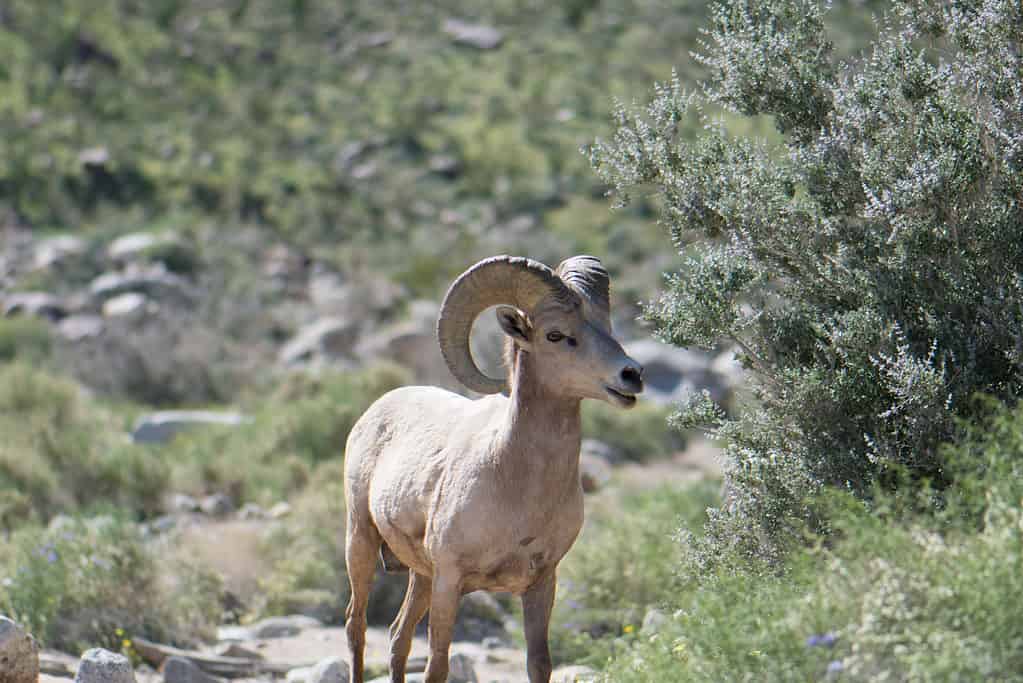
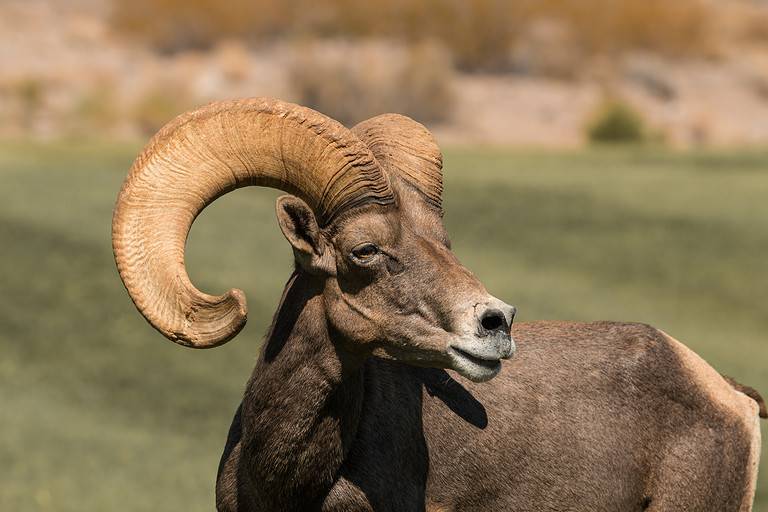
A peninsular bighorn sheep’s horn can weigh up to 30 pounds.
©Jilll Richardson/Shutterstock.com
It’s fitting that we start with this animal, being that the park is literally named after them. Borrego in Spanish means sheep. Sadly, these creatures are on the endangered species list, but conservation efforts are underway to ensure that their population will once again thrive one day. As the name suggests, these animals are notable for their big curvy horns, which can weigh upwards of 30 pounds. The small population, their tendency to be elusive, and the fact that they blend in so well with the desert environment combine to make sightings of the bighorn pretty rare. For the best chance to see one, stick to the low elevations (despite the fact they are excellent climbers) in the early to mid-morning during the hottest times of year when they’re out seeking water, or perhaps around the Palm Canyon Trail during the November/December mating season.
Mule Deer

Mule deer are one of the most commonly seen animals at Anza-Borrego.
©Danita Delimont/Shutterstock.com
One of the more commonly seen animals in Anza-Borrego is the mule deer, especially at higher elevation near leafy vegetation and water sources. To increase your chances of seeing a mule deer, be on the lookout around dawn or dusk when they’re most active, as during the main part of the day they tend to bed down out of the open. During the milder temperatures between October and May, your chances of spotting them increase further. While they are vegetarians, eating mainly nutrient-rich plants, they are primary prey for our next Anza-Borrego dweller: the mountain lion.
Mountain Lion
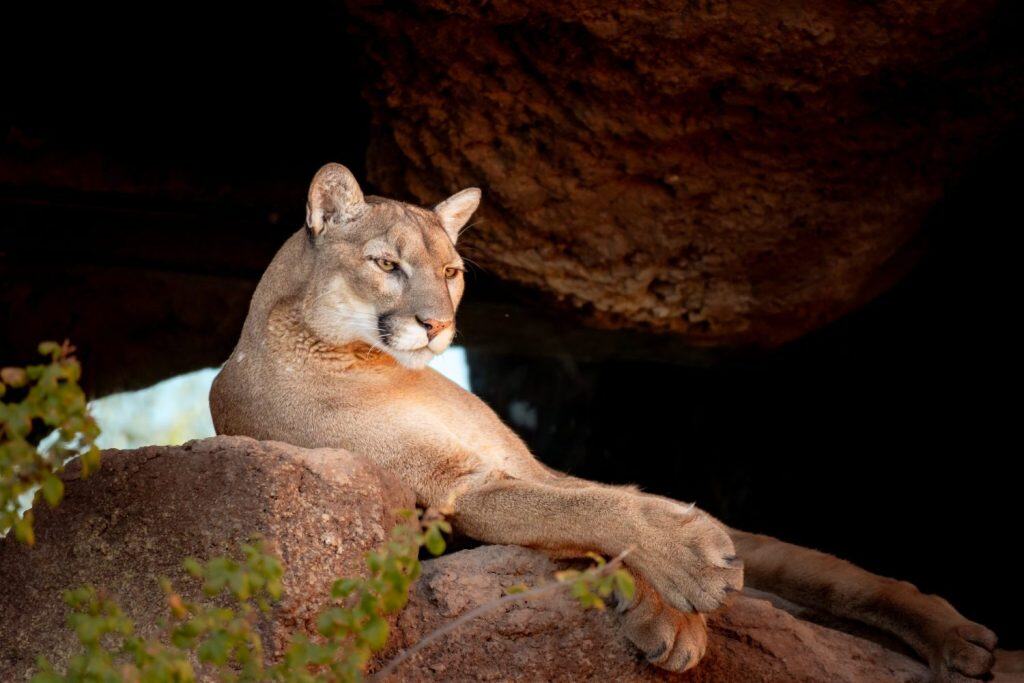
Mountain lions generally steer clear of humans.
©elrod/Shutterstock.com
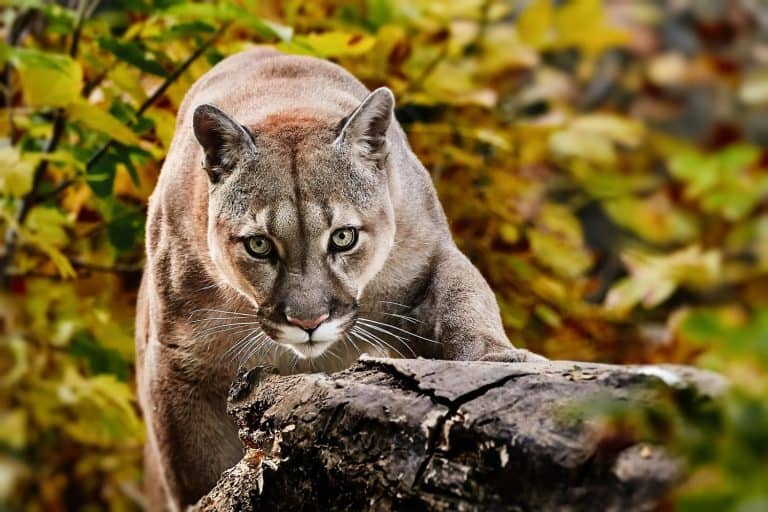
While mountain lions roam all over Anza-Borrego, you are very unlikely to encounter one, and you should probably consider yourself lucky on that count, as these large cats can weigh up to 150 pounds and are not exactly looking to curl up in your lap and purr as you scritch them behind the ear, as much as you might like to do so. Fortunately, mountain lions are secretive and human averse, but if you do happen to run into one of these kitties, the Mountain Lion Federation encourages you to steer as clear as possible. As mentioned above, mountain lions feed mainly on mule deer, however they also have been known to dine on bighorn sheep, which certainly doesn’t help with the bighorn’s endangered status.
Bobcat
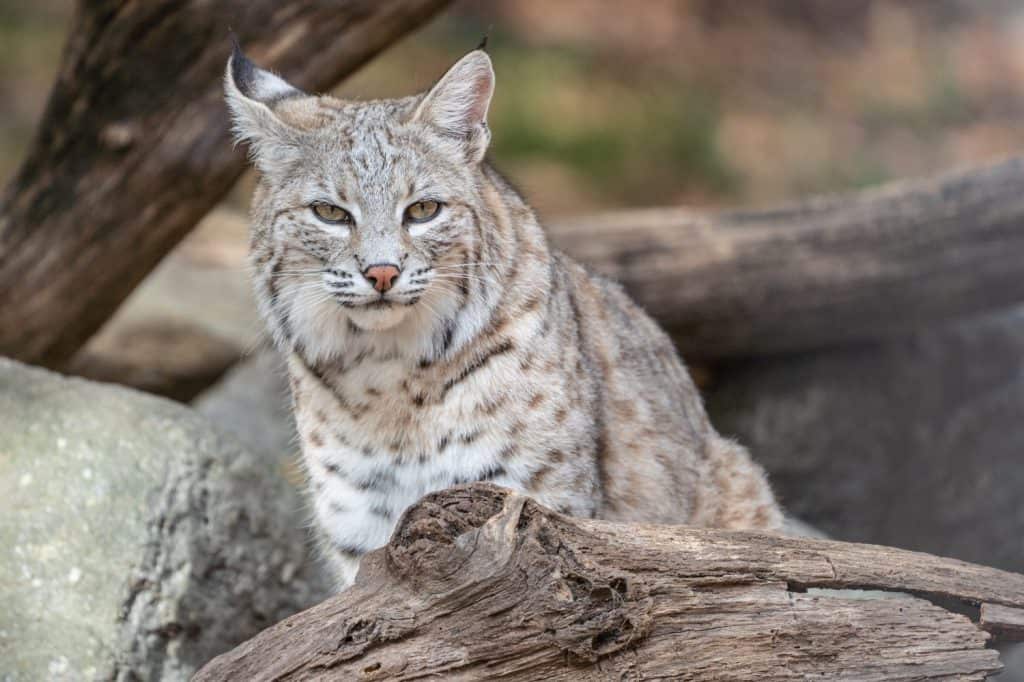
Bobcats are skilled hunters.
©Amy Lutz/Shutterstock.com
Much like the mountain lion—or perhaps your skittish house cat that never comes out from under the bed—bobcats, while very prevalent throughout Anza-Borrego, are private and elusive and unlikely to be seen by human eyes. Smaller than mountain lions (about twice the size of the average domestic cat), bobcats feed on diminutive animals like jackrabbits, rodents, birds, and even insects. However, they are phenomenal hunters and have been known to take out larger animals like deer from time to time. For the best chance to see one of these felines, hang around the Blair Valley during the cooler months between October and May.
Road Runner
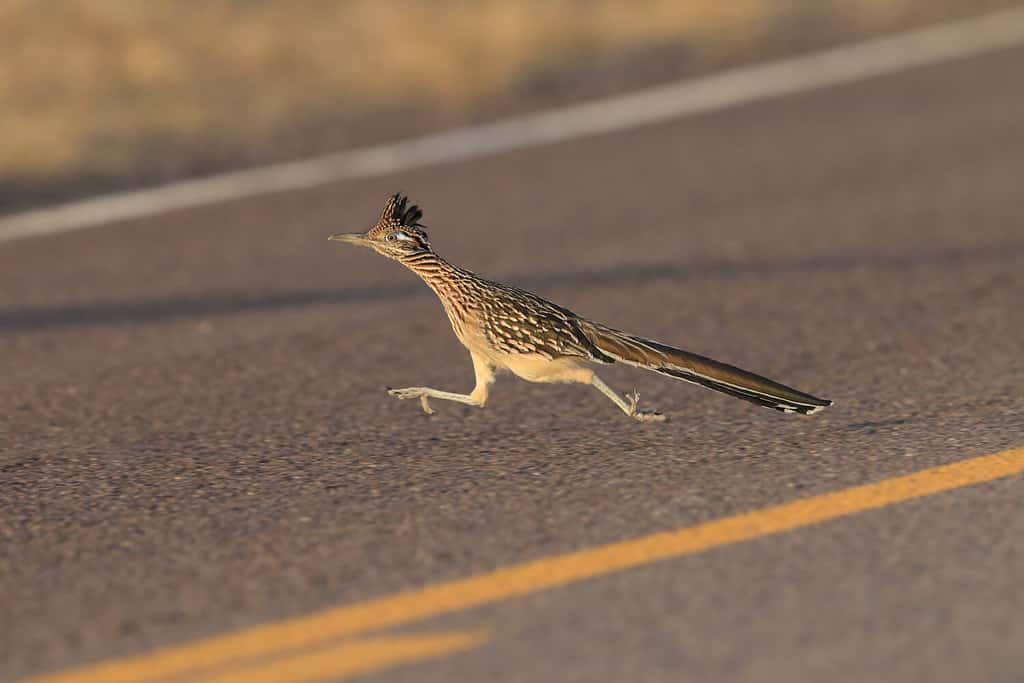
Just like in the cartoon, road runners stand up and run on two feet.
©Frank Fichtmueller/Shutterstock.com
Birding is a popular pastime at Anza-Borrego, with dozens of birds inhabiting the park at various times of year. One bird you’re likely to see at any time of year is the road runner, so named for their curious mode of locomotion in which they run at high speeds on their hind legs (very much like those Roadrunner cartoons you may have watched as a child). Roadrunners are surprisingly social birds and are known to interact directly with humans, especially if they are looking for food or water. You can find these friendly animals all over the park, but a good place to look for them is the Palm Canyon Trailhead in the northwest area of the park.
Coyotes
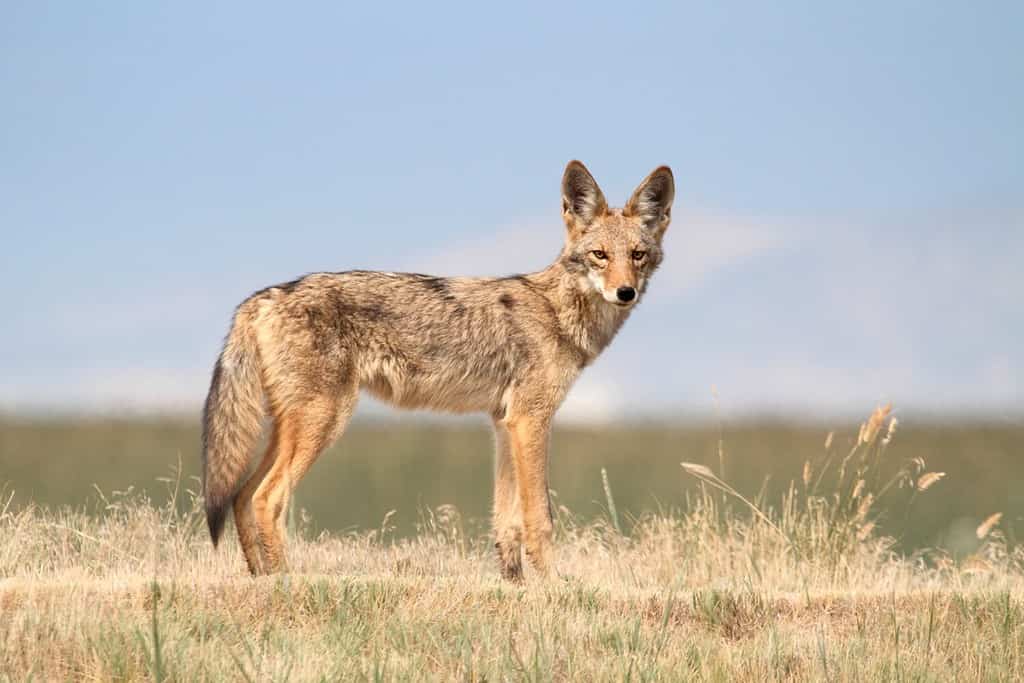
You might be more likely to hear a coyote than you are to see one.
©Steve Byland/Shutterstock.com
If we learned anything from the aforementioned Looney Tunes cartoon, where you find a roadrunner, you’re likely to find a coyote. However, unlike the bafoonish Wile E. Coyote, real coyotes are actually quite intelligent and cunning. And while they will eat a roadrunner if they can catch one, they are diverse and opportunistic diners and will consume just about anything: small mammals, snakes and lizards, fruit and vegetation, and even small pets! So, if you’re visiting with your domestic animal companion, do not let them run wild, especially at night, when coyotes are most active. Not only are coyotes seen all over the park, but they’re heard as well. If you spend the night, you’re almost certain to hear them yipping and yowling under the light of the vast desert starscape.
Kit Fox
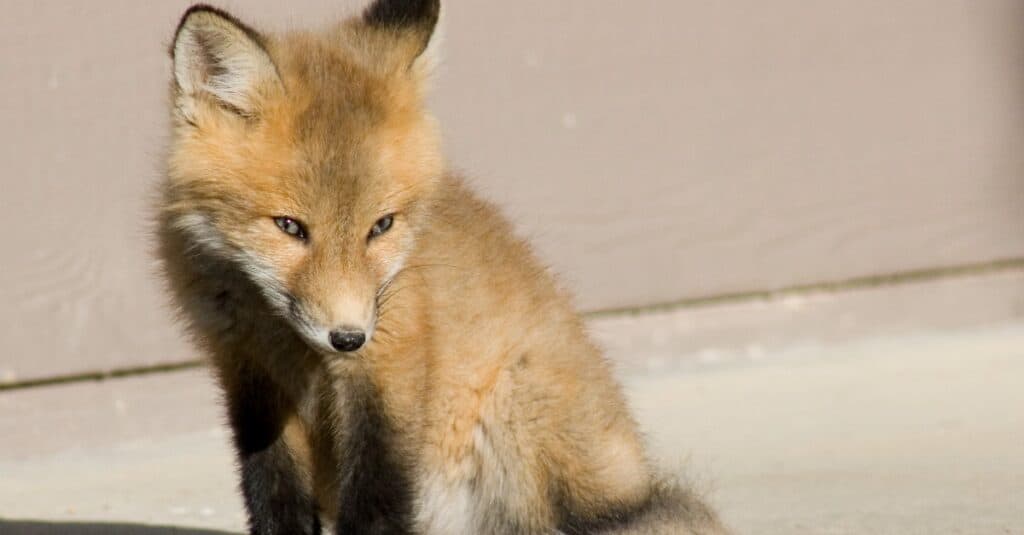
The ears of a kit fox allow it to have exceptional hearing and aid in keeping its body cooler in the desert heat.
©iStock.com/jmhite
These adorable little pups are the smallest members of the canine family in North America. They’re notable for their oversized ears, which not only have the fairly obvious advantage of improving their hearing, but they also help to keep them cool in the desert sun, though they still tend to spend the vast majority of daylight hours out of the elements, tucked away in underground dens. Kit Foxes dine on smaller animals like rodents, snakes, lizards, and even insects, and their digestive systems have adapted to the dry desert such that they are able to extract all the water they need to survive from the food they eat; you will almost never see them drinking water. Be very careful if you are driving in Anza-Borrego at night, as it is quite common to see the eyes of these little guys glowing in your headlights as they slink across the road.
Desert Cottontail
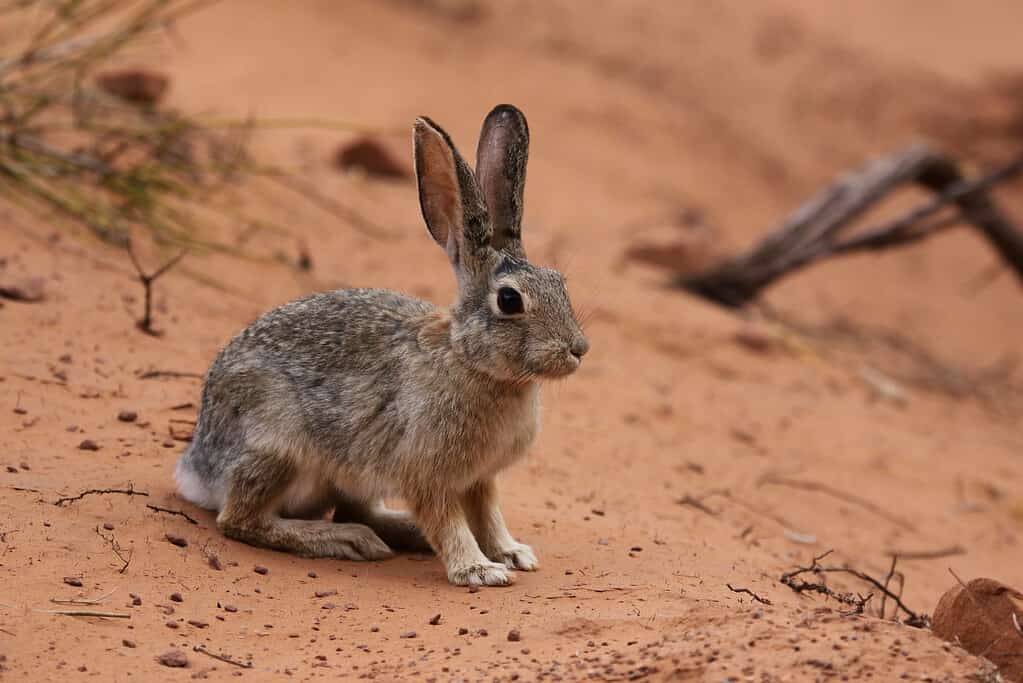
The desert cottontail needs to be constantly on the lookout for predators.
©Chris Hill/Shutterstock.com
The desert cottontail is a common sight in the park. Like much of the wildlife in Anzo-Borrego, it does its best to keep cool during the day and stay out of the oppressive desert sun. These rabbits venture out to find food in the relative coolness of the afternoons and mornings, often in large groups of other bunnies. The cottontail needs to be on its guard due to the large number of predators in proximity, such as coyotes, bobcats, and even birds and snakes. As for its own diet, the desert cottontail subsists mainly on grass, vegetation, and—brace yourself… its own feces.
The Black-Tailed Jackrabbit
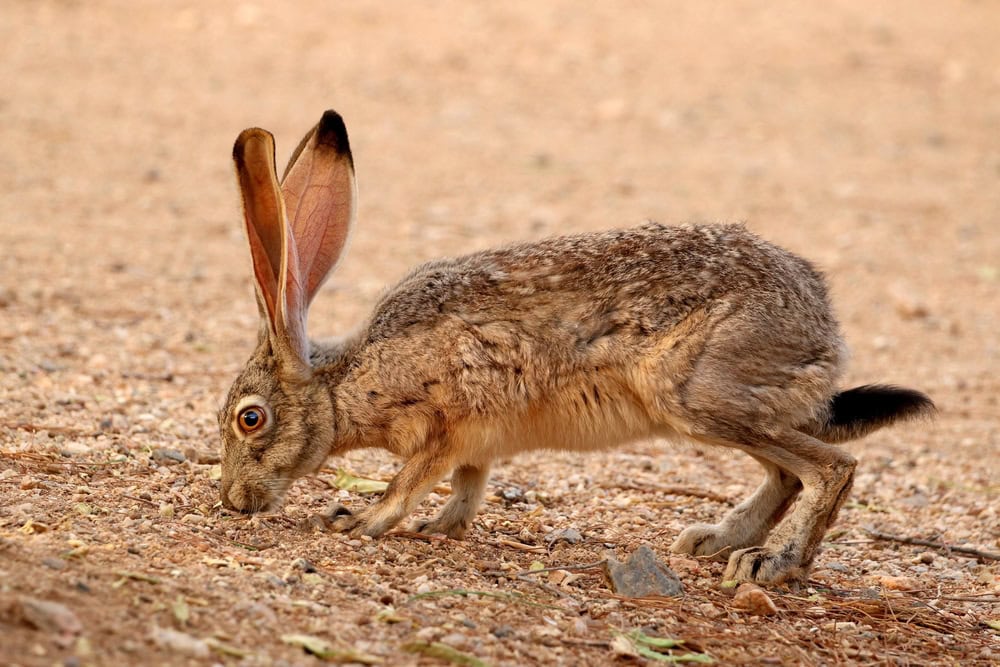
The black-tailed jackrabbit is distinctive for its long ears and hind legs.
©J Curtis/Shutterstock.com
The black-tailed jackrabbit has much in common with the desert cottontail; however, you can easily tell them apart by the jackrabbit’s long ears and long hind legs. Black-tailed jackrabbits have a variety of predators, but fortunately they can flee about as well as any creature in the desert, hitting speeds of up to 30 miles per hour and doing so in a zig-zag pattern to confuse and wear out whoever may be chasing them.
Kangaroo Rat
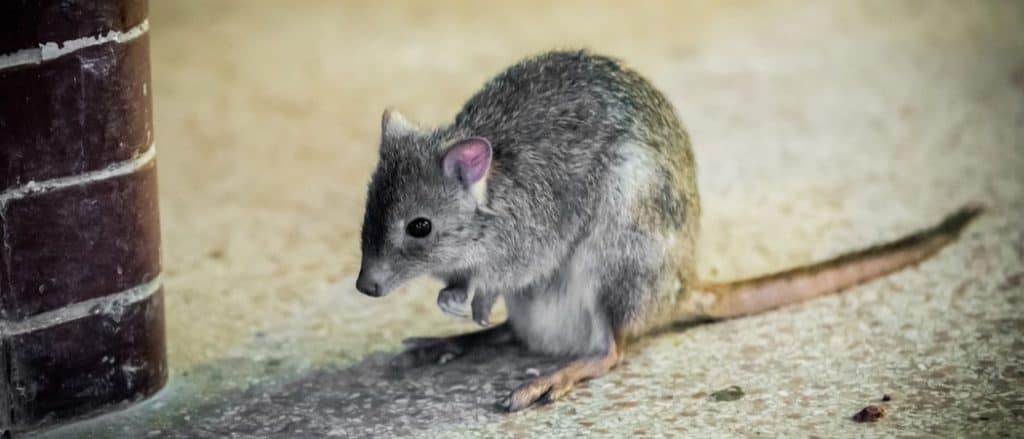
The kangaroo rat can jump up to six feet.
©Jana Mackova/Shutterstock.com
These little guys are expertly adapted for the desert. For starters, they never need to drink water, as they are able to metabolize water from the driest of food, such as seeds. They are also master burrowers—some might even consider them domestic homemakers! —digging separate chambers for keeping cool, catching food, sleeping, and even a space to just hang out in. Kangaroo rats get their name from their long and strong back legs, just like a kangaroo, not only in resemblance but their leaping ability as well, capable of launching their tiny little bodies up to six feet in a single jump!
Reptiles and Amphibians
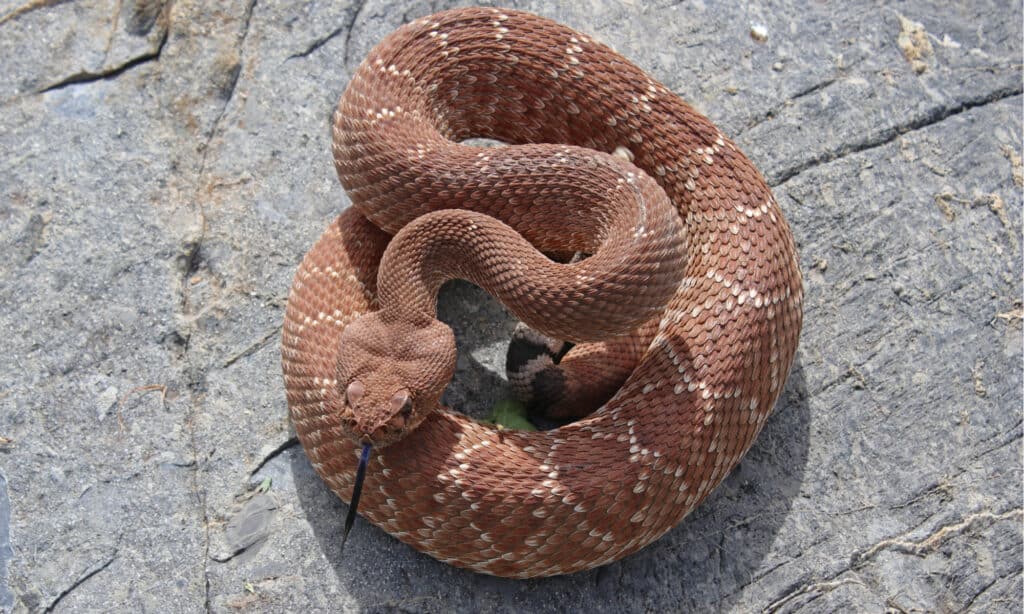
The red-diamond rattlesnake is just one of the many reptiles that calls Anza-Borrego home.
©Creeping Things/Shutterstock.com
Anza-Borrego is home to myriad snakes, lizards, salamanders, geckos, etc. Far too many to list here or even narrow down to a few highlights. You’re most likely to encounter reptiles and amphibians near water and/or in rock crevices. Many of them are quite good at camouflage, so you’ll want to be very aware of your surroundings, both in service of viewing these interesting creatures but also for safety purposes, both theirs and your own; you don’t want to accidentally step on a California toad, nor do you want to accidentally step on a red diamond rattlesnake, albeit for very different reasons!
California Ebony Tarantula
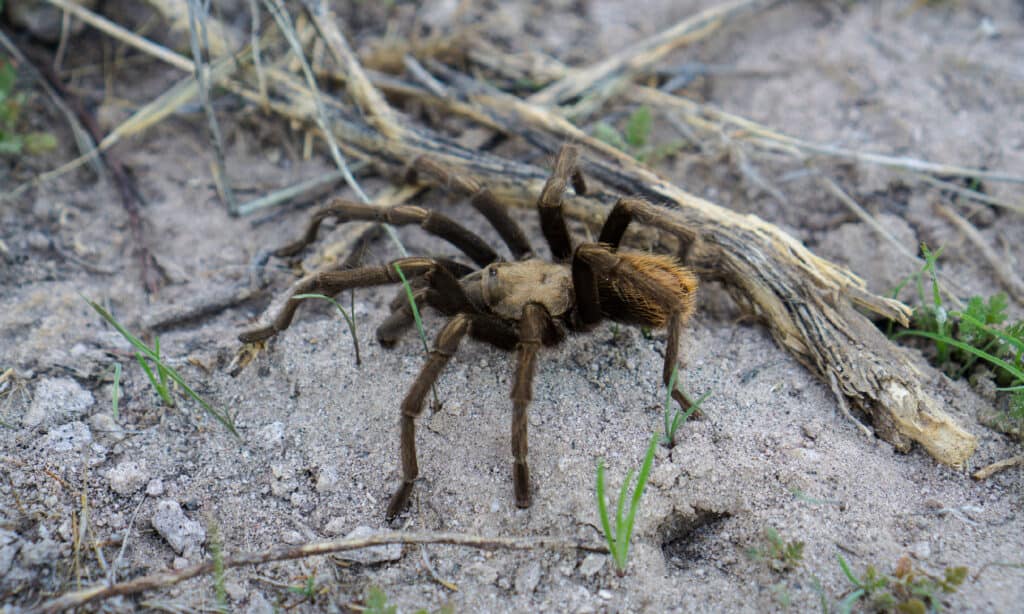
They may look scary, but tarantulas are relatively harmless.
©iStock.com/Stephen Couch
This large, hairy spider certainly looks intimidating, and most people probably wouldn’t want to find one crawling under the covers with them at night, but tarantulas are relatively harmless and non-aggressive unless provoked. Even if one does happen to bite you, their sting, while unpleasant, is really no worse than that of a bee. If you want to lay your eyes on one of these arachnids, your best bet is in a hot, sandy area with lots of vegetation during their mating season from around August to November. And bring a flashlight because they’re mostly active at night. But please don’t disturb them. Again, they will attack if provoked.
Wrap Up
Anza-Borrego is HUGE with lots of diverse landscapes, climates, and elevations, creating vast opportunities to sight numerous types of wildlife. Whether it’s a grazing mule deer, a road runner sprinting across the flatlands, a leaping kangaroo rat, or perhaps even the rare longhorn sheep climbing up the side a rocky incline, there is no shortage of animals to see in this desert dreamworld.