
Quick Take
- Some of the most common materials rabbit owners reach for as chew toys are quietly toxic, and the safe options are not always obvious. See safe and toxic materials →
- A rabbit that doesn't chew enough can develop a cascade of health problems far worse than a gnawed chair leg. Explore the health risks →
- Chew toys matter, but there's one thing in your rabbit's diet that does more for their teeth than any toy on the market. Find out what works better →
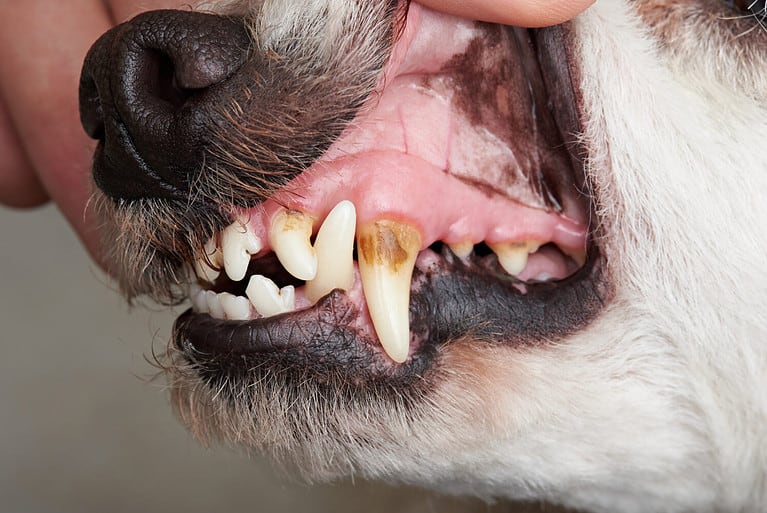
If there is one thing rabbits like to do, it’s chew. Plenty of rabbit owners have had to hide or shelter chewable items like electrical wires, cardboard, and even wooden furniture. Rabbits have an innate drive to chew, explore, and manipulate objects in their environment. Because their teeth are open-rooted, they grow continuously, up to several inches each year. In the wild, rabbits keep their teeth short by chewing on all manner of objects. In the home setting, however, rabbits require a way to wear down their teeth safely.
All animals need enrichment, and rabbits are no different. If a pet rabbit isn’t given adequate activities for stimulation and enrichment, its relentless drive to chew can transform into destructive behavior. It can also lead to serious health problems, including difficulty chewing, trouble swallowing, and excess drooling. Providing plenty of chew toys is important for a rabbit’s health and happiness.
Chew and Chew
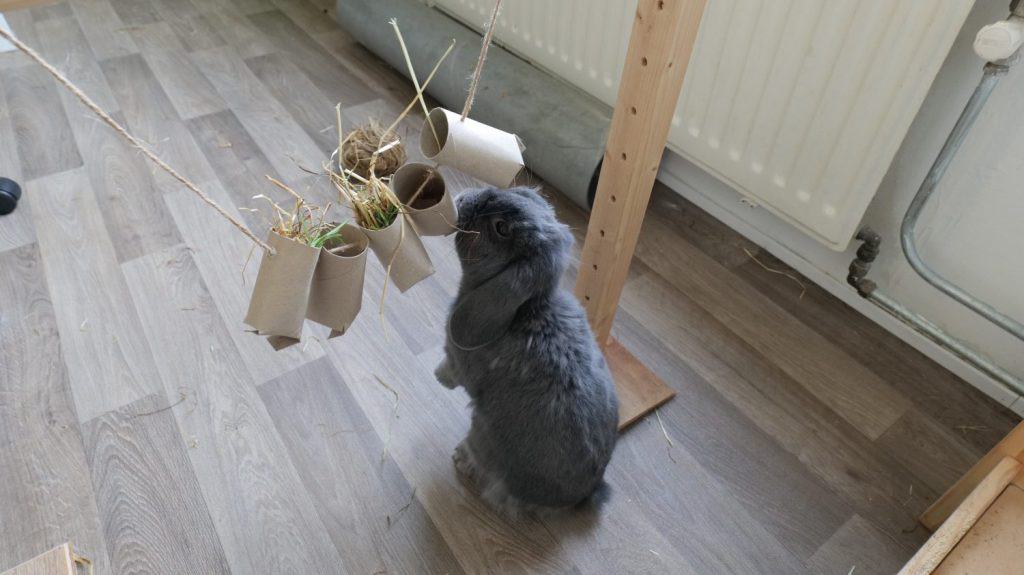
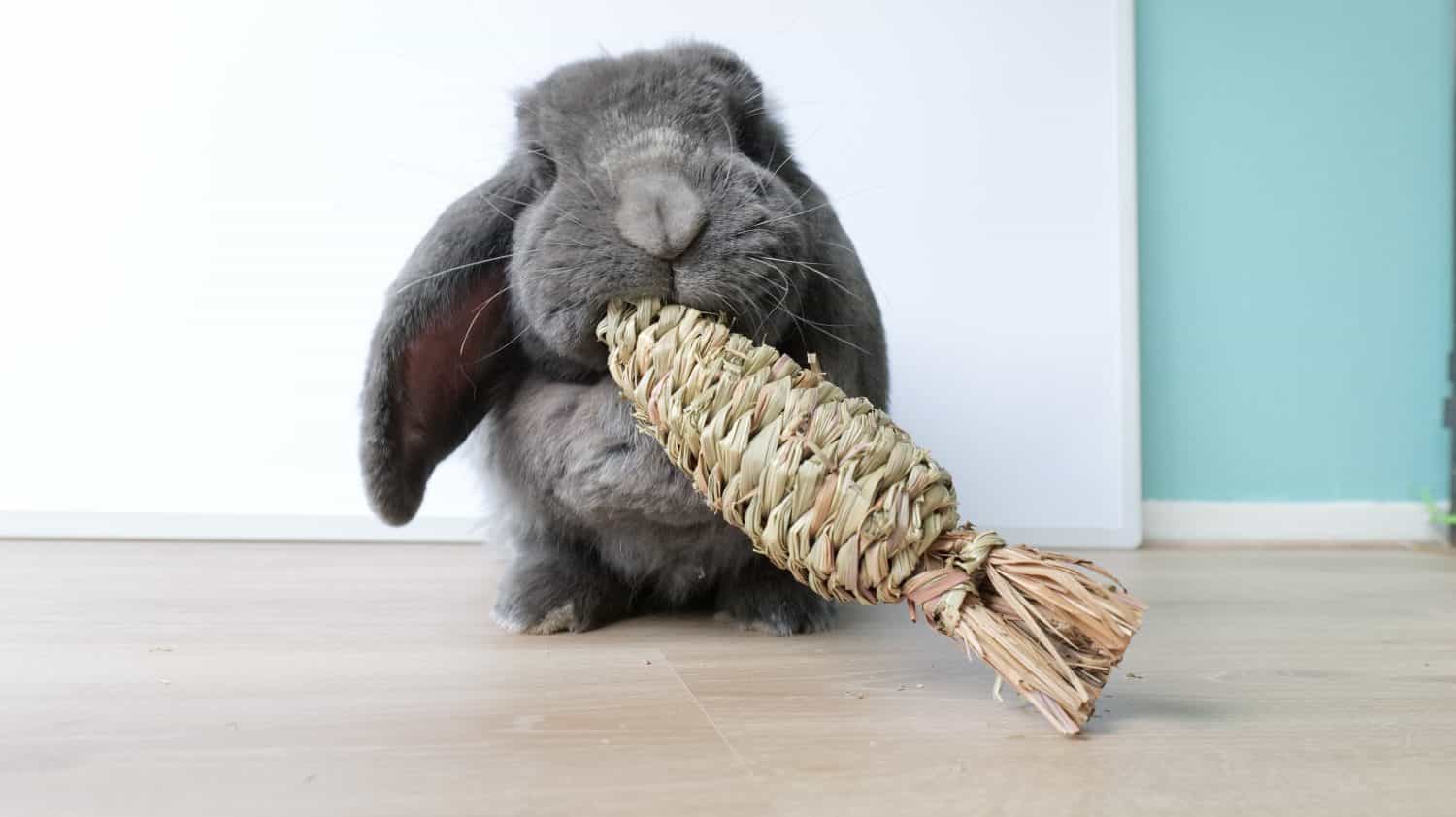
Rabbits require considerable enrichment in the form of chew toys, physical activity, and high-quality grass hay.
©Mariska van Dasselaar/Shutterstock.com
Rabbits are complicated creatures, but their health depends on surprisingly simple things. A veterinarian will tell you the same: if a rabbit is eating hay and defecating regularly, its health is probably good. Since their teeth grow continuously, chewing is an integral part of their lives. That’s why providing a variety of chew toys helps ensure a pet rabbit’s good health and happiness.
Constant chewing prevents rabbit teeth from growing too long. If they don’t chew enough, their teeth keep growing, which can lead to health problems like dental malocclusion, eye infections, and painful bone spurs.
A variety of enrichment activities like chew toys keep a rabbit’s mind free of stress and anxiety. Enrichment also protects expensive and hard-to-replace items in your home, including carpets and furniture. It also keeps bunnies safe by redirecting their chewing towards appropriate objects and away from dangerous ones like electrical cords.
Safe Materials
Rabbits may have only been domesticated around 1,400 years ago, but the science of keeping rabbits as pets has advanced considerably. Since rabbits often ingest small amounts of what they chew, not all materials are okay for rabbits to gnaw on. Experts point to several key materials your rabbit can chew safely.
Wood materials like willow, pear branches, and untreated apple wood are quite safe for bunnies to chew. Other woods, however, like cedar, fresh or aromatic pine, or any chemically treated or painted woods, can be toxic. While plastic toys should be avoided, natural chewables like dried seagrass and water hyacinth are safe. Rabbit owners may not like their pet chewing cardboard, but it is safe as long as it is unbleached. Toys with loose strings or synthetic beads, however, should be avoided.
Hay Is the Way
Proper rabbit parenting involves providing enriching chew toys, but care should not end there. Rabbits need ample space to run, jump, and perform their adorable binkies (spontaneous jumps and twists, similar to dog zoomies). This type of physical activity lowers their stress levels and helps prevent them from chewing inappropriate objects.
Chew toys are a safe enrichment choice for rabbits, but nothing can replace a proper diet. The healthiest rabbits have a diet consisting of 80-90% high-quality grass hay. Its high fiber content helps manage tooth length.