
Quick Take
- One rodent lurking in Georgia yards carries a disease with a fatality rate that would stop most people cold, and exposure does not even require a bite. See the 35% fatality rate →
- The rodent most Georgians write off as harmless backyard wildlife may actually be the most destructive chewer on this list. Chipmunk damage explained →
- Rodents nesting inside your home aren't just a nuisance. They can silently engineer a fire hazard long before you spot a single dropping. Wiring and fire risks →
- Georgia's most common rat isn't originally from anywhere near North America, and its true origins are what explain why it thrives so aggressively in cities. Rat origins and urban spread →
Practically every region of the world has rodents of some type. Georgia has a moderate climate year-round, so the state is home to quite a number of rodents, many of which are destructive and prone to invading human homes and gardens. Read on to discover which rodents can create nightmares for Georgia residents.
Dangers of Rodents in Human-Developed Areas
You’ve probably heard tales of diseases carried by rats and other rodents around the world, particularly in the Late Middle Ages when the Black Death, or bubonic plague, was rampant across Europe, North Africa, and the Middle East. While that sort of spread isn’t as common today as it was hundreds of years ago, the disease vector is still one of the issues humans have with rodents. Three of the most common diseases carried by rodents in Georgia can create serious health conditions for humans who come into contact with the animals or their feces.
Hantavirus
HPS or Hantavirus Pulmonary Syndrome are generally carried by deer mice, white-footed mice, cotton rats, and rice rats. The virus is usually transmitted through humans and other animals coming into contact with the droppings or urine of these rodents. The condition isn’t common, with usually only a handful of cases reported annually, but it is a severe disease with a fatality rate of 35%. If you are clearing out a space or cleaning up an area where deer mice or rats have been spotted, it’s critical to take precautions to avoid coming into contact with the rodents and their waste.
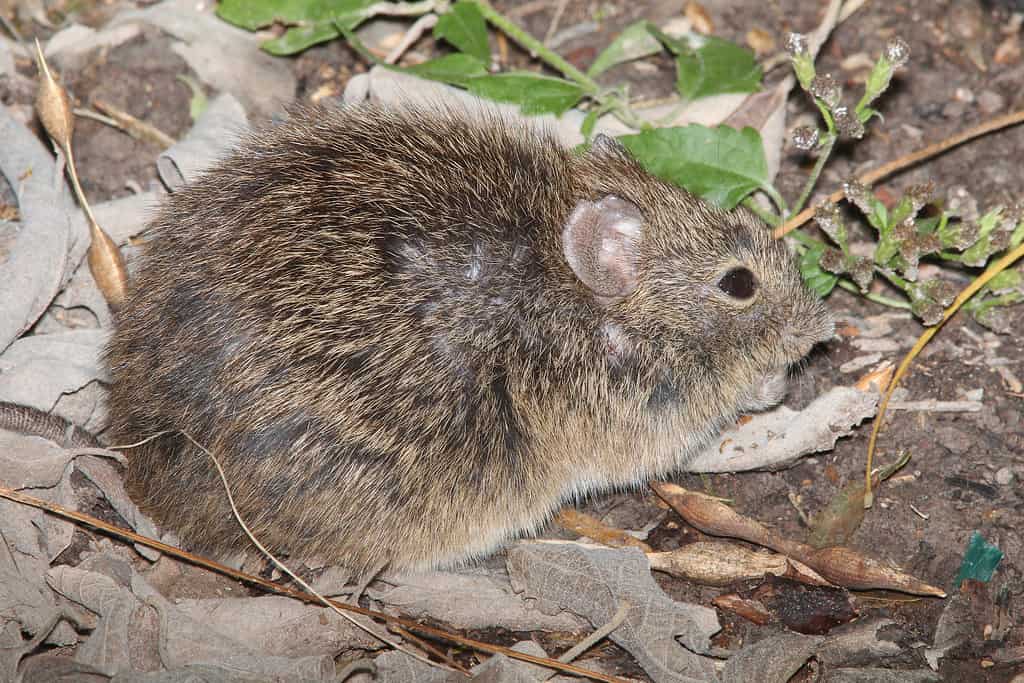
Cotton rats are known carriers of Hantavirus.
Leptospirosis
Bacteria carried by rodents may cause the disease Leptospirosis in either animals or humans. The bacteria has a worldwide distribution, but incidence is greater in tropical climates, and it may be present anywhere on the planet. Like with many diseases, carriers may show no symptoms and unknowingly pass it along to others. Some humans and animals become incredibly ill from the disease. It is generally passed on through contact with the urine of either wild or domestic animals, including raccoons, pigs, dogs, cattle, and rodents of many kinds. If the soil has become contaminated, humans are more likely to contract the disease.
Tularemia
Caused by the bacteria Francisella tularensis, Tularemia is commonly found in wild animals, including rodents like squirrels and beavers, as well as other small mammals like hares and rabbits. Most often, humans and domesticated animals become ill with tularemia through contact with infected ill or dead animals, often through animal bites or contaminated blood and raw meat. The disease may also pass through the bite of infected arthropods like ticks and biting flies. Inhalation of or direct contact with the bacteria may also occur through contaminated water, soil, or dust. Anywhere from 150 to 314 cases are typically reported annually in the United States, with an average of around 200 per year.
Damage Caused by Rodents in Georgia
It’s not just the occasional exposure to rodents in Georgia that causes concern. The habitats of the animals often become human homes and destruction follows. Non-native rodents in particular cause damage as they infest houses and destroy property.
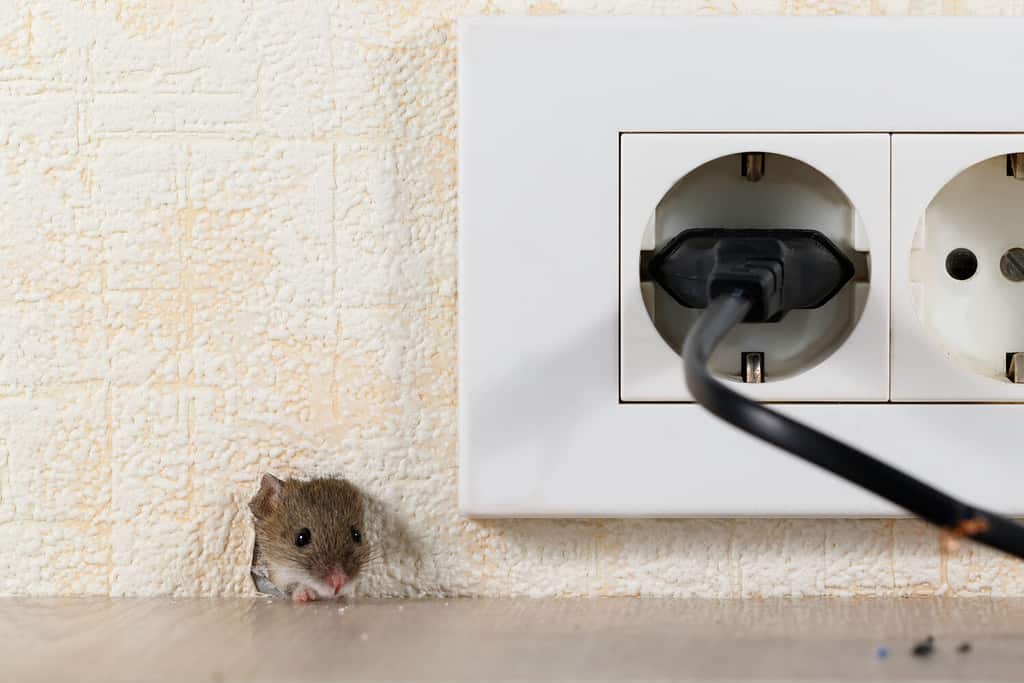
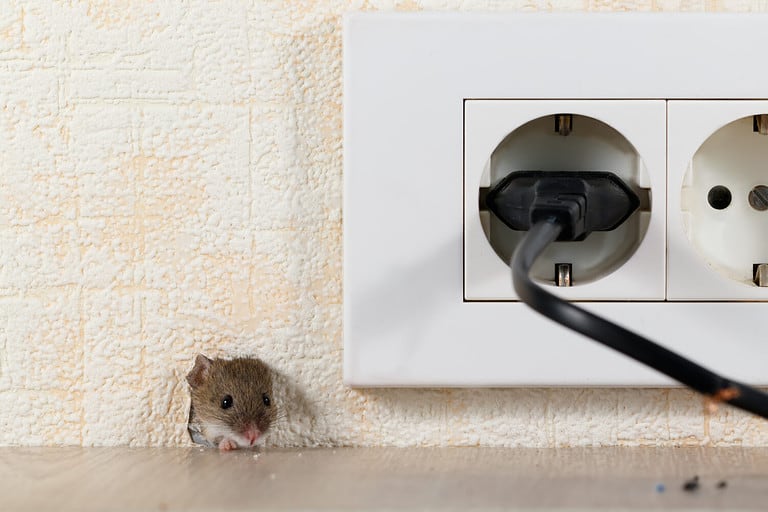
Mice frequently gnaw holes in drywall and chew through wires.
©torook/Shutterstock.com
Frequently, rodents in Georgia infest homes secretly and gnaw away at drywall and baseboards, causing minor to severe damage, depending on how long they have been living indoors. They build nests that may disrupt structures, and they bite through electrical wiring, telephone and internet lines, and insulation. Short circuits, fire hazards, and other dangers can occur, as well as costly repairs.
Additionally, your stored possessions may be damaged — from paintings, trunks, clothing, and heirlooms to books and much more. In garden spaces or indoor plants, mice and other rodents love your fruits and vegetables. They’ll gnaw bark on young trees, eat grain and freshly planted seeds, and chew up beans, tomatoes, cucumbers, strawberries, and practically any other crop before you can harvest.
The Most Common Rodents Wreaking Havoc in Georgia
Now that you’re aware of the most common issues with rodents invading, being able to identify them may help you as you try to deal with rodents around the home and garden. Not all of them carry deadly diseases, but they can cause severe problems if there is an infestation.
Mice
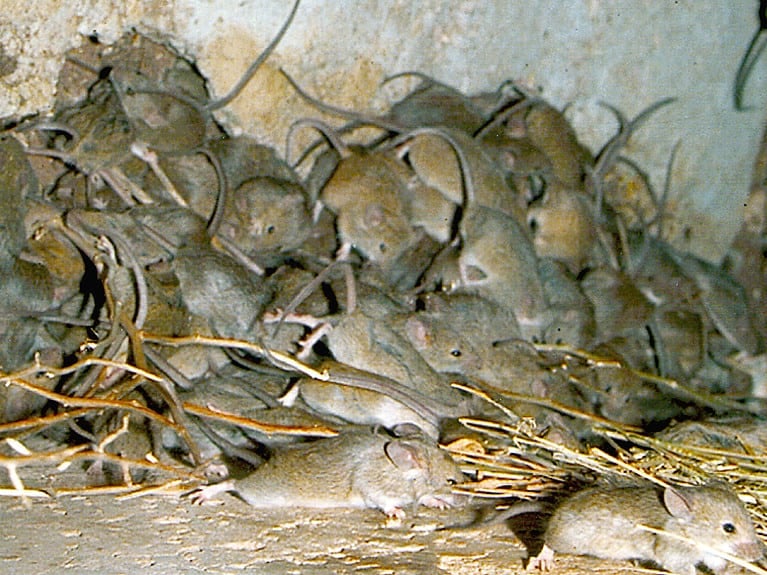
Your kitties might rejoice in this knowledge, but most humans won’t: mice are some of the most numerous rodents in Georgia. They’re highly adaptable, too, so they thrive in all sorts of settings, from dry attics to damp basements, in rural, suburban, or urban areas.
70 different species of mice live in North America, with the House Mouse (or Mus musculus) the most common. This particular species thrives in human dwellings and loves all the food you provide them, whether you intend to or not. Mice build nests in your walls and attics, they scurry through kitchens looking for table scraps, and they spend most of their lives hidden away. You may never even know you’ve got mice until you see small, pellet-like droppings in pantries, drawers, or along baseboards.
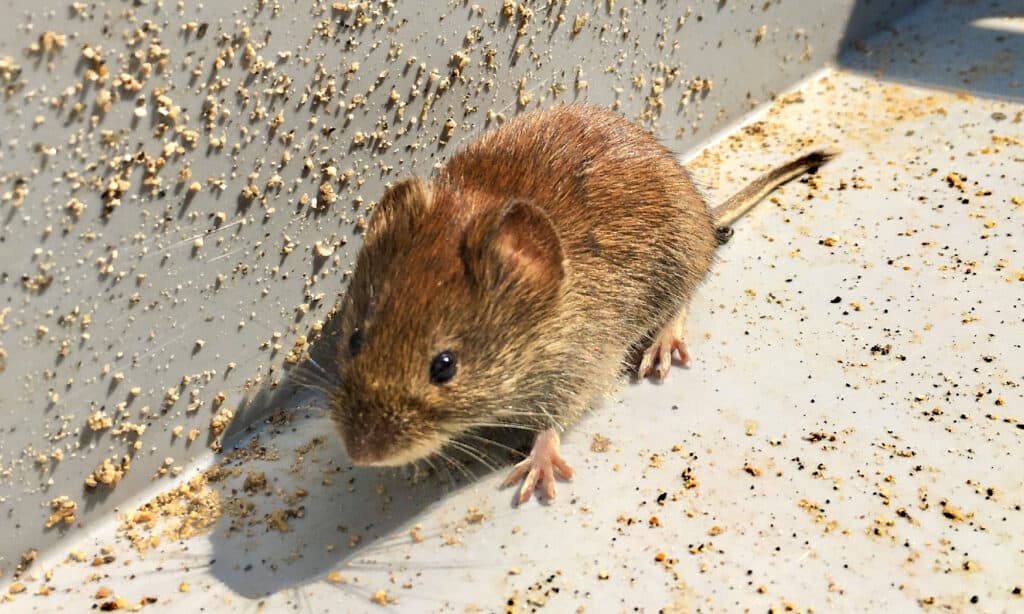
The house mouse is one of the most common rodents in America.
©iStock.com/Bruno_il_segretario
Common mice species in Georgia include:
- Mus musculus (House mouse)
- Ochrotomys nuttalli (Golden mouse)
- Peromyscus maniculatus (Eastern deer mouse)
- Peromyscus leucopus (White-footed deer mouse)
- Peromyscus gossypinus (Cotton mouse)
- Reithrodontomys humulis (Eastern harvest mouse)
Chipmunks
Chipmunks are some of the worst rodents that could infest your home and garden. Why? Because they are some of the most relentless chewers of all rodents in Georgia. Chipmunks feed on many different types of seeds, flower bulbs, garden vegetables, fruit, flowers, pet food, and birdseed. Chipmunks will also gnaw on wooden structures such as decks and porches, and they chew on the bark and buds of ornamental trees and shrubs.
Although their natural habitat is in open wooded areas, they will also make their homes in urban areas. Fortunately, chipmunks are territorial, so large numbers are uncommon. However, if the resources are available, populations can reach 20 or more individuals, which can cause significant damage.
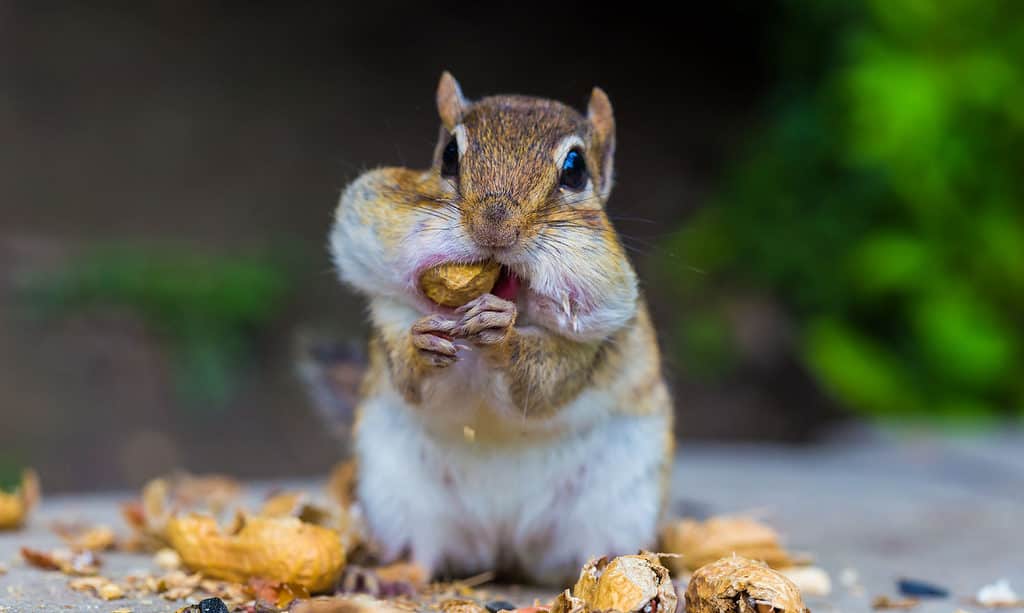
They may look cute, but chipmunks are actually very destructive in large numbers.
©colacat/Shutterstock.com
Rats
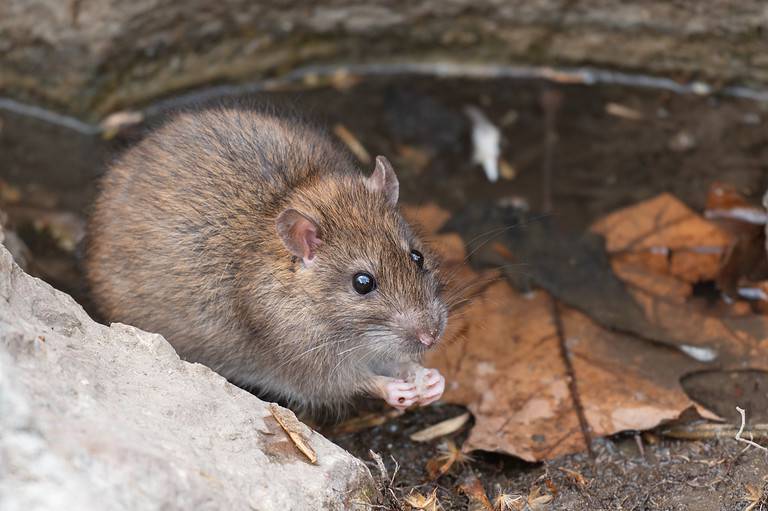
Many native species of rats are actually pretty harmless and tend to live away from humans in their happy forest homes. Unfortunately, we’ve had many species invade from the rest of the world, largely due to shipping and other transit-related industries. These invaders may outnumber native rats in some cases and they thrive in urban environments. For example, brown rats, the most common rat species, are thought to come from Mongolia and China originally.
Living in sewers, basements, subway systems, alleyways, and other locations with some pretty nasty stuff, these are the rats that have earned the reputation that many of us have come to associate with the word “rat.” Rats are scavengers and opportunistic feeders. They will eat whatever they can find. They’re also exceptional climbers, so fences, walls, and trees are no match for these critters.
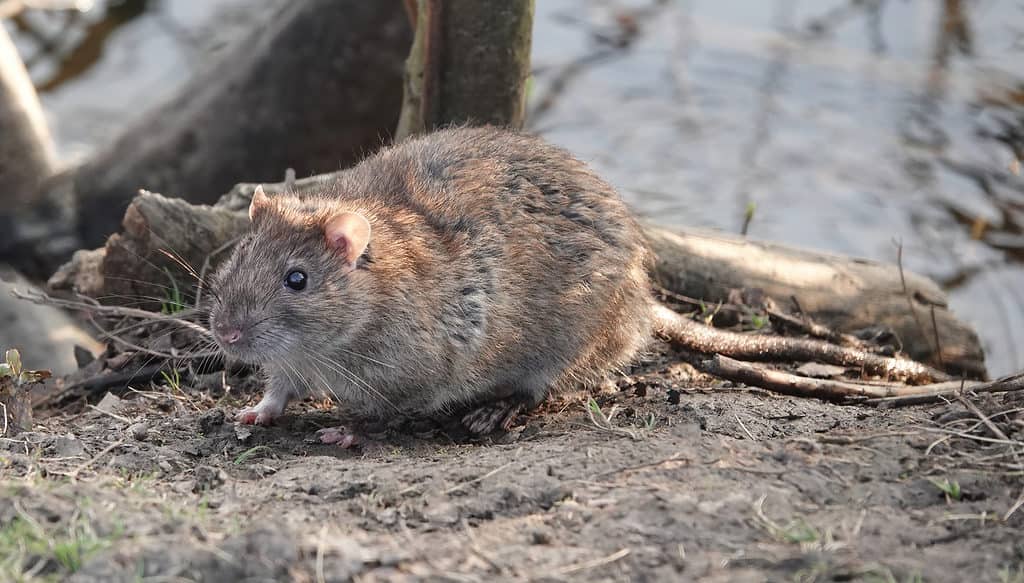
Brown rats are the most common rat in both urban and suburban environments.
©iStock.com/Nigel Harris
The most common rats in Georgia include:
- Rattus norvegicus (Brown rat or Norway rat)
- Rattus rattus (Black rat or Roof rat)
- Neotoma floridana (Eastern woodrat)
- Neotoma magister (Allegheny woodrat)
Squirrels
These fluffy-tailed rodents can be some of the most destructive rodents in urban and suburban areas. They love different types of nuts and acorns, seeds and grains like corn and sunflowers, fruits, and vegetables. Which, of course, also means they wreak havoc on bird feeders wherever they go.
They’re also destructive if they manage to get inside your home. Unlike mice, which tend to focus on wood and soft materials, squirrels also chew through plastic and other materials. They’re known to tear open vents and destroy siding, decimate insulation, cut through electrical wiring, and damage anything in storage that they encounter.
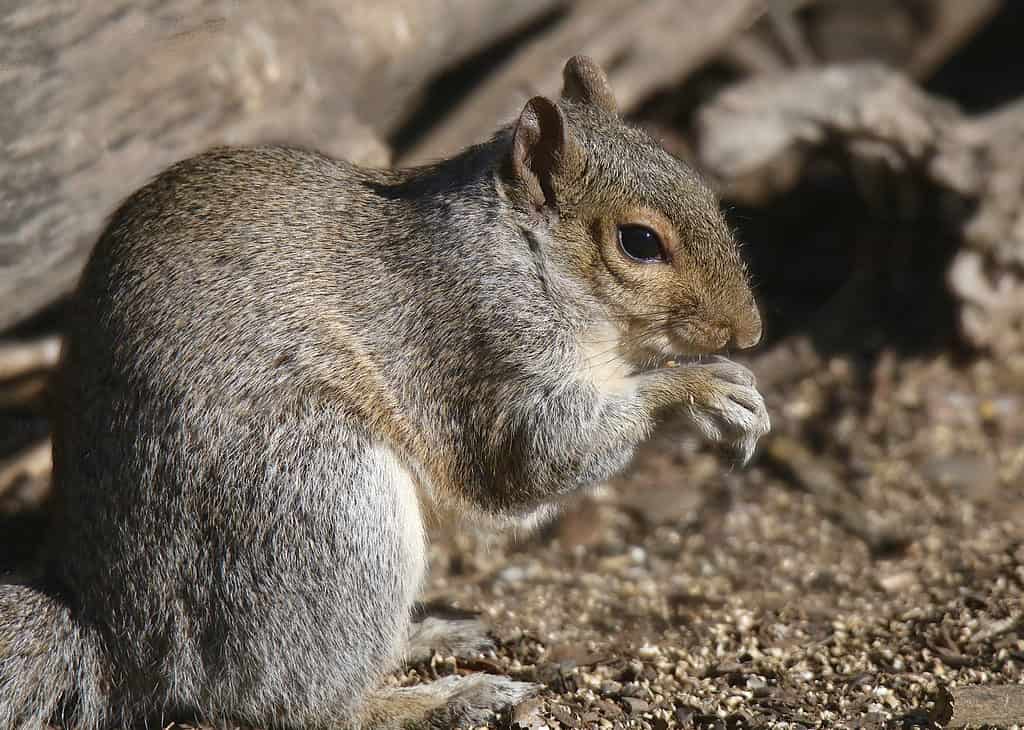
Some of the most plentiful rodents in North America, squirrels can cause major household damage.
©iStock.com/Nancy Strohm
Voles
Also known as meadow or field mice, voles are a unique rodent more closely related to hamsters and New World rats and mice than to true mice, despite their name. Voles nest, shelter, and rest in grasses, under logs, and in ground burrows. They typically come out at night, and they are active all throughout the year.
Naturally, voles prefer grasslands and open forests, but they’re increasingly seen in suburban and urban areas as cities expand. They eat nearly anything they find, from flowers and veggies to grasses, grains, and other crops. Fortunately, they’re not found in homes very often, but it is becoming more common. When you do have voles, they will likely damage your young trees and ornamental trees. They are often found in orchards and can decimate your plants and lawn. Significant dieback of plants typically follows wherever these critters are found.
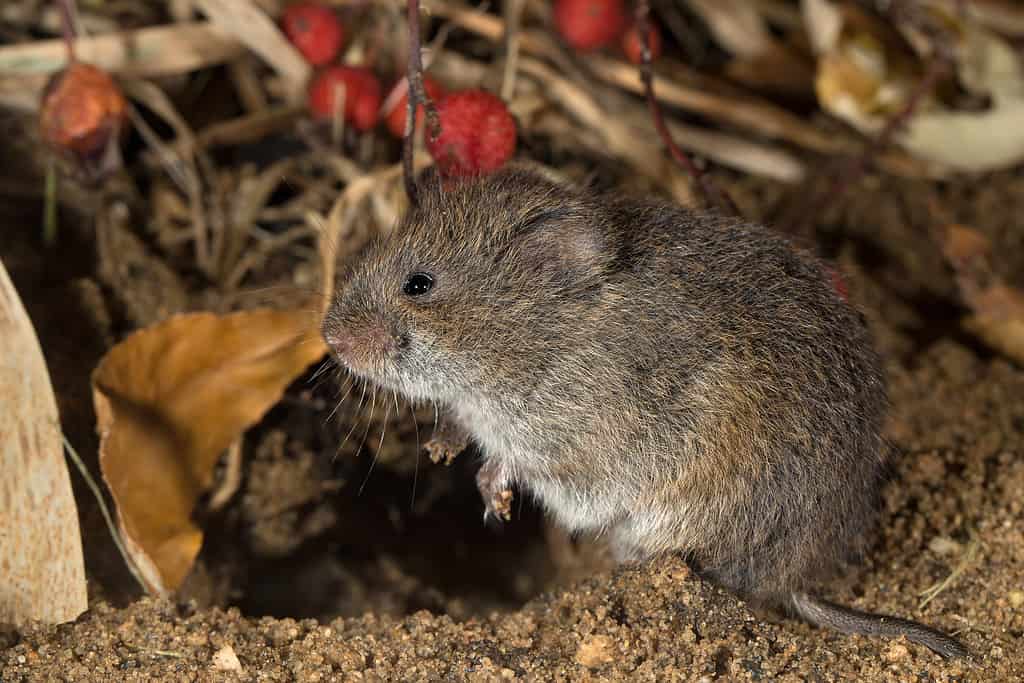
The eastern meadow mouse is also called the field mouse and the vole.
©Agnieszka Bacal/Shutterstock.com
Pocket Gophers
Also known simply as gophers, these critters are burrowers and abundant in the state of Georgia. The reason they’re called “pocket” animals is not because they fit in your pocket, but rather because they have large cheeks that function like pockets so they can carry food and objects around in them. The food is taken back to their burrows where it’s stored and the gopher goes off in search of more. Large hoards of plant roots, vegetables, and other plant matter can be found in these burrows.
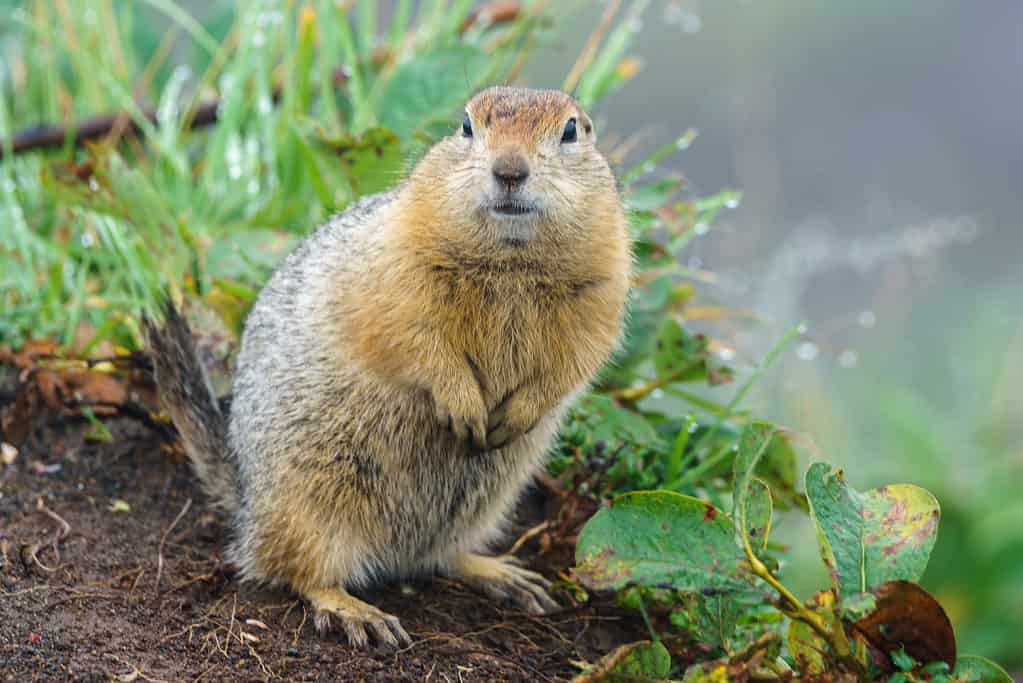
A single gopher is all it takes to ruin your garden.
©Pavluntic/Shutterstock.com
Ultimately, gophers have both positive and negative effects, but most people don’t want them in their yards. They burrow around and eat plants we humans grow for ourselves, meaning our crops are lost and erosion occurs. One gopher can ruin your garden all on its own. Conversely, they don’t eat all the food they store, so it decomposes and ultimately becomes compost that nurtures the soil.