
Quick Take
- The number of teeth and the shape vary depending on the salamander species.
- Salamanders can have jaw teeth and palatal teeth.
- Sexual dimorphism can occur in salamander teeth.
Salamanders are small amphibians that look like a cross between a lizard and a frog. They have smooth, moist skin like amphibians but long bodies and tails like lizards. The word “salamander” is actually the common name for over 700 amphibian species that belong to the order Caudata, which means “tailed,” because salamanders have tails as adults. All salamanders also have teeth, but not all salamanders have teeth in the same place. Read on to learn everything you need to know about salamander teeth.
Salamander Jaw Teeth
Most salamanders have teeth on both their upper and lower jaws — even larval salamanders. However, the number of teeth and the shape vary depending on the species. Many salamander teeth also have a pedicel, which is a slender, stalk-like structure connecting the jawbone to the crown of the tooth. Take an in-depth look at the different types of salamander jaw teeth.
Maxillary Teeth
Maxillary teeth are the teeth located on the upper jaw. They are typically uniformly sized and look like little cones lining the upper jaw’s edge. The most common type of tooth in adult salamanders is bicuspid, which means it has two cusps, or points, on the crown. The maxillary teeth assist in capturing and holding prey as the salamander ingests it.
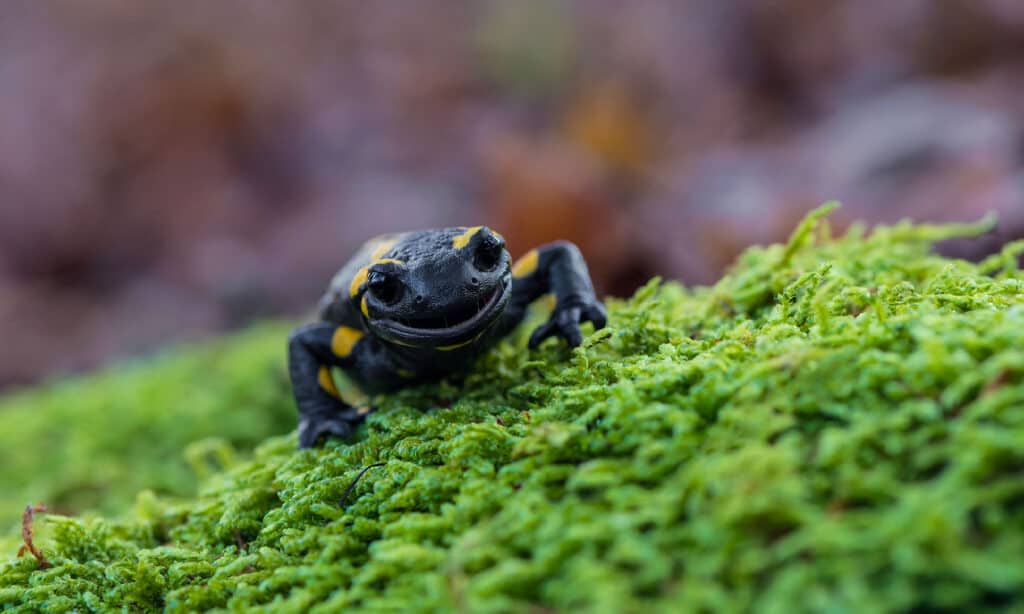
The salamander’s jaw teeth help it capture and hold prey.
©iStock.com/Paolino Massimiliano Manuel
Premaxillary Teeth
The premaxillary teeth are located on the premaxilla bone, at the very front edge of a salamander’s upper jaw, just in front of the maxillary teeth. In many species, they are similar in shape to the maxillary teeth. They they are typically small, with a cone-shaped base and a two-pointed crown.
Mandibular Teeth
The teeth on the salamander’s lower jaw, sometimes referred to as dentary teeth, are called mandibular teeth. The main difference between the mandibular and maxillary teeth is their location: mandibular teeth are on the lower jaw, while maxillary teeth are on the upper jaw. The mandibular teeth help the salamander firmly hold onto its prey as it is being swallowed. In many salamander species, the teeth on both the upper jaw and lower jaw are similar in shape and size.
Salamander Palatal Teeth
Some salamanders also have teeth on the roof of their mouths, or palates. These teeth are tiny but very sharp, growing to around 0.020 to 0.039 inches, although this varies by species. They are also continually replaced by new teeth. Learn more about a salamander’s palatal teeth in the sections below.
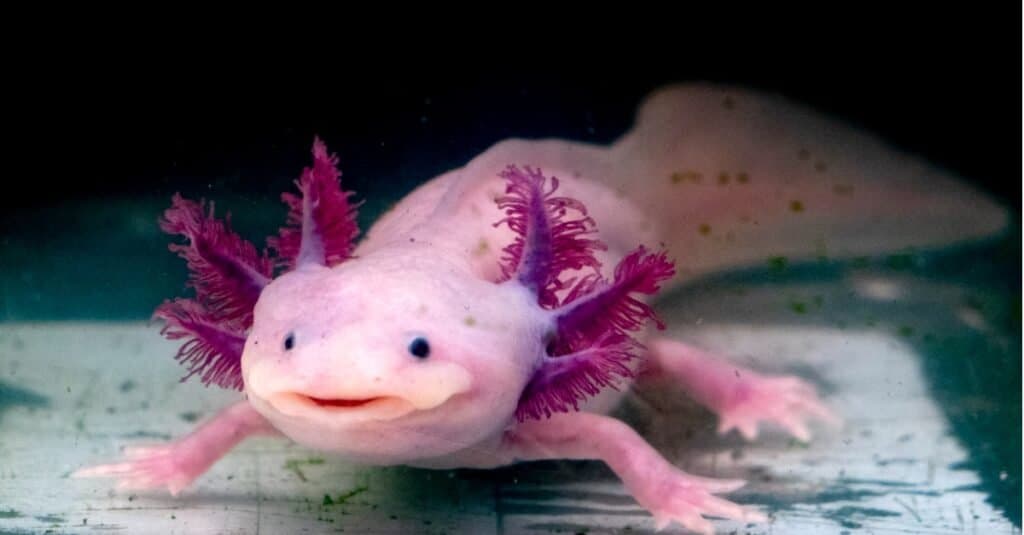
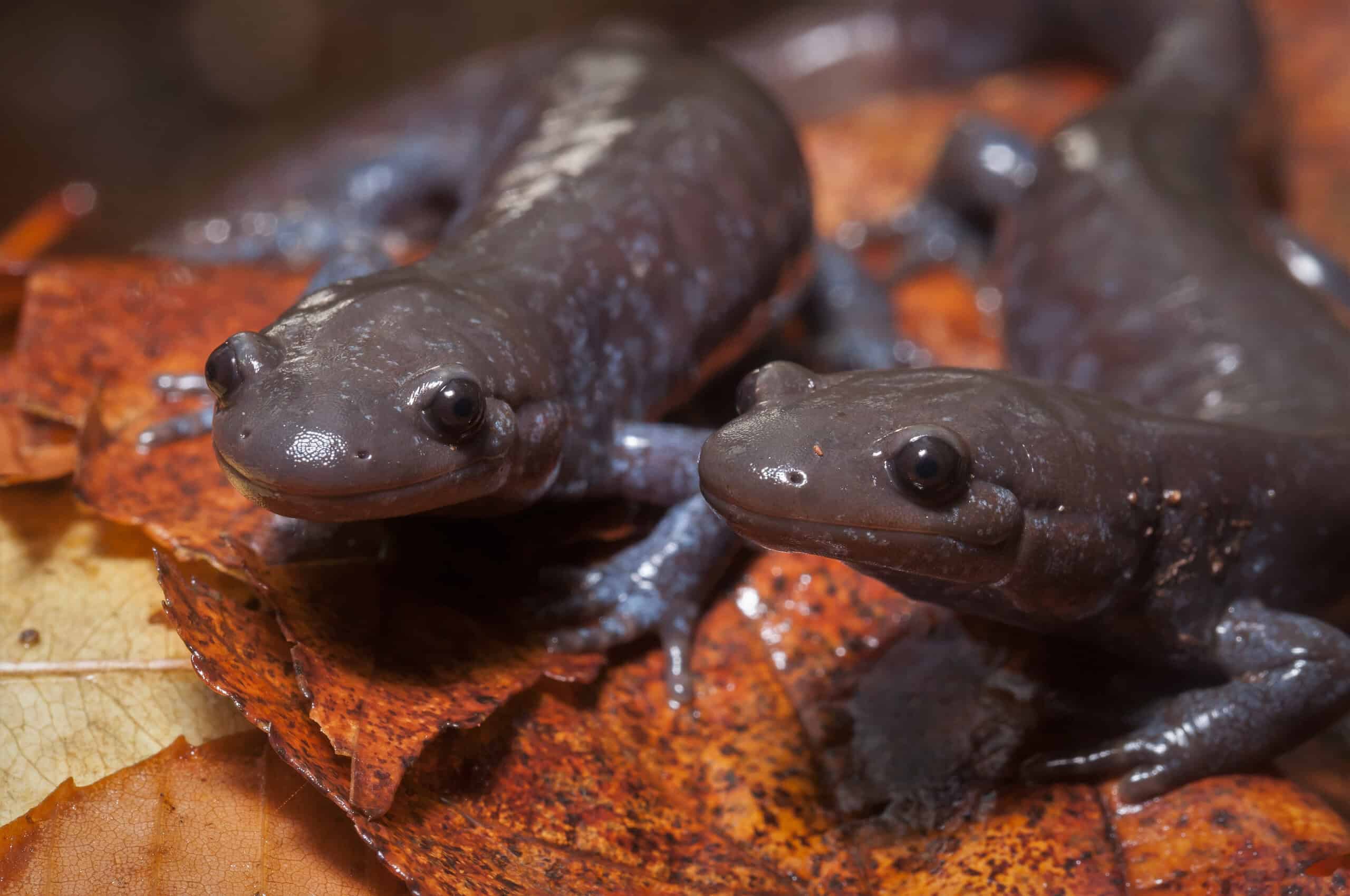
A salamander’s teeth are continuously replaced throughout the animal’s life.
©iStock.com/izanbar
Vomerine Teeth
The vomerine teeth are located in the facial bone known as the vomer, at the front of the roof of the mouth. These teeth are often arranged in small clusters directly behind the maxillary teeth and aid in grasping prey during feeding. In aquatic feeders, vomerine tooth rows run parallel to the maxillary teeth. The vomerine teeth are believed to help secure prey while the salamander expels water from its mouth.
Parasphenoid Teeth
A salamander’s mouth may also contain parasphenoid teeth. These are small, numerous teeth found on the parasphenoid bone in the roof of the mouth in many salamanders. These teeth are often arranged in rows or patches and are either located behind or contiguous with the vomerine teeth.
Do Salamanders Chew?
The palatal teeth may play a role in gripping or securing prey during swallowing, although their exact function is still not fully understood. However, recent studies have found that the jaw teeth may primarily be used to catch and hold prey, while the tongue helps rub the prey against the palatal teeth. The sharp palatal teeth help break down the prey and allow digestive secretions to begin taking effect.
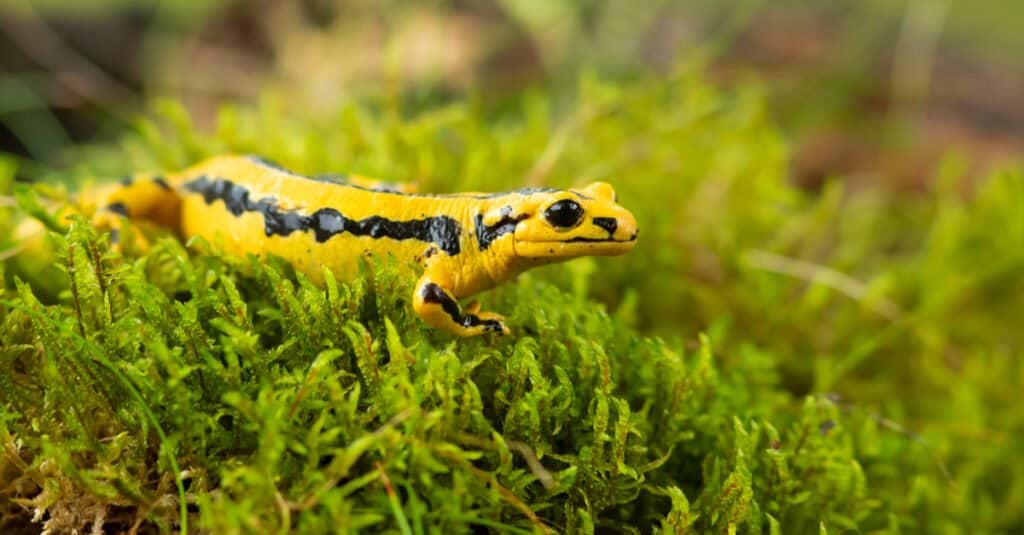
Researchers believe salamanders chew their food, not swallow it whole.
©Milan Zygmunt/Shutterstock.com
Rubbing prey against the palate is particularly useful for opening the tough exoskeletons of some insects. Scientists believe that the head, jaw, and tongue movements they observed indicate that some salamanders chew prey with their palates and do not swallow their food whole as previously believed. They argue that this method of chewing may date back to the early days of terrestrial vertebrates.
Sexual Dimorphism in Salamander Teeth
Sexual dimorphism can occur in salamander teeth. Dental dimorphism has been most often reported in the family Plethodontidae, but it has also been documented in other groups. Salamanders in the Plethodontidae family have pedicellate teeth that are typically bicuspid. However, mature males may develop different types of maxillary teeth, such as larger, monocuspid teeth with a crown that is more chisel-shaped. In contrast, females have bicuspid teeth that are more flattened.
Juveniles of both sexes also typically have bicuspid teeth. This indicates that the development of monocuspid teeth in adult males may be caused by hormonal changes as they mature. Some male salamander species also use their teeth in combat to compete for females. Sexual dimorphism in teeth, as well as the related enlarged jaw musculature in some males, suggests that sexual selection may have contributed to their evolution.