
Quick Take
- Touching the wrong snail egg could put you in the hospital, and most people have absolutely no idea why. See the danger explained →
- The very first thing a baby snail does after hatching is deeply unsettling, though it is also surprisingly logical. Discover what hatchlings do first →
- There's a gourmet product made from snail eggs that commands a price tag rivaling luxury caviar, and its taste is even more confusing than you might expect. Explore snail caviar pricing →
- Ancient Greeks, Romans, and Egyptians had a name for snail eggs that tells you exactly what they believed these tiny things could do. Uncover the ancient name →
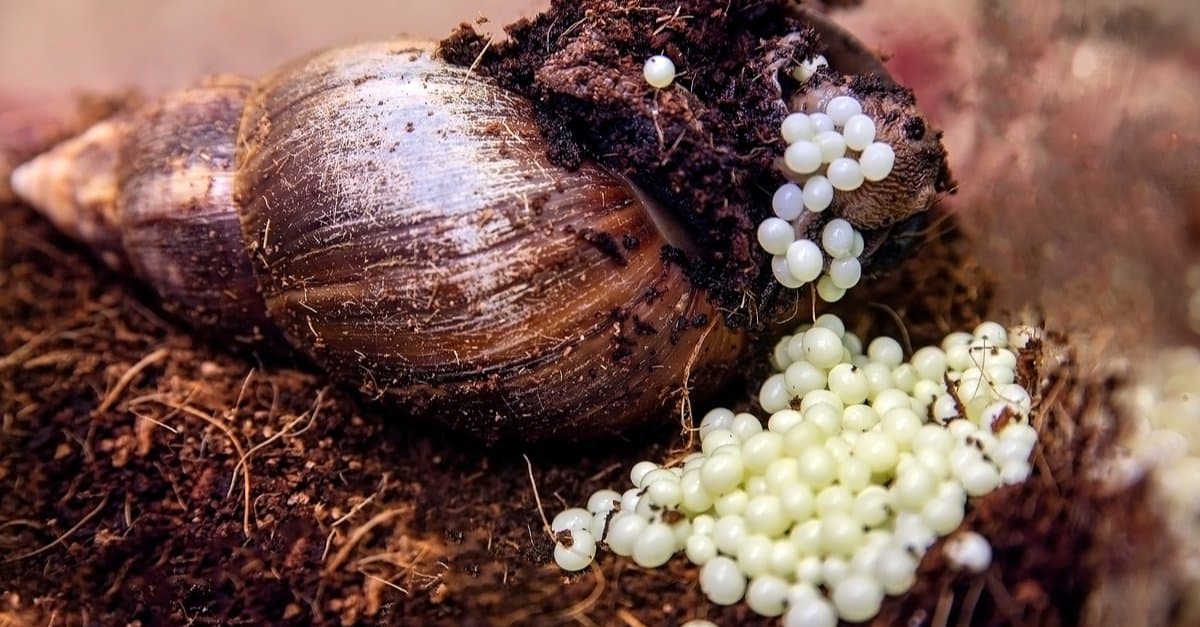
Snail eggs are typically small, round, and clustered together with a thick layer of mucus. They can be a variety of colors, from translucent to white, yellow, bright pink, and even red. Land snails bury their eggs in damp soil, under logs, or in leaf litter. Aquatic snails deposit their eggs above the waterline on the walls of aquarium tanks, under the leaves of plants, or on decor. These facts may not seem unusual, but the following seven facts about snail eggs will actually surprise you.
1. Snail Eggs Are Fertilized in Different Ways
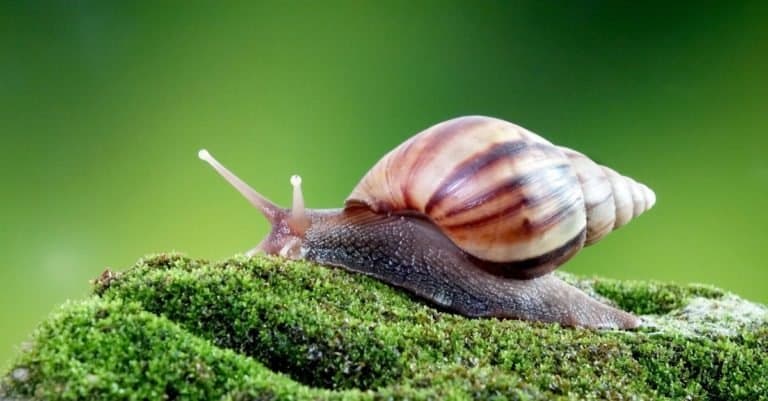
Some snail species require a male and a female snail to reproduce. However, most snail species are hermaphrodites and have both male and female sex organs, but there must be two snails to reproduce. In many species, they mate and store the sperm for later use, sometimes for months. Some snail species can reproduce by themselves through self-fertilization, but the offspring frequently do not survive. Many marine snails spawn. One snail will lay eggs while another releases sperm into the water column. The sperm then swim to the eggs to fertilize them.
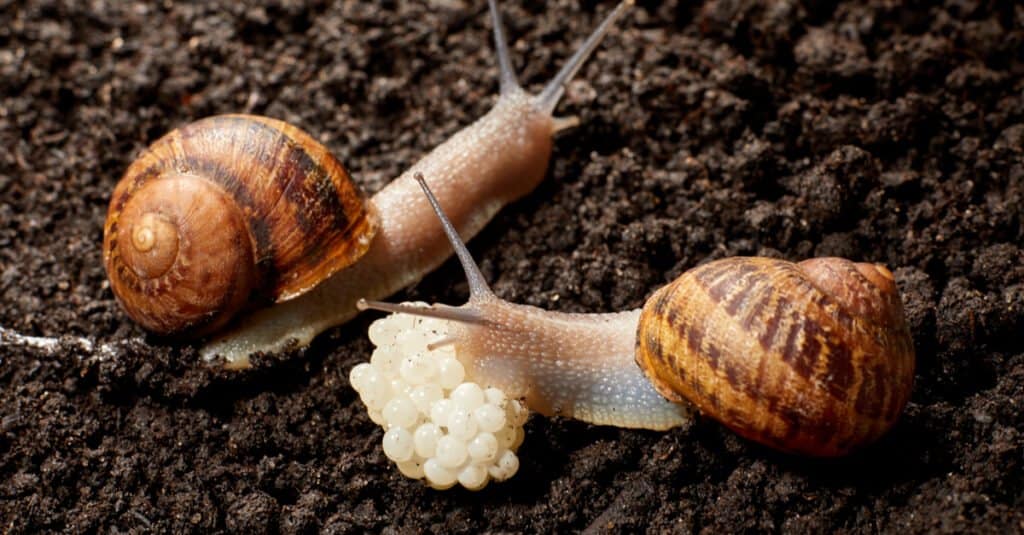
Most snail species are hermaphrodites and have both male and female sex organs.
©Zebra-Studio/Shutterstock.com
2. Some People Eat Snail Eggs
While “snail caviar” may not sound appetizing to some, it is a delicacy to others. The caviar is made of fresh land snail eggs and is said to have an earthy taste. In fact, some people liken it to baked asparagus or mushrooms. Snail caviar can be expensive, too. Some premium snail caviar can cost as much as $3,000 per kilogram due to the difficult process required to produce the eggs.
3. Snail Farming Is Called Heliciculture
Snail farming is known as heliciculture. Snails are farmed for escargot (cooked snails), snail caviar, and snail slime for use in cosmetics. Escargot is the most common reason for snail farming, but snail caviar is becoming more popular. France and Italy are among the most common places for snails to be farmed for their eggs.

Escargot, snail caviar, and snail smile are the primary reasons for snail farming.
©RossHelen/Shutterstock.com
4. Most Snail Eggs Hatch Relatively Quickly
Once laid, the eggs generally hatch within 2–4 weeks, depending on the species and environmental conditions. Warmer temperatures tend to accelerate hatching. Before hatching, snail eggs will generally change colors. In some species, the eggs begin translucent and turn opaque before hatching. In other species, the eggs darken when they are ready to hatch.
5. Some Snail Eggs Are Dangerous to Touch
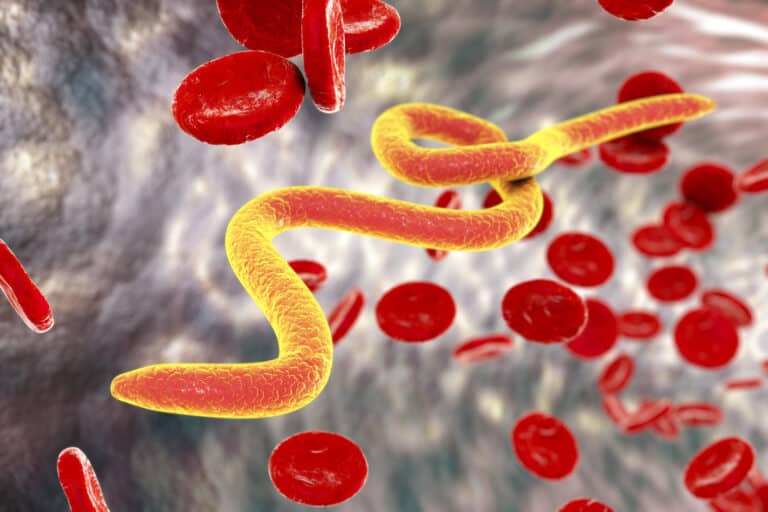
Snails can be hosts to harmful parasites and bacteria. Some snails may carry the rat lungworm (Angiostrongylus cantonensis), which can cause meningitis in humans. In rats, the worm passes into their feces. When snails eat the contaminated rat feces, they ingest the parasites. The parasite does not reproduce within the snail, and there is no evidence to suggest that Angiostrongylus cantonensis larvae pass into snail eggs. However, stressed snails may release the parasites through their slime. Land snails coat their eggs with a layer of slime during laying to hold the eggs together in clusters and keep them from drying out. Humans who touch contaminated snail eggs or eat undercooked or raw snails could become infected with Angiostrongylus cantonensis.
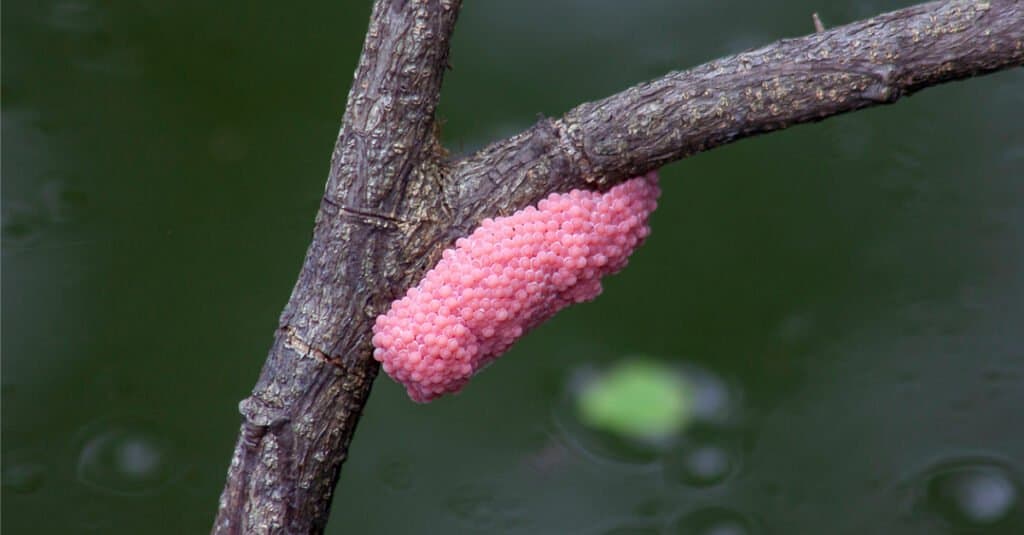
Snail slime, which is used to cover their eggs and bind them together, may be contaminated with the rat lungworm.
©iStock.com/Puripat penpun
6. Baby Snails Eat Their Own Eggs
When baby snails hatch, their shells are soft and thin. They frequently consume their own eggshells to absorb the calcium and begin hardening their shells. Baby snails may also consume the eggs of unhatched siblings.
7. Snail Eggs Were Once Called “Pearls of Aphrodite”
Ancient Greeks, Romans, and Egyptians are said to have nicknamed snail eggs “Pearls of Aphrodite,” after the Greek goddess of love. Snail eggs are typically round and are often white like pearls. The eggs were believed to have aphrodisiac properties.