
Quick Take
- Snails stab their partners with a calcium dart during courtship, and the chemistry it triggers is what decides who wins the reproductive battle. Dart chemistry explained →
- Garden snails don't have fixed sexes, so something else entirely determines which partner ends up laying the eggs. See how eggs are laid →
- Scaled to human size, the snail's love dart would measure over a foot long, and that is not even the strangest part of how they use it. About the love dart →
When you contemplate snails, their reproductive strategies are probably not the first thing that comes to mind. However, snails have some unique adaptations that have allowed them to become some of the most numerous and successful animals on the planet. Let’s explore snail mating habits to discover how they reproduce.
How Do Snails Find a Mate?
Snail mating is a complex event. Different snail species have different methods and even different physiology when it comes to mating. For our purposes, however, we are going to be looking at the mating habits of the common garden snail (Cornu aspersum).
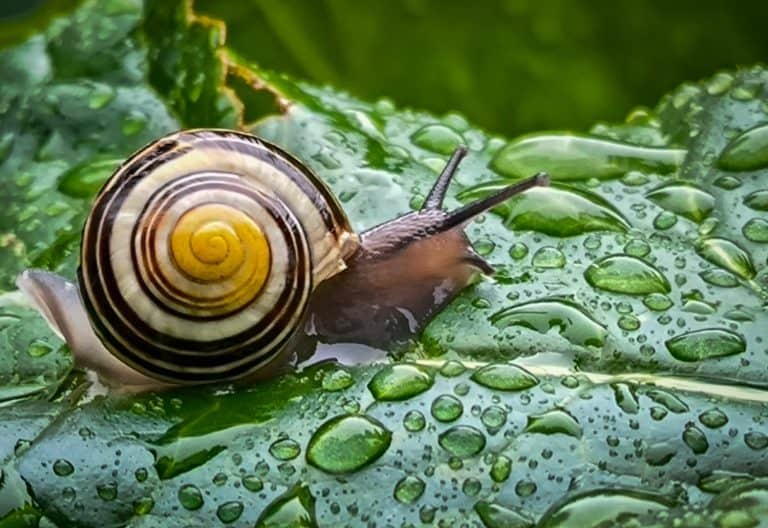
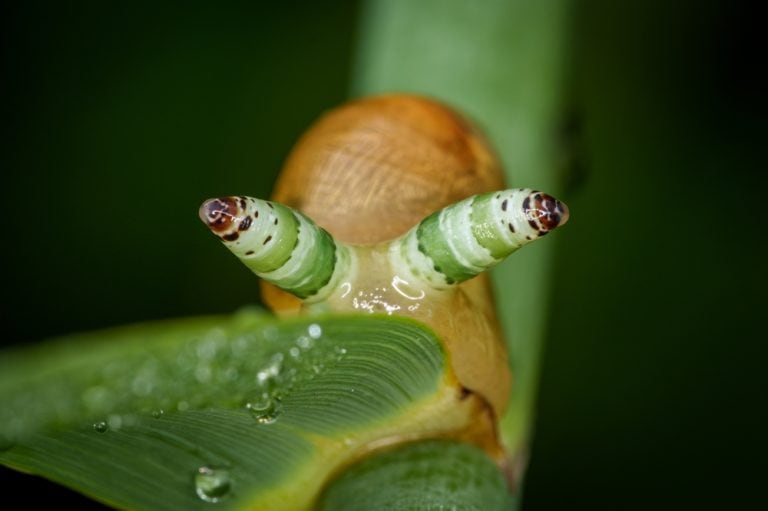
Snails use their senses of smell and taste to search for a partner. Their upper tentacles house their eyes and are also used to smell the air. They can smell and taste the ground with their lower tentacles. Then they follow the trail of mucus on the ground to locate their potential mate.
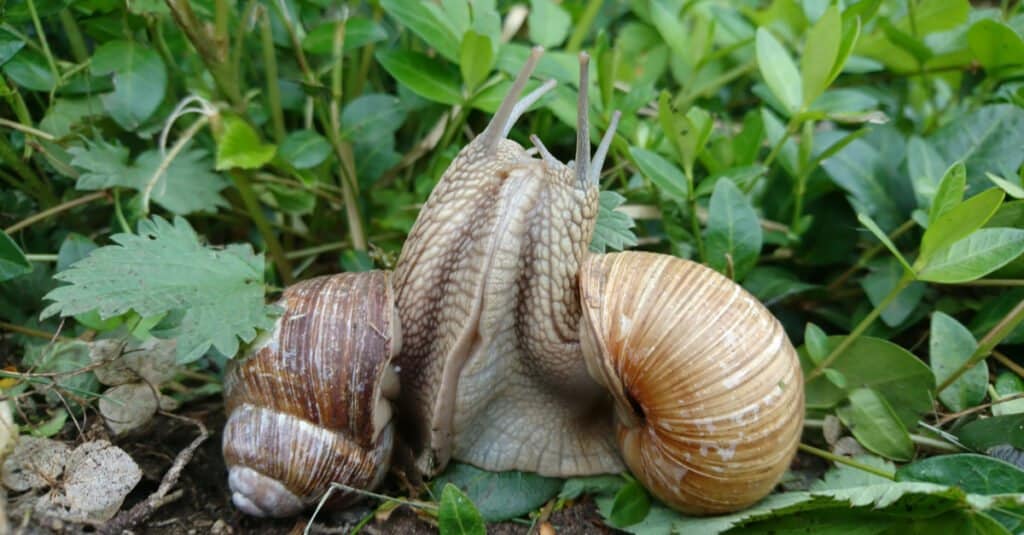
Snail courtship involves smelling and tasting their partner, sometimes for hours.
©Deetron84/Shutterstock.com
Snail Courtship
When snails meet, they continue to smell and taste by crawling all over one another, sometimes for hours. Then, they take things to the next level. One of the snails will stab the other with a “love dart,” technically called a gypsobelum. Made of calcium carbonate, the dart is pushed into the other snail’s body. The dart delivers hormones that increase the shooter’s chances of fertilizing the eggs. In some snail species, only one snail will fire the love dart, but in garden snails, whichever snail fires the dart first generally has the better chance of fertilizing the eggs. Researchers note that the love dart would be equivalent to a 15-inch knife if it were human sized.
Garden snails don’t abide by conventional standards of male and female, although some species do have separate sexes. Most snails are hermaphrodites, having both male and female sexual organs with the ability to both fertilize and lay eggs. Generally, the deciding factor for which snail will be able to lay eggs is which snail gets the better placement of the love dart. In garden snails, the love dart placement is key. The better the placement, the better and stronger the hormonal injection. The snail with the better love dart placement essentially cuts off the other snail’s ability to reject sperm, allowing it to more effectively receive the other snail’s sperm.

A snail’s love dart is used to increase the shooter’s chance of fertilization success.
©oris M. Koene and Hinrich Schulenburg / CC BY 2.0 – Original / License
Snail Mating
After the love dart or darts have been administered, each snail inserts its penis into the vaginal tract of the other. Both snails transfer sperm. The process of common garden snail copulation can take from 2 to 6 hours.
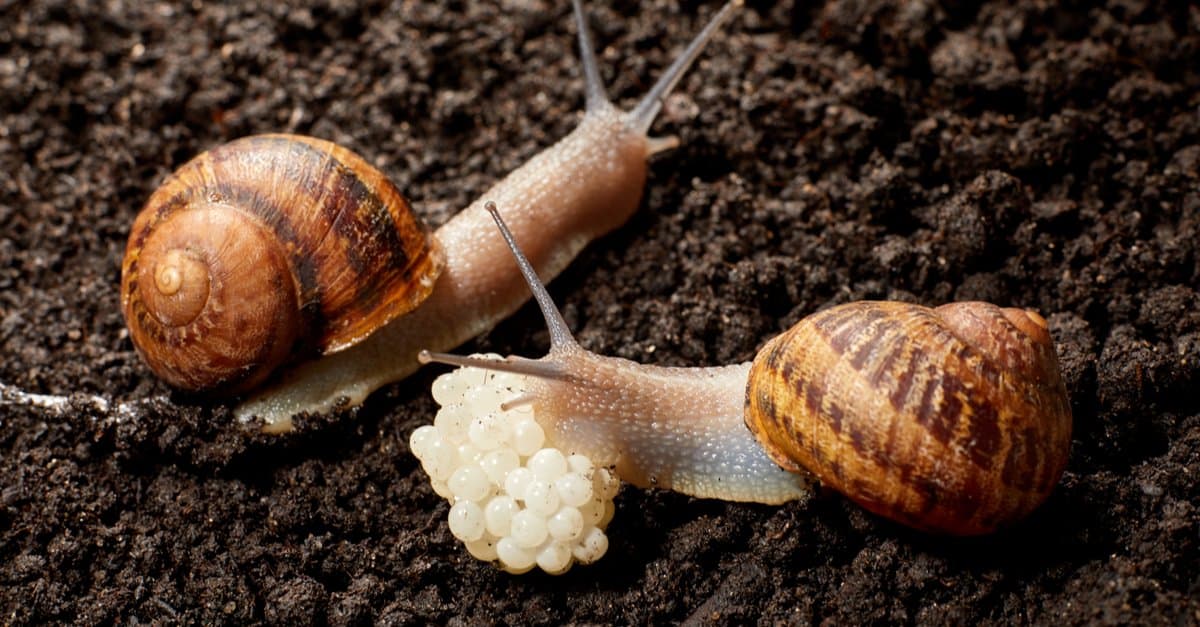
If the eggs are successfully fertilized, the snail digs a hole in moist soil to lay the eggs. The snail then leaves the eggs, which will generally hatch within 2–4 weeks, depending on the species and the conditions. In warm and damp conditions, garden snails can mate and lay eggs as frequently as once a month. In optimal conditions, they can breed year-round, but they are most active from February through October.
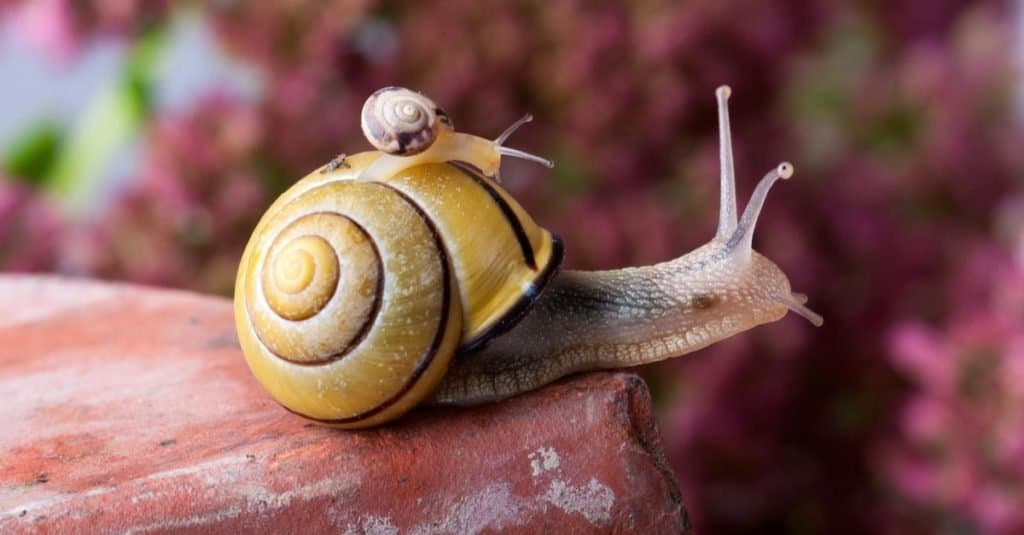
Garden snails are sexually mature in 2-3 years.
©Nailia Schwarz/Shutterstock.com
How Long Until Baby Snails Mature?
When snails are born, they are incredibly tiny and vulnerable to attack. Their shells are soft and thin, and they need calcium to harden and grow their shells. Fortunately, it doesn’t take long for a snail’s shell to harden. In the months after hatching, a juvenile snail’s shell begins to harden and it takes on its adult color. A garden snail is sexually mature within 2–3 years, at which point they will begin the process all over again, from courtship and love dart to egg-laying and hatching.