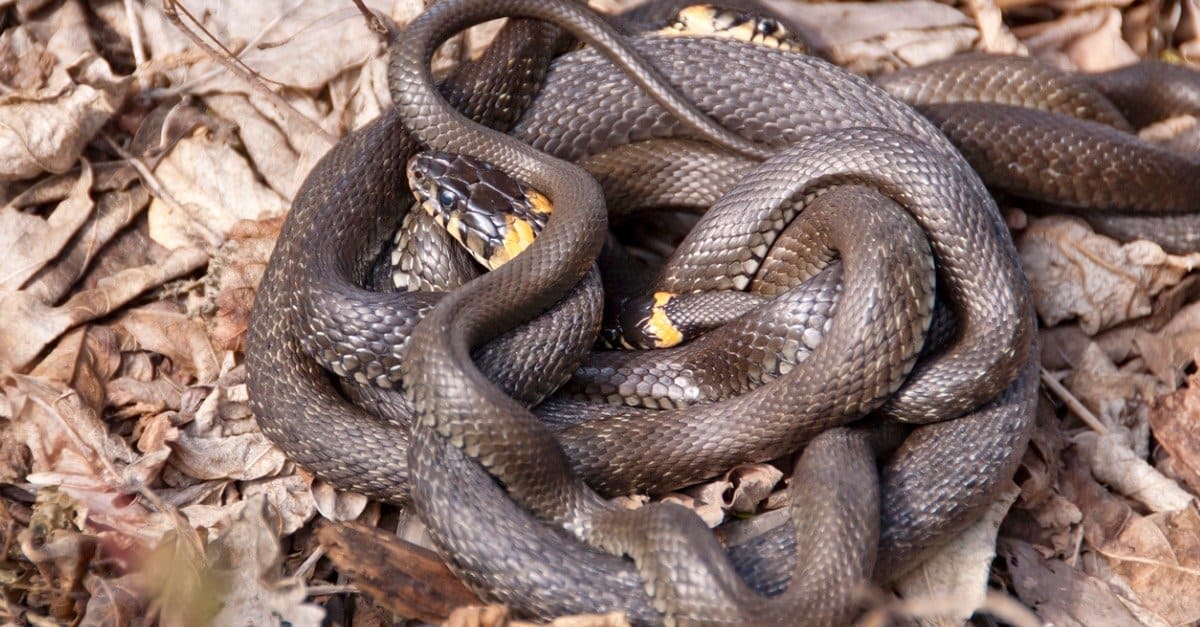

There are more than 4,000 snake species on the planet. Mating rituals among snakes are generally not that different from the practices of most animals, but there is a surprisingly wide gap in our biological understanding of snakes’ courtship, breeding, and reproductive practices, due to the secrecy and inscrutability of these animals. It wasn’t until 2010 that scientists discovered some snakes breed asexually. However, a lot is known about how snakes mate. Continue reading to learn more.
Mating Season
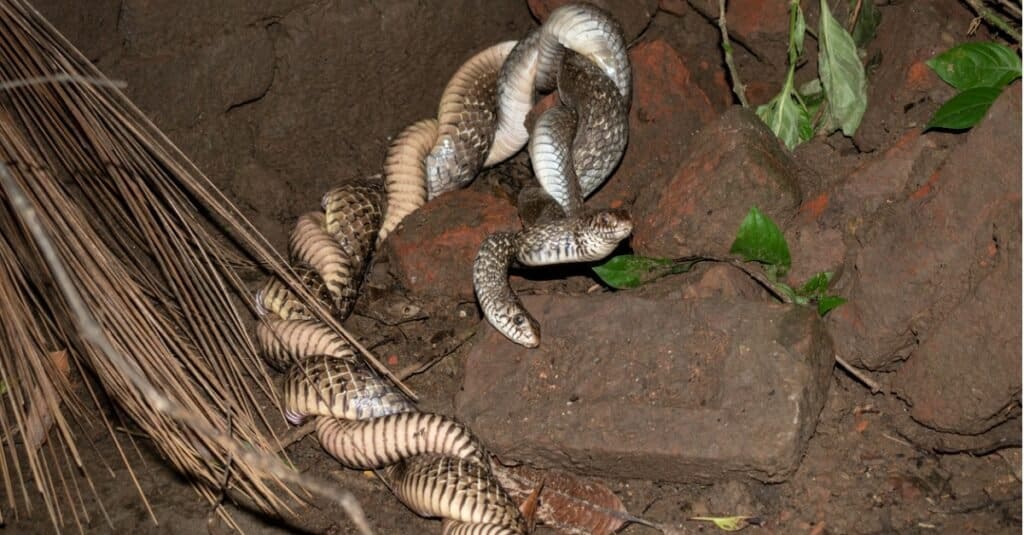
Many snake species breed in a ball, called a mating knot.
©iStock.com/DEVJYOTI BANERJEE
Mating season for snakes is contingent on their ecosystem. In areas with a conventional year constructed of four distinct seasons, snakes will breed in spring, upon waking up from brumation, a period of dormancy for reptiles and amphibians, similar to, but less extreme than hibernation in mammals.
In regions with more complex climate patterns, there may be multiple mating seasons, and in tropical and some subtropical areas, mating occurs throughout the year. Regardless of the timing of mating, it’s critical for the young to develop adequately to survive the cold when it arrives.
Courtship
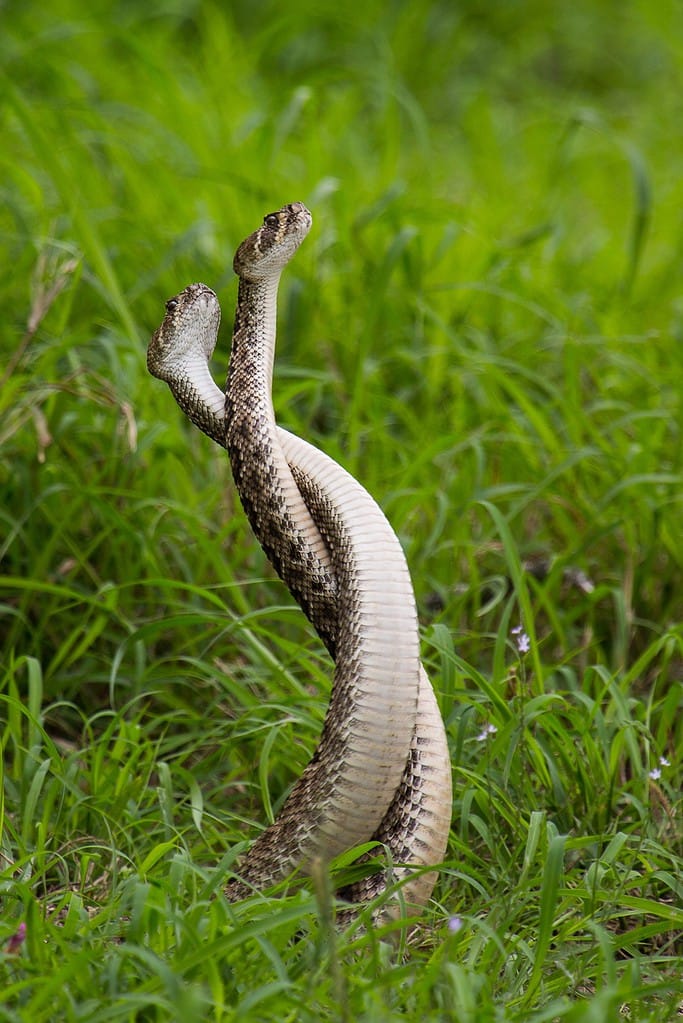
Diamondback rattlesnakes will engage in ritualistic wrestling matches to establish dominance and secure breeding rights.
©Gary Mc Alea Photography/Shutterstock.com
There’s a growing body of research regarding the courtship rituals of various snake species and the commonalities among them. Males typically initiate courtship, using visual and tactile cues to interact with the female. Common behaviors include chin-rubbing, crawling over the female, and tail-waving, while males may also engage in combat to establish dominance.
Rattlesnakes that are competing for a mate will fight without their fangs in a wrestling match. Viper mating rituals include a range of courtship gestures. Various forms of nibbling, undulating, and caressing have been identified among most vipers. Researchers have identified behaviors unique to specific species. This is the case with the short-tailed viper, where females have been identified as quivering during courtship.
The Mating Knot
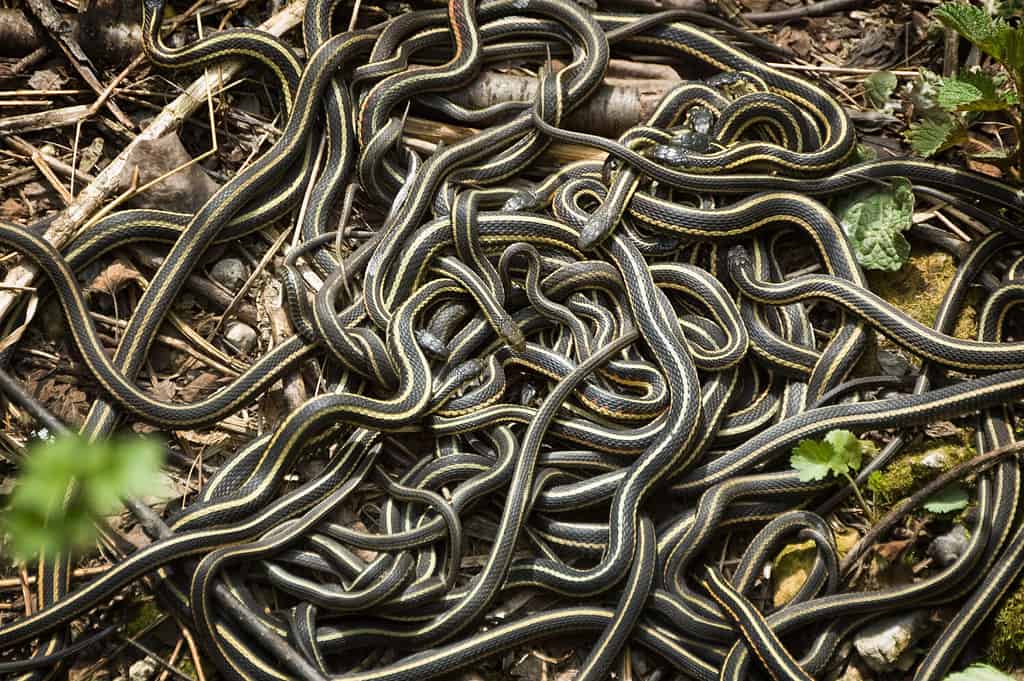
Red-sided garter snakes form huge mating balls composed of many males, but just one female.
©Cindy Creighton/Shutterstock.com
Many species of snake breed in a ball, often known as a mating knot. This is a tactic employed by the common garter snake, which is one of the most populous snakes throughout the United States and Canada. When female garter snakes awaken from brumation in the spring, they do so a few days behind males. This extra time allows the males to reach peak condition for intense competition during mating.
Female garter snakes find themselves overwhelmed by a mass of aggressive and amorous snakes all trying to breed with them. Mating success depends on more than which male arrives first.
Both female and male snakes have a single opening called the cloaca, which leads to their reproductive organs and serves as the endpoint for their digestive and urinary systems. The goal of the males is to access the female’s cloaca for breeding, but females can control when to open and close their cloaca.
A male snake’s reproductive organs, called hemipenes (hemipenis, singular), are in its tail. Each has its own reservoir of sperm. This allows male snakes to mate with two females within a short period. Male reproductive organs are inverted within the cloaca and emerge solely for mating purposes. The actual breeding process can take anywhere from an hour to a day, depending on the species. Once snakes have mated, the male leaves and plays no role in the hatching of the eggs or raising of the young.
Breeding
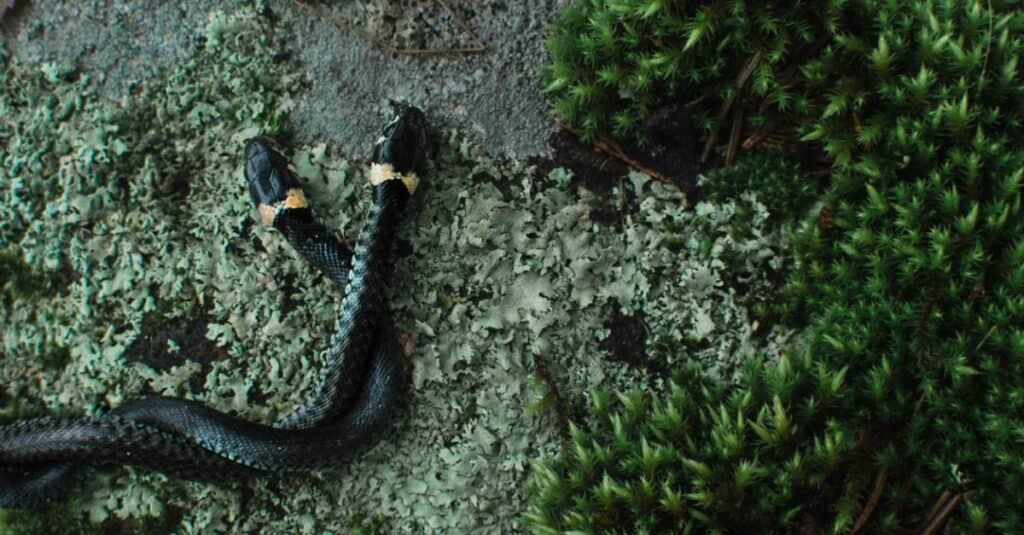
Some snake mothers care for their young for weeks after giving live birth.
©iStock.com/Ilse_Innire
The majority of snakes (70%) lay eggs. Sand and grass are common sites for nests, and mothers may or may not cover up their eggs. Covered eggs are better protected from predators and kept warm enough to properly incubate. Many snake species immediately abandon their eggs after laying them. Only a few, like cobras and pythons, exhibit parental care by coiling around their eggs to provide warmth and protection.
Parenting responsibilities vary between species. Baby snakes are typically born or hatched ready to hunt and survive on their own. However, python mothers care for their young for weeks after giving live birth. And they do so at great personal cost. However, python mothers have been observed caring for their young for weeks after they hatch from eggs.. Rattlesnake mothers will guard their live-born young until their first shed.
Asexual Reproduction in Snakes
It wasn’t until 2010 that scientists confirmed asexual reproduction in boa constrictors, though earlier reports of asexual reproduction in snakes exist. In 2010 a female boa constrictor was observed using her DNA to fertilize her eggs. Snakes aren’t the only animals to reproduce asexually. Sharks are also known to reproduce asexually, and the list of snake species capable of this type of reproduction is growing longer.
It has been determined that boa constrictors, reticulated pythons, and Brazilian rainbow boas can reproduce asexually, and the list of confirmed species continues to grow. In most species, asexual reproduction can be beneficial when mates are scarce or absent. Offspring produced asexually are genetically identical to the mother, limiting the species’ ability to adapt to changing environments.