
Quick Take
- The males and females of this species look so radically different that scientists spent years getting the whole picture wrong. Explore the sexual differences →
- Female Phasma gigas can reproduce without any males, though the strange catch to how it works changes everything. Discover how reproduction works →
- Stick insects aren't supposed to fly, but Phasma gigas didn't get the memo and weaponizes that ability in a surprising way. See the wings in action →
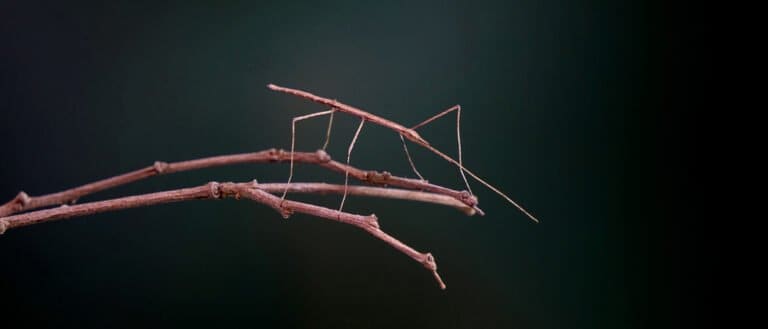
Picture a medium-sized stick. Now, imagine a moth with vibrant, Earth-toned wings. Put those two things together, and you get something like the Phasma gigas. This Instagram video shows just how strange, fascinating, and ancient-looking these creatures are.
First described by the father of modern taxonomy, Carl Linnaeus, in 1758 as Gryllus gigas, this massive living stick insect has enchanted biologists and enthusiasts alike ever since. But for such a striking creature, not much is known about it. In fact, they were once commonly mistaken for Phasma reinwardtii. Let’s learn more about this remarkable insect, where it lives, and what scientists still don’t know about it.
A Massive, Living Stick
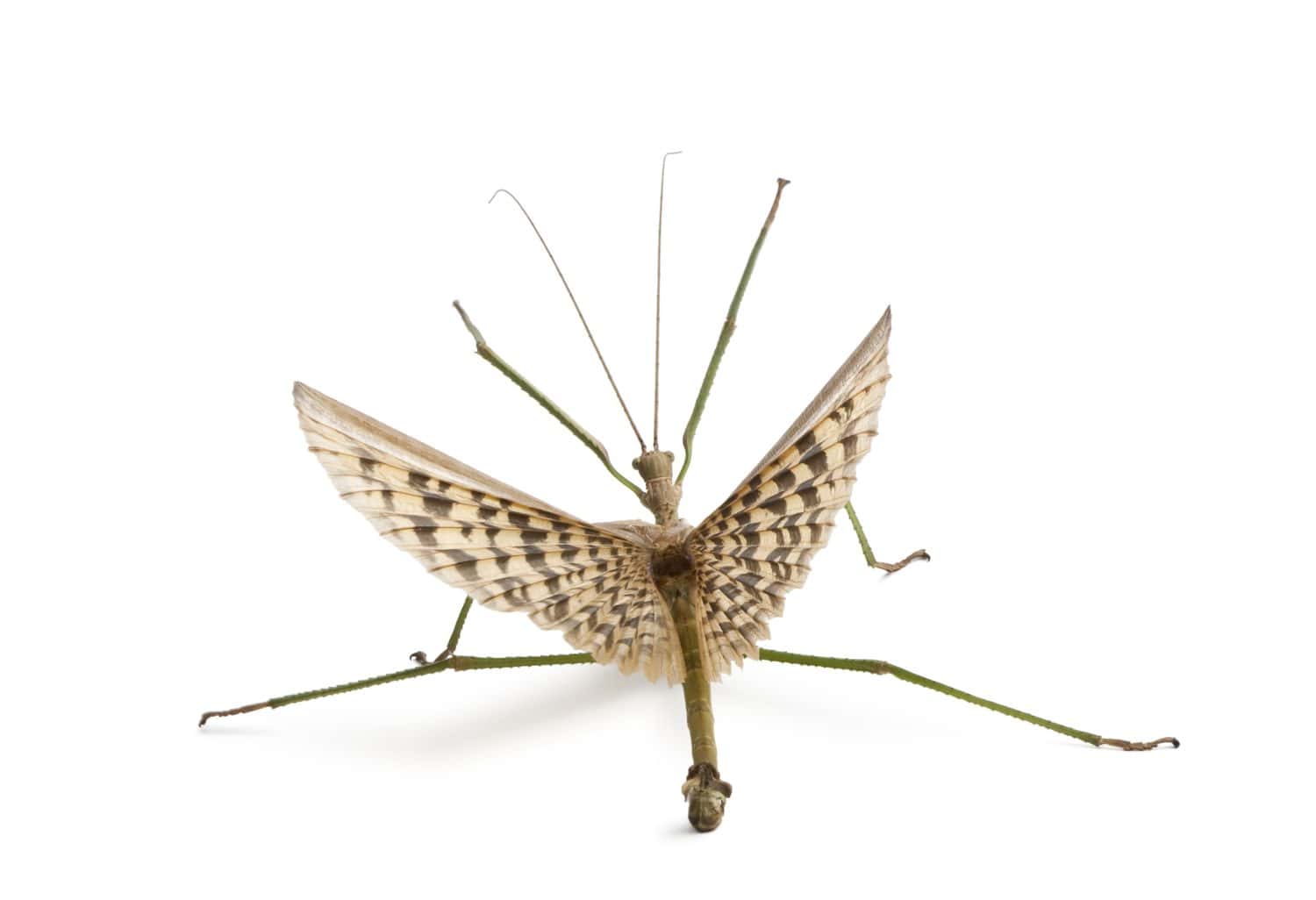
Phasma Gigas is one of the largest insects on Earth.
©Eric Isselee/Shutterstock.com
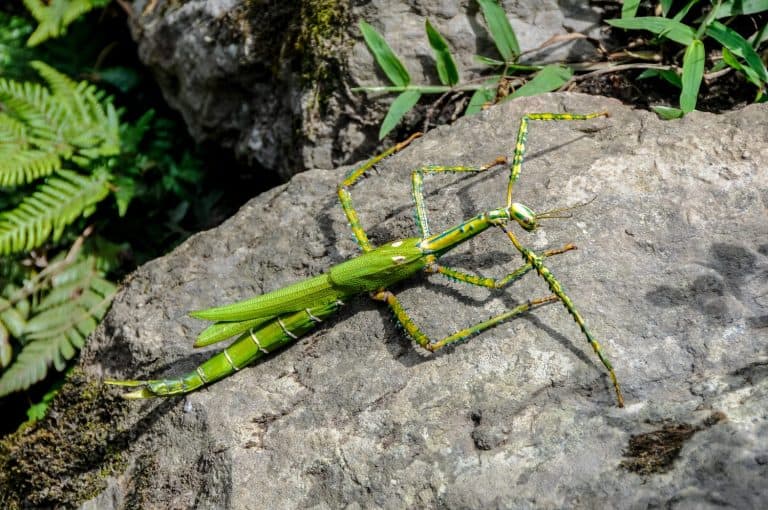
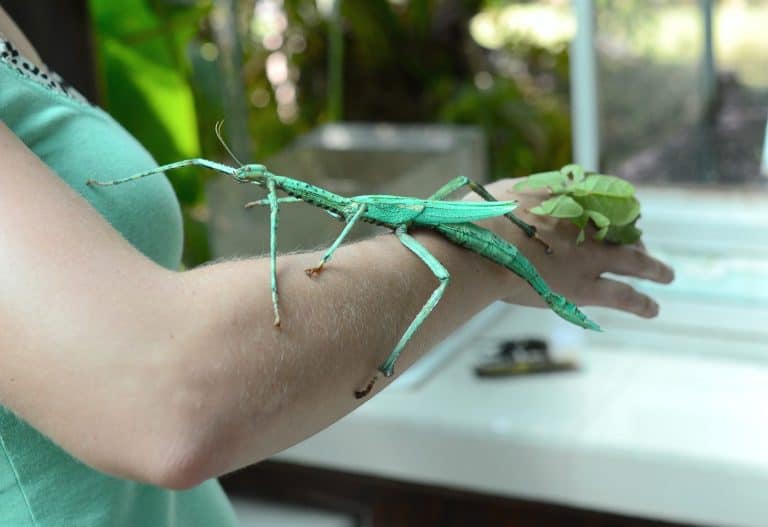
Phasma gigas is a species of giant stick insect native to the Wallacea region of eastern Indonesia. For a long time, they were thought to live in New Guinea. Actually, these insects are primarily found on the Maluku, Gorong, and Kei Islands. They are a distinctly sexually dimorphic species; females can reach up to nine inches in length and develop brown abdomens as thick as human thumbs. Males, however, are considerably smaller, thinner, and brighter green in color.
These living sticks are adapted for camouflage. Take a casual glance at the tropical forest canopies of eastern Indonesia and you’ll easily miss these masters of mimicry. Their natural camouflage ability is further enhanced by their nocturnal lifestyle. During the day, Phasma gigas stays completely motionless. Only at night do they start moving to feed or mate. Herbivores by nature, these spindly insects usually eat leaves in brambles. In captivity, they seem to thrive on a diet of bramble, guava, and hazelnut foliage.
Reproduction for these insects can be an elaborate process. Males use their wings to fly through the forest and locate females. Scientists believe they follow pheromones emitted by females. Once males find a mate, they attach to the female, sometimes for days. Remarkably, female Phasma gigas are parthenogenetic. This means that if no males are around, females can lay unfertilized eggs that will hatch as clones. These clones, however, are always female.
Diabolical Defensive Mechanisms
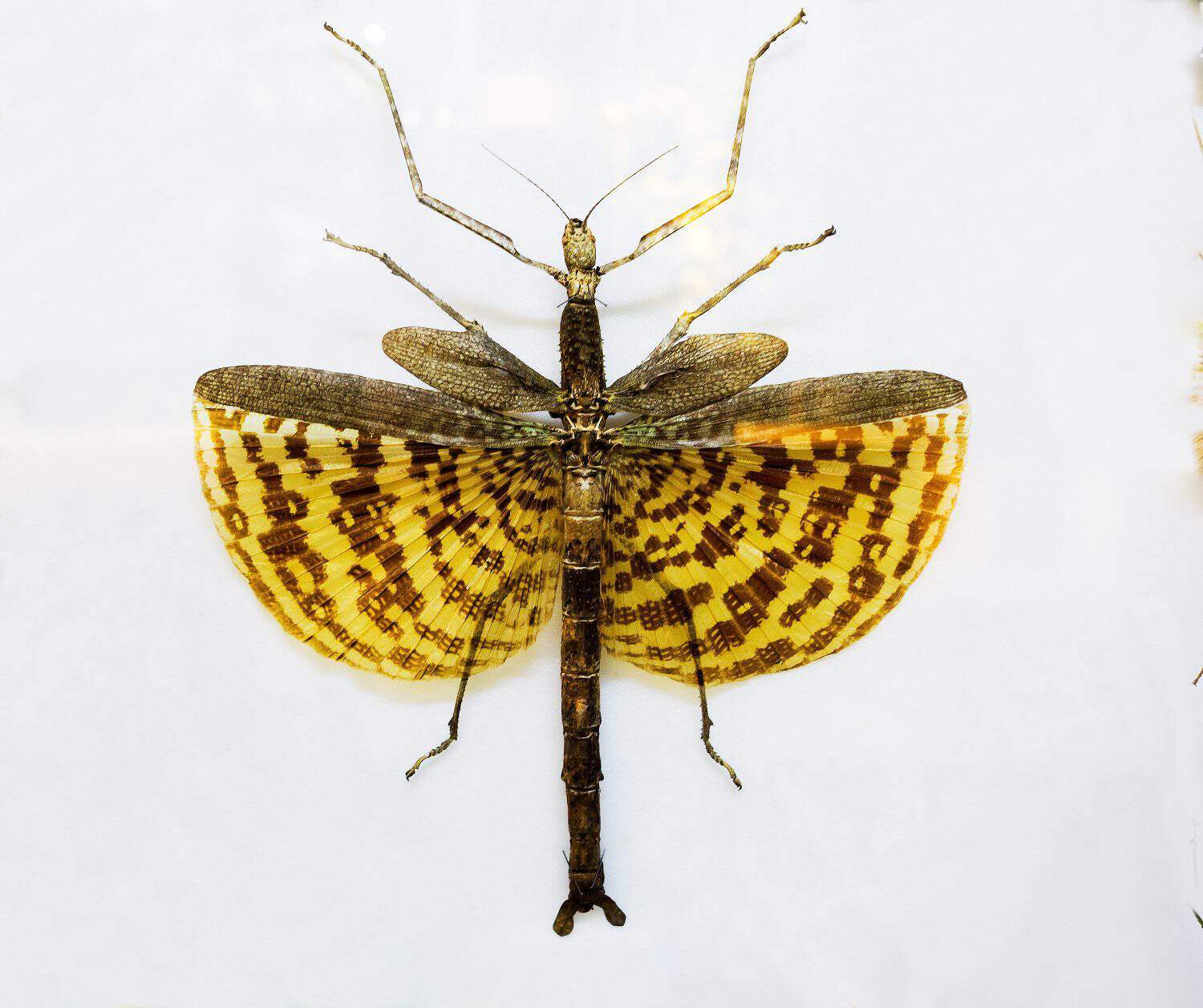
Like some other stick insects of the Phasmatodea order, Phasma gigas possesses wings, though these are used primarily for display rather than flight — females cannot fly at all, while males may flutter only short distances. When they feel threatened, their wings start moving, particularly in the case of nymphs and females. These insects flutter their large wings and drop to the ground, wriggle around a little, and freeze.
If they are unable to perform this movement, they use their wings even more aggressively. Their other defensive position involves opening their vibrant wings, which produces a loud whooshing sound. As seen in this Instagram video, they dramatically flash open their wings with a loud rustling noise as a threat display. They will even try to pinch sizeable threats between their hind legs.
Their fascinating features have made Phasma gigas a prize creature for biologists, entomologists, and collectors. Only time will tell what impressive attributes we will learn about these long, living stick insects.