
Quick Take
- The Queensland whistling tarantula can reach leg spans of nearly 9 inches.
- There are currently 7 described Australian species, but researchers believe there are many more yet to be discovered.
- The Micronesian tarantula Plesiophrictus senffti lacks the noise-making mouthparts found in related genera.
- Tarantulas in the Selenocosmia genus are known for their defensive hissing when threatened.
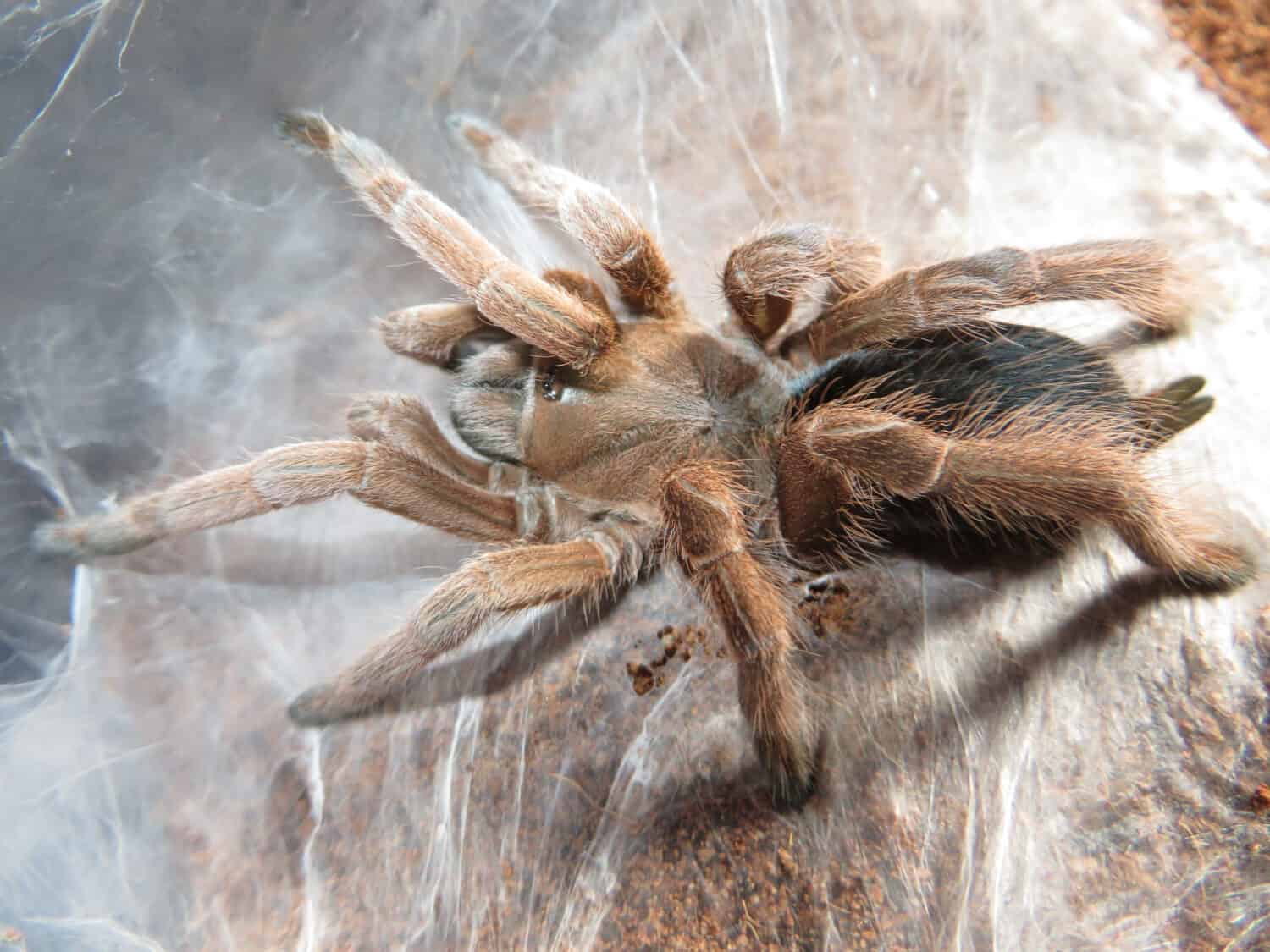
The Oceania region is home to over 20 tarantula species, most of which belong to the Selenocosmiinae sub-family of tarantulas found across Southeast Asia, Australia, and the wider Oceania region. It is the second-largest subfamily of Theraphosidae species, including the Birupes, Chilobrachys, Coremiocnemis, Haplocosmia, Lyrognathus, Orphnaecus, Phlogiellus, Psednocnemis, Selenocosmia, Selenotholus, and Selenotypus genera, many of which are represented in this region.
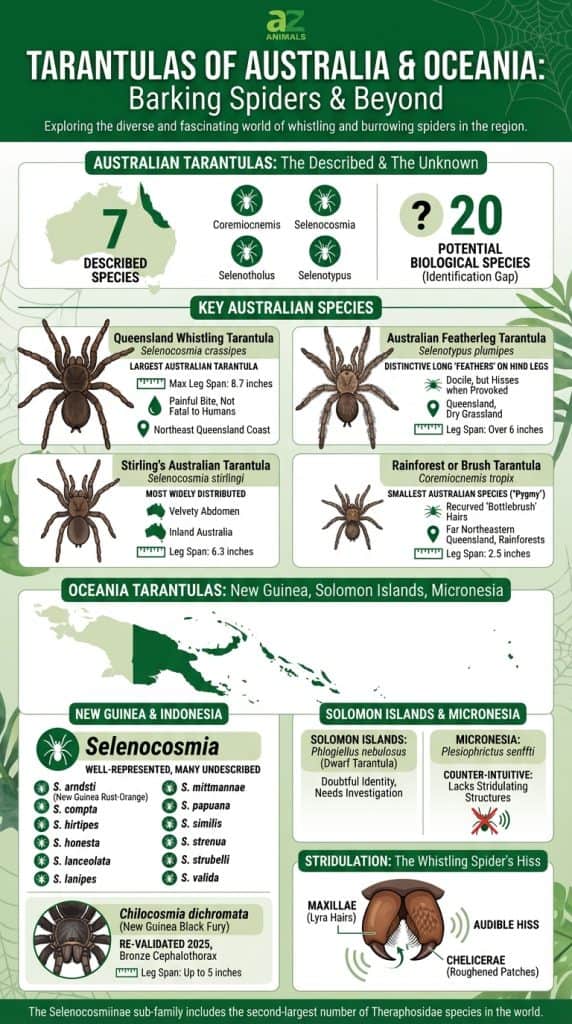
Beyond the 8.7-inch giants, science is racing to identify 20 mysterious species lurking in the Australian outback.
©A-Z Animals
Individuals in this sub-family include well-known barking or whistling spiders, distinguished by their hissing threat display, which is produced by rubbing specialized “lyra” hairs on their maxillae against roughened patches on the chelicerae rather than by the pedipalps. This stridulating action creates the audible hiss these spiders are known for. The list below includes all of the tarantula species in Australia and Oceania currently recognized in the World Spider Catalog. You can also click the following link for a complete list of tarantula species.
Tarantula Species of Australia
There are currently seven described species of Australian tarantulas in four genera, including Coremiocnemis (one species), Selenocosmia (four species), Selenotholus (one species), and Selenotypus (one species). However, researchers have noted that there are at least 20 distinct biological species of tarantulas, some of which may be determined to belong to different genera. The list below includes known information about the seven currently described species. An asterisk denotes the type species of the genus.
Coremiocnemis tropix Raven, 2005
- Common name: Rainforest or brush tarantula
- Distribution: Far northeastern Queensland.
Coremiocnemis tropix is the first species of the genus Coremiocnemis found outside Malaysia. These spiders are known only from lowland tropical rainforest habitats in the Cairns Region in far northeastern Queensland. They prefer to make their burrows in existing spaces and structures. It is a small species, often called a “pygmy” or “dwarf” tarantula. It has a body length of about 1.18 inches and a leg span of 2.5 inches, although some individuals may be larger. One distinguishing characteristic is the presence of long, recurved, bottlebrush hairs on the retrolateral side of the fourth metatarsus and tarsus.
Selenotholus foelschei* Hogg, 1902
- Common name: Sometimes called Foelsche’s whistling spider
- Distribution: Northern Territory
Selenotholus foelschei is a medium-sized tarantula that burrows among shrubs or other desert vegetation. It has a body length of 2.36 inches and a leg span of around 4.5 inches. Observers can tell the difference between Selenotholus foelschei and related genera like Selenocosmia by the recurved indentation on its back (thoracic fovea) and the equal size of its first and fourth pairs of legs.
Selenotypus plumipes* Pocock, 1895
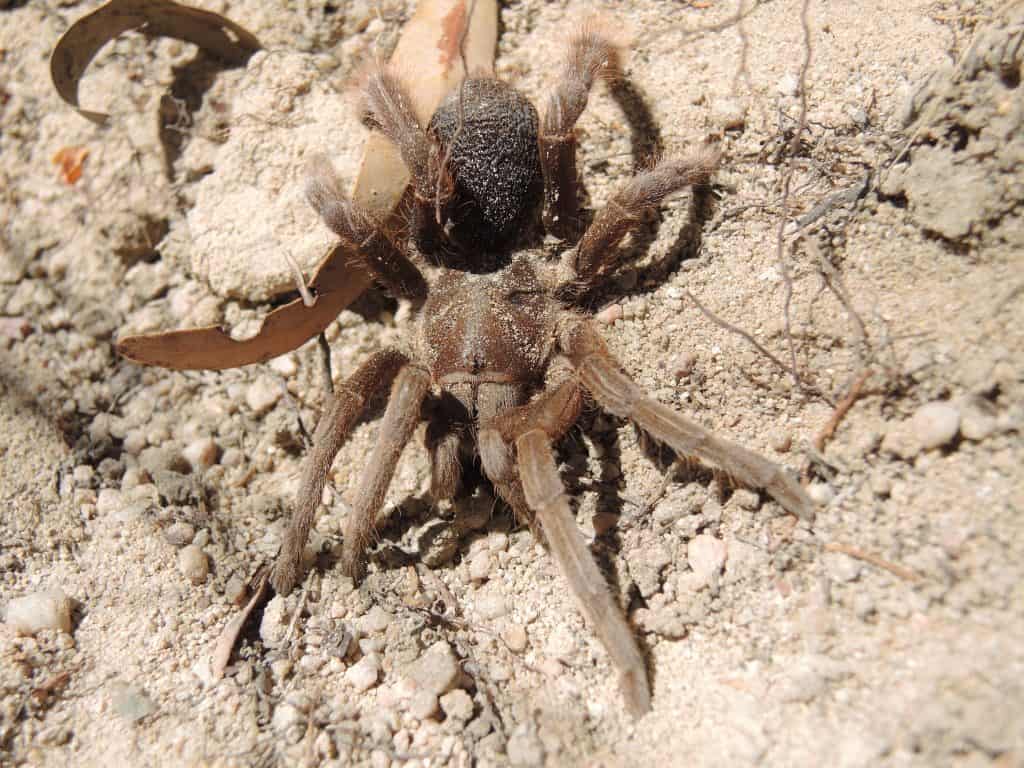
Australian featherleg tarantulas are known for the long hairs on their fourth pair of legs.
- Common name: Australian featherleg tarantula
- Distribution: Queensland
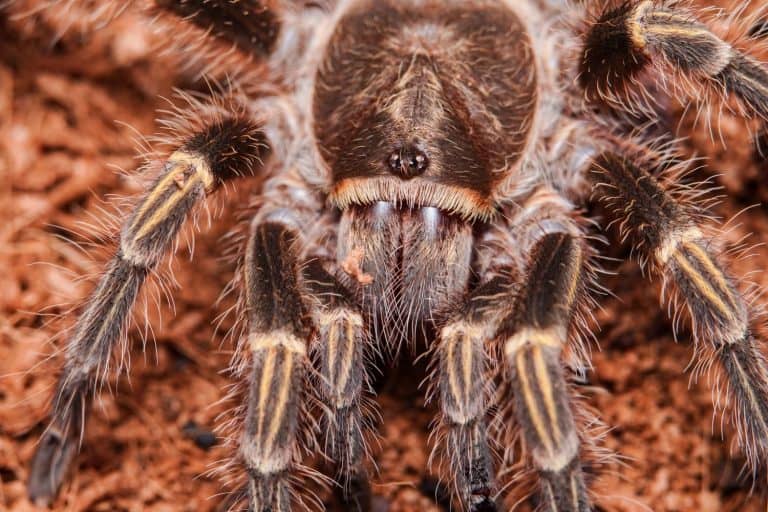
The Australian featherleg tarantula is a large burrowing spider found in dry grassland and scrubland regions of inland and tropical northeast Australia, specifically Queensland. It has a body length of around 3.75 inches and a leg span of over 6 inches. This species has distinctive long hairs, or “feathers,” on its hind legs. It is known to be relatively docile and is often kept in captivity as a pet due to its impressive size and calm demeanor. However, this spider will make a hissing noise when provoked. It also delivers a painful bite.
Selenocosmia crassipes (L. Koch, 1874)
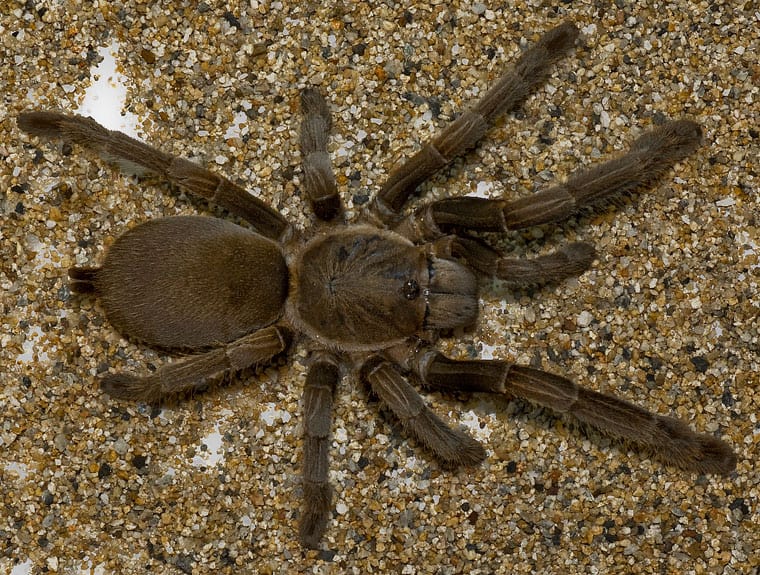
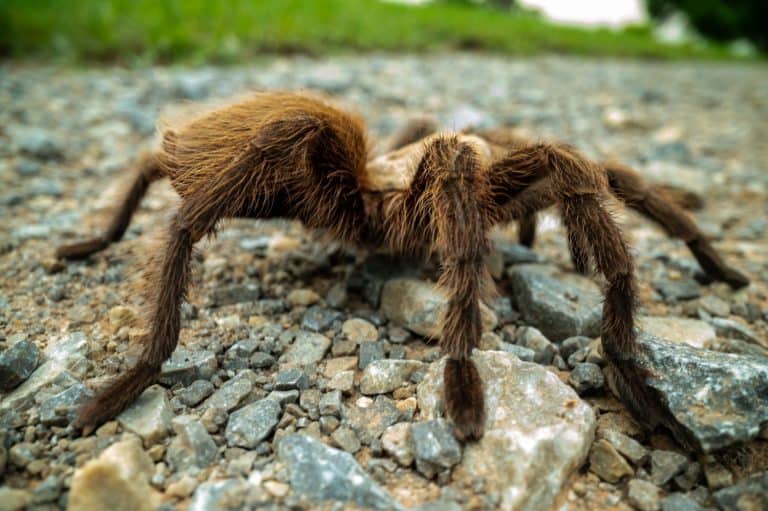
The Queensland whistling tarantula is the largest Australian tarantula with a leg span of up to 8.7 inches.
- Common name: Queensland whistling tarantula
- Distribution: Northeast Queensland coast.
The Queensland whistling tarantula is the largest tarantula in Australia. This burrowing spider inhabits rainforests, open forests, coastal lowlands, and even gardens. It has a body length of up to 3.5 inches and a leg span of up to 8.7 inches. It is also a barking spider known for its powerful venom. While the venom is not fatal to humans, it can cause vomiting, pain, and swelling. However, a bite can be fatal to pets.
Selenocosmia stalkeri Hirst, 1907
- Common name: N/A
- Distribution: South Australia
Selenocosmia stalkeri was removed as a synonym of Selenocosmia stirlingi in 2025 and is now revalidated as a separate species due to differences in DNA. Little is known about Selenocosmia stalkeri, although it shares characteristics with other spiders in its genera.
Selenocosmia stirlingi Hogg, 1901
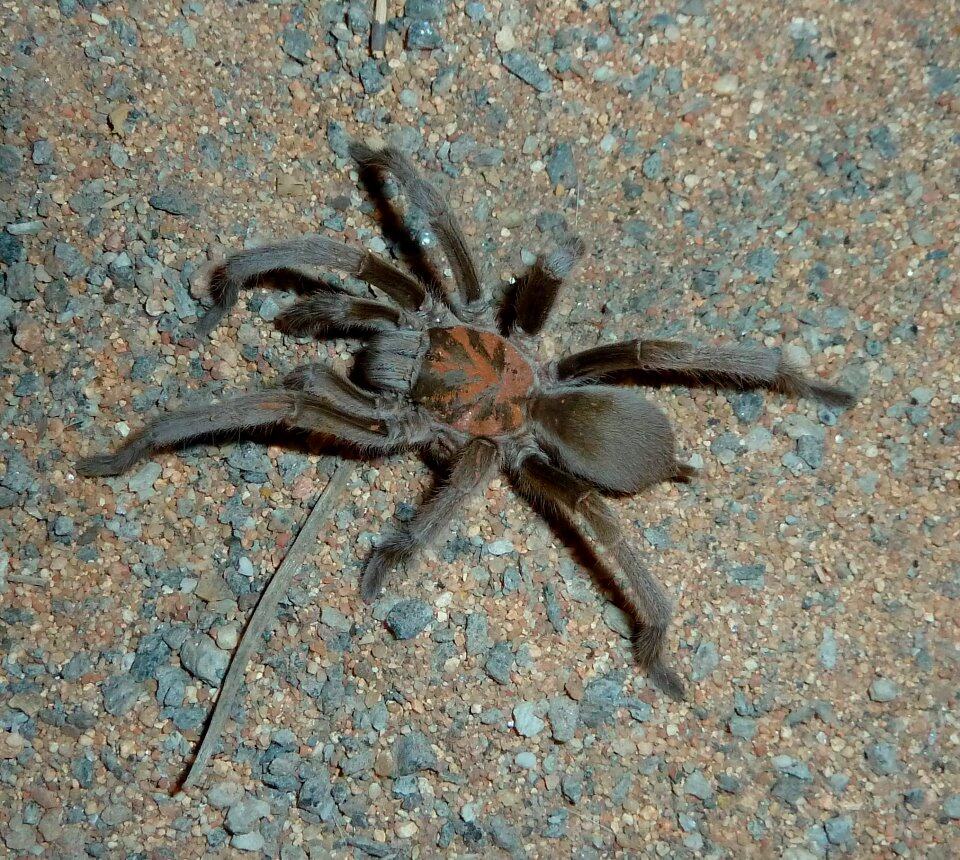
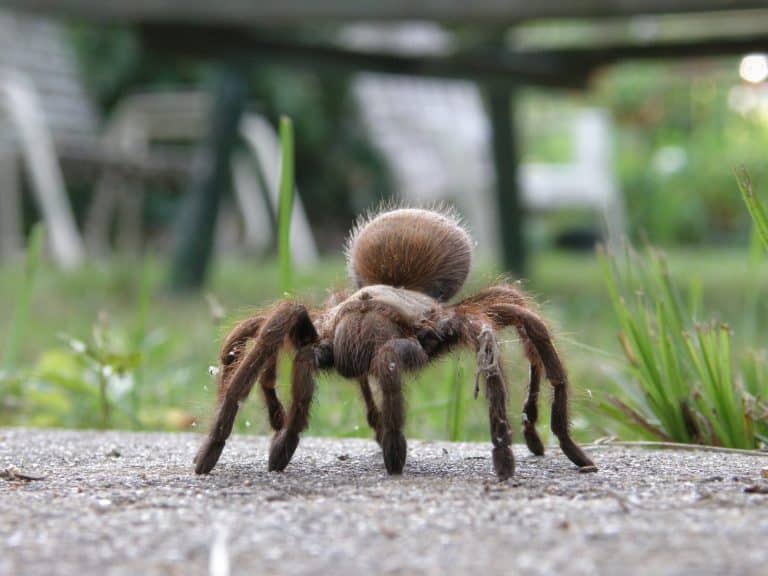
The common whistling spider, Selenocosmia stirlingi, is widely distributed across inland Australia.
- Common name: Australian common whistling spider or Stirling’s Australian tarantula
- Distribution: Widely distributed across inland Australia
Selenocosmia stirlingi is the most widely distributed tarantula in Australia. They primarily construct their burrows in dry areas, including deserts, open woodlands, and grasslands, but they are adaptable and can also be found on the edges of rainforests. This large tarantula measures 2.36 inches in body length with a leg span of 6.3 inches. It has short hair on its abdomen, giving it a velvety appearance. Like all barking spiders, it emits a hissing sound when threatened. This spider has a painful bite that can lead to severe reactions in humans and death in animals.
Selenocosmia strenua (Thorell, 1881)
- Common name: N/A
- Distribution: Far north Queensland and New Guinea
Selenocosmia strenua was previously known as Phrictus strenuus. Little is known about this tarantula, other than it shares characteristics with other members of its genera.
Tarantula Species of Oceania
In addition to Australia, three countries in the Oceania region have recorded tarantulas: New Guinea, the Solomon Islands, and Micronesia. Please note that the island of New Guinea is considered part of Oceania geographically, although the western part of the island is politically part of Indonesia.
Chilocosmia dichromata* Schmidt & von Wirth, 1992
- Common name: New Guinea black fury
- Distribution: Known only from Sorong, Southwest Papua, Indonesia
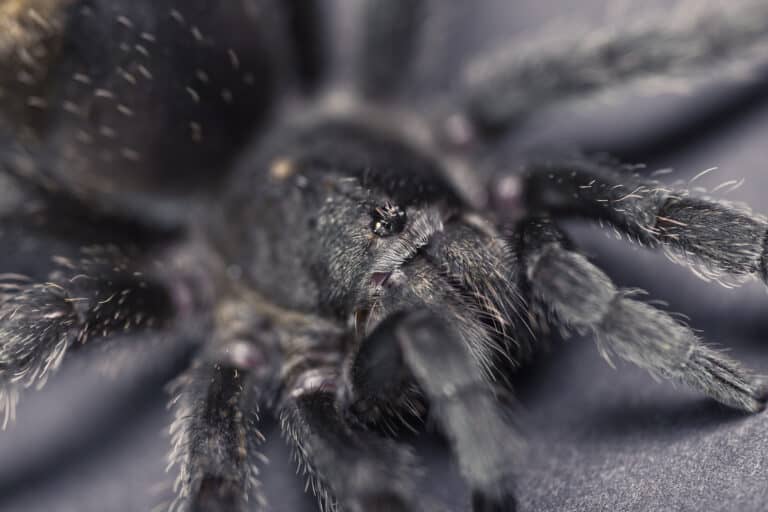
Chilocosmia dichromata was temporarily placed with Orphnaecus by West et al. (2012), but it was taxonomically re-validated as its own genus in 2025 by Acuña et al. The holotype of this medium-sized tarantula is a male specimen with a recorded body length of 1.5 inches. Some sources suggest it can have a leg span of up to 5 inches. These tarantulas are mostly black, with a bronze cephalothorax. They inhabit forest habitats in burrows camouflaged by leaf litter.
Phlogiellus bicolor Strand, 1911
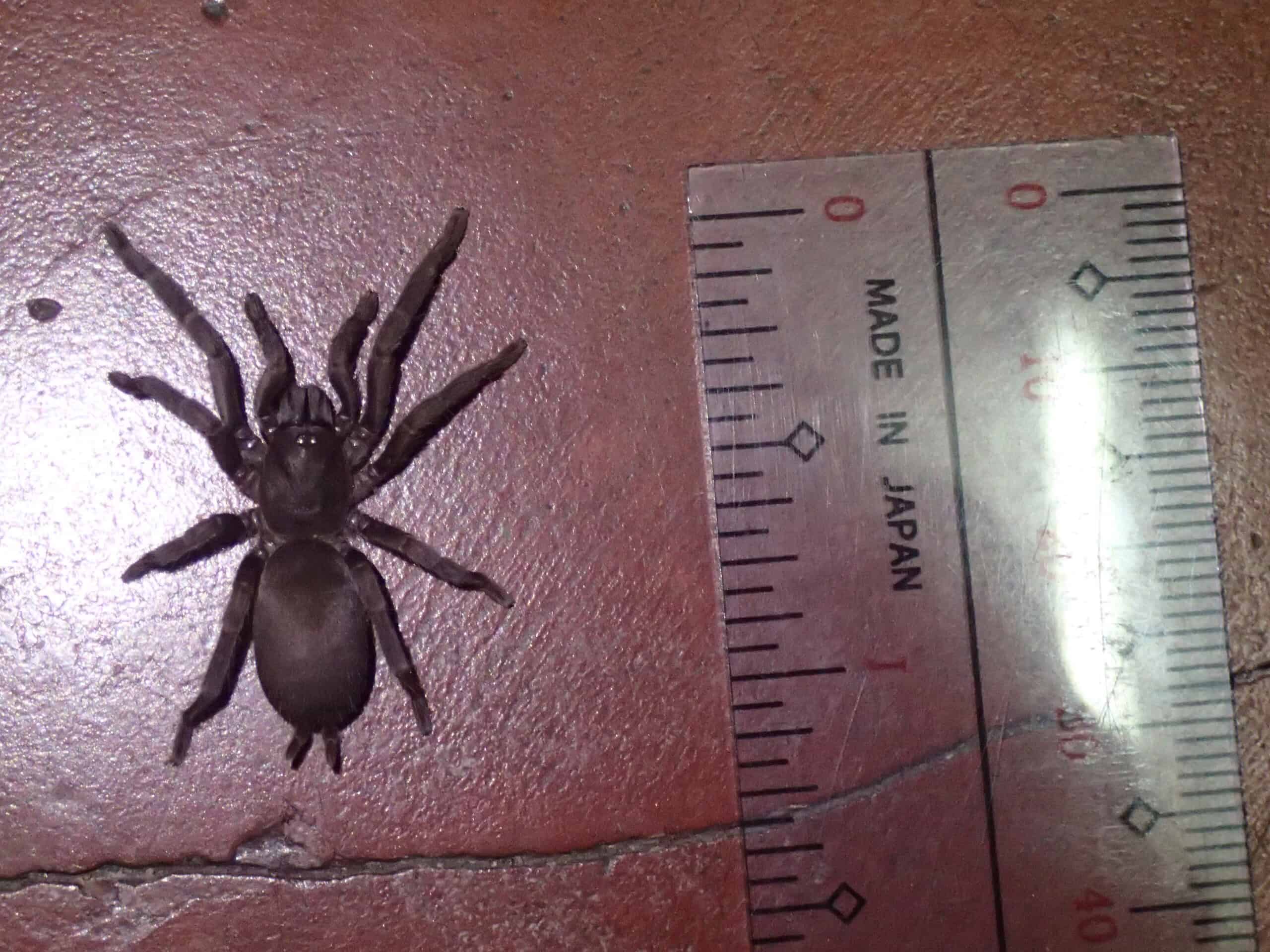
Members of the Phlogiellus genus are considered dwarf tarantulas.
- Common name: N/A
- Distribution: New Britain Island, Papua New Guinea
Researchers note that Phlogiellus is among the least-studied genera. These tarantulas are found throughout Asia and Papua New Guinea. Members of Phlogiellus are usually small, with some exceptions, and they often lack easily distinguishable traits. Phlogiellus tarantulas are often burrowing or ground-dwelling. Scientists currently consider Phlogiellus bicolor of uncertain placement.
Phlogiellus nebulosus (Rainbow, 1899)
- Common name: N/A
- Distribution: Known from the Santa Cruz Islands Archipelago in the Solomon Islands
Phlogiellus nebulosus is also a dwarf tarantula. These spiders are believed to be terrestrial burrowers. Researchers note that Phlogiellus nebulosus is currently of doubtful identity and requires further investigation.
Plesiophrictus senffti (Strand, 1907)
- Common name: N/A
- Distribution: Micronesia
Plesiophrictus are ground-dwelling spiders that have been recorded in India, Sri Lanka, and Micronesia. An older record from China is no longer valid because the species involved (P. guangxiensis) was transferred to Chilobrachys. Only Plesiophrictus senffti is endemic to Micronesia. The genus is distinguished by a lack of stridulating structures or scopulae (microscopic hairs) on the base of their legs or mouthparts. They also possess serrula (small spines or fine teeth) on their maxillary lobe.
Selenocosmia Ausserer, 1871
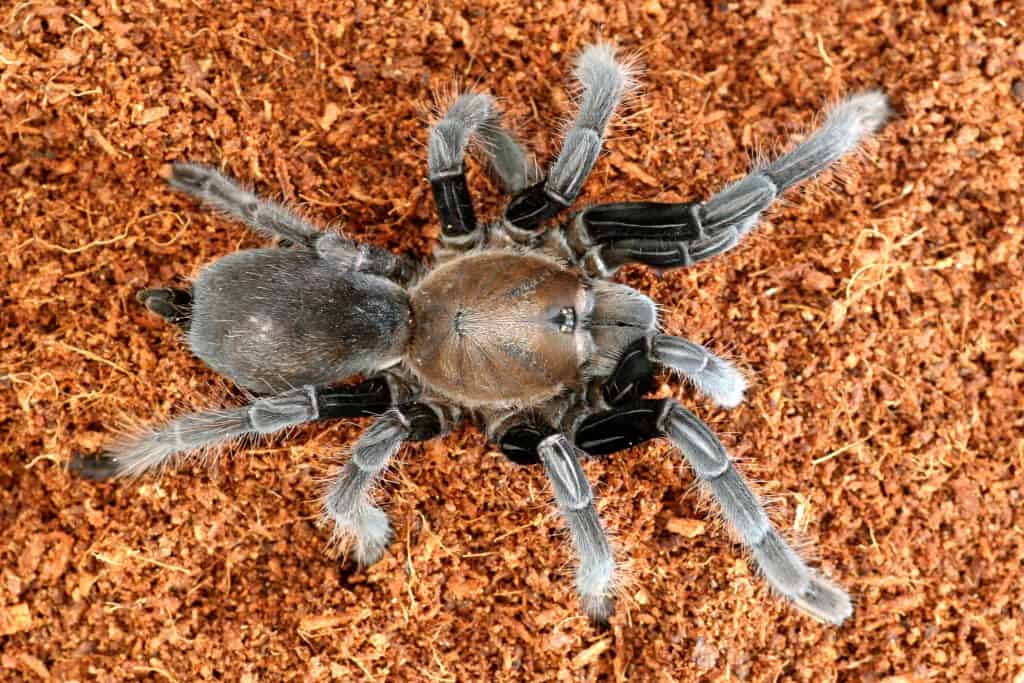
Tarantulas that belong to the Selenocosmia genus are known for their defensive hissing when threatened.
The Selenocosmia genus is well-represented in New Guinea, and researchers believe that many more species remain undescribed. These terrestrial burrowing spiders are commonly called barking or whistling spiders, as described above. Little is known about most individual species, but the following Selenocosmia tarantulas have been recorded in New Guinea.
- Selenocosmia arndsti (Schmidt & von Wirth, 1991)
- Common name: New Guinea rust-orange tarantula
- Distribution: New Guinea
- Selenocosmia arndsti have a carapace and legs of a rusty-orange color, with contrasting black femurs and abdomen. They also have iridescent undersides. These spiders can grow to reach leg spans of 4-5 inches.
- Selenocosmia compta Kulczyński, 1911
- Common name: N/A
- Distribution: New Guinea
- Selenocosmia hirtipes Strand, 1913
- Common name: N/A
- Distribution: Indonesia (Moluccas), New Guinea
- Selenocosmia honesta Hirst, 1909
- Common name: N/A
- Distribution: New Guinea
- Selenocosmia lanceolata Hogg, 1914
- Common name: N/A
- Distribution: New Guinea
- Selenocosmia lanipes Ausserer, 1875
- Common name: N/A
- Distribution: Indonesia (Moluccas), New Guinea
- Selenocosmia mittmannae (Barensteiner & Wehinger, 2005)
- Common name: N/A
- Distribution: New Guinea
- Selenocosmia papuana Kulczyński, 1908
- Common name: N/A
- Distribution: New Guinea
- Selenocosmia similis Kulczyński, 1911
- Common name: N/A
- Distribution: New Guinea
- Selenocosmia strenua (Thorell, 1881)
- Common name: N/A
- Distribution: New Guinea, Australia (Queensland)
- Selenocosmia strubelli Strand, 1913
- Common name: N/A
- Distribution: Indonesia (Java, Moluccas), New Guinea
- Selenocosmia valida (Thorell, 1881)
- Common name: N/A
- Distribution: New Guinea