
Quick Take
- Smugglers have devised some genuinely bizarre methods to move tarantulas across borders, with one method involving a beloved retro gaming console. See the smuggling methods →
- Some tarantula species hit the black market before scientists even have a name for them, and the buyers may be closer to the lab than you would expect. Species sold before named →
- Wild-caught tarantulas are actually a worse deal for buyers, though most hobbyists have no idea why until it's too late. Why wild-caught is worse →
Spiders in the Theraphosidae family, commonly known as tarantulas, are among the most traded invertebrates on the international market. Tarantulas are traded for the commercial pet trade, scientific research, souvenirs, and even for use as medicine or food. While many tarantulas are captive-bred and legally traded, hundreds of tarantula species are taken from the wild and illegally trafficked. Illegal trade threatens the survival of both described and undescribed tarantula species, contributing to global losses in biodiversity and causing irreparable harm to the ecosystem.
How It Began
Wildlife poaching, including tarantula trafficking, started booming in the 1970s, around the time the public developed an interest in keeping tarantulas as pets. By the 1990s, it had become one of the fastest-growing pet hobbies. As demand increased, some hobbyists began breeding captive spiders and trading in them legally. However, others began collecting and shipping tarantulas internationally without the proper permits and licenses.
Once the internet became widespread, illicit trade exploded because buyers and sellers could connect much more easily. Illegal trade began to occur via online forums and social media sites. Experts say that influencers and celebrities have also contributed to the problem by making exotic animal ownership popular.
Researchers have reported a considerable amount of illegal tarantula trafficking worldwide, thought to be driven by hobbyists and collectors who are willing to pay hundreds or even thousands of dollars for rare or novel tarantulas. Adult females of some highly sought-after species, such as the Mexican Jade Fuego (Aphonopelma mooreae), have sold for over $3,000.
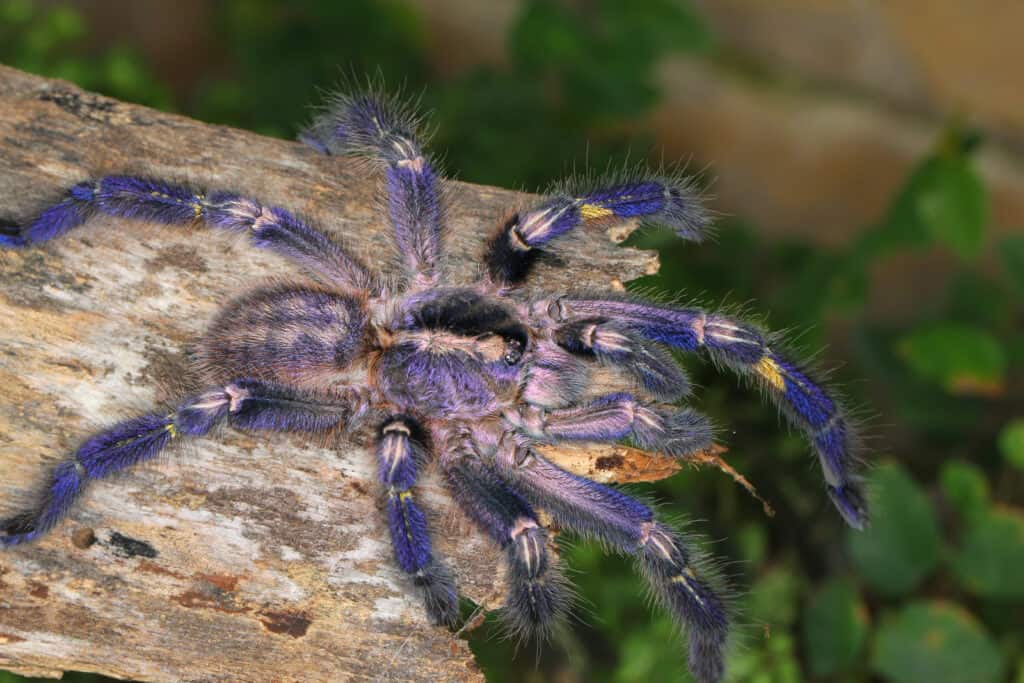
The gooty sapphire ornamental (Poecilotheria metallica) is a critically endangered tarantula from India.
©Pong Wira/Shutterstock.com
Trading in Tarantulas
Dr. Chris Hamilton, Associate Professor in Entomology, Plant Pathology, and Nematology at the University of Idaho, agrees that the biggest driver of trafficking is the pet trade. However, the pet trade itself is not the root of the problem. “I don’t personally think the pet trade is a horrible thing,” says Hamilton. “There is a lot of captive breeding that has occurred and is occurring now. In the past, yes, the tarantula pet trade was driven by taking adults out of populations, and obviously that still happens…but not nearly to the extent that it did in the past.”
Jackie Billotte, an entomologist and Ph.D. candidate at Colorado State University, is passionate about tarantula conservation. One issue she raises about the tarantula trade is the lack of public awareness about the detriment of removing wild tarantulas from the ecosystem. “It is mostly sub-adult and adult animals that are trafficked. Adult and sub-adult animals are vital to the continued health of a wild population, as they are the ‘fittest’ individuals and have adaptations suited for their environment,” she explains.
Billotte says that potential buyers may also be unaware that the tarantulas are trafficked. She stresses the importance of educating hobbyists on how to identify sellers who may have trafficked animals. She also points out that uninformed buyers may not realize that wild animals are at a higher risk for health issues and may fail to thrive in captivity. Billotte notes that captive-born individuals are generally healthier and typically better adapted to live in captivity. “The other side of trafficking is the supply side, which can be more complicated,” Billotte explains. “Financial need can drive traffickers to overlook the legal risk and engage in trafficking.”
Statistics and Trends in Tarantula Trafficking
Tarantula trafficking is part of a multibillion-dollar wildlife trafficking industry, ranking fourth after drug smuggling, human trafficking, and the trade in counterfeit goods. However, the value is poorly understood due to its clandestine nature. Legal wildlife trade is estimated to be valued at $220 billion annually. Experts estimate illegal trade values from $5 billion to $23 billion.
The Largest Markets
The European Union and the United States are the largest markets in the tarantula trade. Although the pet trade is believed to be the primary motivator, researchers indicate that there is also a growing U.S. market for preserved tarantulas as souvenirs. Among all arachnids (spiders and scorpions) traded in the U.S., 70.4% are from the wild. Only 28.5% are reportedly captive-bred. The E.U., which is less regulated than the U.S. in this area, is believed to have similar or even higher percentages of wild-caught animals.

The Chilean rose tarantula (Grammostola rosea) is among the most popular in the pet trade.
©iStock.com/Svetlana Makarova
U.S. Imports
From 2000 to 2020, the U.S. alone imported approximately 600,000 Grammostola tarantulas, including the perennially popular Chilean rose tarantula (G. rosea), primarily for the commercial pet trade. The spiders were exported from Europe. A Convention on International Trade in Endangered Species of Wild Fauna and Flora (CITES) study determined that 88.9% of the individuals were wild-caught. Tarantulas are often imported under junior synonyms—invalid names published after an organism has already been described. For example, G. rosea is sometimes traded under the name G. spathulata, which hinders law enforcement efforts and obscures the true impact of trade.
Captive breeding establishes species in the hobby and decreases the need to take more out of the wild. But better managed captive breeding programs need to be established.
Dr. Chris Hamilton, Associate Professor in Entomology, Plant Pathology, and Nematology at the University of Idaho
Tarantula Laundering
Tarantulas are frequently non-native to exporting countries, suggesting these countries act as laundering hubs for wild-caught spiders. Native and endangered tarantulas are also illegally collected and sold before or soon after they have been scientifically described. A 2022 study found that up to 50% of tarantula species were on the market, including 25% of new tarantula species that have been described since 2000. Researchers in the Philippines found that Phlogiellus johnreylazoi, also known as Palawan blue dwarf tarantula, was for sale in both local and international markets before being described as a new species in 2016.
Tarantula Transport
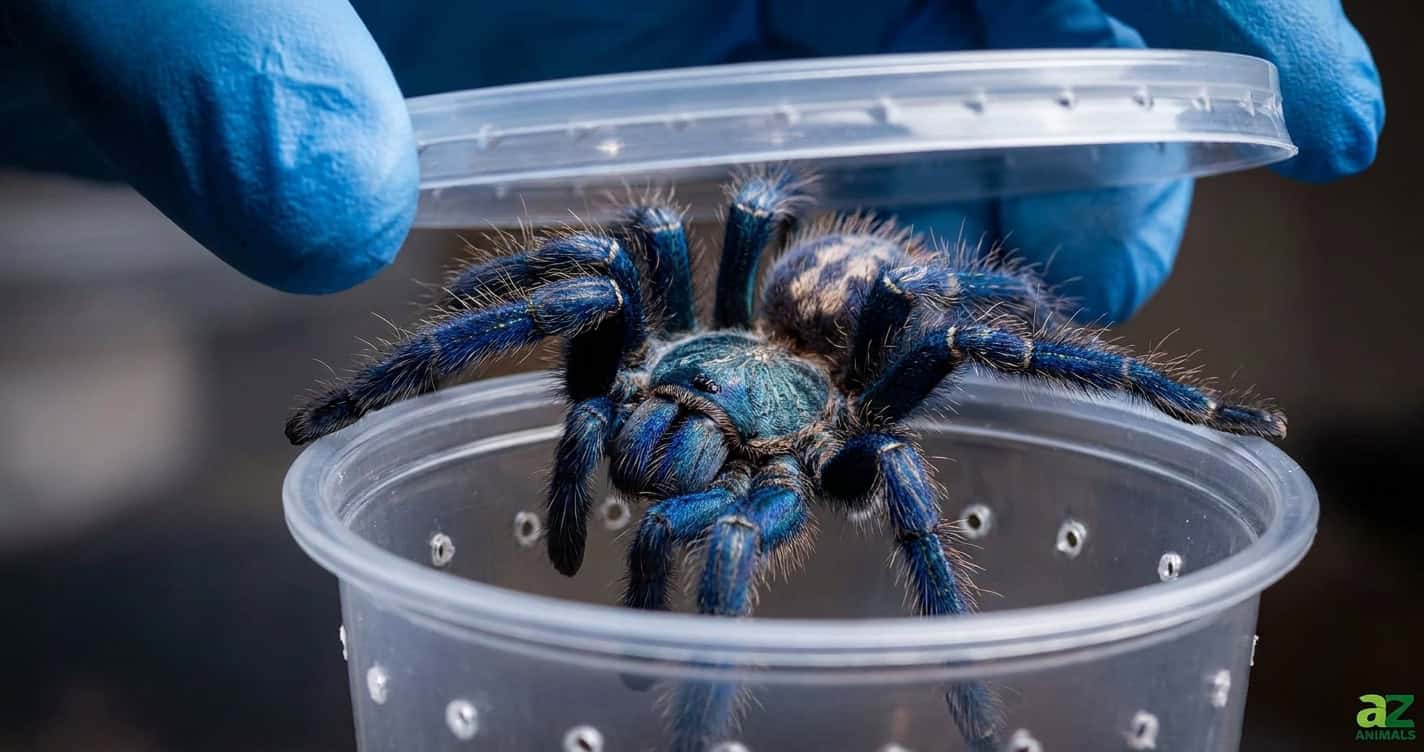
Smugglers have a multitude of ways to transport tarantulas both domestically and internationally. Tiny spiderlings are especially easy to conceal. In 2010, a German man was found guilty of sending hundreds of baby tarantulas packaged in drinking straws through the U.S. mail. U.S. Fish and Wildlife officials seized 250 Brazilian white-kneed and Brazilian salmon pink bird-eating tarantula spiderlings in December 2018. The tiny spiders were packed in plastic deli cups and 35 mm film canisters. They were most likely bred from illegally wild-caught adults, as Brazil does not export adult tarantulas.
Police at Peru’s Jorge Chávez International Airport in Lima arrested a 28-year-old South Korean man for wildlife trafficking in November 2024. Officials noticed that the traveler’s stomach looked suspiciously lumpy. When detained, the man was found to have 320 tarantulas packed inside plastic containers and Ziploc plastic bags strapped to his abdomen. In the fall of 2025, the U.K.’s Border Force stopped a car smuggling over 2,000 live tarantulas from Europe. This included over 300 protected species without the proper licenses. Officials estimated that the spiders were worth approximately $94,500.
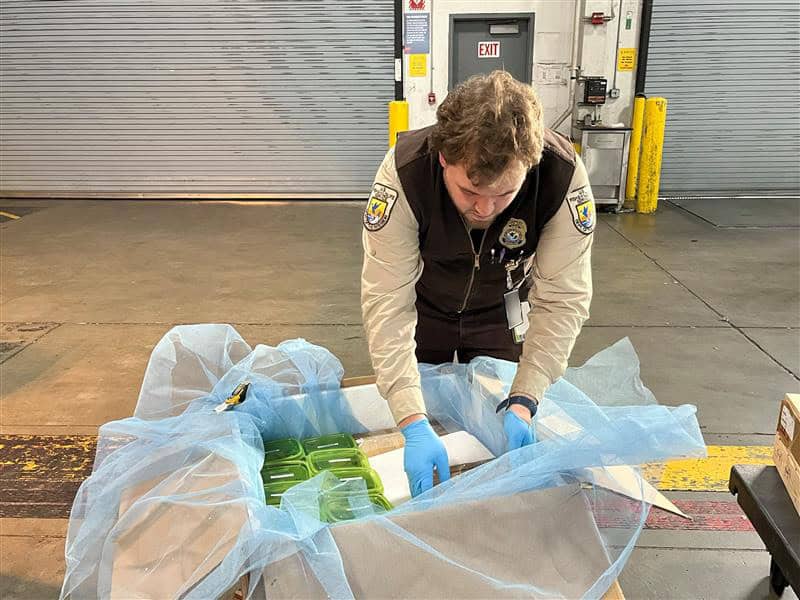
When U.S. Fish and Wildlife officials seize tarantulas, the trafficked arachnids are relocated to zoos and universities.
Smugglers often simply falsely report the contents of their packages, but some criminals are more devious. In 2017, customs officials in Mexico seized 73 live tarantulas en route to an address near Baltimore. The spiders had been hidden inside 10 bootleg Nintendo Famicom game cartridges. German customs officials seized a package from Vietnam containing around 1,500 juvenile tarantulas in June 2025. They were found in plastic tubes that traffickers had concealed inside chocolate sponge cake boxes. Officials were tipped off by an unusual odor that did not match what would be expected from 15 pounds of sponge cake.
Trafficking for Scientific Purposes
Another reason for illegal wildlife trafficking is scientific research. Experts believe this can be attributed to ignorance regarding the permit requirements of other countries or impatience with the bureaucracy involved with rule adherence. Procedural delays and regulatory bottlenecks can tempt both hobbyists and scientists to break the rules.
Animals from Questionable Sources
Commercial trade and scientific research are sometimes combined when it comes to describing new species. In 2019, two prominent arachnologists sparked a fierce controversy after receiving specimens of a new species, Birupes simoroxigorum, which they described in a hobbyist journal that same year. The spider, known for its neon blue legs, was allegedly taken from Borneo without proper documentation. The Forest Department of Sarawak said the European collectors who procured the spiders for the researchers lacked the permits to obtain or export the spiders.
In an article for Science, one of the authors of the study said she and her colleague had “no reason to believe” that the specimens were illegally obtained, and that they received the spiders “in good faith.” When asked to produce evidence of the collectors’ permits, the author did not respond. Her co-author declined to answer the journal’s request for comment.
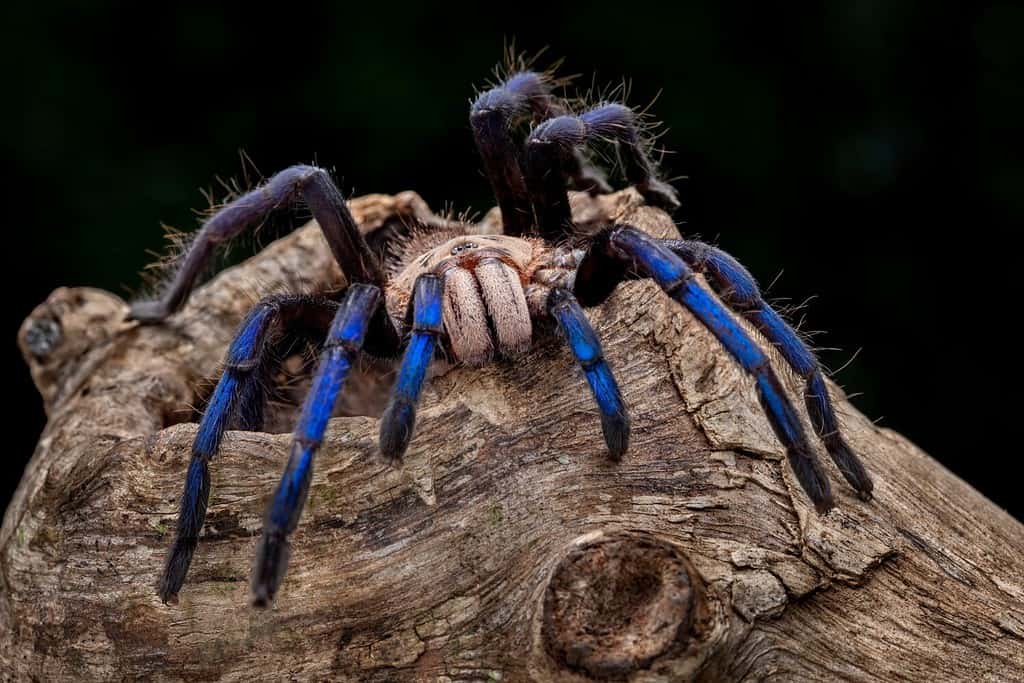
Birupes simoroxigorum was allegedly taken from Borneo and sold to researchers without proper documentation.
©Lauren Suryanata/Shutterstock.com
Basing New Descriptions on Traded Animals
The example above was not the first time a new species was described in a non-peer-reviewed journal based on traded tarantulas. The description of the Brazilian Black and White tarantula (Nhandu coloratovillosus) was derived from spiders illegally captured by a German collector who had previously been arrested in Brazil for his illicit activities.
Researchers also note that almost half of Brachypelma and Tliltocatl species were described by hobbyists in non-peer-reviewed publications. Many of the species in these genera are listed on the IUCN Red List and included in CITES. Permits were not mentioned in the articles, so researchers believe there is a high probability that the animals were obtained illegally.
Combating the Illegal Tarantula Trade
CITES covers less than 2% of tarantula species. The International Union for the Conservation of Nature (IUCN) has only assessed a small fraction of the 1,192 known species. However, few species have enough biological and ecological data to properly assess their status and develop measures for conservation. Despite the lack of safeguards for most species, these protections have proven effective. Once Brachypelma and Tliltocatl species were listed under CITES, trade shifted to 99% captive sources, despite a 330% increase in traded animals.

The Mexican red knee tarantula (Brachypelma smithi) is protected under CITES.
©True Touch Lifestyle/Shutterstock.com
In the U.S., the Lacey Act prohibits importing, exporting, transporting, selling, receiving, acquiring, or purchasing wildlife in violation of any U.S. or foreign law. Therefore, breaking another country’s wildlife laws is also illegal in the U.S. However, the E.U. has no comprehensive equivalent. Scientists and conservationists argue that stronger protections are needed, both under the law and under CITES.
Although most countries have wildlife laws, the strength and enforcement of these laws vary significantly. Experts believe the solution lies in coordination between authorities, measures to promote enforcement, and incentives for local communities. As Billotte explains, “Currently, many anti-trafficking initiatives are not focused enough on working with local populations to combat trafficking, especially with invertebrates.”
Incentivizing Captive Breeding
Experts believe that incentivizing captive-breeding efforts to meet buyer demand can make captive-bred tarantulas more financially competitive and the sale of wild-caught spiders less profitable. “As long as the financial rewards are out there, trafficking will continue,” Billotte warns.
According to Hamilton, “Captive breeding establishes species in the hobby and decreases the need to take more out of the wild. But better managed captive breeding programs need to be established, particularly in the countries where a lot of pet trade species come from (Mexico, Brazil, India, etc.). I think there should be regulations, but I don’t think that shutting [the pet trade] down is beneficial. Regulations should be science-based…but we need new, better science about the effects of the pet trade.”
Why Is Stopping Illegal Trade So Important?
Although some assume that the illegal tarantula trade does not impact long-term species survival, tarantulas are in fact vulnerable to unsustainable trade practices, particularly because novelty and scarcity often drive demand. Tarantulas have relatively long lifespans and slow reproductive rates. Some species can live up to 30 years. Tarantulas also exhibit high levels of endemism and have a limited ability to disperse. As a result, the loss of even a few juveniles or breeding-age females from a single area can significantly impact local populations.
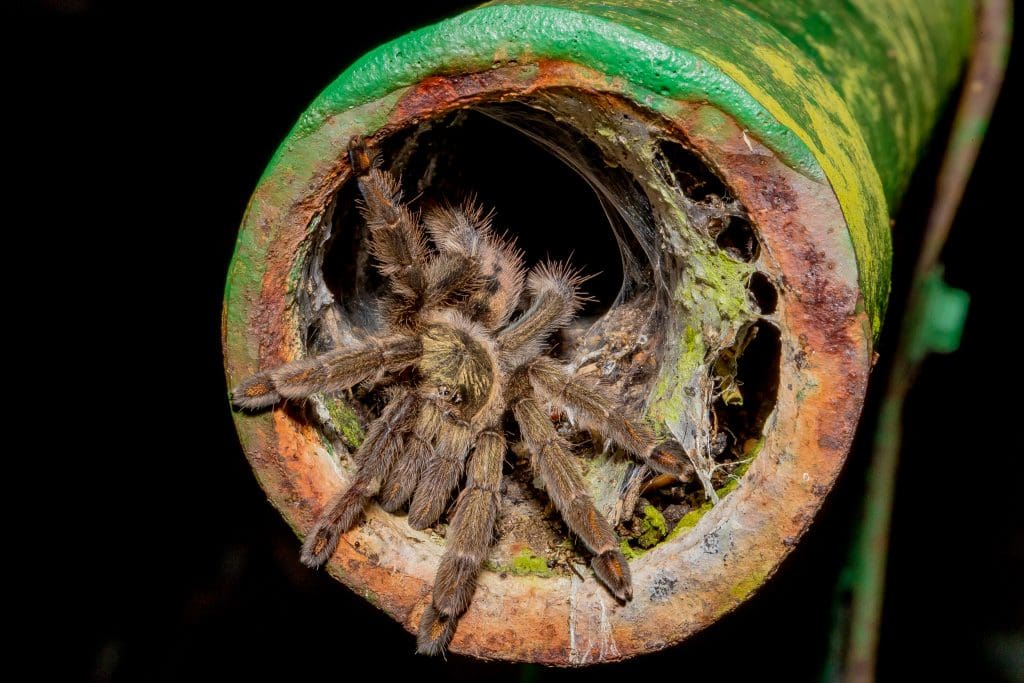
Tarantulas play a crucial role in the ecosystem as both predators and prey.
Billotte emphasizes the vital role that tarantulas play in the ecosystem as both predators and prey. She also warns about cascading effects on ecosystems if wild populations are exploited. Their importance in controlling pest populations cannot be overstated. Without these beneficial arachnids, there would be an inevitable increase in pest insects. Billotte also highlights the cultural significance of tarantulas, noting their role in traditional beliefs and, more recently, as a source of ecotourism. “La Junta, Colorado, now hosts the annual ‘Tarantula Fest’ during the tarantula mating season, which is a fantastic economic opportunity for the area,” she says.
However, beyond the loss of biodiversity, Billotte emphasizes that stopping the illicit trade is important because tarantula trafficking may fund other forms of trafficking. Like any criminal enterprise, “wildlife trafficking can perpetuate more violence and human suffering,” she says. Billotte also highlights the high mortality rates caused by the poor conditions of illegal transport methods.
Yet, tarantulas face an even greater danger. According to Hamilton, “The biggest driver of tarantula biodiversity loss is habitat destruction and climate change.” Although trafficking is undeniably a major threat, he cautions, “This second component is the biggest issue facing theraphosids going forward.”