Quick Take
- The genus name references a figure from Greek mythology notorious for one very specific trait, and that trait fits these spiders disturbingly well. See the record-breaking palps →
- The reason why these tarantulas evolved a record-breaking anatomical feature has everything to do with staying alive long enough to reproduce. Explore the mating dangers →
- Mating for male Satyrex tarantulas is less a romantic encounter and more a life-or-death gamble, with the odds decidedly not in their favor. Understand the genus name →
- Four new species were hiding across Somalia and the Arabian Peninsula, and one of them is so aggressive its behavior has to be seen to be believed. Meet the four new species →
A recent taxonomical revision of the tarantula genus Monocentropus led to the discovery of a new genus with a highly unusual characteristic: the longest male copulatory organs of any known tarantula species. Researchers named the genus Satyrex, combining Satyr, a part-man, part-animal figure from Greek mythology known for his large genitalia, and rēx, the Latin word for king. But why do these male tarantulas need such long sexual organs?
The Unique Feature of Satyrex Tarantulas
While studying Monocentropus tarantulas, researchers found that M. longimanus had unusually long pedipalps (leg-like appendages near the mouthparts) unknown in any other tarantula species. Its copulatory bulb was also remarkably different from those of the other two Monocentropus species, M. balfouri and M. lambertoni. An examination of four undescribed species from Somaliland and the southern Arabian Peninsula revealed that they also had elongated palps and similarly shaped bulbs, suggesting they could be related to M. longimanus. The significantly longer palps of these spiders were among the main characteristics that led researchers to establish a new genus instead of placing them in Monocentropus.
In juveniles and females, the pedipalps are primarily used for sensory perception and to capture and manipulate food. However, the pedipalps in mature males are also secondary sexual organs modified for sperm transfer during mating. The palps of most male tarantulas typically measure around 1.5 to 2 times the length of the carapace, the hard exoskeleton covering the first body segment, known as the cephalothorax. Yet in Satyrex tarantulas, these appendages measure from 2.23 to 3.85 times longer than their carapace. The pedipalps of some Satyrex species can reach nearly 2 inches in length, almost as long as their longest legs.
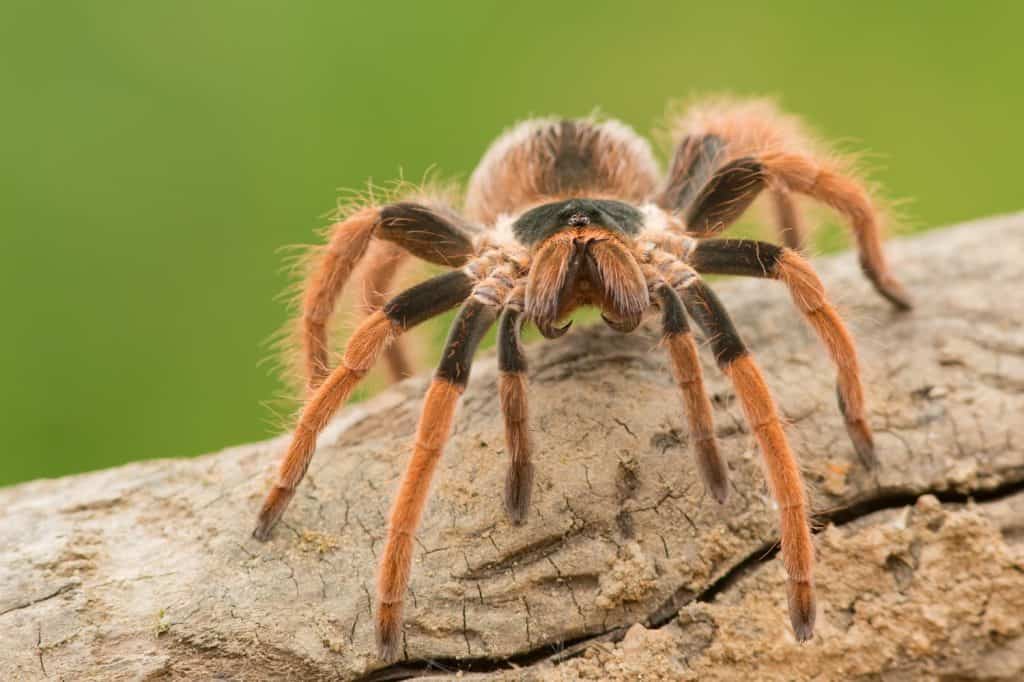
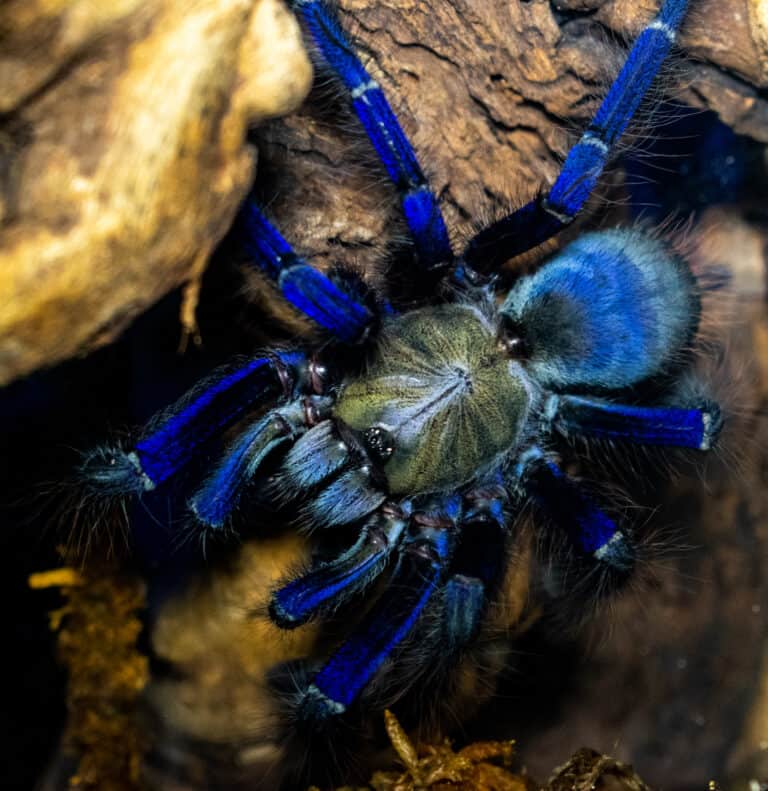
The pedipalps are the segmented, leg-like appendages near the tarantula’s mouthparts.
©Milan Zygmunt/Shutterstock.com
Tarantula Reproduction Is Dangerous Business
To understand why elongated pedipalps may have evolved in Satyrex species, some knowledge of tarantula reproduction is required. Take an in-depth look at the dangers of tarantula mating in the sections below.
The Mechanics of Mating
After their final molt, mature males spin a web, into which their sperm is deposited. The sperm web is then siphoned and stored in the palpal bulbs, located on the end of the pedipalps. Males of most tarantula species have tibial apophyses, which are hook-like structures on the front pair of legs. These hooks are used to restrain the female’s chelicerae, or mouthparts that control the fangs, and elevate the female’s body during mating. Male tarantulas insert their pedipalps into the female’s epigynum (genital opening) and transfer the sperm to her sperm receptacles, which are called spermathecae.
The Risks of Reproduction
Tarantula mating can be extremely dangerous for males. Generally, tarantulas exhibit sexual dimorphism in size. Female tarantulas are typically larger and heavier, while males are smaller with longer, thinner legs and slimmer abdomens. Tarantula mating requires the pair to be face-to-face. Males are also frequently exhausted after sperm production and the search for a mate. Some species have been recorded traveling up to 20 miles in search of a female. It is not uncommon for female tarantulas to practice sexual cannibalism, in which the female attacks and consumes the male before or after mating. Researchers have also found that female arachnids with genetic predispositions toward aggression may be even more likely to practice cannibalism.
Acute Aggression
While both sexes can be aggressive, female tarantulas of the Satyrex genus are especially so. They raise their front legs and pedipalps to expose their fangs in a threat posture, while hissing loudly and often at the slightest provocation. The study’s authors theorize that males evolved to have elongated palps to minimize the risk of cannibalism, as the male can restrain the female while positioning himself at a greater distance, rather than directly beneath her. If the female gets free or either of her fangs becomes unrestrained, the male has a better chance of withdrawing safely.
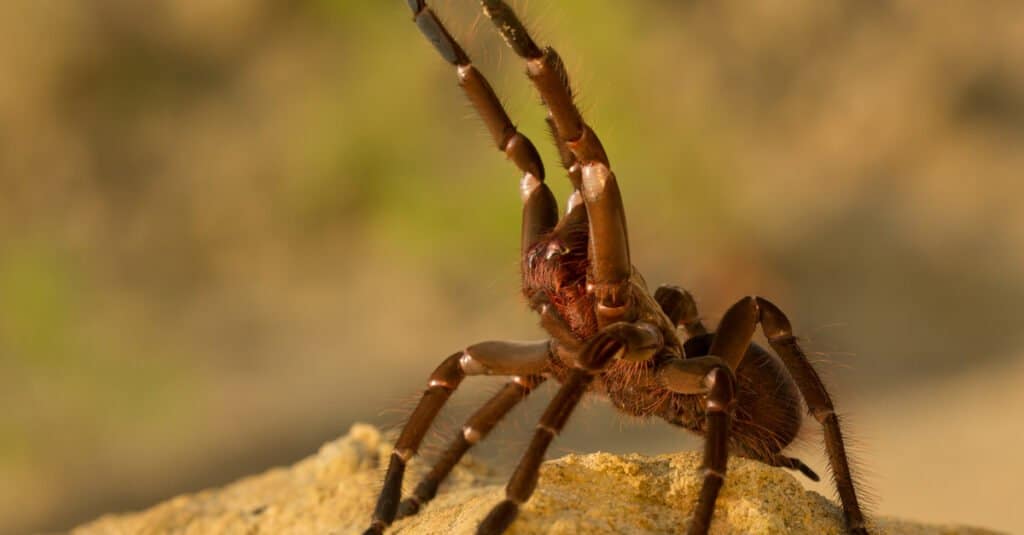
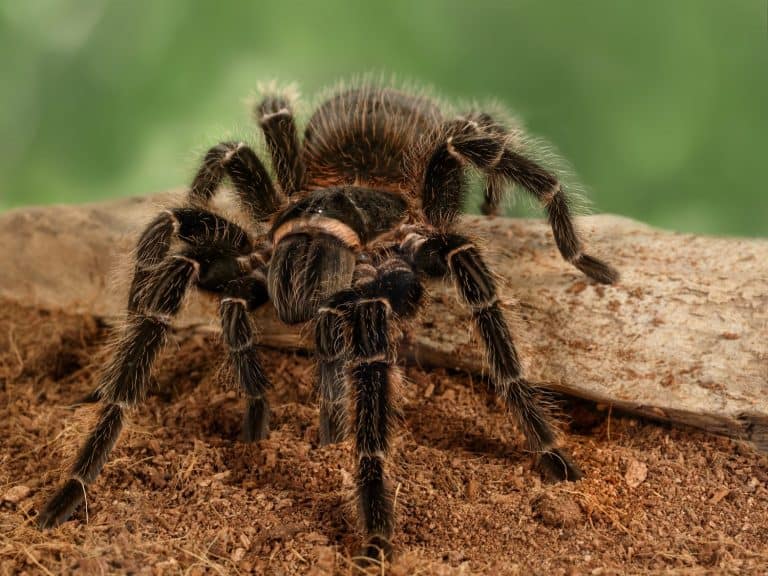
In a threat pose, tarantulas raise their front legs and pedipalps, exposing their fangs to warn off intruders.
©Milan Zygmunt/Shutterstock.com
Satyrex Tarantulas
There are four newly described tarantula species and one species that was transferred to the new genus. Each of the new Satyrex tarantulas is discussed in detail below. To see how aggressive these tarantulas are, watch the fierce Satyrex ferox in action in this Instagram post from one of the study’s authors, Dr. Alireza Zamani.
Satyrex arabicus Zamani & von Wirth, 2025
- Common name: Arabian black tarantula
- Distribution: Saudi Arabia
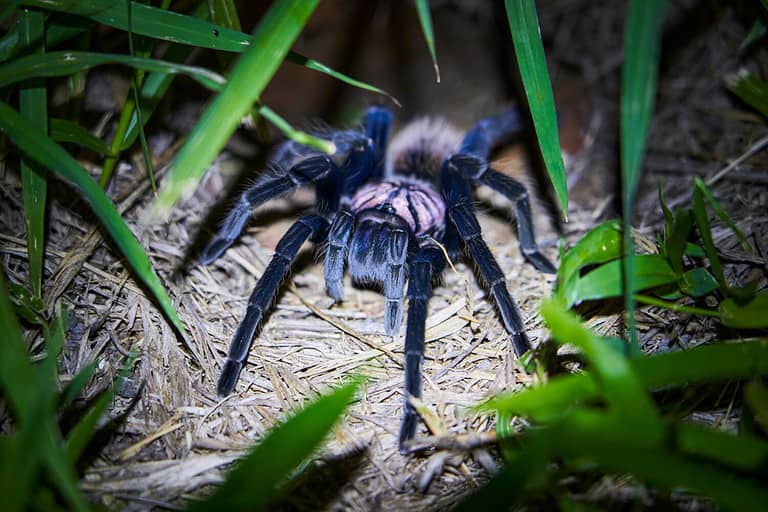
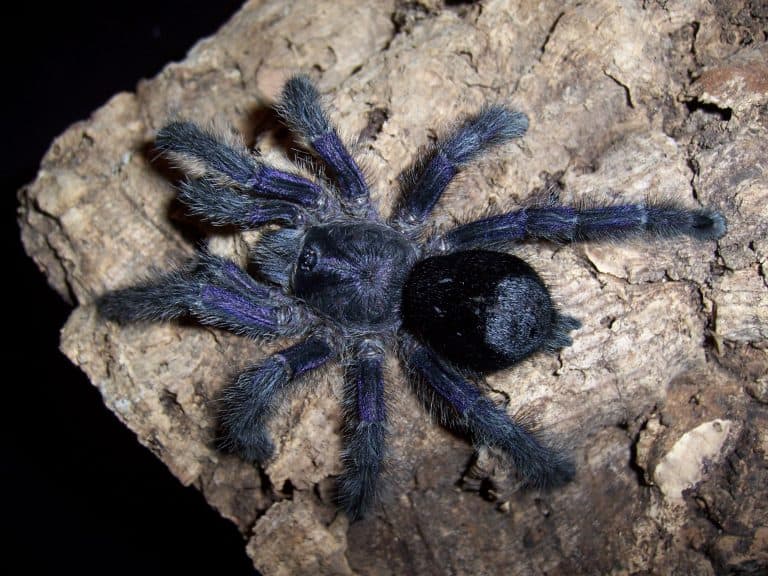
Satyrex arabicus is known from Jazan Province, southern Saudi Arabia. Male specimens examined in the study reached a total length of 1 inch. The palps are 3.18 times the length of the carapace. These tarantulas are dark overall with bluish-grey to black legs and bodies. Live female specimens are similar in color to the males, but no preserved female specimens are available for formal description. S. arabicus is a burrowing spider that inhabits humid, mountainous habitats with rocky outcrops, dense vegetation, and tall grasses.
Satyrex ferox Zamani, von Wirth & Stockmann, 2025 (Type Species)
- Common name: Dhofar black tarantula
- Distribution: Yemen, Oman
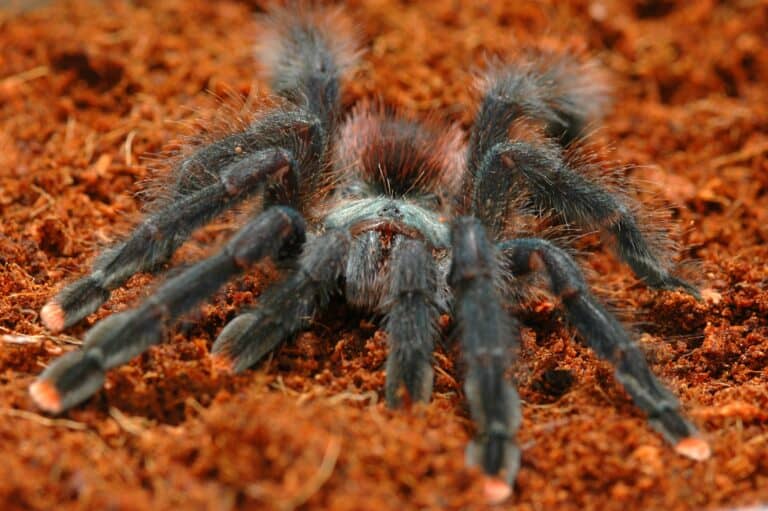
Satyrex ferox is known from the Al Mahrah Governorate in southeastern Yemen and the Dhofar Governorate in southwestern Oman. These tarantulas are particularly defensive, assuming a threat posture and producing loud hissing sounds with minimal provocation. Their legs and bodies are dark bluish-grey to nearly black in color. They are fossorial spiders, excavating burrows between rocks or at the base of shrubs. Males measure 1.06 inches in length. Females have a total length of 1.96 inches with a leg span of about 5.5 inches. The male palps measure 3.85 times the length of the carapace. S. ferox is the largest and most aggressive of the newly described tarantulas.
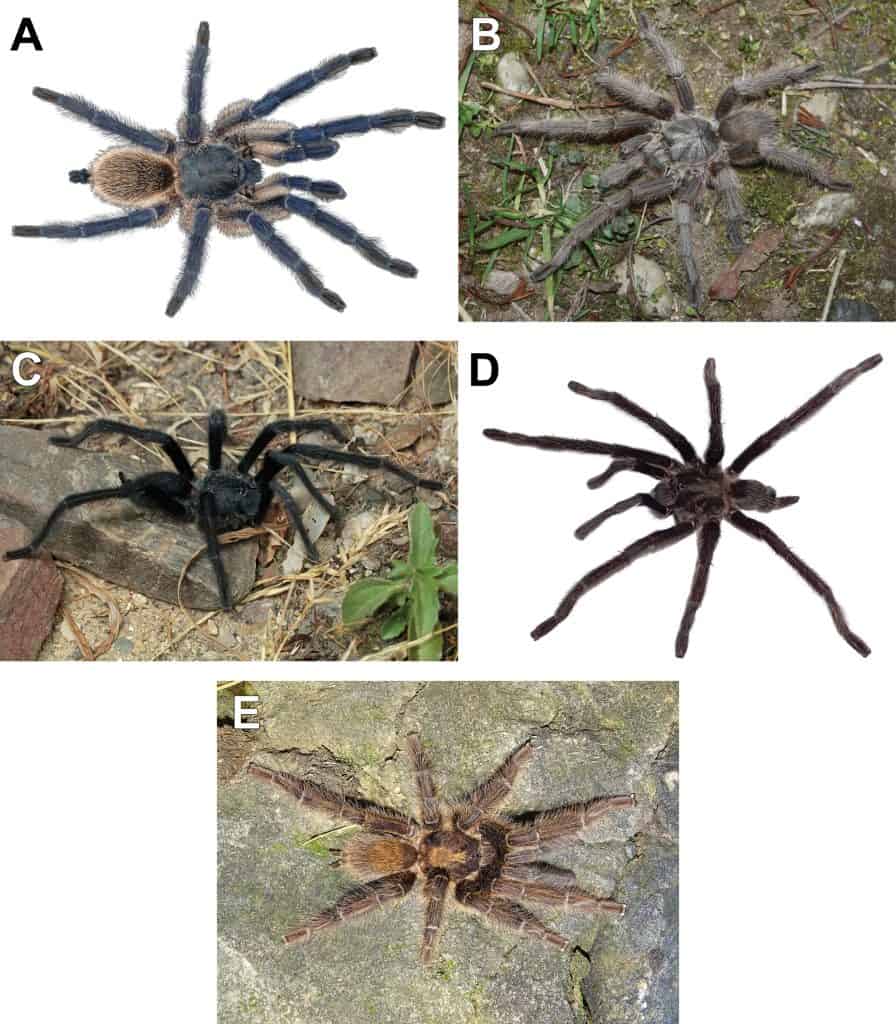
A) Monocentropus balfouri B) Monocentropus lambertoni C) Satyrex ferox D) Satyrex arabicus E) Satyrex speciosus
©Přemysl Fabiánek (A), Frank Schneider (B), Bobby Bok (C), Ibrahim Mohssin Fageeh (D), Pavel Just (E) / CC BY 4.0 – Original / License
Satyrex longimanus (Pocock, 1903)
- Common name: Yemeni black tarantula
- Distribution: Yemen
Due to the morphology of its genitalia, Monocentropus longimanus was transferred to the Satyrex genus. Little is known about S. longimanus, but its ecology and behavior are believed to be similar to those of S. ferox. Its exact color in life is unknown, but it is assumed to be as dark as other spiders in the genus. The male specimen measures 0.94 inches, while the female measures 1.59 inches in total length. The male palp is 2.7 times the length of the carapace. S. longimanus is only known from the Dhale Governorate in southwestern Yemen.
Satyrex somalicus Zamani & von Wirth, 2025
- Common name: Somali dwarf tarantula
- Distribution: Somaliland
The placement of Satyrex somalicus is considered tentative, primarily due to its smaller size and shorter palp. The total length of the male specimen measures 0.72 inches. The male palp is 2.23 times the length of the carapace. The female of S. somalicus is unknown. This tarantula is overall a greyish-brown color. The only specimen was found in a burrow dug in compacted sandy loam soil beneath a rock. Its habitat is a semi-arid region with scattered acacia scrub. This tarantula is known from the Awdal Region in western Somaliland.
Satyrex speciosus Zamani, von Wirth & Just, 2025
- Common name: Somali blonde tarantula
- Distribution: Somaliland
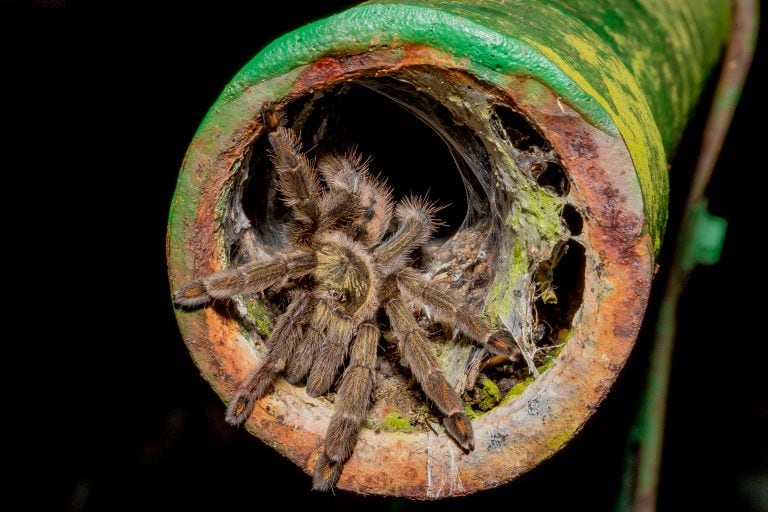
Satyrex speciosus is known only from its type locality in the Sanaag Region of northeastern Somaliland. The male specimen measures 1.06 inches in total length, while the female measures 1.19 inches. The male palp is 3.13 times the length of the carapace. The male’s body and legs are dark golden brown overall, while the female’s are light golden brown. This fossorial species excavates deep, lightly silk-lined burrows. They favor clay soil under limestone rocks in semi-arid mountainous regions with rocky slopes, shrubland, and little vegetation.