
Quick Take
- Female Grammostola anthracina must survive 30 years to reach their full potential longevity.
- The 90% dominance of Pampas grasslands creates a significant barrier to species diversification.
- Counter-intuitively, the Catumiri genus lacks the urticating hairs standard among New World species.
- Adult males are forced into crossing roads during the mating season to reach necessary habitats.
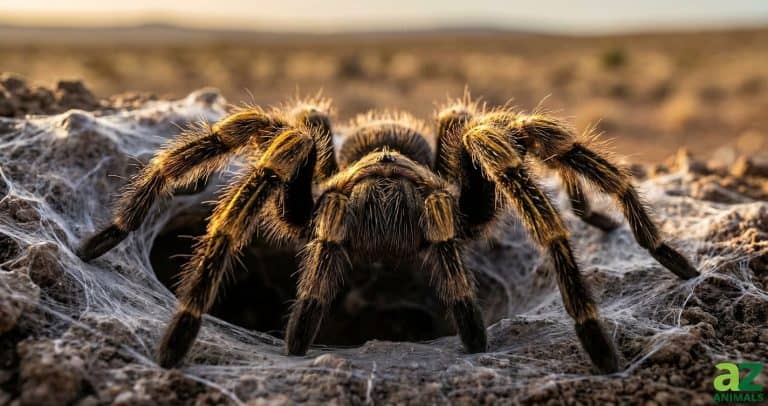
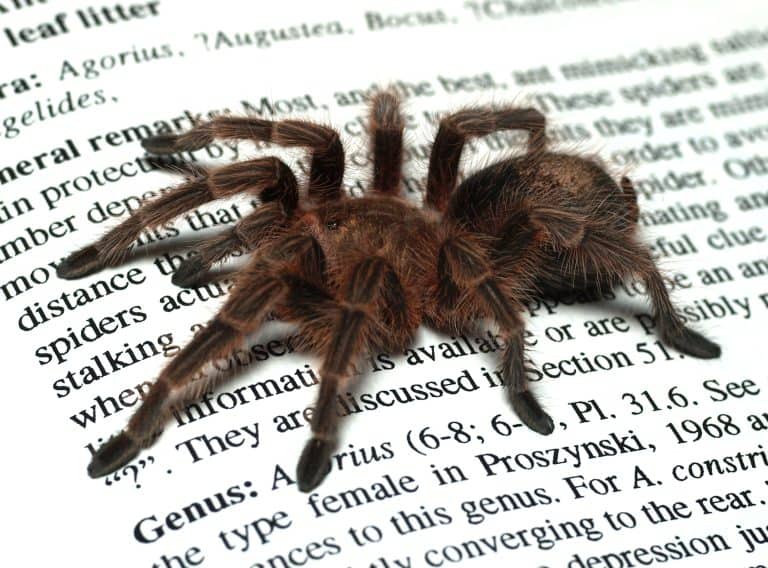
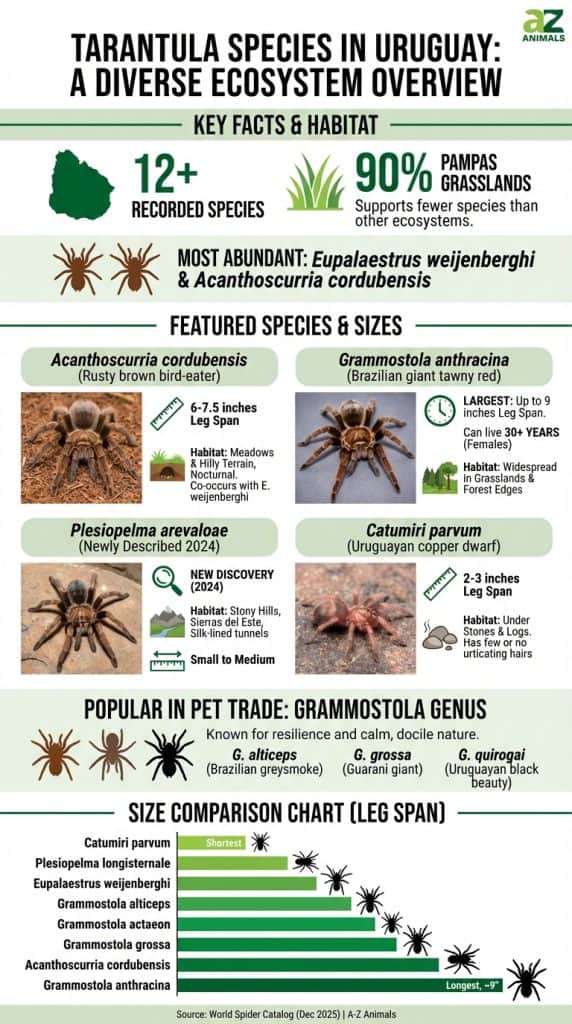
There are at least a dozen tarantula species recorded in Uruguay. Researchers report that approximately 90% of the land area in Uruguay is Pampas grasslands, which supports fewer tarantula species than the complex ecosystems found in many other South American countries. Eupalaestrus weijenberghi and Acanthoscurria cordubensis are believed to be among the most abundant tarantulas in Uruguay, as they live in the dominant ecosystem.
They can outlive most pets and grow to the size of a dinner plate—discover the 12+ species ruling Uruguay’s grasslands.
©A-Z Animals
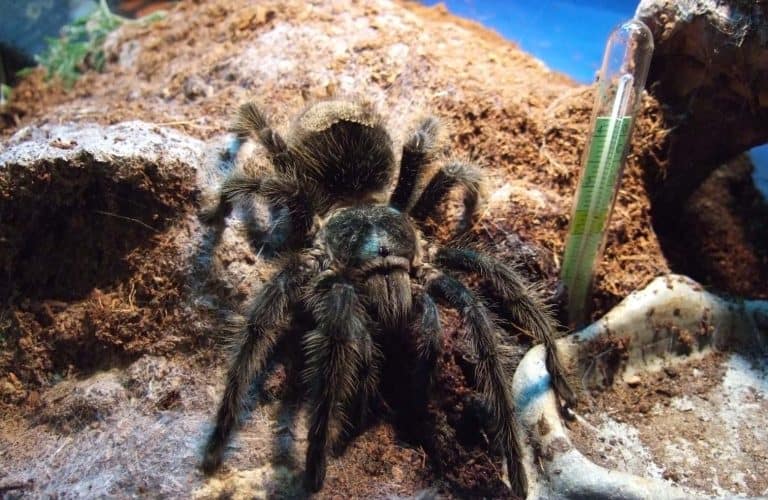
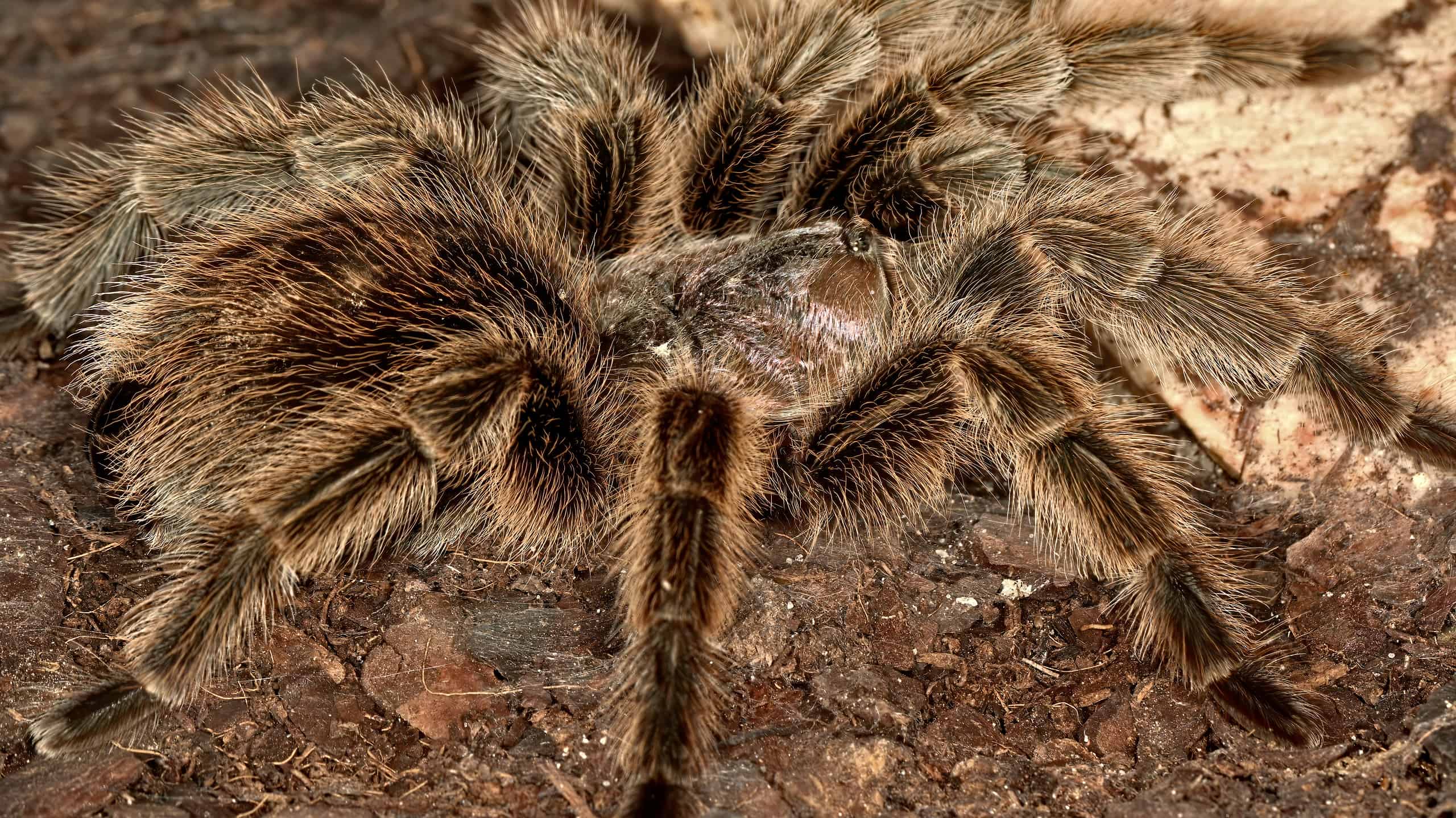
Uruguay is also well-known for species of the Grammostola genus, such as Grammostola alticeps, the Brazilian greysmoke tarantula, and Grammostola grossa, the Guarani giant, which are popular in the pet trade. The following list includes all of the currently recognized tarantula species of Uruguay as recorded in the World Spider Catalog as of December 2025. You can also click the link for a complete reference list of all tarantula species.
Acanthoscurria Ausserer, 1871
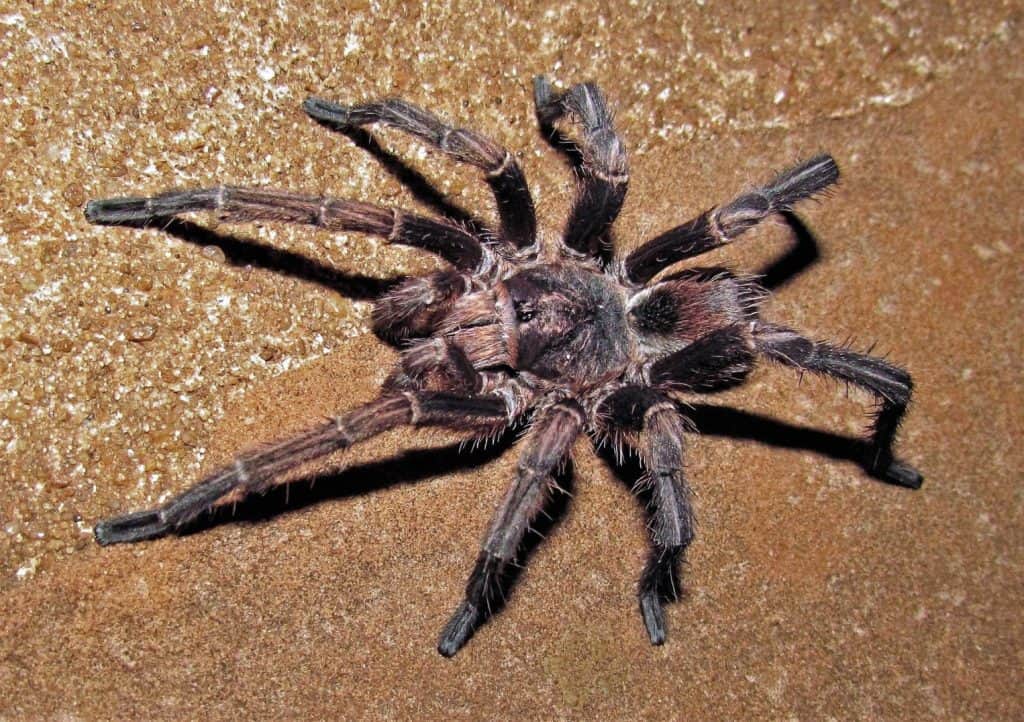
The rusty brown bird-eater, Acanthoscurria cordubensis, generally has a leg span of approximately 6-7.5 inches.
Acanthoscurria cordubensis Thorell, 1894
- Common name: Rusty brown bird-eater
- Distribution: South America, except Colombia, Suriname, Ecuador, and Chile
Acanthoscurria cordubensis, formerly known as Acanthoscurria suina, is a large, nocturnal tarantula found primarily in southern Uruguay. They typically reach a leg span of up to around 7.5 inches. These spiders primarily dig tubular burrows in meadows, but they have also been observed in gently rolling and hilly terrain. During the mating season, adult males are frequently seen crossing roads. A. cordubensis often co-occurs with Eupalaestrus weijenberghi.
Catumiri Guadanucci, 2004
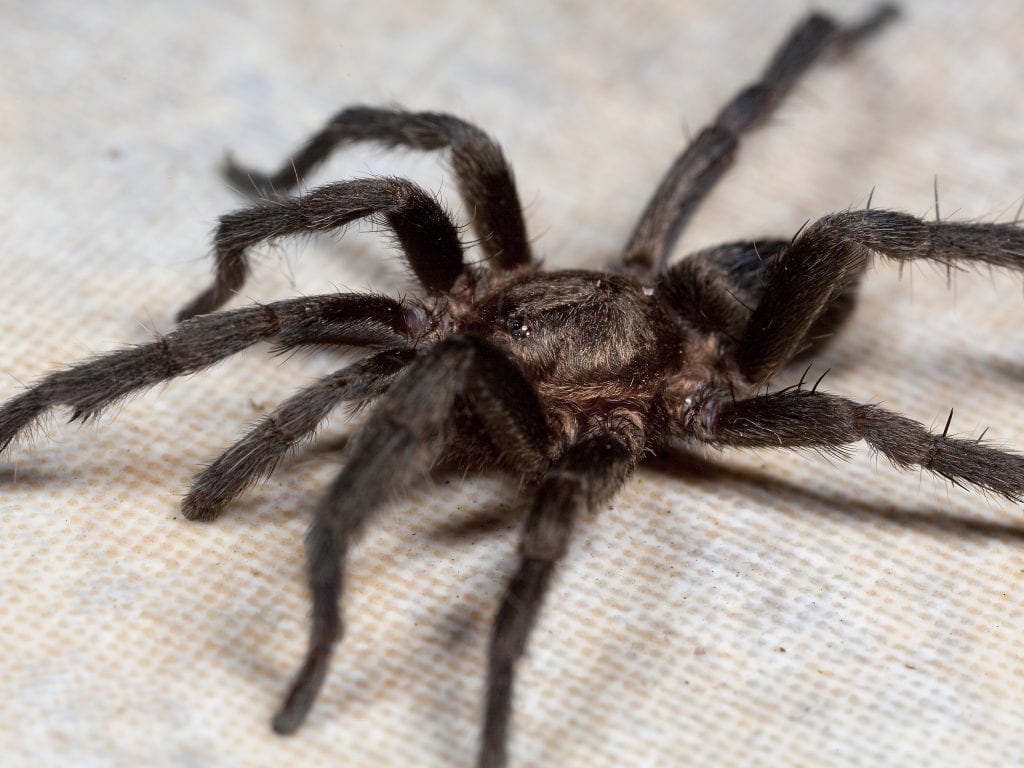
Members of the Catumiri genus are small tarantulas that have a leg span of between about 2 and 3 inches.
Catumiri parvum (Keyserling, 1878)
- Common name: Uruguayan copper dwarf
- Distribution: Brazil, Uruguay
The genus Catumiri includes multiple species distributed in Argentina, Brazil, Chile, and Uruguay. These spiders are very small, only reaching a leg span of 2-3 inches. Catumiri parvum has a brown body with a reddish-brown carapace and coppery-pink colored hairs (setae) on its abdomen and legs. Unlike most New World tarantulas, Catumiri species have little or no urticating hairs. The labium (lower lip) is also much wider than it is long, with a few small cuspules (bumps).
Eupalaestrus Pocock, 1901
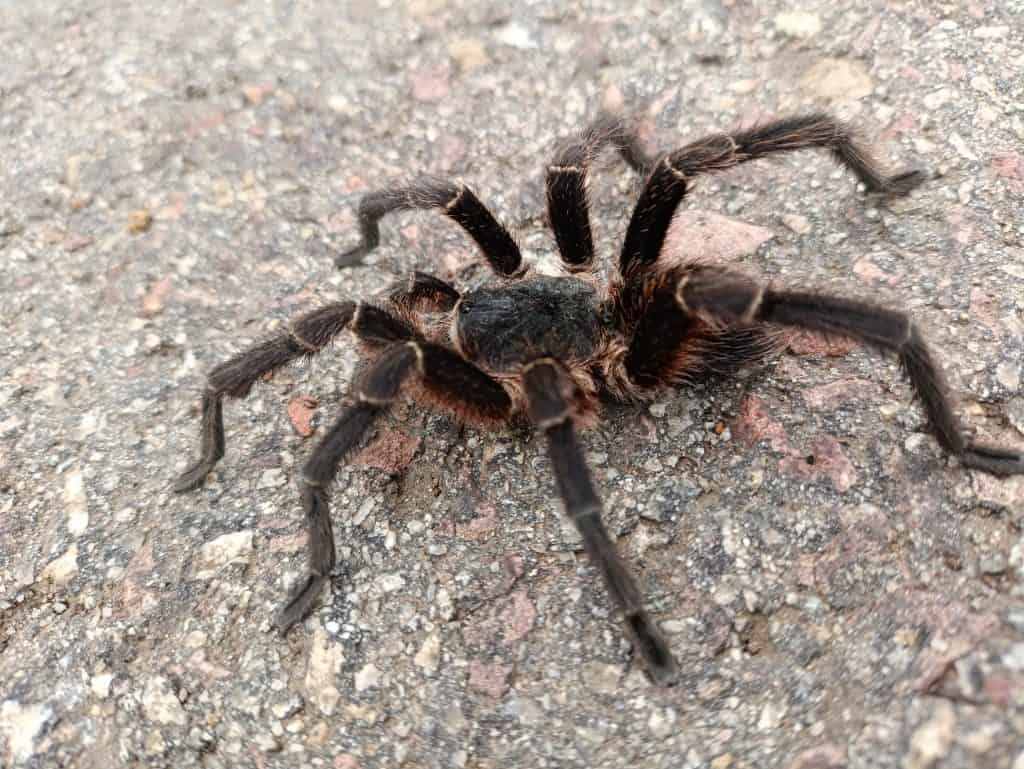
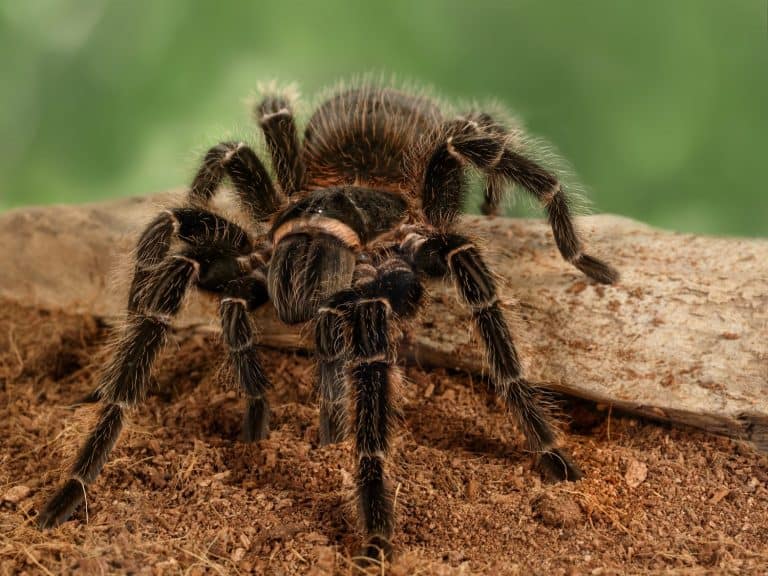
The white collared tarantula, Eupalaestrus weijenberghi, is native to Brazil, Uruguay, and Argentina.
Eupalaestrus weijenberghi (Thorell, 1894)
- Common name: The white collared tarantula
- Distribution: Brazil, Uruguay, and Argentina
Eupalaestrus weijenberghi is found across Uruguay. It is a medium-sized spider with a leg span between 4 and 5 inches. As noted above, E. weijenberghi frequently co-occurs with Acanthoscurria cordubensis. This species is nocturnal and excavates deep, narrow, tube-like burrows in meadows. Like A. cordubensis, E. weijenberghi is often seen crossing roads during the mating season. It is a popular beginner species in the pet trade due to its size and relatively calm nature in captivity.
Grammostola Simon, 1892

The Guarani giant tarantula, Grammostola grossa, has a body length of around 3 inches.
Grammostola alticeps (Pocock, 1903)
- Common name: Brazilian greysmoke
- Distribution: Uruguay
Grammostola alticeps has a smoke-grey to black body with reddish-brown setae on its legs and a reddish-orange underbelly. These large tarantulas can reach leg spans of around 6 inches or more. They are found in grassland and open habitats of southern South America. Most individuals are hardy and often described as docile, making them a popular pet for beginners.
Grammostola andreleetzi Vol, 2008
- Common name: N/A
- Distribution: Uruguay
Little is known about this tarantula species, but it is presumed to have the characteristics of its genus. Grammostola tarantulas are medium to large spiders that are terrestrial burrowers. They tend to be dark colored with dense hair, and they are known to be resilient, calm, and non-aggressive.
Grammostola actaeon (Pocock, 1903)
- Common name: Brazilian red rump or Brazilian woolly black
- Distribution: Brazil, Uruguay
Grammostola actaeon is a black and grey spider with long, woolly setae on its legs and abdomen. The setae on its abdomen are a fiery red. These are large, heavy-bodied spiders that can reach a leg span of 7 inches, although some sources suggest they can grow even larger. Grammostola actaeon are terrestrial burrowers that are reputed to be docile and calm, like most individuals of this genus.
Grammostola anthracina (C. L. Koch, 1842)
- Common name: Brazilian giant tawny red
- Distribution: Brazil, Uruguay, Paraguay, Argentina
Grammostola anthracina is a glossy brown tarantula with reddish-colored setae on its legs. It is a terrestrial burrower widely distributed throughout Uruguay. G. anthracina is said to be among the largest spiders in the country. Some sources suggest their leg span can reach up to 9 inches, but others are more conservative at 6-7 inches. Researchers also speculate that G. anthracina may be the longest-lived tarantula species in the world, with females living 30 years or even longer.
Grammostola grossa (Ausserer, 1871)
- Common name: Guarani giant tarantula
- Distribution: Brazil, Paraguay, Uruguay, Argentina
Grammostola grossa is a large, bulky spider with a body length of around 3 inches and a leg span of 7 inches or more. They are mostly black with metallic silver on the carapace and reddish setae on the abdomen. They make their burrows in the grasslands and forest edges, often under roots, rocks, or leaf litter. G. grossa is said to be exceptionally docile, even among other Grammostola species.
Grammostola quirogai Montes de Oca, D’Elía & Pérez-Miles, 2016
- Common name: Uruguayan black beauty or Uruguayan black tarantula
- Distribution: Brazil, Uruguay
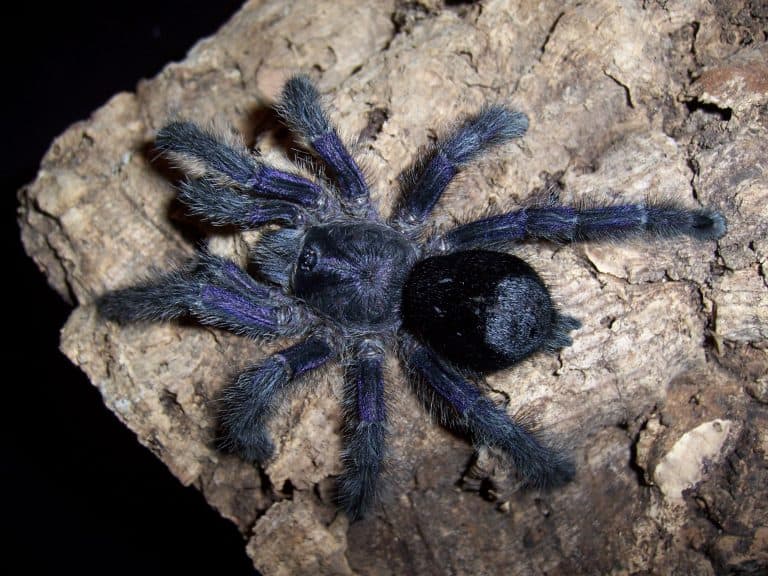
The Uruguayan black beauty, Grammostola quirogai, is a velvety-black tarantula that is often confused with Grammostola pulchra, the Brazilian black beauty. G. quirogai has often been sold as G. pulchra due to their nearly indistinguishable appearance, which has led to widespread misidentification in the pet trade. These spiders are terrestrial burrowers with the typically calm demeanor of Grammostola tarantulas.
Homoeomma Ausserer, 1871
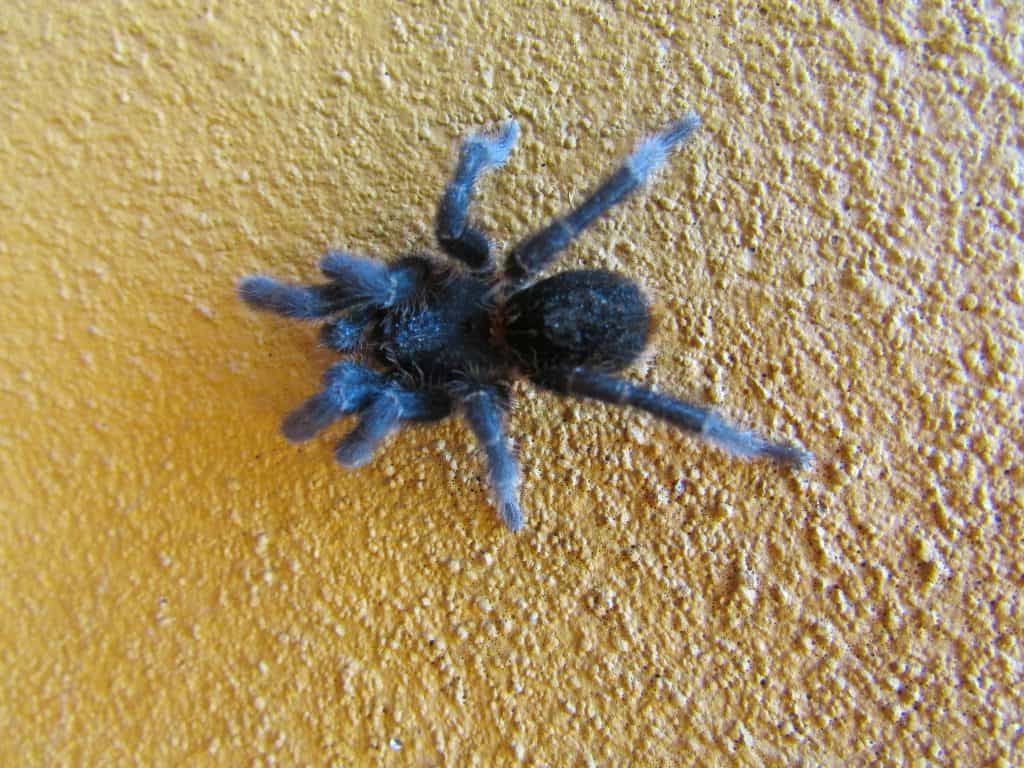
The Uruguayan dwarf tarantula, Homoeomma uruguayense, is a type of dwarf tarantula found in Uruguay and Argentina.
Homoeomma uruguayense (Mello-Leitão, 1946)
- Common name: Uruguayan dwarf tarantula
- Distribution: Uruguay, Argentina
The genus Homoeomma has 16 species across Argentina, Brazil, Chile, Colombia, and Uruguay. These are small tarantulas, reaching just 2-4 inches. They are often found in short burrows under stones and logs. Homoeomma uruguayense is a dark brown to black tarantula with reddish-orange setae on its abdomen and at the base of its legs.
Plesiopelma Pocock, 1901
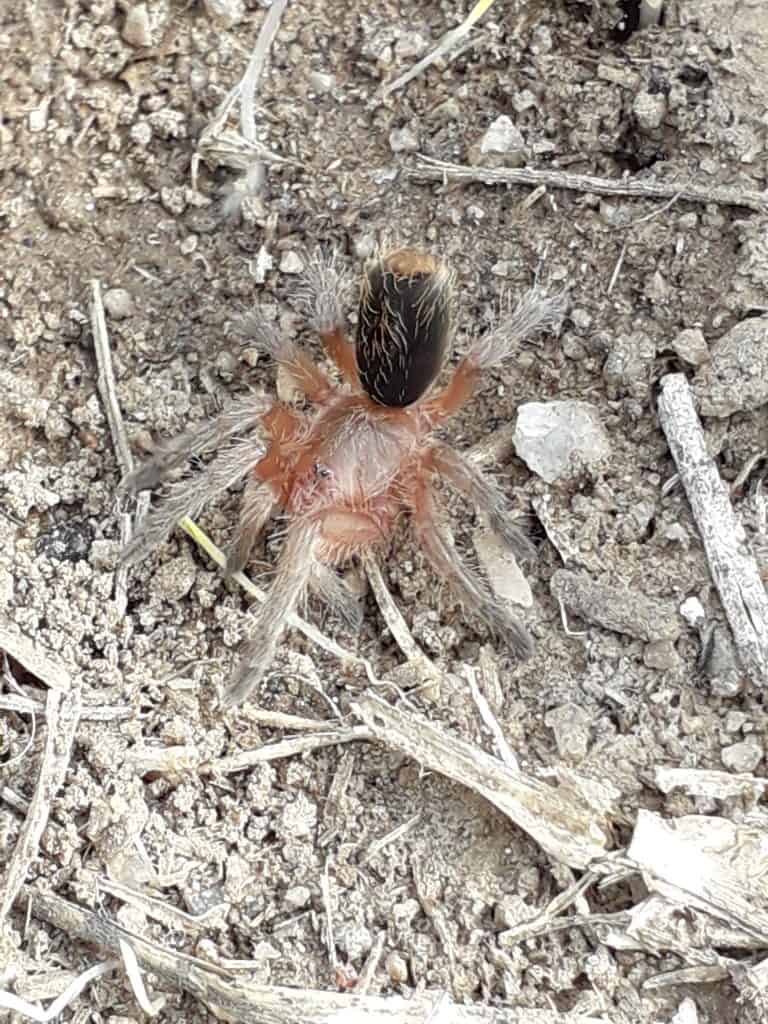
The Plesiopelma genus consists of 13 species native to Argentina, Bolivia, Brazil, Paraguay, Uruguay, and Venezuela.
Plesiopelma arevaloae Arias & Pérez-Miles, 2024
- Common name: N/A
- Distribution: Uruguay
Plesiopelma arevaloae is a newly-described species as of 2024. Scientists distinguished P. arevaloae from other Plesiopelma species by its unique features, as well as its DNA. P. arevaloae was found in the stony hills of the Sierras del Este region. Plesiopelma are small to medium-sized tarantulas known to inhabit silk-lined tunnels under stones in mountainous regions. P. arevaloae has a brown carapace and legs with whitish setae on the carapace border. It has a black abdomen with reddish setae.
Plesiopelma longisternale (Schiapelli & Gerschman, 1942)
- Common name: Argentine dwarf fire rump
- Distribution: Argentina, Uruguay
Plesiopelma longisternale is a small species, with adults typically measuring 3-4 inches in leg span. Like other Plesiopelma, these terrestrial spiders inhabit mountainous areas, living in silk-lined tunnels under rocks. It is a greyish-brown tarantula with red setae on its legs and abdomen.
Plesiopelma myodes Pocock, 1901 (type species)
- Common name: N/A
- Distribution: Uruguay
Plesiopelma myodes is the type species for the genus Plesiopelma. It was originally described by Pocock based on a male specimen from Uruguay.
Plesiopelma semiaurantiacum (Simon, 1897)
- Common name: N/A
- Distribution: Paraguay, Uruguay
Little is known about the species Plesiopelma semiaurantiacum. However, it is distinguished by the characteristics of the Plesiopelma genus, such as long abdominal hairs and inhabiting silk-lined burrows under stones in mountainous regions.