
Quick Take
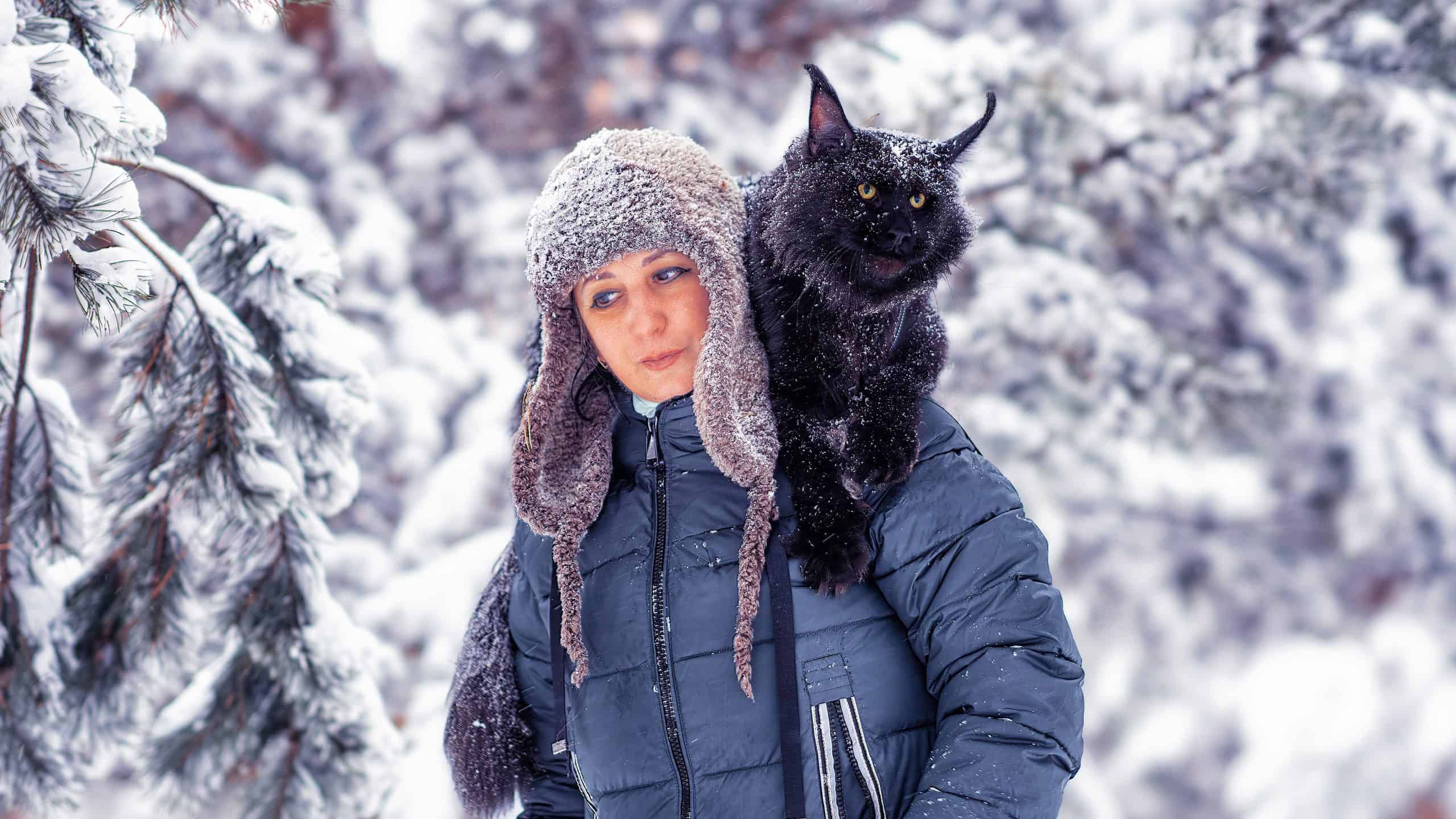
- Maine Coon winter adaptations include a weatherproof coat, snowshoe paws, and a fluffy tail.
- The coat features shorter fur on the shoulders and back and longer fur on the neck and hindquarters for insulation.
- They have large ears with fur tufts and enhanced hearing, aiding cold-weather detection.
The Maine Coon is the undisputed king of winter. Its impressive size and luxurious fur coat make it clear that this magnificent feline doesn’t just survive the cold — it was built for it. From its strong, sturdy frame to its unusually furry paws, each of the Maine Coon’s physical traits is a natural adaptation designed for life at low temperatures.
The Origins of the Maine Coon’s Winter Superpowers
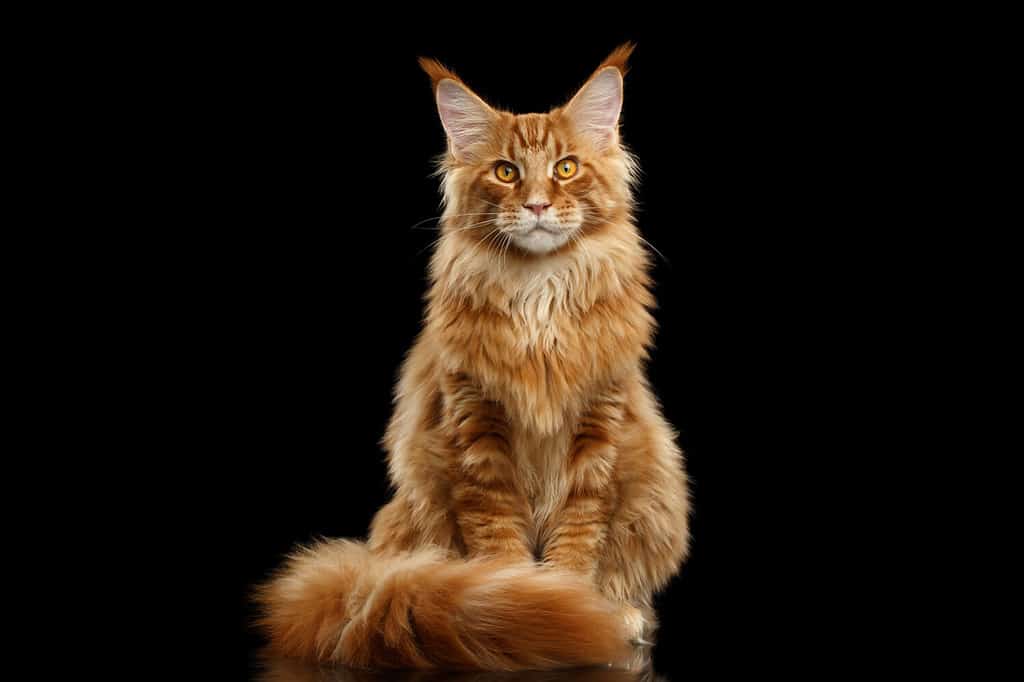
The Maine Coon is the official state cat of Maine.
©Seregraff/Shutterstock.com
The Maine Coon’s history dates back to at least the 1850s, beginning in the northeastern United States. Here, it shone as the essential barn and household cat. Its strong, robust build and impressive hunting skills were indispensable for surviving harsh winters and keeping rodent populations in check, establishing the cat as a crucial partner in survival. The breed quickly became known not just for its size, but also for its reliability and endurance in an unforgiving climate.
However, the breed’s exact origins are cloaked by several popular myths. One romantic tale suggests that Marie Antoinette’s beloved long-haired cats were smuggled out of France during the Revolution and escaped into Maine’s wilderness. Another credits a sea captain named Coon. His ship was allegedly full of long-haired cats that mixed with the local feline population in New England. Some speculate that Viking cats contributed their northern lineage to the breed. This theory is fueled by the striking similarity between Maine Coons and Norway’s Norwegian Forest Cats. There was even an old, biologically impossible theory that Maine Coons descended from raccoons, inspired by the bushy, ring-patterned tails seen in some cats.
Whatever the truth of their ancestry, it is clear that natural selection played the greatest role in shaping the Maine Coon’s physical features. The harsh environment of New England forced the cats to adapt to survive, resulting in the physically and genetically robust and hardy Maine Coon cat we see today. Even today, much of the breed’s inherent natural resilience remains intact, as organized breeding efforts did not begin until relatively recently. Selective pressures shaped physical traits that continue to define the breed, even in strictly indoor-only pets.
The Magnificent, Weatherproof Coat
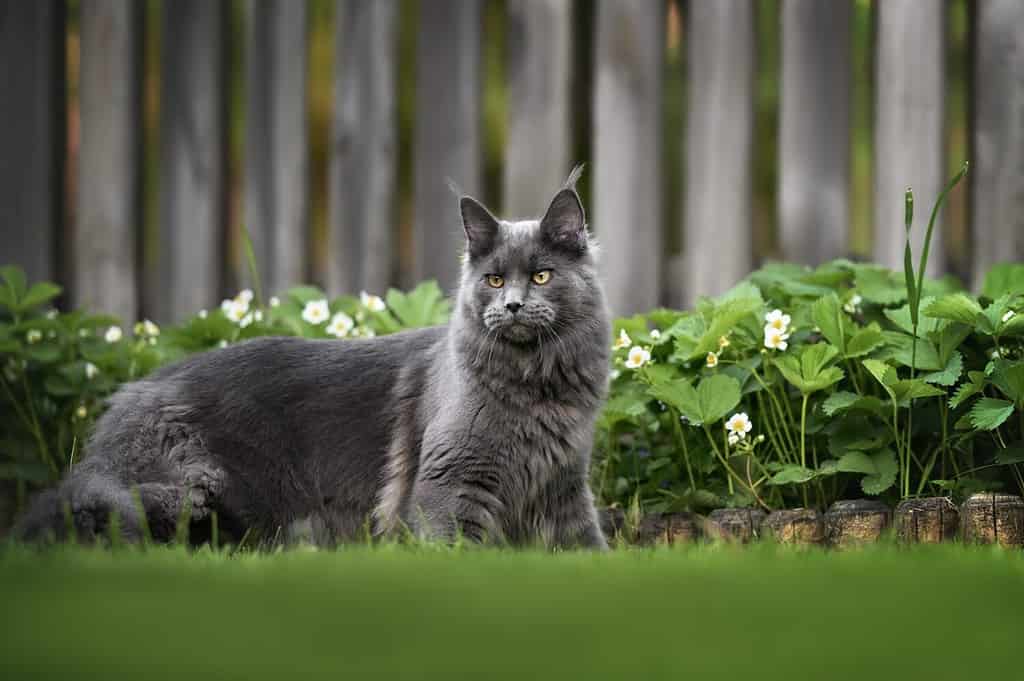
Maine coons are known for their friendly personalities and are often good with children and other pets.
©otsphoto/Shutterstock.com
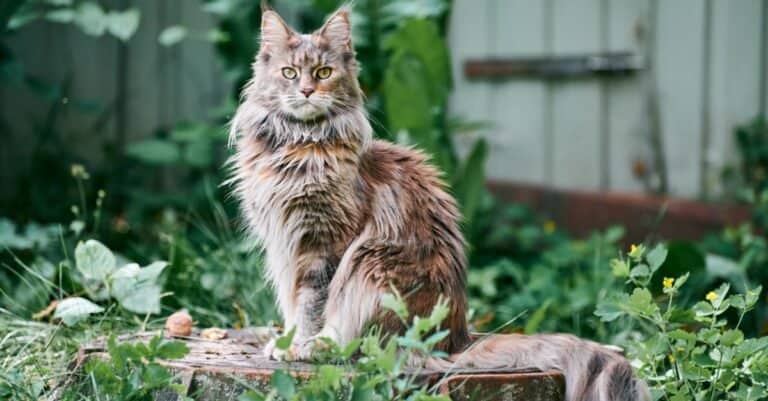
Without a doubt, one of the Maine Coon’s most striking characteristics is its magnificently full coat. But this fur is not just for show; it is a strategically designed spectacle built specifically for mobility and protection in cold, winter weather.
The fur is shorter on the cat’s shoulders and back, minimizing tangling and allowing the cat to move easily through thick underbrush or deep snow. In contrast, the fur on the stomach, neck (the ruff), and hindquarters is much longer. This longer fur forms a dense, protective barrier against biting winter winds, snowbanks, and frozen ground.
The overall texture of a Maine Coon’s coat is smooth and layered, helping to resist matting and providing reliable insulation. The fur also has a slight, natural oiliness that provides excellent water repellency. This quality makes it incredibly difficult for a full-grown Maine Coon to become completely soaked, even during a bath. In the wild, this feature would have been crucial for maintaining core warmth during storms or while navigating wet terrain.
Built-In Snowshoes
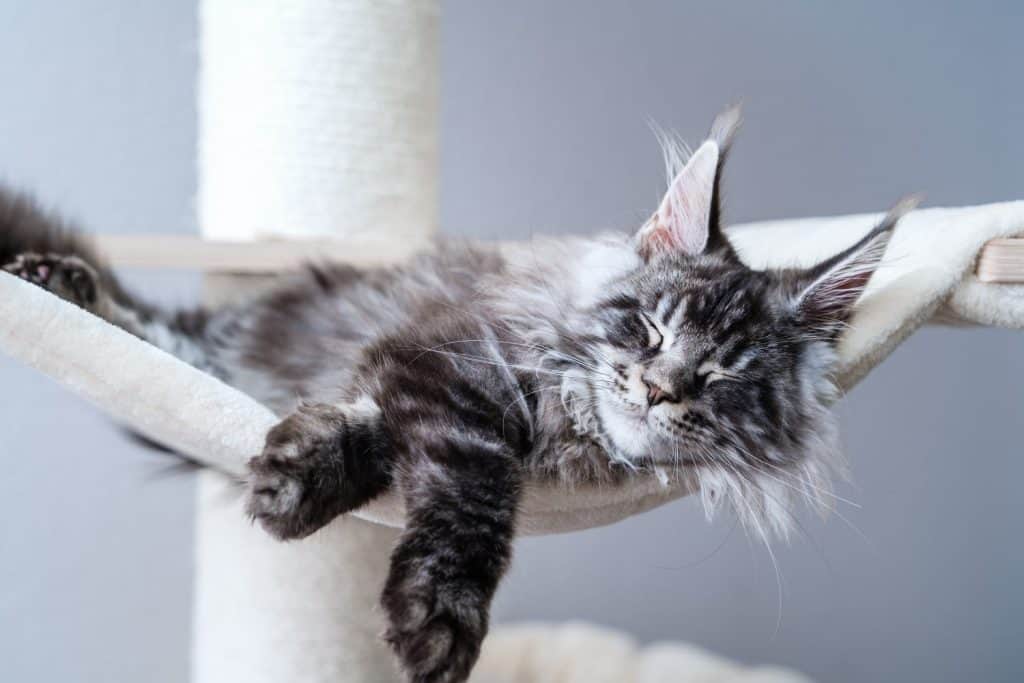
Historically, around 40 percent of Maine Coons were polydactyl, meaning they had extra toes. However, this trait is much less common in the breed today.
©Tatyana Soares/Shutterstock.com
A Maine Coon’s paws are round, large, and equipped with long, dramatic tufts of fur growing between the toes. The wide, substantial size of the cat’s paws acts like natural snowshoes. They distribute the cat’s weight evenly across the snow and allow it to walk easily over deep drifts without sinking. The dense, furry tufts growing between the cat’s toes serve as built-in mittens. These tufts insulate the toes and shield them from cold temperatures, frostbite, and sharp debris hidden in the snow. The tufts also provide superior traction on icy, slick, or uneven ground, giving the cat a secure grip even in treacherous conditions.
A Multi-Purpose Tail
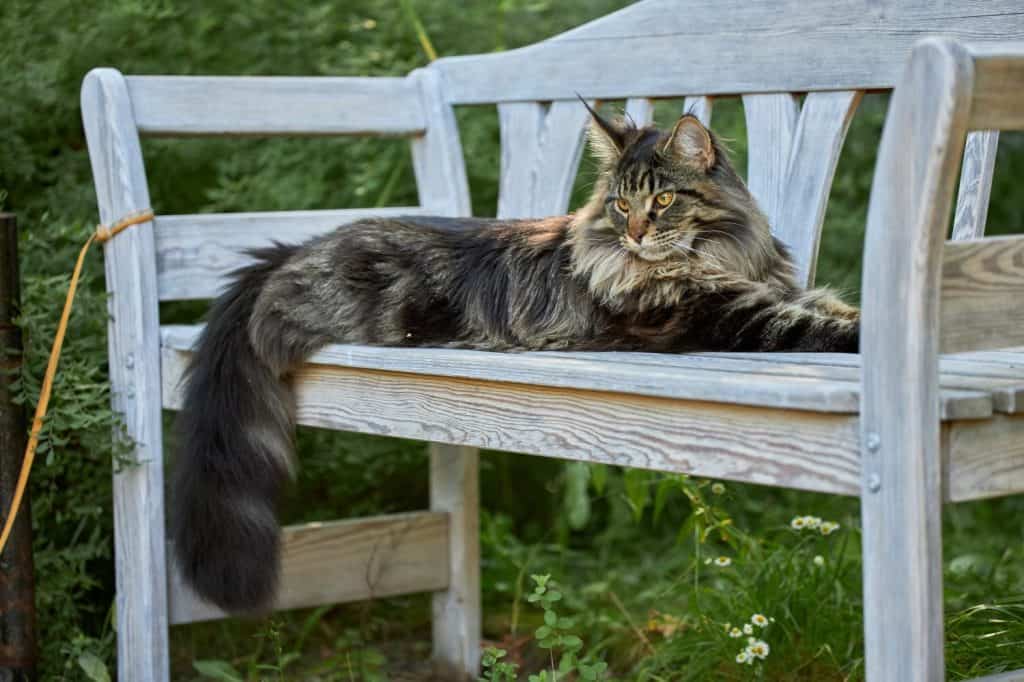
Maine Coon cats come in just about every color and pattern possible.
©Konstantin Zaykov/Shutterstock.com
The Maine Coon’s luxurious tail is undeniably beautiful, but it is far more than just an elegant feature. In the challenging conditions of a New England winter, this long, exceptionally full, and astonishingly fluffy appendage is a critical survival tool.
When sleeping or resting in the cold, a Maine Coon cat can easily wrap its long tail around its body like a plush, insulating blanket, conserving body heat and protecting vulnerable areas. The tail’s sheer fluffiness and density also help it stay atop deep snow rather than sinking. This prevents the loss of vital body warmth and avoids unnecessary effort when traversing snowdrifts. In addition, the tail acts as a dynamic counterbalance that helps the cat maintain its agility and stable footing while navigating slippery ice or uneven terrain.
Enhanced Senses and Cold-Proof Ears
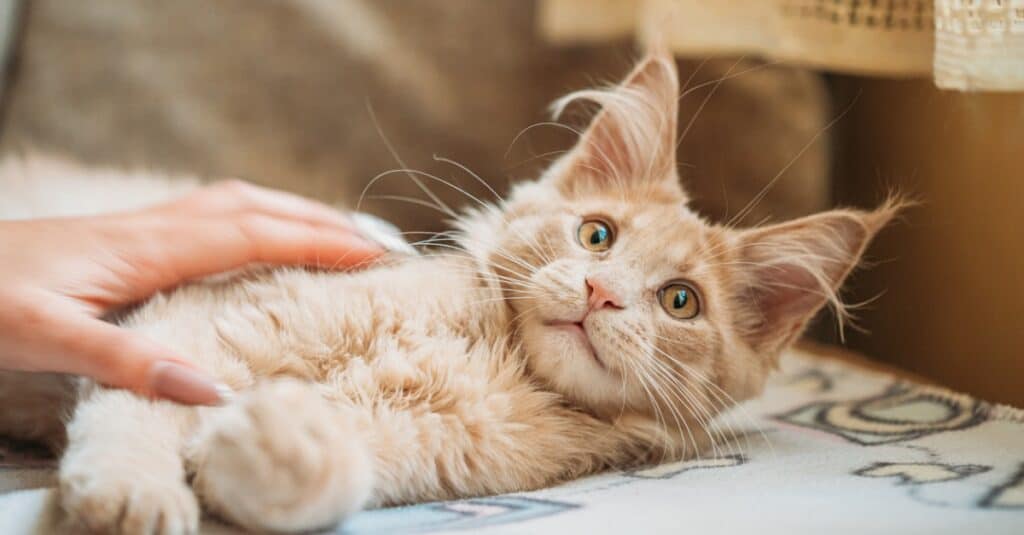
Maine Coons are active cats who love being near their favorite humans.
©Grisha Bruev/Shutterstock.com
A Maine Coon’s ears have heavy tufts of fur that grow on both the inside and outside, providing superior insulation against wind and cold. Their ears are also extra large, enhancing their hearing and allowing them to detect a faint rustle or small movement hidden beneath a layer of snow. This enhanced hearing is coupled with large, expressive eyes that are perfectly suited for vision in low-light environments like the dark, harsh conditions of winter. These sensory advantages would have made Maine Coons highly effective nocturnal hunters, even in deep winter.
A Strong, Sturdy Frame
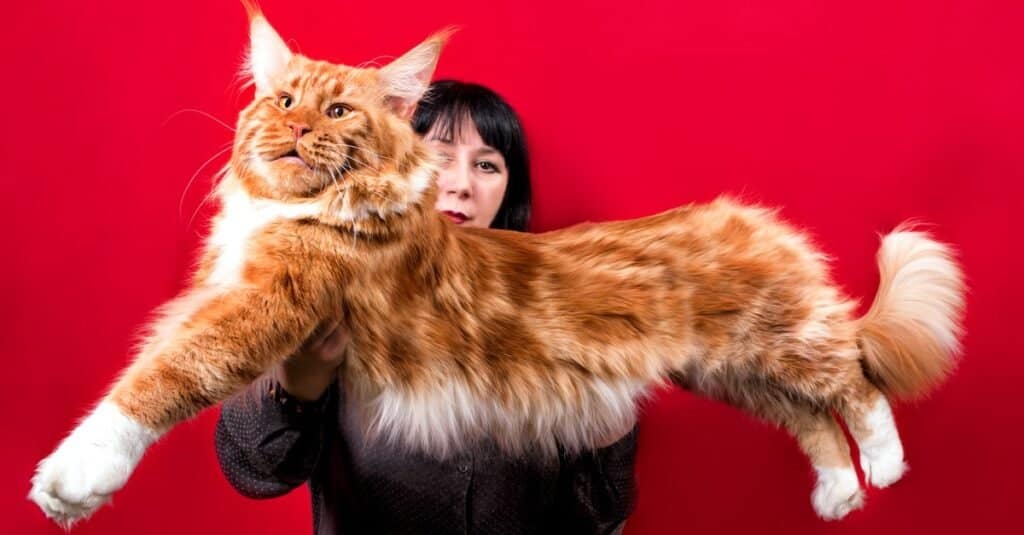
Maine Coon cats often reach 3 feet in length.
©Sergey Ginak/Shutterstock.com
The Maine Coon is one of the largest domestic cat breeds, with tall, broad-chested, and exceptionally muscular bodies. Males typically weigh between 13 and 19 pounds, while females range from 10 to 16 pounds. With their robust build, Maine Coons are excellent at leaping and climbing, which makes them great hunters in the barns and forests of New England. They also have a distinctive long, square muzzle — a shape perfect for easily grabbing prey and drinking from icy streams.
Slow Growers With Serious Stamina
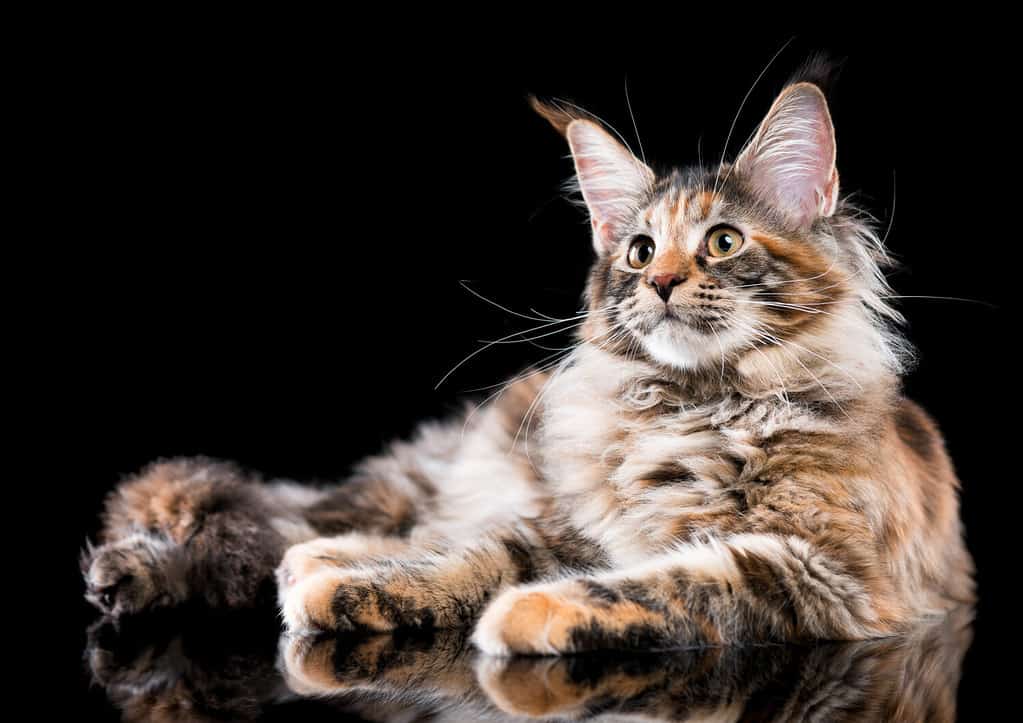
Maine Coons typically stand 10 to 16 inches tall.
©DenisNata/Shutterstock.com
Most domestic cats reach their full size by their first birthday, but the Maine Coon takes a lot longer to finish growing. At a year old, a Maine Coon is certainly a large cat, but it is more of an awkward teenager than a full-grown adult. They continue to fill out their massive frames and often take three to five years to reach their final adult size. The cat’s famously full, magnificent neck ruff usually does not begin to fill out until around two years old.
Winter Warriors and Gentle Giants
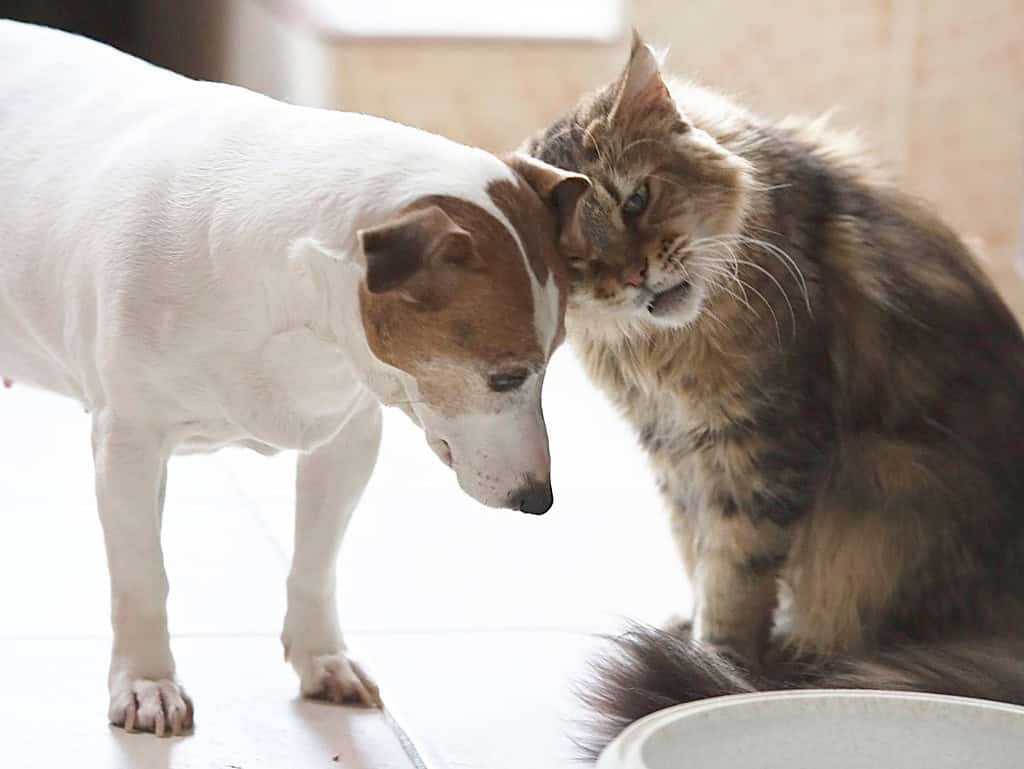
Maine Coons are outgoing, friendly, and often make wonderful family pets.
©Heidi Bollich/Shutterstock.com
Despite their enormous and rugged appearance, Maine Coons are known to be profoundly affectionate and highly interactive cats. Many describe them as “dog-like” in their behaviors and personalities. They thrive on human companionship and commonly follow their favorite person around the house. Maine Coons are intelligent and eager participants in training and quickly master tricks, routines, and other complex behaviors. Many of these rugged felines even enjoy playing in water!
Generations of survival in New England’s cold, snowy environment shaped the Maine Coon’s entire physical design. This natural selection gave the breed a powerful immune system and robust constitution, making it more resilient than many other pedigreed breeds. Each of the cat’s defining features — from its thick, strategic coat and snowshoe paws to its magnificent tail, sharp senses, and large body — is an adaptation for survival in the cold. Even the breed’s gentle, people-oriented personality is part of its inherited nature, reflecting the cooperative relationship early settlers in New England developed with these remarkable cats.