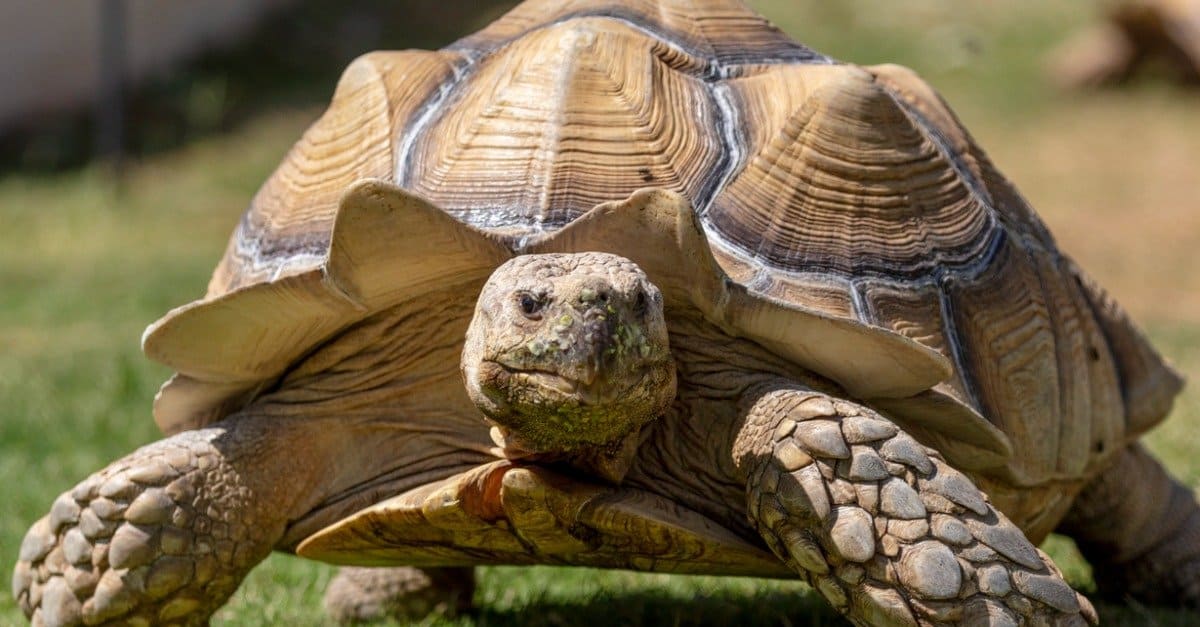

Quick Take
- Tortoises are primarily herbivorous, meaning they eat plant matter rather than other animals.
- Some species of tropical tortoise are omnivorous and may eat small amounts of meat as well.
- When caring for a pet tortoise, it is important to be educated on the particular species’ diet so that you can feed them the most nutritious food possible and avoid potential harm.
Tortoises are terrestrial reptiles in the family Testudinidae, with between 45 and 50 species found across Africa, Eurasia, and the Americas. Known for their high-domed shells and slow metabolism, they vary significantly in size, ranging from a few inches, like the Speckled Padloper (Chersobius signatus), to up to six feet long, like the Aldabra giant tortoise (Aldabrachelys gigantea). Tortoises are herbivores that, despite being primarily plant-eaters, may occasionally consume insects or animal matter. Continue reading to learn everything you need to know about what tortoises eat.
What Foods Do Tortoises Eat?
Tortoises eat leaves, grasses, fungi, and vegetables for most of their meals. Many species of tortoise are primarily herbivorous, but others are omnivorous. That means they will also consume some types of animal matter.
Beyond diet, the main differences between truly herbivorous tortoises and more omnivorous ones, like red-footed tortoises (Chelonoidis carbonaria), are habitat, morphology, and metabolic adaptations to water scarcity. Herbivorous tortoises typically inhabit arid, dry areas, while omnivorous species are often native to tropical forests.
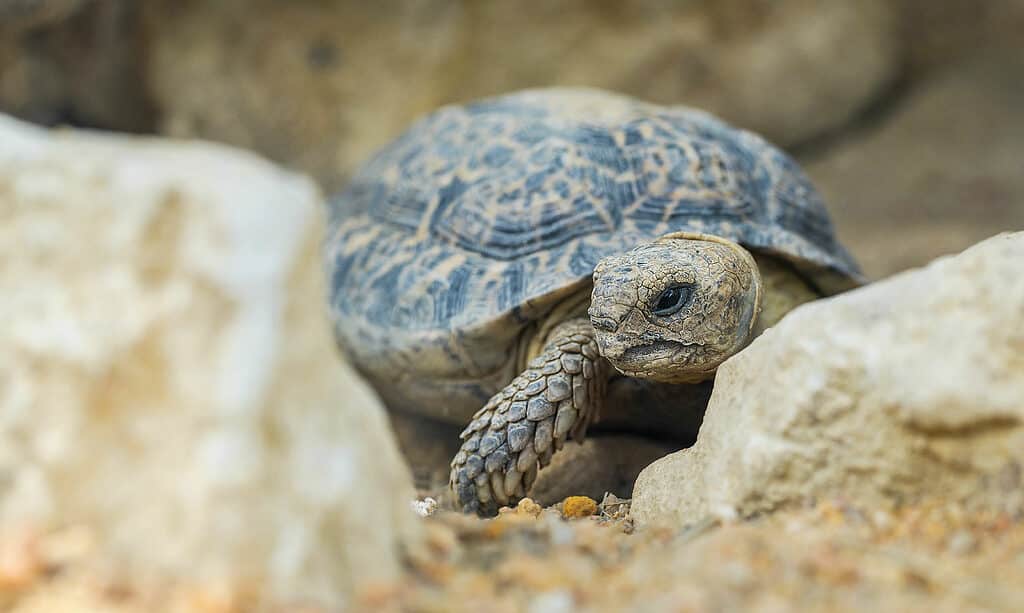
Tortoises live exclusively on land, whereas other turtles spend the majority of their lives in water.
©jindrich_pavelka/Shutterstock.com
The most common foods that tortoises eat while living in the wild:
- Fungi
- Millipedes
- Clover
- Alfalfa grass
- Sowthistle grass
- Bermuda grass
- Mulberry leaves
- Hibiscus leaves
- Aloe
- Barley
- Hay
- Grains
- Earthworms
- Snails
- Slugs
- Carrion
- Mushrooms
- Melons
- Apples
- Pears.
These are some of the typical foods that tortoises can find in the wild.
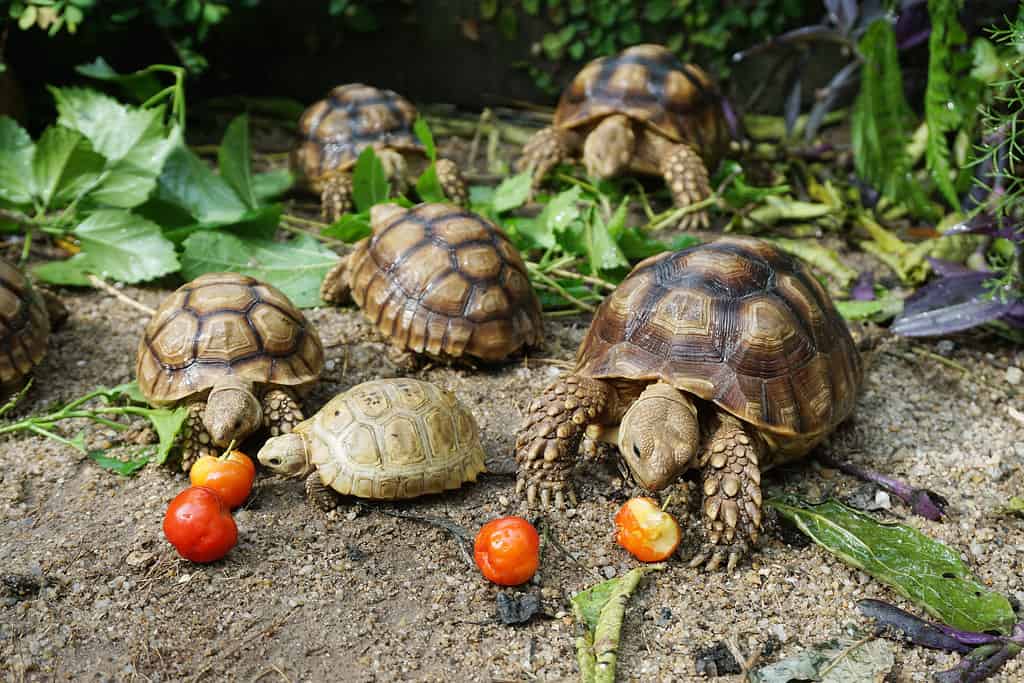
Truly herbivorous tortoises live in dry regions and can go for a year without drinking, relying on water stored in their bladders.
©Somedaygood/iStock via Getty Images
Omnivorous tortoises may eat meat from dead animals (carrion) and a variety of insects. They are opportunistic feeders and do not actively hunt for these foods.
How Do Tortoises Forage and Find Food?

Tortoises have a great sense of smell that helps them find food.
©Don Mammoser/Shutterstock.com
Tortoises use their acute sense of smell to locate food by detecting faint, distant odors. They employ a sniffing technique, pumping their throats to circulate air through their nostrils to detect food odors and use the Jacobson’s organ in the roof of their mouth to taste the air for chemical cues.
Their keen sense of smell allows them to detect food before they see it and to navigate directly toward a food source.
Tortoises are most active and forage during early morning and late afternoon in the spring and early summer, particularly after rain. They thrive in temperatures between 79° and 93° F. During the hottest parts of summer and colder winter months, tortoises spend most of their time in underground burrows to conserve water and survive extreme conditions.
Generally foraging close to home, these reptiles rarely venture more than a few hundred feet from their burrows. However, they will leave their shelters to breed, migrate, flee from threats, or establish new homes.
What Do Pet Tortoises Eat?
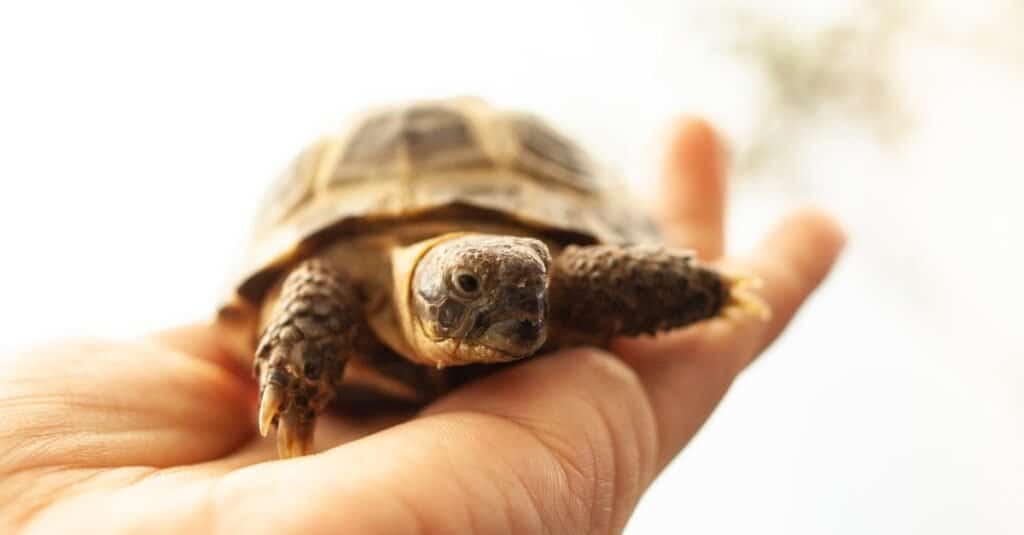
Pet tortoises eat plants, vegetables, and commercial foods.
©KOTORICHIKAPHOTO/Shutterstock.com
Tortoises are popular pets, but it is not always possible to precisely mimic the food that they would get in the wild. Nevertheless, pet owners have identified several foods that provide great nutrition for their tortoise pets.
Pet tortoises eat:
- Kale
- Collard greens
- Clover
- Mulberry leaves
- Sweet potato
- Artichoke
- Dandelions
- Bell peppers
- Squash
- Mango
- Peach
- Grapes
- Strawberries
- Commercial tortoise foods.
Each of these foods is a good option for a tortoise. The majority of their diet in the wild and in captivity comes from leafy green vegetables, but commercial food mixes will provide the tortoise with all the nutrition needed to stay healthy.
What Should Tortoises Not Eat?
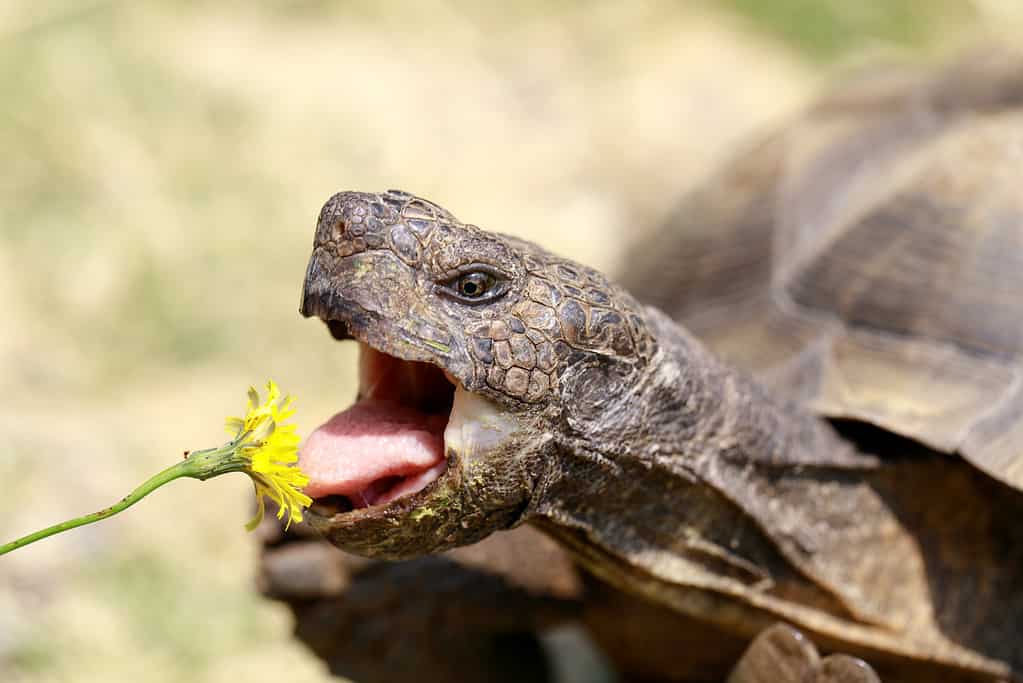
Tortoises should not be fed items that have high levels of oxalic acid which blocks the absorption of calcium.
©yhelfman/ via Getty Images
Tortoises should not be fed the following items due to their high levels of oxalic acid, which blocks the absorption of calcium and can be harmful to them:
- Broccoli
- Cauliflower
- Spinach
While tortoises may be able to tolerate small amounts of broccoli and cauliflower, it is best to avoid spinach entirely.
How Much Do Tortoises Eat?
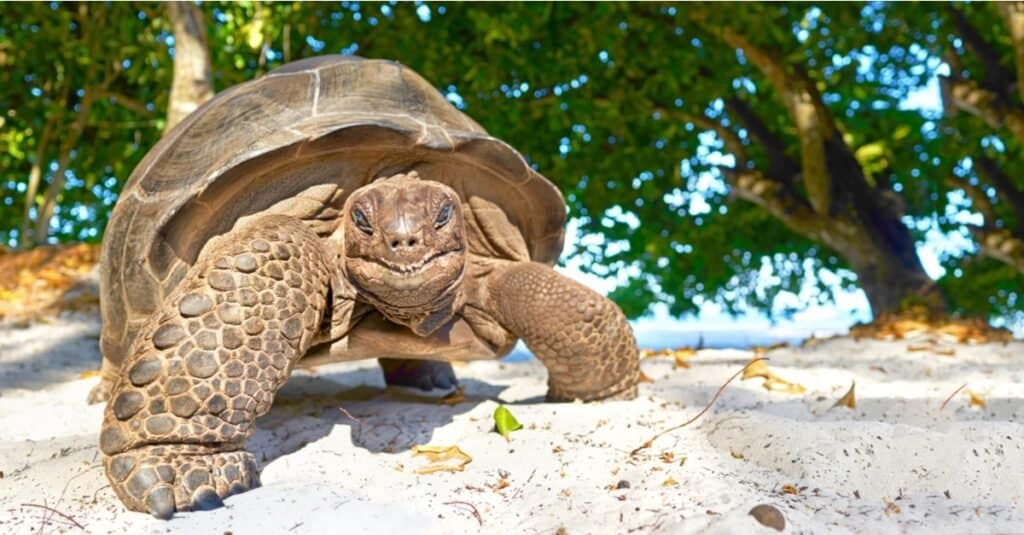
Tortoises eat a food plate as large as their shells once a day.
©Jenny Sturm/Shutterstock.com
When they are in the wild, tortoises forage for food throughout the day, so it can be difficult to track how much they eat. As pets, it is a bit easier to get an idea of how much they eat. Some keepers recommend offering food daily, while others may include occasional fasting days for adult tortoises to mimic natural foraging patterns. The ideal feeding schedule depends on the species, age, and health of the tortoise. A common and effective method for feeding pet tortoises is to offer an amount of food equivalent to the size of their shell, allowing them to graze on it throughout the day.
What Predators Eat Tortoises?
Tortoises have few defensive methods against predators. They can retract their limbs and head into their shell or hide in their burrows. They can use their beaks defensively, but doing so means they cannot protect their heads inside their shells.
Although their shell can ward off some predators, it’s not enough to save them in all cases.
Some of the most common predators of tortoises include:
- Coyote
- Fire ants
- Ravens
- Badgers
- Hawks
- Raccoons
- Foxes
- Chimpanzees
- Herons
- Snakes.
These are just a few of the common predators that prey on tortoises.
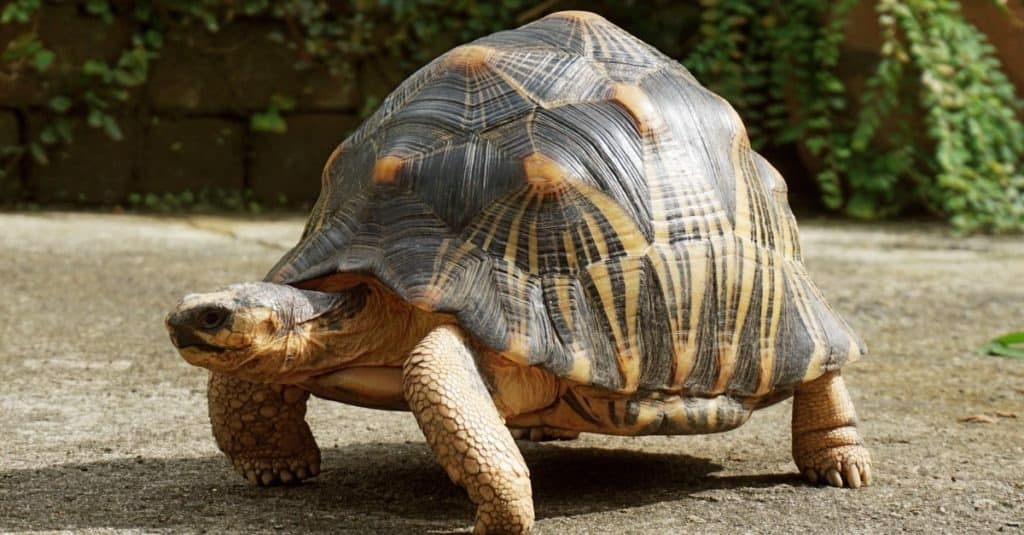
A tortoise’s shell is its best defense against predators in the wild.
©seasoning_17/Shutterstock.com