
Quick Take
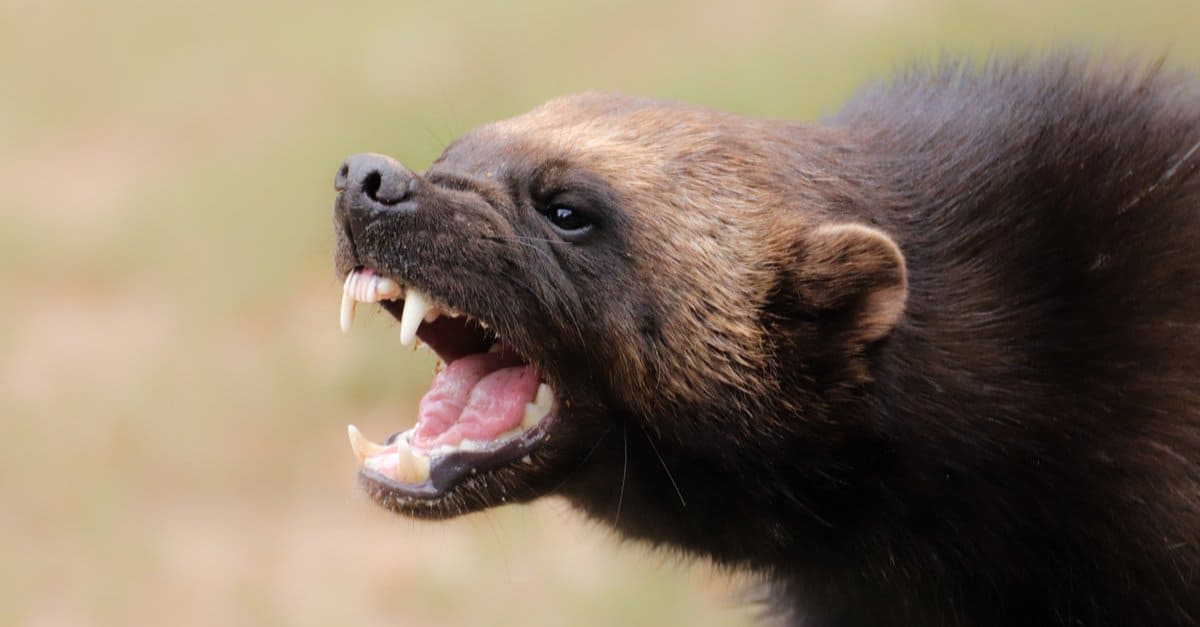
- Wolverines have 38 teeth, including incisors, canines, premolars, and molars.
- The molars in their upper jaw are rotated 90° inward to improve shearing action.
- They have powerful jaws and well-developed neck and shoulder muscles to cut through and crush frozen flesh and bones.
Wolverines (Gulo gulo) are the largest terrestrial members of the mustelid family, which includes animals such as otters, weasels, and badgers. There are two subspecies of wolverines: the Eurasian wolverine (Gulo gulo gulo), found from Scandinavia through eastern Europe and Russia to China, and the North American wolverine (Gulo gulo luscus), found in Canada, Alaska, and mountainous regions of the western continental United States. They prefer remote, high-elevation forested areas, grasslands, or tundra and are well-adapted to cold temperatures. Even their teeth have adaptations for their arctic, subarctic, and alpine habitats. Read on to learn everything you need to know about wolverine teeth.
The Wolverine Diet
Wolverines are carnivores and opportunistic scavengers. They often eat carrion left on the carcasses of animals killed by other predators. Although they measure only 31–44 inches in length and weigh around 40 pounds, they are very strong for their size. They have powerful jaws and well-developed neck and shoulder muscles that allow them to shear through and crush frozen flesh and bones.
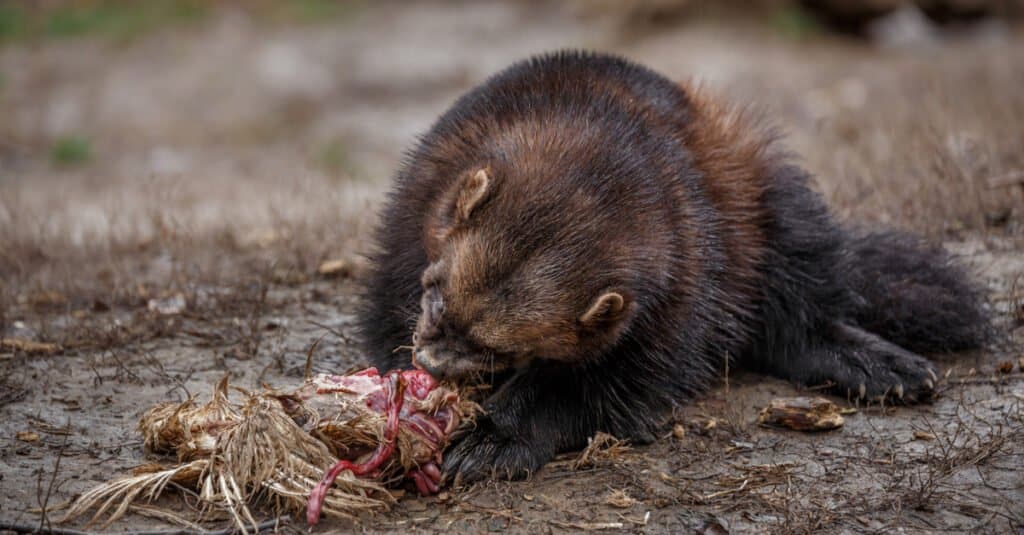
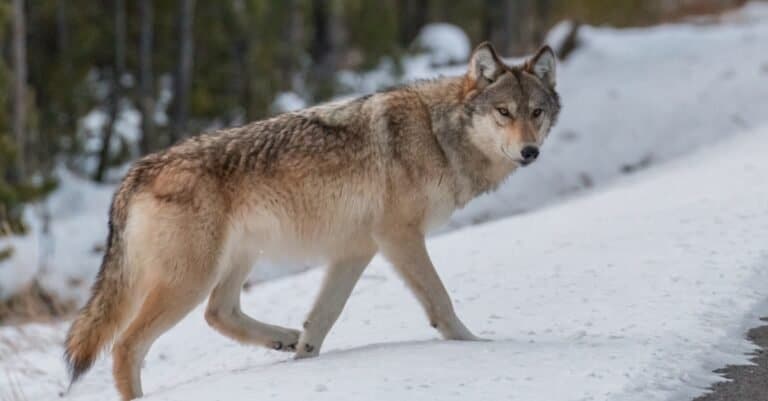
Wolverines are carnivores and scavengers that typically hunt small mammals and birds.
©Josef_Svoboda/Shutterstock.com
Their prey typically includes small and medium-sized mammals and other vertebrates such as beavers, rabbits, voles, squirrels, and birds. They occasionally take large animals such as deer, moose, Dall sheep, elk, and caribou. During the winter, they rely on scavenging from the remains of animals that died of illness or exposure or that were killed by wolves, bears, or hunters. They have also been known to steal animals killed in traps.
Adult Wolverine Teeth
Like some other mustelids, wolverines have 38 teeth. These include incisors, canines, premolars, and molars. The carnassial teeth are the first lower molar and the fourth upper premolar, which are found in many different species of carnivores. If they lose a tooth, the loss is permanent. The following paragraphs take an in-depth look at the different types of teeth and how wolverines use them.
Incisors
Wolverines have 12 incisors located at the front of their mouths. There are six on their upper jaws and six on their lower jaws, with three on each side. Incisors are used to aid in grasping and holding prey. They can also tear off smaller pieces of meat from a kill.
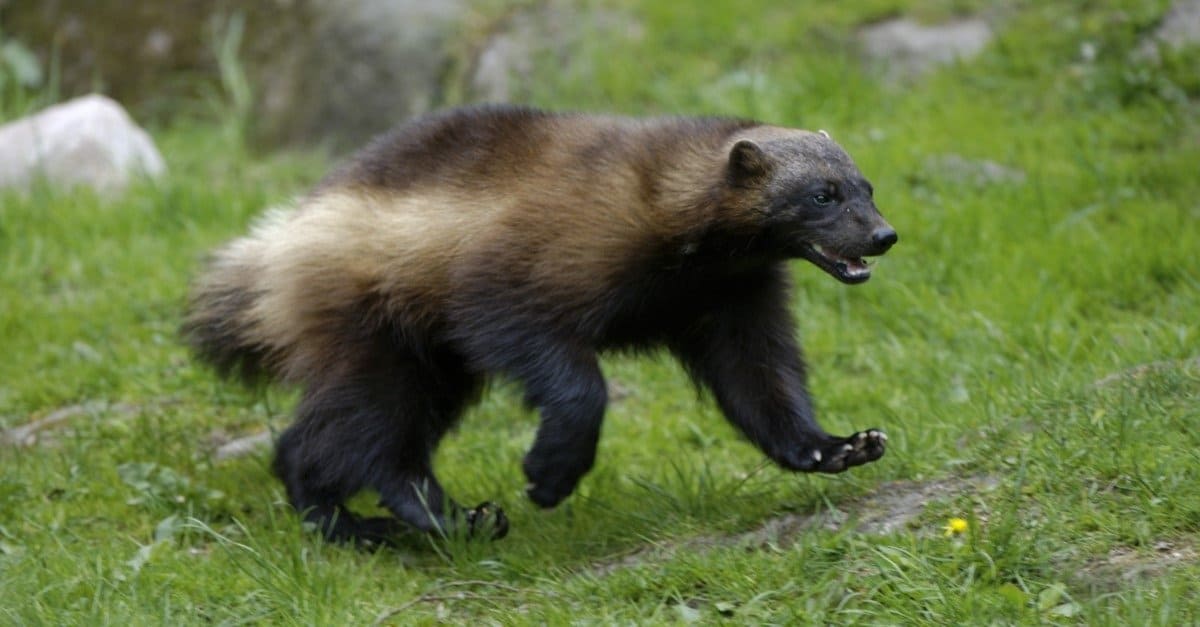
Wolverines have 38 teeth.
©Bildagentur Zoonar GmbH/Shutterstock.com
Canines
The canine teeth are used to grip and kill prey by biting the front or back of the neck and severing the neck tendons. Wolverines have four canine teeth. There are two on the top and two on the bottom, with one tooth on each side.
Premolars and Molars
Adult wolverines have 16 premolars, with four on each side of both the upper and lower jaws. They have six molars, with one on each side of the upper jaw and two on each side of the lower jaw. Like other mustelids, the molars in their upper jaw are rotated 90° inward. This improves the efficiency of the shearing action, helping them cut through tough flesh and hide. It also gives them increased power to crush and grind bone. This is an important adaptation for wolverines’ cold habitats, as it allows them to consume the meat and bones of frozen carcasses.
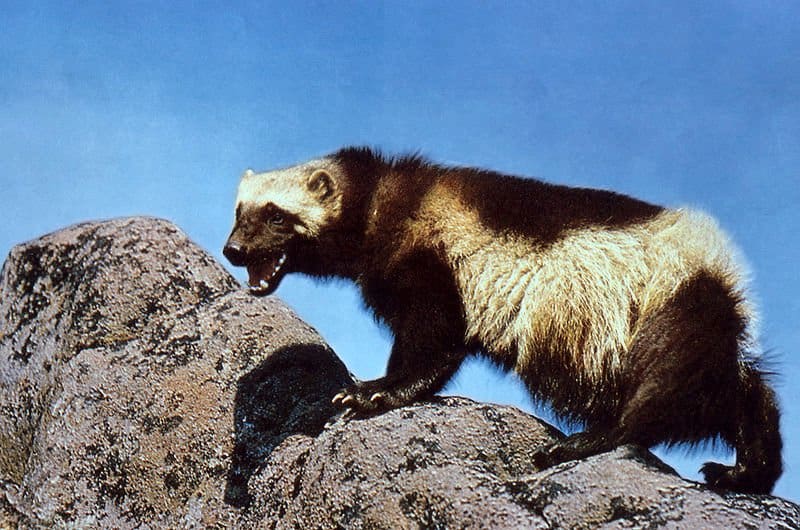
Like other mustelids, the molars in wolverines’ upper jaw are rotated 90° degrees inward.
©U.S. National Park Service/ Public Domain – Original / License
Carnassials
Most carnivorous animals have carnassials, and wolverines are no exception. As noted above, carnassials consist of the first lower molar and the fourth upper premolar. Like scissors, the upper and lower teeth slide past each other to slice through flesh.
Baby Wolverine Teeth
Baby wolverines are called kits. They are born in the spring with closed eyes, no teeth, and covered in pale-colored fur. A litter typically consists of two to three kits. They weigh less than one pound at birth but grow quickly, reaching adult size by seven months of age.
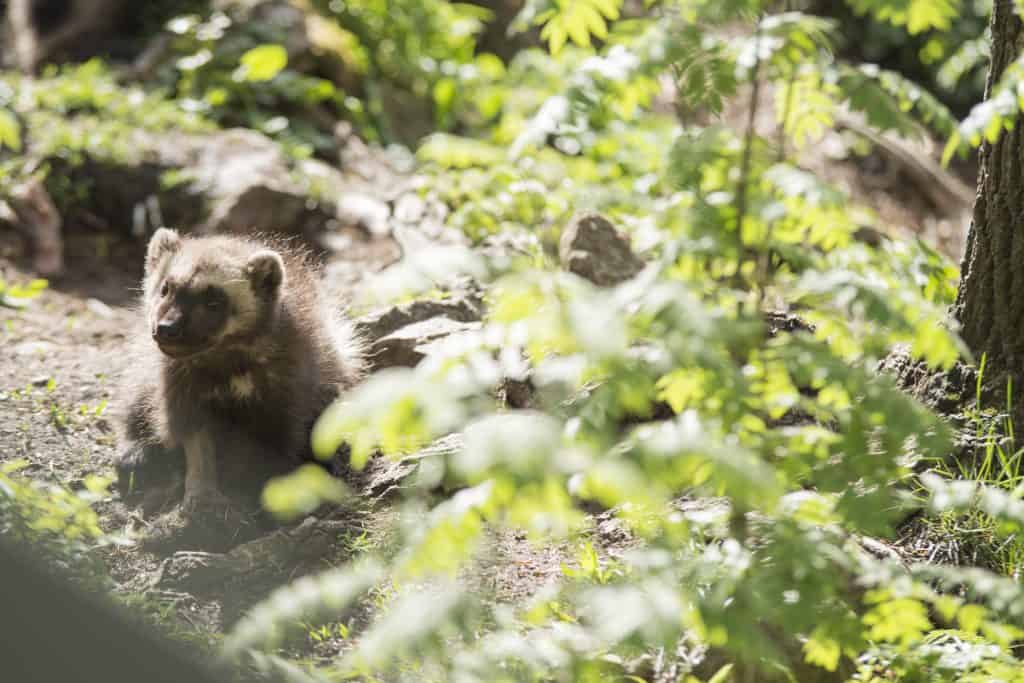
Young wolverines are weaned at around 9 to 10 weeks old.
The timeline for when baby wolverines’ teeth begin to erupt is not well-documented. However, kits are weaned around 9 to 10 weeks old, so they have enough teeth by then to eat solid food. Juvenile wolverines remain with their mothers until the fall of the year they were born, learning how to hunt and scavenge before dispersing to find their own territories.