
Quick Take
- Unrelated predators separated by millions of years keep independently inventing the same two tooth designs, and the reason why is stranger than shared ancestry. See the convergent designs →
- There's a hard physical limit on what a carnivore's teeth can do, a fact scientists just proved by 3D-printing fangs and stabbing them into food. See the 3D-printed proof →
- Some ancient predators evolved such specialized teeth that when their world changed, those teeth became a death sentence. Meet the over-specialized victims →
- The one tooth type that seems to solve everything actually costs more than it gives, a tradeoff that reshaped the entire history of mammal diversity. Explore the slicing trade-off →
Evolution is not perfect. If anything, the evolutionary process favors traits that are simply adequate for survival. This is perhaps nowhere more evident than in teeth. They grow, they fall out, and they decay. The fact that teeth are often organized as rows of molars has led some researchers to propose that teeth evolved just once in a common ancestor of jawed vertebrates. A study just published in Nature shows that carnivores in particular can grow teeth that either slice or crush, but not both. As such, this evolutionary trade-off has continually produced the same few tooth structures in unrelated predators.
The first appearance of tooth-like arrangements likely occurred in the posterior pharynx of jawless fishes over 500 million years ago. Since then, teeth moved onto oral jaws but didn’t change much structurally. While vertebrates eventually grew more specialized teeth, like tribosphenic molars, it came at a price. Teeth effective at slicing are not so great for crushing. This conflict of adaptation is at the heart of the new research about carnivore teeth. Let’s learn about this new study and what it reveals about the evolutionary trade-off shaping tooth form and function.
Grind or Slice
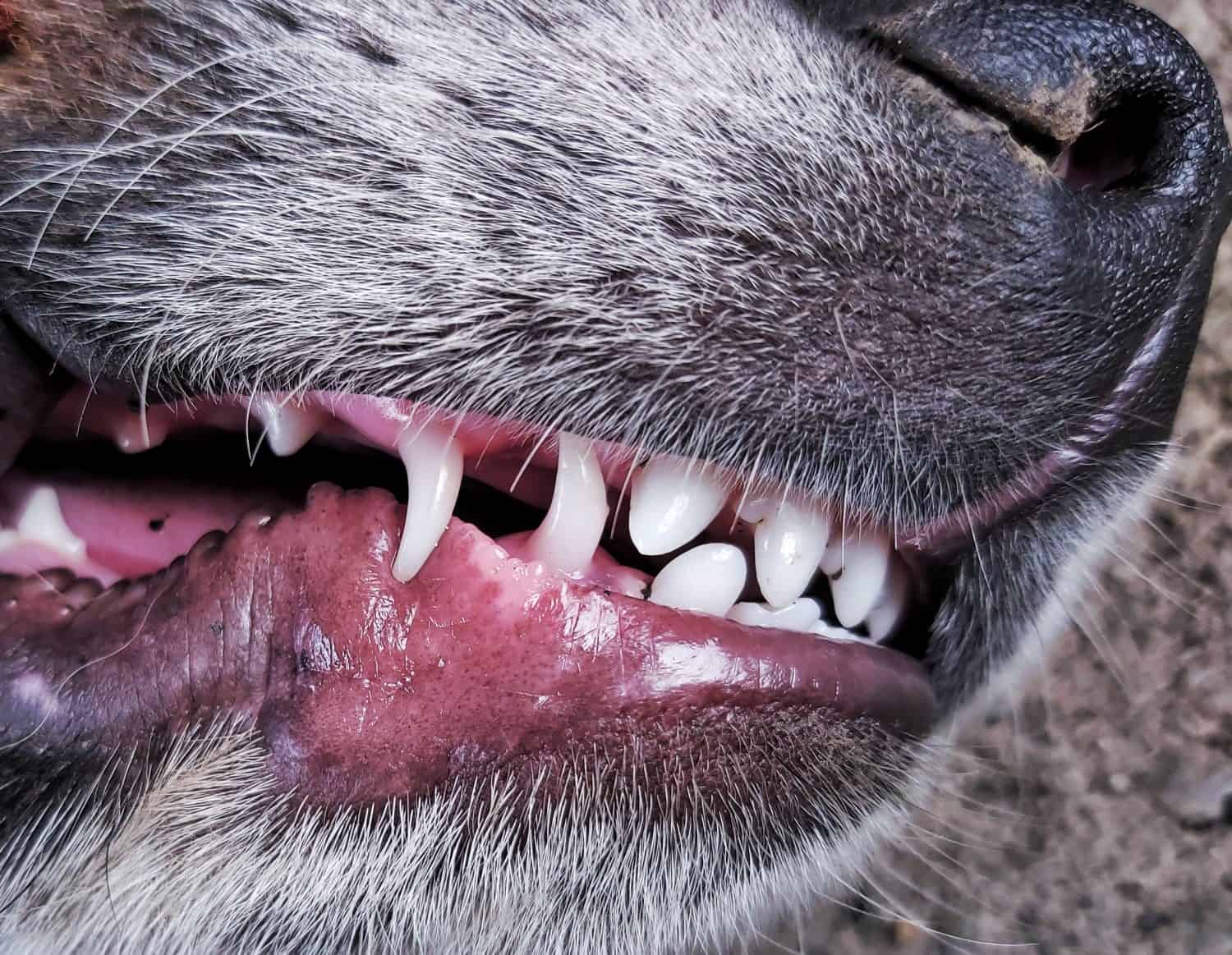
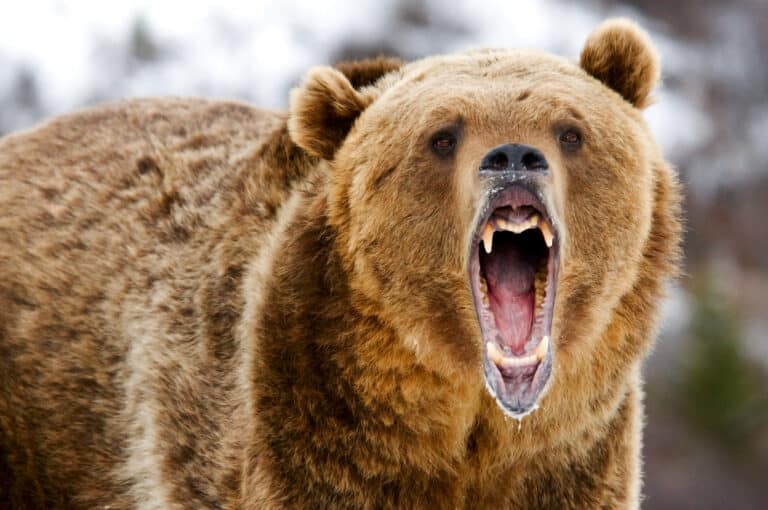
Dogs and bears have more teeth designed for grinding, which reflects in their more varied diets.
©Bogdan Vacarciuc/Shutterstock.com
One reason mammals have been so successful on Earth is specialized teeth. Some types of teeth cut, others grind. One specialized type, the tribosphenic molar, can do both at once. Such variety allowed mammals to expand their diets to an incredible degree. In turn, this variation in diet allowed mammals to diversify into thousands of unique species.
But there is no free lunch in this world, and this is evident in the structure of vertebrate teeth. If one type of tooth excels at slicing, it disappoints at crushing. This conflict led Narimane Chatar, a paleontologist at the University of California, Berkeley, to investigate why this trade-off exists. She and her team studied this tension in tooth function across the evolution of carnivores. This involved both examination of real teeth and exertion tests.
Tooth Convergence
To establish a baseline, Chatar and her colleagues measured the physical form of the carnassial, a lower slicing tooth found in 250 living and extinct carnivore species. It plays an integral role in a carnivore’s ability to cut meat, making it a good indicator of the animal’s diet. The team plotted the form of each tooth, which yielded surprising results. Two dental designs kept popping up: a narrow, knife-like tooth found in cats and other pure carnivores, and the other was a broader, grinding tooth found in more versatile eaters like dogs and bears.
These patterns point to convergent evolution, in which unrelated species independently arrive at the same solutions to survival challenges. Cats are unrelated to bears or hyenas, yet all of these creatures keep arriving at the same dental structures, whether living or extinct.
What makes the result striking is that these are not close relatives following a shared blueprint. Cats, dogs, bears, and hyenas, along with their extinct counterparts, arrived at these forms independently, again and again. Furthermore, the research team found that the gaps between the two tooth designs are narrow. Only a small change in tooth growth can be enough to push a species toward a different dental form.
Physical Tests
From there, researchers tested precisely how poorly one type of tooth performed for a specific task. They created exact replicas of each tooth form, printed 3D models of them, and pressed them into materials that stood in for food. The results confirmed what the researchers suspected: fewer than one in a hundred species could perform well at both slicing and crushing food, and every tooth that was good at one task was poor at the other. Modeling suggests that the knife-like teeth of pure carnivores occupy a specific region of the dental arcade, and the physical tests confirmed this. It seems that natural selection has repeatedly arrived at the same conclusion regarding eating and efficiency.
Although this test may seem redundant, it is actually the first time the conflict between different dental functions has been measured using physical models.
Evolve or Perish
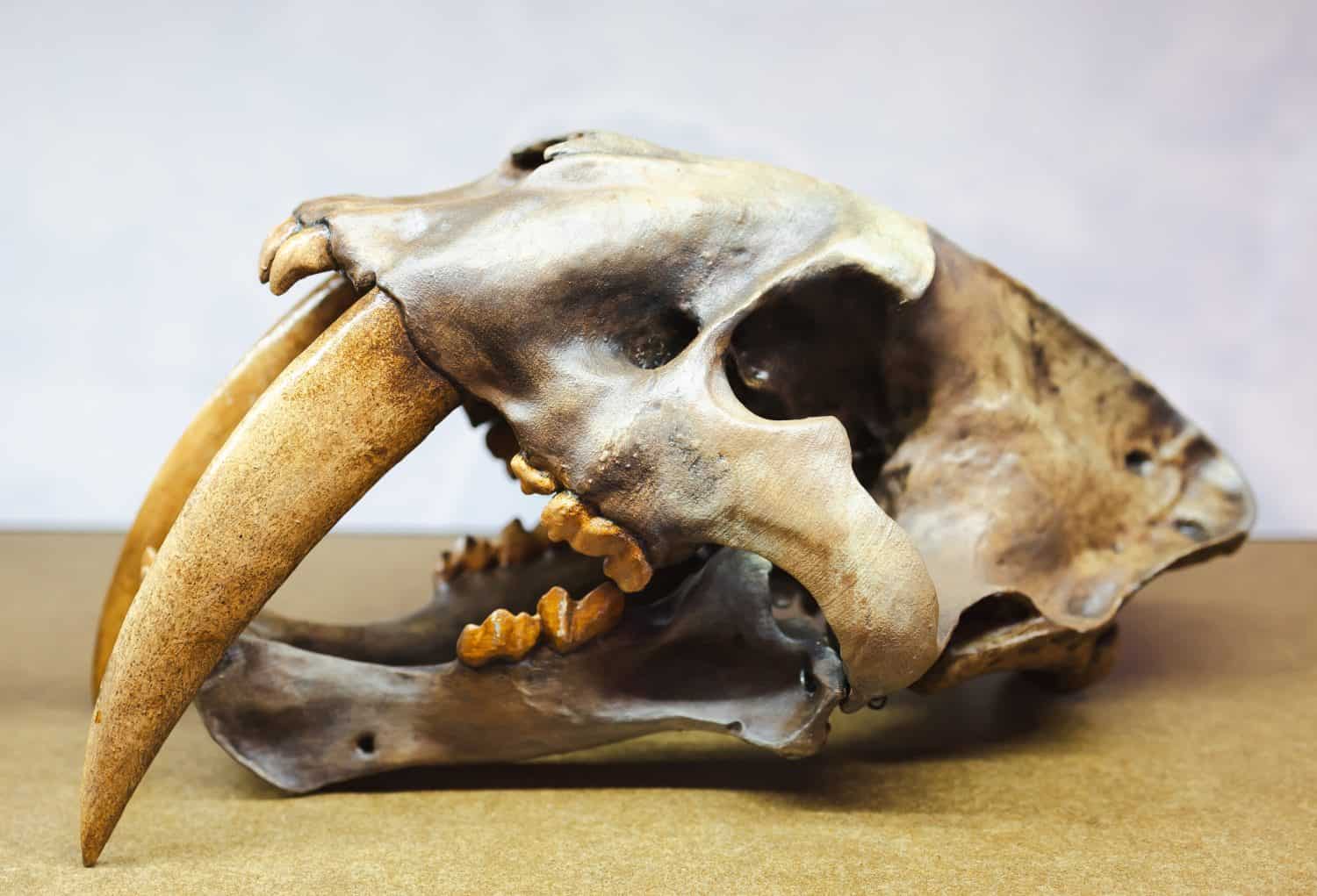
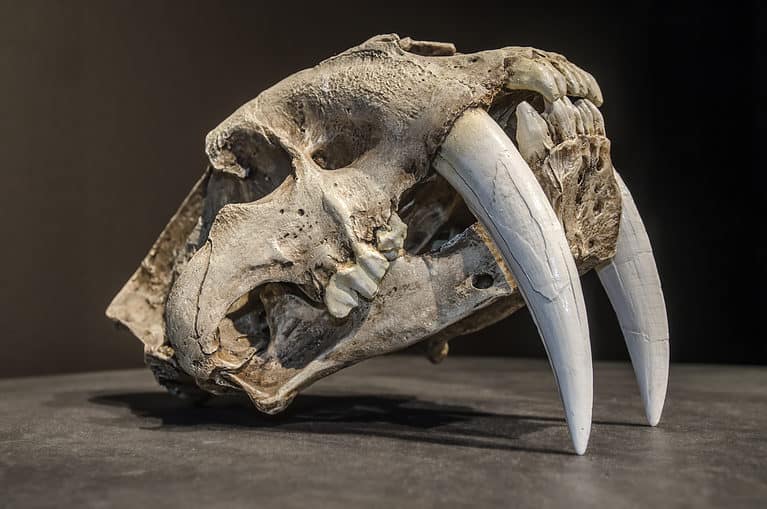
Extinct creodonts like saber-toothed cats likely went extinct because conditions changed but their teeth couldn’t.
©Sarbinaz/Shutterstock.com
When a species selects for one type of tooth over another, it gives up the alternative completely. It doesn’t seem able to reverse the process, either. If specialized predators evolve in an increasingly narrow direction, they tend to die out.
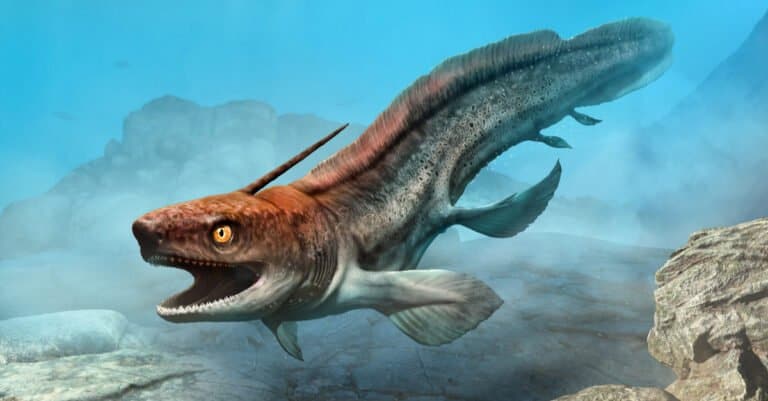
Once a lineage slides toward the pure-slicing extreme, it gives up the grinding surfaces that would let it fall back on other foods when prey runs short. Take creodonts, an extinct form of meat-eating mammals. Early in their history, they adapted almost all of their molars into cutting teeth instead. When conditions on Earth changed, they couldn’t devolve their teeth back into grinders. Without this flexibility, they went extinct.
Conversely, modern carnivores likely survived because they retain greater dental flexibility. Thanks to this new research, we now have the first direct physical evidence of this evolutionary tension.