
Quick Take
- Wombats have a total of 24 teeth that never stop growing.
- Their teeth differ from other marsupials, but they are very similar to those of rodents.
- Wombats have specialized teeth due to their grazing diet, which wears down their teeth.
- In managed care, wombats can have teeth issues because it is difficult to replicate their natural behaviors and diet.
Wombats are stocky, short-legged marsupials found only in Australia, including the island of Tasmania. There are three species of wombats, including the common, or bare-nosed, wombat (Vombatus ursinus), the northern hairy-nosed wombat (Lasiorhinus krefftii), and the southern hairy-nosed wombat (Lasiorhinus latifrons). Their dentition, which is the number, type, and arrangement of the teeth, is unlike that of other marsupials, such as koalas and kangaroos. There are also a few differences in dentition among wombat species. Read on to find out more about the unique teeth of the wombat.
How Are Wombat Teeth Unique?
Wombat teeth may differ from those of other marsupials, but they are very similar to those of rodents. Wombats have a total of 24 teeth, including incisors, premolars, and molars that never stop growing. They have open roots, which means the pulp chamber containing the nerves, blood vessels, and connective tissue remains open at the base of their teeth throughout their lives. Wombats have these specialized teeth due to their grazing diet, which naturally wears down their teeth. Learn more about the different types of teeth wombats have in the sections below.
Incisors
Wombats have one pair of upper incisors and one pair of lower incisors to cut and gnaw on coarse vegetation. Like rodents, their incisors only have enamel on the front and sides. Because the back of their incisors lacks protective enamel, it wears down more quickly, creating a sharp, chisel-like edge at the front of the teeth. In common wombats, the lower incisors are low and wide, tapering at the base and becoming broader at the end. In contrast, hairy-nosed wombats have lower incisors that are higher and narrower.
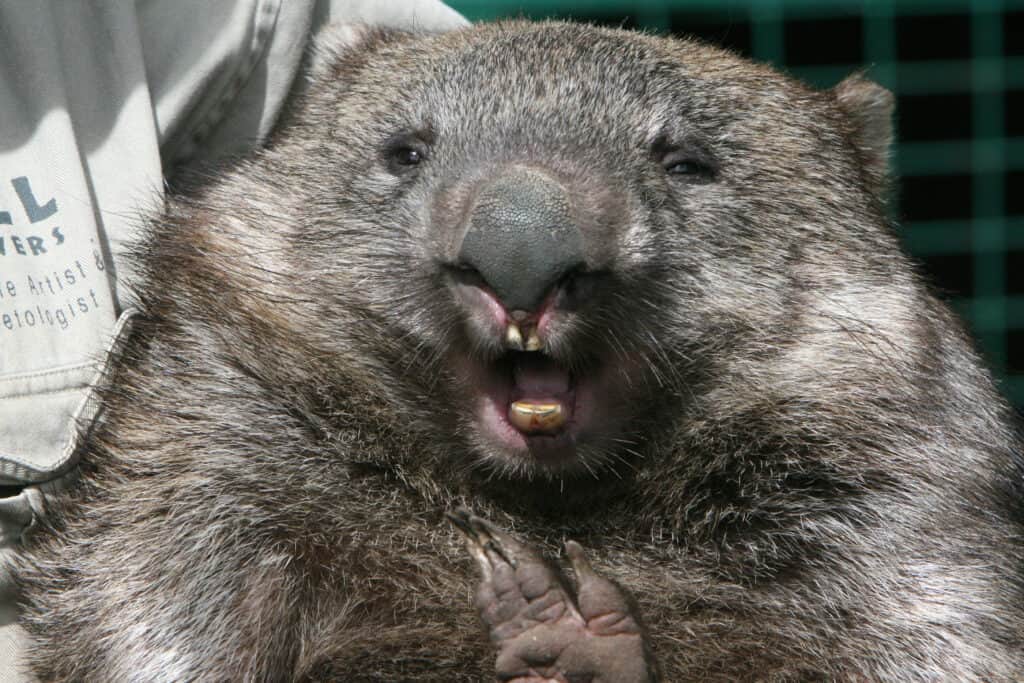
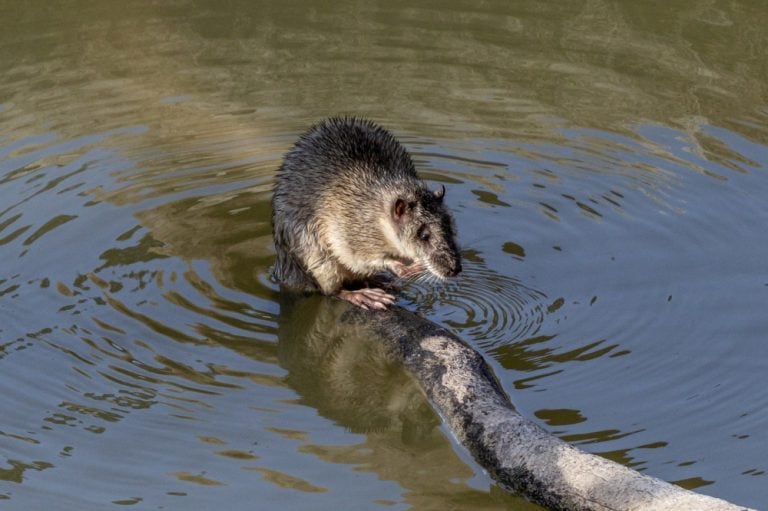
Like rodents, wombats have teeth that never stop growing.
©Smithy55/Shutterstock.com
Premolars
Wombats lack canine teeth in both their upper and lower jaws, so there is a large space between their incisors and premolars, called a diastema. Common wombats have a narrower palate between the first molars, while hairy-nosed wombats have a wider palate. They have one premolar on each side of the upper and lower jaws. The premolars work with the molars to process tough, fibrous vegetation.
Molars
Wombats have 16 hypsodont molars for processing abrasive vegetation. This means their molars are high-crowned and have enamel that extends past the gum line. On each side of their mouths, they have four molars in the upper jaw and four in the lower jaw. When they chew, the lower jaw shifts up and sideways, allowing the high enamel ridges of their molars to meet and cut through grass stems. Wombats also have strong muscles for chewing that generate a high bite force, so they can easily shear and grind down plant material.
Newborn Wombat Teeth
Wombats are mammals, so they give birth to live babies. However, as marsupials, the joeys are born blind and hairless and only weigh 0.25 ounces. As soon as they are born, they crawl into their mother’s backward-facing pouch and attach to one of two teats. Joeys remain in the pouch for the next 9 to 10 months while they finish developing.
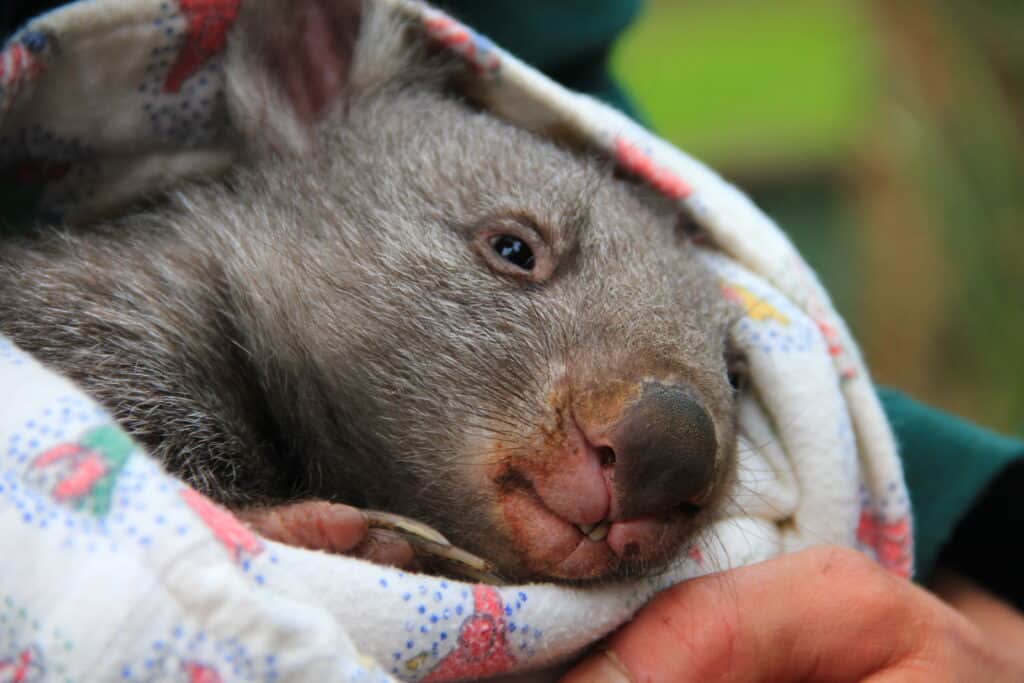
Baby wombats begin to get their teeth at around 5 months of age.
©Flash-ka/Shutterstock.com
Baby wombats are not born with teeth. Their first teeth are the lower incisors, which begin to erupt when the joey is around 5 months old. By 6 months, the first molars are visible and the upper incisors are emerging. At around 7 months of age, their premolars and second molars start erupting. Joeys begin to eat solid food at 8 months old and leave the pouch for good by 10 months old. However, they will typically not be fully weaned until they are between 12 and 15 months of age.
Dental Care in Wombats
As wombats mature, their teeth increase in both length and width, which can result in the lengthening of the entire row of teeth. Their primary foods include grasses, forbs, roots, and even tree bark. They particularly favor green grasses and shoots. These tough plant materials contain silica, which can help wear down their teeth and keep them from growing too long. In drier weather, they also ingest soil while foraging, which adds to tooth wear.
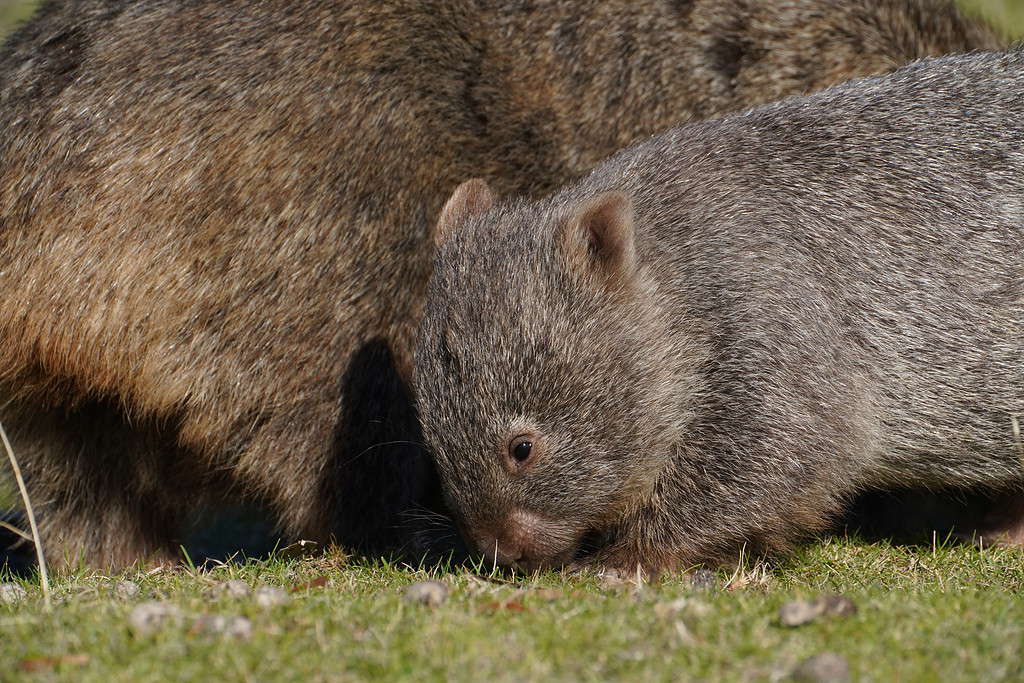
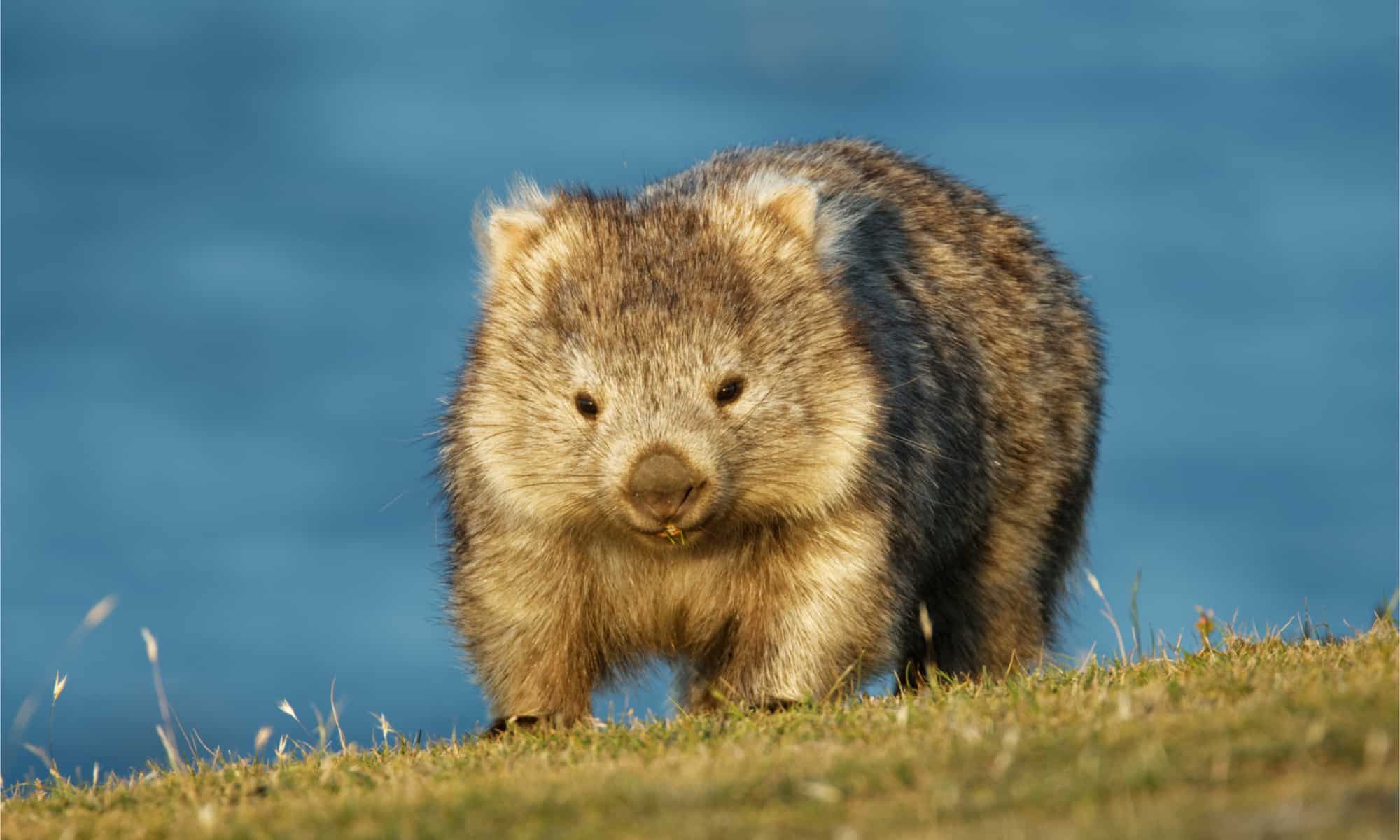
Wombats in managed care can have teeth issues because it is difficult to replicate their natural behaviors and diet.
©LKR Photography/iStock via Getty Images
However, for wombats in managed care situations, it can be difficult to replicate their natural behaviors and diet, which leads to dental and other health problems. If wombats do not eat enough fibrous food or do not chew their food properly, their teeth can become misaligned or grow too long, making it difficult for them to eat and resulting in weight loss. Their molars can stab into their cheeks and tongues, causing lesions and pain while eating. Their teeth may also become infected or develop abscesses. Fortunately, veterinarians have treatments that can help. They have special drill bits to manually grind down overgrown teeth. In severe cases, veterinarians can perform a surgery called commissurotomy, which widens the wombat’s small mouth and provides better access to treat overgrown teeth.