

The Yorkshire terrier is a very popular dog breed, and it has captured the hearts of millions since it was developed in the nineteenth century. The Yorkie, as it has come to be known, has constantly been a favorite of the fashionable elite. Did you know that there are seven different types of Yorkie breeds? We are going to take a quick look at the various types of Yorkies so you can find your favorite!
1. Original Yorkshire Terrier
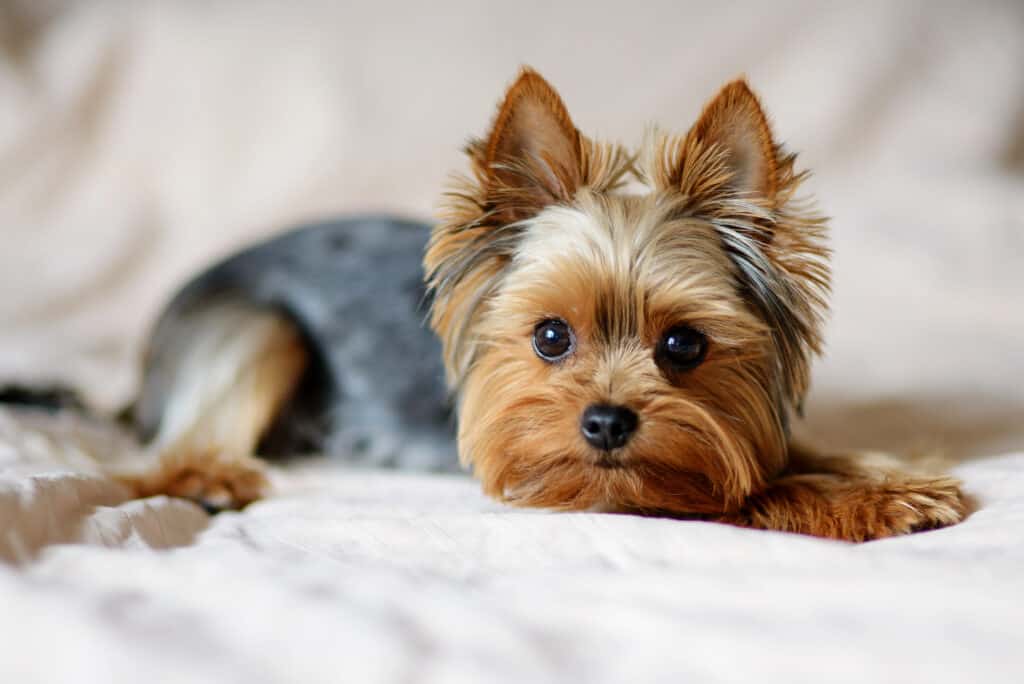
Despite being dainty, Yorkshire terriers are known for being feisty and bold.
©Anna Vasiljeva/Shutterstock.com
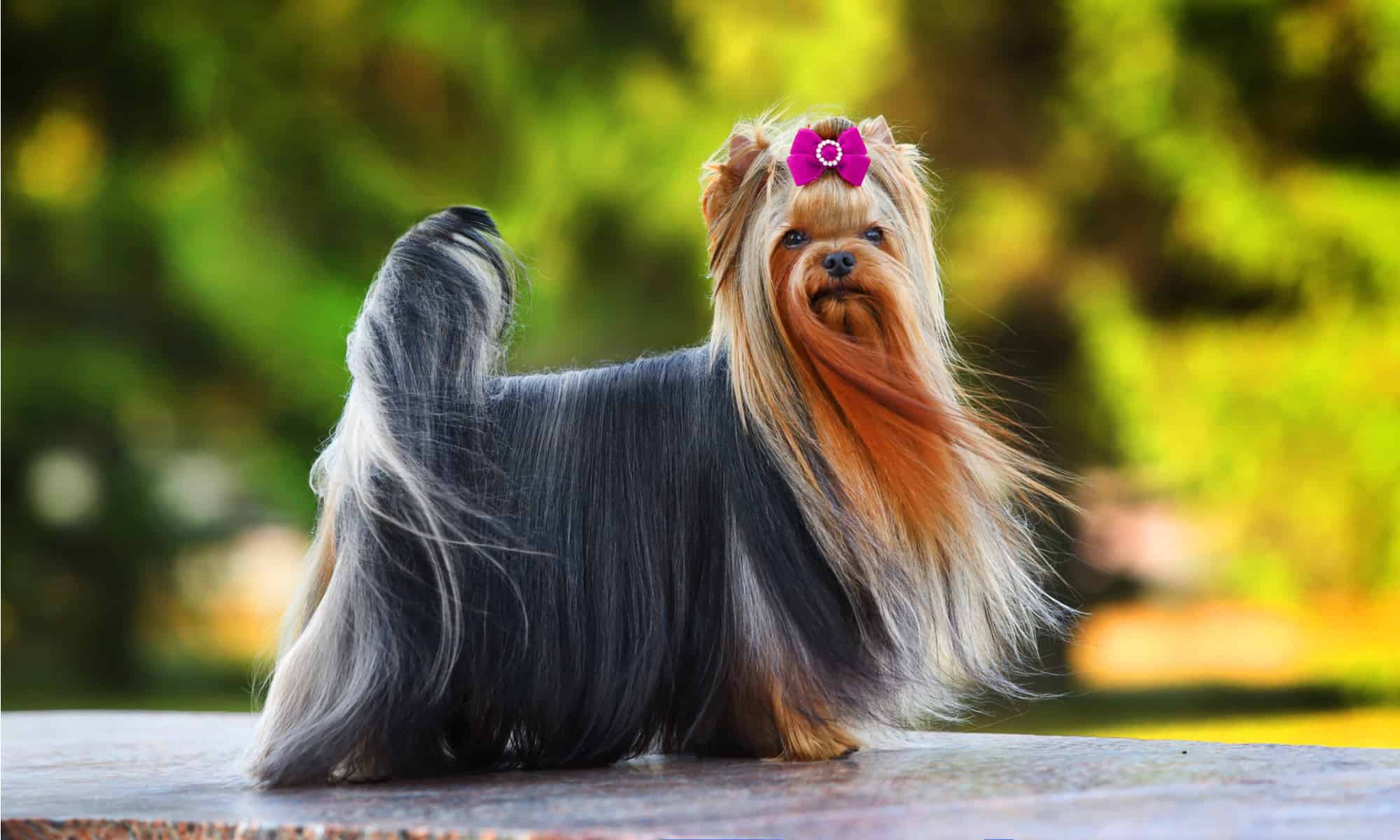
The standard Yorkshire terrier has many records for being one of the smallest dogs in the world. They are known for being playful, attention-seeking dogs that are always looking forward to the next adventure. Perhaps the most obvious feature of these dogs is that they come in black, gold, tan, and blue tones. The combinations are blue and gold, black and tan, blue and tan, and black and gold.
Their fur can be quite long and needs grooming, making it possible to find long-haired and short-haired variants of the animal at competitions. When primped to perfection, the Yorkie is a striking sight to behold. Aside from being beautiful creatures, they are known for having a great number of wonderful features. For example, these dogs are hypoallergenic because they shed so infrequently. While they make great companions, Yorkies can become lonely quite easily. They do well with other pets in their home, and that is true of most breeds of Yorkies!
2. Black Yorkies
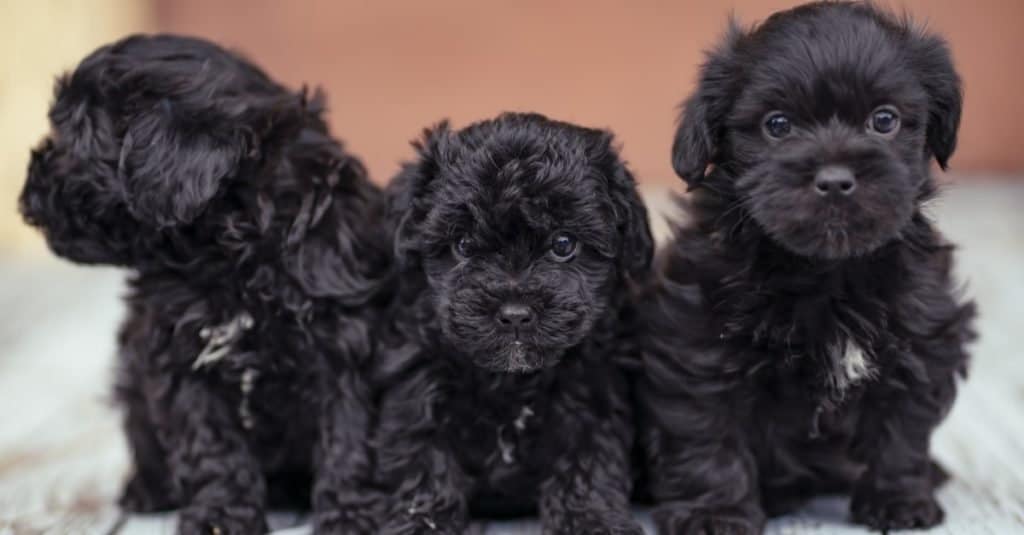
Black Yorkies are not purebred, but they are adorable.
©Marion Vaughn III/Shutterstock.com
Although you may be accustomed to seeing a Yorkie in the blue and gold, black and tan, blue and tan, or black and gold varieties, the truth is that they can come in all black. Black Yorkies are exceedingly rare, and they are certainly not purebred when they have an all-black appearance.
The types of dogs they can be bred with to achieve an all-black look vary, but you can be certain that you can’t trace their lineage back solely to Yorkies. As a result, they can have a unique demeanor compared to purebred Yorkies. The chances are that they will still make an adorable partner for you.
3. Designer Yorkies or Yorkie Mixes
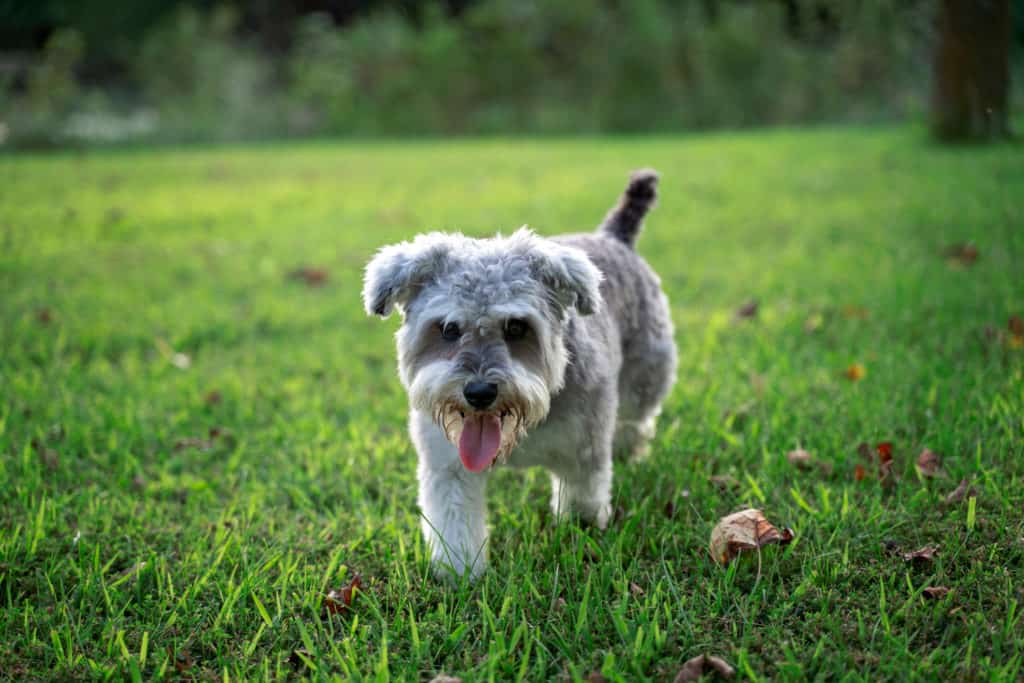
A cute Snorkie puppy enjoys a day outside.
©Kristin Chiasson/Shutterstock.com
Yorkies are beautiful animals that many people want to mix with other dogs. These are called Designer Yorkies or Yorkie Mixes. For example, someone may want to breed a Yorkie with a fox terrier, thereby creating a “Torkie.”
Chihuahuas and bichon frisés are other popular animals to breed with the Yorkie, creating designer dogs. Interestingly, it is often believed that the Designer Yorkies take on the temperament of the dog that is mixed with the Yorkie. That means your Chorkie would likely be a rather noisy, tiny pup.
4. Biewer Yorkshire Terrier
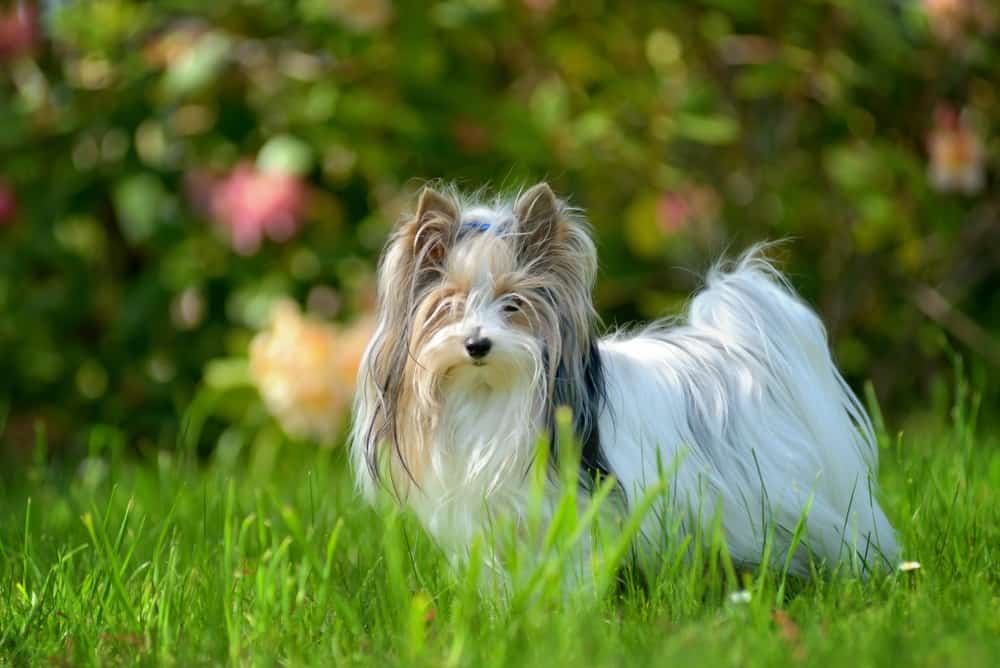
The Biewer terrier is descended from the Yorkshire terrier.
©Radek Havlicek/Shutterstock.com
The Biewer terrier (pronounced like Beaver) is a breed of Yorkie that has been developed from Yorkshire terriers that had a recessive piebald gene, creating the unique coloring of the Biewer. This color includes a fair amount of white coloration in addition to the standard Yorkie colors.
5. Parti Yorkies
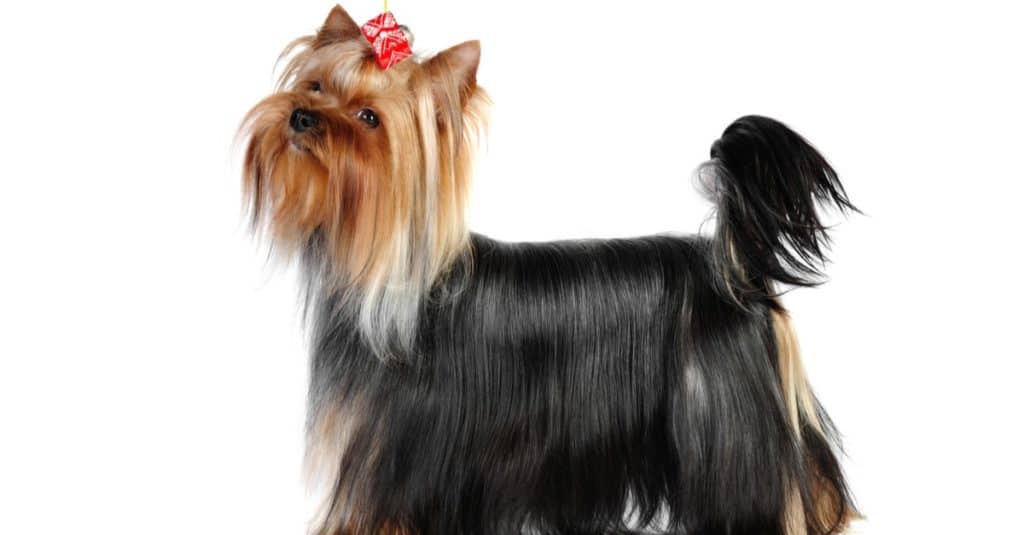
Parti Yorkies have three colors in their fur.
©Julia Remezova/Shutterstock.com
As we mentioned when discussing the original Yorkie breed, they have two-color coats that come in a few varieties. The colors include blue and gold, black and tan, blue and tan, and black and gold. The major difference with Parti Yorkies is that they can have three colors in their coat.
These dogs stand out for their unique color combinations. Even their name sounds fun! Don’t worry, though—they are just as playful as the standard breed and have a similar temperament.
6. Mismarked Yorkies
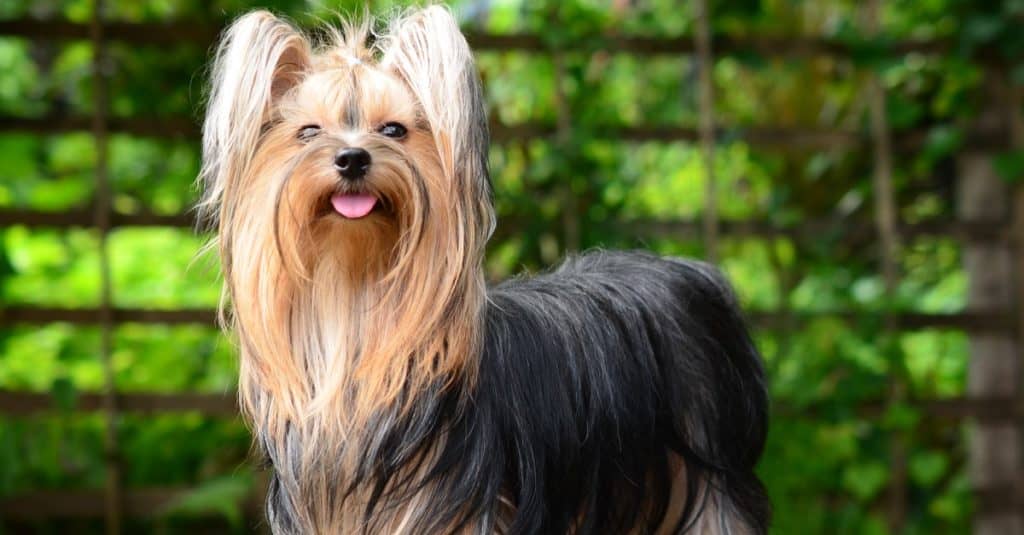
Yorkshire terriers with strange markings are called “mismarked” Yorkies
©Mr. SUTTIPON YAKHAM/Shutterstock.com
Although the traditional Yorkie has a two-color coat, not everyone wants a Yorkie that looks the same, and that is quite fortunate. Mismarked Yorkies are not a distinct breed of Yorkie, but rather one of the dogs that have atypical colorations and markings on their bodies. These “mismarkings” happen quite frequently, so it’s not altogether unusual to encounter one of these dogs.
7. Teacup Yorkies
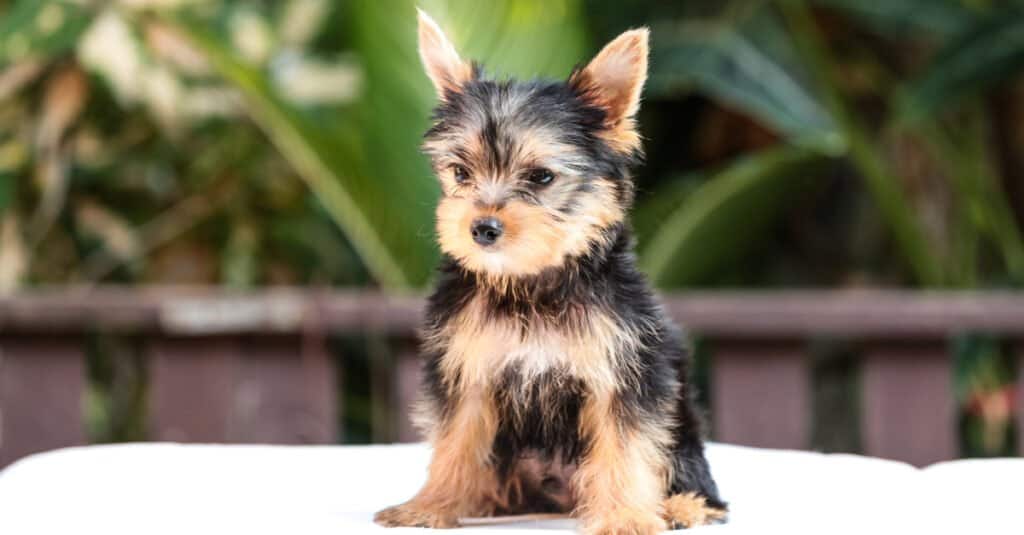
Teacup breeds tend to have shorter lifespans due to breeding.
©DOPTOON/Shutterstock.com
Yorkies are known for being incredibly small dogs. However, you can get an even smaller version of the Yorkie that is called a teacup Yorkie. Teacup Yorkies reach a maximum height of seven inches at the shoulder and typically weigh four to five pounds, with some reaching up to seven pounds.
These are incredibly small dogs that are purebred and capable of fitting in a handbag, so you can safely take them on journeys in most city subways. The only downside is that they are somewhat vulnerable to health issues. You need to take care of your little pup to ensure it has the best health outcomes possible.
History and Origins
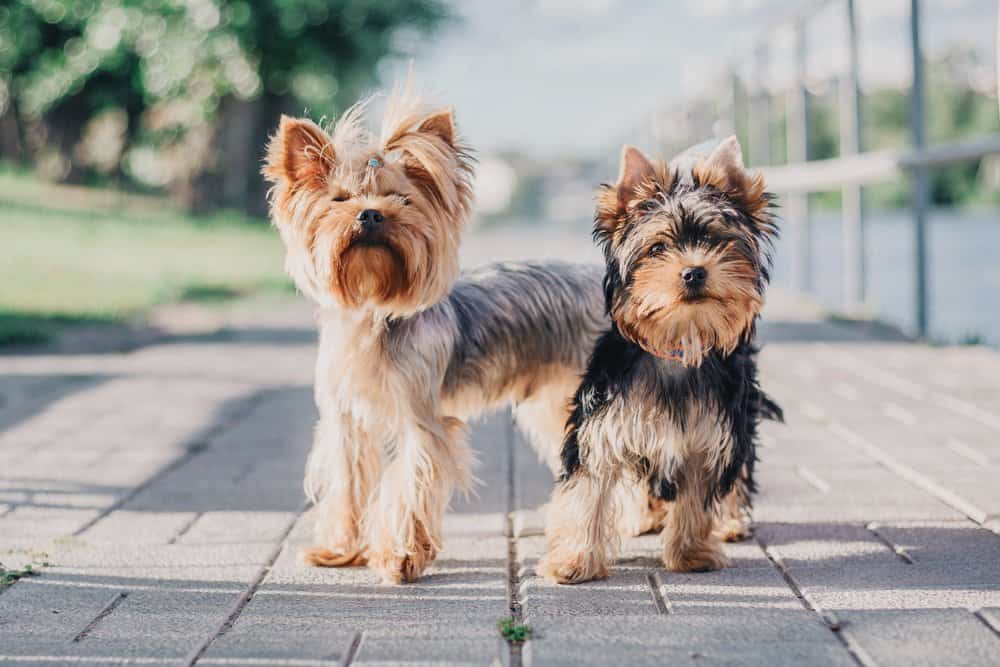
Yorkshire terriers originated from Scottish weavers who had moved to England to work in textile mills.
©OlgaOvcharenko/Shutterstock.com
The Yorkshire terrier was bred in the mid-1800s in Northern England. In the late Victorian era, it became a popular pet for affluent English women, but initially, it had a much lower-class background.
It is believed that the Yorkie breed originated from weavers who had migrated from Scotland to the north of England, bringing along their Scottish terriers with them. There is a difference between the Scottish terriers, which are terriers from Scotland, and the specific breed known as the Scottish Terrier. The genetic makeup of the Yorkie includes several extinct breeds of Scottish terriers, as well as other existing terrier breeds such as the Skye and Dandie Dinmont. It is suggested that Maltese blood has also been included in the Yorkie’s genes.
The weavers from Scotland were proud of their small and tough little dogs, which were able to fit in the tight spaces of the textile mills to hunt rodents. People made jokes about the Yorkie’s long, silky coat, suggesting that its delicate fur was made by the looms. The area where they originated was a hub for both mining and fabric production, and many Yorkies were used in coal mines to exterminate pests.
In 1886, the Kennel Club (England) officially acknowledged the Yorkie breed, which consequently gained recognition and prestige with the fashionable elite. The size of Yorkies was reduced to better suit their new purpose as small, lovable lapdogs. The first Yorkie to be documented in America was a female called Belle, recorded by the AKC in 1885.
Lifespan of a Yorkie
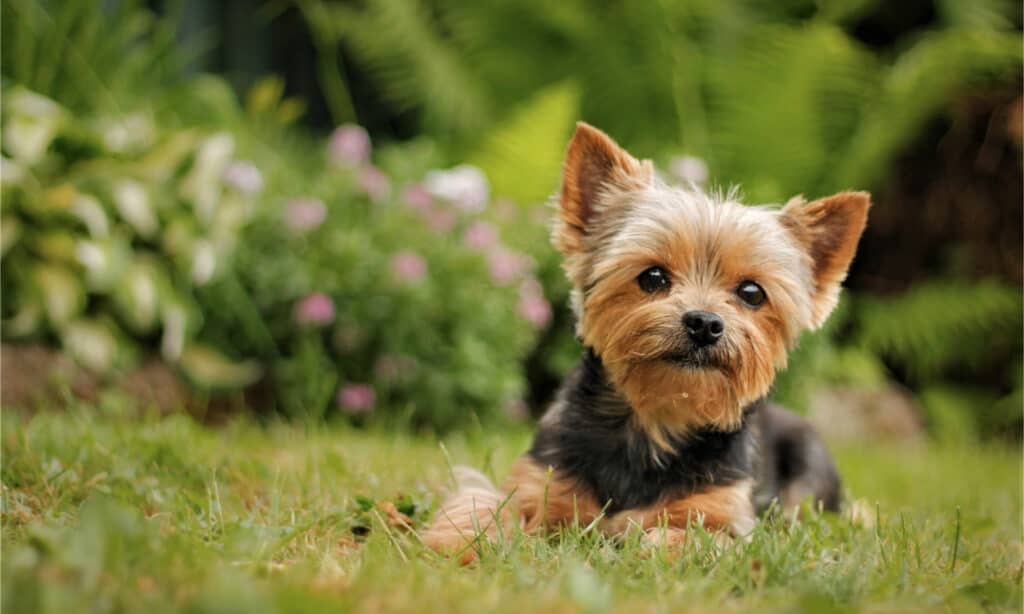
Yorkshire terriers can live for 15 years.
©Shllabadibum Bubidibam/Shutterstock.com
The average lifespan of a healthy Yorkshire terrier is 12 to 15 years. However, some may live much longer depending on genetics and luck. Good nutrition, exercise, and regular veterinary visits also play an important role in ensuring that your pup has a long life full of activity and fun! With proper care, these lovable pooches can easily outlive their expected lifetime by several years or more.
Final Thoughts
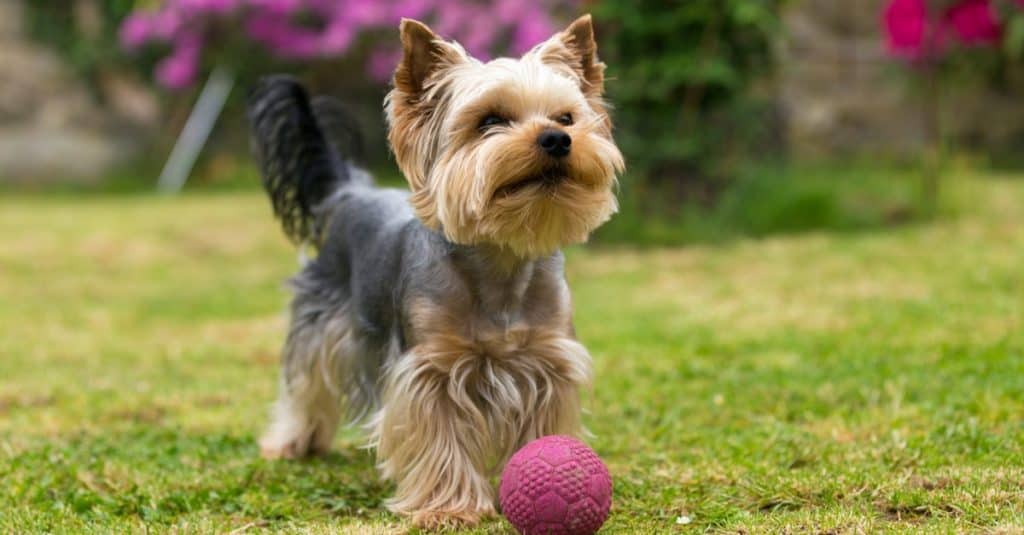
Yorkshire Terriers love playing with their owners.
©Artush/Shutterstock.com
Yorkies are loving animals that have a lot to offer in terms of their companionship. They are very small dogs, which makes them great for people who want a pet but lack a ton of space. These dogs are comfortable in just about any home where they can play with their owner. They can also live surprisingly long lives, which makes them ideal companions.
These dogs are frequently members of contests and dog shows because they are purebred animals. However, they have many gorgeous offshoots that are not purebred, many of which we have listed here. Whether you get a black Yorkie or a Yorkie mixed with another dog, you’re getting a lovely pet that will value your company and make you feel loved. Now that you know what kind of Yorkies are out there, you can easily choose the one for you!