
Quick Take
- The tapeworm can silently grow inside a human body for up to 15 years before revealing itself, and what it does during that time is deeply unsettling. See the 15-year timeline →
- Your dog's instinct to chase something in the backyard could make them a vector for spreading this parasite, not just catching it. How dogs spread the parasite →
- Most people assume coyote contact is how you'd catch this tapeworm, but the actual transmission route is far more ordinary. The real transmission route →
- This parasite quietly established itself across multiple U.S. states before anyone living there knew to look for it, and the Pacific Northwest is just the latest place where that has happened. See the Puget Sound findings →
A parasitic tapeworm has been spreading across the United States over the past 15 years. It has now been identified in the Pacific Northwest, making coyotes a public health concern due to their role as carriers.
Coyotes Are Carrying Parasitic Tapeworms
Two decades ago, a parasitic tapeworm capable of creating cysts within the body without causing symptoms for years was something of a rarity in the United States. Now, not only is the parasitic tapeworm common, but it is also spreading.
According to a new study published in PLOS Neglected Tropical Diseases, Echinococcus multilocularis, a parasitic tapeworm, has been located for the first time in the Pacific Northwest. The carriers are coyotes, although foxes can also serve as hosts for the tapeworm.
Researchers from the University of Washington followed 100 coyotes in Puget Sound. Of the 100, 37 were found to be carriers of Echinococcus multilocularis. This is concerning, according to the lead author of the study and recent University of Washington graduate, Yasmine Hentati, for a multitude of reasons.
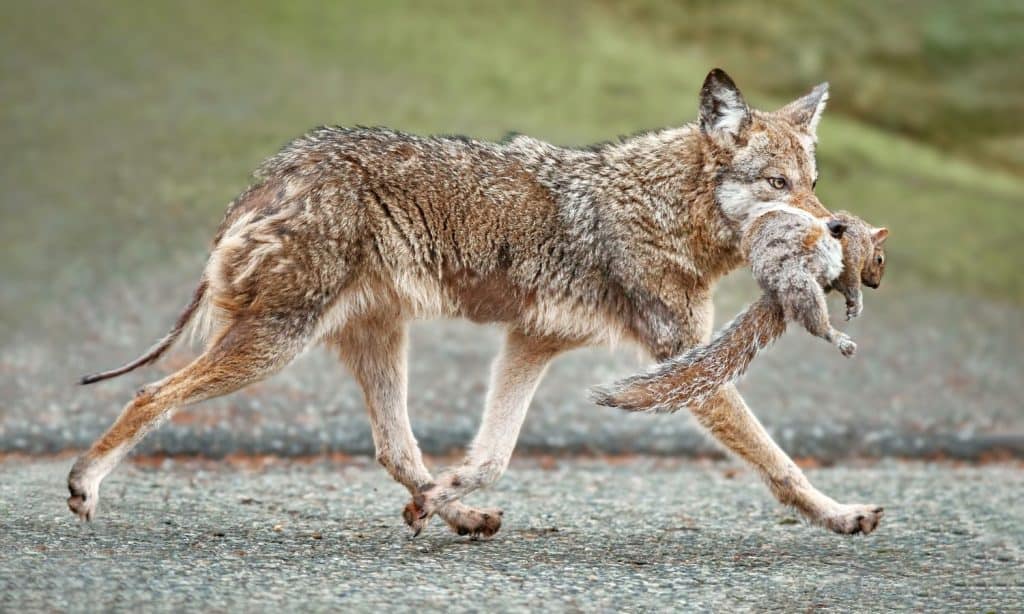
Coyotes eating rodents or small mammals are contracting Echinococcus multilocularis in Washington State.
©RobDemPhoto/Shutterstock.com
“This parasite is concerning because it has been spreading across North America. There have been numerous cases of dogs getting sick, and a handful of people have also picked up the tapeworm,” Hentati explained in a press release. “The fact that we found it here in one-third of our coyotes was surprising, because it wasn’t found anywhere in the Pacific Northwest until earlier this year.”
The tapeworm causes cancer-like cysts to grow in the infected host. If not treated, the cysts can be deadly. However, because symptoms are not always present, an immediate and proper diagnosis may not be possible.
Coyotes have been infected with Echinococcus multilocularis by eating rodents and small mammals that carry the tapeworm larvae. The tapeworms lay eggs in the coyotes’ intestines, which are then spread through their feces.
Parasitic Tapeworm Can Be Passed to Domestic Dogs
Due to their behavior and proximity to wild canids, domestic dogs are proving to be effective hosts for Echinococcus multilocularis. Unfortunately, not only is this unhealthy for the dog, but it is also increasing the spread of the parasitic tapeworm.
Coyotes and foxes are definitive hosts for Echinococcus multilocularis. A definitive host is one in which the tapeworm lives and reproduces. Dogs are now becoming definitive hosts, rather than intermediate hosts, because of their tendency to chase and eat small mammals.
Many dogs cannot resist chasing rodents or other small mammals. These animals are carriers of Echinococcus multilocularis larvae. By consuming rodents and other small mammals, the dogs also ingest tapeworms.
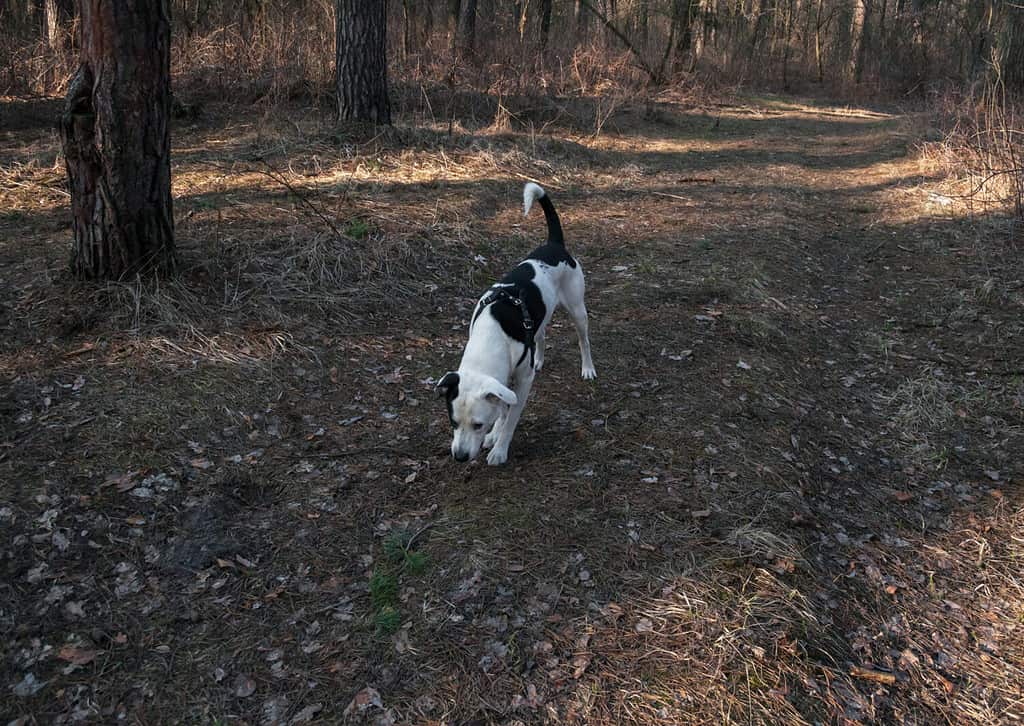
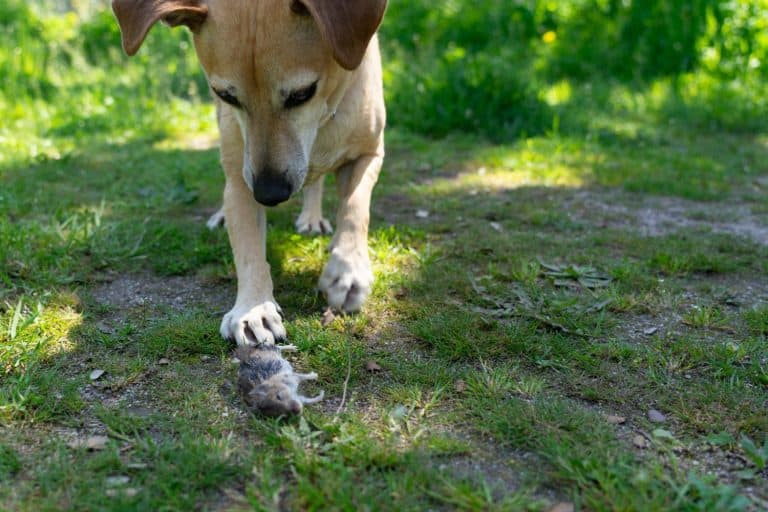
Dogs that come into contact with diseased rodents and other small mammals can contract Echinococcus multilocularis.
©Yulia Kostenko/Shutterstock.com
Once the tapeworms are ingested, they move to the small intestine, where they begin to lay eggs. These eggs are then passed through the dog’s feces.
In some rare cases, dogs have been known to become infected by consuming Echinococcus multilocularis eggs. When this happens, the tapeworm larvae hatch and can move to the liver. This form of infection is fatal to most dogs due to cysts that form in the liver and other organs.
Can People Contract the Parasitic Tapeworm?
Much of the attention surrounding the transmission of Echinococcus multilocularis has been focused on canines, both wild and domestic. However, it is not only these four-legged species that can contract the parasitic tapeworm. People can as well.
Dogs become infected by eating infected rodents and other small mammals. People, by contrast, usually become infected by accidentally swallowing microscopic eggs after contact with contaminated dog feces, soil, or food.

People can become infected with Echinococcus multilocularis by accidentally ingesting the tapeworm’s eggs.
©Monika Wisniewska/Shutterstock.com
The tapeworm eggs cannot be seen with the naked eye. Because the eggs are microscopic, they can be accidentally swallowed if hands are not washed properly after contact with contaminated material.
Symptoms may not appear for years—sometimes up to 15 years—while the tapeworms form cysts in the body. As the cysts grow larger, they create the following symptoms:
- Abdominal pain
- Enlarged liver
- Jaundice
- Cough
- Chest pain
- Coughing up blood
- Blocked bile ducts
In some instances, the cysts can metastasize to other organs and bones.
Contracting Echinococcus multilocularis is rare. However, good hygiene and washing food before consumption are necessary to prevent accidental ingestion of parasitic tapeworm eggs.
How to Keep Dogs Safe from Coming in Contact with the Parasitic Tapeworm
Currently, most Echinococcus multilocularis cases have occurred in rural areas. While this means those in urban areas have less to worry about, there are reports of Echinococcus multilocularis cases in more densely populated locales. Consequently, all dog owners should know how to limit their dogs’ exposure to the tapeworm as much as possible.

Keeping dogs enclosed in their yards, on leashes, and away from wild animals is the best way to prevent infection with Echinococcus multilocularis.
©Catherine Avilez/Shutterstock.com
Ways to ensure that dogs do not become infected with Echinococcus multilocularis include:
- Do not allow dogs to consume rodents or other small mammals
- Restrict contact between dogs and wild canids like coyotes and foxes
- Keep dogs fenced in or on a leash to prevent scavenging
Additionally, it may be worth consulting a veterinarian to determine whether regular deworming is necessary for those dogs in areas where Echinococcus multilocularis cases are prevalent.
In just 15 years, Echinococcus multilocularis has established a presence in multiple states across the U.S. As it continues to move north and west, more states will be affected. Therefore, taking preventive measures now is important to protect both dogs and their owners from cancer-like cysts and potentially fatal outcomes if the infection is left untreated.