
Quick Take
- A specific everyday object triggers ferrets into a frenzied 'dance of joy,' and the reason why reveals something surprising about their wild instincts. See the trigger objects →
- Bored ferrets don't just mope. According to vets, they develop a self-destructive cycle that can become nearly impossible to break. See the boredom cycle →
- The toys that excite ferrets most aren't found in a pet store, and some purpose-built pet products could actually harm them. Discover safer toy choices →
- Your ferret's goofiest play behavior is actually a rehearsal for something wild ferret relatives do when they hunt, and it is striking to witness. Explore the hunting instinct →
Although they’re more familiar to people as pets, the original ferrets were wild. About 2,500 years ago, Europeans began hand-rearing a weasel-like creature called the European polecat (Mustela putorius) to control rats and assist hunters by flushing rabbits out of burrows. While your pet ferret is the product of generations of selective breeding that have altered it enough to warrant a subspecies status (Mustela putorius furo), its origins as an inquisitive, exploratory predator are still on display.
The more you replicate the wild conditions in which ferrets evolved, the more you’ll observe their unique and often amusing ferret-like behaviors. The 2022 Encyclopedia of Animal Cognition and Behavior describes how stimulating objects can “release” the innate behavior of animals. Your ferret will be happier and healthier if given a chance to express its wild side.
“If captive ferrets don’t have enough enrichment,” explains Dr. Bradly Fountain, a veterinarian at Stahl Exotic Animal Veterinary Services in Virginia, in an email interview, “they can start displaying repetitive behavior such as pacing, over-grooming, and destructive play. Known as ‘stereotypy,’ these actions become self-soothing even if they also cause injury, and so they feed into a regular cycle of stress -> stereotypy behavior -> stress that can be very difficult, if not impossible, to break.”

Ferrets are naturally stimulated by burrows and tunnels (such as this native American black-footed ferret).
©Kerry Hargrove/Shutterstock.com
Certain Objects Stimulate Ferret Behavior
A pop-up kids’ play tunnel will stimulate pet ferrets to excitedly jump, tumble, and wrestle. Flexible aluminum tubing used in ductwork offers a ferret-sized tunnel that crinkles when ferrets run through it. Anything that creates a hiding place and makes crunching sounds, from a paper bag to a cardboard box, excites ferrets, likely because it’s reminiscent of the sounds of dry leaves in forest burrows. They may do an energetic “dance of joy” in which they hop from side to side, nip each other, and flip over.
Ferrets also love to dig, a reminder of their natural burrowing behavior. If provided with a box of sand or soil, or even the plastic balls used in ball pits, ferrets will exhibit energetic exploration with both their front and back paws. Watch HERE how captive ferrets at Hertfordshire Zoo in the UK get revved up by a bunch of balls. A box of rice, see HERE, can keep a ferret engaged for hours. If you have an opportunity to let them experience sand, soil, or even snow outside (in a secure enclosure), you’ll be amazed by the frenzy of excited behavior it elicits.
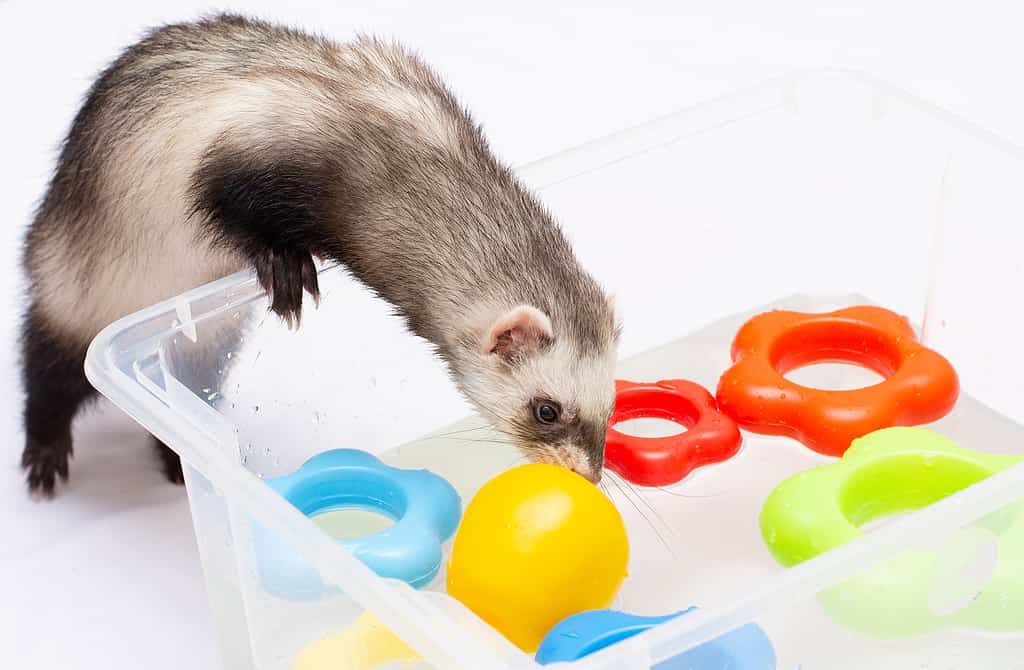
Ferrets like to play with objects in water, but avoid anything that could get stuck around their necks.
©Irina Vasilevskaia/iStock via Getty Images
Surprises are Key to Ferret Well-Being
In deciding how best to care for your ferrets, consider that wild ferrets experience the stimulation of a continually changing environment, including plant growth, weather, and other animals. If their captive environment remains constant, ferrets eventually become bored and listless. “Captive ferrets, like all captive species, lack the most critical stimulation and exercise that their wild counterparts partake in—finding food and hiding from predators,” adds Dr. Fountain.
So, introducing new toys, as you would for a human child, is fundamental to keeping ferrets active. Many children’s toys, whether a spinning top, a bin of stuffed animals, or a box full of Legos, are exciting to ferrets. Instead of buying specialized ‘ferret toys,’ you can repurpose used children’s toys. Beware, however, that manmade objects often include unnatural plastics, solvents, and glues that could be dangerous to your ferret. Supervise ferrets as they play with new objects to ensure they’re not dangerous. Avoid items made of chewable materials, like foam, which could cause intestinal blockages, or small objects like marbles or screws that they might ingest.
If nothing else, a too-sedentary lifestyle can also lead to obesity, increasing the risk for arthritis and heart disease.
Dr. Bradly Fountain, veterinarian
Ferrets are Nighttime Hunters that Need Daytime Rest
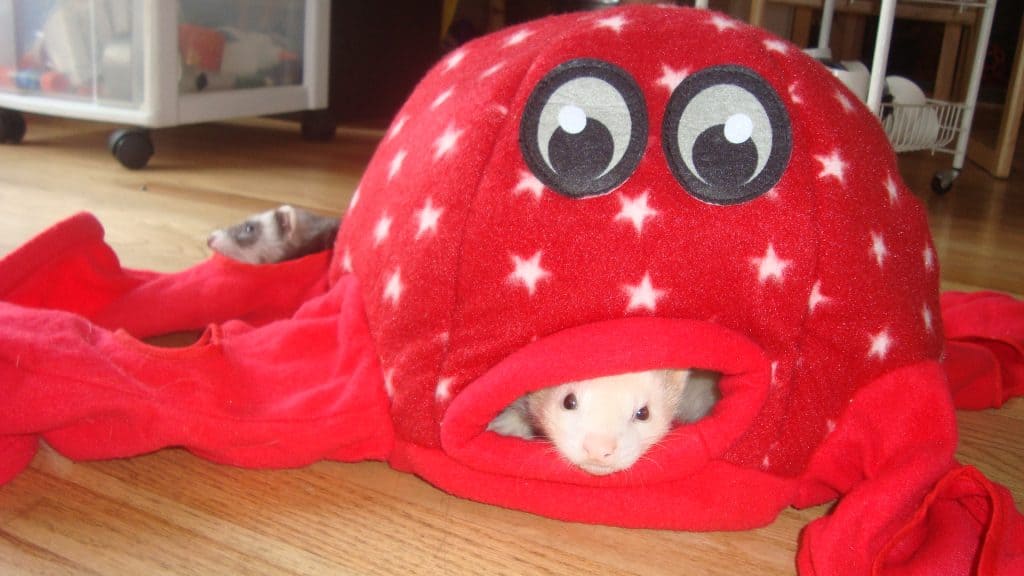
Ferrets will seek out burrow-like places to rest after vigorous activity.
©Devin Reese, permissioned
Ferret play behavior is not just for entertainment; it is essential for their cognitive and physical health. Dr. Fountain compares the deprivation that can occur to cabin fever in humans. “Stress is also immunosuppressive, potentially leading to an increase in infectious disease or other pathologies that are common in ferrets, such as insulinoma,” says Dr. Fountain. “If nothing else, a too-sedentary lifestyle can also lead to obesity, increasing the risk for arthritis and heart disease.”
Some of their playing reflects the gregarious nature of captive ferrets, in contrast to their more solitary European ancestors. However, many of their play behaviors also mimic their hunting approach, known as the ‘war dance.’ Watch HERE how wild stoats (close ferret relatives) get into a frenzy of jumping and twisting as they hunt for rabbits, and you’re seeing a preview of how your captive ferret will behave in its most exuberant moments.
Because they love to play, ferrets also need lots of rest. In the wild, they’re nocturnal, spending the day asleep in dark burrows. Provide them with ferret hammocks, old T-shirts, or other cloth they can hide in when they need to sleep. And don’t be surprised if you find a ferret slumbering in an unexpected refuge, like under a couch cushion or inside your boot. They’re using the manmade environment to do exactly what ferrets should be doing!