
Quick Take
- The gold-standard tool scientists use to measure invasive species damage has a glaring blind spot, and a new framework was built specifically to close it.
- A parasite invading the Galápagos causes suffering so specific and grotesque that it exposed exactly why current ecological metrics fall short.
- Invasive birds and invasive ants both cause harm, but when researchers applied the new framework, they found that one group produced results that were almost incomparably worse. See the ant impact data →
- The framework measures suffering experienced by native species, and it also tracks something researchers almost never bother to study about the invaders themselves. Explore the full framework →
Invasive species are among the most well-studied phenomena in ecology, and for good reason: they cost the global economy $423 billion every year, have been implicated in 60% of all extinctions, and 3,500 unique invasive species are thought to pose a severe global threat. For generations, scientists have sought ways to measure the impact of invasive species, and one team of international researchers has published a novel method to quantify the damage: by focusing on how invasive species affect the welfare of animals in the ecosystems they invade.
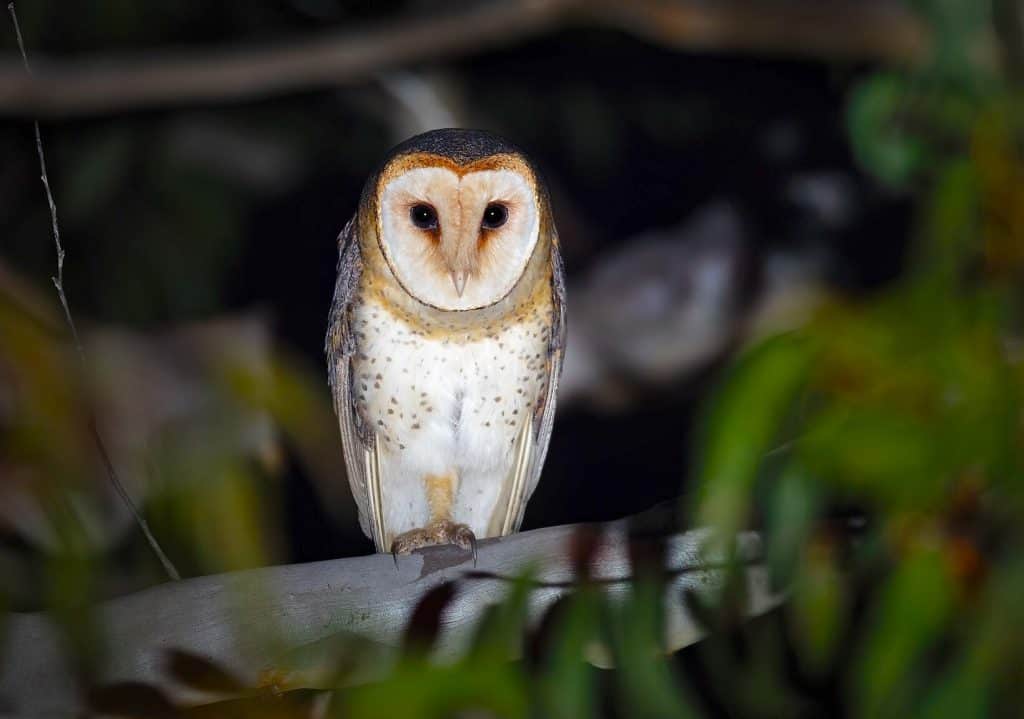
Australian Masked Owls (Tyto novaehollandiae) have been introduced to some islands that have invasive rats; these birds have begun hunting native birds, and were included in the study.
The researchers, led by Thomas Evans and Michael Mendl and writing in Nature Communications, determined that because investigations into how animals suffer as a result of biological invasions are uncommon, we have an incomplete picture of the changes that occur after an invasive species takes hold in an ecosystem. The authors make the case that the sentience of animals is becoming a consensus in the scientific community, arguing that behavioural, cognitive, and neuroscientific evidence demonstrates that many animals can consciously experience emotions and sensations.
Most of the research on invasive species focuses on how alien invaders harm the biodiversity and population levels of ecosystems. The primary existing framework for quantifying the harms of invasive species is the Environmental Impact Classification for Alien Taxa (EICAT), published by the International Union for Conservation of Nature, which also publishes the Red List of Threatened Species. The EICAT does provide an in-depth examination of the impacts of invasives by asking researchers to make assessments across 12 mechanisms of harm: Competition, predation, hybridization, transmission of disease, parasitism, poisoning/toxicity, biofouling, grazing/herbivory/browsing, chemical impact on ecosystems, physical impact on ecosystems, structural impact on ecosystems, and indirect impacts through interactions with other species. While some of these metrics may serve as proxies for animal welfare, no category focuses on the suffering caused or experienced by invasive species–instead, the EICAT mechanisms focus on biodiversity and ecosystem impacts.
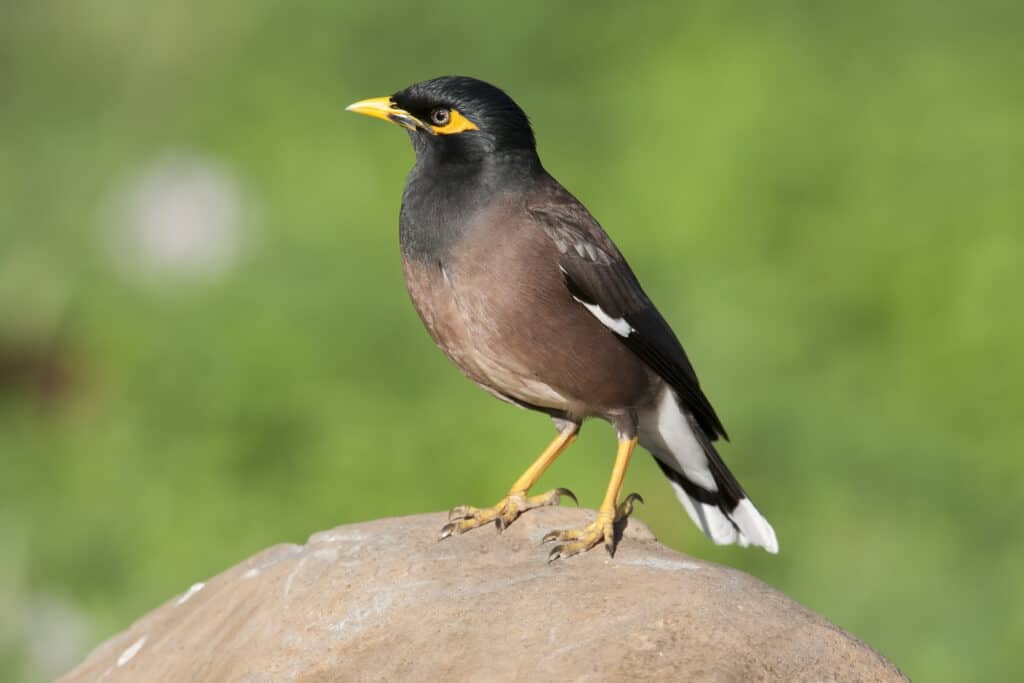
Common Myna birds (Acridotheres tristis) have become problematic invaders in many tropical and subtropical ecosystems.
©Stubblefield Photography/Shutterstock.com
Evans & Mendl propose a new framework in their paper, “Quantifying and categorising the animal welfare impacts caused by biological invasions,” calling it the Animal Welfare Impact Classification for Invasion Science (AWICIS). Parasitic invasive species represent a helpful use case for the AWICIS–they depend on native species for their own reproduction, and are therefore unlikely to be the unilateral cause of extinction for their hosts, but they can cause nightmarish harm.
To highlight this suffering, the authors exemplified the avian vampire fly (Philornis downsi), an introduced species in the Gálapagos Islands. Fly larvae crawl into the ear canals of birds, eating blood and keratin before digging into the flesh of their legs, abdomens, and backs. Those that survive are often deformed; some lose their ability to sing effectively because of damage to their windpipes. A study using EICAT might not analyze the welfare impacts of invasive species like this; hence, Evans & Mendl’s interest in creating a framework that captures “the physical and mental state of an animal in relation to the conditions in which it lives and dies,” their definition of animal welfare. Indeed, rather than studying species-level impact of invasive organisms, like EICAT, the AWICIS framework studies individual animals and their suffering–even the experiences of invasive organisms.
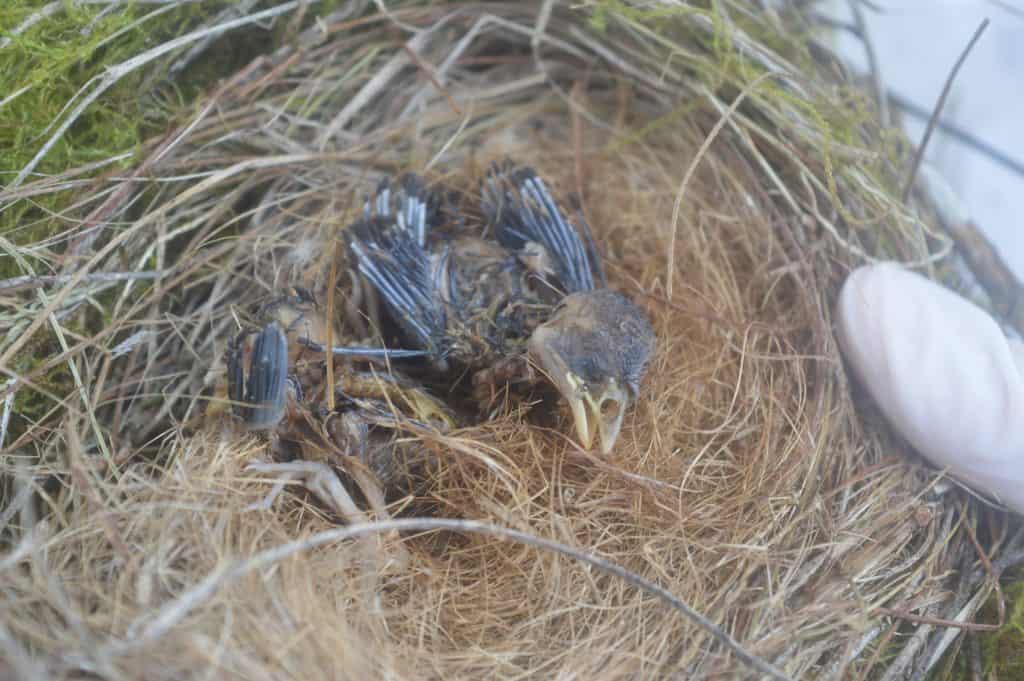
Dead Darwin’s finch (Geospiza spp.) nestlings with enlarged nostrils caused by avian vampire fly parasitism
The AWICIS assessment criteria are based directly on the 12 EICAT mechanism criteria listed above, but with tweaks that ask researchers to investigate how sentient animals are hurt. For example, one of the criteria used by both EICAT and AWICIS is “chemical changes to ecosystem,” but AWICIS uses a narrowed definition targeted on animal harm, “A [invasive] species changes chemical characteristics of the environment (e.g., pH, nutrient levels) which results in welfare impacts on an animal (e.g., biological invasions can create anoxic conditions in river systems, leading to the suffocation of fish.”
The AWICIS further builds on the EICAT model by using the same 5 impact severity categories, once again tailored to ask questions about animal welfare. The scale ranges from Level 1, defined as “negligible welfare impacts on an individual animal,” to Level 5, “welfare impacts that result in prolonged suffering that the individual animal is not affected by in the absence of biological invasions.”
In order to test the effectiveness of the framework, Evans & Mendl chose to focus on 2 very distinct taxa of animals–birds and ants–that are well-studied and have caused invasions. They pulled data from existing datasets that had been peer-reviewed and applied the AWICIS framework to it, comparing the severity of the welfare impacts caused by animals affected by biological invasions to those caused by native species in the absence of invasive species.
Suffering Caused by Avian Invaders
The study reported that 23 orders of birds, three orders of mammals, and two orders of reptiles had been harmed by invasive bird species. Shorebirds and seabirds are more likely to experience severe welfare impacts than other orders of birds. Of the 11 mechanisms of harm used by AWICIS, bird invaders were found to cause 5, but most of the harm fell into 2 categories, competition(61%) and predation (25%). Sixty-three percent of the indicators of harm were behavioral, such as Eurasian nuthatches (Sitta europaea) abandoning their nests due to aggressive, invasive rose-ringed parakeets (Alexandrinus krameri), or listlessness and loss of appetite among American goldfinches (Spinus tristis), Hawaii amakihi (Chlorodrepanis virens), and Galapagos doves (Zenaida galapagoensis).
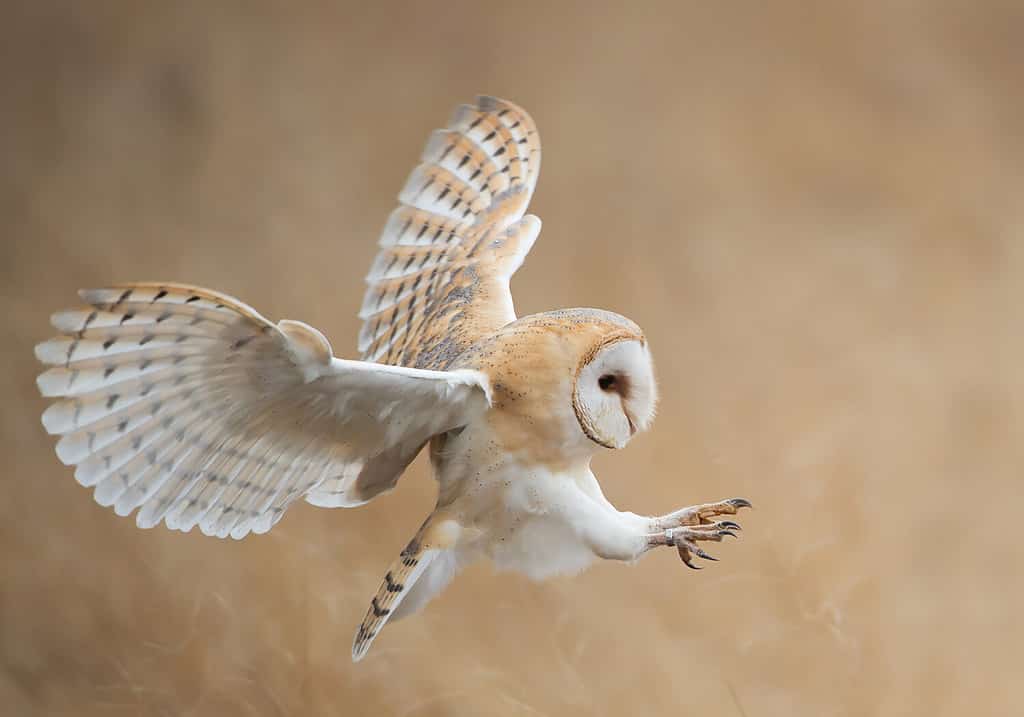
Barn owls (Tyto alba) have been introduced to some island ecosystems to control invasive rodents like rats and mice
©MZPHOTO.CZ/Shutterstock.com
The remaining 37% of harm indicators to birds consisted of physical evidence, including carcasses of native seabirds killed by introduced barn owls (Tyto alba), eggs and nests destroyed by invasive common mynas (Acridotheres tristis), as well as injuries and illnesses caused by invasive birds, such as anemia; swollen, red, and crusty eyes; mouth lesions; necrotic masses; and respiratory tract infections. The study also recorded physical indicators of harm experienced by invasive birds, such as the presence of rose-ringed parakeet remains found in the pellets of native long-eared owls (Asio otus); this kind of detail is often ignored in studies that examine only biodiversity impacts, rather than animal suffering.
Suffering Caused By Ant Invaders
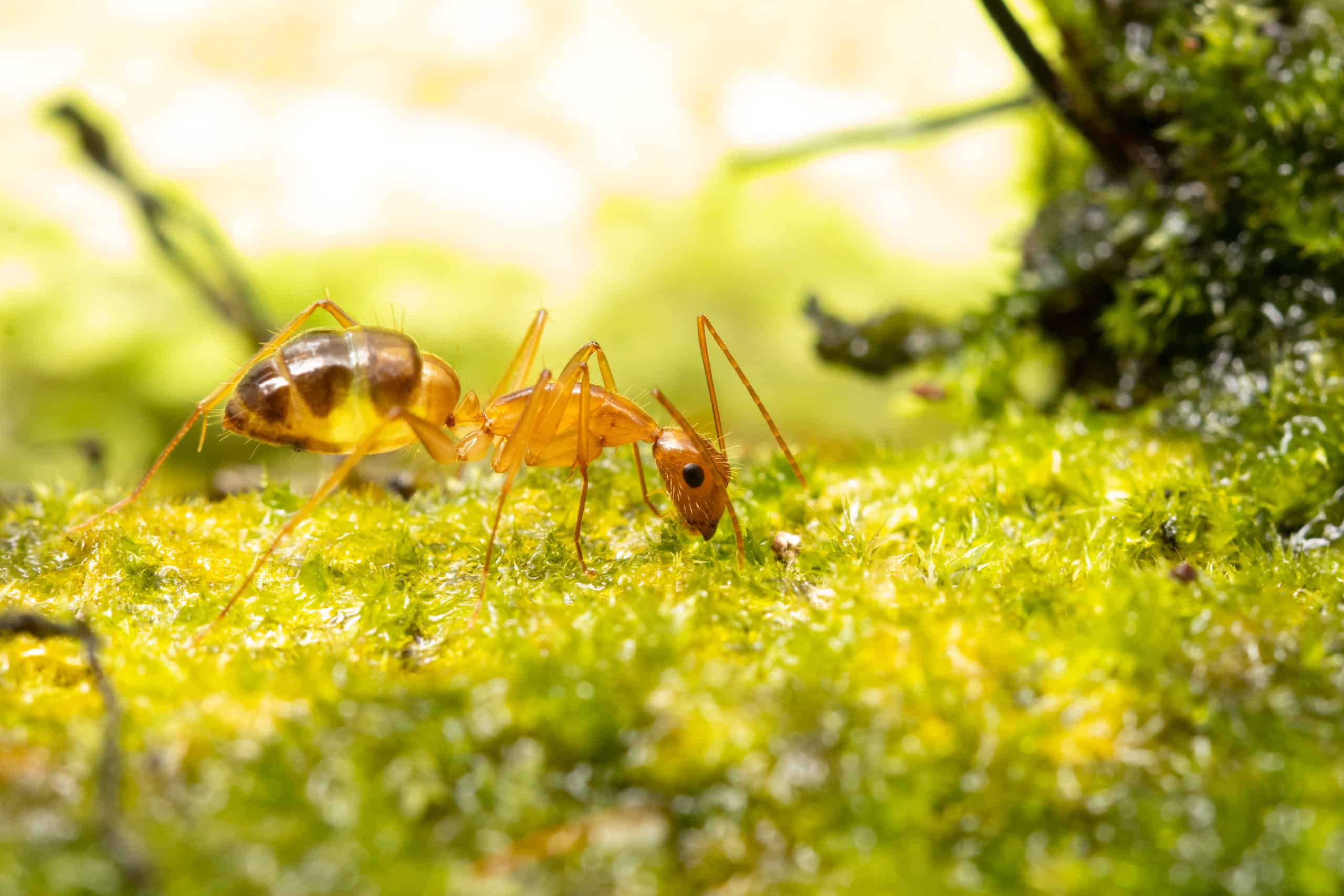
The ant invaders examined by Evans & Mendl caused suffering to a wider range of species than did invasive birds, harming animals from 6 classes and 27 orders, including birds, mammals, reptiles, amphibians, crustaceans, and ray-finned fishes. Whereas only 9% of bird impacts were classified as “more severe” (Level 4 or 5), a stunning 92% of ant impacts fell into the two highest categories of the 5-step harm scale. Introduced yellow crazy ants (Anoplolepis gracilipes) spray animals they are preying on with acid, which leads to long-term suffering before death, while red imported fire ants (Solenopsis invicta), with their venomous bites, were able to kill fledgling black-capped vireos (Vireo atricapilla) in a few hours. The study showed that ants were particularly harmful to immobile, ground-nesting species, including fledgling turtles, seabirds, shorebirds, and crocodiles.
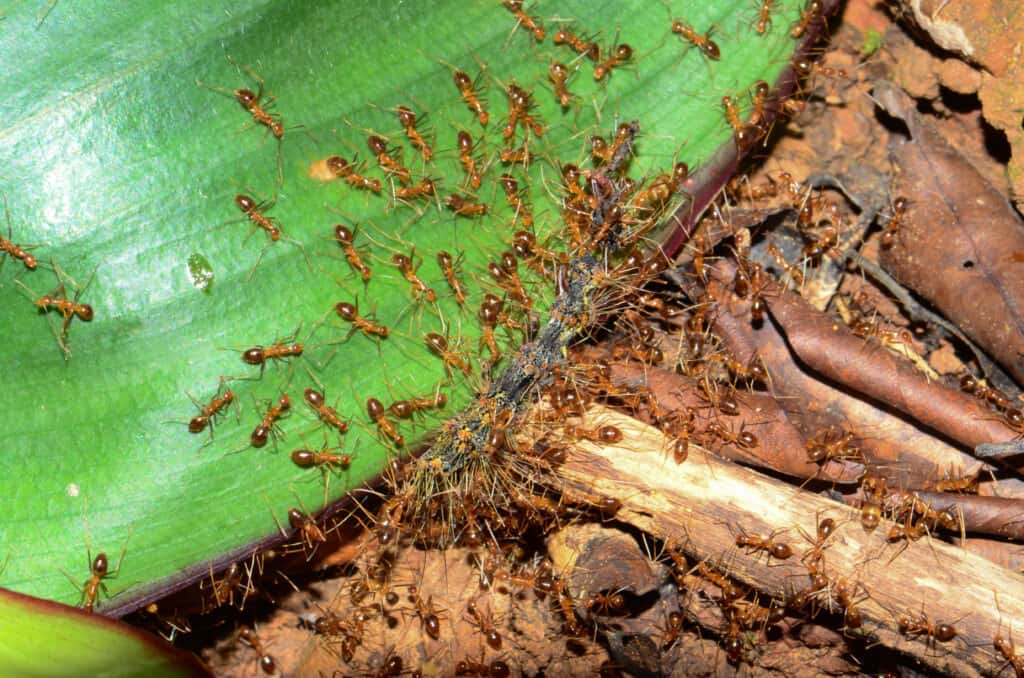
Yellow crazy ants spray formic acid on their prey, a debilitating attack with long-lasting effects
©demonhero69/Shutterstock.com
Ant invasions led to a wide range of physical harm (Alligator mississippiensis) hatchlings with swollen heads and bodies. Birds experienced corneal inflammation, pus-filled nostrils, bill and eye irritation, missing toes and nostrils, and malnourished fledglings. Ants also caused a condition called Florida keratopathy, characterized by cloudy eyes, in large animals, including domestic dogs (Canis familiaris), leopards (Panthera pardus), and African savanna elephants (Loxodonta africana).
Looking Forward
Evans & Mendl hope that the framework they developed will be used to supplement the broad range of biodiversity data that exists concerning the impacts of invasive species with analyses that can quantify and compare the animal welfare impacts of these invasions. Though most of the harms studied were experienced by native species, the authors hope that the framework will also be used to better understand how invasive species cause harm to introduced species, and that scientists and policymakers will build a better understanding of all kinds of animal suffering caused by invasive species.