
Quick Take
- This tapeworm doesn't behave like any you've heard of, and what it does inside the body is far more alarming than malnutrition or intestinal blockages. See how it spreads internally →
- By the time symptoms appear, the damage may already be catastrophic, and the timeline is not what most people would guess. Understand the silent timeline →
- Infected coyotes carry no visible warning signs, which is exactly what makes this parasite so difficult to contain. Explore coyote infection rates →
- Protecting your dog from this tapeworm may require less than you think, though one overlooked habit could still leave them exposed. Check prevention steps →
Tapeworms infect thousands of companion animals in the United States each year. The culprit behind tapeworms is swallowing a flea infected with the parasite. Fortunately, there is prevention available to keep animals from being plagued by the worms. This issue needs to be taken seriously, especially given the deadly, cancer-like tapeworms that have reached the Pacific Northwest and behave differently from most other tapeworm species.
Deadly Tapeworm Has Made Its Way to the West Coast
Echinococcus multilocularis was once believed to be an issue only in Europe and Asia. Cases of the tapeworm in North America were rare. This changed around 2010, when E. multilocularis became more prevalent in the Midwest and Canada, infecting both dogs and people. The tapeworm is now on the move again.
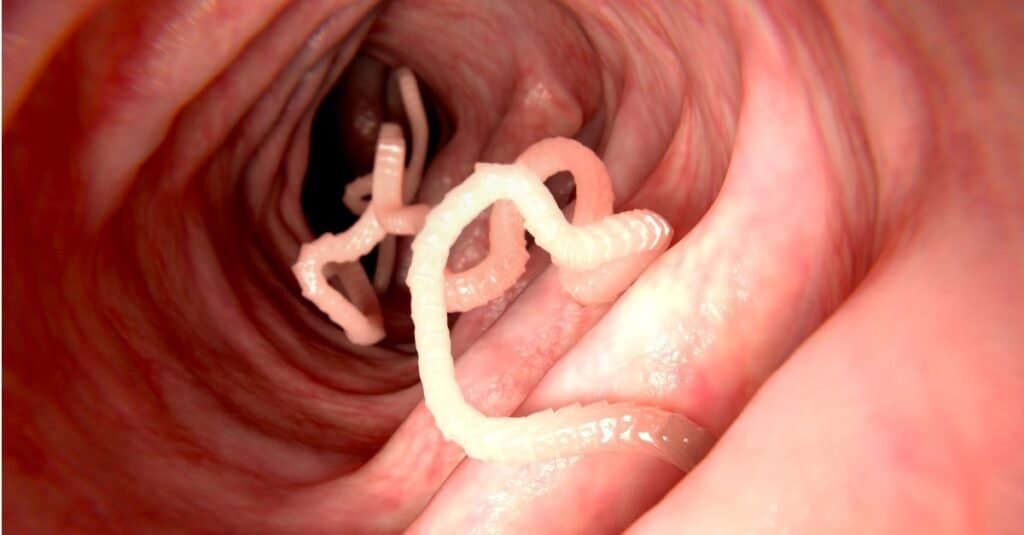
Tapeworms that were once only found in Europe and Asia are now on the West Coast of the United States.
©iStock.com/selvanegra
According to a new study published in PLOS Neglected Tropical Diseases, the tapeworm is now present in coyotes in the Pacific Northwest. While people and domesticated dogs are considered to be “accidental hosts,” they can easily contract E. multilocularis. Those who do can face some devastating consequences of the infection.
Tapeworm Causes Cancer-Like Lesions
Tapeworms can make people and dogs sick if contracted. Typically, serious cases involve the infected person or animal not receiving treatment. It is then the malnutrition, weight loss, and intestinal blockages that can lead to problems.
The tapeworm causes cancer-like lesions in the liver.
©FAZLI YURTSEVER/Shutterstock.com
E. multilocularis behaves differently. Rather than simply absorbing nutrients from the host’s ingested food, the tapeworm can cause significant damage. The tapeworm leaves cancer-like cysts in the liver, according to the study, and in some cases, other organs as well.
Because symptoms may not appear for five to fifteen years after exposure and infection, significant internal damage can occur before detection. This is why preventative measures are so important for people and their dogs as E. multilocularis continues to spread.
Why So Many Coyotes Are Infected with the Deadly Tapeworm
Coyotes in the Pacific Northwest have been hit especially hard by E. multilocularis due to their exposure to raw meat—specifically, their prey—which is infested with fleas. Not only that, but they are also the first wild animal on the West Coast to contract the tapeworm.
According to the study, 37% of the coyotes surveyed tested positive for E. multilocularis. These coyotes were not scattered along the West Coast. Instead, they were concentrated in the Puget Sound region of Washington. Researchers were surprised by how many coyotes had the tapeworm, according to Yasmine Hentati, lead author of the study and a recent doctoral graduate from the University of Washington, especially since it was only discovered in the Pacific Northwest earlier in 2026.

37% of coyotes in the Puget Sound area of Washington were found to have E. multilocularis.
©Kelly vanDellen/Shutterstock.com
“This parasite is concerning because it has been spreading across North America. There have been numerous cases of dogs getting sick, and a handful of people have also picked up the tapeworm,” Hentati said in a press release. “The fact that we found it here in one-third of our coyotes was surprising, because it wasn’t found anywhere in the Pacific Northwest until earlier this year.”
Yet, those who are infected often show no signs of illness. This makes this particular species of tapeworm especially concerning, particularly because it is so easily transmissible to people and their dogs.
How Can People Prevent Their Dogs from Becoming Infected With the Tapeworm?
With E. multilocularis continuing to move across the United States, it is necessary, now more than ever, to keep dogs from contracting the tapeworm. Fortunately, the same rules for preventing dogs from becoming infested with tapeworms apply to E. multilocularis. Therefore, many dog owners may already be doing what they need to do to keep their fur babies safe.

Flea prevention treatments are one of the ways to prevent dogs from being infected with E. multilocularis.
©Pixel-Shot/Shutterstock.com
The necessary steps to keep dogs safe from tapeworms include:
- Have dogs on year-round flea control
- Remove dog feces from the yard promptly to prevent any potential eggs from contaminating the property
- Do not allow dogs to interact with wild rabbits, rats, or other animals that carry tapeworms
- Regularly clean water and food bowls
- Do not allow dogs to investigate carcasses of animals
With E. multilocularis spreading faster than expected, keeping dogs up to date with their yearly vet appointments is also recommended. This allows veterinarians to identify and treat infections as early as possible, reducing the risk of long-term health complications.