
The most prevalent colors of animals in nature are brown, black, and gray. These colors are important for protection and visual communication. Brown helps wild animals camouflage themselves as they move along the ground or the trunks of trees. Brown fur acts as insulation, keeping animals warm in the winter and cool in the summer. But with brown being so common, it is not often considered beautiful. Continue reading to learn about nine beautiful brown animals.
1. Cedar Waxwing
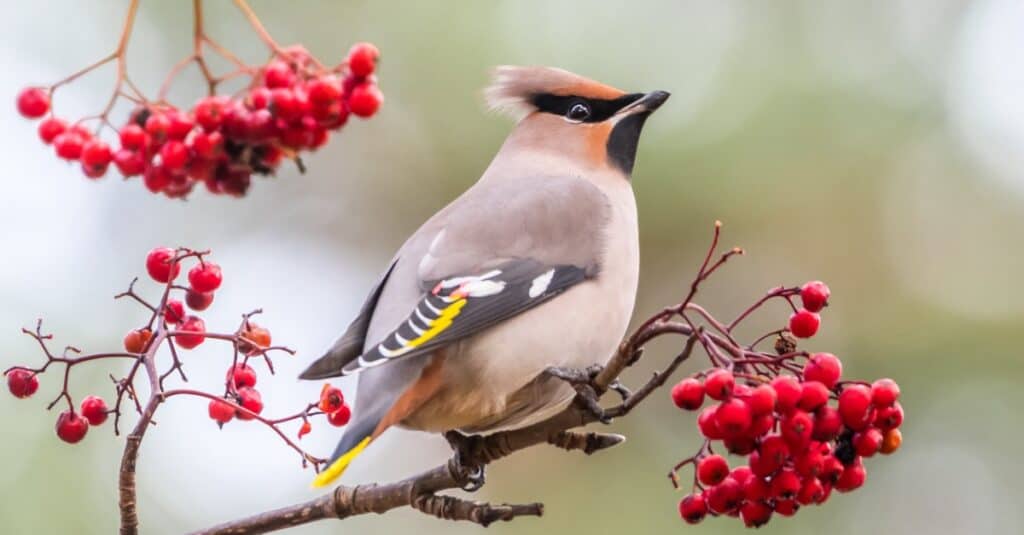
The silky sheen of the feathers sets the cedar waxwing apart from other brown birds.
©iStock.com/hannurama
The brown feathers of the cedar waxwing (Bombycilla cedrorum) have a silky sheen that sets them apart from other brown-feathered birds. It is a medium-sized bird that’s approximately 6 to 7 inches long with a 9 to 12-inch wingspan. The cedar waxwing’s wings are dark brown with black and white stripes. It has a crest, a black mask, and bright red drops on its secondary flight feathers. It’s found from Canada down to Northwest South America, and its population status is least concern. This bird eats berries and insects. Its larger cousin, the Bohemian waxwing (Bombycilla garrulus), lives in Canada and northern Eurasia.
2. Western Banded Gecko
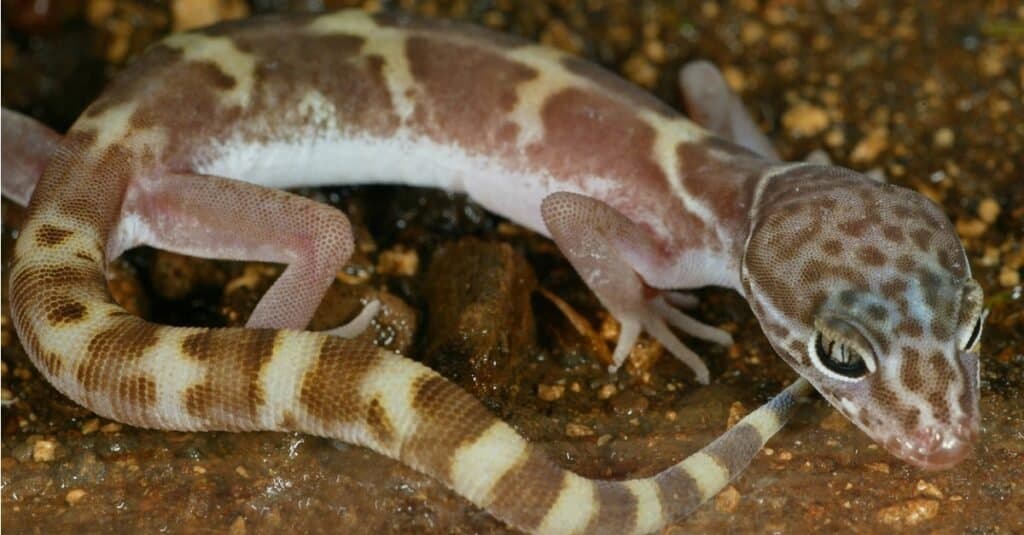
The Western banded gecko is one of the only geckos that have eyelids.
©iStock.com/EdwardSnow
The beautiful brown Western banded geckos (Coleonyx variegatus) are native to the Southwestern United States and Northwestern Mexico. This gecko’s body is light brown and striped with darker brown bands and spots. The tiny scales give its body a smooth and shiny look. It differs from other geckos in that it has eyelids. Approximately 4 to 6 inches long, including its tail, the Western banded gecko lives in several types of desert habitats, including chaparral. It is nocturnal and hunts insects and small arthropods at night. They also eat juvenile scorpions but are, in turn, preyed upon by snakes and coyotes.
3. White-Tailed Deer
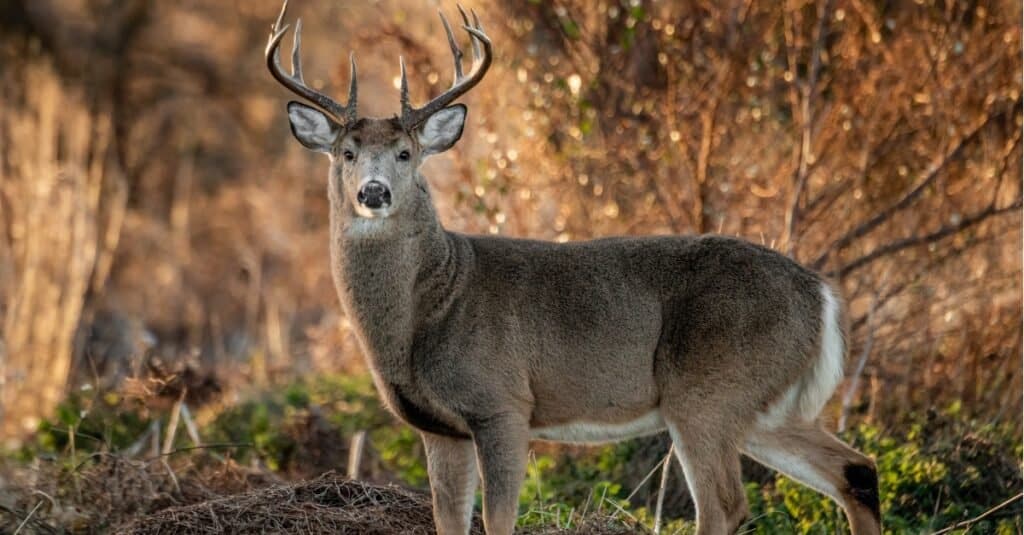
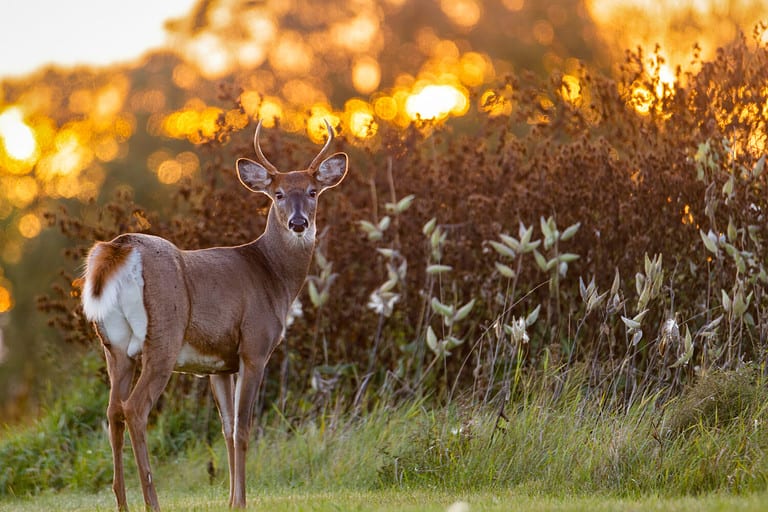
The white-tailed deer has a redder tint to it in the warmer months.
©iStock.com/Harry Collins
Familiarity may breed contempt when it comes to the white-tailed deer (Odocoileus virginianus), but it’s also true that this deer is one beautiful animal. This graceful deer lives in North, Central, and South America and has been introduced in Europe, the Caribbean, and New Zealand. There are possibly 26 subspecies of this deer, most of which are found in America.
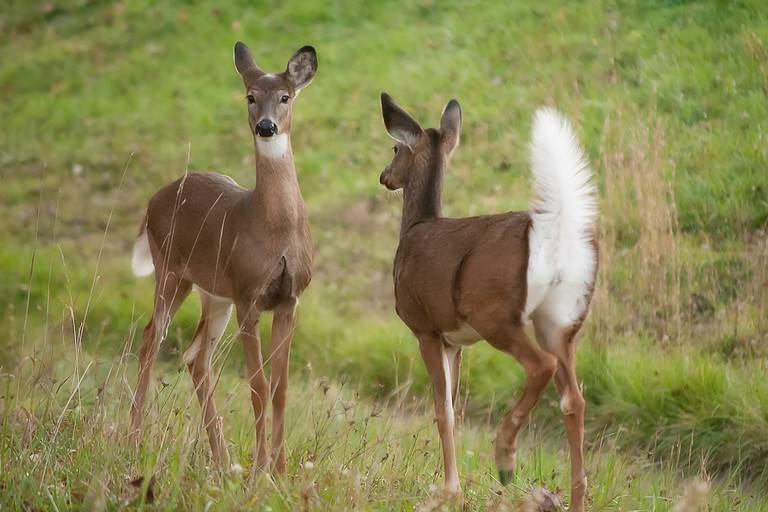
The coat of the white-tailed deer famously changes from red-brown during the warm months to grayish brown in the colder months. But what makes it recognizable is the white underside of the tail, which flashes when the animal runs away. It has a long, elegant head and a white patch at the throat and over its chin. Fawns are born with spots that help hide them in dappled forest lighting. White-tailed bucks are also known for their beautiful antlers, which they shed and regrow every year.
Since white-tailed deer have numerous subspecies, their size varies. Bucks can stand 39 inches at the shoulder and weigh as much as 400 pounds. Does can stand 31.5 inches at the shoulder and weigh up to 198 pounds. There is a Floridian subspecies, the Key deer (Odocoileus virginianus clavium), whose bucks stand only 30 inches tall at the shoulder and weigh between 55 and 75 pounds.
4. Dumeril’s Ground Boa
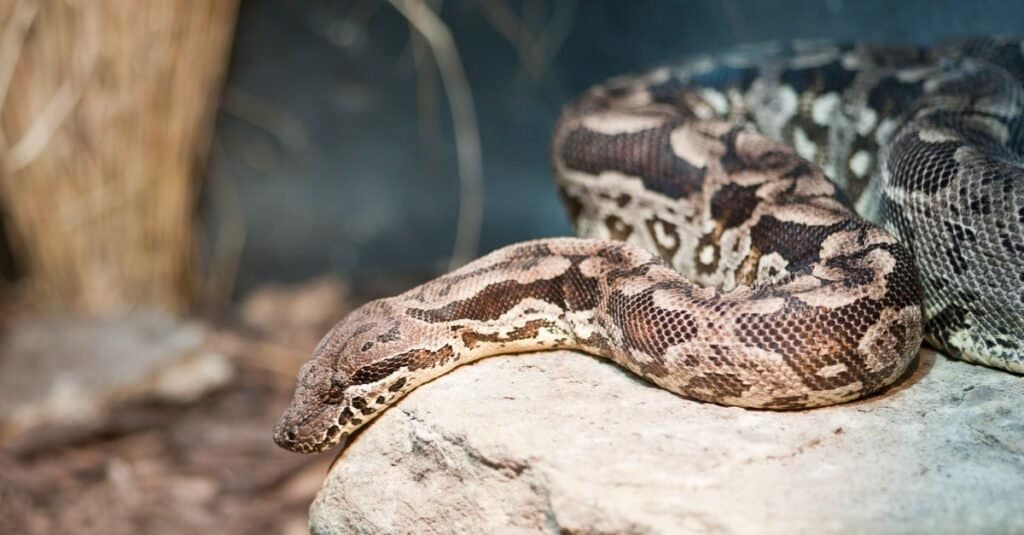
Dumeril’s ground boa is native to Madagascar.
©Matt_Gibson/Shutterstock.com
The non-venomous Dumeril’s ground boa (Acrantophis dumerili) is native to Madagascar. It grows to approximately six and a half feet in length, with females being larger than males. Its beauty comes from the pattern of scales on its body. The base color of the snake is grayish-brown, and the patches form a flower petal pattern from the snake’s head to its tail. This snake’s beauty makes it sought after as a pet.
Dumeril’s ground boa has a varied diet of small mammals, lizards, birds, and even other snakes. It may even feed on small primates like lemurs.
Due to its calm nature, Dumeril’s ground boas were popular in the snake trade before restrictions were placed. They do well in captivity, although their large size may be a challenge for a novice snake owner. Pet Dumerils thrive on a diet of rats but will stop eating if stressed out.
5. Hoopoe
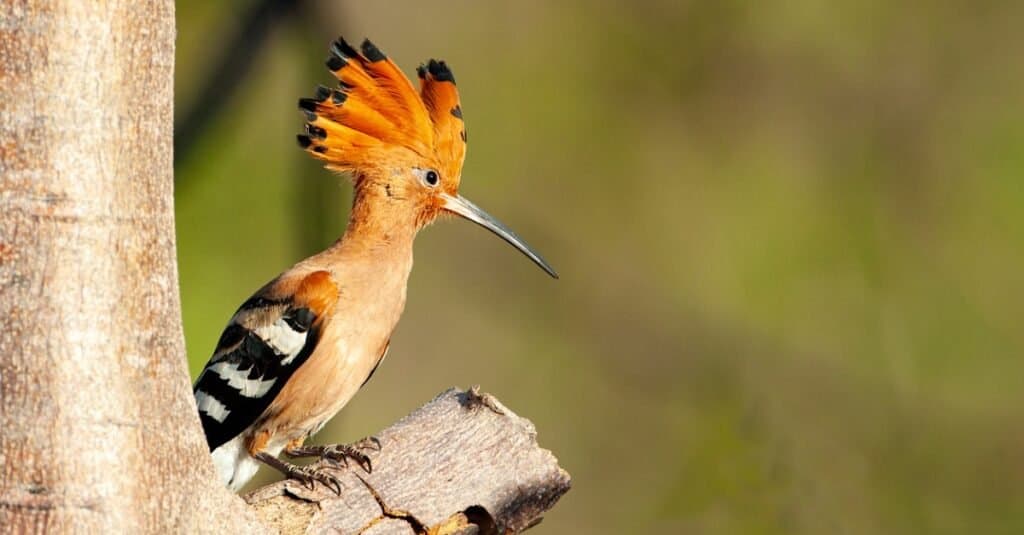
The colors of the Hoopoe serve as camouflage.
©iStock.com/Andrey Kanyshev
There are three species of this striking bird with a long, thin, curved beak and spectacular crown of feathers. All species are rusty or sandy brown with lovely black and white bars on the wings, tail, and crest. This coloration serves as camouflage, as the bird usually feeds on the ground. Its long bill allows it to probe the ground for small reptiles and insects. It also eats seeds and berries. Despite this, the hoopoe is a strong flyer, and the black and white patterns on its spread wings only add to its majesty.
Hoopoes are approximately the size of American robins, ranging from 9.8 to 12.6 inches long, and have 17 to 19-inch wingspans. They weigh between 1.6 and 3 ounces and are native to Africa, Europe, and Asia.
6. Bicolor Commodore
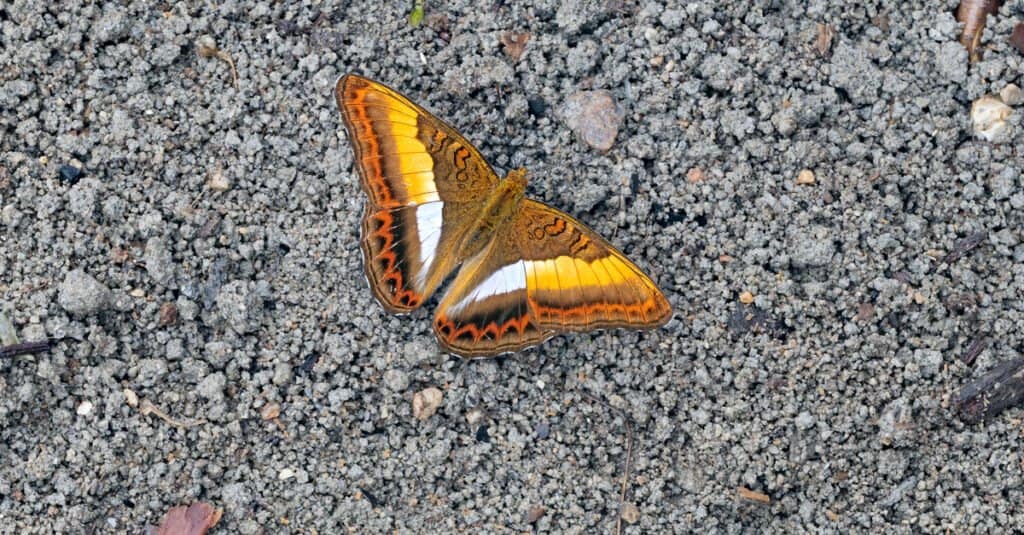
This beautiful brown commodore has zigzags on its forewings and hindwings.
©DiamondWarriors/Shutterstock.com
This exceptionally beautiful butterfly is found in Southeast Asia. A type of nymphalid, the bicolor commodore (Parasarpa zayla) has dark brown wings embellished with sunny yellow stripes on the forewings that ombré into white on the hind wings. The edges of both the forewings and the hindwings are lined with zigzags, and there is darker marbling on the insides of the forewings.
The wingspan of the bicolor commodore is approximately 3.25 inches, and it can be found at altitudes as high as 8200 feet in Pakistan, India, and Burma. Other than this, scientists don’t know much about the bicolor commodore.
7. Orizaba Silkmoth
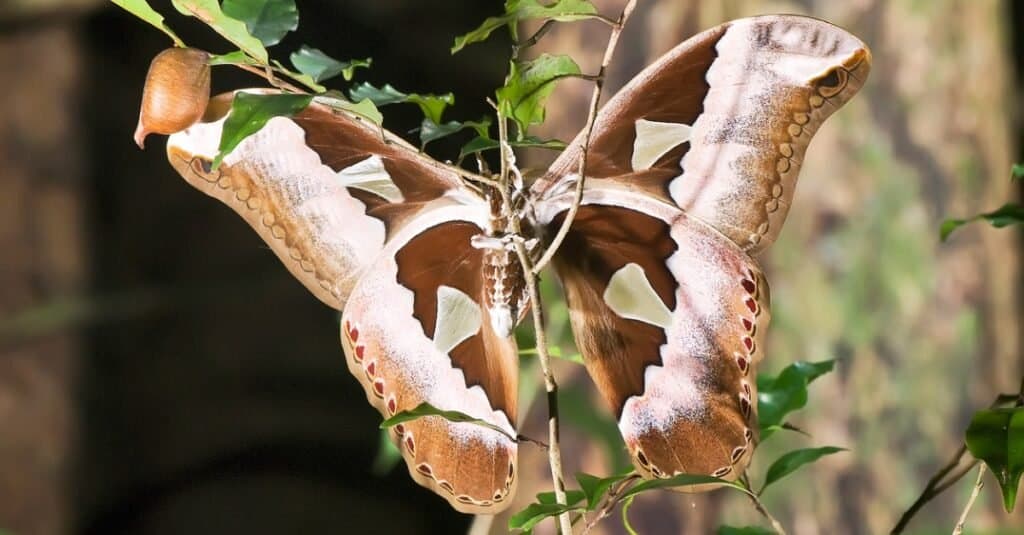
The Orizaba silkmoth has ringed brown spots on the margins of its hindwings.
©iStock.com/LeoMercon
The huge Orizaba silkmoth (Rothschildia orizaba) has a wingspan between 4.5 and 5.25 inches. It has a plump body with brown fur. There are white-edged bands of purplish-brown near the edges of the wings, and the margins of the hindwings are dotted with ringed brown spots. Both pairs of wings have translucent triangles, and the inner forewings have brown patches bordered with white.
The Orizaba silkmoth is native to South America but has been found as far north as Southern Texas. Though scientists know the caterpillar is fat and green and has been raised successfully on privet, they are unsure what its host plant is in the wild. The Orizaba silkmoth has eight subspecies.
8. Cougar
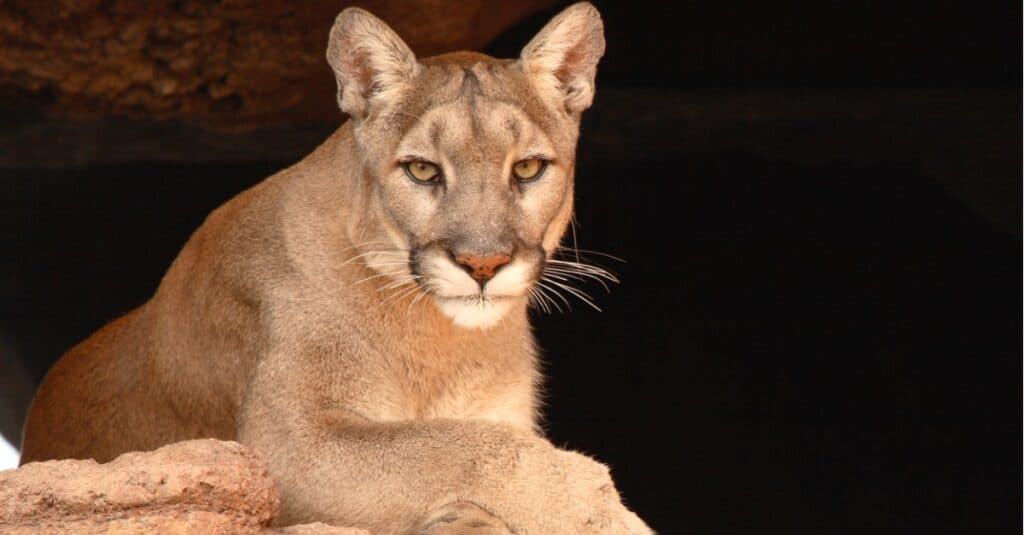
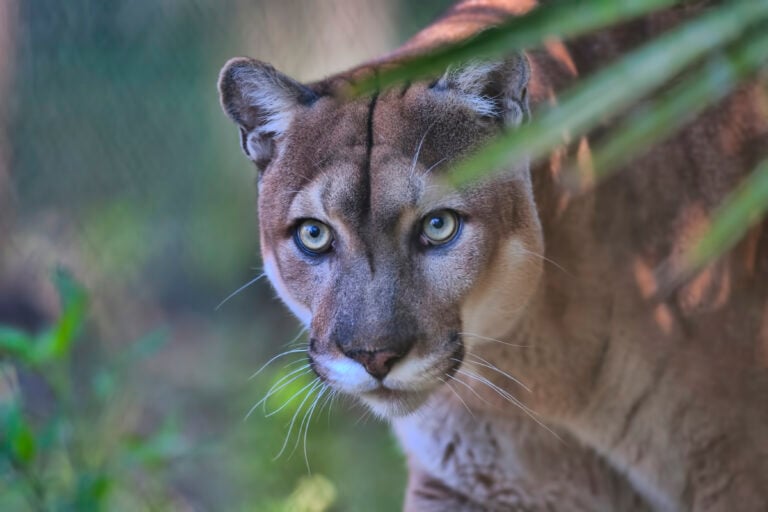
The cougar has a much sleeker look than a lion.
©iStock.com/gatito33
Cougars (Puma concolor) are found as far north as Yukon, Canada, and as far south as the South American Andes. This demonstrates how adaptable cougars are and how successful they have been despite being hunted for centuries. As of 2025, its conservation status is Least Concern according to the IUCN Red List.
The coat of this cat is light brown, though there is some white on the muzzle and the undersides. Its head is small for its body, while its paws are disproportionately large. The forelegs are shorter than the hind legs; these muscles allow the cat to leap onto the back of its prey, often a deer. The cougar is between 3.5 and 6.5 feet long and weighs between 150 and 230 pounds.
9. Kodiak Bear

The Kodiak bear is the largest subspecies of the brown bear.
©iStock.com/Jess Bray
The Kodiak bear (Ursus arctos middendorffi) is the largest subspecies of the brown bear (Ursus arctos). It is only smaller than the polar bear and can weigh as much as 1320 pounds while standing 4 feet 4 inches tall at the shoulder and 8 feet in length. This bear is only found on the Kodiak Archipelago, and its population is considered healthy and stable.
The Kodiak bear, like other brown bears, has tiny eyes in a huge round head topped with small ears. Its limbs are short for its body but powerful, and it has formidable claws on its front paws that cannot be retracted. Though it usually has brown fur, some bears have been known to have blond or black fur. Surprisingly, brown bears are largely herbivorous and eat grasses, roots, berries, nuts, and bulbs. They add salmon to their diet when the salmon run in May. Recent studies show that when elderberries and salmon are available at the same time, Kodiak bears may prefer eating elderberries over salmon, a shift attributed to changes in berry ripening times due to climate change.