
Quick Take
- From 0 to 100: In the late 1800s, deer almost vanished from Pennsylvania. Discover how a total population collapse turned into the state’s greatest conservation success.
- The “Buckskin” Economy: Long before it was a state symbol, the white-tailed deer was the literal “currency” of the frontier, providing everything from clothing to survival tools.
- A Polarizing Icon: Why the decision to name the deer a state symbol in 1959 still sparks heated debates among farmers, hunters, and homeowners today.
- The “Flash of White”: Learn the biological secret behind the deer’s famous tail and how it communicates a hidden language to the rest of the herd.
Walk almost anywhere in Pennsylvania at dawn or dusk, and there is a good chance a white-tailed deer will be watching from the tree line. This familiar mammal is more than a roadside silhouette or a flash of white vanishing into the woods. It is tied closely to the state’s history, economy, and outdoor traditions. From early survival to modern wildlife management, the white-tailed deer has shaped how people interact with the land. Looking at why lawmakers chose the deer as Pennsylvania’s official state animal reveals a broader story about conservation, identity, and the long relationship between people and wildlife in the region.

The White-Tailed Deer (Odocoileus virginianus)
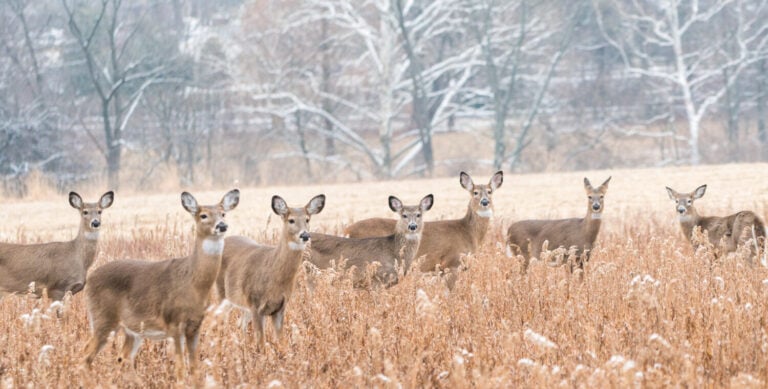
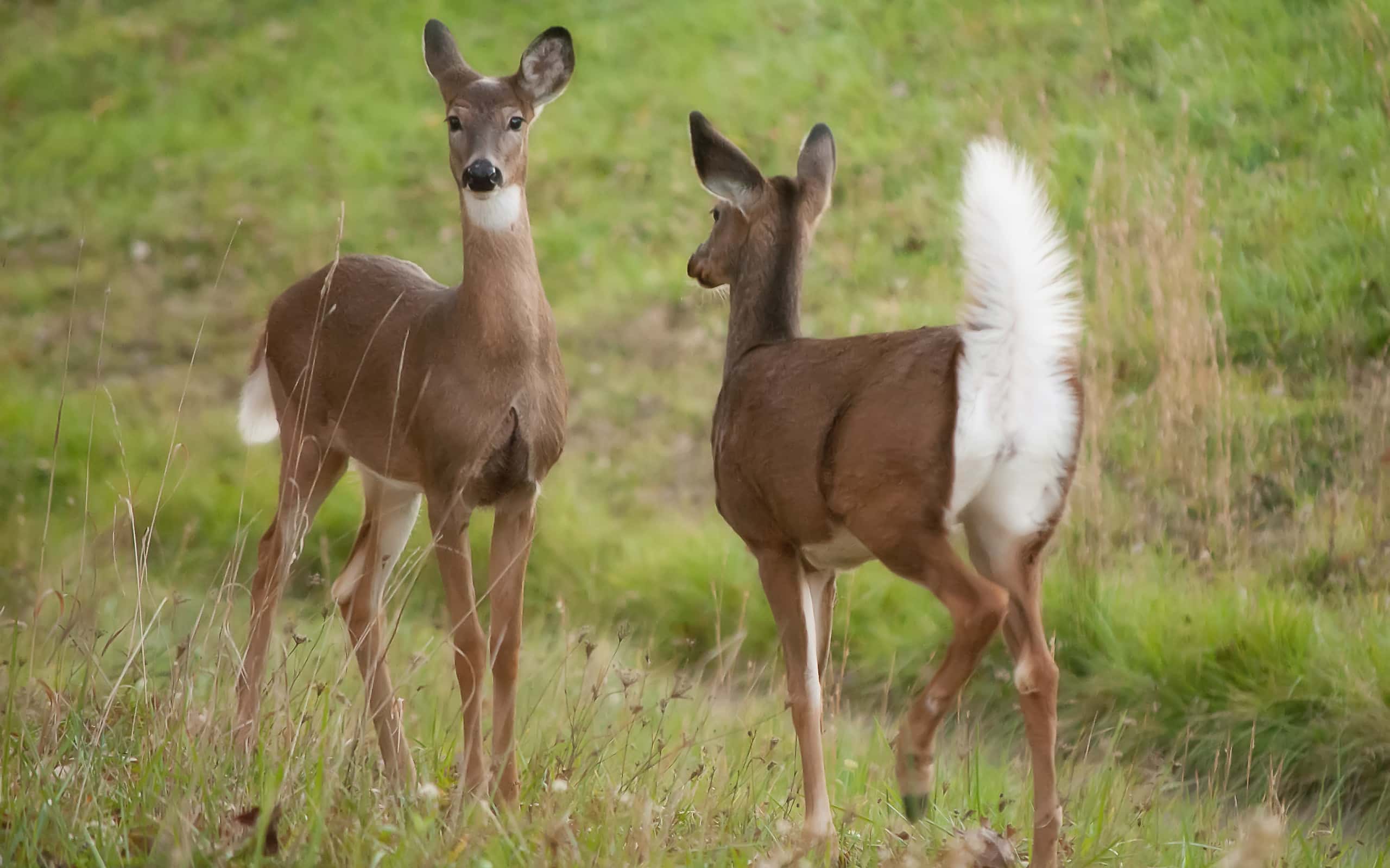
The white-tailed deer is a medium-sized member of the deer family found across much of North America. In summer, its coat is reddish-brown, shifting to grayish-brown during winter months. The most recognizable trait is the bright white underside of its tail, which it raises when alarmed. This visual signal helps other deer detect danger.
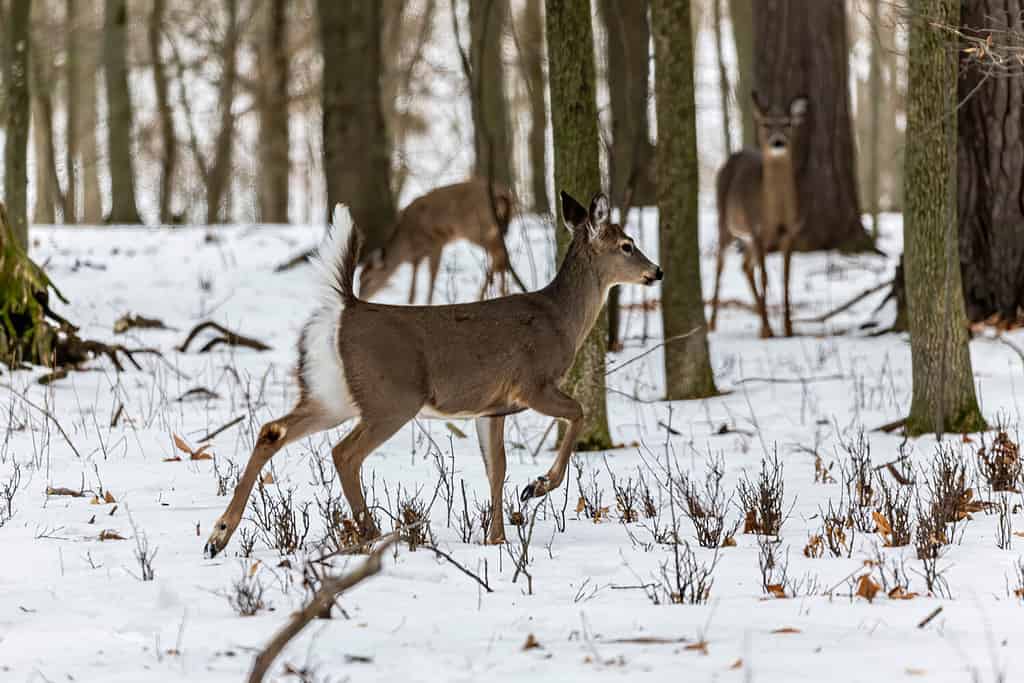
White-tailed deer get their name from the way they flash the bright underside of their tail as a danger signal to other deer.
©Karel Bock/Shutterstock.com
Adult males, known as bucks, grow antlers each year. These antlers are shed in late winter and regrown in spring, with a soft velvet covering that hardens by late summer. Females, called does, give birth in late spring or early summer. Fawns are born with white spots that help them blend into forest light and usually lose these markings by their first winter. White-tailed deer rely on sharp hearing, strong eyesight, and an excellent sense of smell. They are most active at dawn and dusk, moving between feeding areas and cover.
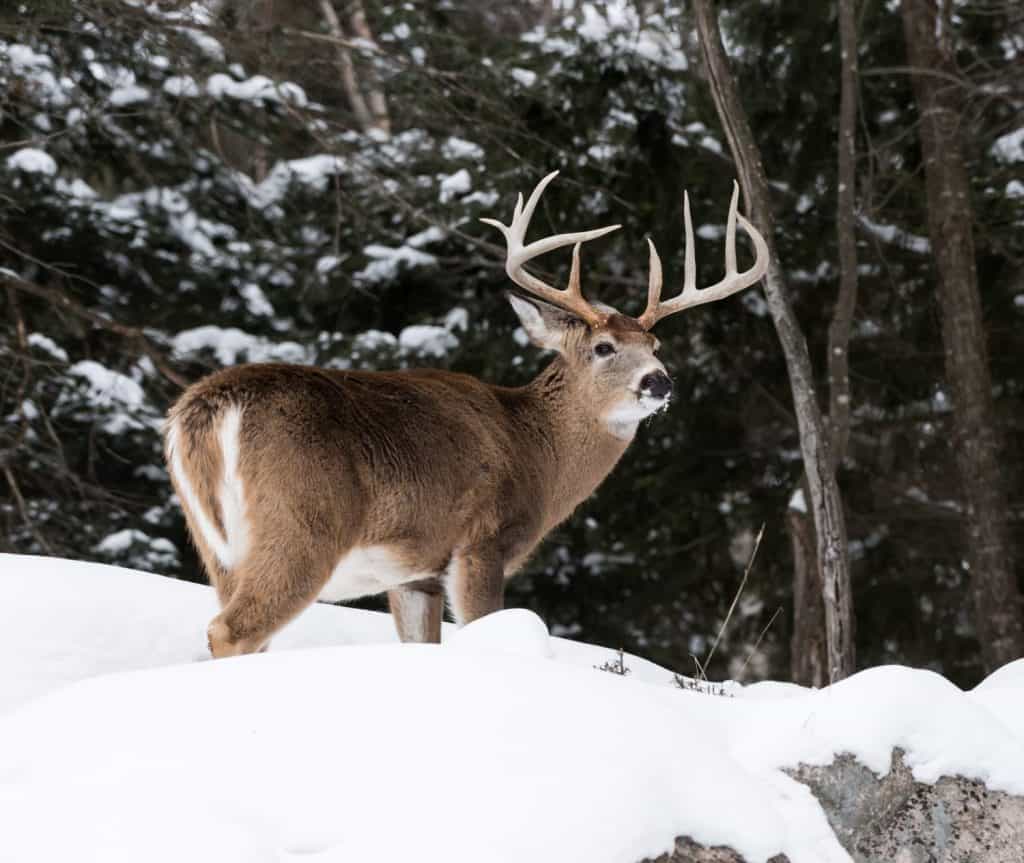
Bucks shed their antlers and regrow them in spring.
©FotoRequest/Shutterstock.com
A Lifeline for Native Peoples
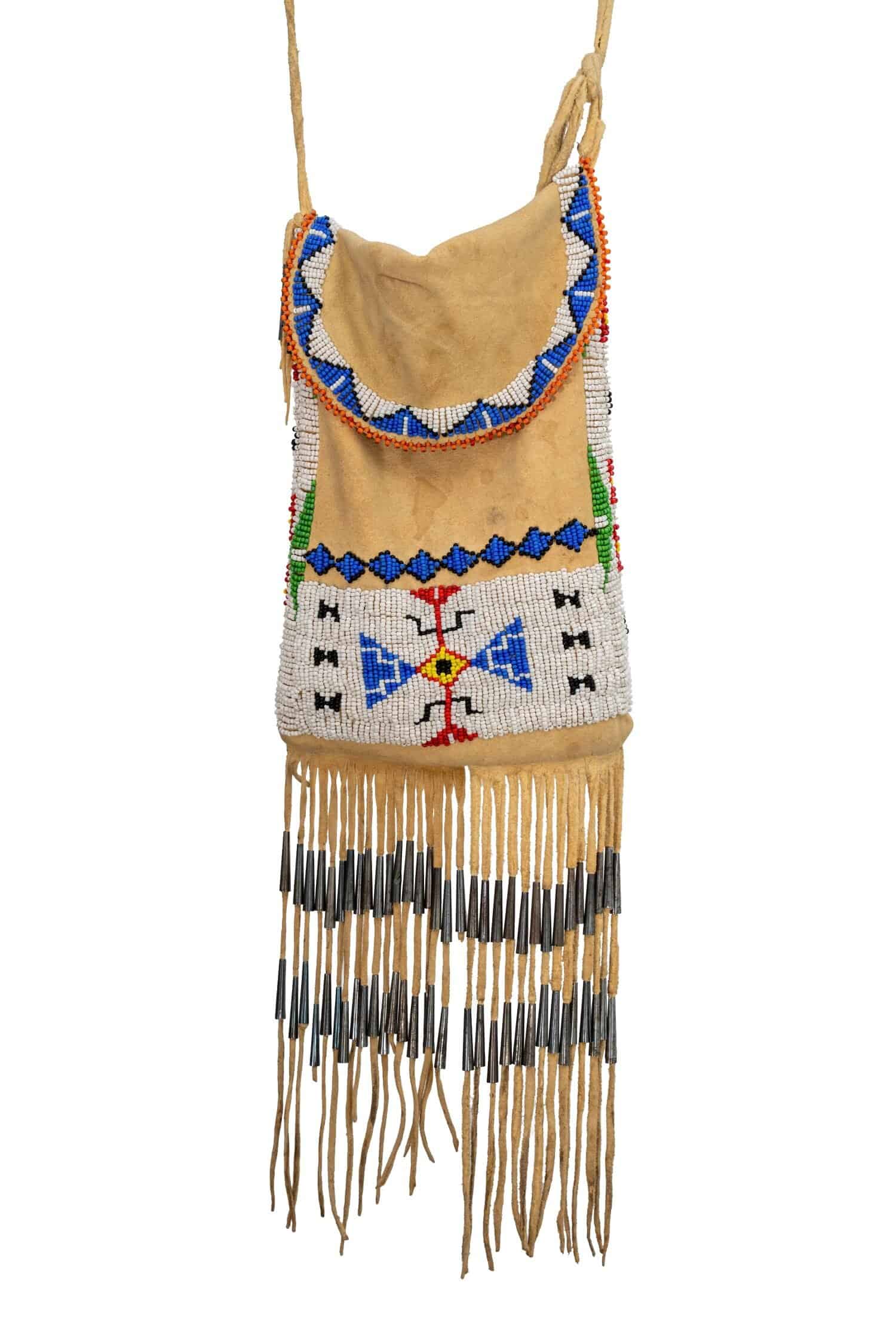
Long before European settlement, indigenous peoples in what is now Pennsylvania depended heavily on white-tailed deer. Deer provided a reliable source of protein that could be eaten fresh or preserved by drying or smoking. This food supply was essential during long winters when other resources were scarce. Deer hides were tanned into buckskin, which was used for clothing, footwear, and coverings. Bones and antlers became tools, needles, and parts for weapons, while sinew was used as strong cordage.
©Janny2/Shutterstock.com
Native Americans used deerskin for clothing, moccasins, bags, and many other useful items.
The animal held practical and cultural importance, appearing in stories, teachings, and seasonal practices. Hunting methods were carefully timed and shaped by knowledge of deer behavior and migration. This deep understanding allowed communities to meet their needs while maintaining balance with the land. For Indigenous peoples, the deer was not only a resource but also part of a broader relationship with nature that emphasized respect and restraint.
Deer and Early European settlers
When European settlers arrived in Pennsylvania, they quickly adopted similar uses for white-tailed deer. In the 1600s and 1700s, frontier communities were often isolated from towns and supply routes. Deer meat became a key food source, while hides were turned into clothing and trade goods. Buckskin garments were common due to their durability and warmth. Deer skins and meat were frequently traded for tools, salt, and other necessities. In some cases, deer products functioned as a form of informal currency.
Hunting skills were passed down through families and became central to frontier life. The availability of deer helped settlers survive periods of hardship and poor harvests. Over time, the animal became linked with ideas of self-reliance and adaptation. These early experiences helped shape the strong cultural connection between Pennsylvanians and the white-tailed deer.
From abundance to decline in the 1800s
As settlement expanded, forests were cleared for farms, towns, and industry. Logging operations removed large areas of habitat, leaving deer with fewer places to feed and hide. At the same time, hunting pressure increased sharply. Market hunters killed deer in large numbers to sell meat and hides, often shipping them to growing cities. Hunting seasons were poorly regulated or nonexistent, and there were few limits on how many animals could be taken. Firearms improved, making hunting more efficient.
By the late 1800s, deer populations had collapsed across much of the state. In some regions, deer were nearly gone, and sightings became rare. This sharp decline alarmed many residents and laid the groundwork for major changes in wildlife policy.
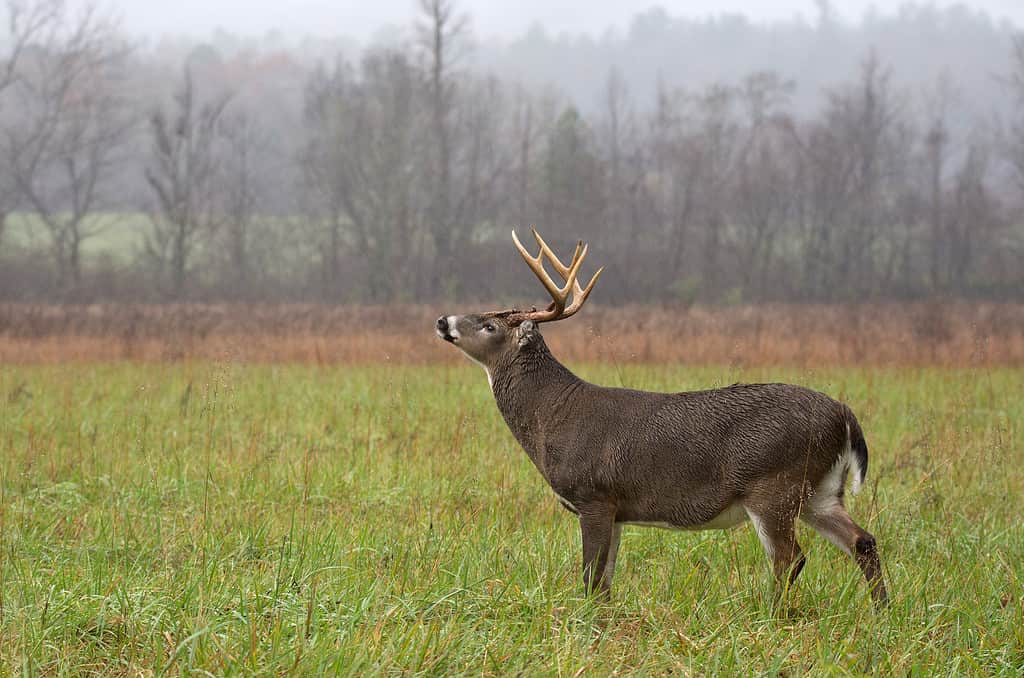
Deer sightings were rare in some parts of Pennsylvania by the 19th century.
©iStock.com/EEI_Tony
The rise of conservation efforts
The disappearance of white-tailed deer helped spark Pennsylvania’s early conservation movement. Lawmakers and concerned citizens began to recognize that wildlife could not survive without regulation. In the late 1800s and early 1900s, the state passed laws to control hunting seasons and limit harvests. Agencies were created to oversee wildlife management and enforce regulations. Forest restoration also became a priority, with efforts to replant trees and reduce uncontrolled logging. In some cases, deer were reintroduced to areas where they had vanished.

Reforestation was an important element of the recovery of deer in Pennsylvania.
©Scenic Corner/Shutterstock.com
These combined actions allowed populations to slowly recover. Regulated hunting played a key role by preventing overharvest while generating funds for management through license fees. By the mid-20th century, deer numbers had rebounded across much of Pennsylvania. This recovery was widely seen as proof that conservation laws and science-based management could reverse severe declines.
How the deer became the state animal
Pennsylvania officially named the white-tailed deer as its state animal in 1959. By that time, deer were once again common across the state. Many residents viewed their return as a success story rooted in responsible management. The choice honored the deer’s role in frontier survival and its ongoing importance to hunting and outdoor culture. It also recognized the animal as a symbol familiar to people in rural, suburban, and forested areas alike. Citizens routinely saw deer in everyday life, making them a relatable emblem. The designation linked the animal to Pennsylvania’s broader story of loss, recovery, and learning to manage natural resources more carefully.
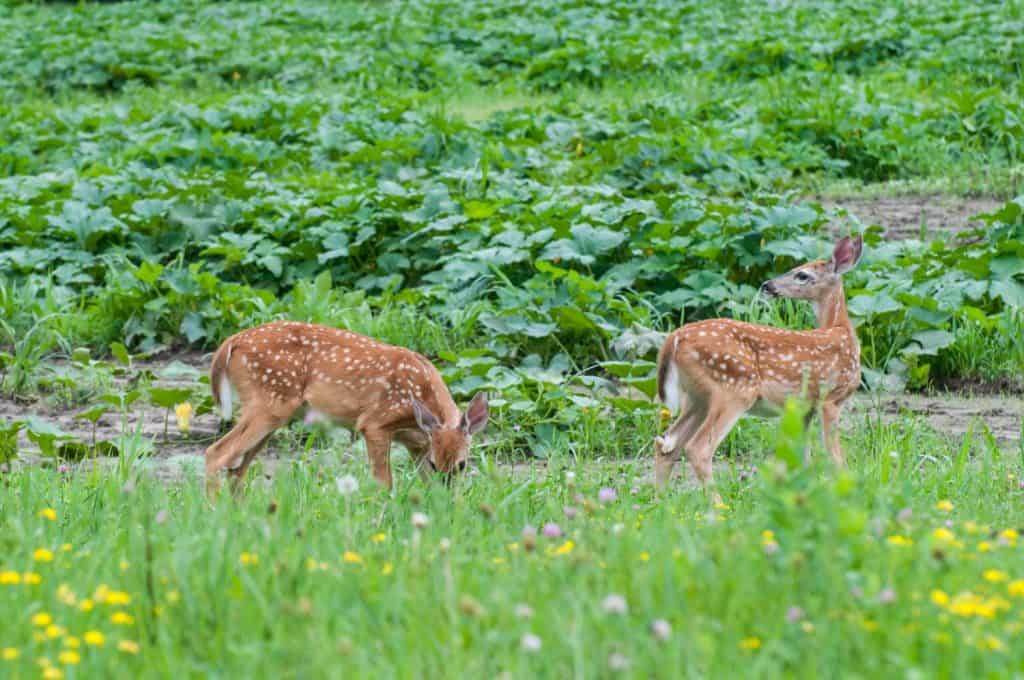
Deer birth rates had recovered by the mid-20th century. Fawns have spots that help camouflage them in dappled sunlight on the forest floor.
©Michael Siluk/Shutterstock.com
Support behind the designation
Hunters and sportsmen’s groups were influential voices in wildlife policy during this period. These organizations promoted regulated hunting as a way to sustain healthy deer populations. Conservation groups and educators also played a role by highlighting the deer in discussions of ecology and land use. Wildlife agencies used the deer as an example when explaining how management could balance human use with animal needs. This broad support made the white-tailed deer a practical choice for a state symbol. It appealed to many groups without controversy. People more easily accepted deer as a state symbol than predators like bears or wolves.
Outdoor Traditions
For many families, the white-tailed deer is a reminder of long-standing outdoor traditions. The opening days of rifle season are an unofficial holiday in some communities. Schools and workplaces may see lower attendance as hunters head into the woods. License fees and equipment taxes provide funding for conservation programs and public lands. These funds support habitat protection and wildlife research.

A young buck walks out of the woods as a hunter observes it through a gun sight.
©AdamLongSculpture/ via Getty Images
At the same time, many residents enjoy deer without hunting. Watching deer from a window, photographing them on trails, or spotting them during a drive are common experiences. This shared presence helps connect people with different views on land use. The deer serves as a link between recreation, tradition, and everyday life in Pennsylvania.
Modern challenges and conflicts
The recovery of white-tailed deer has brought new challenges. In many parts of Pennsylvania, deer populations are higher than the land can support. Heavy browsing can prevent young trees from growing, which affects forest health. Loss of understory plants also reduces habitat for birds and small mammals. Farmers and homeowners report damage to crops and landscaping. Vehicle collisions involving deer are another serious concern, especially during fall movements.
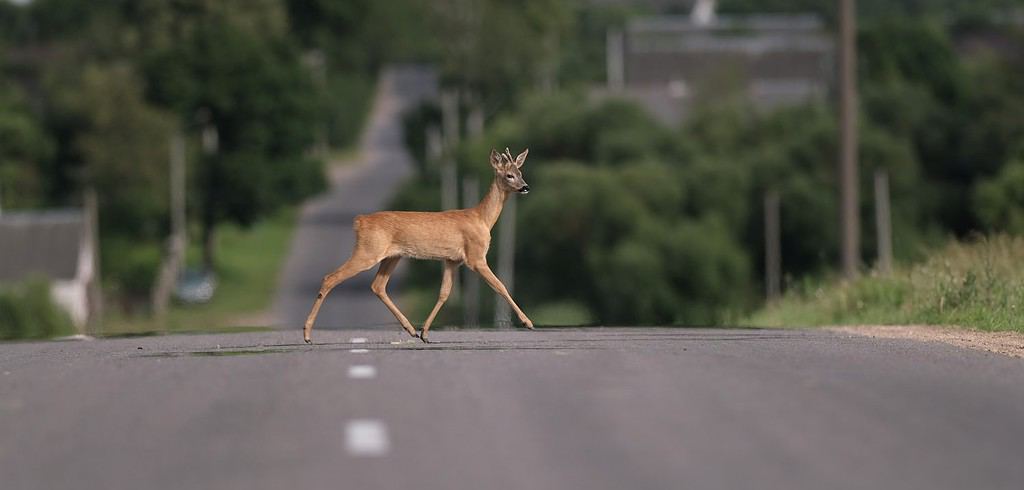
Deer are some of the most dangerous animals to humans in the United States because of their propensity for crossing roads unexpectedly and causing collisions.
©gorid photo/Shutterstock.com
Wildlife managers respond by adjusting hunting seasons and harvest limits based on local conditions. These measures aim to reduce damage while maintaining stable populations. The situation highlights the ongoing nature of conservation. Success requires constant monitoring and adjustment as conditions change.
A symbol that still fits
More than sixty years after its designation, the white-tailed deer continues to reflect Pennsylvania’s identity. Its meaning has grown more complex over time. The deer still represents wilderness and tradition, but it also stands for the responsibilities that come with managing wildlife in a developed state. Residents may admire deer while also dealing with their impacts. This mixed response mirrors broader challenges in balancing human needs with natural systems. The deer’s ability to adapt to suburbs and city edges shows how wildlife can persist alongside people. As a result, the animal remains a relevant emblem of coexistence and change.