
Quick Take
- In a single act of civic theater, 211,729 students voted to name the Florida panther as the state animal, turning a conservation symbol into a statewide civics moment.
- As an umbrella species requiring a vast home range, protecting its 200 square miles of wilderness safeguards watersheds, aquifers, and flood resilience for Florida’s residents and wildlife.
- The rebound hinged on a Texas genetic rescue that lifted the population from about 30 to over 100 individuals by releasing eight female cougars to break inbreeding.
- Read on to discover the polar bear decoy that spurred a classroom-driven conservation push and the Protect the Panther plate funding underpasses that save panthers from traffic.
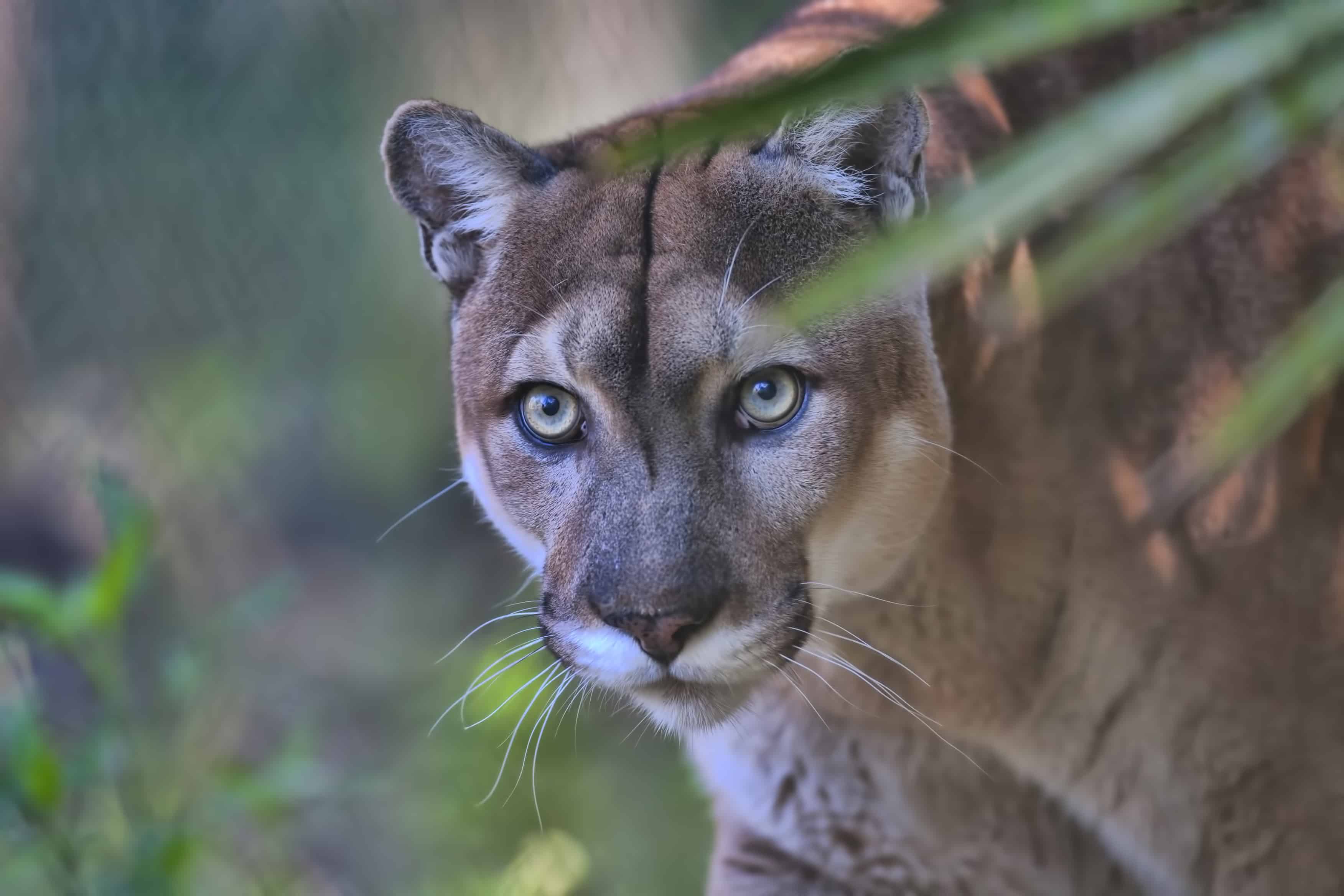
In the early 1970s, many biologists feared they were chasing nothing more than a “walking ghost.” The Florida panther (Puma concolor coryi), which once roamed across the entire Southeastern United States, had been pushed into the deepest, most inhospitable corners of the Everglades and Big Cypress Swamp. With only 20 to 30 individuals left, the species was on the brink of extinction, and its time was rapidly running out.
Today, the Florida panther represents a profound contradiction. It is Florida’s most beloved icon, decorating thousands of vanity license plates and the jerseys of a professional NHL team. Yet, it remains the state’s most vulnerable resident. As an apex predator that requires massive, unbroken stretches of wilderness, the panther serves as a barometer for the state’s environment. As long as the panther has room to roam, the spirit of “Wild Florida” survives.
The fact that the Florida panther still exists in 2025 is a testament to both scientific ingenuity and political resolve. Its journey from near extinction to an estimated population of 120 to 230 adult panthers is remarkable, though some experts caution that this range may be outdated and the population remains vulnerable. This recovery was fueled by a bold genetic experiment involving cougars from Texas, and a historic democratic push that began from an unlikely source: Florida’s classrooms.
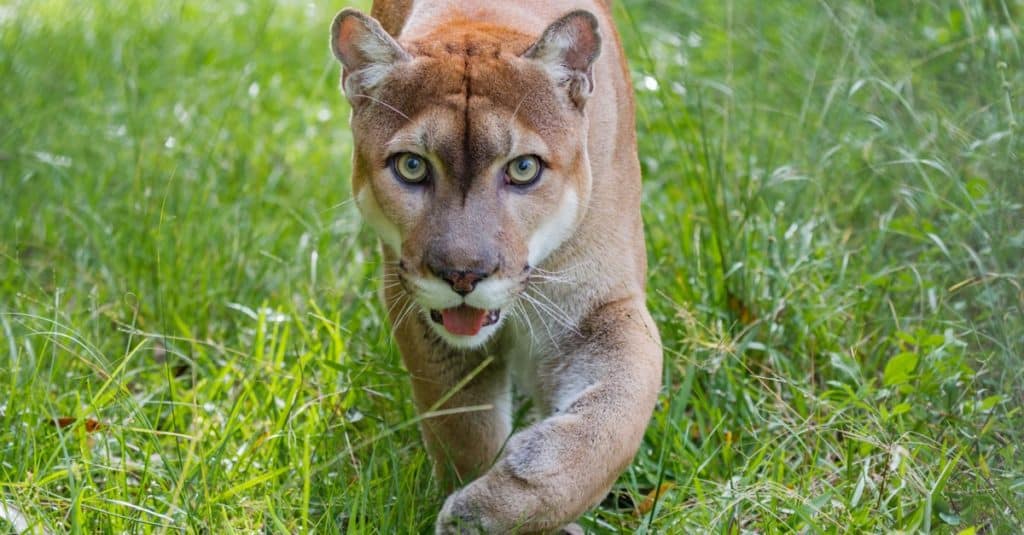
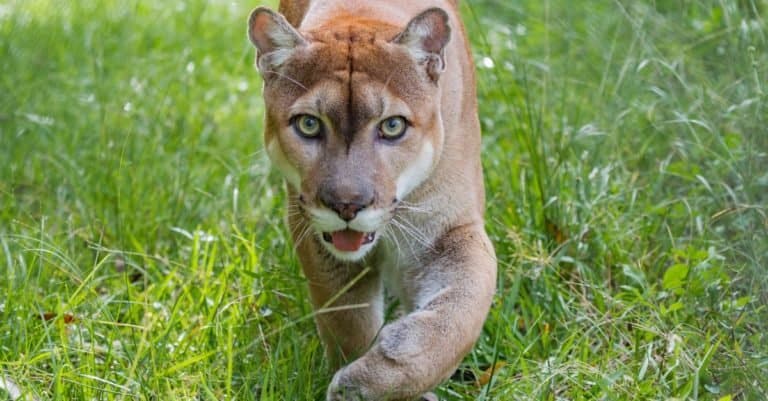
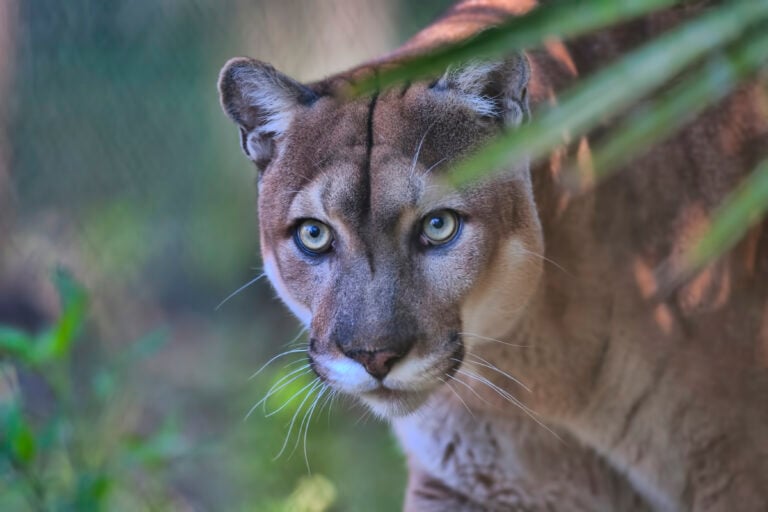
Florida panthers usually have black markings on the edges of their snout and ears, and the tip of their tail.
©jo Crebbin/Shutterstock.com
The People’s Choice
The Florida panther’s path to becoming a state icon began with a legislative placeholder and an unexpected sense of humor. In late 1981, State Representative William “Bill” Bankhead of Jacksonville pre-filed a bill to name an official state animal. However, there was no consensus on which creature deserved the honor.
To secure a spot on the busy legislative calendar, Representative Bankhead initially proposed the polar bear — an absurd choice for a subtropical state — as a strategic placeholder. This “decoy” bill temporarily held the space while another plan took shape.
Education Commissioner Ralph Turlington saw this bureaucratic maneuver as a golden opportunity to create a real-world civics lesson for Florida’s children. Rather than letting politicians choose the state symbol, he organized a statewide election, transforming Florida’s schools into polling stations.
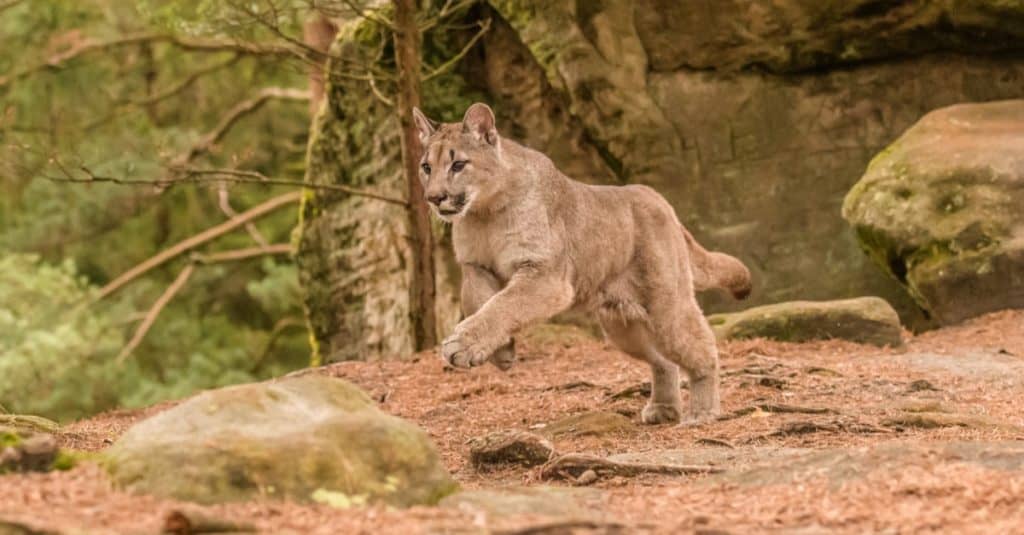
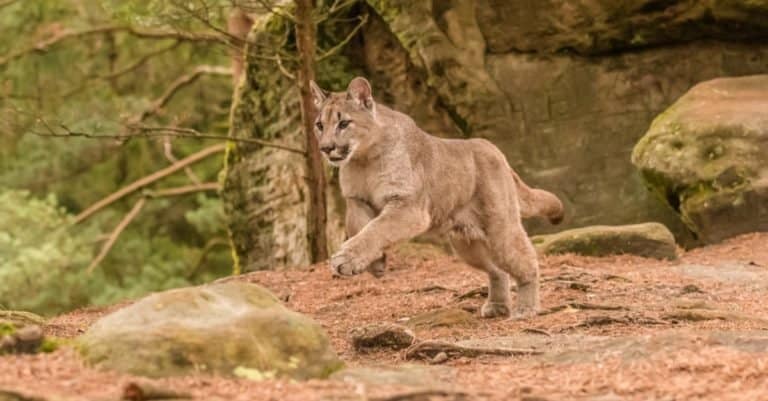
Florida panthers often have a crooked or slightly kinked tail.
©Vaclav Sebek/Shutterstock.com
Schools across the state’s 67 counties received ballots. Over 500,000 students studied the habitats and conservation needs of four primary candidates: the alligator, the manatee, the key deer, and the Florida panther. While some students got creative with write-in votes for dolphins, rattlesnakes, and even monkeys, the final tally was decisive. In a poetic twist, the children chose the animal they were least likely to ever see in the wild. With 211,729 votes, the Florida panther was officially named the state animal.
The Ghost of the Everglades
Known as a mountain lion or cougar in other regions, the Florida panther is a distinct subspecies. It is also the only puma population remaining east of the Mississippi River. Panthers are masters of agility, specifically evolved for the dense palmetto scrub and swampy hardwood hammocks of the American South.
These large, long-tailed cats have a tawny (pale brown) coat. Despite the common myth of the “black panther,” there has never been a documented case of a melanistic cougar in Florida. Their fur is evolutionarily designed to blend into dried grasses and dappled forest sunlight.
Male cougars stand 24 to 28 inches tall at the shoulder and weigh 100 to 160 pounds. A large male can stretch up to 7 feet from nose to tail. Females are smaller, typically ranging from 70 to 100 pounds.
A Vital “Umbrella” Species
Without the Florida panther, the delicate balance of the Everglades would collapse. This ecological truth was clearly recognized in 1981, when Florida’s students successfully voted to name the panther as the official state animal.
The Florida panther is vital to the state’s ecosystem because it acts as an umbrella species. Because a single male needs a vast home range — averaging about 200 square miles — protecting just one individual necessitates preserving vast parcels of land. By securing these large areas and the wild corridors that connect them, we inadvertently protect everything else living within them. As a result, thousands of species of birds, insects, and rare plants thrive simply because they share a habitat with the panther.
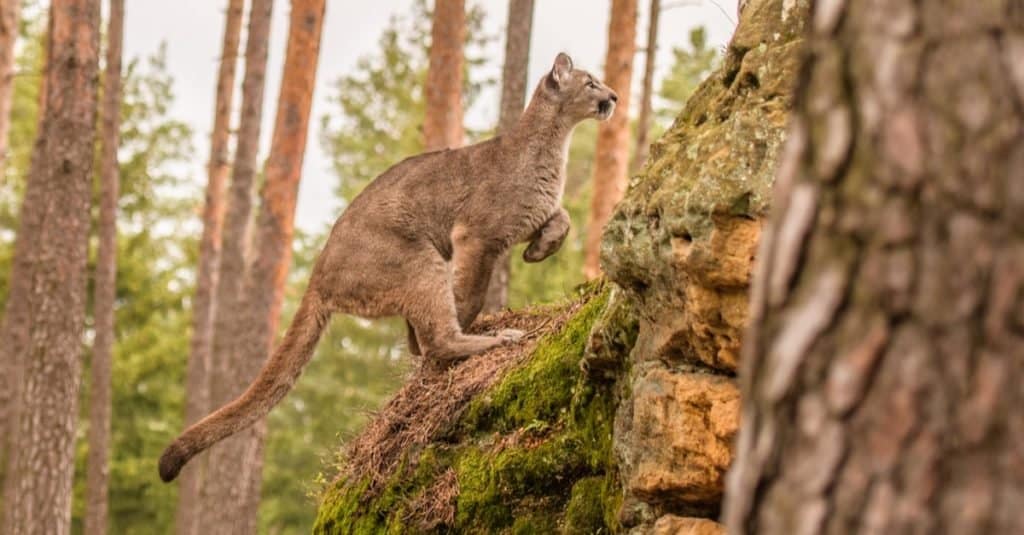
Florida panthers cannot roar.
©Vaclav Sebek/Shutterstock.com
Panther habitats often overlap with Florida’s vital watersheds. Protecting these lands secures the aquifers that provide clean drinking water for millions of Florida’s residents. Moreover, these unspoiled territories act as a buffer against urban development, helping to regulate local temperatures and absorb floodwaters.
As an apex predator, the Florida panther hunts feral hogs, which helps prevent the destructive over-rooting of sensitive wetlands. Panthers also keep deer and raccoon populations in check, ensuring these animals do not overgraze the landscape or strip it of vegetation.
From Bounty Hunting to Beloved Icon
For centuries, residents of Florida saw panthers as a dangerous nuisance that needed to be eradicated. The folklore of early European settlers and ranchers painted panthers as bloodthirsty monsters, leading to widespread persecution. In fact, it was not until 1958 that Florida finally recognized the panther’s value to the ecosystem and banned hunting.
Despite these efforts, the panther population continued to spiral toward extinction throughout the 1980s. When scientists studied the decline, Dr. Melody Roelke discovered that rampant inbreeding was causing severe genetic defects, including reproductive failure, kinked tails, and heart murmurs.
By 1995, the gene pool was so limited that the Florida panther was considered “functionally extinct.” In a desperate attempt to save the species, officials released eight female cougars from Texas to introduce new DNA. This “genetic rescue” was a massive gamble, but it paid off as the population surged from roughly 30 cats to over 100.
The Florida Panther’s Living Legacy
Beyond its crucial role in the wilderness, the Florida panther also serves as a profound cultural symbol, particularly to the Seminole people. In the Seminole Creation Story, the Panther (known as Coo-wah-chobee) is revered as the “Creator’s Favorite,” serving as the bridge between the divine and the foundational clans of the Seminole people. The Creator took such a special liking to the animal that he petted him constantly, and the Panther’s fur directly absorbed the Creator’s own healing powers and divine knowledge.
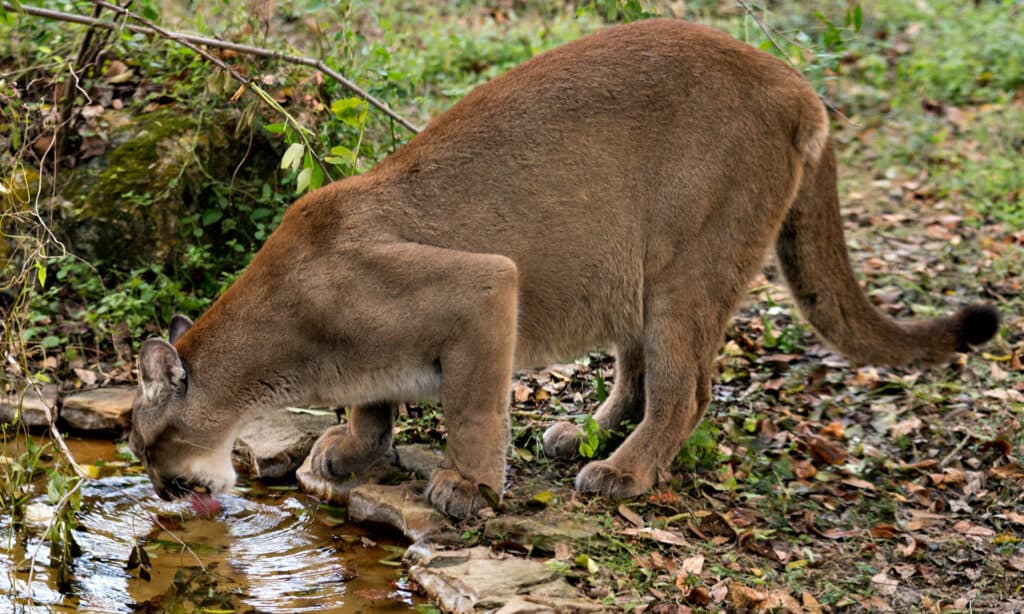
Florida panthers live primarily in the southwestern region of the state.
©iStock.com/Rejean Bedard
Florida’s residents also show their love for the panther through sports and civic pride. As the mascot for the NHL’s Florida Panthers, the animal represents agility, speed, and strength, rooting the team’s identity in the local landscape.
The panther is also the face of one of the state’s most successful specialty license plates, which raises millions of dollars specifically for conservation research and habitat protection. Launched in 1991, the “Protect the Panther” license plate remains a major funding source for the state’s research and management efforts; each purchase contributes directly to the Florida Panther Research and Management Trust Fund. These millions of dollars fund satellite tracking collars, genetic monitoring, and the construction of vital wildlife underpasses that save panthers from vehicle collisions.
Politics, Economy, and Survival
Today, the Florida panther’s survival is more than just a biological challenge — it is now a political and economic one. In a state that welcomes hundreds of new residents every day, the “vast territory” a panther needs to survive is increasingly being paved over.
Panthers are solitary and territorial animals. When a young male seeks his own 200-square-mile range, he must cross high-speed roadways. The year 2016 remains a record, with 34 panthers killed by vehicles. However, 2024 was nearly as devastating, with 26 panthers killed by vehicles.
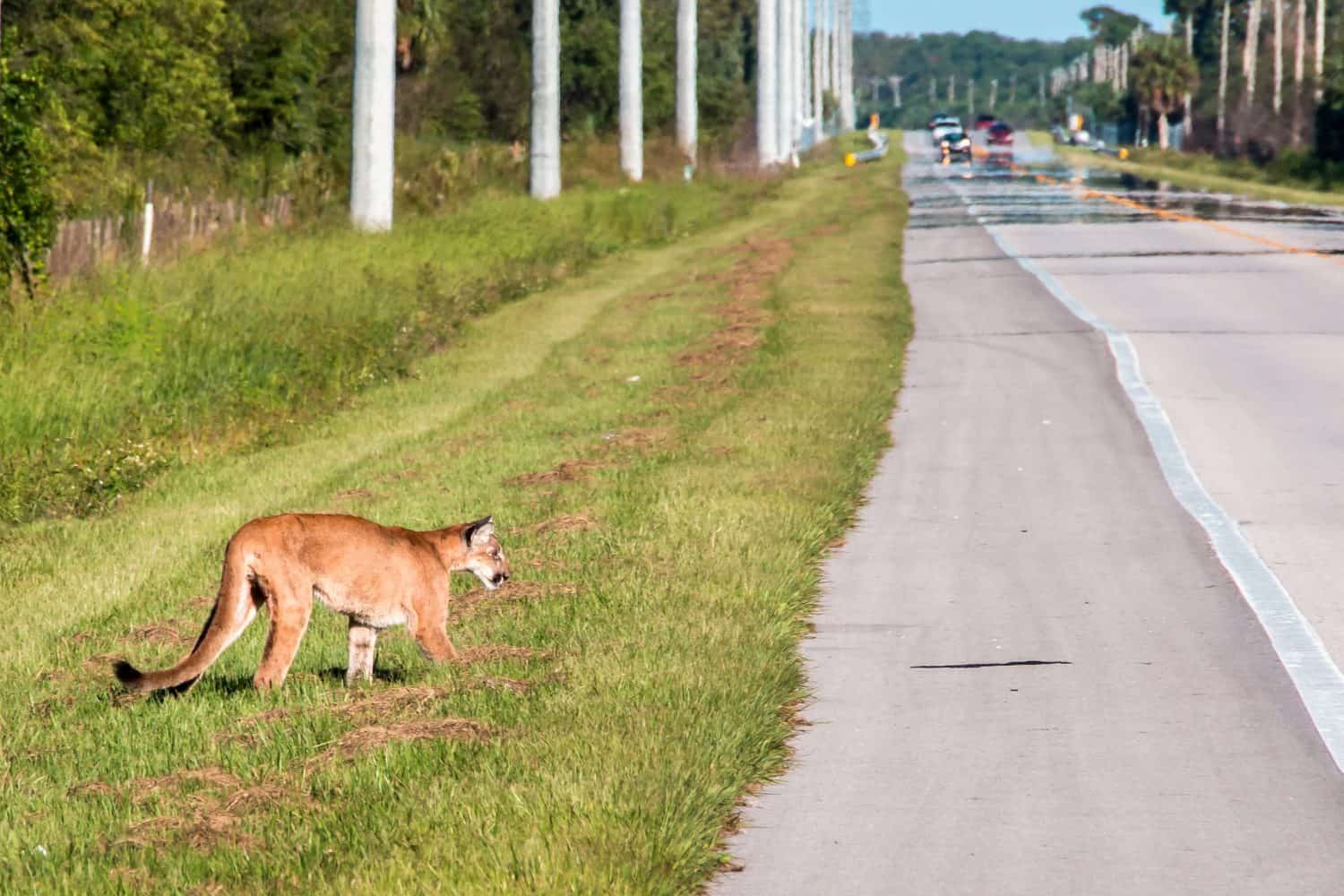
Humans are the greatest danger to Florida panthers.
©Michael A. Damanski/Shutterstock.com
To combat this, Florida has invested in multimillion-dollar underpasses and fencing. These “panther bridges” have been very successful, allowing the cats to move safely beneath traffic. However, they are also expensive and difficult to implement across the entire state.
Feline leukomyelopathy (FLM), a mysterious neurological disorder, also threatens Florida panthers. This condition impairs the panther’s ability to walk, further complicating conservation efforts. As of late 2024, the exact cause of the disorder remains unknown, leaving the Florida panther’s recovery in an even more fragile state.