
Quick Take
- Achievement of population counts in the hundreds of thousands became a requirement for statewide recognition.
- The Odocoileus virginianus classification creates a management challenge regarding crop damage and public safety.
- It is counterintuitive that the near-total disappearance in 1900 led to statewide dominance.
- The 1988 designation was necessary to link shared history with modern conservation.
Ohio’s white-tailed deer might seem like an obvious state symbol, but that familiarity is exactly why it works. Few animals have influenced daily life in this state as consistently or for as long. Officially named Ohio’s state mammal in 1988, the white-tailed deer reflects a long history that ties together forests, farms, hunting traditions, and modern conservation efforts. For centuries, deer have shaped how people lived on the land, from early subsistence practices to present-day outdoor recreation.
The decision to recognize the deer was not about novelty. It was about choosing an animal that nearly every Ohioan recognizes and understands. Deer are part of the scenery in rural areas, suburbs, and even near city edges. They symbolize endurance, adaptability, and the complicated relationship between people and wildlife. Decades after the designation, the choice still feels closely aligned with Ohio’s identity.
Official State Mammal (Odocoileus virginianus)
Ohio formally designated the white-tailed deer as its state mammal in 1988. The decision was written into state law, identifying the species by its scientific name, Odocoileus virginianus. Unlike some states that selected symbols early in their histories, Ohio waited until late in the twentieth century to name an official mammal. That timing was significant because the deer’s recovery from near extinction was already well underway.
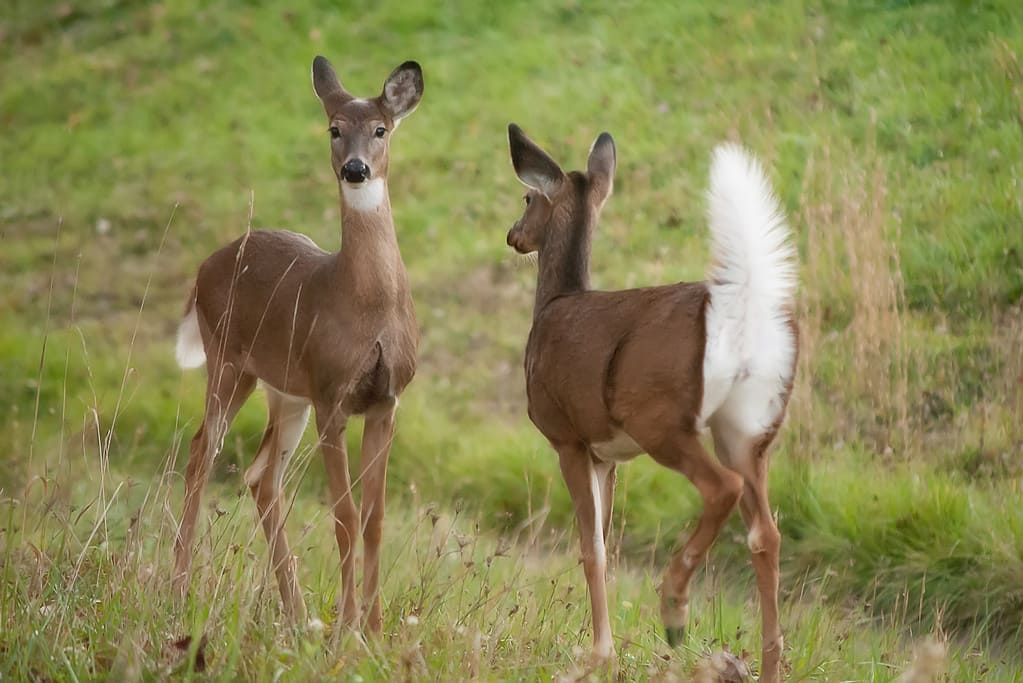
The white-tailed deer, Ohio’s state mammal, thrives across all 88 counties thanks to decades of conservation efforts.
©Christopher Roth/iStock via Getty Images
By the 1980s, white-tailed deer lived in all 88 counties and were central to regulated hunting seasons and wildlife management programs. Lawmakers viewed the species as one that reflected the entire state rather than a single region. The designation recognized not only the animal itself but also decades of conservation work supported by biologists, land managers, and hunters.
Deep Roots in Ohio’s History
Long before Ohio became a state, white-tailed deer were essential to Indigenous nations throughout the region. Deer provided food, clothing materials, tools, and trade goods. Their presence shaped seasonal movements and hunting practices, and the animal held cultural meaning beyond its practical uses.
European settlers depended on deer as well, especially during the early years of settlement. As towns expanded and forests were cleared, hunting pressure increased. By the late nineteenth century, deer populations declined sharply. By the early 1900s, white-tailed deer were effectively gone from Ohio. That loss became an early example of how quickly wildlife could disappear without limits or oversight.
A Conservation Comeback Story
The return of white-tailed deer to Ohio is often cited as one of the state’s most successful wildlife recovery efforts. In the early twentieth century, strict hunting laws were enacted, and restocking programs were introduced. Deer were brought in from other states and released into protected areas, including lands that later became state forests.

A male white-tailed deer in Ohio’s tall grass reflects the species’ successful recovery and restored habitats.
©iStock.com/Wirestock
As forest cover increased on abandoned farmland and management practices improved, deer populations steadily grew. By the middle of the twentieth century, the species had spread across Ohio once again. Today, the statewide population is estimated in the hundreds of thousands. Carefully regulated harvests are used to keep herds at levels that the land can support, reinforcing the deer’s role as a conservation success shaped by long-term planning.
Everyday Presence Across the Buckeye State
White-tailed deer are among the most familiar wild animals in Ohio. They thrive in a wide range of environments, including forests, farm edges, suburban green spaces, and undeveloped lots near cities. Many residents encounter deer while driving, walking trails, or simply looking out a window in the early morning or evening.
Their ability to adapt to fragmented habitats has enabled them to live in close proximity to people. Woodlots, cornfields, and residential areas all provide food and cover. Because deer are so frequently seen, they are a shared experience for people across the state, whether they live in rural townships or growing suburbs.
Cultural Symbol and Hunting Heritage
Hunting has played a major role in shaping Ohio’s relationship with white-tailed deer. Regulated deer seasons support conservation funding and provide food for thousands of households. For many families, hunting is a tradition passed down through generations, connecting outdoor skills with time spent together.
The white-tailed deer is Ohio’s only big-game animal, and annual harvest totals often reach the hundreds of thousands. Beyond hunting, deer appear in school lessons, children’s books, and local media. Their presence in everyday life, recreation, and education helped make the species an appropriate choice for official recognition.
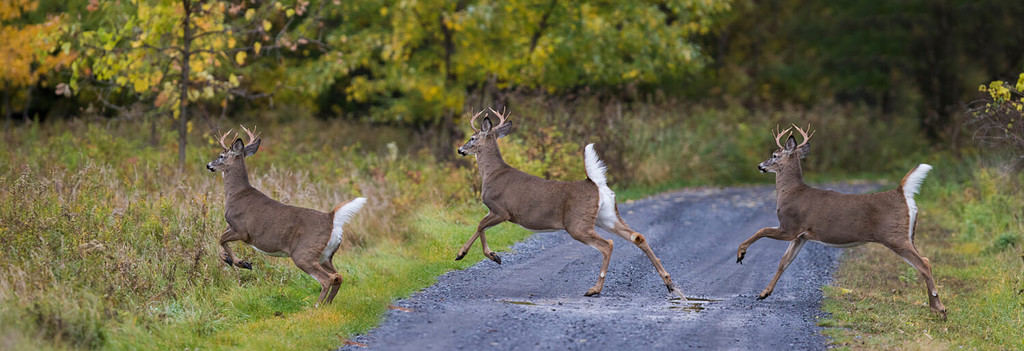
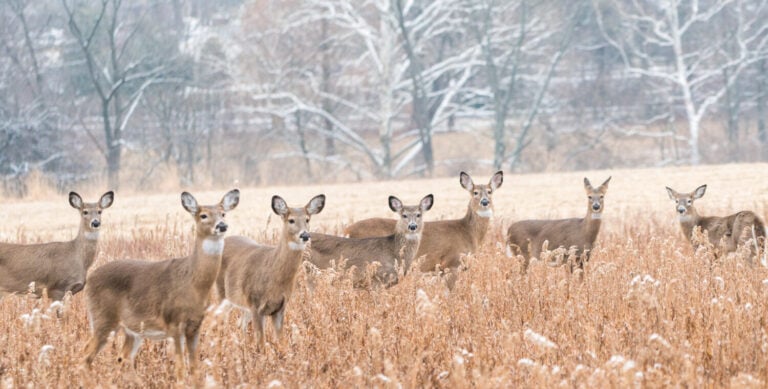
White-tailed deer are a familiar sight across Ohio, interacting with human landscapes while thriving in restored habitats.
©Mircea Costina/Shutterstock.com
Physical Traits and Recognizable Behavior
White-tailed deer are known for features that make them easy to identify. Their raised tail reveals a bright underside, which serves as a warning signal to other deer when danger is near. This behavior is often the most memorable detail for people who see a deer suddenly flee.
Built for speed and agility, deer can run at speeds approaching 40 miles per hour, leap high obstacles, and swim when necessary. Bucks grow antlers each year, shedding them and regrowing new sets as part of a natural cycle. These visible traits contribute to the deer’s strong presence in the public imagination.
Ecological Role in Ohio’s Forests and Fields
As Ohio’s largest common plant-eating mammal, white-tailed deer play a major role in shaping local ecosystems. They browse on leaves, twigs, acorns, crops, and ornamental plants. Their feeding habits influence which tree seedlings and wildflowers survive, particularly in forest understories.
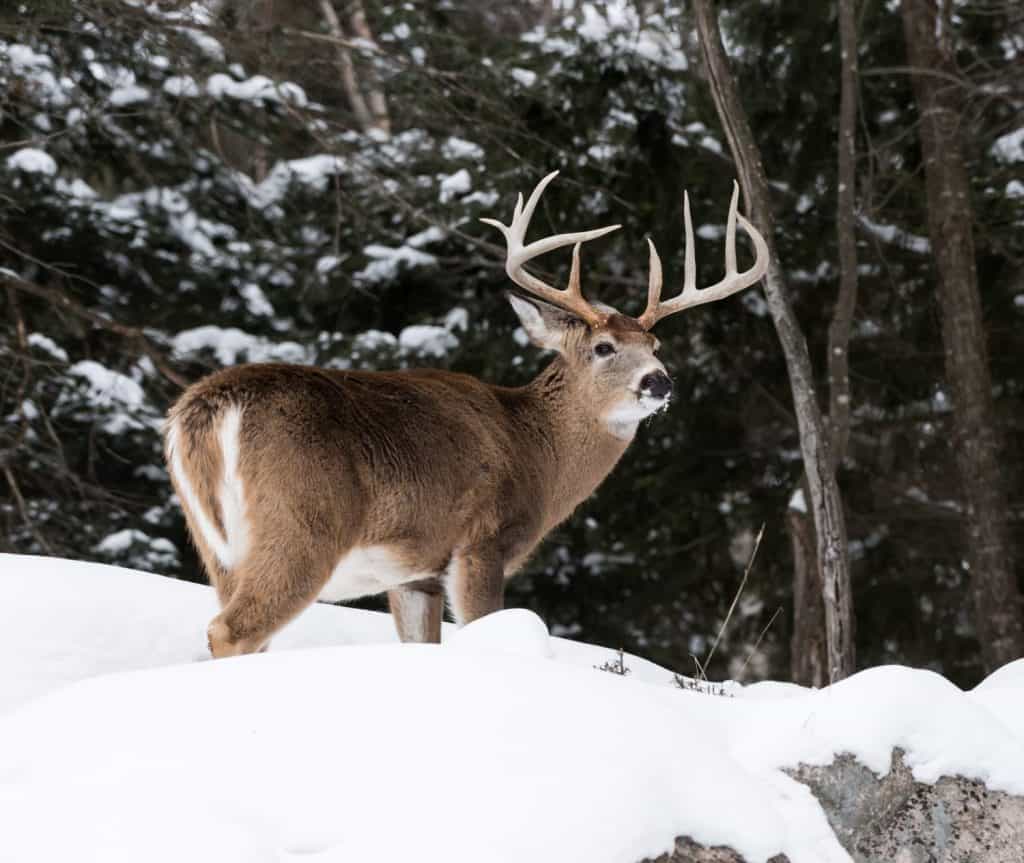
In the winter, white-tailed deer browse on twigs and shrubs, helping maintain Ohio’s plant diversity despite the cold.
©FotoRequest/Shutterstock.com
Balanced deer populations can support healthy plant turnover and habitat diversity. When numbers grow too high, overbrowsing can reduce native plant growth and give invasive species an advantage. Wildlife managers monitor herd size closely and adjust regulations as needed to protect long-term ecosystem health.
From Predators to Human Management
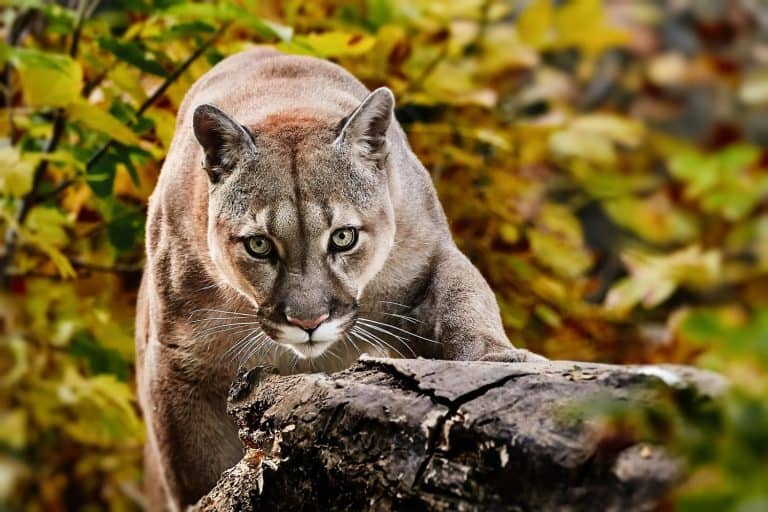
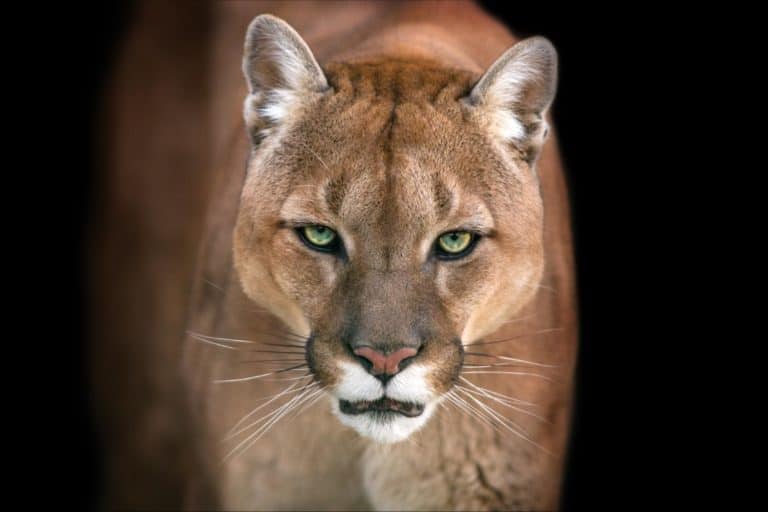
Historically, predators such as wolves and cougars helped regulate deer populations across the eastern United States. As those predators disappeared and landscapes changed, humans became the primary force controlling deer numbers. Laws shifted over time, first protecting dwindling herds and later expanding harvests as populations increased.
Today, deer management remains a topic of public discussion in Ohio. Vehicle collisions, crop damage, and residential concerns are common issues. The deer’s designation as a state symbol reflects not only admiration but also the responsibility of managing a species that lives so closely alongside people.
How States Use Animals to Express Identity
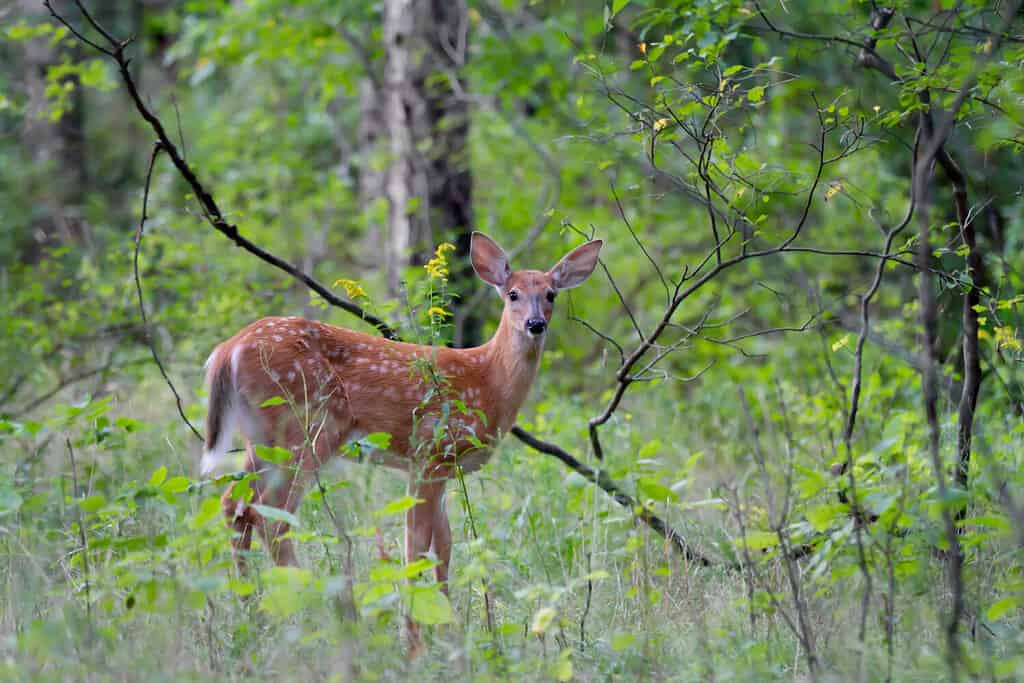
A young female white-tailed deer in Ohio’s forests represents the next generation, helping shape the state’s diverse ecosystems through its feeding habits.
©Jim Cumming/Shutterstock.com
Official animals serve as more than decorative symbols. States often select species that reflect shared history, local landscapes, or economic traditions. The process of choosing an animal can involve educators, civic groups, and student-led efforts, turning the decision into a public lesson about biology, history, and citizenship.
Once adopted, a state animal becomes a familiar reference point in classrooms, tourism materials, and public conversations. The designation can also raise awareness and support for conservation, research, and habitat protection. In this way, official animals connect environmental responsibility with regional identity, reinforcing the idea that wildlife and communities exist within the same living landscape.
A Shared Species with a Local Story
Many states recognize the white-tailed deer in official ways because of its wide distribution and cultural importance. Ohio’s relationship with the species, however, carries a distinct history. The deer stands alongside other state symbols that reflect agriculture, natural resources, and regional heritage.
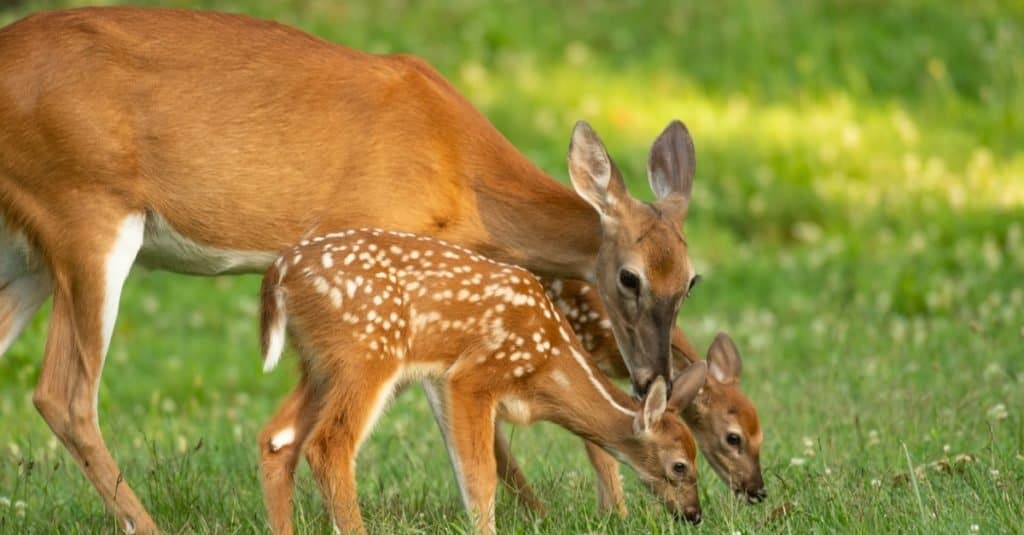
This mother and her fawns reflect Ohio’s changing relationship with the land, where conservation efforts have led to a new generation of white-tailed deer.
©Tony Campbell/Shutterstock.com
The combination of early reliance by Indigenous peoples, heavy exploitation during settlement, near disappearance, and eventual recovery gives the deer special meaning in Ohio, reflecting the state’s evolving relationship with its land over time.
Why the Choice Still Makes Sense Today
More than three decades after its designation, the white-tailed deer still fits Ohio’s image. Deer remain widespread and highly visible, sometimes in numbers that require careful control. Their presence serves as a daily reminder that wildlife can persist in landscapes shaped by human activity.
The deer’s story offers lessons about conservation, patience, and shared responsibility. From classroom discussions to roadside sightings, it links personal experiences with a larger narrative about Ohio’s past and future. As long as people and deer continue to share fields, forests, and neighborhoods, the white-tailed deer will remain a symbol that feels firmly rooted in place.