
Quick Take
- Gray Wolves typically hunt large mammals supplemented with rabbits and hares.
- Five Pacific salmon species migrate upstream in British Columbia’s rivers and streams.
- The annual migration of so many spawning salmon presents an excellent potential source of nutrition to terrestrial carnivores.
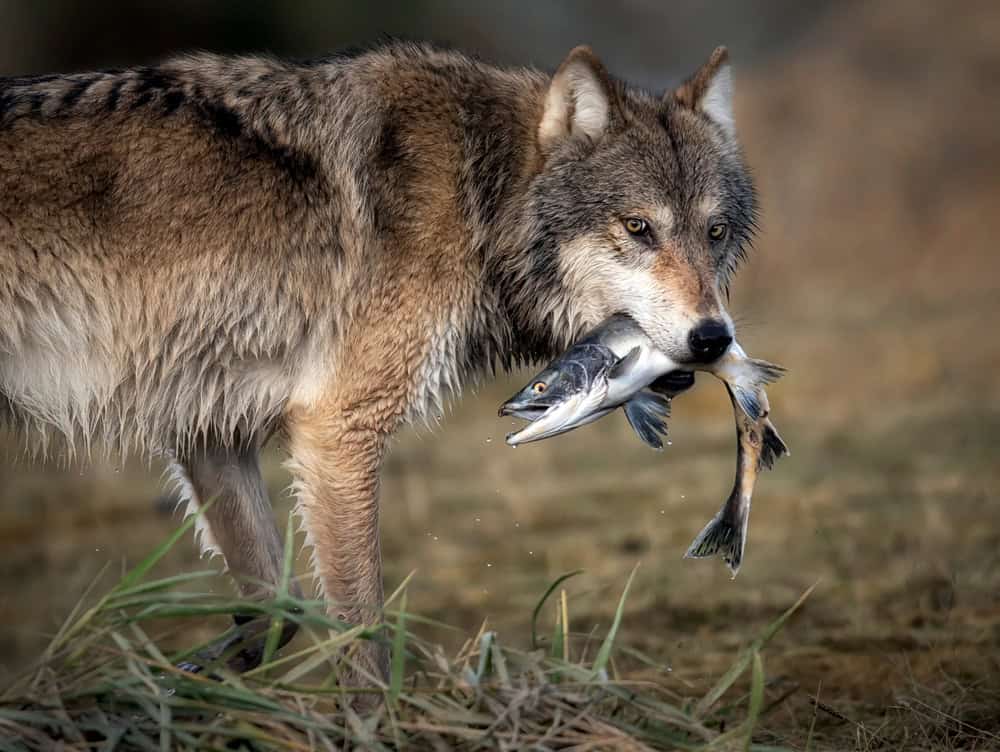
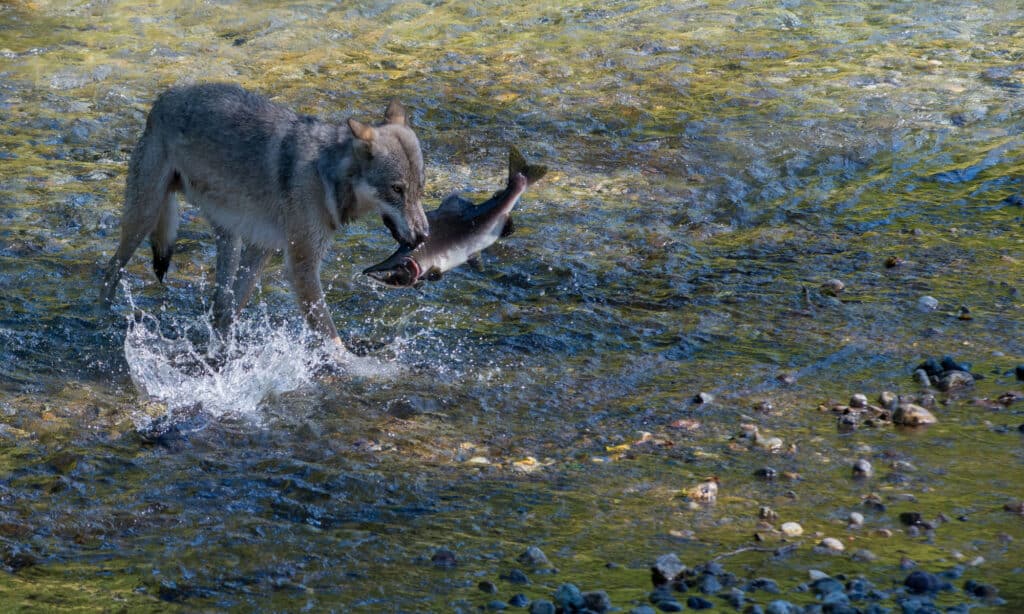
- Gray wolves in British Columbia hunt salmon in streams.
- They grab them with their teeth and eat them on the shore.
Wolves are intelligent and resourceful terrestrial (land-living) predators. As is clear from this fascinating Instagram post, some of them are also good at fishing. Take a look for yourself! We researched whether this is normal behavior for wolves and why the wolves would behave in this way. This is what we found out.
What We Know About the Gray Wolf Diet
Gray wolves (Canis lupus) are highly adaptable carnivores distributed across the Northern Hemisphere. The largest numbers are in northern regions, primarily Russia and Canada (where the wolves in this clip were filmed). They live in forests, prairies, deserts, swamps, and tundra, mainly in wilderness and remote areas.
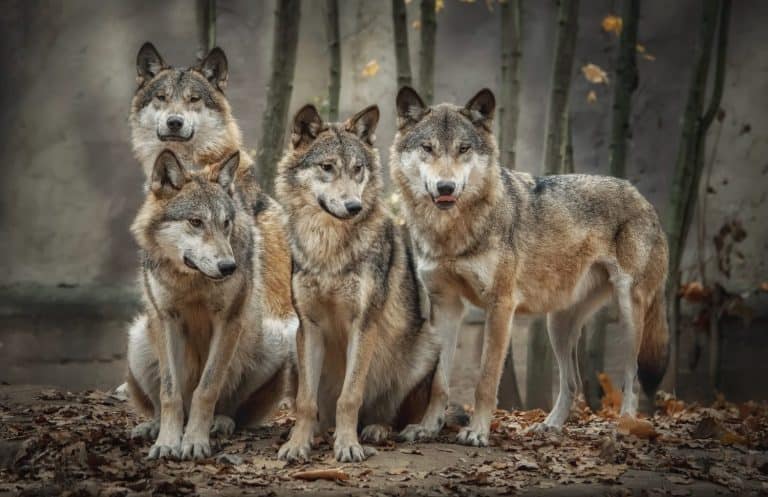
The clip shows a group of wolves. They are extremely social animals that live in family groups called packs. Their hunting behavior can involve the entire pack or be done individually. However, when it comes to fishing, each wolf appears to hunt on its own.
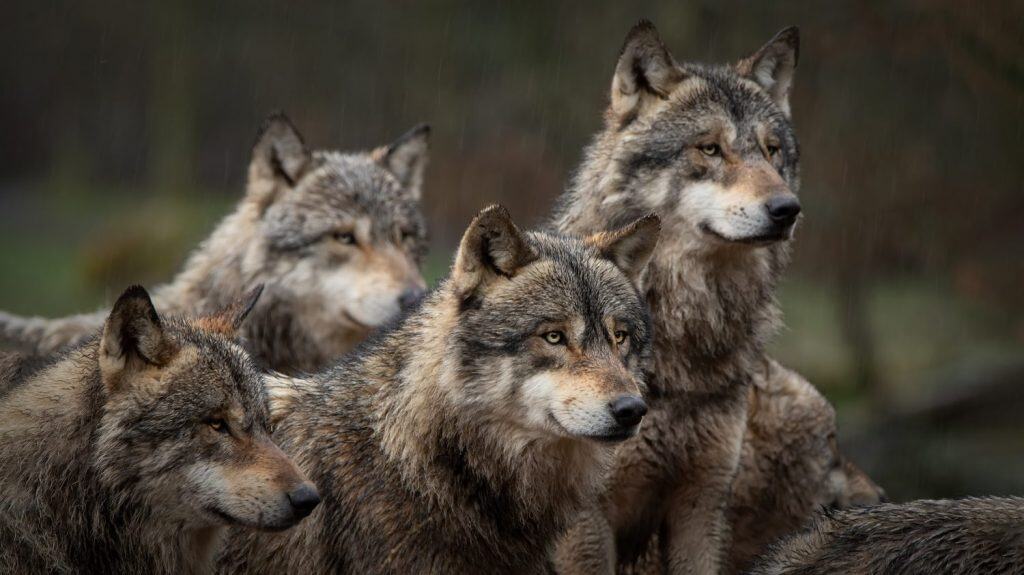
Gray wolves hunt as a pack or alone.
©Pat-s pictures/Shutterstock.com
Their primary prey is large mammals, and in North America, this is generally white-tailed and mule deer, moose, musk-ox, caribou, bighorn sheep, elk, and bison. Between larger kills, they supplement their diet with rabbits, hares, and voles. Gray wolves are also happy to scavenge food from other predators and even garbage dumps. When a large kill is made, they will stay close to it for several days as the entire pack feeds. Wolves can gorge themselves and eat up to 22 pounds of meat at one time! The dominant males and females get to feed first.
Spawning Salmon Annual Migration in British Columbia
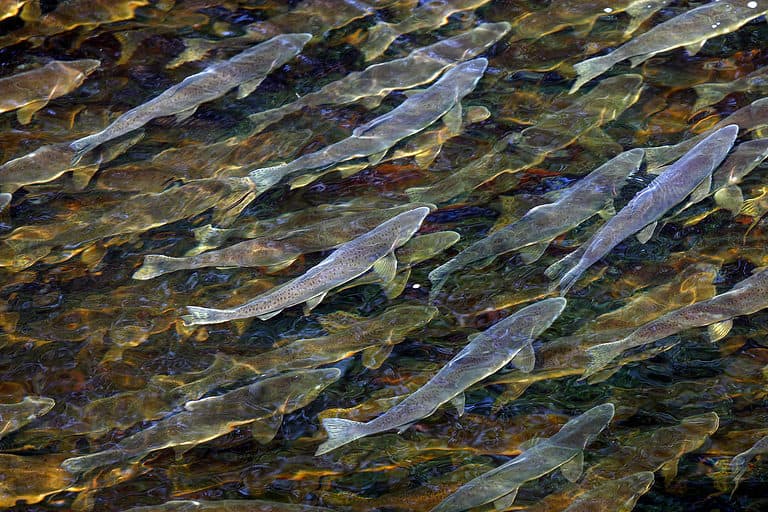
The annual migration of spawning salmon presents an attractive food source for carnivores living in and around rivers. Five Pacific salmon species migrate upstream in British Columbia’s rivers and streams. Chinook salmon (Oncorhynchus tshawytscha) migrate upstream from the spring through the fall as far as 900 miles inland. Coho salmon (Oncorhynchus kisutch) return to fresh water between late summer and early fall, also journeying 900 miles inland. Chum (Oncorhynchus keta) generally spawn in late fall but stay in tributaries near the coast, so they are no more than 90 miles or so inland. Pink salmon (Oncorhynchus gorbusha) return from the sea to rivers in the late summer and early fall, but stay close to the sea. Finally, sockeye salmon (Oncorhynchus nerka) return to their spawning streams, which are always connected to lakes.
Carnivores Seize the Opportunity
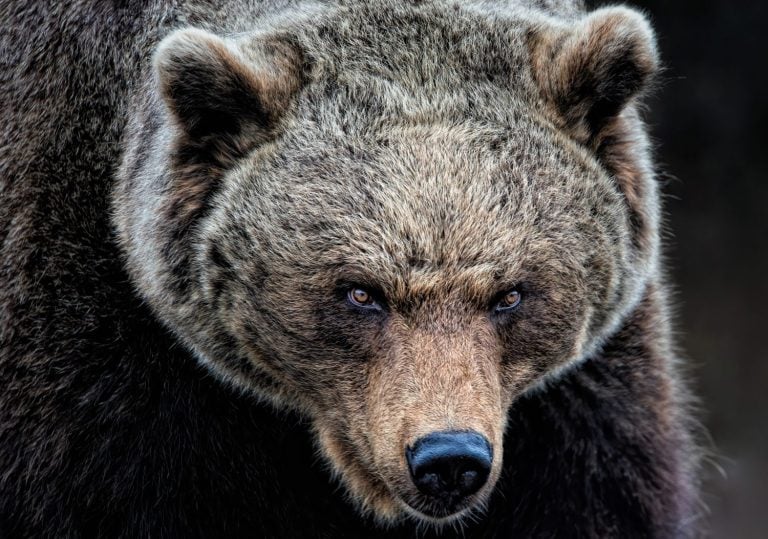
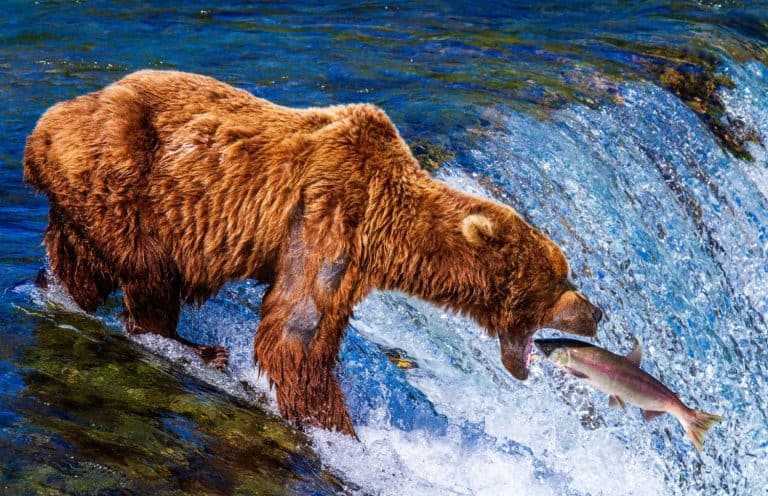
The annual migration of so many spawning salmon presents an excellent potential source of nutrition to terrestrial carnivores. They are highly nutritious and predictable, which is exactly what we all want from our meals! Species that evolved alongside the salmon have adapted their hunting strategies to exploit the food source. Their leading predators are black and brown bears (Ursus americanus and Ursus arctos). However, foxes (Vulpes vulpes), otters (Lontra canadensis), and bald eagles (Haliaeetus leucocephalus) also hunt them.
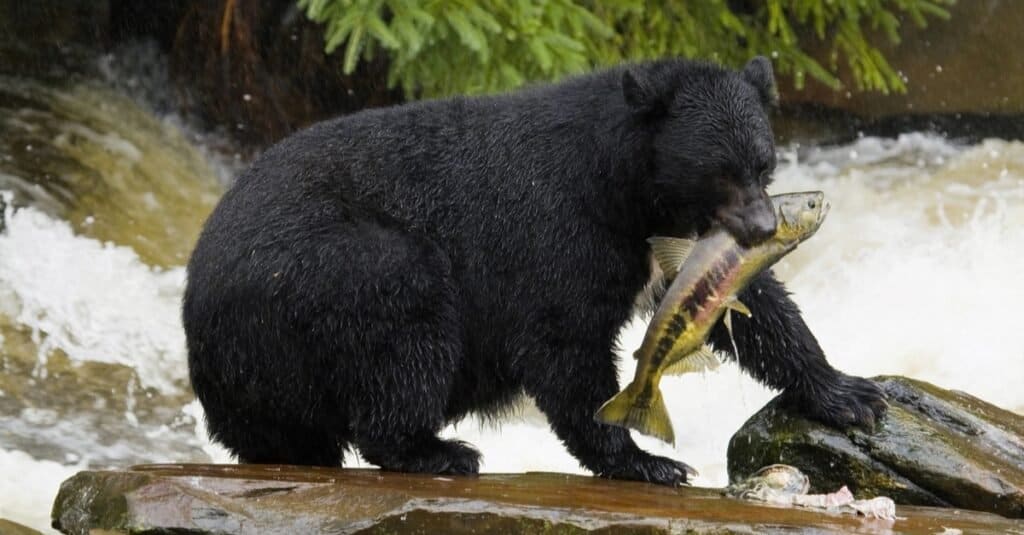
Some bears are experts at catching fish.
©emperorcosar/Shutterstock.com
Gray wolves live on the land around rivers used by the salmon in British Columbia and across other large areas of western North America. It’s hardly surprising that they noticed this potential feast and decided to help themselves.
Watching Gray Wolves Hunt Salmon
The above Instagram post provides video evidence that gray wolves are very good at hunting salmon in rivers. Also, the remains of salmon have been found in wolf poop (scat). What’s more, isotope analysis indicates that salmon could provide considerable lifetime dietary protein to wolves in Alaska and British Columbia.
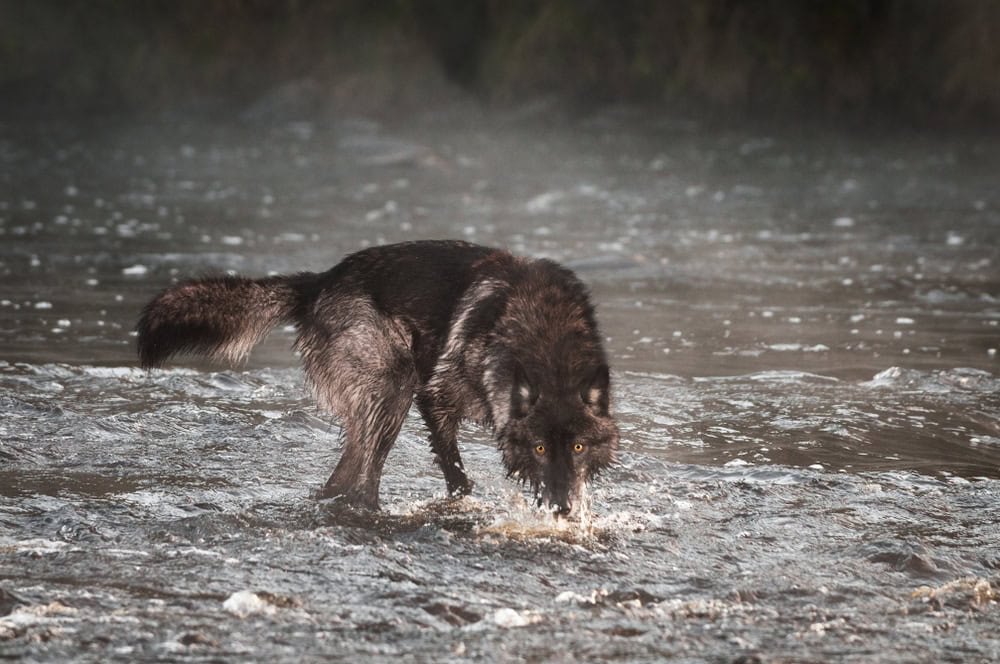
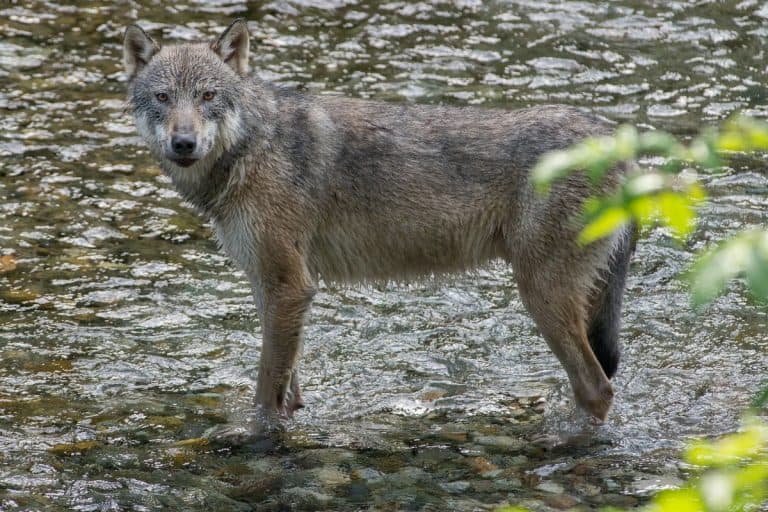
Wolves grab salmon with their teeth.
©Holly Kuchera/Shutterstock.com
An observational study carried out in 2000 and 2001 surveyed salmon-bearing watersheds on British Columbia’s central and north coast. The researchers witnessed wolves hunting salmon using a stereotypical sequence. Typically, the wolf approached their target salmon, taking between two and five steps. They then plunged their muzzle into the water, grasped the fish with their teeth, and trotted to the shore to consume it. Most salmon were eaten on the grass next to the river. From their observations, the researchers concluded that wolves used their eyesight and hearing to spot a target salmon.
The Art of Catching and Eating Salmon
In the study, wolves had a success rate of 39.4 percent when fishing for salmon. Unsurprisingly, adults were better at it than pups.
Wolves trot to the shore to eat the salmon.
©Ghost Bear/Shutterstock.com
While we can see the hunting sequence for ourselves in the clip (which matches what the researchers recorded), what we don’t see is the wolves actually consuming the salmon. This is where the research outlined above can fill in the gaps. The study found that adults ate the head of the salmon and then went back to fishing. Some wolves also scavenged the abandoned carcasses of salmon. The Instagram post mentions that the wolves’ fur even smells faintly of fish instead of musk. This may be because the wolves scent-roll in the salmon (rub themselves in carcasses) rather than because they eat them.
Why Would Wolves Eat Salmon?
Salmon are a predictable and highly nutritious food source for wolves. Also, hunting salmon does not carry the same dangers as hunting a large ungulate such as a moose, which can cause nasty injuries to wolves. Additionally, as shown in the clip, this method of hunting is relatively low-energy and less strenuous for the wolves. Wolves have learned to ambush salmon from downstream, where they are less likely to be detected, and this increases their success rates.
They may preferentially eat the heads because they want to access the fat-rich brains of the fish. Also, the heads are richer in docosahexaenoic acid compared to the rest of the body. It may also be a way of avoiding the parasites that are more abundant on the main body of the fish. Whatever the reason, wolves in this area have clearly perfected their salmon hunting and consumption techniques.