

Quick Take
- Sleep is vital to the health and wellness of your dog, which is why building a bedtime routine is important.
- Dr. Liza Cahn identifies multiple causes of nighttime restlessness and pacing, including not enough physical or mental activity during the daytime.
- Lowering lights and household volume around bedtime can help your dog wind down.
- Puppies and senior dogs may need different routines than younger dogs.
Winding down at the end of the day is something most households look forward to, and Fido is no exception. However, how many of you have a dog who struggles to settle down once bedtime comes? A growing number of families with dogs notice their pets’ restlessness when the sun goes down, but is there anything that can be done to address this behavior? What’s really going on with your dog before bedtime, and what habits can you establish to help them feel safer?
We spoke with Dr. Liza Cahn, a veterinarian at Embrace Pet Insurance, to get practical, expert-backed advice and answers on how to build a bedtime routine that works for your whole family, including the pups in your life. Using her guidance, combined with scientific research about canine sleep, we’ll bring you the information you need to help build a better routine for your dog’s sense of safety and well-being.
Ready to see how your bedtime habits can better influence your dog? Let’s begin with some of the telltale signs that your pet is struggling to wind down in the first place.
Signs Your Dog May Be Unsettled at Night
Just like in people, research published in Scientific Reports shows that poor sleep in dogs increases anxiety-like behaviors. It also has the potential to decrease cognitive performance and is often associated with depressive states. Good sleep is foundational to your dog’s quality of life, which is why recognizing the signs of their poor sleep habits is a must.

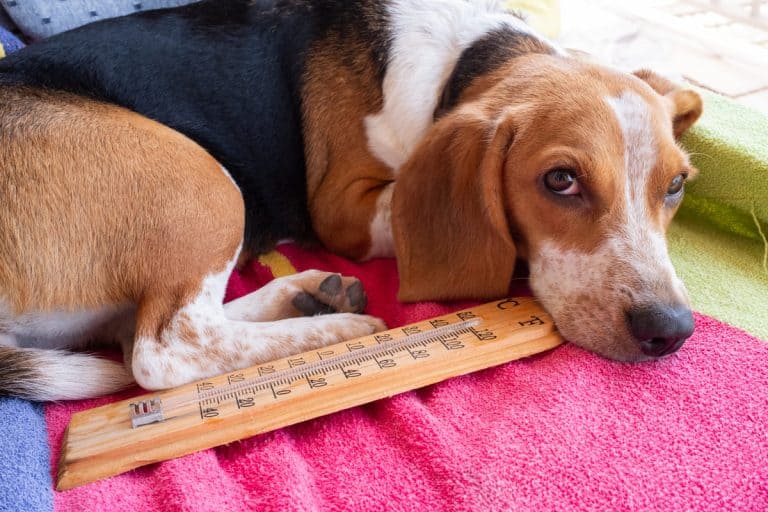
There are many signs that your dog may be struggling with their nightly routine, including having trouble getting comfortable.
©Kateryna Mainova/Shutterstock.com
Since dogs can’t verbally tell you that they didn’t sleep well, they often communicate this through their behavior. Dr. Cahn explains, “Dogs who pace, whine, bark, pant, repeatedly change positions, have accidents overnight, or wake frequently may be having trouble settling comfortably.”
Other signs include restlessness shortly after you’ve gone to bed, as well as excessive yawning or lip-licking in the evening hours. Plus, a dog who seems unusually irritable or distracted the following day most definitely didn’t sleep well; they’re just like us!
Another study on canine sleep characteristics and problem behaviors suggests that dogs resting in environments they perceive to be safe achieve better quality and duration of sleep, but the opposite can also be true. When a dog assesses its environment as less safe, it often utilizes much higher levels of vigilance; generalized anxiety may also cause dogs to misinterpret a safe environment as one requiring their watchful eye.
A good bedtime routine has the potential to repair your dog’s relationship to its environment and anxiety levels, and this is Dr. Cahn’s advice on how you can achieve that.
1. Choose a Consistent and Comfortable Sleeping Location
The foundation of any bedtime routine starts with where your dog sleeps; Dr. Cahn advises, “Whether it’s sharing your bed, a crate, or an orthopedic pet bed, make sure your pup has somewhere safe and comfortable to sleep at night. Use high-value food rewards to create a positive association and teach them the command ‘go to your bed.'”

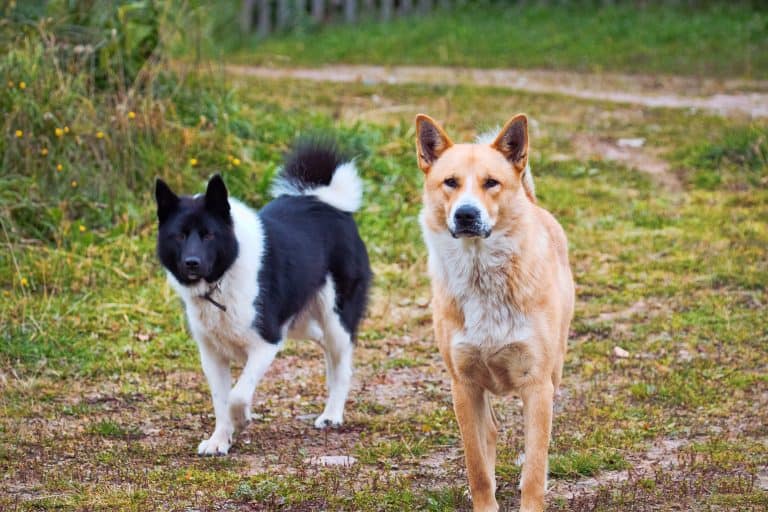
Choosing a consistent location for your dog’s bed helps them feel safer.
©annokhotska/Shutterstock.com
The location itself is the most important aspect of this. A dog who knows exactly where they belong at night and who has been positively reinforced for going there will settle faster; empowering them to recognize their safe sleeping place is a must. For dogs with joint issues or older dogs, an orthopedic bed can reduce any physical discomfort that might otherwise interrupt a good night’s sleep.
2. Always End the Night With a Potty Break
This one sounds obvious, but it’s easy to skip, especially if your dog is adept at holding it. However, Dr. Cahn is clear on this bedtime habit: “Letting your dog out to urinate or defecate is an important step before heading to bed.”

A regular potty break before bed is an easy way to help your dog sleep better.
©schulzie/iStock via Getty Images
A dog that needs to go but can’t hold it will not sleep soundly—and neither will you. Making this final potty break a non-negotiable part of your night removes a significant potential cause of your dog’s physical discomfort. This is especially true for puppies, who may still be developing their bladder control.
3. Make Sure the Day Includes Enough Exercise
If your dog is wide awake at bedtime, the solution often lies earlier in your day. “Dogs who do not get enough physical stimulation during the day may be restless and have trouble settling down for the night,” says Dr. Cahn. “Exercise needs vary considerably by breed, but most healthy adult dogs require 30–60 minutes per day.”

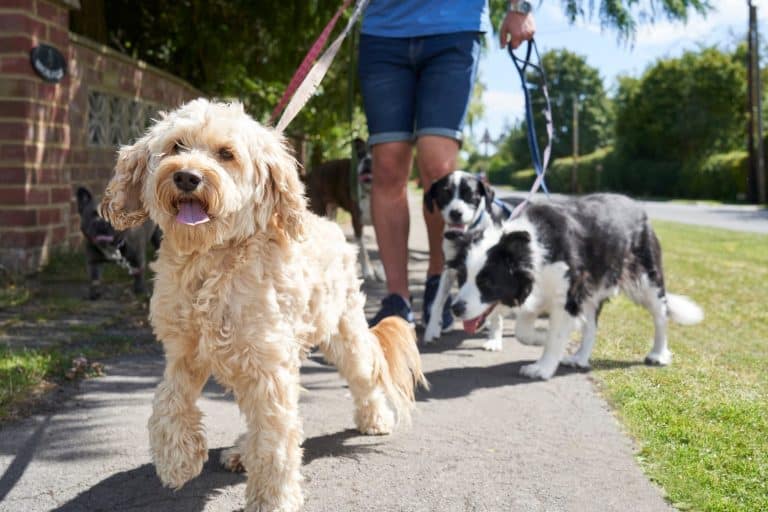
A physically tired dog is more likely to develop a reliable and healthy circadian rhythm.
©evrymmnt/Shutterstock.com
Experts at Canine Evolutions note that physical activity actually reinforces a dog’s circadian rhythm by distinguishing between active and rest periods, which better establishes their sleep-wake cycle. Keep in mind that high-energy breeds often need longer or more intense daytime activities, while older or lower-energy dogs benefit from gentler walks or light play. It all depends on your individual pup!
One more important thing to note: experts also recommend scheduling intense exercise at least two to three hours before bedtime, as any exciting activity too late in the evening can make it harder for a dog to wind down.
4. Provide Mental Stimulation Throughout the Day
Physical exercise on its own isn’t always enough, especially depending on your dog’s unique breed and preferences. Dr. Cahn considers physical and mental exercise equally important, stating, “Mental stimulation, such as training, puzzle toys, and interactive games, is equally important” to helping dogs settle down.
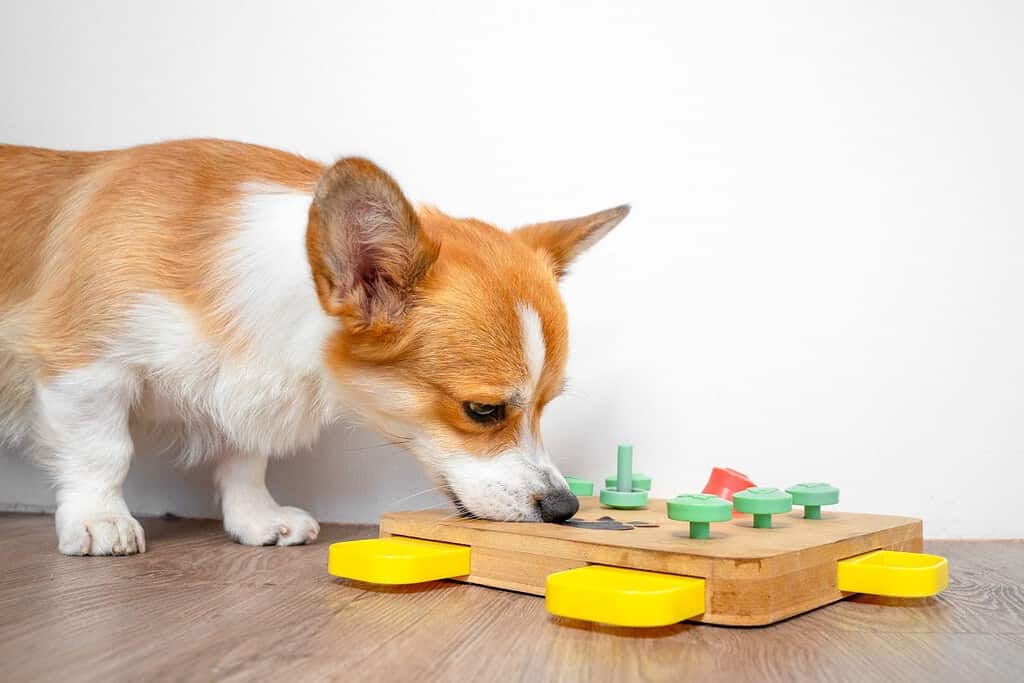
Mental stimulation is also at the heart of a healthy bedtime routine for dogs.
©Masarik/Shutterstock.com
According to PetMD, mental exercises can actually make dogs more tired than physical exercise, especially for high-energy working breeds, and many destructive behaviors may be resolved by implementing adequate mental exercises every day. Regardless, a dog whose brain has been given a proper workout during the day is far more likely to sleep through the night.
Once you decide on the steps that you would like to include in your bedtime routine, do them consistently in the same order and around the same time each night. In time, your dog will learn to predict what comes next, and it will help them settle down for the night.
Dr. Liza Cahn, a veterinarian at Embrace Pet Insurance
5. Keep Evening Activities Calm and Quiet
Once the sun starts going down, it’s time to chill out. “It’s best not to start a rowdy game of tug-of-war right before lights out. Instead, spend some quiet time together with your dog or engage them in petting or gentle massage,” Dr. Cahn says.
Rough play or exciting games, especially in the hour before bed, can raise your dog’s arousal levels at the worst possible time. You may want to reinforce a bedtime routine that includes calm brushing or providing a comforting object, such as a favorite toy or blanket.

A preferred toy or blanket may help your dog relax and wind down.
©Korneeva Kristina/Shutterstock.com
If your dog enjoys it, consider a short massage session as well. University Animal Hospital explains that canine massage helps reduce stress and anxiety in dogs by encouraging the release of endorphins that improve mood and create a sense of calmness. Even long, slow strokes along your dog’s back and neck can bring about a calming effect and deepen the bond between you.
6. Create a Sleep-Inducing Environment
According to Dr. Cahn, “In addition to a comfortable bed, begin dimming the lights and lowering household noise as you wind down for the night.” Just as humans sleep better in dark, quiet rooms, dogs actually respond to similar signals. A study published in Scientific Reports found that sleep structure in dogs is modified not only by biological characteristics such as age and activity level, but also by environmental conditions, including light and human activity.

Lowering the lights in your home may help your dog before bedtime.
©Kuznetsov Alexey/Shutterstock.com
Turning off the TV earlier on, lowering voices, playing calming music, and even dimming overhead lighting in the hour before bed helps your dog understand that the household is transitioning into bedtime. When all of this is combined with a cozy, appropriately sized bed in a low-traffic corner of the home, you’re creating an environment that actively promotes deep, restful sleep for your dog.
7. Build Healthy Home-Care Habits Into Bedtime
Bedtime routines can also become an anchor for other healthy habits. Dr. Cahn tells us, “Bedtime routines can be a helpful reminder for simple home-care habits, such as daily toothbrushing, especially if you tie it to your own evening routine.”

Brushing your dog’s teeth is a good way to reduce trips to the vet, and you may consider incorporating this into your nightly routine.
©Aquarius Studio/Shutterstock.com
Think of it like this: if you’re already brushing your own teeth before bed, adding your dog’s dental care to your own habit makes it far easier to stay consistent. Dental disease is one of the most common health issues in dogs, and daily brushing makes a real difference in prevention.
8. Stay Consistent, As Much As Possible
While humans have much more variable lives than dogs, all of the above habits work best when they’re done consistently. Dr. Cahn stresses this point: “Once you decide on the steps that you would like to include in your bedtime routine, do them consistently in the same order and around the same time each night. In time, your dog will learn to predict what comes next, and it will help them settle down for the night.”

Consistency is always key when training your dog.
©Catalina Arango/Shutterstock.com
This is largely because dogs are masters of pattern recognition, capable of syncing their internal clocks to the rhythms of their household. A dog who understands that a walk is followed by a potty break, which is followed by quiet time and then bedtime, will begin winding down before you even begin this routine. Routines like this should absolutely be considered for puppies and recently adopted dogs, as this helps them quickly understand the rhythm of their new home.
9. Consider Your Dog’s Age and Individual Needs
Not every dog needs the same things from their bedtime, and Dr. Cahn notes that age plays a major role in this: “Puppies and seniors may not be able to make it through the night comfortably.”
For puppies, crate training, frequent potty breaks, regular meal times, and a predictable structure in the home are fantastic ways to help you establish good sleep habits, which make them easier to maintain as your dog grows.

An older dog likely has more needs for their comfortable bedtime routine.
©Yobab/Shutterstock.com
“Senior dogs may need extra support if pain, arthritis, cognitive decline, or increased nighttime urination are affecting their sleep,” Dr. Cahn says. An orthopedic mattress, a sleeping location on the same floor as your bedroom, non-slip rugs, or even a nightlight for a dog experiencing cognitive changes can all make a difference. Keep in mind that if your senior dog’s overnight behavior has shifted noticeably, it’s worth having a conversation with your vet.
10. Rule Out Any Health Issues and Consider Calming Aids
If you’ve done everything you can and your dog still struggles to settle down at night, Dr. Cahn mentions that expert advice may be necessary. “If your dog is having trouble sleeping through the night, it’s important to check in with your veterinarian to rule out any contributing medical issues, such as arthritis leading to pain and restlessness, allergies causing itchy skin, diabetes or kidney disease resulting in increased thirst and urination, or cognitive decline,” she says.

Rule out any health issues in your dog if they’re having trouble settling at night.
©PeopleImages/Shutterstock.com
Behavioral issues at nighttime are often side effects of physical ailments, which your vet should assess and address. For dogs who are healthy but still experience anxiety at bedtime, Dr. Cahn notes, “Tools such as pheromones or calming treats may be helpful as part of a broader plan to reduce stress and support relaxation.” These options are well worth discussing with your veterinarian if nothing else seems to help.
A Bedtime Routine For Fido and You
“Just like us, dogs often thrive on predictable routines. The main goal is to find something consistent that works for your family,” Dr. Cahn says. Your comfort will help your dog feel comfortable too, and human bedtime habits overlap with dog bedtime habits more than we realize.
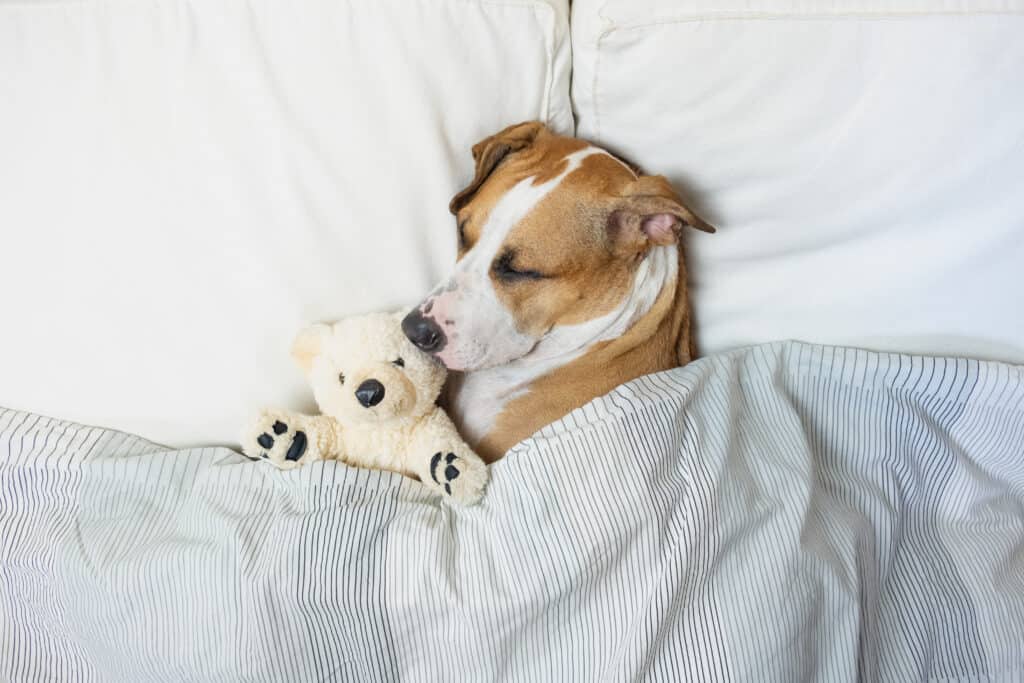
Making your dog feel safe before bed will likely make your nightly routine easier, too!
©Aleksey Boyko/Shutterstock.com
When your dog sleeps well and has a consistent daily schedule alongside you, everyone ultimately benefits. A rested dog is a calmer, better-behaved companion, and a more settled bedtime routine makes the whole evening feel easier for your family as well. Sweet dreams to you and the dogs in your life!