
Quick Take
- Your dog can be in chronic oral pain for years while still eating, wagging its tail, and acting completely normal, and there is a biological reason why this happens. See how dogs mask pain →
- Some of the most popular dog toys and treats are quietly destroying your dog's teeth, and most owners have no idea this is happening. Check damaging toys and treats →
- Bad breath signals a disease that's already been progressing silently, and by the time you smell it, you've likely missed the window most owners don't know exists. Understand what bad breath means →
- Most breath-freshening products marketed for dogs don't treat the actual problem, and vets say one specific approach is the only thing that reaches where disease really lives. Find out what actually works →
Doggy breath is not known for smelling minty fresh — these amazing creatures do lick their own butts, after all! However, a severely foul odor could indicate a more serious health issue than just needing a good brushing. Oral pain, infection, and a declining quality of life can hide behind your dog’s bad breath. This is often the first sign that you need to take action to protect their overall well-being.
When Bad Breath Is Serious
“Bad breath in dogs is rarely ‘just bad breath.’ In most cases, it is an early sign of dental disease,” Briana Mirchel, DVM, veterinarian at Dentistry and Oral Surgery for Animals in San Marcos, California, a Thrive Pet Healthcare partner, tells A-Z Animals.
The actual smell doesn’t come from your dog eating garlic or something similar; it’s due to the bacteria gathering in their gums and surrounding tissue.
“The odor is typically caused by bacteria accumulating below the gumline, where infection begins,” Dr. Mirchel explains. “As periodontal disease progresses, it can lead to chronic oral pain, bleeding gums, and damage to the surrounding bone that ultimately leads to tooth loss. In more advanced cases, bacteria from the mouth can enter the bloodstream and affect other organs, such as the heart, liver, and kidneys.”
Dental diseases like this are fairly common in dogs, even if they don’t show any other symptoms.
“By age 3, most dogs already have some level of dental disease, Bernadine Cruz, DVM, of pawTree Foods, tells A-Z Animals. She adds, “Are you finding that you’re kissing your dog less because of its stinky breath? Your dog may already be living with chronic oral pain, even if they’re still eating and wagging their tail. Why are they still eating with a painful mouth? Survival trumps oral pain almost every time.”
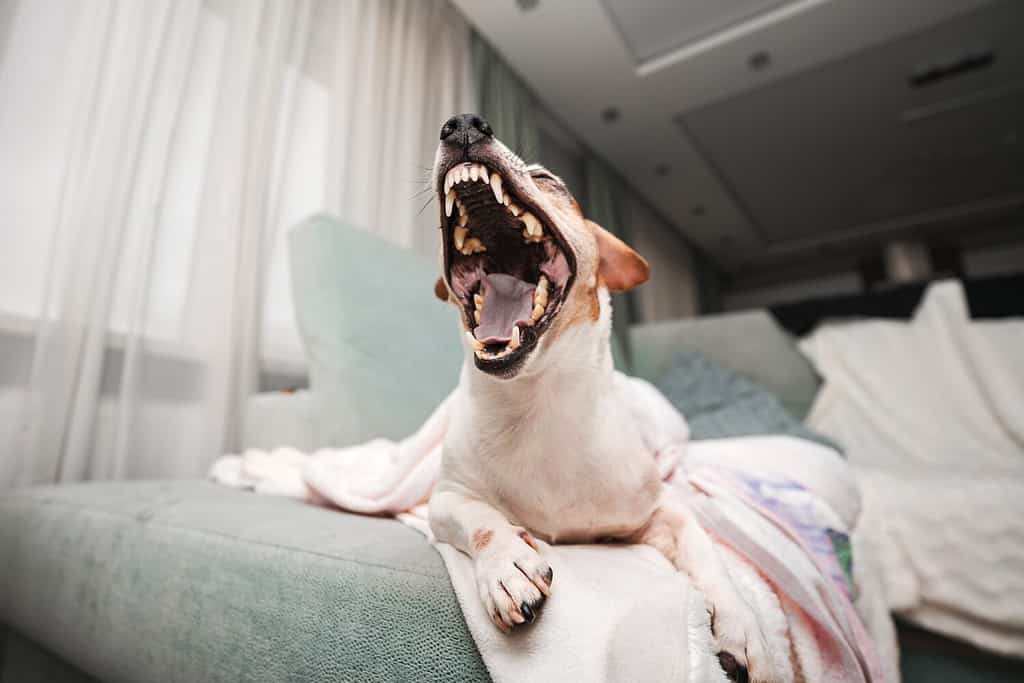
By age 3, many dogs have dental disease.
©Bonsales/Shutterstock.com
Dr. Mirchel says the way dogs continue to act like everything is normal can fool their owners. “One of the biggest challenges is that dogs often appear to keep eating and behaving normally even when they are experiencing significant oral discomfort,” Dr. Mirchel explains. “Because of this, bad breath should be viewed as a medical concern rather than a cosmetic issue.”
Dr. Cruz agrees. “Dental disease is not cosmetic. It’s a quality-of-life issue,” she says. “It affects how your dog eats, plays, and interacts. It can cause chronic, low-grade pain for years. It may contribute to systemic health issues over time, and perhaps the hardest truth — by the time you smell it, the disease has already been present for an extended period of time.”
Warning Signs of Poor Oral Health
“Dental disease is often referred to as a ‘silent disease’ because many of the early signs are subtle and easily overlooked,” Dr. Mirchel says.
Some warning signs that something serious is happening with your dog’s oral health include:
- Persistent bad breath
- Red, inflamed, or bleeding gums
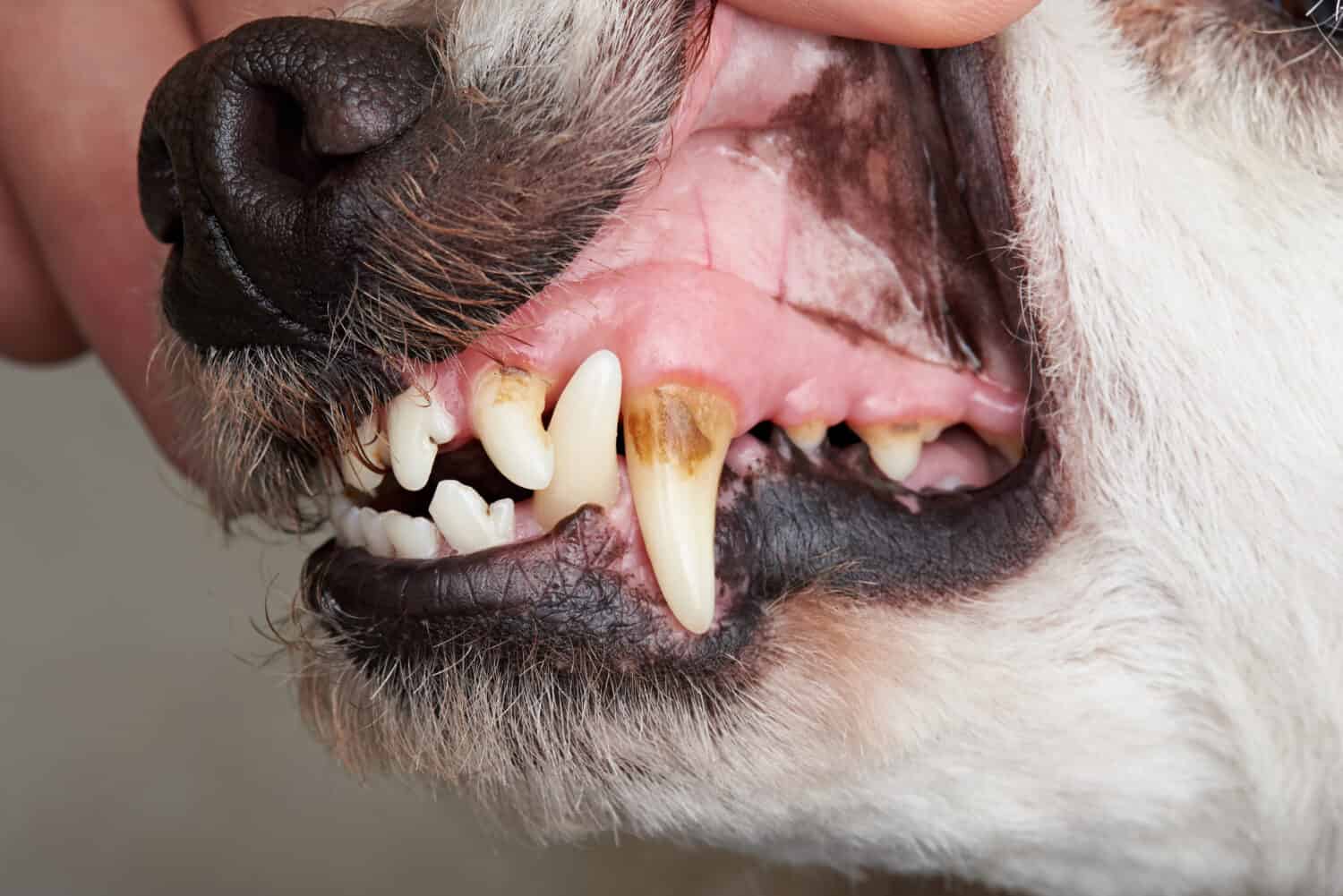
- Yellow or brown buildup on teeth
- Difficulty chewing
- Avoidance of harder treats, chews, or food (like kibble)
- Swelling around the mouth or under the eyes
- Sneezing or nasal discharge
- Decreased desire to play with or hold toys
“A common misconception is that if a dog is still eating, they are not in pain,” Dr. Mirchel warns. “Most dogs will continue to eat despite significant dental disease due to a strong instinctual drive, which can delay diagnosis and treatment.”
There are also some less obvious signs your dog is suffering from poor oral health. “Dogs are masters at hiding pain, so you won’t always see dramatic symptoms,” Dr. Cruz says.
She suggests looking for subtle signs of a problem, such as:
- Chewing on one side or dropping food
- Suddenly avoiding chew toys
- Drooling more than usual
- Pawing at the mouth or rubbing the face
- Acting “normal,” but less playful or interactive than usual
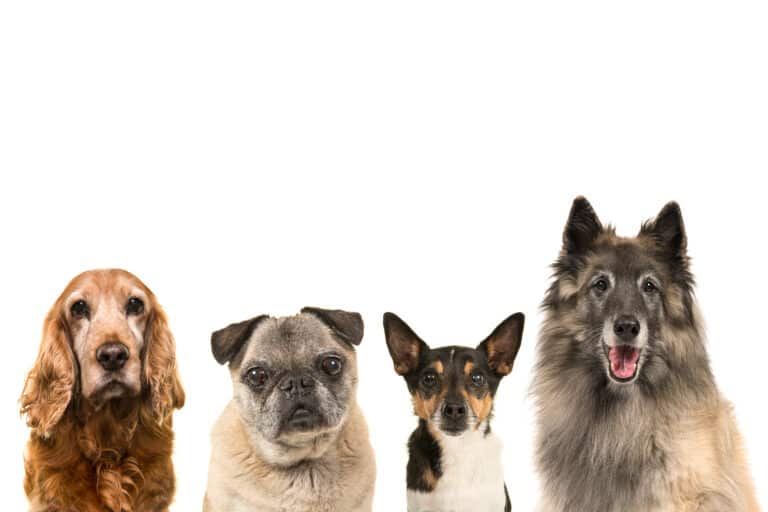
There are also certain breeds that are more likely to develop dental disease, although it can happen to any dog. Dr. Mirchel says, “While every dog can get periodontal disease, smaller dog breeds (such as Chihuahuas, Yorkies, and Maltese) and certain large breeds (such as Greyhounds) are particularly prone to dental issues due to crowding, genetic, and anatomical factors, which can accelerate plaque buildup and disease progression.”
Bad breath in dogs is rarely ‘just bad breath.’ In most cases, it is an early sign of dental disease.
Briana Mirchel, DVM, veterinarian at Dentistry and Oral Surgery for Animals in San Marcos, California
Why Are Professional Dental Cleanings Important?
Dogs have 42 teeth compared to a cat’s 30, and many of them are hidden back in the mouth or below the gumline, according to Dr. Mirchel. “Even well-intentioned owners may not be able to fully evaluate their pet’s oral health at home,” she says.
Dr. Mirchel says that a professional dental cleaning performed under anesthesia is the most effective treatment for dental disease and bad breath. “They allow for a complete examination with probing and dental radiographs, evaluating areas around the tooth and under the gumline that cannot be safely or thoroughly assessed while a pet is awake,” she says.
During the exam, the veterinarian will thoroughly examine your dog’s entire mouth, take dental radiographs to view structures below the gumline, remove plaque and tartar above and below the gumline, and treat any infections or diseased teeth.
“Professional dental cleaning (under anesthesia) is the gold standard,” says Dr. Cruz. “It removes disease below the gumline, where the real problem lives. [Because] 65% of the tooth is actually under the gum line, non-anesthetic dental cleanings just can’t reach all the disease.”
She adds that sometimes tooth extraction and/or targeted antibiotics are necessary. “Painful, infected teeth are not ‘saved’ — they’re removed to eliminate suffering,” Dr. Cruz says, adding, “[Antibiotics are] used when infection is significant or systemic.”
Supporting Your Dog’s Oral Health at Home
Of course, between appointments, there are plenty of things you can do to help your dog’s oral health — but be aware that some DIY, at-home treatments are not effective. According to Dr. Cruz, avoid sprays that claim to freshen breath, chew toys with no proven benefit, and relying on kibble to clean teeth, as these do not actually address dental disease.
And don’t forget to take care of plaque at home. “Because disease starts again the next day,” Dr. Cruz says.
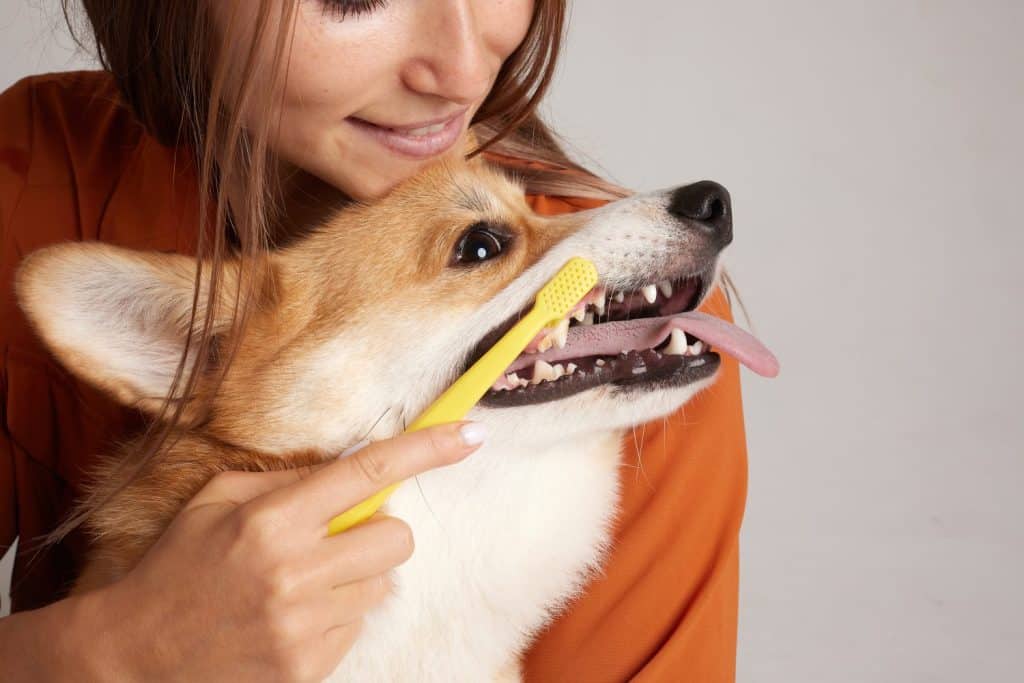
Brushing your dog’s teeth at least every other day is important for a healthy mouth.
©sergey kolesnikov/Shutterstock.com
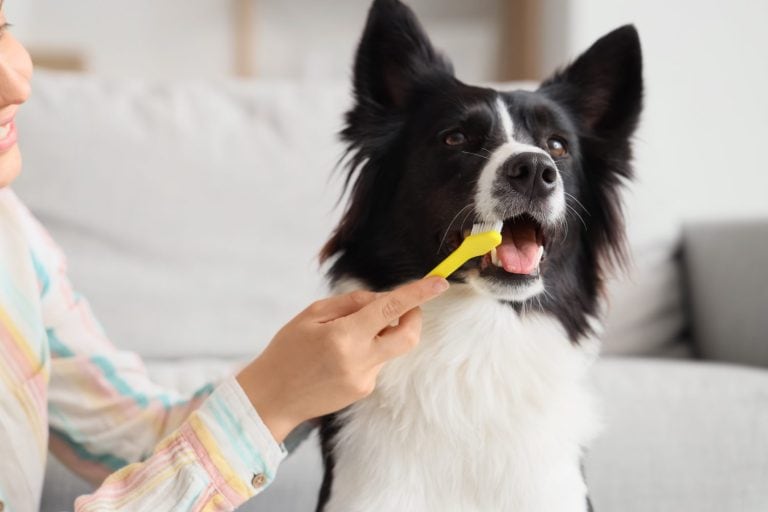
“While many over-the-counter products claim to improve breath, most only mask odor rather than treat the underlying disease,” says Dr. Mirchel. She recommends brushing your dog’s teeth daily or every other day with pet-safe toothpaste, providing dental chews and other products approved by the Veterinary Oral Health Council (VOHC), and adding water additives or powders to food designed to reduce plaque.
“These approaches are most effective when used as part of a preventive care routine, ideally started immediately after a professional dental cleaning, and not as a replacement for professional treatment,” she adds.
Another way to protect your dog’s teeth is to avoid giving them hard or cylindrical toys that can fracture their teeth. “Bones, antlers, yak chews, bully sticks, plastic, and nylon bones are a few examples that have been shown to break teeth,” says Dr. Mirchel. “Dog tooth enamel is significantly thinner than human enamel, measuring approximately 0.1–0.6 mm (sometimes up to 1 mm) compared to the 2–4 mm thickness found in human teeth. The most important chewing teeth in dogs are commonly referred to as ‘carnassial’ teeth, designed to cut and tear soft tissue rather than to crush hard items.”
Be sure to give your dog rubber balls rather than tennis balls. “People often are not aware that the hair-like fabric of tennis balls, especially when it grabs dirt and debris from the ground, has a sandpaper-like effect on the teeth that wears away the enamel,” Dr. Mirchel says.
At the end of the day, if your dog has bad breath, it is likely a sign of an underlying problem. “It is important to understand that bad breath is not a normal characteristic of dogs,” says Dr. Mirchel. “It is typically an indicator of an underlying disease and should be evaluated by a veterinarian.” She adds, “The good news is that dental disease is largely preventable. With a combination of professional care and consistent at-home maintenance, pet owners can significantly improve their dog’s comfort, health, and quality of life.”