
Quick Take
- Burmese pythons are an invasive species in the Florida Everglades where they are decimating some medium-sized mammal species.
- There are multiple strategies to control these large snakes, including competitions to remove them.
- Burmese pythons have a large maximal gape due to greater stretching of the soft tissues in the intermandibular region.
- This allows some of them to be able to swallow a 77-pound deer whole, a feat seen in the Instagram post.
This Instagram post of a Burmese python eating a 77-pound white-tailed deer is quite horrifying. It teaches us a lot about the power of these incredible but invasive reptiles. At the same time, it raises questions about the impact this non-native species is having on the ecology of the Everglades National Park. How can a snake eat such a huge animal? This video clip has been scientifically analyzed, and we share the findings below.
Burmese Pythons in the Everglades National Park
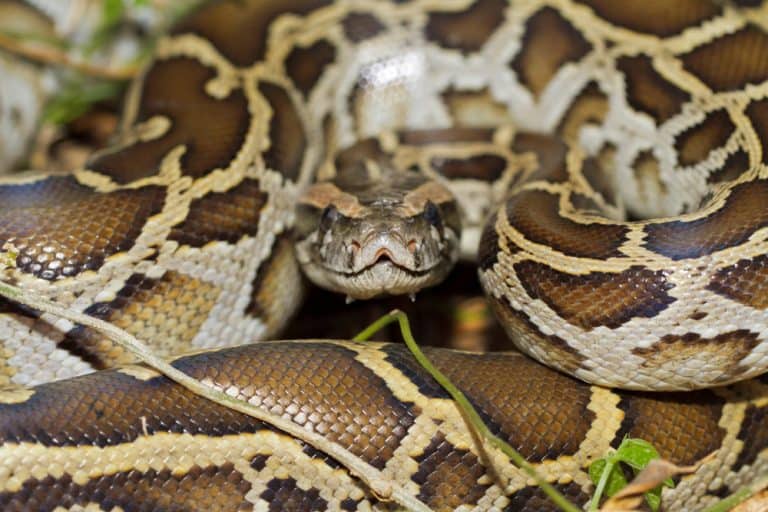
Burmese pythons (Python bivittatus) were first introduced from Southeast Asia to Florida through the pet trade, although their numbers were increased when Hurricane Andrew hit a breeding facility in 1992, releasing captive individuals into the wild. By the time the authorities realized that there was a problem, the snakes had established a breeding population that was difficult to get rid of.
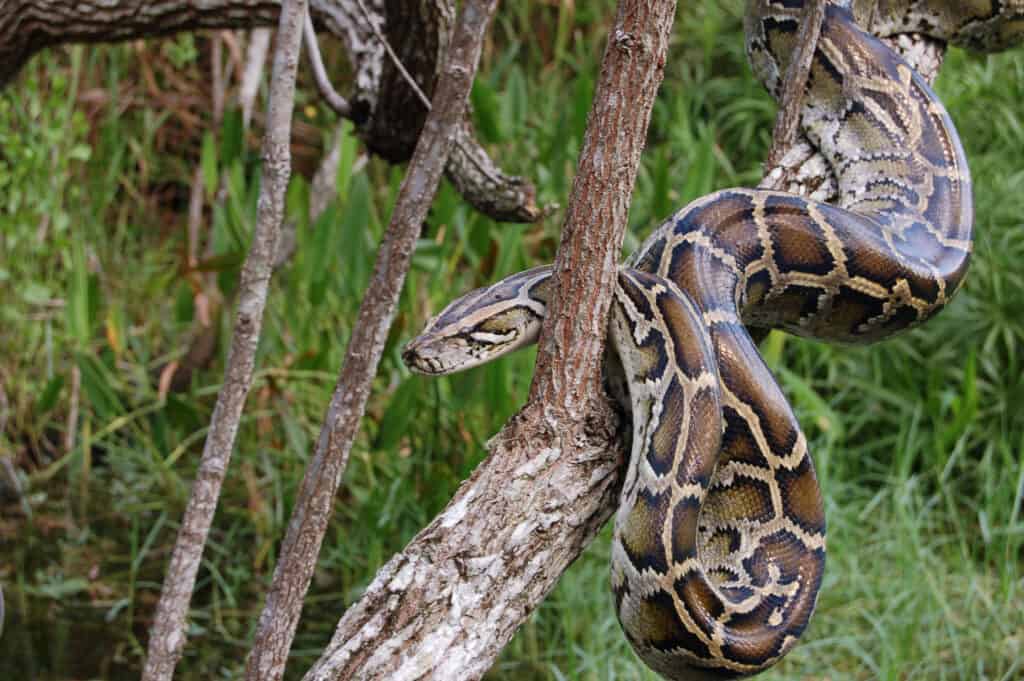
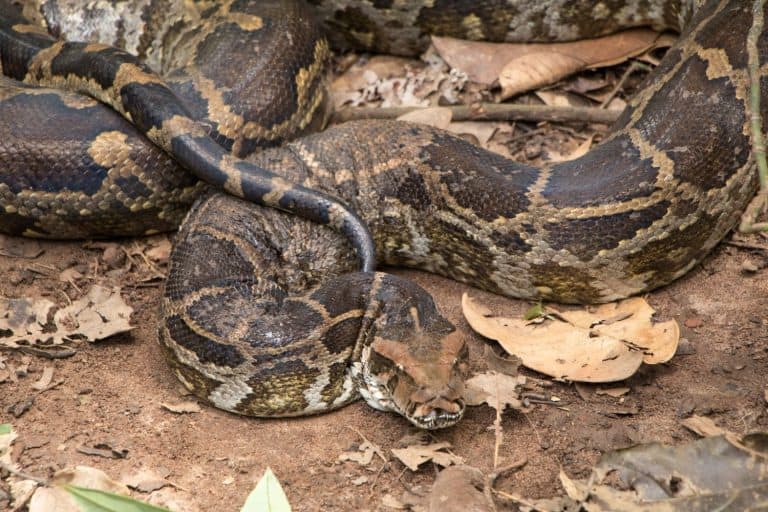
Burmese Python is a species invasive in the Everglades.
©Heiko Kiera/Shutterstock.com
The climate in Florida suits these reptiles, and they are very good at hunting and hiding in the Everglades. They can grow to 18 feet long, weigh more than 200 pounds, and have become a super-predator in an ecological system that is unaccustomed to how deadly they are.
What Damage Have Invasive Burmese Pythons Caused?
In the 40 years that they have been in Florida, Burmese pythons have decimated the meso-mammal (medium-sized mammals) population by over 90 percent. Raccoons have been reduced by 99.3 percent, opossums by 98.9 percent, and bobcats by 87.5 percent. Things are even worse for marsh rabbits, cottontail rabbits, and foxes, which are now considered extirpated (locally extinct) from most areas of successful python invasion. However, the effects on the local ecology also extend to other predators. The endangered Florida panther is now struggling to find food.
What Is Being Done to Tackle Invasive Burmese Pythons?
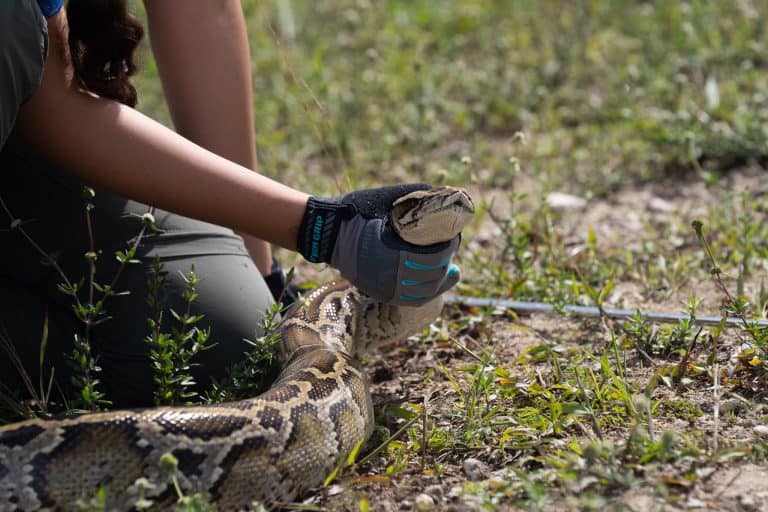
There is no easy or single fix for this issue, and researchers and wildlife managers have been investigating a range of strategies. This has included ‘scout snakes’, radio-tagged males who lead researchers to breeding females so that they can be removed. Specially trained sniffer dogs sniff out pythons in dense brush, and ‘robotic rabbits’ lure the snakes out of hiding.

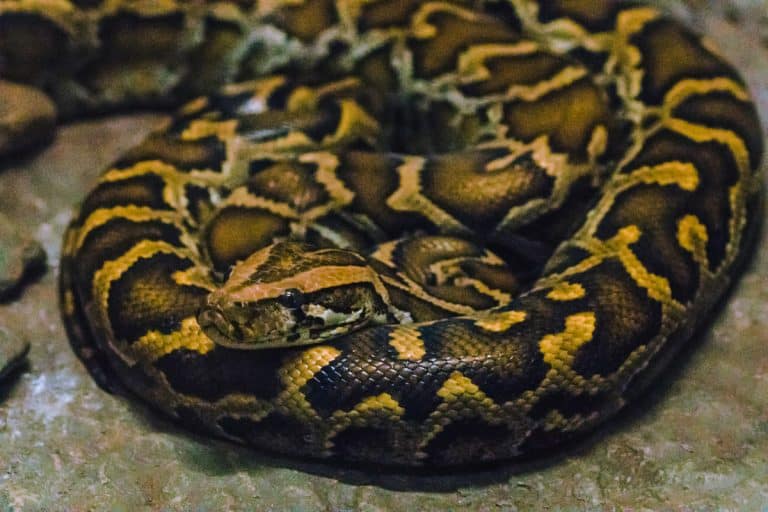
There are multiple strategies attempting to reduce Burmese python populations in Florida.
©Thomas Barrat/Shutterstock.com
Another strategy is the Florida Python Challenge. In 2025, this 10-day competition took place between July 11th-20th and encouraged participants to remove Burmese pythons from designated public lands in South Florida.
The Florida Fish and Wildlife Conservation Commission’s Python Action Team – Removing Invasive Constrictors (PATRIC) program is achieving record-setting removal numbers of invasive Burmese Pythons from Florida’s Everglades. Between May and July 2025, 1,022 pythons were removed, compared to 343 during that same period in 2024.
How Can a Python Swallow a Deer?
Burmese pythons are constrictors. They kill their prey by hiding in wait and lunging at an unsuspecting animal. While the snake holds the prey with its mouth, it wraps its powerful coils around the body. The pressure stops the blood flow through the victim’s body so that it cannot reach vital organs such as the brain and heart. The prey loses consciousness, and their heart stops soon after.
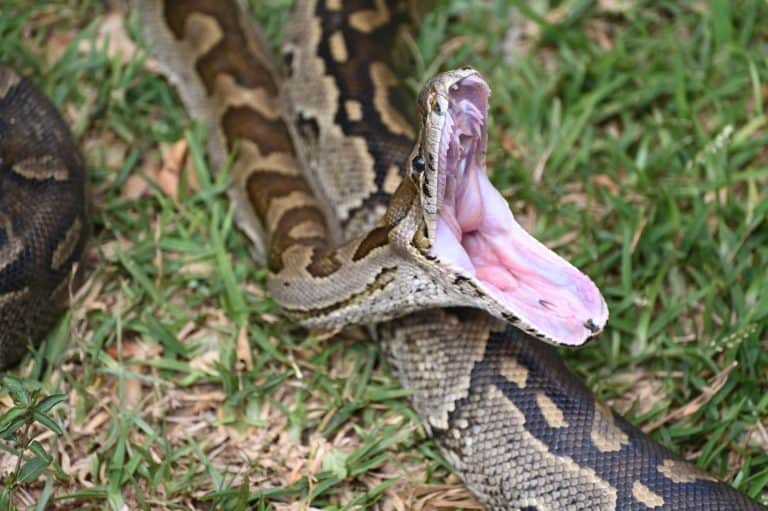
Pythons cannot chew or rip chunks off their prey, so they have to swallow it whole. This means that there is a size limit to what they can prey on. The maximum size of their open mouth is called their maximal gape. Research has shown that Burmese pythons have a particularly large maximal gape because they have greater stretching of the soft tissues in the intermandibular (area between the jaw bones) region. Their maximal gape varies between individuals but has been measured at roughly 10.24 inches (26 cm). Interestingly, the soft tissues between the lower jaws accounted for 56–59 percent of the maximal gape area.
The Science Behind the Video
This video clip was included in a study of Burmese python maximal gape published in 2024, which revealed several interesting statistics. After the python had swallowed the deer, it was palpated; after the snake regurgitated the meal, some vital measurements could be taken. It also revealed that the deer was a male and there were bite marks on its neck where the snake likely first attacked.

White-tailed deer are large prey for Burmese pythons to swallow.
©Christopher Roth/iStock via Getty Images
The victim was a 77-pound white-tailed deer (Odocoileus virginianus) with a maximum circumference of 30.91 inches, which equates to a circle with a diameter of 9.84 inches. The deer weighed 66.9 percent of the snake’s mass, so the reptile was eating over two-thirds of its own body weight in one meal!
If you look at the video carefully, you can see that the snake has coiled part of its body around the hind legs of the deer to anchor it in place as it swallows. At the time of this clip, its head was near the pelvis of the deer. The large mammal was swallowed headfirst, but one of its front legs was extended straight forward. It took 20 minutes for the snake to swallow the rest of the deer!